Organization & Compilation: Deep Tide TechFlow
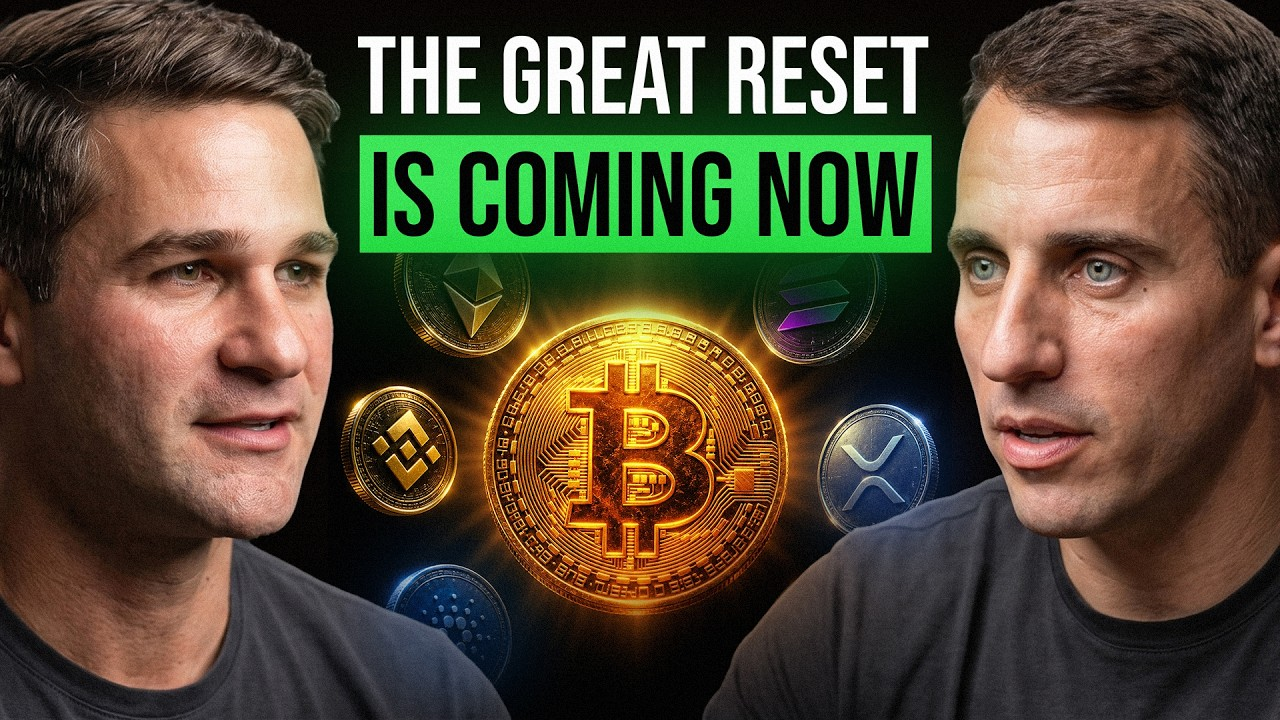
Guest: Jay Jacobs (Head of BlackRock U.S. Equity ETF Business)
Host: Anthony Pompliano (The Pomp Podcast)
Podcast Source: Anthony Pompliano (YouTube)
Broadcast Date: 2026-09-17
Duration: 50 minutes
Disclosure: The guest is the head of BlackRock's ETF business. All the products mentioned in the text, including IBIT, ETHA, ETHB, BIDA, BAI, PWR, IDGT, and ICOP, are his own products and are presented from an insider's perspective; read with caution. The host’s program includes sponsored segments for the Lava credit card, Token 2049, and Simple Mining, which are unrelated to the main points discussed and have been omitted in the translation.
Key Summary
This episode features the BlackRock executive discussing the business of Bitcoin ETFs, providing four useful pieces of information for readers.
First, he acknowledges that Bitcoin’s volatility has dropped from about 80 to 35 or 40 and believes this compression is structural: ETFs and the options market have provided more ways for people to participate, long-term buyers have entered, and the market has become thicker. However, he insists that Bitcoin’s fundamental nature has not changed; when people worry about fiat currency depreciation and geopolitical concerns, it benefits, and in such environments, stocks and bonds often perform poorly, maintaining the value of diversification.
Second, the threshold for physical creation/redemption (exchanging real Bitcoin for ETF shares) has been lowered to $1.5 million, but what truly drives large holders to switch to ETFs is not custody safety, but financialization: when coins enter the ETF structure, they can be used as collateral for loans to buy homes or cars and apply options strategies. This is crucial for understanding the behavior of large holders.
Third, BlackRock's product discipline: they only deal with Bitcoin and Ethereum, as these two account for two-thirds to three-quarters of the entire cryptocurrency market capitalization. The staking version of Ethereum ETHB and the covered call rental version of Bitcoin BIDA (selling covered calls for cash flow with a 30% position) are designed for "those who want to hold coins but desire cash flow."
Fourth, AI has already been treated internally at BlackRock as a macro factor, on par with GDP and interest rates. The real mismatch lies in the supply chain: large models are self-iterating 24 hours a day with exponentially growing demand, but it takes 4 to 8 years to produce a copper mine and 4 years for a semiconductor factory. His conclusion is to either buy a basket (actively managed BAI) or buy sectors (power PWR, data center real estate IDGT, copper mines ICOP), as going deeper cannot be captured by ETFs.
Interesting Points Summary
About Bitcoin's fundamental nature:
"When people are worried about institutions, worried about geopolitics, and worried about the depreciation of fiat currencies, Bitcoin should benefit. In such environments, stocks and bonds often perform poorly."
About the real changes brought by ETFs:
"Before IBIT was released, many advisors and institutions could pretend the topic of Bitcoin did not exist. With IBIT, it must enter the discussion of asset allocation."
About why large holders switch to ETFs:
"We thought larger holders wanted the safety of institutional-grade custody, but the bigger demand is to financialize Bitcoin. Long-term holders want to buy homes and cars, and the ability to use coins as collateral for loans is a hard demand."
About product discipline:
"Bitcoin and Ethereum account for two-thirds to three-quarters of the entire digital asset market cap. We have over 480 ETFs, but the product concepts we've rejected may even exceed that number."
About choosing ETFs:
"The number of ETFs in the U.S. now exceeds that of stocks. Don't just look at the names; they can be misleading. Open the lid to see the structure and look at the market makers; the differences can be significant."
Main Text
1. The Biggest Influence of ETFs: Turning Bitcoin from “Invisible” to “Must Discuss”
Anthony Pompliano: The Bitcoin ETF seems to be the most successful ETF issuance in history. When you filed for it, I said it would be approved and would be a major event for the industry. Looking back now, what are the measurable impacts on the industry?
Jay Jacobs: The biggest impact is the number of participants. Before ETFs, individuals had to open accounts at digital asset exchanges, which involved friction; for many institutions, this was a direct prohibition; for financial advisors, the process was long and tedious. After IBIT was launched, buying Bitcoin became as easy as clicking to buy the S&P 500 in a brokerage account.
Jay Jacobs: There’s also a change that may be even more important. Before IBIT, advisors and institutions could avoid the topic because they couldn't buy it anyway. Institutional personnel are always busy with many tasks; do you think they spend time learning about Bitcoin or thinking about stock-bond allocations? Most choose the latter. After IBIT was launched, Bitcoin had to enter the conversation: how to view this asset class and whether it fits into portfolios. The discussions among the most discerning institutions globally have been greatly accelerated.
2. Volatility Dropped from 80 to 35, Can It Go Back?
Anthony Pompliano: Bitcoin's volatility has clearly compressed, previously around 80, now around 35 to 40. Some say it's because Wall Street has entered, others say it's due to ETFs, and some say the root cause is the leverage and options built above. Do you have a judgment on this? Will this compression continue?
Jay Jacobs: We don't have a single answer, but several factors certainly contribute. One is that ETPs and the options market surrounding ETPs have built up, increasing participation and making the market thicker, accommodating those seeking liquidity and those engaging in complex trades. Additionally, more participants lead to more research and long-term buyers, which balance out the short-term traders. The more participants there are and the better the market liquidity, the easier volatility is to reduce.
Anthony Pompliano: My friend Jordi Visser has a term called "silent IPO": Bitcoin over the past year or two has quietly gone public, with early holders transferring their shares to the next generation of shareholders, and ETFs are the main channel for this transfer. Now Bitcoin is more sensitive to interest rates and has a higher correlation with certain assets. How do your clients now position it?
Jay Jacobs: The holding structure has indeed changed, with more long-term buy-and-hold money, which also reduces volatility. However, we do not believe Bitcoin's fundamental attributes have changed. It remains a global substitute for currency, decentralized, not governed by any government, with free cross-border circulation, which is the source of much of its value. When people are worried about institutions, worried about geopolitics, and worried about fiat currency depreciation, Bitcoin should benefit, while stocks and bonds often perform poorly in such environments. This foundational nature of diversification has not changed to this day.
3. Product Line Logic: Only Two Coins, but Many Variations; Large Holders Switch to ETFs for Collateralized Loans
Anthony Pompliano: There are generally three paths for creating crypto products: completely avoid it; include all coins; or only focus on a very few. You are taking the third path, focusing on Bitcoin and Ethereum but also creating staking and yield versions. How do you delineate this line during product meetings?
Jay Jacobs: The starting point is a fact: Bitcoin and Ethereum account for two-thirds to three-quarters of the entire digital asset market capitalization, with values highly concentrated and adoption still very early. So we first focus on that largest pool. IBIT is the world's largest and most liquid Bitcoin ETP. For Ethereum, we have a non-staking ETHA and this year launched a staking version ETHB, allowing investors to obtain staking yield through the ETP structure.
Jay Jacobs: There’s also BIDA, which has about 30% of its Bitcoin position selling covered calls to generate cash flow for investors. This responds to client feedback: many like Bitcoin's long-term story, but it has zero interest and zero yield, and it feels uncomfortable when included in a cash flow-focused portfolio. By connecting it to options yield, we retain investors.
Anthony Pompliano: What about physical creation/redemption? Large holders can now exchange real Bitcoin for ETF shares. I often hear discussions about the security of holding coins; cold wallets being hacked, physical security issues, etc. Do many large holders believe holding an ETF is safer than holding coins? Hardcore Bitcoin players might feel this goes against the spirit of Bitcoin. What do these discussions actually look like?
Jay Jacobs: When IBIT was first launched, regulators did not allow for physical creation/redemption, but later it was opened up. My initial judgment was the same as yours, assuming it was mainly a safety demand, but it turns out safety is only part of it; the larger part is financialization. Long-term holders have much of their wealth in coins and want to buy homes and cars, so being able to use coins for collateral is a hard demand. Some also want to layer options protection or yield strategies on top of their coins or exchange part of the Bitcoin risk for exposure to the S&P 500. Once coins enter IBIT’s structure, many more things can be done. The threshold for physical creation/redemption has also decreased significantly, to about $1.5 million per transaction, which was much higher before, expanding the pool significantly.
4. AI is Already a Macro Factor; The Real Mismatch Lies in Mining and Semiconductor Factories
Anthony Pompliano: Your mid-year thematic report talked a lot about AI. Previously, the market thought AI was stealing Bitcoin's limelight, but now both seem to be back at the same table. Given the long chain of the AI industry, what is your analytical framework?
Jay Jacobs: At BlackRock, we started viewing AI as a macro factor a few months ago. Previously, people looked at GDP and interest rates; now, AI adoption rates are variables of the same level: if AI slows down, the market feels it; if AI accelerates, the market benefits accordingly. It is that important to the overall price level in the U.S. market.
Jay Jacobs: Many still view AI as a technology theme, which is an outdated perspective. It is a healthcare theme, a legal theme, a consumer theme, and will touch nearly every industry. Buying a healthcare fund does not mean you are avoiding AI in that line.
Jay Jacobs: We have established a framework for the AI value chain: power companies, data center real estate, chip manufacturing, data holders, large model developers, application layer, platform layer, with dozens of companies globally spread across various aspects.
Jay Jacobs: The biggest mismatch today lies in the speed difference between supply and demand. Large models are self-improving, constantly writing their own code; globally, companies decide to increase AI investments in a matter of days or weeks. The demand is exponential. However, on the supply side, it takes 4 to 8 years to build and start a copper mine, and rebuilding data centers and power grids is stuck on copper; if optical interconnection replaces copper interconnection, there will also be a need for indium, which is a byproduct of zinc mining and takes years; even for more GPUs, a semiconductor factory also takes about 4 years to start production. Demand is counted in days while supply is counted in years; this is the biggest misalignment in AI today.
Note from Translator: Indium is a rare metal used for lasers and optical communication devices, with almost no independent mines, primarily obtained as a byproduct of zinc refining. This implies that even if the technical route shifts to optical interconnection, upstream materials will still be constrained by mining cycles.
5. The Inside Story of the ETF Business: More than Stocks, Names Can Mislead
Anthony Pompliano: How detailed can products be broken down? For an ETF on memory, what about liquid-cooled chips? If we go deeper, there could be thousands. How do you decide how deep to go?
Jay Jacobs: There are three criteria. First, does it address the real needs of clients? Is this exposure something clients can't reach themselves or need someone to define? Second, is there a positive expected return? Producing things that are worth nothing together is pointless. Third, can a high-quality ETF be created? When only two or three names are left in a sub-category, it no longer resembles an ETF and cannot be formed at all; it’s just a small basket of stocks.
Jay Jacobs: Therefore, our approach is: for those who want convenience, buy BAI, an actively managed AI ETF managed by Tony Kim, who rotates stocks in the value chain; for those who want to be hands-on, buy sectors, with PWR covering generation fuel, generation, and distribution companies according to index rules; IDGT for data center real estate, and ICOP for copper mines.
Anthony Pompliano: Now independent investors and self-directed funds are growing rapidly; do these people want the same things as institutions?
Jay Jacobs: This is one of the fastest-growing client channels. ETFs are inherently the most democratized tools; the products retail investors buy in brokerage apps are the same exposures that the largest global institutions have. But the differences among end investors are significant: some want laser-like precision in exposures, with strong beliefs; others have just saved their first $100 in life and only want something like a pension. The products differ, and so does the education.
Anthony Pompliano: You must also have things that didn't work out, right? From the outside, it looks like your Bitcoin ETFs have won and so has AI. What keeps you up at night?
Jay Jacobs: Education can always be improved. Another real issue: there are now more ETFs in the U.S. than publicly traded stocks, and this year is also a record year for ETF issuances. Actively managed ETFs have already surpassed indexed ETFs. The selection is so overwhelming that investors simply cannot choose, and names can also be misleading; many ETFs sound like AI ETFs or power infrastructure ETFs. Open the lid to see what you hold, how the processes are designed; the differences can be huge.
Jay Jacobs: Take BIDA as an example; we specifically used the 33 Act structure instead of the 40 Act structure. The 33 Act is the structure used for Bitcoin and gold ETFs, and the cost is that investors will receive a K-1 tax form, which is a bit more troublesome, but the post-tax efficiency is higher. We chose it knowing it was more complex and then put in the effort to explain why.
Jay Jacobs: Also at the trading level. We don't do market making, but we consider the pain points of market makers when designing products. Two ETFs with the same name: one has a lot of market makers supporting it; when the market is turbulent and liquidity is tight, I bet the one with a denser ecosystem of market makers will provide a better trading experience. So my advice can be summed up in one sentence: don’t just look at the names.
Note from Translator: The 33 Act and the 40 Act refer to the U.S. Securities Act of 1933 and the Investment Company Act of 1940, respectively. A K-1 is a tax form for partnership structures that is more complex than the ordinary 1099 form, usually received in mid-March, making tax reporting more cumbersome. His statement implies that structural choices affect post-tax returns, which ordinary investors may not consider before purchase.
6. Intergenerational Transition: Parents Ask About Large Cap Stock Funds, Children Ask About Bitcoin Funds
Anthony Pompliano: Let me share some data from our side. On our financial platform, user assets consist of about 20% in primary residence real estate, only 10% in crypto, with the bulk still in stocks. My audience consists of crypto enthusiasts; you'd think they all hold coins, but that’s not the case. There’s always a gap between narrative and data.
Jay Jacobs: This aligns with what we see. Millennials are the first tech-native generation, but social media is not really native to them; many had flip phones only in high school. Generation Z was born into social media, and Generation Alpha will engage with the financial world in ways that are completely different from their parents.
Jay Jacobs: This has concrete effects on business: advisors must serve two generations simultaneously. Baby boom clients ask about your large-cap growth fund, while their children ask about your Bitcoin fund. One reason IBIT has been so successful is that advisors realized they need to connect the product lists they discuss with two generations differently. Moreover, a massive wealth transfer from baby boomers to millennials is still upcoming.
Jay Jacobs: However, one thing will not change: the fundamental principles of portfolio management do not vary by generation; the old truths about risk and return remain. What changes are the tools and asset classes. Advisors need to maintain their money management approach while learning to connect with each generation.
免责声明:本文章仅代表作者个人观点,不代表本平台的立场和观点。本文章仅供信息分享,不构成对任何人的任何投资建议。用户与作者之间的任何争议,与本平台无关。如网页中刊载的文章或图片涉及侵权,请提供相关的权利证明和身份证明发送邮件到support@aicoin.com,本平台相关工作人员将会进行核查。


