Author: Beca, Blockchain One Hundred People
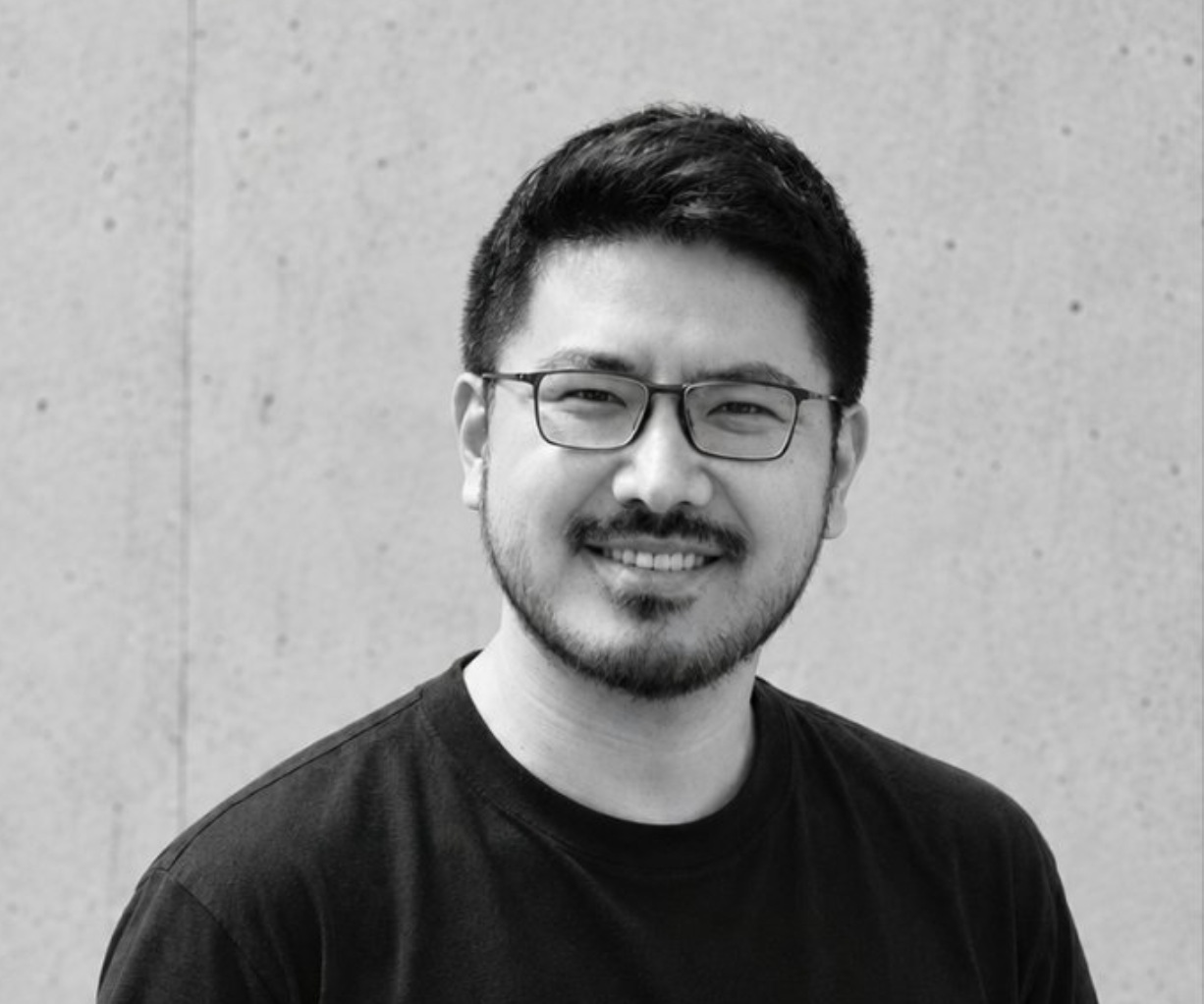
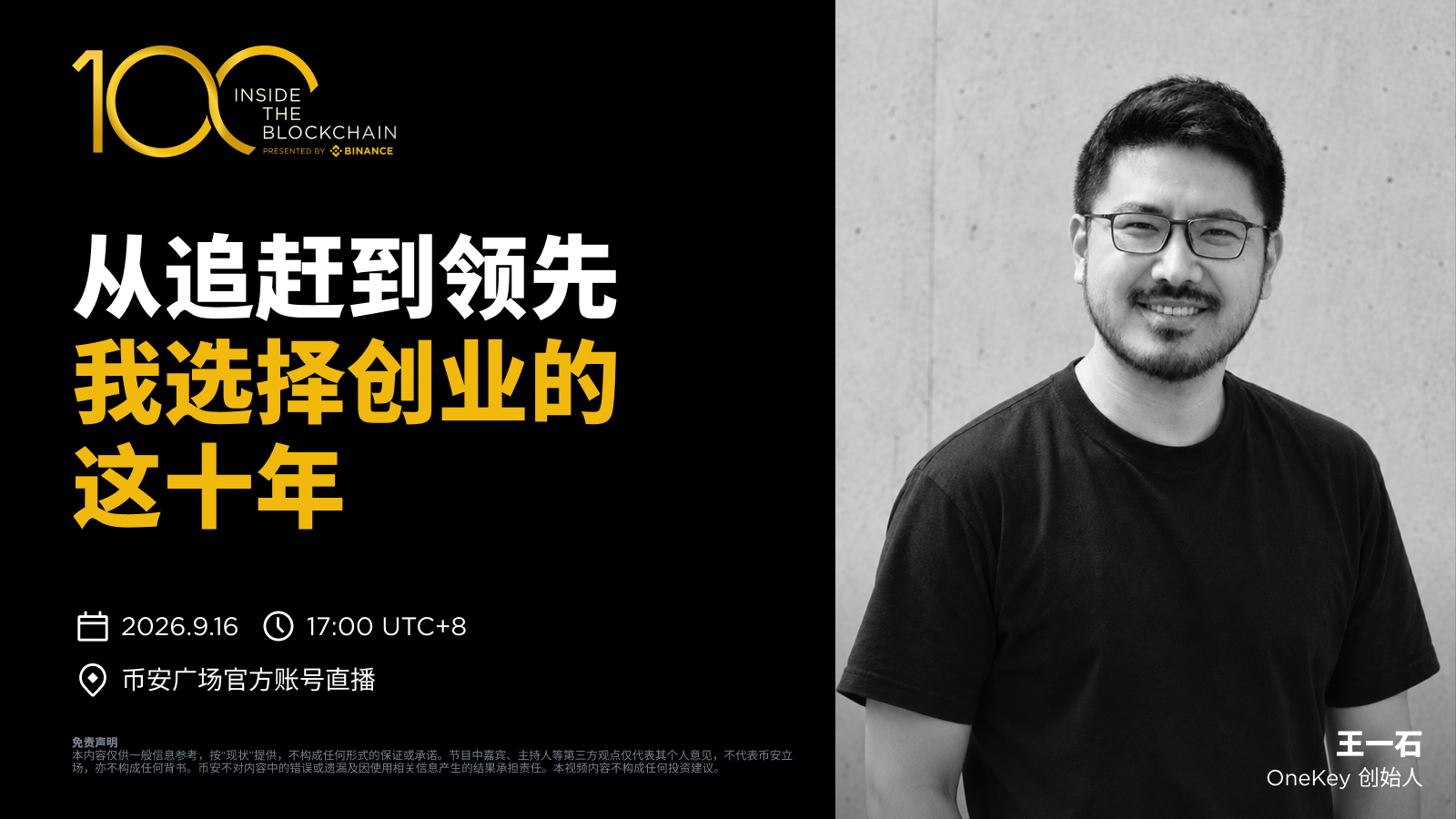
In 2013, a junior student majoring in civil engineering purchased his first bitcoin through Taobao. Twelve years later, he became the founder of OneKey, one of the most important hardware wallet companies in the industry.
In this discussion, Wang Yishi @ohyishi talked about the judgments and choices he made along his journey, but we spent more time on the recent topics in the industry that cannot be ignored: AI empowering both offense and defense, what really went wrong behind Bybit's $1.5 billion theft, why he designed OneKey's recruitment process to resemble a "blind date," and what he is actually screening for, and how he plans to use a portion of his "trial and error capital from his first startup" to cultivate his descendants.
1. Entering the Circle: From Civil Engineering to Bitcoin
Host Beca: You came from a civil engineering background, and in your junior year in 2013, you bought your first bitcoin on Taobao. What pulled you from the construction site to the blockchain?
Wang Yishi: To put it simply—because it went up.
2013 was a bull market. It had been rising since 2012 and peaked in Q4 at nearly 8,000 RMB. I remember buying for about over 100 USD, around 700 RMB.
At that time, you could directly buy bitcoin and Ripple on Taobao by just clicking a link to pay; the transaction was very primitive. Also, exchanges began to appear in China, like BTC China founded by Yang Lin. I bought coins because they were rising, and I noticed this thing. I got excited when I saw Teacher Xiao Lei's article "When This Thing Comes Out, the World Turns Upside Down," so I ran to the Babbitt forum and Bitcointalk to read many early posts.
So, the core reason is—because it went up, I bought.
Host Beca: From ByteDance to CoinEx to OneKey, how did you make your choices step by step?
Wang Yishi: When I joined ByteDance, the company had around 400 people, and now it should have 100,000. At that time, ByteDance's biggest money-maker was the Toutiao APP ads, valued at 1 billion USD—now it may be 500 billion or even over a trillion.
ByteDance is a very typical "APP factory": several apps are released every month, utilizing the main app's tab to drive traffic to new products, deciding whether to continue investing or dissolve based on data — it is particularly ruthless. At that time, AB testing and data-driven thinking were already very strong.
But big companies have a natural issue: having too many resources can sometimes be a curse. If you're short on staff, you hire; if you're short on budget, you propose an OA; if you lack traffic, you demand it—being in that environment makes you more like a component; you must perform your job well, but you naturally lack some "field survival experience."
"Field survival" refers to creating something new without having traffic flowing to you, and having no one to help you deal with problems outside of the product. It is different from something wild outside.
Later, the reason I chose crypto was that civil engineering is slow. The feedback cycle in civil engineering is calculated in "years": the design institute produces drawings, seniors go on-site with a whole bridge project, which takes years. The internet is fast, and crypto is even faster—you invest money, it rises, then it’s a strong positive feedback.
While I was working at ByteDance, aside from paying rent, basically all my income went into buying coins. Since I was already buying coins anyway, why not go all in the industry?
2. How OneKey's "First Wave of Users" Came About
Host Beca: The hardware wallet sector has been dominated by Ledger and Trezor for six or seven years. How did OneKey emerge from so many peers?
Wang Yishi: Actually, until now, OneKey hasn’t "burst out" — that term is a bit overrated. OneKey is still struggling to grow.
However, if I had to say, the biggest growth point was the 2020 DeFi Summer. At that time, a lot of money surged from exchanges to the blockchain—because there were pools and very high annual returns. But what tool did you use? Metamask.
At that time, the little fox's security was not very good. I remember during an audit at the end of 2020, we found that the way it stored mnemonic phrases posed security risks—it was relatively easy to access source files and brute-force crack them.
Users with significant funds wanted DeFi but did not want to lose everything if one day their computer got a Trojan or their browser was hacked—they began using hardware wallets. But if you use Ledger to mine on Uni, you need to install Ledger Live, install the Ethereum APP, install Metamask, then connect Metamask to Ledger, and you also need to turn off the Ledger client because they will fight for the same USB port—
This feels like using three remote controls to operate one TV. It is difficult to use.
At that time, OneKey made some innovations in user experience, especially localization and some friction-reducing experiences—this was our first wave of users.
Host Beca: Besides improving user experience, what is another reason for achieving growth?
Wang Yishi: Open source.
Ledger still hasn't gone open-source. Our judgment is—A product that makes you "believe" it is safe and allows you to "validate" whether it is safe, in the long run, the latter will be better. Just like AI models today, I have a long-term view on open source. The ability to verify is very important.
After the first wave of growth, the rest is actually an issue of competitors—they didn’t do well, fell behind, and slowly the users came over.
Recently, Coldcard also had problems. Coldcard is a wallet made by very professional, geek Bitcoin OGs. But can you imagine—during the nearly four years from 2021 to 2025, a vulnerability in mnemonic phrase generation hung on the internet as open source for four years without being fixed? So can you say they are really professional? I have my doubts.
Every time competitors make basic mistakes, our user numbers increase slightly. That’s basically it.
So it's not about "breaking out"—it's about surviving.
Host Beca: The rapid growth phase of a company is also when it's easiest to make mistakes. Have you encountered any detours?
Wang Yishi: Many. Looking back now—it's just utterly speechless.
During the DeFi Summer period, our wallets were out of stock for almost a year.
The reason is that we opened new molds and wanted to do firmware entirely ourselves, then underestimated the difficulty and R&D cycle of this matter. Once you get into hardware, it differs from software—hardware has a supply chain behind it and one problem leads to a hundred others. As a result, we should have captured a large number of users but had no product.
If you don’t even have product—you're essentially sending out traffic.
Also, some are technical architecture issues: premature design, premature optimization, over-design. Instead of "I first focus on growth and letting users use it, then slowly optimize". This order is very important. If we had clarified this issue at the time, it should have been much better than now.
3. Offense and Defense in the AI Era: From "Two Months" to "Two Weeks"
Host Beca: The efficiency of AI in finding vulnerabilities is increasing. What preparations have you made?
Wang Yishi: This is a problem for the whole industry, not just the crypto industry. In the past, everyone thought iOS was very secure, but now with AI models, there are many holes in iOS.
Our team has a security team called Anzen Labs (Anzen means "safety" in Japanese). This year, we released a USB vulnerability at Black Hat— from finding the vulnerability to reproducing it, to connecting several vulnerabilities into a complete supply chain attack, almost the entire process used AI.
Before AI, to create a complete attack chain like this, it would take two to three senior security researchers about two months of effort. But this time, we found this vulnerability with just one security engineer in two weeks.
The speed change is very rapid.
But while AI makes finding vulnerabilities easier, this "ease" is mutual for defenders as well.
Defenders have one advantage over attackers: you have those undisclosed codes in your repository. For an attacker to attack you, they must first find your stuff. If you are open source, then anyone can join the attack; but if your product and code are continuously iterating, there will definitely be parts that have not yet been released—at that time, you can attack yourself.
In the past, we conducted firmware security audits basically twice a year, hiring more than two companies for cross-audits. The frequency was very low. But now, with AI tools assisting, you can audit every week with each release.
Frankly, AI is just a kitchen knife—you can use it to harm or to cook. It depends on how the teams in the industry utilize it.
4. The $1.5 Billion Theft Case at Bybit: Not One Mistake in the Whole Chain, But Funds Were Lost
Host Beca: Why have defensive tools been constantly improving over the years, yet incidents have not decreased?
Wang Yishi: More and stronger tools, and incidents continue to occur—all three of these things hold true simultaneously.
Previously common attack methods were finding contract vulnerabilities, flash loans, manipulating oracles—these still exist, but not as many as before. Why? Because now many protocol developers use some auditing tools and formal verification, which can block most of these vulnerabilities.
As a result, attackers have realized—coding has become less cost-effective. They, you know, General Jin has to support so many people.
So they found: if it's hard to attack the code, then they can target the human element.
Host Beca: Taking Bybit's $1.5 billion theft case as an example—each link seems to have done nothing wrong?
Wang Yishi: Correct. This is a very typical example.
Bybit's Safe multisignature was hacked for $1.5 billion; actually, every link looked good when viewed individually: the multisignature contract itself has no bugs; Bybit's cold wallet has no issues; and the Ledger hardware device they used also had no bugs.
So where is the problem? It lies with a front-end engineer on the Safe protocol, whose computer was socially engineered by North Korean hackers, Lazarus.
After being socially engineered, a piece of malicious code was implanted in Safe's official front-end, and this code only took effect for that one address of Bybit. So when Bybit's four persons (Ben and three others from finance and audit) signed, they saw a very normal transaction from the cold wallet to the hot wallet on the webpage.
Unfortunately, Ledger provided a blind sign—they did not parse the Safe contract and did not display any warnings for delegatecall.
As a result, what they signed was actually a "proxy transfer" action—directly giving away the permissions of Bybit’s Safe contract. The ownership was lost.
Every step seemed not to have gone wrong; the only issue was the Safe front-end engineer's computer had been compromised. But all conditions just happened to align, which was—very uncomfortable.
In the past, the approach was to find ways to hack your code; now the approach is to find ways to hack your people.
There’s a saying in traffic safety—that if you equip a driver with seat belts and airbags, the driver will drive faster. The same goes for the industry. Everyone keeps adding more—more audits, more multisig, adding passphrases, increasing the attack thresholds. But often, the incidents don’t come from those visible areas but from the hidden ones.
Your fortress may be impregnable, and your security guard is loitering outside with the keys. Someone comes up and says, "Brother, can I have a cigarette?"—you light up, and when you turn around, they've stolen your keys. It's that kind of feeling.
5. Hacking Ledger: A Public Disclosure of an "Olympic Spirit" Vulnerability
Host Beca: Recently, you revealed a transaction replacement vulnerability in Ledger with "we hacked Ledger". Why such a high-profile approach?
Wang Yishi: First of all, that vulnerability has been fixed.
At the time I posted that, Ledger firmware had already reached version 1.2.3; the vulnerability was in 1.2.1 and had been fixed almost two weeks prior. "We hacked Ledger" does seem a bit clickbait—but Ledger has done that repeatedly, so it's understandable.
This vulnerability is technically called TOCTOU (time-of-check to time-of-use)—it exploits the time difference between the device and computer. A user sees "transfer 1 million USD from address A to address B" on the device, and then they sign it; but in that gap, I send in the transaction for B, and what you signed was actually the transaction for B, which replaces your transaction for A.
In terms of the severity of the vulnerability—it is quite dangerous.
Our Anzen Labs' daily task is to hack ourselves. If I can't even hack myself, that proves my security capacity can't crack or manage this.
But there is communication in the industry. We also reported some security bugs to Keystone before—about two months in advance, telling them how to reproduce it and providing a complete solution; once they fixed it and enforced updates, we published it together. It’s good. There should be this kind of positive Olympic spirit.
6. Hiring: Interviews Are Just Two Actors Performing
Host Beca: OneKey's hiring process is quite unique—you first pay candidates to complete practical tasks, and after passing, there's a paid probation period. Why is that?
Wang Yishi: The core reason is—we can't find suitable people.
All the "strange hiring methods" you see are actually not strange; it's because conventional methods have a low hit rate.
Hiring is very much like matchmaking. If you interview someone and have a great conversation, what does that prove?—It proves that this person is very good at interviewing. They predict your predictions of their predictions. An impressive candidate will make the interviewer "come to the conclusion they want themselves," leading the interviewer to think it was their own wise discovery of the qualities in the candidate—this is a form of subtle psychological manipulation.
The interview process is more like a performance by both sides—the candidate performs a capable individual, and I perform as a great company. Then both actors watch each other's show and decide whether they want to be together.
However, the two-to-three-day paid practical test is different. You can observe the thought processes, completeness, and quality of delivery—the most important part is whether they communicate proactively when they encounter problems or hold back until things pile up. In our work, we hope to have timely communication on issues.
Also, all the questions are crafted by us, not picked from YC's questions to "fool them for a solution."
For candidates, it's the same—through these two or three days, they can intuitively sense the company's working style. Because the person crafting the questions is usually their direct colleague after they join. They will know if they like this person or not. That is crucial.
Finally, payment. Aside from respecting the other person's time, paying also serves one more purpose—if I suddenly give you a question to test your abilities, and you take a day or two to work on it, you might feel like I’m exploiting you. But if I pay, you will feel I’m serious about this, and thus you will take it more seriously.
Host Beca: You once said, "I cannot accept engineers in 2025 who cannot efficiently code using AI." What does your ideal team look like?
Wang Yishi: That statement from me in 2025 was indeed a bit of an "extreme argument." At that time, Codex had not yet been released, and AI was just starting to improve efficiency in programming and text.
But this year, we launched many new hardware-related items. For example, hardware testing—currently, we don't have any testing engineers in the office, but four or five robotic arms are doing it.
For some tests on mobile phones, you can directly use a USB cable to read instructions, but some tasks are external—for example, whether sliding has any lag or the tactile feel of buttons—require both visual and external hand coordination. Before 2026, we had many testing engineers in the office clicking things manually. Now it's robotic arms + high-definition cameras + models: every time a version is released, these things are automatically fed to the testing backend, and the robotic arms go through testing cases one by one.
This is not just done by a single hardware engineer or testing engineer—it’s done by two people together. Because there is a consensus on "what current strongest AI models can achieve," based on that consensus, we believe this can be done. Then we try it—ultimately proving it can indeed be accomplished.
The biggest change brought by AI is providing everyone with a common boundary: turning things that used to be "two specialties that do not understand each other and think are unattainable" into results of "1+1 greater than 2 or even far greater than 2."
7. "Trial and Error Capital" for My Son: Let Him Lose This Money Early
Host Beca: You have discussed on Twitter your approach to raising your son—to open Binance and Robinhood accounts in his name, investing money into them every year. What values lie behind this?
Wang Yishi: I did want to do that—but there are two issues: Robinhood requires American residents, and my child is not; Binance's Junior account requires one to be 6 or 13 years old, and my child was only 3 months at that time. So it’s still on my to-do list, but I will definitely open them later.
The founder of Dell opened accounts for newborns in America, depositing $250 in each— I think it’s quite interesting.
Why do I want to do this? Because I realize—the earlier you let kids engage with money, the better.
And this "money" isn’t just pocket money—it’s not "Daddy, Mommy, I want to buy ice cream, give me 5 or 30 yuan." Instead, once he can recognize numbers and do simple arithmetic up to 100, you can tentatively give him a savings account or even an investment account. Let him learn how the world’s money operates.
Then—let him lose that money early.
If he can have 10,000 yuan from the family before adulthood, enabling him to lose all of it before he becomes an adult—it’s much better than him graduating, working, earning money, and then losing a much larger amount due to an investment mistake one day.
Fail cheap, fail early. He serves that role. It also cultivates his understanding of money.
Host Beca: There is a saying: In the AI era, only "wealthy kids" won’t be limited by AI in their imagination. What do you think about the relationship between children and AI?
Wang Yishi: How could AI limit imagination? Isn’t AI supposed to liberate imagination?
The progress of human society fundamentally boils down to one statement—the young do not listen to the old, and humanity will progress.
With AI, kids can accomplish so many things. They are builders from a young age—not necessarily having to learn programming to create a product; as long as they can speak, they can create.
You see many families now buying 3D printers, like Bambu Lab, at home to print many small items—not necessarily figurines; some are practical objects: automatic switches, foldable mats for coffee machines. It’s fascinating. I can hardly imagine how happy I would have been to have something like that when I was young.
You can make apps, build websites, create tangible physical things—and then you can combine them, leading to infinite possibilities.
8. In Conclusion: Show Me the Product
Host Beca: You have journeyed from a field completely unrelated to this industry to where you are today. What would you say to those wanting to make a mark in this industry now?
Wang Yishi: I wouldn’t call it advice. I don't necessarily do it particularly well myself.
But if I had to say—first, everyone’s growth potential is limitless. The major you study, what you do after graduation, what you do at 20, what you do at 25, and what you do at 30—all four can be completely different.
Your liking for something determines your level of investment in it. Your outlook and understanding of this thing determine its growth ceiling.
If you both love it and it is something on a long slope with a long track—then you’re more likely to go farther.
In the past, many people did not like to share what they created in public; they preferred to work in silence—waiting until the day they could launch before saying, "You all come use this thing I made." But now you will find—having AI create something is incredibly fast. If you have an idea, directing Codex, Grok, or Claude to assist you might yield results within just two resets.
Once it’s out, you can distribute it for others to use—quickly receiving feedback: Is it a necessity? Is it only needed by you, or do many others feel the same but haven’t spoken up? Can it generate revenue? Does it have long-term user support?
The author of Lovable, before creating Lovable, made over thirty vibe coding apps that no one used—until Lovable became popular. This is a very typical example of rapid trial and error.
When developing a new product, you’ll connect the strengths and weaknesses of all previous products—you are connecting dots. Those things AI cannot replace in you because they are cognition, aesthetics, and decision-making, residing in your mind.
Previously, it was called "idea is cheap, show me the code." Now you don’t even have to show me the code—just show me the product.
So, indeed, this is the best era.
免责声明:本文章仅代表作者个人观点,不代表本平台的立场和观点。本文章仅供信息分享,不构成对任何人的任何投资建议。用户与作者之间的任何争议,与本平台无关。如网页中刊载的文章或图片涉及侵权,请提供相关的权利证明和身份证明发送邮件到support@aicoin.com,本平台相关工作人员将会进行核查。


