Author: BigTime Industry Research · Market Research Report|BT-2026-01
Research Scope: GSR (Digital Asset Market Maker) Panoramic Analysis|Data Validation up to 2026-09-11|BigTime focuses on market making, liquidity, and trading technology practices
Core Viewpoints
- Market making is a fundamental service in the market. Judging a market maker should be based on pricing and risk management in stable, volatile, and token unlocking scenarios, rather than the "market maker" label.
- GSR's continuous actions in 2026 (a $57 million acquisition, leading Libeara, strategic investment from SC Ventures, Cayman entity registration) point in the same direction: expanding from a single market-making focus to institutional capital market services.
- Transaction volume, revenue, and net profit are three layers; public information is insufficient to calculate GSR's current net profit; the synergy of acquisitions and tokenization strategies still needs operational results to validate.
A transaction that completes smoothly appears to be just the buyer meeting the seller. What truly supports this is the continuous quoting, sufficient market depth, and the presence of someone managing inventory and risk during severe market fluctuations.
GSR is worth studying, one reason being its participation in these basic market services; more importantly, its recent public actions are surpassing the single market-making label: acquiring business service capabilities, expanding treasury and advisory services, and participating in institutional asset tokenization. Putting these actions together, the question becomes: can a company starting from liquidity find more customer needs throughout the entire asset lifecycle?
When analyzing this type of enterprise, we should consider two things simultaneously: whether they can continuously deliver transaction services and whether they can create value in more areas that meet customer needs. GSR's public actions provide a window for observation, but the true operational results still require ongoing validation.

1. What Do Market Makers Really Provide?
The basic role of a market maker is to provide buy and sell quotes in the market. For users, the value is not only reflected in "there are prices on the screen," but more fundamentally in what price can be executed and how much quantity can be transacted after placing an order.
Assume two markets both show an asset selling for 100. One can transact 1 unit at this price, while the other can transact 100 units; when buying 100 units, the results in the two markets may differ. This example illustrates the mechanism and does not reflect the actual prices or commitment of any platform.
Continuous quoting also needs to bear the changes in inventory prices, hedging, financing, and counterparty risk. Therefore, "earning the spread" is merely the starting point for understanding revenue, not a guaranteed profit model. Evaluating a market making company's capabilities requires considering the trading system, quote quality, risk management, and client relationships together.
GSR's official website lists services such as market making and institutional trading. The study of its business should start from the target clients and actual capabilities, rather than deducing conclusions from the "market maker" label or the price fluctuations of individual tokens. GSR Markets
How Is a Market Maker's Capability Tested in Three Scenarios?
To judge a market maker, we cannot only look at the buy-sell spreads in calm market conditions. When the market changes rapidly, how much depth can the quotes maintain; after inventory shifts to one side, how is the risk transferred; after the costs of hedging and financing rise, how much profit remains from the original spread? These questions are closer to the operational quality of this business.
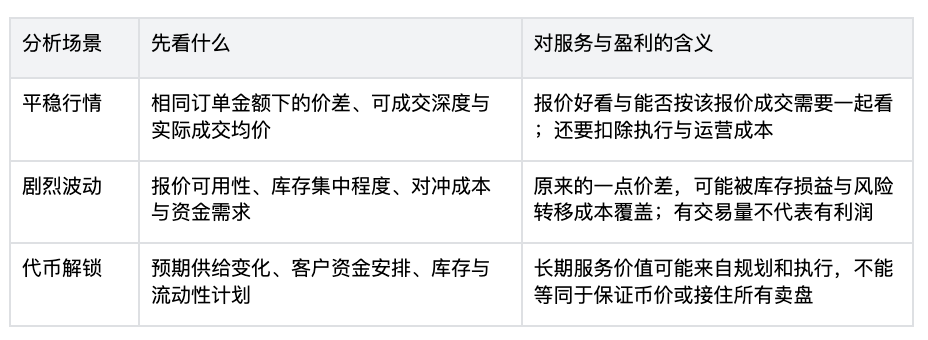
Table 1|Market Scenario Testing Framework
Source: BigTime Research Framework
This table is a research framework, not a client backtest for BigTime or GSR. When comparing companies, specific data on transaction scale, token types, market conditions, and statistical methods must be consistent. The scope of public services can help pose questions but cannot replace actual delivery records.
Looking at GSR's acquisitions through these three scenarios, the question becomes more specific: can the new services extend client relationships, allowing clients to continue using the same set of capabilities across different stages of issuance, trading, and treasury management?
2. From a Single Transaction to Continuous Demand from Institutional Clients
GSR was established in 2013. Its longer operational history provides the opportunity to observe different market cycles, but current operational quality still needs to be assessed by combining client, revenue, and risk data. SC Ventures' Introduction to GSR
The needs of institutional clients often extend beyond a single transaction: projects require liquidity, fund holders need execution, enterprises need treasury arrangements, and asset issuance and distribution require different services. Researchers can break this type of business down into the table below instead of lumping all cash flows together under "market making income."
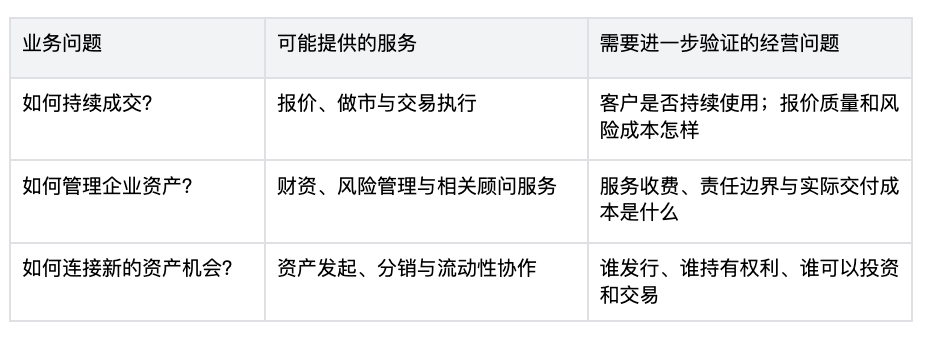
Table 2|Breakdown Framework for Institutional Client Business
Source: BigTime Research Framework
This is a research framework table, not a revenue breakdown disclosed by GSR. Without financial splits, one should not infer which business line is the most profitable from the service menu alone.
3. How Do Quotes Generate Revenue, and Why Don’t They Equal Profit?
First, clarify the distinctions between transaction volume, revenue, and net profit. Transaction scale reflects the transactions processed through the market; revenue relates to specific accounting principles; net profit must also account for costs, profits and losses, and taxes. A large transaction volume does not directly equate to significant profits.
For financial service companies, it is essential to keep asking: does profit derive from stable client demand or from a specific market condition? How much of this is realized profit, valuation changes, or one-time projects? What is the situation regarding profit conversion to cash? What risks do inventory and financing arrangements pose?
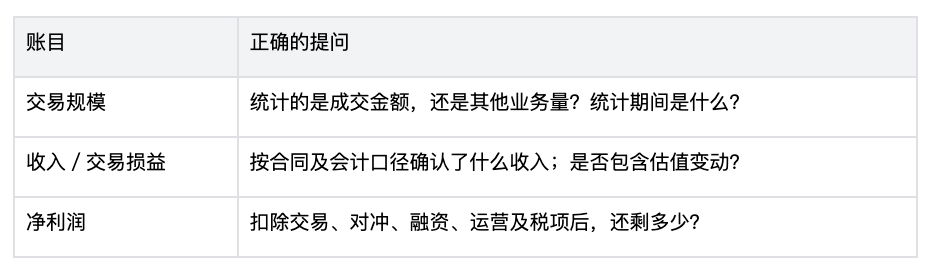
Table 3|Three-Tiered Perspective on Transaction Volume, Revenue, and Net Profit
Source: BigTime Research Compilation
These three levels cannot substitute for one another, nor can they be directly used to estimate returns for fund shareholders.
To assess profit quality, it is necessary to obtain the corresponding financial data from the fiscal year, then distinguish between business revenue, trading profits and losses, one-time projects, and cash flows. The net profit of the latest complete fiscal year requires further disclosable financial evidence to support it.
4. Why Spend $57 Million to Buy Two Companies?
On March 17, 2026, GSR announced the acquisition of Autonomous and Architech for a total of $57 million, introducing the direction of integrating capital markets and treasury services. This figure represents the total acquisition amount for the two companies, not the price for any individual company, and certainly not GSR's revenue or valuation. GSR Acquisition Announcement
According to the announcement's division of responsibilities, Autonomous provides project initiation, financial and operational support; Architech forms the foundation of GSR's digital asset advisory business, connecting token design, issuance, and liquidity strategies. These capabilities, combined with existing trading services, pose a hypothesis worth testing: clients may continue requiring services during the issuance, operation, and treasury stages, potentially leading to longer client relationships.
However, the success of an acquisition and the realization of synergies are two separate matters. The next step should observe client adoption, service delivery, renewals, and actual operational results. Combining businesses may expand opportunities, but it could also increase integration costs and management complexity.
5. Where Is the Connection from Liquidity to Tokenization?
On April 7, 2026, GSR announced leading the funding round for Libeara, with collaboration focusing on institutional asset tokenization and related market capabilities. On June 23, SC Ventures released an announcement revealing that Libeara completed the strategic financing led by GSR. These two announcements provide observation points from the funding announcement to completion. GSR Leading Announcement|Libeara Financing Completion Announcement
Additionally, SC Ventures disclosed in a May 2026 announcement that it became GSR's first external strategic shareholder. Strategic investments indicate that a capital and business relationship has been established between institutions, but specific collaborative outcomes still need observation. SC Ventures Investment Announcement
Asset tokenization will not automatically create liquidity. Asset rights need clear legal correspondences, issuance and registration require arrangements, distribution needs to connect suitable participants, and transactions require buy-sell demand and execution capability.
From this, we can pose an analytical judgment: liquidity services may become an important part of the process of institutional asset chain integration. This indicates a demand worth studying, but does not prove that any company will necessarily capture all value, nor can it be used to infer any returns for investors.
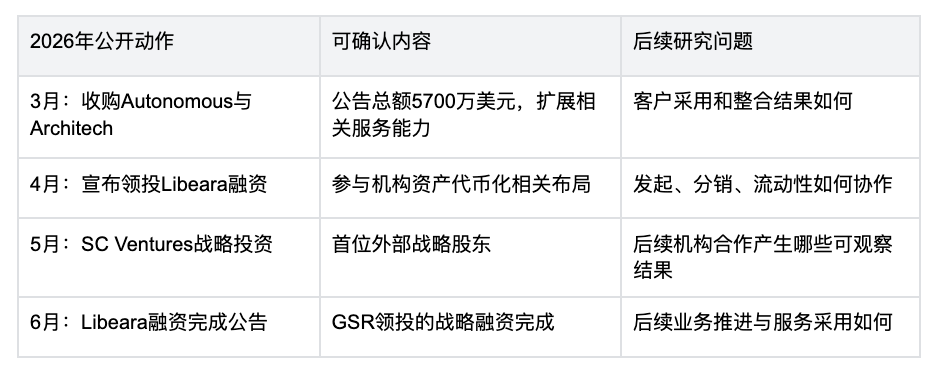
Table 4|Overview of GSR's Public Actions in 2026
Source: Announcements by GSR and SC Ventures, Compiled by BigTime
6. Which Capabilities Are Worth Affirming, and Which Judgments Need Evidence?
The observable research basis for GSR includes long-term market participation, institutional service experience, and recent public actions expanding into more service segments. These support the view of the company as a significant case study in the development of the crypto capital market.
We believe that investment judgments also require information on normalizing profitability, client concentration, financing and inventory risks, governance, valuation, and ultimate rights obtained. Corporate capability needs to be evaluated along with participation prices and terms; regulatory records should correspond to specific legal entities and licensed businesses.
"Will crypto see a Goldman Sachs" is thus suitable as a capability question: is there an institution that can connect assets, issuers, investors, transactions, and risk management? It is not a valuation question that can be directly answered through name analogies.
7. After Understanding the Company, Understand What You Are Getting
Studying a company does not equal acquiring its stock. When participating through funds or special purpose vehicles, the investment agreement, holding rights, and exit paths for investors may differ from direct shareholding.
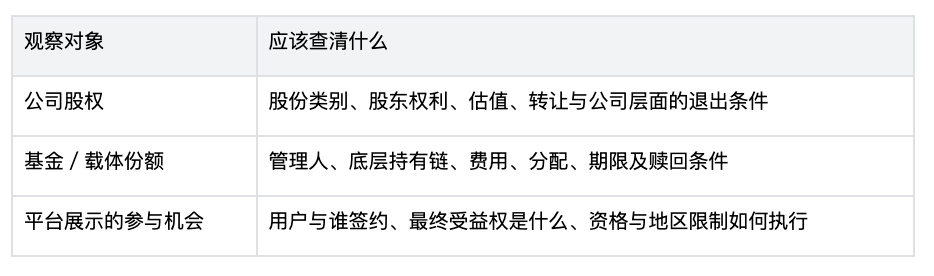
Table 5|Checklist for Different Participation Methods
Source: BigTime Research Compilation
The case of GSR reveals a more complete financial service demand behind liquidity. What is worth continuous tracking is how these capabilities form client value and how the company's value corresponds to specific participation conditions.
Risk Warning
This report is based on public information; GSR has not disclosed audited public financial data, and financial references in the text are cited from media reports; market-making industry income fluctuates significantly with market conditions, and historical operational performance does not represent future performance; the integration effects of acquisitions and tokenization businesses have uncertainties, and related judgments require ongoing validation.
Data Description: Company facts come from the announcements of the companies and institutions mentioned in the text; the three scenarios, service synergies, and future revenue opportunities are the analyses of BigTime.
Disclaimer: This report is produced by BigTime Industry Research, based on public information, and does not constitute investment advice, offer, or income commitment; historical performance does not represent the future. No part of this report may be reproduced or summarized without written permission.
BigTime Industry Research continues to cover market making, liquidity, and institutional asset markets, with a series of reports being released.
免责声明:本文章仅代表作者个人观点,不代表本平台的立场和观点。本文章仅供信息分享,不构成对任何人的任何投资建议。用户与作者之间的任何争议,与本平台无关。如网页中刊载的文章或图片涉及侵权,请提供相关的权利证明和身份证明发送邮件到support@aicoin.com,本平台相关工作人员将会进行核查。


