Author: Crypto.com
Compiled by: Deep Tide TechFlow
Executive Summary
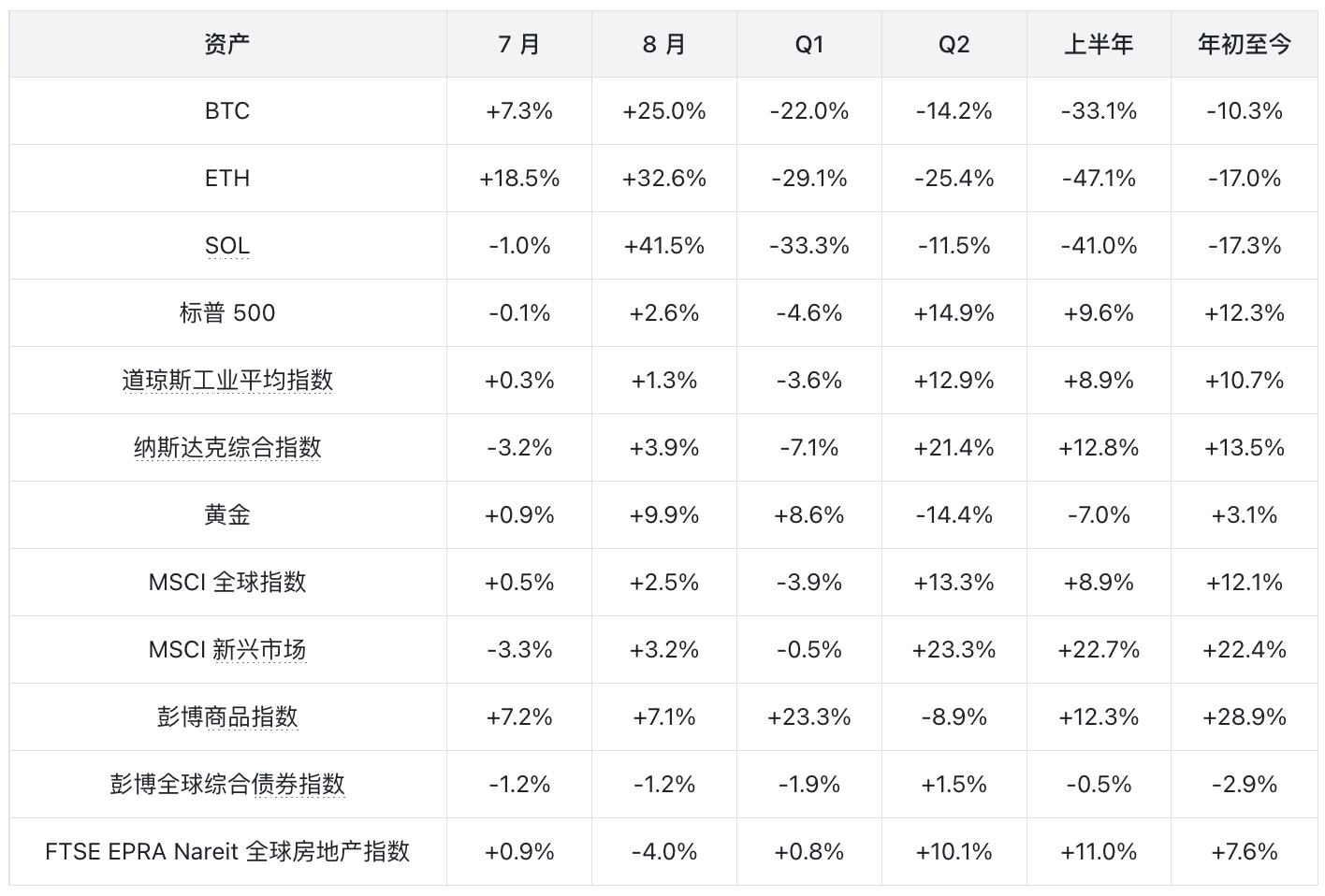
- Overall Market Performance: In August 2026, the global market generally warmed up, led by strong increases in digital assets (Bitcoin +25.0%, Ethereum +32.6%, Solana +41.5%) and the U.S. stock market (NASDAQ +3.9%, S&P 500 +2.6%, Dow Jones +1.3%). Gold rose by 9.9%, while real estate fell by 4.0%.
- G20 Macroeconomic Environment: In August, various central banks continued the "wait and watch" strategy, with most G20 economies keeping interest rates unchanged. The Brazilian central bank was an exception, cutting the Selic rate by 25 basis points. The market is focusing on potential trade frictions, fiscal deficit management, and wider deployment of AI-driven capital expenditure.
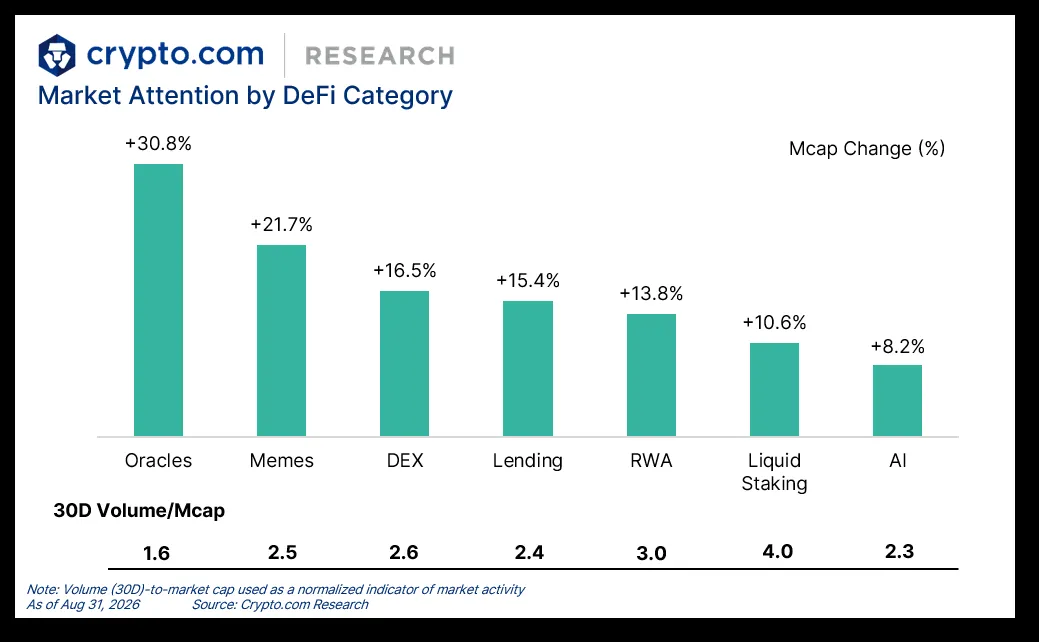
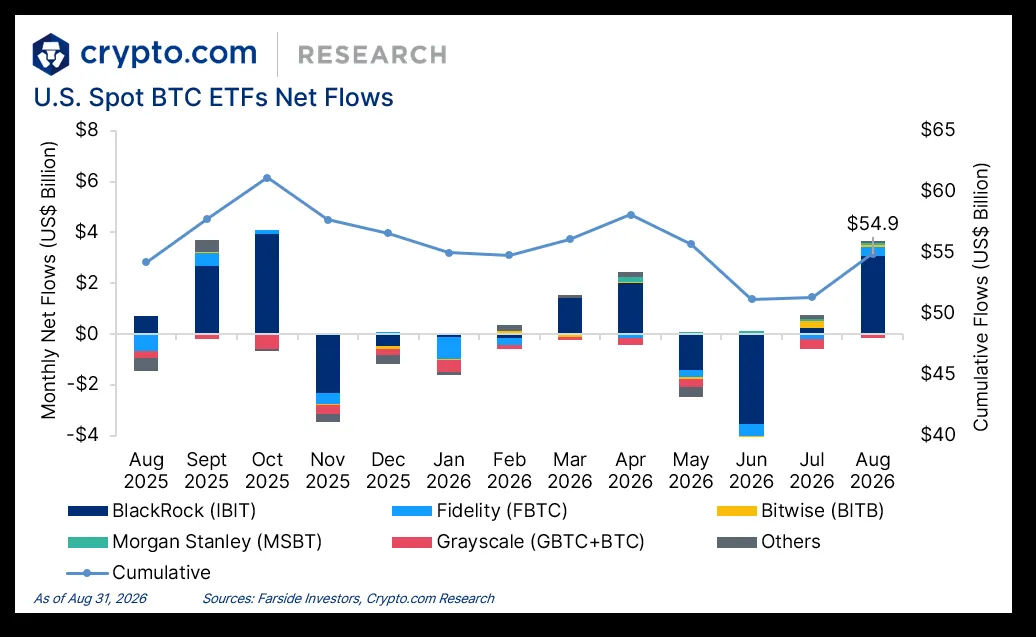
- Cryptocurrency Market Dynamics: In August, all DeFi categories achieved growth, with oracle projects (+30.8%) leading in market capitalization. Institutional interest remains strong, with U.S. spot BTC and ETH ETFs recording net inflows of $3.5 billion and $1.8 billion, respectively.
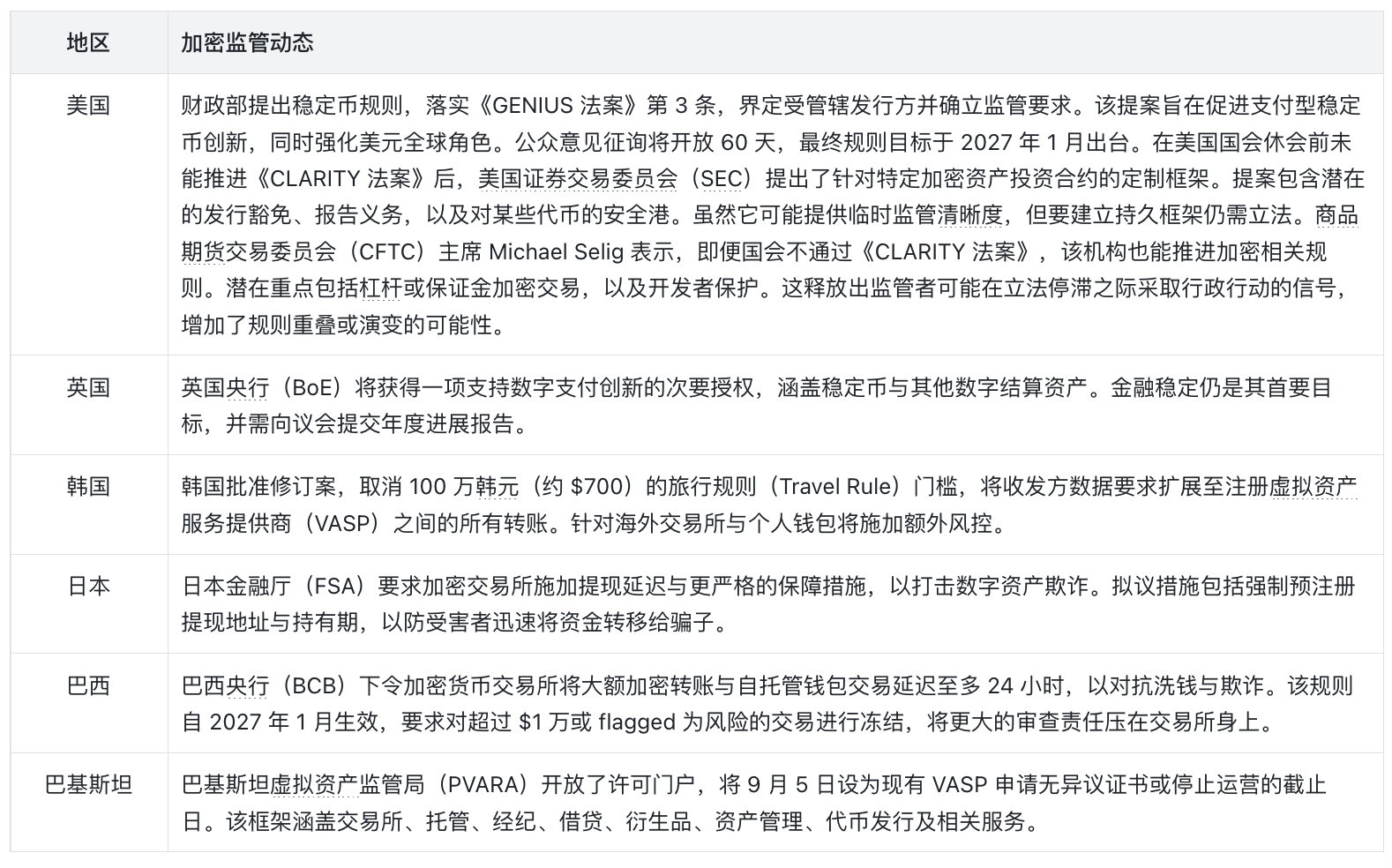
- Cryptocurrency Regulatory Developments: Regulatory activities intensified. The U.S. Treasury proposed stablecoin regulations under the GENIUS Act, the Bank of England gained innovation authorization, and South Korea, Japan, and Brazil tightened controls on transfers and exchanges to combat fraud and money laundering. Pakistan opened a licensing portal for virtual asset service providers.
- Stock Market Trends: The U.S. market was driven by optimistic sentiments in AI and semiconductors, especially following strong earnings reports from NVIDIA. The European market hit a new high at the beginning of the month but saw fluctuations towards the end due to geopolitical tensions and interest rate expectations. The Asian market showed divergence: Japan and South Korea rose due to earnings and capital rotation, while India and Hong Kong faced retracements.
- New Developments in Crypto and TradFi: Crypto.com launched tokenized stocks, partnered with Trading Technologies, and expanded Pay™ integration to Dubai Duty Free and REAL Jet. Institutional adoption continues: BlackRock launched tokenized money market funds, Wells Fargo announced tokenized deposits, and Charles Schwab expanded its cryptocurrency platform products.
- Key Item Outlook: With recovering demand, Bitcoin returned to a net accumulation state; Ethereum advanced its roadmap focused on quantum readiness; Solana expanded its remittance channels. Projects like Ethena Labs and World Liberty Trust also made progress.
1. Overview
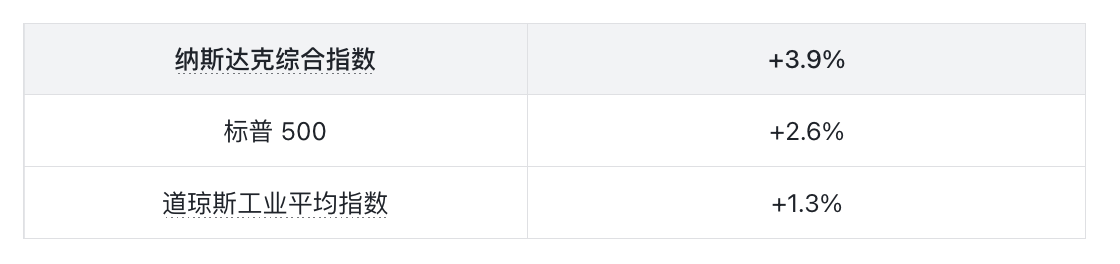
In August, the global financial markets generally recovered, characterized by a strong rebound in digital assets and sustained positive momentum in major stock indices. Digital assets performed remarkably, with significant increases in Bitcoin (+25.0%), Ethereum (+32.6%), and Solana (+41.5%). Optimism spread to the U.S. stock market, with the NASDAQ Composite Index (+3.9%), S&P 500 (+2.6%), and Dow Jones Industrial Average (+1.3%) all rising. Gold continued its upward trend (+9.9%), while real estate experienced a pullback (-4.0%).
1.1 G20 Economic Environment
In August, the policy divergence among G20 economies intensified, as central banks struggled to balance ongoing energy-driven inflation and uneven domestic performance.
Monetary Policy
In August, the G20 central banks were generally in a "wait and watch" mode, with most maintaining interest rates unchanged following July's decisions:
- Federal Reserve: Maintained the federal funds rate target range at 3.50% to 3.75% (July 29 decision, 9 votes in favor, 3 against). The minutes released on August 19 confirmed a hawkish tone.
- European Central Bank: Kept three benchmark rates unchanged (deposit facility rate at 2.25%, main refinancing rate at 2.40%, marginal lending facility rate at 2.65%). The minutes from the July meeting released on August 27 hinted at a potential policy shift in September.
- Bank of Japan: Maintained its policy interest rate, keeping the overnight lending rate target around 1.00% (July 30 to 31, 8 votes in favor, 1 against).
- Bank of England: Kept the bank rate at 3.75% (6 votes in favor, 3 against, with three members favoring a hike to 4.00%). The next rate decision is on September 17.
- People's Bank of China: Held the Loan Market Pricing Rate (LPR) unchanged for the 15th consecutive month (1-year at 3.00%, over 5 years at 3.50%), signaling cautious easing amid weak domestic demand.
- Reserve Bank of India: Voted unanimously to keep the repo rate unchanged at 5.25%, maintaining a neutral stance.
- Central Bank of Brazil: An outlier, it cut the Selic rate by 25 basis points to 14.00% on August 5, leaving room for further easing. Brazil's rates remain the highest in the G20.
Outlook
- Trade Friction and Tariffs: Continued trade tariffs (10% to 12.5%) under Section 301 targeting dozens of trade partners, combined with ongoing trade friction between the U.S. and Europe, pose an upward risk to supply chain costs and overall price indices entering the fourth quarter.
- Fiscal Deficits and Sovereign Debt: Rising debt servicing costs are squeezing fiscal flexibility in developed and emerging markets. Coordinating the overlap between central bank quantitative tightening (QT) and sovereign debt management is crucial for bond market stability.
- AI Capital Expenditure Implementation: Technology-driven capital expenditure (capex) remains a key structural tailwind. If productivity gains from AI expand from the tech sector to traditional services and manufacturing, potential output in G20 economies is likely to see upward revision before 2027.
1.2 Cryptocurrency Market
In August, all categories of decentralized finance (DeFi) rose across the board. Oracles (+30.8%) led in market capitalization, while liquid staking attracted the highest market attention (trading volume / market cap ratio).
In the oracle sector, Chainlink (LINK) surged by 32%, mainly driven by a token buyback and whale activity.
Ether.fi (ETHFI) is the main driver of liquid staking activity. It expanded its product offerings to include tokenized stocks, metals, and portfolio loans supported by Aave. As part of a broader "neobank" expansion, the protocol is transitioning to a less crypto-centric user interface to appeal to mainstream consumers.
The U.S. spot BTC ETF recorded $3.5 billion in net inflow in August, the highest level since October 2025.
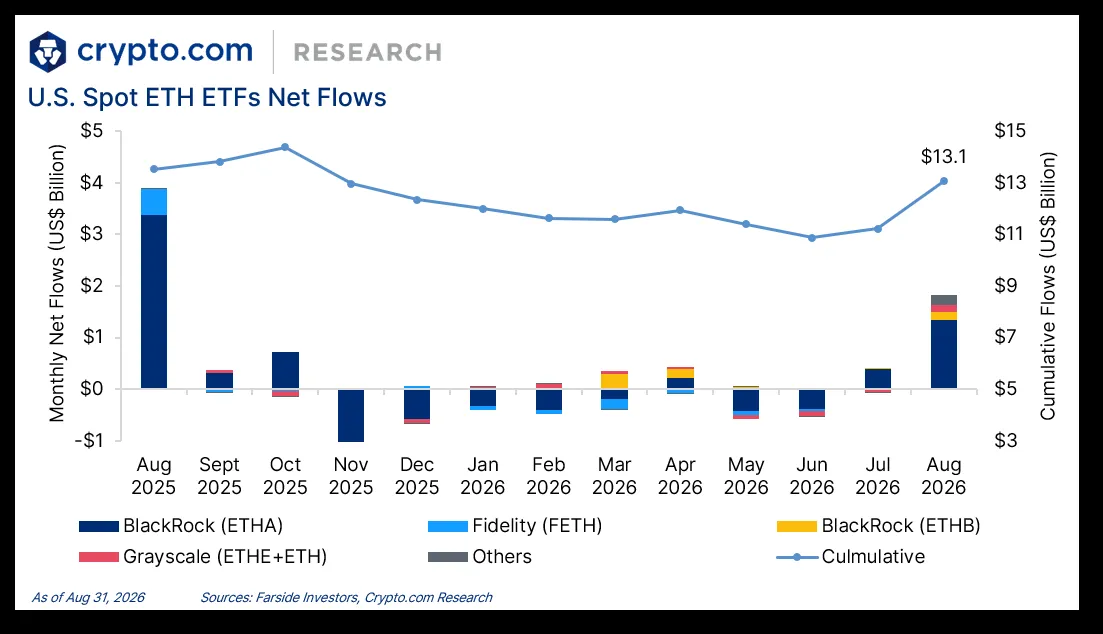
Meanwhile, the U.S. spot ETH ETF recorded $1.8 billion in net inflow in August, the highest level since August 2025.
1.3 Cryptocurrency Regulatory Dynamics
1.4 Stock Market
United States
In August, the U.S. stock market displayed a broad increase led by AI and semiconductors, with all three major indices posting monthly gains. Following NVIDIA's explosive earnings report, optimism regarding AI infrastructure was reignited, propelling the NASDAQ Composite Index to the forefront; the S&P 500 reached a new high mid-month. By month's end, hawkish remarks from the Federal Reserve Chairman at Jackson Hole, together with renewed tensions between the U.S. and Iran driving up oil prices, narrowed the gains.
Core Drivers
- AI Infrastructure and Chip Earnings: NVIDIA's August 26 earnings and better-than-expected outlook reassured investors about demand for AI chips and data centers. The next day (August 27), its stock jumped 8.7%, boosting the broader semiconductor sector, with the Philadelphia Semiconductor Index up about 63% year-to-date.
- Cooling Labor Market and Interest Rate Easing: The U.S. employment report released on August 7 was weaker than expected, alleviating interest rate concerns and helping the S&P 500 close at a historical high, boosting overall market risk appetite at the beginning of the month.
- Month-end Oil Price Shock and Fed Hawkishness: Renewed hostilities between the U.S. and Iran pushed crude oil prices higher, reigniting inflation concerns. Meanwhile, hawkish statements from Fed Chairman Kevin Warsh at Jackson Hole drove up Treasury yields, suppressing month-end gains and impacting the Dow and cyclical stocks the most.
Sector and Style Dynamics
- Factor Rotation: As chip and software earnings exceeded expectations, AI and growth trades regained leadership; as risk appetite returned, defensive and low-volatility positions underperformed.
- Leading Sectors: The energy sector led with a rise of about 7.0%, benefiting from the surge in oil prices at month-end. Information technology followed closely with a gain of about 6.2%, driven by NVIDIA's earnings and Salesforce's raised guidance. The materials sector also rose by about 5.9%.
- Lagging Sectors: Utilities underperformed, declining about 4.8% as bond yields rose; the industrial sector fell about 2.6%, while communication services also slipped due to profit-taking and capital withdrawal from defensive and interest-rate-sensitive sectors.
Europe
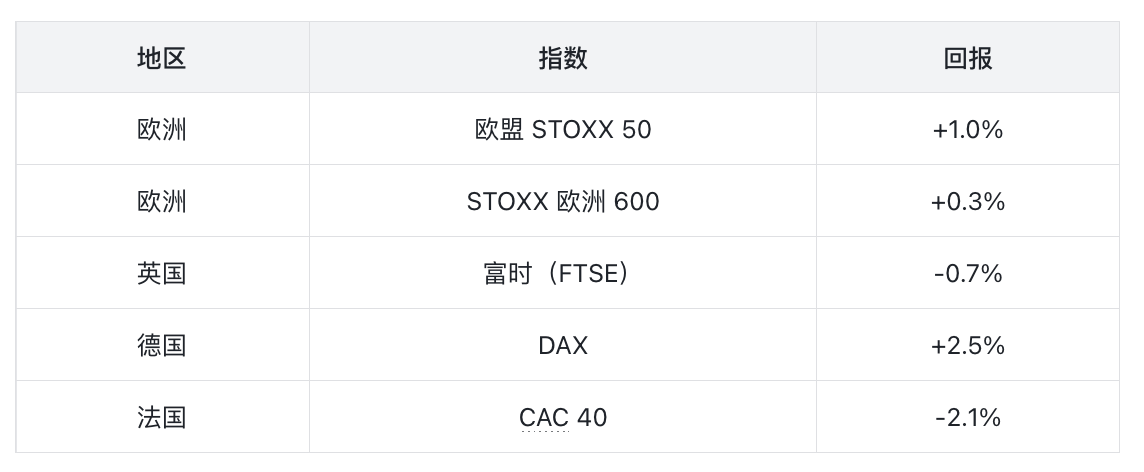
European stock markets saw slight gains in August, with the pan-European benchmark index recording its fifth consecutive month of increases, though momentum weakened towards the month-end. The STOXX Europe 600 Index reached a new high at the beginning of the month due to strong second-quarter earnings and AI-driven tech optimism. However, rising oil prices, strengthening bond yields, and expectations of tightening policy from the European Central Bank (ECB) narrowed the end-of-month gains. Market performance was mixed: the German DAX led with strength in industrials and finance, while the French CAC 40 lagged due to domestic fiscal and political uncertainty.
Core Market Drivers:
- Earnings and AI-led Records: Early in August, widespread strong earnings in Europe and enthusiasm for AI drove European stock markets to new highs, allowing the STOXX Europe 600 Index to record its fifth consecutive month of gains.
- Month-end Oil Price and Inflation Shock: The risk appetite driven by strong earnings and AI optimism at the beginning of the month receded towards the end of the period, as renewed geopolitical tensions pushed crude oil prices higher, again triggering inflation concerns.
- Tighter ECB Policy Expectations: As inflation in the Eurozone continues to exceed targets and policymakers signal a tightening stance, the market priced in tighter ECB policy, pushing up bond yields and constraining the stock market at the month-end.
- Second Quarter Corporate Earnings: Resilient second-quarter performance (especially in the banking and industrial sectors) supported early-month gains, but further upward movement was limited by macro headwinds as well-known company earnings fell short of expectations.
Sector Rotation:
- Leading Sectors: Basic resources led with a 9.42% increase, driven by strengthening commodity prices; technology followed closely with a gain of +4.30%, powered by AI momentum. Financial services rose 3.23%, as banks benefited from resilient second-quarter earnings and sustainable net interest income.
- Lagging Sectors: Consumer staples had the weakest performance, with food and beverage down 3.42%, and personal and household products down 2.75%. Construction and materials fell 2.18%, as rising bond yields pressured interest-sensitive and defensive stocks.
Asia
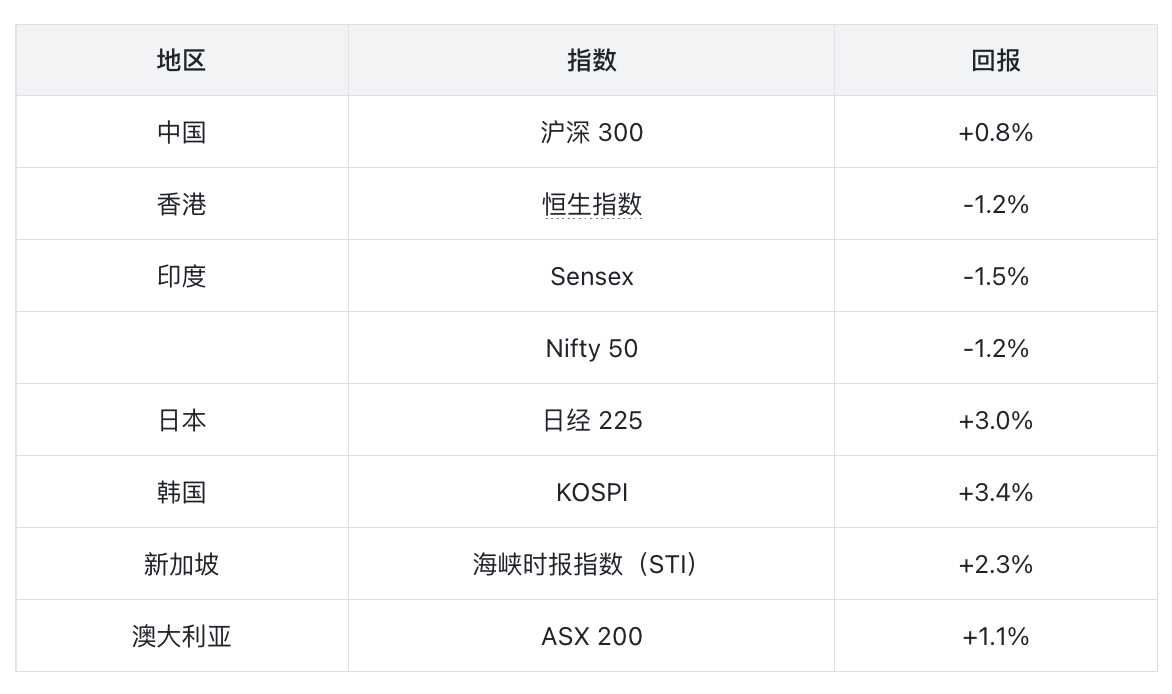
In August, Asian stock markets showed overall resilience, though there was significant regional divergence in performance. Developed markets in North Asia led the way: Japan's Nikkei 225 climbed on strong earnings and a weakening yen, while South Korea's KOSPI rose as capital rotated from volatile semiconductor heavyweights to other sectors. The Greater China region saw mixed performance, with mainland stocks inching up on policy support while Hong Kong declined. South Asia lagged, with high valuations, foreign capital outflows, elevated oil prices, and U.S. interest rate uncertainty dragging down India's Sensex and Nifty 50. Southeast Asia and Australia recorded solid gains, driven by the strength of the financial sector.
China
- Drivers: The mainland stock market edged higher due to targeted stimulus, resilient industrial output, and stable national support, offsetting weak domestic consumption and cautious sentiments in the real estate sector.
- Sector Rotation: Capital flows favored high-dividend state-owned enterprises (SOEs), industrial capital goods, and local technology, while consumer-facing real estate stocks lagged.
Hong Kong
- Drivers: The Hang Seng Index slightly retreated due to profit-taking in major Chinese tech stocks and cautious sentiments ahead of key earnings reports, giving back part of the strong gains made year-to-date.
- Sector Rotation: Chinese internet and platform stocks underwent two-way flows after strong rises, while insurance companies and some financial institutions outperformed hardware and real estate developers.
Japan
- Drivers: The Nikkei 225 approached highs on strong corporate earnings, ongoing governance-driven buybacks, and a weaker yen supporting exporters, despite volatility among chip-related suppliers.
- Sector Rotation: Exporters, large banks, and value-oriented cyclical stocks led the gains, while some semiconductor-related stocks lagged amid global chip volatility in the middle of the month.
Korea
- Drivers: The KOSPI rose despite severe fluctuations in Samsung Electronics and SK Hynix, as capital rotated from concentrated semiconductor holdings to other sectors, consolidating its gains for 2026.
- Sector Rotation: Construction, automotive, and other domestic cyclical stocks attracted significant inflows, offsetting weakness in memory chip-heavy stocks, and breaking the typical correlation between chip stocks and benchmark indices.
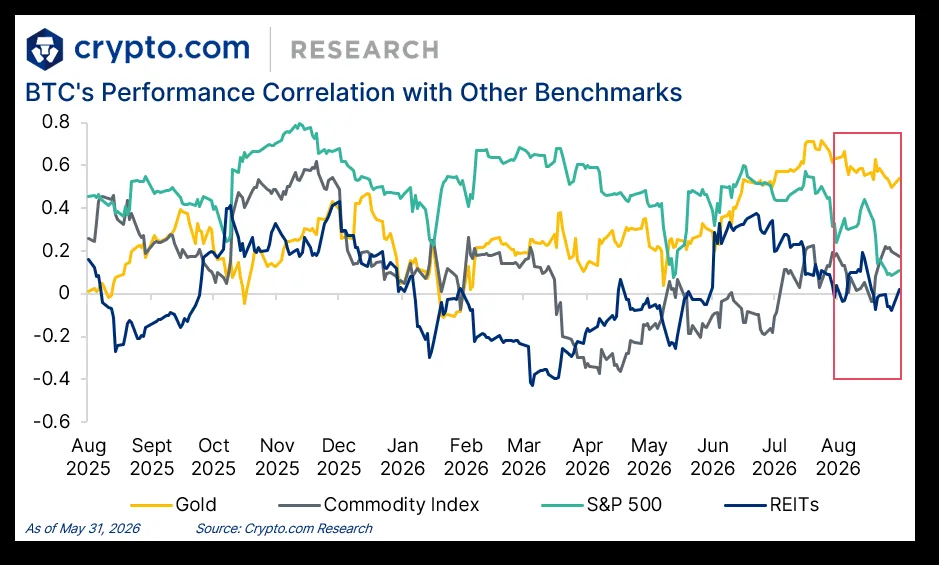
1.5 Performance Correlation
Throughout August, the 30-day rolling return correlation between Bitcoin and gold remained high between 0.50 and 0.60. Meanwhile, the correlation between Bitcoin and the S&P 500 fell to 0.10, while its correlation with commodities and REITs fluctuated between 0.20 and -0.10.
2. New Developments
2.1 Crypto.com Dynamics
- Crypto.com launched tokenized stocks, a new app feature that allows eligible users to gain price exposure to U.S. stocks and ETFs through derivative tokens. This service is available to users in the European Economic Area (EEA) and certain global jurisdictions, offering access to over 1,500 underlying assets, with a minimum investment of $1.
- Trading Technologies (TT) announced a strategic partnership with Crypto.com to directly integrate the connection capabilities of Crypto.com's CFTC-regulated exchange and clearinghouse, OG.com, into the TT trading platform. The integration is scheduled to launch in the fourth quarter of 2026, providing institutional clients with access to regulated predictive markets and digital asset derivatives.
- Dubai Duty Free became the first airport retailer in the Middle East to accept Crypto.com Pay™ as a regulated digital payment option. This initiative launched on August 5, enabling eligible UAE residents to make purchases at Dubai International Airport (DXB), Al Maktoum International Airport (AMIA), and the Dubai Duty Free online store using the Crypto.com app.
- REAL Jet (a subsidiary of REAL SLX) became the first private airline to accept Crypto.com Pay™ for private jet charter bookings. This integration allows eligible U.S. residents to use Crypto.com’s digital payment solution to settle bookings in U.S. dollars.
2.2 Traditional Finance (TradFi)
Asset Allocation
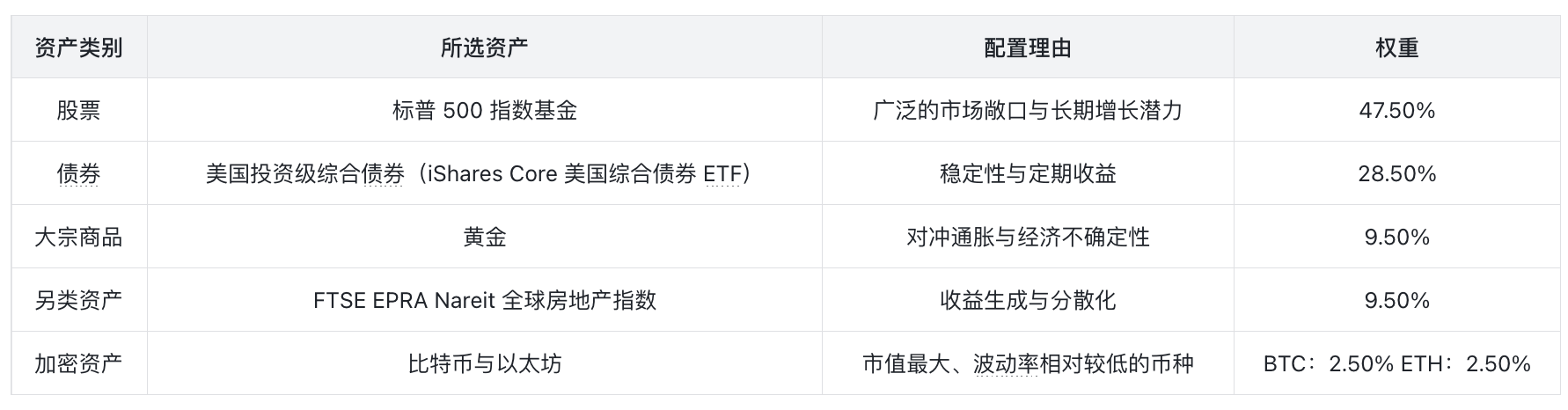
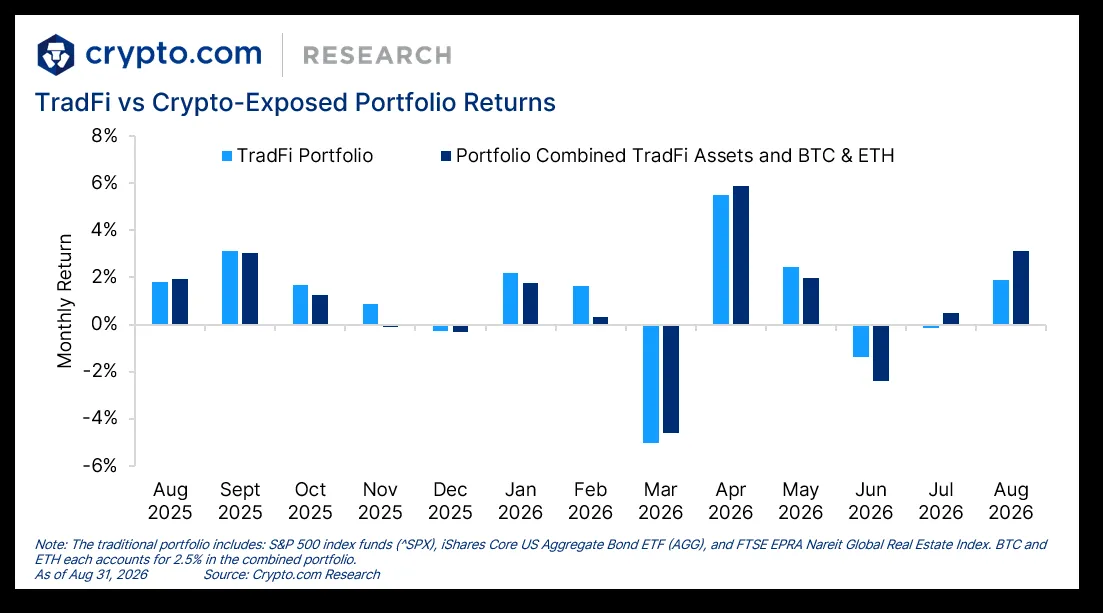
The following assets are used to construct a TradFi investment portfolio, comparing its returns with scenarios including BTC and ETH:
- Ray Dalio, founder of Bridgewater Associates, recommends holding gold and "a little bit of Bitcoin" as a hedge against potential debt, monetary, and geopolitical risks. Dalio believes that gold could constitute 10% to 15% of an investment portfolio, positioning Bitcoin as a secondary macro hedge. While these remarks reinforce Bitcoin's role as a store of value, they reflect personal investment views rather than predictions or formal allocation advice.
- Brokerage Charles Schwab plans to add Solana (SOL), Avalanche (AVAX), and Chainlink (LINK) to its Schwab Crypto platform, expanding its digital asset offerings beyond Bitcoin and Ethereum.
- BlackRock launched two tokenized money market funds, BSTBL and BRSRV, to support stablecoin reserves. These funds target institutional investors and specifically invest in cash, short-term U.S. Treasury bills, and overnight repo agreements across multiple blockchains to maintain principal stability and liquidity.
- Wells Fargo announced plans to offer tokenized deposits for its corporate clients. This initiative is set to launch in the fall, leveraging blockchain technology for 24/7 real-time cross-border and business-to-business (B2B) settlement.
3. Outlook
3.1 Projects and Tokens
Bitcoin (BTC)
- According to our research, the number of global Bitcoin holders increased by 2.5%, rising from 364 million in December 2025 to 373 million in June 2026.
- In August, Bitcoin rose to nearly $78,000, supported by improved market liquidity and returning investor interest. On-chain metrics indicated that apparent demand surged sharply, recovering from deep negative values (about -206,000 BTC on July 23) and returned above zero for the first time since February 2026 (36,900 BTC on August 22). This shift indicates that spot accumulation has absorbed new supply once again.
Ethereum (ETH)
- Co-founder Vitalik Buterin updated the network roadmap, listing quantum readiness and user privacy as priorities. This strategic adjustment focuses on protecting the blockchain from future cryptographic threats, while enhancing base layer transaction shielding and zero-knowledge proof scalability.
- Ethereum developers proposed EIP-8361, which would eliminate staking rewards when staked ETH reaches 50% of the network's supply (approximately $112 billion). Founders of Aave and ether.fi oppose this proposed "yield burn," arguing it would hinder ecosystem growth and create complex tax issues.
Solana
- Global remittance service provider MoneyGram expanded its crypto cash "Ramps" service to Solana, enabling bidirectional exchange between cash and crypto assets via a single API.
Others
- Ethena Labs announced plans to integrate perpetual stock basis trading into its synthetic dollar USDe’s collateral strategy, expanding its hedging model to stock-linked derivatives to capture non-crypto revenue streams.
- World Liberty Trust (a crypto venture associated with Donald Trump) received a preliminary conditional bank charter from the Office of the Comptroller of the Currency (OCC). This entity plans to operate as a national trust bank, focusing on the issuance and custody of its USD1 stablecoin, although this charter restricts traditional operations like accepting deposits or extending loans.
- On-chain metrics indicated that users quickly migrated post-Zcash network upgrade, with Ironwood becoming Zcash's largest shielded pool, holding approximately 3.8 million ZEC (nearly $3.2 billion).
- The Cardano community approved a treasury allocation of 120 million ADA to enhance the liquidity of native DeFi protocols.
- Harmony executed a complete blockchain state rollback to reverse exploitations that artificially inflated the supply of the ONE token. The team erased about 109,000 transactions, opting not to perform selective transaction recovery to prevent state inconsistencies.
- Cosmos Labs recommended suspending the operation of public chains running Cosmos EVM module versions below v0.6.2 or v0.7.2 immediately after a logic flaw in the vesting account led to exploitations impacting three chains, including Mantra, KiiChain, and TAC.
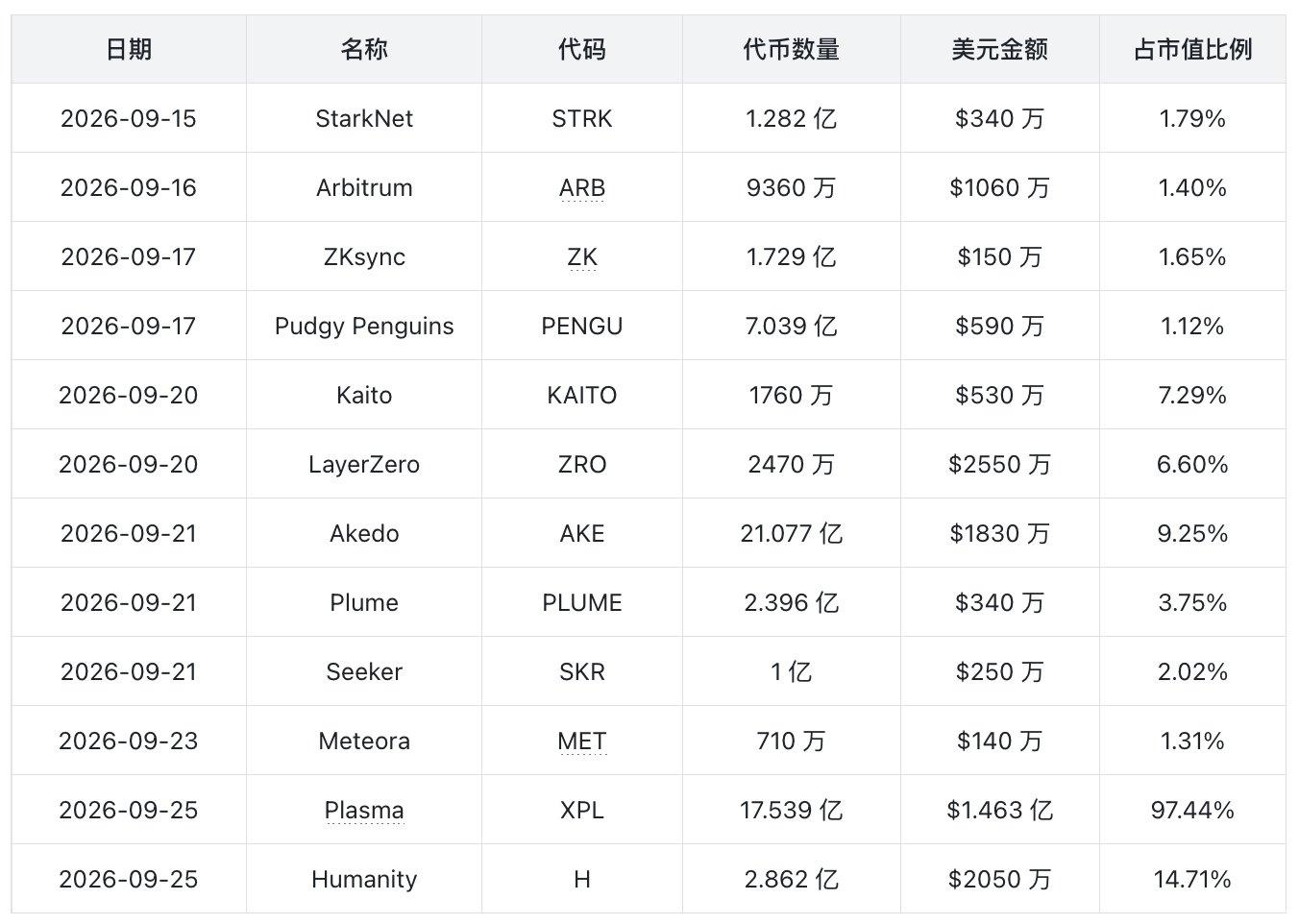
3.2 Token Unlock Calendar
Source: icodrops
免责声明:本文章仅代表作者个人观点,不代表本平台的立场和观点。本文章仅供信息分享,不构成对任何人的任何投资建议。用户与作者之间的任何争议,与本平台无关。如网页中刊载的文章或图片涉及侵权,请提供相关的权利证明和身份证明发送邮件到support@aicoin.com,本平台相关工作人员将会进行核查。


