Author: Shaunda Devens & Kunal Doshi
Translated by: Deep Tide TechFlow
Deep Tide Guide: A protocol ranked first in TVL on Solana, with a fully diluted valuation of only 32 million USD, this mismatch is rare in the crypto market. Sanctum addresses the cold start problem that LST issuers face with its "liquidity sharing factory" model. Over 200 LSTs connect to the same liquidity network, and monthly revenue continues to rise, but the market seems not to have reacted yet. This article helps you break down its business model, revenue structure, and the latest changes at the token level, to judge whether this discount is worth noting.
Weekend Market
The weekend market was led by altcoins, with Raydium and TAO becoming the focus, and StonkFun expanded its token issuance range. Meanwhile, Sanctum has quietly surpassed Jupiter to become the protocol with the largest TVL on Solana, while its token's fully diluted valuation is only 32 million USD.
Today, we will break down the market movements over the weekend and analyze Sanctum's liquid staking business, its growing revenue, and proposed changes at the token level.
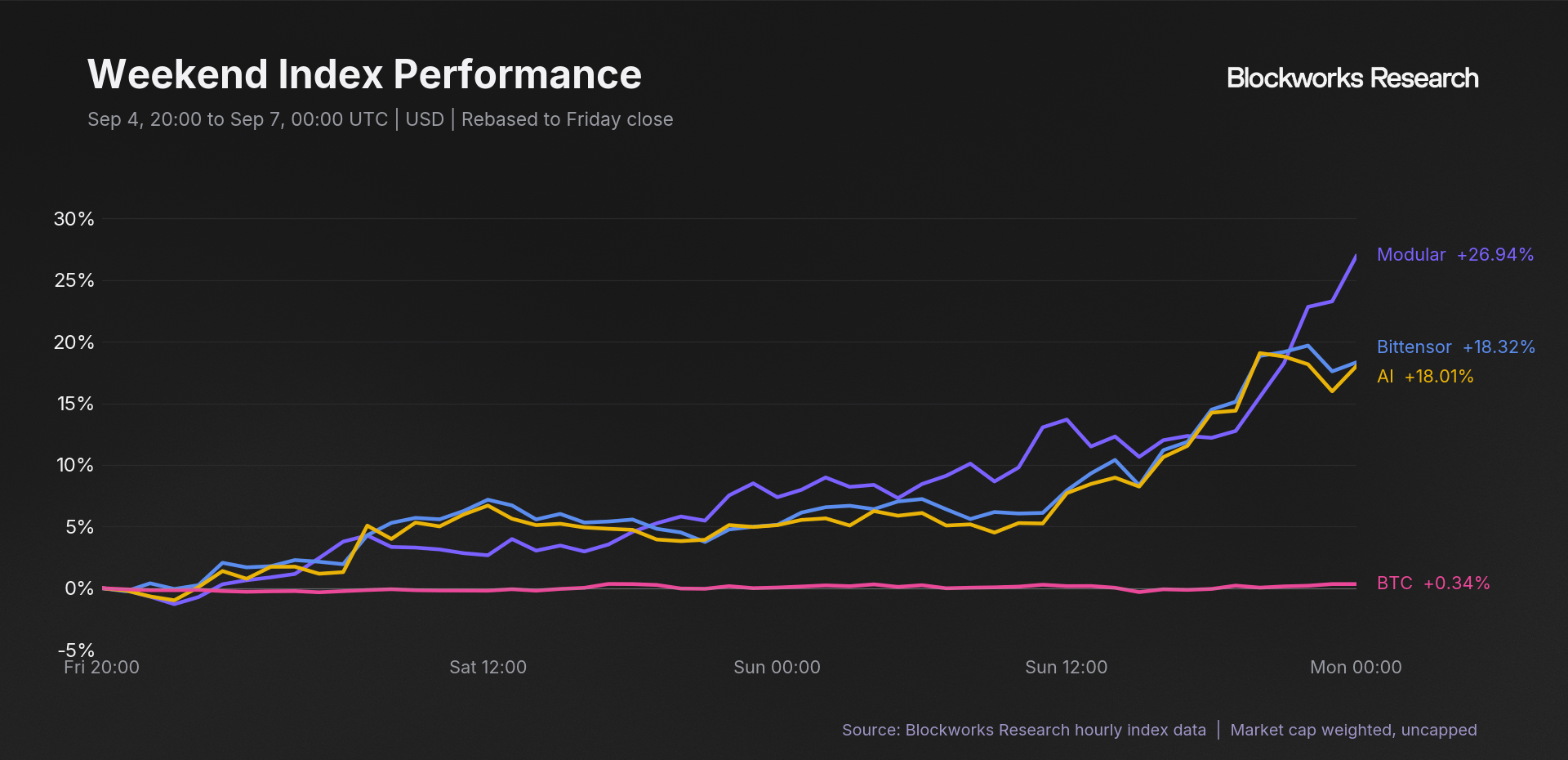
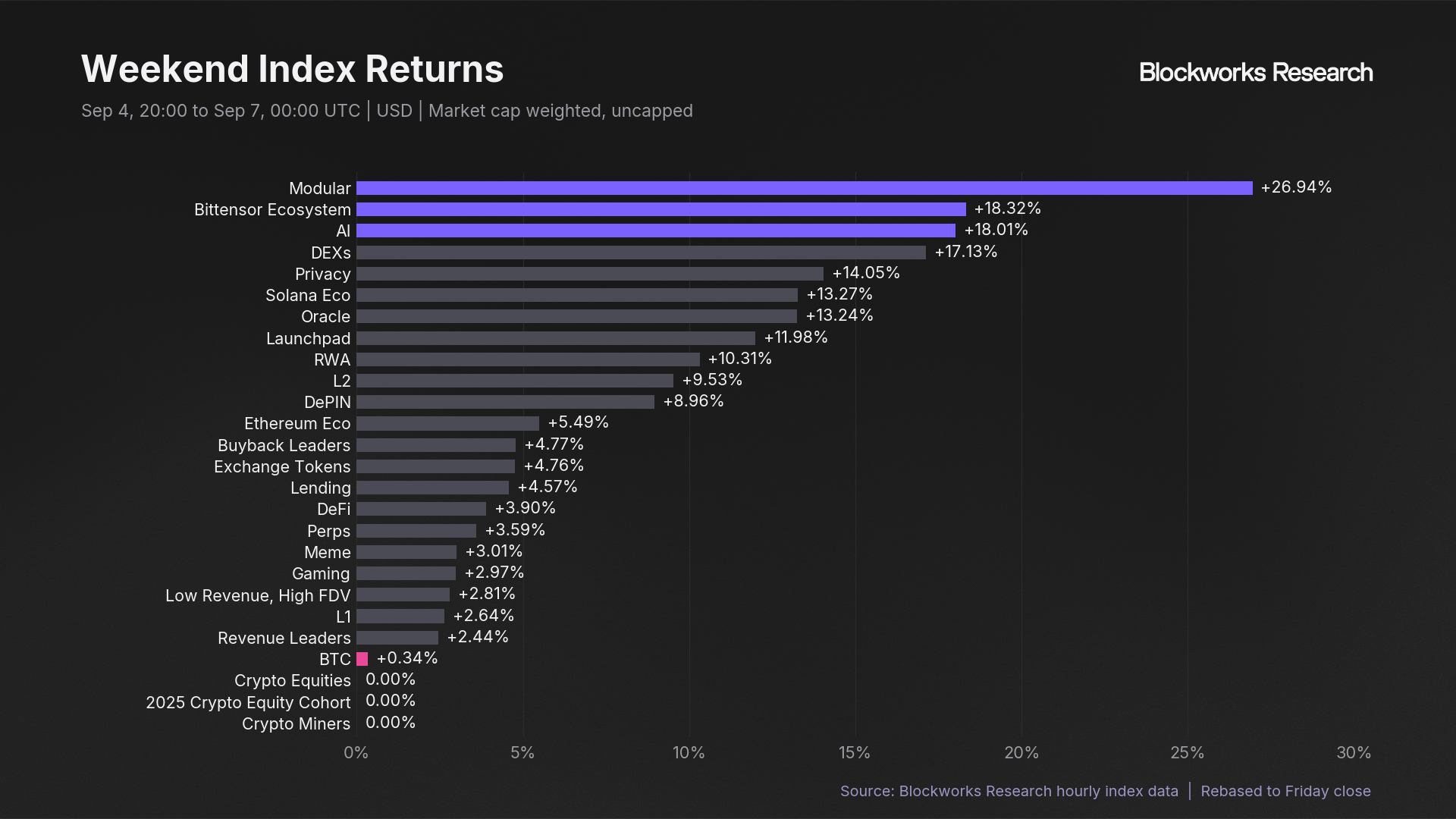
The crypto market overall rose over the weekend, with the strongest gains coming from altcoins. BTC only rose by 0.3%, while Modular led with a 26.9% gain, and AI and Bittensor rose about 18%. DEX and privacy sectors also outperformed the market, while L1 and memecoins lagged behind the leading sectors. Behind these gains, Solana trading venues experienced a new source of activity over the weekend.
Raydium rose about 58%, due to StonkFun's announcement on Saturday that new token issuance would occur through Raydium's LaunchLab. StonkFun allows users to create tokens paired with tokenized stocks and other assets, expanding the market that can flow into Solana exchanges. Once a certain issuance meets the graduation threshold, its liquidity enters the Raydium liquidity pool, and trading continues through aggregates like Raydium and Jupiter. This provides Raydium with a new market pipeline and explains the market's enthusiasm for RAY: the opportunity extends beyond the initial token issuance to ongoing trading activity.
The rebound in the AI sector also has a specific TAO story. On Sunday, StonkFun added support for token issuance paired with TAO, and Buttensor (BUTT) is one of the first cases. These markets require TAO liquidity, and the reward model uses transfer taxes to fund distributions to holders of TAO. This creates a pathway from memecoin activity to TAO demand, bringing the token to the attention of Solana retail traders.
The Quiet Giant of Solana
Let’s temporarily set aside the Robinhood battlefield. Back to Solana, there is a piece of data that is hard to understand: the protocol with the largest TVL on this network has a fully diluted valuation of only 32 million USD.
It is not Jupiter, Kamino, or Jito. It is Sanctum, a protocol that, while quietly becoming one of the most important infrastructures on Solana, has largely stayed away from the spotlight.
Sanctum allows companies to issue branded liquid staking tokens without spending millions to create liquidity for them. The simplest way to understand it is: it is an LST factory connecting a shared liquidity network.
Suppose Backpack wants to issue bpSOL. Users deposit SOL, and Backpack stakes it, returning bpSOL to users. The tough part comes next. Users need to know they can sell or redeem bpSOL anytime, which often requires Backpack to establish a deep bpSOL-SOL liquidity pool with millions of dollars.
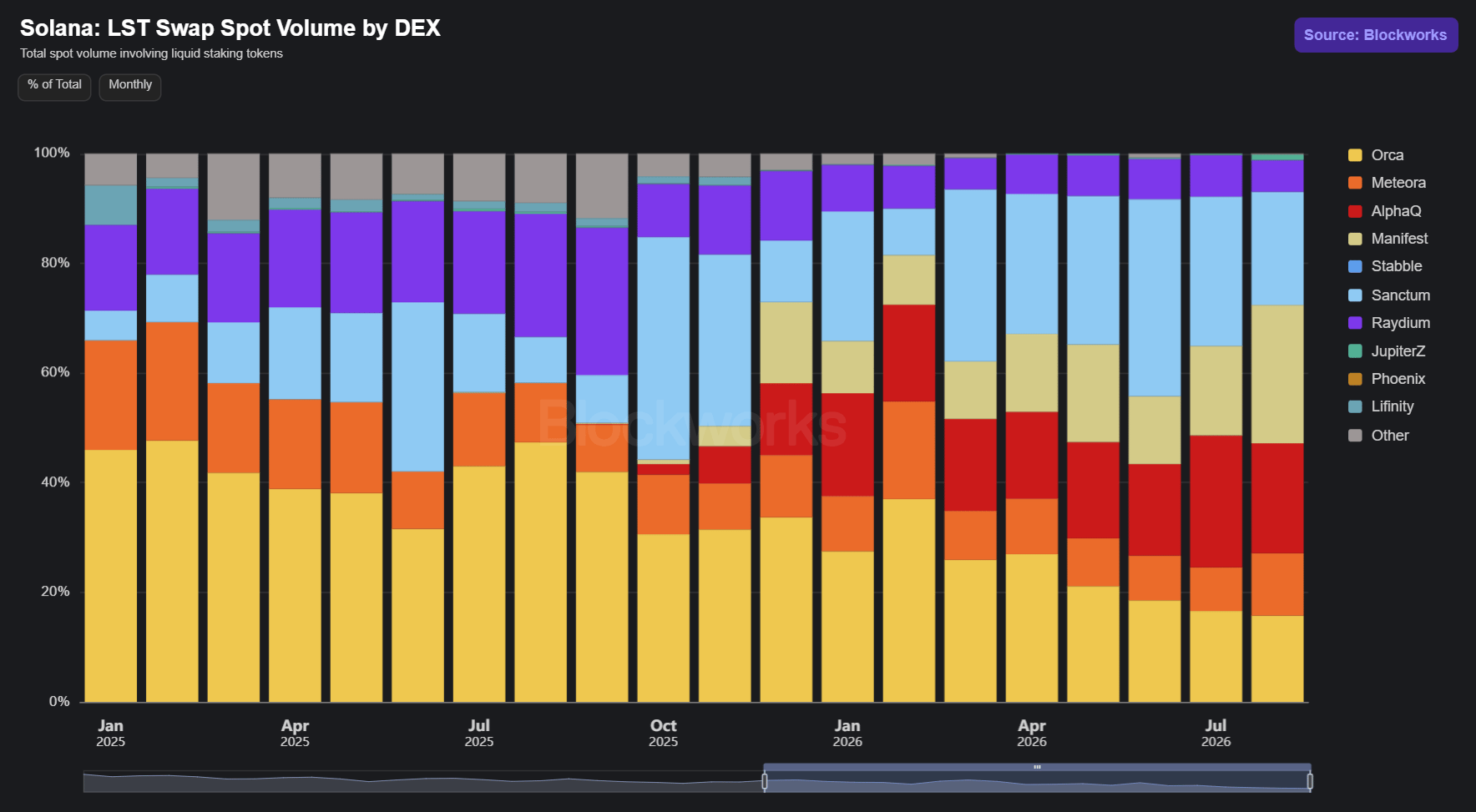
Sanctum eliminates much of this burden by connecting bpSOL to the same liquidity network used by hundreds of other Solana LSTs. Sanctum does not require each issuer to build liquidity from scratch but routes exchanges between them through shared infrastructure. This allows a newly issued LST to have liquidity from day one, while enabling the issuer to focus on distribution. This model has gained significant traction, with Sanctum handling 20% to 35% of Solana LST exchange volumes in most months.
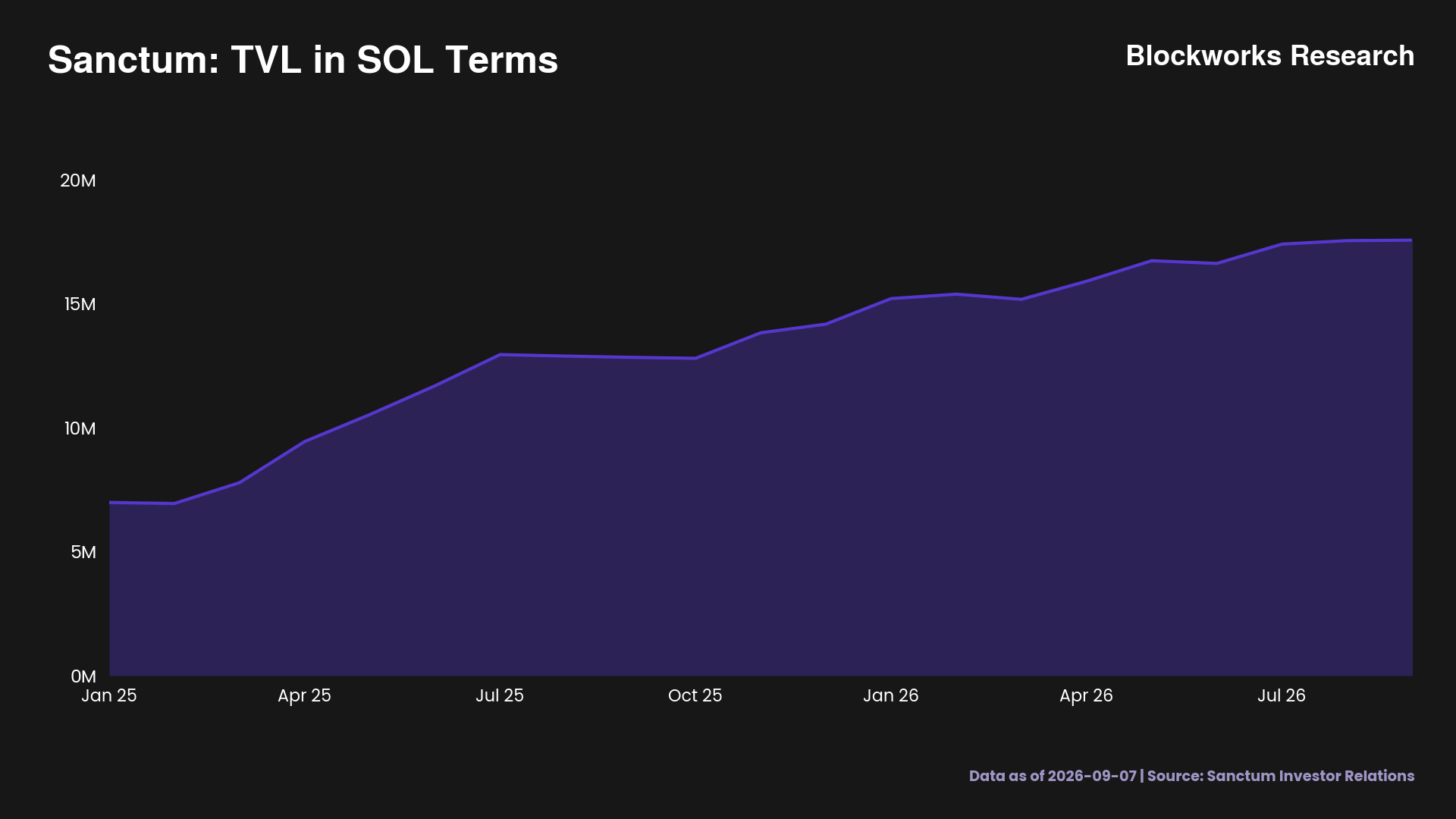
This model has attracted over 200 LSTs, including products associated with Backpack, Bybit, and Jupiter, as well as DATs like Forward Industries and DeFi Development Corp. In SOL terms, TVL has grown by 150% since early 2025, currently reaching 1.77 billion USD, enough for Sanctum to surpass Jupiter as the protocol with the largest TVL on Solana.
Sanctum also operates its own SOL LST (Infinity), which is a liquidity pool containing baskets of various Solana LSTs. Depositors earn INF, which the token generates from staking and MEV rewards from underlying assets, as well as trading fees when users exchange between LSTs through the pool. This allows INF to offer higher yields compared to ordinary LSTs, while providing liquidity to the broader Sanctum network.
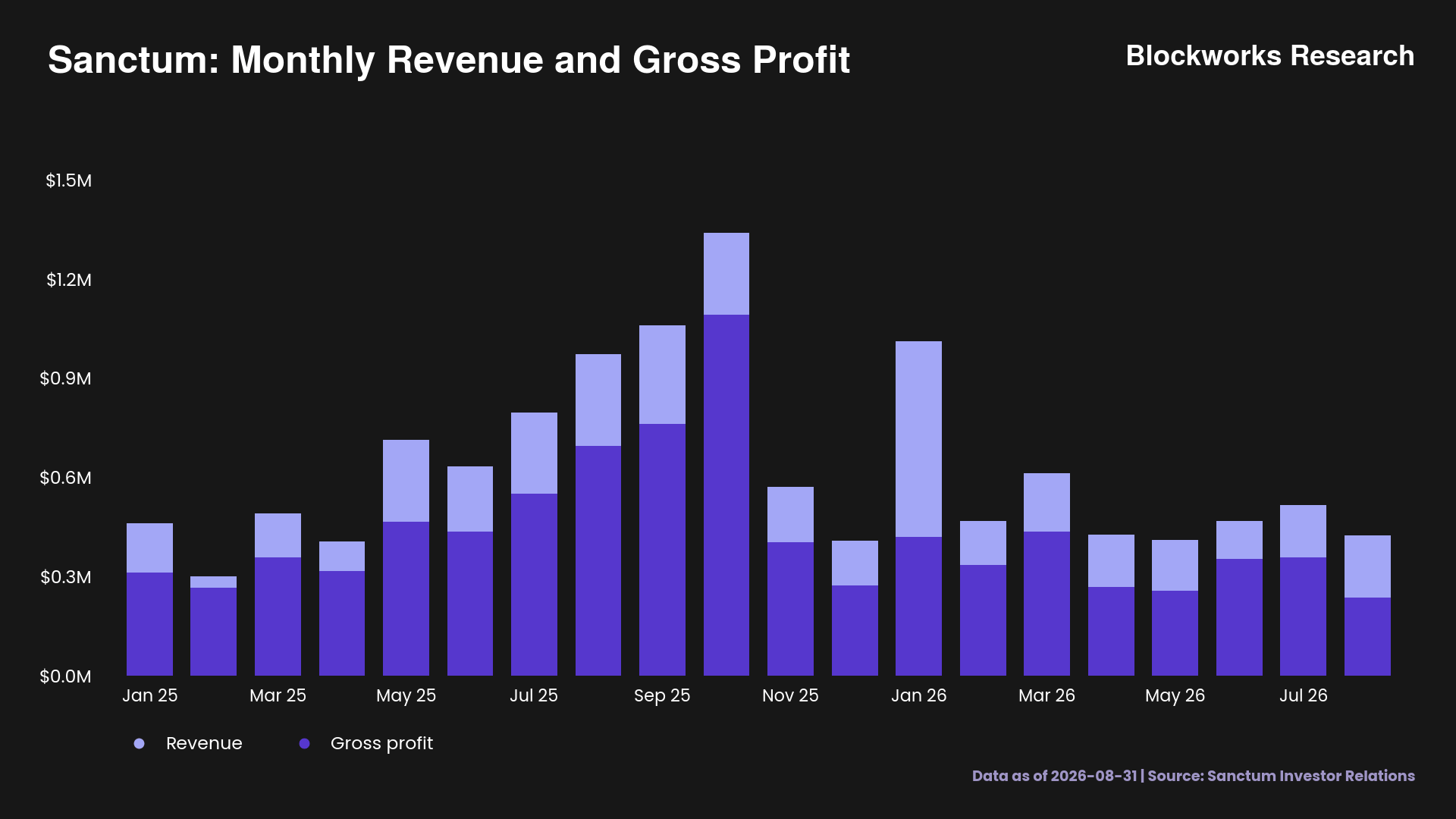
The business model is relatively simple. Sanctum takes 2.5% to 5% of the staking profits generated by partners issuing LSTs on its infrastructure. These partner products account for approximately 80% of total revenue. The remaining 20% mainly comes from a 5% fee on the revenue earned from INF.
In SOL terms, monthly revenue has generally shown an upward trend since early 2025, with gross margins reaching 55% in August. Sanctum also holds 6.53 million USD in its treasury, providing a substantial cash buffer relative to its 16 million USD circulating market cap.
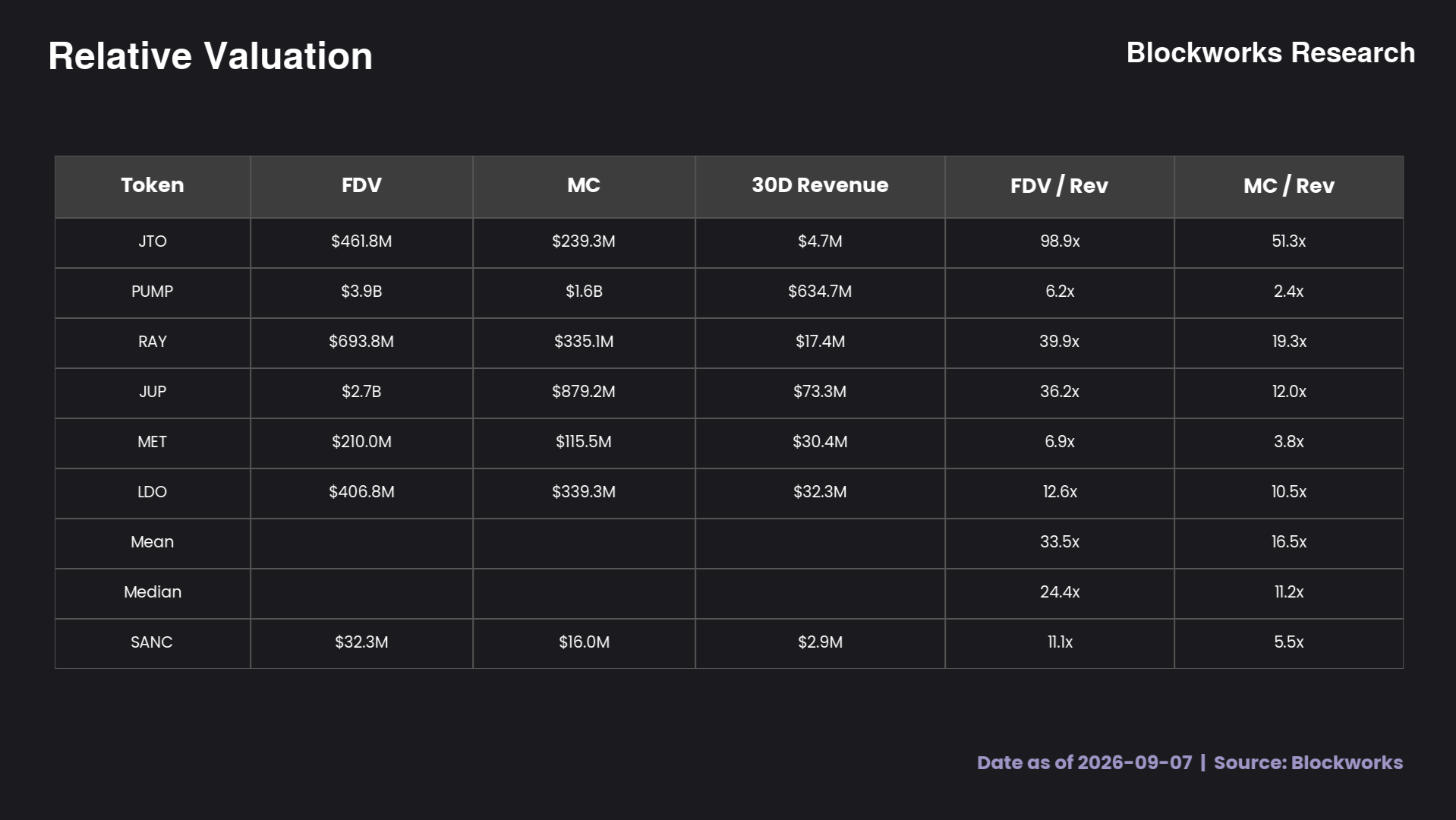
Compared to other revenue-generating protocols on Solana and LST protocols, SANC's trading price is at a discount, especially when compared to JTO. Part of this discount may reflect the token's limited liquidity and the market's lower growth expectations for pure LST businesses, which also helps explain why SANC's trading multiple is closer to LDO.
The team stated that some interesting announcements are in preparation, which will be based on its existing LST business and improve the token economics. Recently, they proposed to burn 25% of the token supply from the community reserves and rename the token to SANC. Sanctum co-founder Jaye also hinted at the upcoming product swSOL (Sanctum Wrapped SOL), which would allow the protocol to monetize the yields from idle wSOL deposits. As the token has quietly risen by 50% in the past month, Sanctum is certainly worth keeping an eye on.
免责声明:本文章仅代表作者个人观点,不代表本平台的立场和观点。本文章仅供信息分享,不构成对任何人的任何投资建议。用户与作者之间的任何争议,与本平台无关。如网页中刊载的文章或图片涉及侵权,请提供相关的权利证明和身份证明发送邮件到support@aicoin.com,本平台相关工作人员将会进行核查。


