Author: David, Deep Tide TechFlow
If the "meme stock pairing" on Robinhood's blockchain was only an on-chain carnival for retail traders in the crypto circle over the past two weeks, the scene that unfolded today marks the official breakout of this experiment, even directly angering the CEO of a real U.S. listed company.
On September 4, a new token on the blockchain named $MEME (A Meme Coin) suddenly ignited the market. This token is based on the tokenized stock of $AMC, and GMGN data shows that within just a few hours, its market value peaked at $45 million, with an intraday increase of over 1800 times and a trading volume exceeding $39 million.
AMC is the largest cinema chain in the United States and also a faith symbol in the classic 2021 confrontation between retail investors on Wall Street.
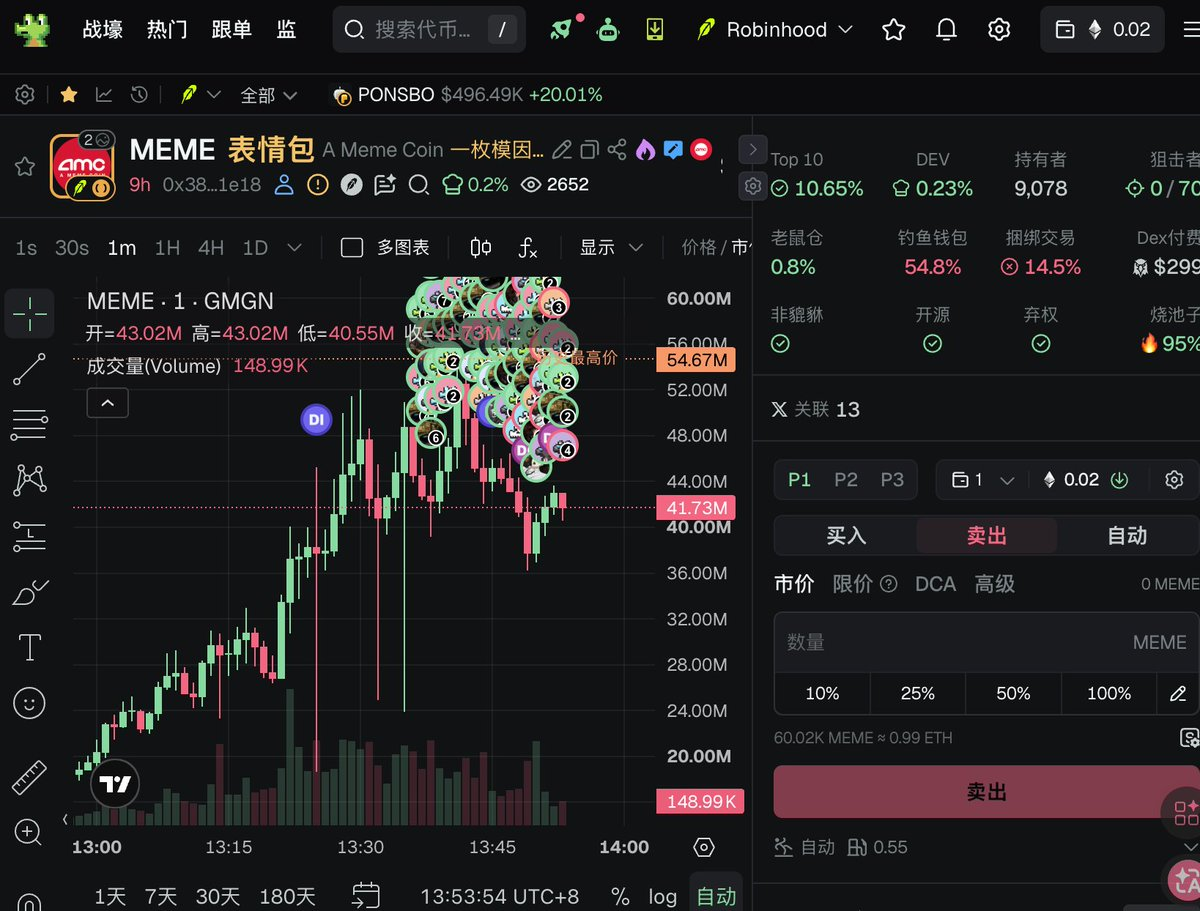
What fueled this frenzy of buying $MEME was not any narrative breakthrough but rather the tried-and-true method of pairing meme coins with stocks; however, attention quickly converged because the CEO of AMC and the head of Robinhood began a public exchange of blows on social media.
This absurd scene also pushed Robinhood's approach of "using memes to hijack U.S. listed companies" to the center of public discourse.
CEO Feud Triggers $45 Million Quick Trading
The catalyst for this farce originated from a long public post by AMC CEO Adam Aron.
Adam Aron used severe language, repeating terms like "despicable, outrageous, unforgivable," publicly accusing Robinhood of unauthorized tokenizing AMC stock and circulating it on-chain. He emphasized that this action has not been registered under U.S. securities law and announced that the board has officially hired external securities lawyers to conduct compliance and legal investigations.
In response to the thunderous anger of the board of directors, Robinhood CEO Vlad Tenev's reply was remarkably dismissive, leaving a sarcastic four-word comment under the tweet:
“What’s the concern?”
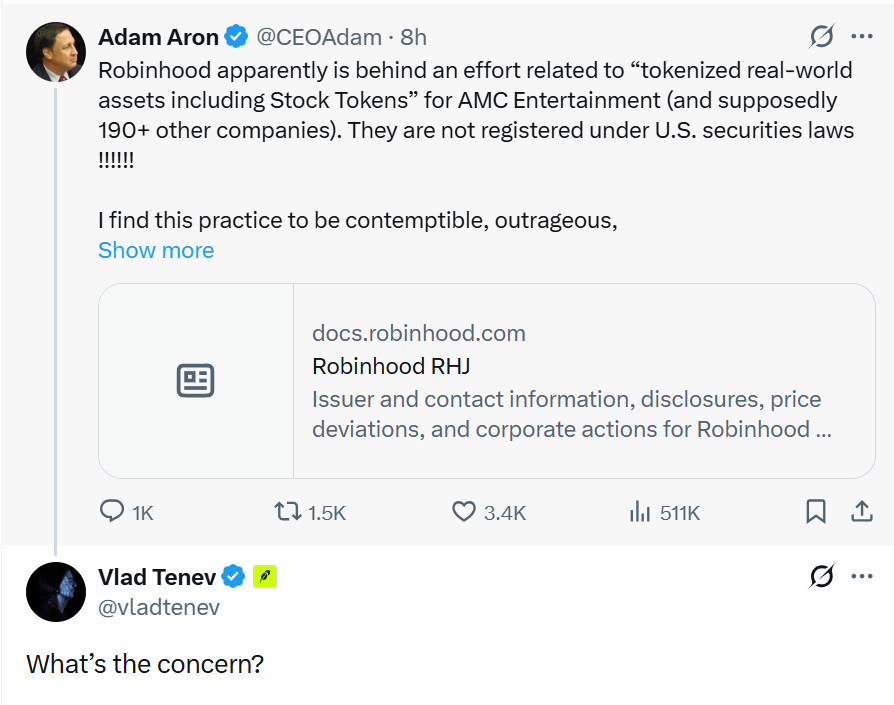
In the on-chain market filled with attention economy, this online clash between two top executives instantly turned into a catalyst for liquidity.
Perceptive anonymous developers quickly took AMC's tokenized stock as the liquidity pool to launch the new coin $MEME. As some posts in the crypto community described, AMC previously carried the underlying emotions of retail investors fighting against Wall Street;
For readers unfamiliar with AMC, here's some context to easily understand why $AMC became an excellent topic of conversation and speculation:
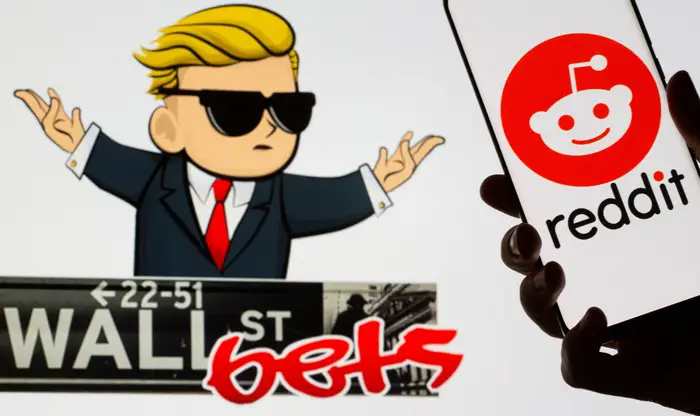
As the largest cinema chain in the U.S., AMC was once on the brink of bankruptcy in 2021, being heavily shorted by Wall Street hedge funds. At that time, retail investors from the WallStreetBets (WSB) forum on Reddit spontaneously rallied to leverage aggressive buying to force institutions to cover their shorts, not only pushing the stock price up many times but also enabling AMC to issue shares at high prices for self-rescue.
From that moment on, AMC became more than just a movie theater in the eyes of retail investors; it became a "symbol of rebellion" against the financial establishment and traditional rules.
Now, the controversies, real events, and executive confrontations are all packaged into a meme token, where every quarrel and observation in public discourse directly translates into a continuous influx of new buying in the pool.
Catching On, the Dangerous Evolution of “Meme Stock Pairing”
This is not the first speculative frenzy of stock and coin pairing on Robinhood's blockchain. Looking back on the evolution of this gameplay, it has actually undergone a radical transformation from "mechanism arbitrage" to "extreme opportunism" in a very short time.
The true eruption of this logic stems from the recently popular $BONER. As the first meme stock pairing to break into mainstream on Robinhood's blockchain, developers cleverly paired $BONER with the tokenized stock of the U.S. telehealth platform Hims & Hers Health (famous for selling Viagra) to form a trading pool.
Since the U.S. stock market was closed for the weekend while on-chain trading continued 24/7, the retail frenzy for BONER quickly drained the limited stock liquidity in the pool. In the absence of arbitrage channels to correct price discrepancies, the price of HIMS tokens on-chain was once violently pushed to over $130, compared to the spot price of only $28 at the U.S. market's Friday close, a surge of over 300%. This dramatic "price escape" not only pushed the market cap of $BONER to tens of millions of dollars but also ignited the imagination of the entire network regarding stock and coin pairings.
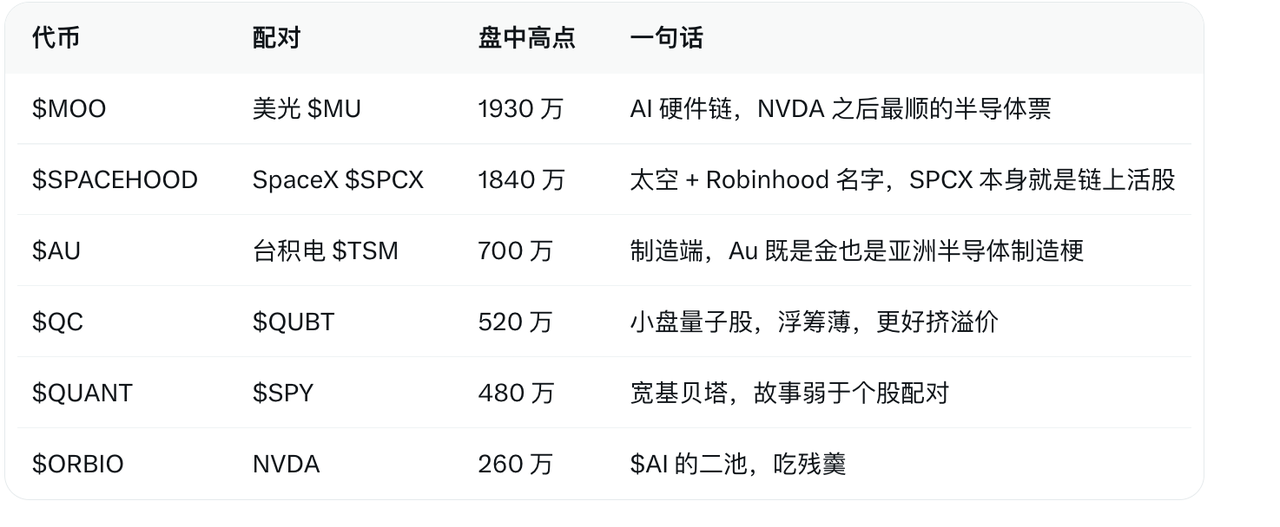
However, overall, stock and coin pairing has indeed undergone a process from large to small, continuously finding trending topics:
- First Stage: Riding the Coattails of Giants, One-Sided Self-Indulgence
The earliest pairing attempts mostly anchored on mega-cap U.S. stocks like NVDA and TSLA.
Due to the immense size of the underlying stocks, speculative waves of tens of millions of dollars on-chain could hardly have any physical impact on the traditional market, leading large traditional firms to naturally ignore it; consequently, one-sided speculation on-chain also produced some targets, such as $AI.
Related reading: “Robinhood Goes Wild, A Look at Today's Top-Gaining Tokens and Noteworthy Projects”
- Second Stage: Hitting Microcap Penny Stocks, Imaginary Short Squeezes
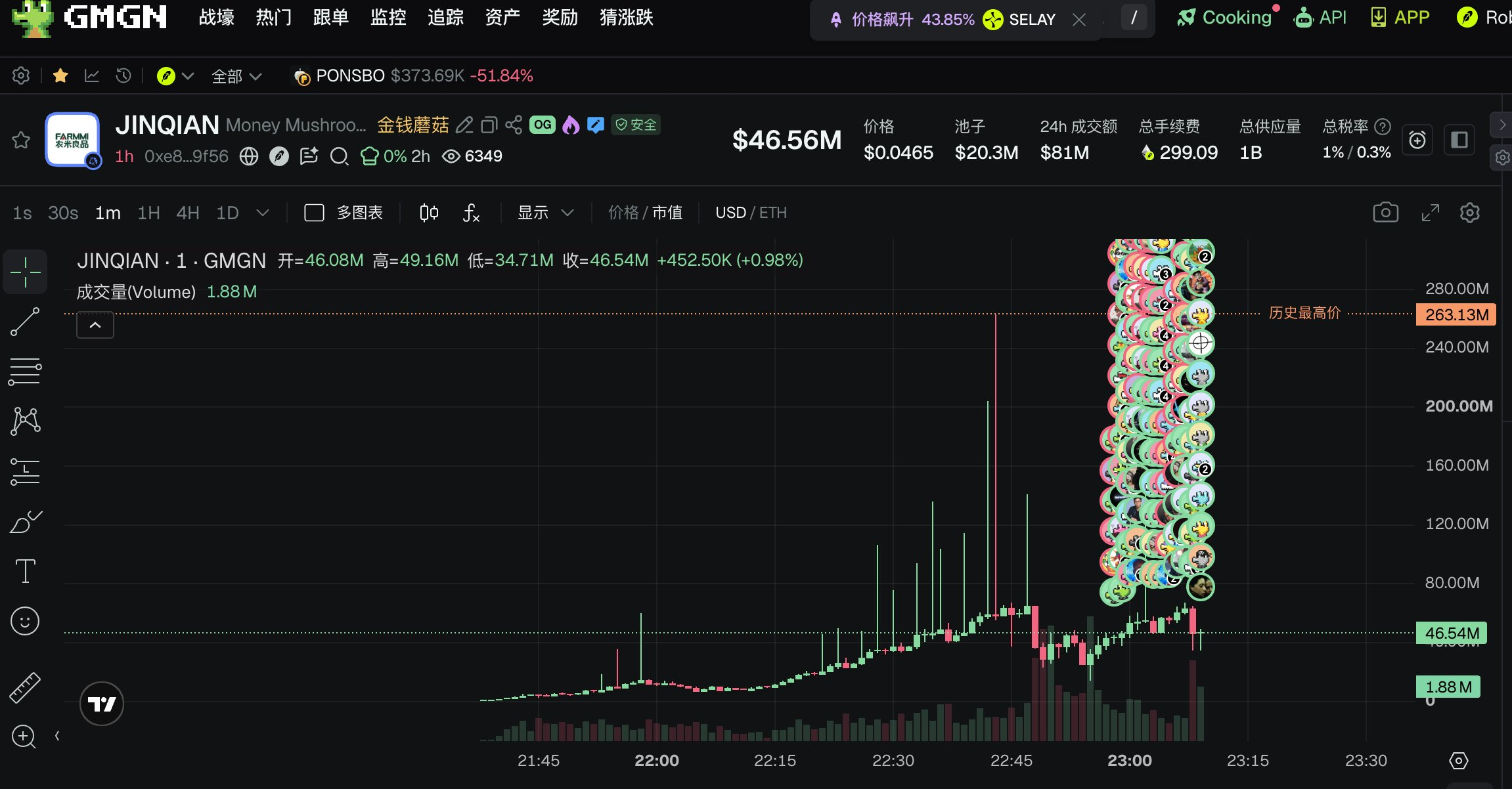
Subsequently, funds began to turn their attention to ultra-microcap stocks on Nasdaq. From the previously rug-pulled FGL to the recently exaggerated FAMI (a Chinese concept stock mainly dealing with mushrooms and black fungus), retail investors attempted to form a Soros-style "reflexivity flywheel" by buying on-chain tokens, intending to cause a reverse squeeze on U.S. stock spots.
However, microcap stocks themselves have significant short-selling restrictions and opaque transmission; the real physical squeeze ultimately proved to be more of a one-sided speculative stunt.
- Third Stage: Angering Faith Symbols Leads to Legal Investigations
Now with $MEME, this opportunistic game has reached a real hard ceiling (although players on the blockchain and Robinhood's CEO himself do not seem to think there’s any issue).
Developers are no longer satisfied with silent microcap stocks but have directly bundled the former retail symbol AMC. This time, the traditional public company did not choose silence but directly threw out compliance accusations about "unregistered securities issuance," which could prove fatal.
Marginal Risks Rapidly Narrowing
On today's Robinhood blockchain, the so-called pairing of stocks and coins has completely transformed into an attention-attracting cash machine driven by news controversies and PR confrontations. The more it fights, the more it rises; the more it scolds, the more it surges—this has become the festive code for traders chasing short-term profits.
However, when opportunistic behavior evolves from self-indulgence within the ecosystem to expectations involving legal intervention, the marginal costs of the game are rapidly escalating.
First is the real risk of regulatory blowback.
Previously, such tokens mostly operated in decentralized gray areas, but when the CEO of a listed company officially files a complaint and hires securities lawyers to investigate compliance responsibilities for "unregistered securities tokenization," the window for regulatory intervention has already been significantly advanced.
Moreover, although Robinhood states in its product terms that tokenized stocks are not open to U.S. domestic users, its compliance defenses still remain vulnerable in the face of cross-jurisdictional judicial scrutiny.
Even more realistically, there are threats from liquidity backlash.
Simply relying on the momentary hype generated by executive feuds is extremely fragile; once the online spat cools down or the related tokenized targets face delisting and restrictions, liquidity withdrawal from the pairing pool can often trigger a brutal stampede in a very short time.
Treating U.S. stocks as the liquidity pool of memes may indeed create incredible wealth myths and topic heat in the short term. However, retail investors must remain alert at all times and ensure they do not become the ones left in the ruins to pay for this extreme speculation once the smoke from the giants' squabbles clears away.
免责声明:本文章仅代表作者个人观点,不代表本平台的立场和观点。本文章仅供信息分享,不构成对任何人的任何投资建议。用户与作者之间的任何争议,与本平台无关。如网页中刊载的文章或图片涉及侵权,请提供相关的权利证明和身份证明发送邮件到support@aicoin.com,本平台相关工作人员将会进行核查。


