
Author: @Mrjacknicee
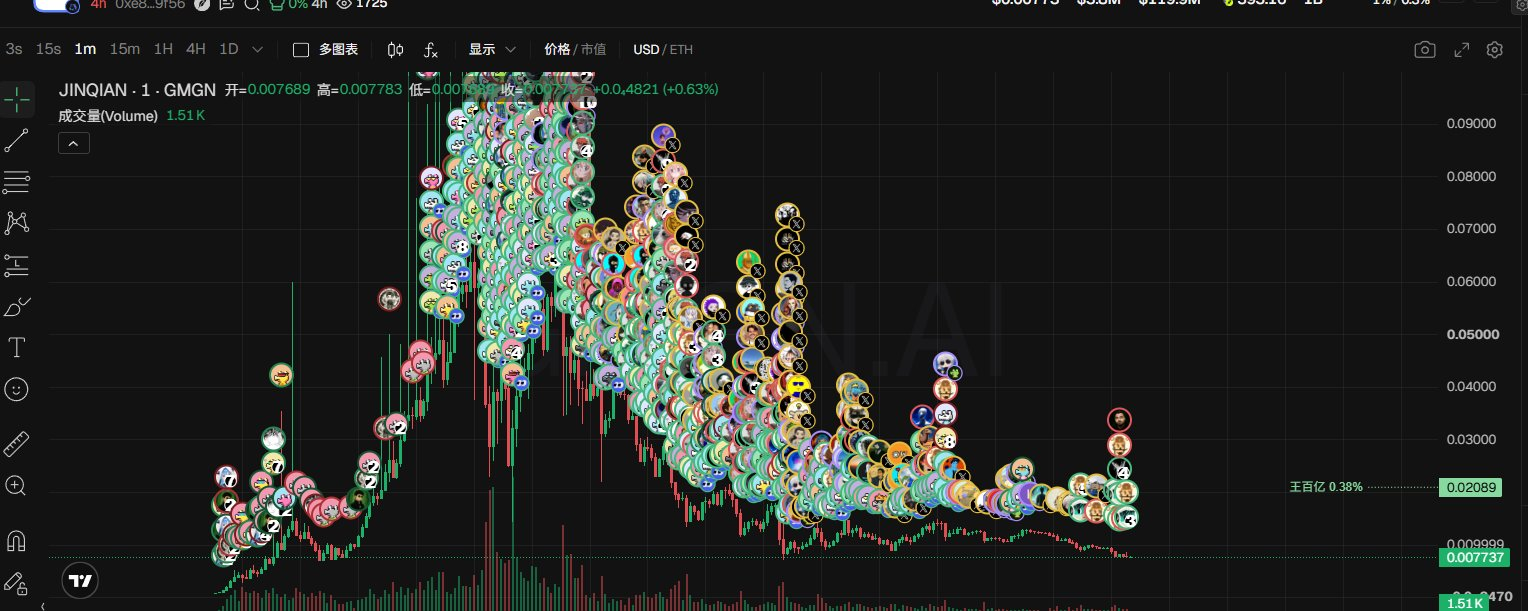
On September 2, on the Robinhood chain, a token called JINQIAN CA:0xe81880c1c5054245e036359f5c7be31606e79f56 reached a market cap of 70 million dollars in just one hour.
JINQIAN, which means "money" in Chinese pinyin, is associated with a Nasdaq company called Farmmi, which specializes in mushrooms; and in Farmmi's annual report, there is indeed a record of a mushroom variety called Jinqian mushroom, which the community refers to as "money mushroom."
At the same time, Farmmi's underlying stock on Nasdaq, with the code FAMI, surged over 300% during the session, reaching around 0.4 dollars at one point, with trading volume increasing to hundreds of millions of shares. A micro-cap company that was just around 0.12 dollars a few days ago, with a market cap of over 4 million dollars, suddenly became the brightest star on the market.
On the chain, a coin called "FAMI" also increased alongside JINQIAN, and at one point had a market cap exceeding 100 million dollars.
The story begins two days earlier.
A Good Narrative
On August 31, crypto trader Rune (@RuneCrypto_) tweeted that he spent about 1.8 million dollars to acquire 37.4% of a low-market-cap Nasdaq company over-the-counter (OTC). He reported specific numbers: a market cap of about 4.8 million dollars, a stock price of about 0.12 dollars, and a short ratio of 92.3%. This stock had nearly all its circulating shares borrowed for short-selling.
He openly stated his next plan: to tokenize this stock on the Robinhood Chain, and then issue a paired meme coin to use the funds on-chain to buy the underlying stock and short-squeeze. Short-squeezing means forcing those who borrowed the stock to sell it short to buy it back at the peak price to cover their positions.
This instantly became a great story. The short-squeeze narrative is ingrained in Robinhood's essence.
On January 28, 2021, GameStop hit a peak of 483 dollars during the session. A month prior, it was at 18 dollars. Retail investors on Reddit turned a physical store selling video games into a nightmare for Wall Street: shorted shares at one point exceeded 100% of the float, and they were anticipating bankruptcy, only to be caught in a buying frenzy. The leader, Keith Gill, known online as Roaring Kitty, showcased his holdings going from 53,000 dollars to 48 million, looking into the camera saying, “I like the stock.”
So, when Rune's story emerged, all that remained was for people to see which company he had chosen, as the community discovered that no Nasdaq stock could meet the set of numbers he reported.
But with emotions running high, people didn't care much.
When the community discovered the strange FAMI and JINQIAN on September 2, they quickly reflected on these key elements: Farmmi, Nasdaq code FAMI, a company engaged in edible mushrooms, with a product called JINQIANG mushroom, and a very low market cap. All the elements for a US stock meme were present, so they jumped in. (Regarding the logic of US stock memes, you can see "Looking at BONER to Understand the US Stock Meme Logic and Bringing Short-Squeezing on Chain").
The excitement quickly escalated.
On-chain, FAMI surged tenfold in an hour. Trading volume swiftly exceeded 100 million dollars. People flooded into the JINQIAN/FAMI liquidity pool: a 4% fee? Let's go. Slippage? Not important.
The underlying stock was also busy. Nasdaq's FAMI rose over 300% during the session, hitting 0.39–0.47 dollars at one point, with trading volume escalating to hundreds of millions of shares. On-chain, FAMI's market cap peaked around 100 million dollars, nearly ten to twenty times that of the underlying company's total market cap. A mushroom company that usually went unnoticed had daily trading volume matching the sum of its past few years.
Why It Might Be a Scam
It wasn’t his doing, he said. The acquisition statement “I bought 37.4%” and “I plan to tokenize and short-squeeze” was something he had Claude write and send out. The real person who issued the coin and set up the liquidity pool was someone else who borrowed his idea.
After the emotional tide receded, someone dug up the address that issued the coin on-chain. The truth was much more precise than the story.
The on-chain FAMI contract was deployed at 21:34 (UTC) on September 1, a newly minted coin that had been created the afternoon prior.
Total token supply: 37,430,000 tokens. And Farmmi's underlying stock just happened to have about 37.43 million shares available. The numbers aligned perfectly.
The deployer's first action was not purchasing, but minting: transferring 14,223,400 tokens from a zero address to themselves. Dividing:
14,223,400 ÷ 37,430,000 ≈ 38.0%, which is what Rune mentioned, 37.4%.
Even the proportion of reserved tokens was scripted accordingly. The coin creators wanted everyone to believe: this is managed by Rune.
But more importantly than the authenticity is another fact: this method, from the very start, was missing a crucial piece.
Robinhood has a strict requirement for its stock tokens; the official documentation states clearly: they only recognize the official contract address. If the name and code are the same but the contract addresses are different, then it is not a Robinhood stock token. On-chain stock tokens can only be minted by designated authorized parties through Robinhood Assets (Jersey), backed by custodial stocks corresponding to them; a community-issued token with the same name does not count. The ability to buy and sell FAMI's underlying stock in the US stock app is from a brokerage page and is entirely separate from the on-chain stock tokens.
The official asset list contains over a hundred codes, including CRM, JNJ, LLY, QCOM, but neither FAMI nor Farmmi is listed.
This means there are no FAMI stock tokens at all on the Robinhood chain. That skyrocketing FAMI is merely a coin with the same name and has no relation to the stock; it was just minted on September 1.
What does this imply? The real US stock meme play, using stock tokens to lock and price against the other side of the pool, requires the stock to first be on the official list, with an official stock token existing. FAMI does not appear on the list. There has never been a "FAMI stock token" on-chain. The FAMI that has increased tenfold today is just a namesake coin using the same code and has nothing behind it.
The transmission chain, on-chain funds buy meme → demand for tokenized stocks → issuers buying the underlying stocks on Nasdaq to short-squeeze, only holds when "that stock genuinely has an official stock token." FAMI is not on the list.
The narrative is a good narrative. Small-cap stocks being shorted, interaction on-chain, short-squeeze; every word strikes a nerve with Robinhood retail investors.
Unfortunately, the best narratives are often the most susceptible to wolves lurking. Can retail investors really not win?
免责声明:本文章仅代表作者个人观点,不代表本平台的立场和观点。本文章仅供信息分享,不构成对任何人的任何投资建议。用户与作者之间的任何争议,与本平台无关。如网页中刊载的文章或图片涉及侵权,请提供相关的权利证明和身份证明发送邮件到support@aicoin.com,本平台相关工作人员将会进行核查。


