Bitcoin Asia concluded, three major signals: Bitcoin is turning towards global payment reserves, RWA holders increased by 440% month-on-month, AI agents rely on Crypto for automatic settlement. The industry no longer asks when it will rise, but who is really using it.
Written by: Zeuspace Yao Kun
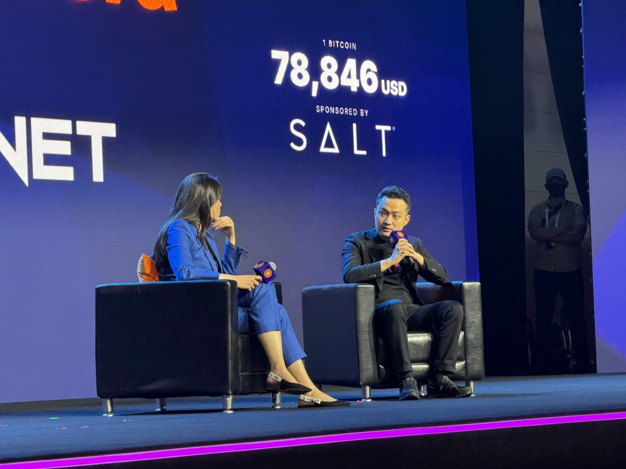
Bitcoin Asia 2026 was particularly lively during those two days. The Hong Kong Convention and Exhibition Centre was crowded with 15,000 people, discussing corporate treasury allocations, national reserve assets, and stablecoin regulations; outside, trending topics included "Sun Yuchen Jing Tian" and a meme coin of the same name that surged 14,283% overnight.
The two parallel worlds overlapped in Hong Kong. But after the conference, it became clear that what is truly worth remembering is a fundamental shift happening in the industry: the crypto market is no longer discussing "when will it rise," but is starting to seriously discuss "how to use it."
One|CZ's 30 minutes: Bitcoin is to become a global payment and reserve asset
This is CZ's first public speech at a major crypto conference in Asia since his release in 2024. The theme is "The Bitcoin Century," during which he highlighted one direction: shifting the narrative of Bitcoin from "how much it can rise" to "what it can do."
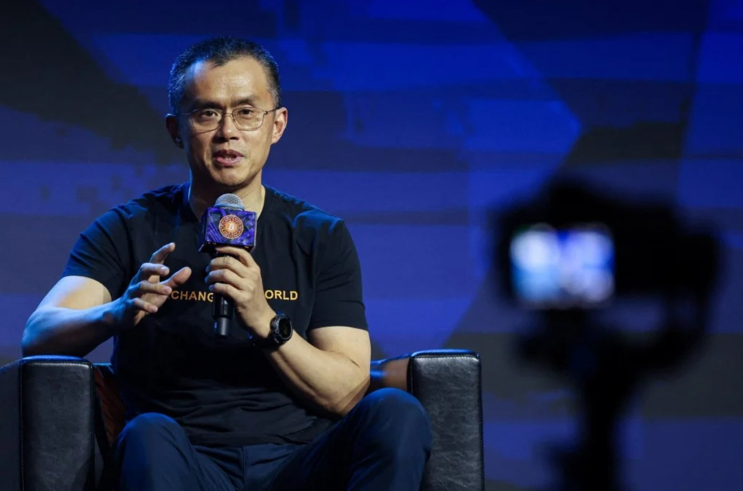
Regarding price: He said that 1 million dollars is inevitable, and "it doesn’t take 25 years." But he quickly added—more important than price is utility; payments need to be used on a truly large scale, and pension systems need to treat Bitcoin as a reserve asset.
Regarding positioning: He believes the gap between Bitcoin and gold is only 10 times.
Regarding the next wave of users: Billions of AI agents in the future will trade and settle automatically, with funding likely being cryptocurrencies, and it will probably start from stablecoins.
These judgments point in the same direction: Bitcoin is transitioning from "digital gold" to "global settlement layer."
Two|RWA is becoming the core entry point for incremental users and funds
At the CDDJAP forum on the sidelines, Professor Wang Yang from the University of Hong Kong stated bluntly: "Regulations should serve the real existing market, rather than create rules that drive market participants away."
The core is: after assets are on-chain, they must also be capable of custody, trading, settlement, and financing, with liquidity prioritized.
The market size for tokenized RWA has reached approximately 29 to 33 billion dollars, with over 13 billion dollars in tokenized U.S. Treasuries, and the stablecoin market size exceeding 320 billion dollars.
BNB Chain data shows that there are about 1.25 million RWA holders, with a 440% increase in the past 30 days.
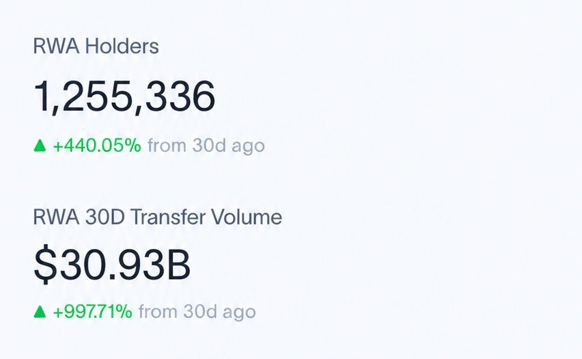
RWA is becoming the core entry point for acquiring incremental users and funds in the crypto market.
The role of Hong Kong is also clear: it has established a regulatory framework for virtual assets and stablecoins, and is becoming a testing ground for RWA implementation in the Asia-Pacific region.
The next step is to complete the closed loop between issuance, custody, trading, settlement, and financing.
Three|The payment issue of AI Agents, Crypto is the only answer
At the conference and on the sidelines, "AI Agent" was almost as high-frequency a term as "Bitcoin."
In the past, discussions about AI focused on large models, computing power, and Agents, but very few asked: When an AI entity needs to automatically call another service, automatically purchase a piece of data, and automatically complete a settlement, what does it use to pay?
Using a bank card? It doesn’t have one. Using Alipay? It cannot open an account. It can only use Crypto.
The collaboration and transactions between AI entities naturally require a 7×24 hours, programmable, and no human authorization settlement network—which is precisely the scenario that crypto assets excel in.
Research from Binance shows that there are currently over 20,000 active AI agents on-chain, managing wallets independently, executing DeFi strategies, and even issuing tokens.
Four|With compliance in place, institutional funds will dare to enter the market
CZ stated during the Q&A session what was considered the most substantial statement on-site: "I have paid the price, learned the lesson, and also looked forward."
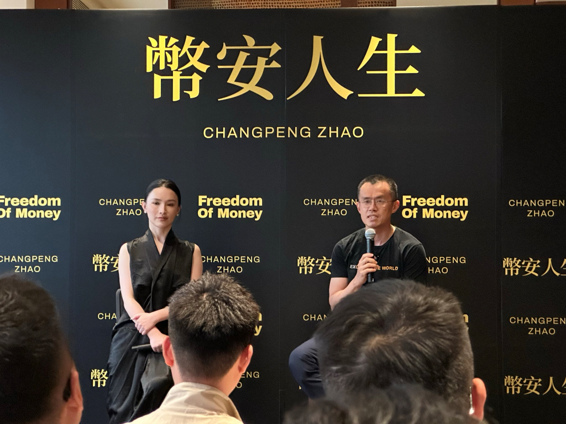
His advice to governments around the world is very specific: establish a regulatory framework for crypto, set up crypto reserves, issue stablecoins, and promote asset tokenization.
Regionally, the UAE's regulatory framework is ahead, the U.S. is making significant progress in stablecoin and exchange regulation, and Japan and Hong Kong are advancing quickly. Once the rules are clear, institutional funds will dare to enter the market.
In conclusion
The lengthy article may have achieved its purpose in the frenzy of curiosity and traffic, but what investors should truly see is that the essence of this conference is— the standards for value judgment in the industry are switching: from "who tells the most compelling story" to "whose products are genuinely being used."
In recent years, the market has become accustomed to buying concepts—metaverse, Web3, AI+Crypto, one narrative after another, with valuations based on expectations.
But the signals released by Bitcoin Asia 2026 are very clear: we no longer need to justify value based on "what the future will be," but rather there are already real products, real funds, and real users operating within the workflow.
免责声明:本文章仅代表作者个人观点,不代表本平台的立场和观点。本文章仅供信息分享,不构成对任何人的任何投资建议。用户与作者之间的任何争议,与本平台无关。如网页中刊载的文章或图片涉及侵权,请提供相关的权利证明和身份证明发送邮件到support@aicoin.com,本平台相关工作人员将会进行核查。


