Author: Shen Chao TechFlow
Shen Chao’s Guide: After years of striving for “Mass Adoption” in the Web3 industry, it may be unfolding in an extremely magical way in reality.
Recently, several foreign media conducted tests where users could directly purchase Meme coins through Visa or Mastercard using Apple Pay on the Robinhood Wallet and trading app Fomo. This transaction not only eliminated the cumbersome separate KYC process but was even disguised as “digital movies” and other everyday expenses on bank statements, allowing cardholders to also earn credit card points and cashback from the issuing bank.
Chase, a subsidiary of JPMorgan, has filed a complaint with Visa. This seemingly absurd “arbitrage” reveals the core incremental source of this market cycle: traditional overseas retail investors are entering the on-chain space through payment shortcuts with zero barriers.

In the past few years, the crypto sphere has repeatedly circulated narratives involving “Account Abstraction,” MPC wallets, and various cross-chain bridges to lower the entry barriers for users.
However, what Robinhood has truly brought to thousands of ordinary overseas retail investors in this on-chain frenzy is not some profound breakthrough in cryptography but rather an ironically stealthy Web2 payment channel.
According to an investigation report by The Block, users only need to double-click the power button to bring up Apple Pay, authenticate with facial recognition, and Meme tokens will be directly deposited into their self-custody addresses on Robinhood’s self-custody wallets (Robinhood Wallet) and social trading platform Fomo.
Not only is the process for buying coins as smooth as purchasing morning coffee at a convenience store, but what’s even more exaggerated is:
When cardholders open their banking app to check their statements, they find that this purchase has been classified as buying “e-books or digital movies” and other ordinary digital entertainment products. Originally, buying coins would be strictly regarded by banks as a “cash advance,” which would deduct benefits, but now it is breezy, and consumers still receive the credit card points and cashback from the issuing bank.
Web2 Checkout Plugin Removes Deposit Barriers
What token to buy is merely a facade. Whether it is WIF tested by the media or various hype-driven dog tokens, what’s worth noting is the underlying pipeline quietly opened behind this channel.
In traditional crypto deposit pathways, a newcomer wanting to buy coins must endure an excruciating trilogy: register on a centralized exchange, take a photo with their ID for KYC, bind a wire transfer or debit card to purchase stablecoins, and finally explore how to withdraw coins across chains. This cumbersome process can deter 90% of outsiders right at the first step.
The underlying service that Robinhood Wallet has integrated, supported by the crypto payment company Crossmint, cleverly circumvents all barriers faced by overseas retail investors through a Trojan Horse approach:
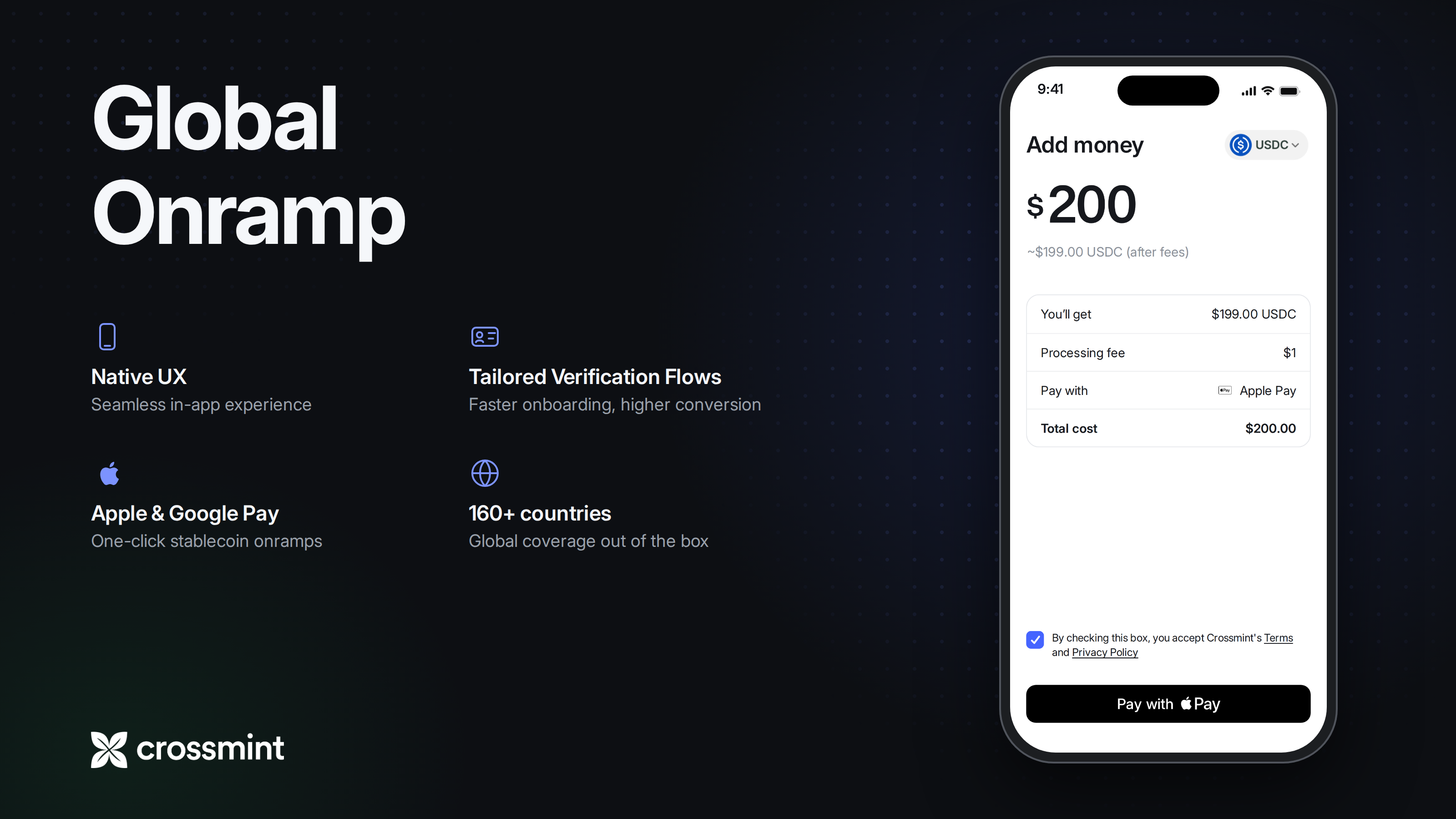
As long as users have their routine spending credit cards linked in their phones, they can charge directly using Apple Pay or Google Pay, no longer needing to repeatedly fill out forms and upload ID proof.
At the same time, the interface directly uses fiat pricing, and tokens are automatically settled to the self-custody wallet, allowing users to completely avoid needing to understand what gas fees are or what private keys involve.
Early data disclosed by officials indicates that in just the first week of integrating this channel on on-chain applications, over 68,000 new buyers who had never interacted with cryptocurrency converted using Apple Pay.
This extremely low friction allows Robinhood and its ecosystem wallet to directly tap into a vast pool of existing capital, those overseas ordinary consumers holding foreign credit cards who originally had no intersection with Web3.
Exploiting Credit Card Cashback Rules
In the compliant financial system, traditional banks and card organizations (Visa, Mastercard) have always been on high alert regarding crypto assets.
According to standard rules, card organizations require all transactions involving cryptocurrencies to be marked with special codes (such as MCC 6012/6051, which refers to quasi-cash or financial services), and such transactions usually come with high fees; moreover, major banks explicitly exclude scoring in credit card reward terms, with some conservative issuing banks going so far as to directly refuse payment.
However, in this test by foreign media, the checkout system employed an extremely clever interpretation of rules:
It classified the act of purchasing tokens as a normal digital commodity (MCC 5815, covering e-books, digital images, media streaming, etc.). The compliance rationale given by the payment service provider cited a previous regulatory clarification categorizing some digital assets as “digital collectibles,” packaging them as everyday cultural goods consumption.
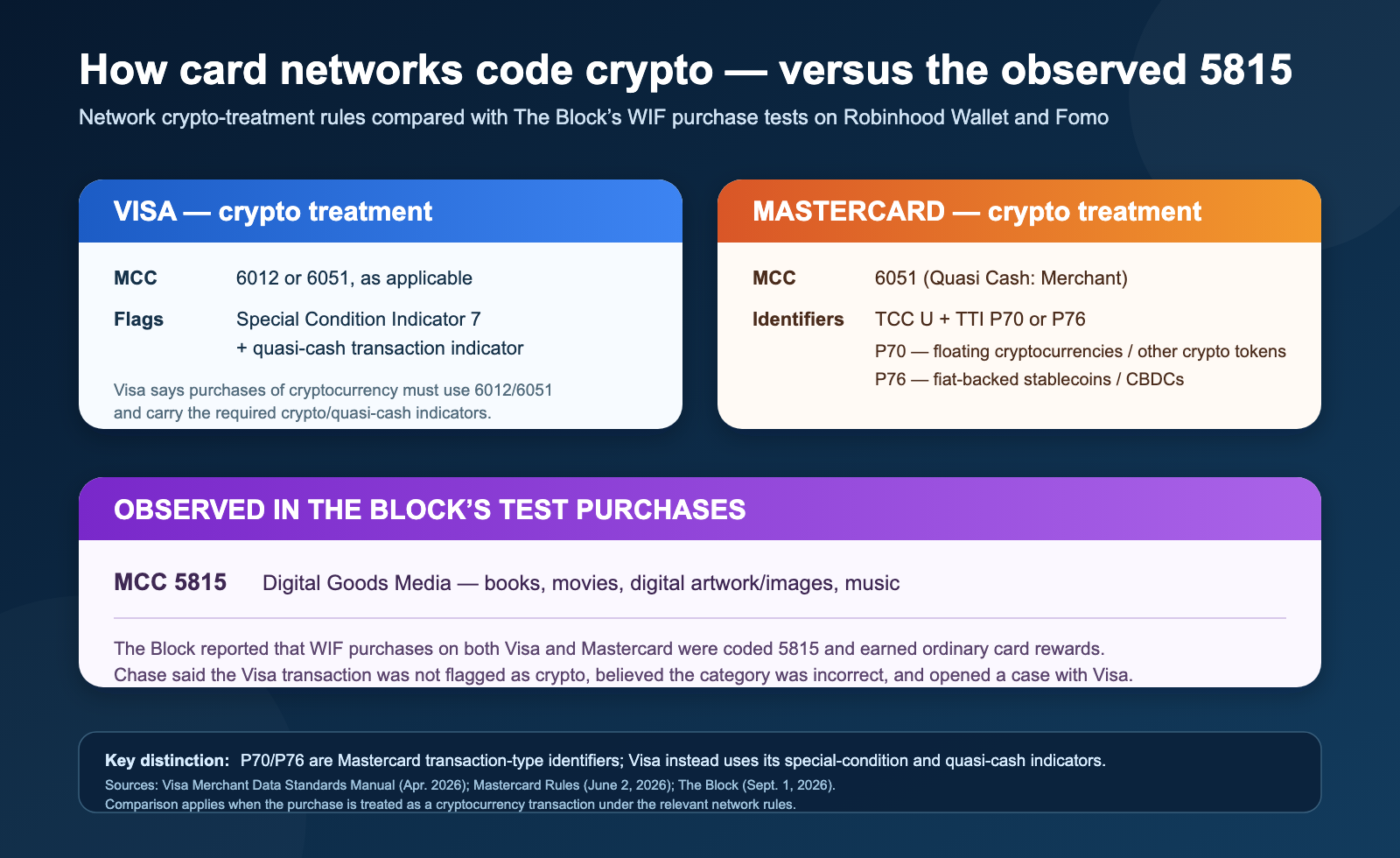
This has led to a dramatically theatrical arbitrage scenario:
The banking system believes you are buying a streaming movie, automatically deeming it a regular purchase and issuing 1% to 3% cashback; meanwhile, your on-chain wallet has actually gained a volatile Meme chip.
Although this meager cashback is negligible compared to the extreme volatility of the tokens themselves, it fundamentally reconstructs the perception of ordinary people in a psychological account:
When buying a dog token feels no different from purchasing a song in the App Store, the public's defensive psychology towards risk assets is instantly dismantled.
Incremental Key of This Market Cycle: Who is Entering?
Understanding the existence of this payment channel allows one to comprehend the underlying financial driving force of the current Robinhood ecosystem market.
The driving force behind this frenzy is not the seasoned DeFi players who monitor price comparisons daily, but rather traditional overseas retail investors imported through Robinhood, overseas social media, and simple payment tools.
This group of users possesses very typical profile characteristics:
They do not care what the underlying technology architecture is, nor do they wish to understand decentralization and consensus mechanisms; they only recognize trending topics on Twitter and TikTok. At the same time, they are accustomed to one-button payments and credit card consumption, treating buying memes as a form of lottery or entertainment spending.
The on-chain liquidity has been rapidly pushed up in a short time precisely because this influx of incremental capital bypassed the layers of barriers that originally existed between the crypto world and the real world.
A massive amount of credit card funds has surged into the channel of unobtrusive payments, naturally pushing the most viral and easiest to understand meme assets to the forefront.
Regulatory and Banking Backlash
This method of skirting the edge of card organization rules clearly cannot remain in a vacuum for long.
Currently, traditional financial institutions have begun to be vigilant. Chase, the issuing bank under JPMorgan, after investigating transactions, has explicitly stated that this credit card classification is incorrect and points should not be awarded, and has formally filed a dispute with Visa; regulatory bodies like the New York State Attorney General's office have also begun to gather relevant materials for review.
For this “covert route,” once card organizations intervene to correct it, Visa and Mastercard might tighten compliance flags at any moment, forcing merchant codes back to quasi-cash categories. At such a point, not only will cashback be reclaimed, but subsequent credit card transactions might also face widespread risk control rejections.
However, the effect of market entry has already occurred. Whether this loophole is closed in the coming days or weeks, it has objectively completed the “on-chain enlightenment” for a substantial number of overseas traditional cardholding retail investors, and more addresses and real funds have entered the ecosystem.
Risk Warning and Disclaimer
This article serves only as an industry observation of trends in the overseas crypto market and Web3 payment mechanisms for research discussion purposes.
The services mentioned in this article, such as the Robinhood Wallet and credit card Apple Pay cryptocurrency deposit channel, are aimed at specific overseas jurisdictions and are not available to users in mainland China, where such services do not exist.
Cryptocurrency assets are a very high-risk investment type. Readers are urged to strictly comply with the laws and regulations of their respective countries or regions and not to engage in any illegal financial activities. This article does not constitute any investment, trading, or operational advice.
免责声明:本文章仅代表作者个人观点,不代表本平台的立场和观点。本文章仅供信息分享,不构成对任何人的任何投资建议。用户与作者之间的任何争议,与本平台无关。如网页中刊载的文章或图片涉及侵权,请提供相关的权利证明和身份证明发送邮件到support@aicoin.com,本平台相关工作人员将会进行核查。


