Organization & Compilation: Deep Tide TechFlow
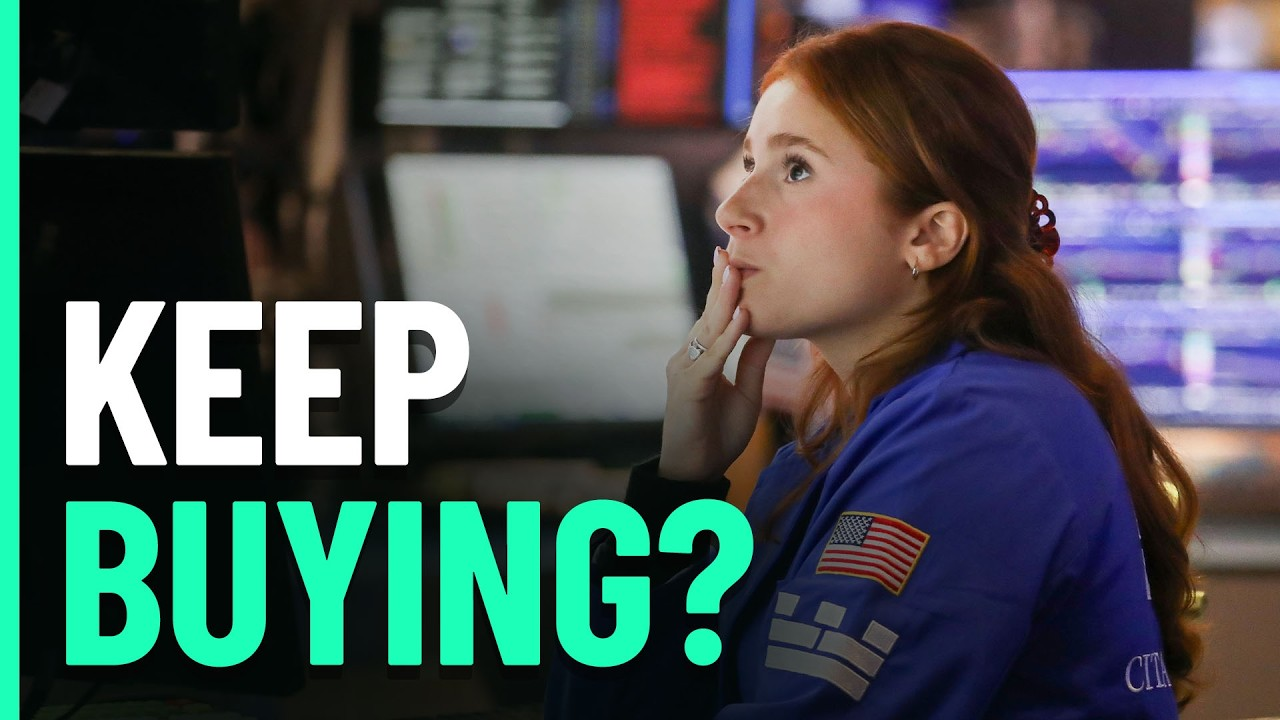
Guest:Nancy Tengler, Senior Fund Manager, CEO and CIO of Laffer Tengler Investments
Host:Caroline Woods, TheStreet
Podcast Source:TheStreet
Original Title:Market At Record Highs — Nancy Tengler Says To Keep Buying These Names
Broadcast Date:August 12, 2026
Disclosure Statement:Nancy Tengler is the CEO/CIO of Laffer Tengler Investments, and most of the stocks discussed in this episode are positions in her company’s managed portfolio. The related views reflect the investment stance of interested parties and do not constitute independent third-party analysis.
Key Summary
Nancy Tengler is a seasoned fund manager with over 40 years of experience, previously led the value equity team at UBS Asset Management, and was the CEO of Fremont Investment Advisors. In this interview on August 12, she remains bullish on the S&P 500 reaching new highs, but suggests a more valuable list of holdings for the second half of the year.
She has clearly directed funds towards four areas: AI infrastructure (PWR, GEV, WMB, DE), mispriced growth value stocks (NVDA, AMZN), cybersecurity (PANW, CRWD, preferring the latter), and financial and consumer catch-up stocks (GS, BAM, JPM, SBUX, HD). NVDA is seen as a typical value stock, with a forward P/E ratio of only 16 to 18 times next year's earnings, earnings growth of 60% to 80%, and a PEG of just 0.25. She will avoid $META, consumer staples, utilities, and REITs, believing that in a strong growth environment, one should stick with growth. She also warns that a breakdown in the credit market or a return of inflation is the greatest risk.
Highlights of Views
What Phase is the Market In
- "This is one of the best market conditions since the 1990s."
- "From 1995 to 2000, earnings grew 60%, but stock prices rose 220%, which was valuation expansion. In the past five years, earnings grew 80%, and stock returns were around 85% to 90%, with both being aligned."
- "I would prefer the S&P to rise 12% to 15% by year-end, rather than 20% to 25%. Bull markets need to take a breather and trim the roses."
AI Infrastructure and Market Expansion
- "In the next five years, there will be $7.5 trillion in capital expenditure directed towards computing power and data centers."
- "New technology is consuming tech companies and is building infrastructure for electrification."
Stocks and Positions
- "Nvidia is only 16 to 18 times earnings, with earnings growth of 60% to 80%, and a PEG of only 0.25."
- "Tesla, Palantir, and SpaceX are narrative stocks; you’re paying for future possibilities, so volatility will be high."
- "Sitting on the sidelines is a bigger mistake than chasing higher prices."
1. Echoes of the 1990s, But This Time Not a Bubble
Caroline Woods: The S&P 500 is now near historic highs, and inflation data seems mild. You say this is one of the best market conditions since the 1990s. Why are you so optimistic?
Nancy Tengler: Because of earnings and because we are in a technological revolution, or economic transformation. Productivity-driven growth is highly convincing and self-reinforcing. We’ve listened to countless earnings calls and can hear various industries using new technologies, not just cloud computing but also physical AI and power-driven solutions.
Caroline Woods: Many investors reflexively think of "bubbles" when they hear the 1990s. What is different this time?
Nancy Tengler: Because today’s companies are real. Back then, those companies had debt on their balance sheets and nothing else. Now, what you see are companies with nearly fortress-level clean balance sheets and incredibly strong profitability. Hyperscalers are typical examples.
Additionally, from 1995 to 2000, earnings growth was about 60%, while stock prices rose 220%, which was a mismatch. Valuations were pushed to absurd levels; Cisco once reached a 100 times P/E ratio. In the past five years, earnings have grown around 80%, and total stock returns have been about 85% to 90%. This is not valuation expansion. Valuations do not appear low, but high valuations do not signal a bear market. The key difference is the serious mismatch between earnings and stock prices that existed back then.
Caroline Woods: So do you think the market is expensive now?
Nancy Tengler: I think valuations are reasonable because growth is too strong. What might seem like high interest rates to young investors appears pretty good for those of us who have seen a lot of years. The yield on the ten-year treasury is below the average of the past 40 years. Really. So we are excited about opportunities, and the market is not overly stretched.
2. Key to Breaking the Range: Market Needs to "Broaden"
Caroline Woods: Earnings are the driving factor, but what's going to actually break the sideways range of the past three months?
Nancy Tengler: I think it will come from the broadening of underlying stocks. The previous market was quite concentrated, although summer adjustments helped alleviate some pressure. But I believe we will see a broadening of the market's movement, and we have shifted and expanded our positions towards infrastructure.
We hold many stocks related to AI infrastructure and have added to existing positions. Goldman estimates that there will be $7.5 trillion in capital expenditure directed towards computing power and data centers in the next five years. I want exposure to this theme. I believe this will be the key to driving sector leadership changes.
Caroline Woods: When you talk about broadening, do you mean within the tech sector?
Nancy Tengler: We have seen broadening at the overall level, but looking at future market leaders, they are still tech-driven. New technologies are "eating" tech companies, building infrastructure for electrification. That's what I'm referring to as broadening.
3. How to Invest in Infrastructure: From Grids to Tractors
Caroline Woods: Besides the energy demand, what is the best way to invest in the infrastructure theme?
Nancy Tengler: Right now, I think Quanta Services looks great. It has risen quite a bit, but based on current orders and guidance provided by management, I believe the upward trend can continue. We also hold GE Vernova, the company that builds gas turbines, and recently added to our position in Williams. This is a defensive way to participate in the AI trade because they deliver natural gas, and their contracts are fixed price, so fluctuations in natural gas prices have limited impact on them, and they are expanding business around hyperscalers.
We also hold industrial stocks like Deere, which actually has little to do with infrastructure but is using AI to help farmers with weeding, planting, and using automated tractors. It's pretty cool; you can even go home for dinner while the tractor is planting by itself.
4. Treat Nvidia and Amazon as Value Stocks
Caroline Woods: I noticed that Amazon and Nvidia recently entered your Value Folio. Are these two still considered value stocks?
Nancy Tengler: Caroline, that's a great question, as most people overlook this. We identified them in our growth stock portfolio two years ago. We also included Google in the value portfolio. Do you remember after Bard was released, everyone said Google could never catch up? That was a disastrous release. But then Gemini came out, and the stock rose over 100%.
Now looking at the Russell 1000 value index, the world has flipped; the largest holding is Amazon, with Micron being number one in the first half. I know how they calculate, and sometimes there are these "fallen angel" growth stocks trading at value stock prices.
Nvidia's dividend was significantly raised, which in our view signals that the company is winking at the market, suggesting they believe this profitability is sustainable. Based on next year’s earnings, its P/E ratio is between 16 to 18 times, earnings growth is 60% to 80%, depending on whether it’s fiscal or calendar year. So relative to earnings growth ratio, it has only 0.25 times. In comparison, Tesla is at 5 times. That's why we bought it.
As for Amazon, it is completely unable to move out of its own shadow. We believe Andy Jassy knows what he is doing and has gone through similar phases before. We want to hold it before the earnings report, which is rare. We sold some Apple to buy Amazon, and at least for the past few weeks, this trade has looked very right.
Caroline Woods: Would you still buy these two now?
Nancy Tengler: Yes.
5. Cybersecurity, Palantir, and the Narrative of Tesla
Caroline Woods: What is your strongest conviction in stock selection for the second half of the year?
Nancy Tengler: I still think it is infrastructure. The names mentioned earlier, along with some we are researching and cannot name yet, because we might be adding to them this week. But this will be the main theme for the second half. This doesn’t mean tech stocks must continue to outperform for the market to do well, but you still want to hold some tech names, with cybersecurity being a significant part of our portfolio; Palo Alto Networks and CrowdStrike are both held.
This business will grow, but competition will intensify. Vertically integrated players will also enter, like Palantir. They are all working on data security. It will be a very interesting competition in the future.
Caroline Woods: Would you add to Palantir now?
Nancy Tengler: We added during the summer plunge. Palantir is still down this year, but has rebounded significantly from its lows. These high-valuation stocks, Palantir, Tesla, and SpaceX, are all narrative stocks. Palantir's growth is indeed impressive, but you buy it for the future. So volatility will be substantial. I remember we added at $88, then it rose to $250, then fell back to $100, and I am still very happy. If you are a long-term investor, you have to regard volatility as a friend.
Caroline Woods: Tesla has been a big underperformer this year. What needs to happen for it to become a winner?
Nancy Tengler: FSD must truly take off, and Cybercab and Robotaxi also need to launch. But we initially invested in Tesla because of its battery storage business, Megapack, utility-level battery storage. Additionally, any potential acquisition or merger of Tesla by SpaceX could serve as a catalyst for stock prices.
Caroline Woods: SpaceX is currently not profitable; would you invest in it?
Nancy Tengler: Yes, we held it during our IPO and added more when it fell recently. This stock is one you need to hold for 3 to 5 years. Honestly, Caroline, it doesn't matter whether your cost basis is $105 or $150 in the future because it represents the future and will change our way of life. Elon Musk is the type you must stubbornly hold onto during downturns because he always finds a way. The Wall Street Journal even had an article yesterday saying if there’s a merger, his pay package targets would be reached for many items. He is always a step or even several steps ahead of others.
6. Catch-Up Opportunities in Finance and Consumption
Caroline Woods: What about other sectors like healthcare, energy, and finance?
Nancy Tengler: We hold Goldman, Brookfield Asset Management, and JPMorgan. From the earnings reports of these companies, we hear they are utilizing AI. Goldman mentioned on the call that headcount will remain steady, but growth will accelerate by 20% to 25%. This is significant operational leverage.
I am looking at discretionary consumption. We have an overweight position in this sector, quite partial to several names, and just added to positions ahead of recent earnings reports. Thank goodness. Starbucks is quite interesting; we all know the CEO knows how to turn things around. Amazon is, of course, part of discretionary consumption. Home Depot has also become interesting; we hold it, and it hasn't moved much in our 12 best ideas portfolio, but that’s the norm in investing. We think the housing market will eventually revive; we just aren't sure when.
Caroline Woods: Are there any sectors you would avoid?
Nancy Tengler: Staples. We only hold one or two. For utilities, we only hold one utility company. REITs as well; I feel there are better places right now. Our REIT holdings are less than market weight. In a strong growth environment, you need to stick with growth.
7. Year-End Targets and Greatest Risks
Caroline Woods: You usually don't set price targets, but how do you think the market will move next?
Nancy Tengler: This year, the S&P has already risen about 10%. I would be very satisfied with a year-end close up 12% to 15%; I do not want to see 20% to 25%. This is a relatively young bull market, even earlier than the 1990s. We know bull markets need to take a breather, to prune the roses, and to consolidate. So I would be content with 12% to 15%. The fourth quarter usually sees momentum pick up, and we might see a wave of upward movement.
Caroline Woods: What would lead you to be wrong? What is the biggest risk to this bull market?
Nancy Tengler: At the beginning of the year, I would have said geopolitical shocks, but we seem to always get through. If companies start to miss, if guidance begins to slow down, we'll see earnings growth decelerate; the question is how much deceleration. If the credit market breaks, then I would be wrong. Currently, credit spreads are still tight by historical standards; you've heard many complaints in the bond market about excessive debt, but compared to the past, this isn’t much. Primarily these are the two points.
8. Quick-Fire Questions
Caroline Woods: Is Wall Street too optimistic or reasonable?
Nancy Tengler: I think it’s just about the performance of five stocks.
Caroline Woods: At historic highs, buy or wait?
Nancy Tengler: If you are a long-term investor, buy. Sorry, I hedged.
Caroline Woods: Trade early or late?
Nancy Tengler: Early.
Caroline Woods: If you got $10,000 today, invest all at once or in batches?
Nancy Tengler: All at once.
Caroline Woods: Is a bigger mistake chasing highs or waiting on the sidelines?
Nancy Tengler: Waiting on the sidelines.
Caroline Woods: From now on, is the biggest market risk valuation or inflation?
Nancy Tengler: Inflation.
Caroline Woods: Where is the best place for new money, value or growth?
Nancy Tengler: Growth.
Caroline Woods: Where is the best value in the market now, individual stocks or sectors?
Nancy Tengler: Sectors. I choose discretionary consumption.
Caroline Woods: Top pick within discretionary consumption?
Nancy Tengler: Amazon.
Caroline Woods: Amazon or Apple, which has more upside?
Nancy Tengler: Amazon.
Caroline Woods: Broadcom or AMD?
Nancy Tengler: Broadcom.
Caroline Woods: Palo Alto or CrowdStrike?
Nancy Tengler: CrowdStrike.
Caroline Woods: Who would you avoid in the Mag 7?
Nancy Tengler: Meta.
Caroline Woods: Buy one, Tesla or SpaceX?
Nancy Tengler: In the next 12 months, Tesla.
Caroline Woods: US stocks or international?
Nancy Tengler: US stocks.
Caroline Woods: Large-cap or small-cap stocks?
Nancy Tengler: Large-cap stocks.
Caroline Woods: Long-term investor, individual stocks or index funds?
Nancy Tengler: Individual stocks.
Caroline Woods: Cash on the sidelines, invest now or wait for a pullback?
Nancy Tengler: Invest now.
Caroline Woods: Describe the remaining market this year in one word?
Nancy Tengler: Bullish.
Caroline Woods: Will the market go up or down, and by how much?
Nancy Tengler: Up, about 5%.
免责声明:本文章仅代表作者个人观点,不代表本平台的立场和观点。本文章仅供信息分享,不构成对任何人的任何投资建议。用户与作者之间的任何争议,与本平台无关。如网页中刊载的文章或图片涉及侵权,请提供相关的权利证明和身份证明发送邮件到support@aicoin.com,本平台相关工作人员将会进行核查。


