Author: Eric, Foresight News
Every industry on the road to prosperity must go through a round of "death on the battlefield," and Web3 is no exception.
According to Foresight News's analysis of public information, from 2025 to now, at least 78 Web3 projects with total funding exceeding $1.5 million have announced their shutdowns. Among these, 69 projects with confirmed funding have collectively taken over $900 million in investment. If we include those small projects that died quietly without institutional funding, the total number far exceeds 300.
This means that, in the past nearly 600 days, an average of 1 Web3 project has died every two days, whether known or unknown.
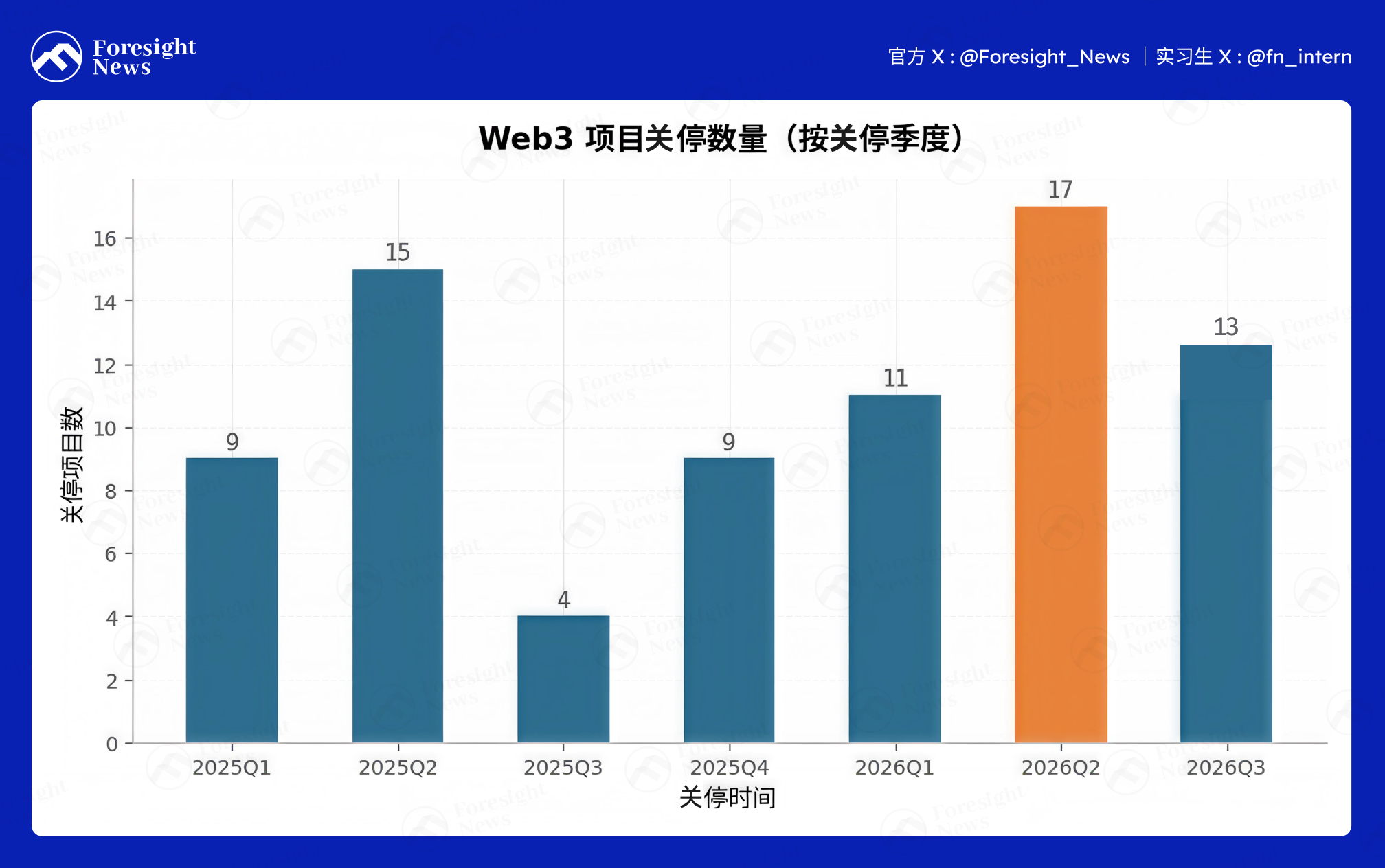
Among the 75 projects counted by Foresight News, 37 were shut down in the entire year of 2025, while over half of 2026 has already seen 41 shut downs, with 17 in the second quarter alone, setting a record for a single quarter since this wave of eliminations began. Popular Dapps from the previous bull market, such as DappRadar, Zapper, and established exchanges like BitMEX and AscendEX (formerly BitMax), have all come to an end in their business careers over the past two years.
The reshuffling has not stopped due to the market's recovery; rather, it has accelerated.
After securing millions, even tens of millions of dollars in funding, every team that stepped into this new world was filled with the ambition of "laughing out loud to the sky, we are certainly not common folks." But after a few years of market baptism, these cold and brutal numbers have been laid bare for all to see.
The emerging market is still a market, and Web3 is no gentler than other industries.
"Not self-sustainable" is the top "cause of death"
When analyzing the "causes of death" for the 75 projects, the leading cause is "insufficient funding," with 31 projects failing due to this issue, accounting for over 40%; closely followed by "insufficient market demand," which led to the shutdown of 17 companies. Combined, these two account for nearly two-thirds of the total. In other words, the vast majority of projects share a single cause of death: they never managed to sustain themselves.
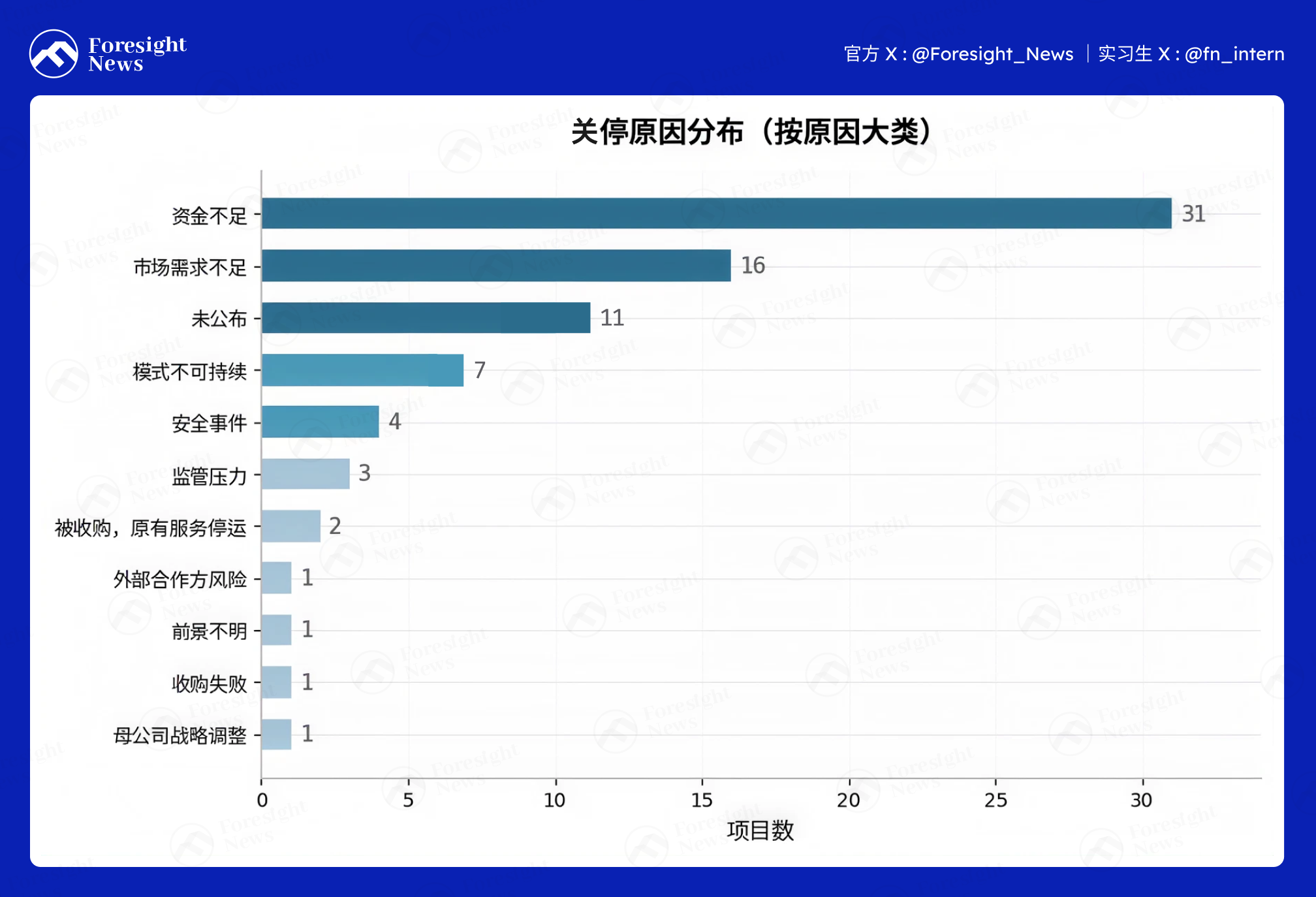
The shutdown announcements from these projects used similar expressions, many stating, "despite our best efforts, we still could not find a path to sustainable development." The subtext of this statement is that from the onset, the project had not figured out how to operate, or the initial vision was vastly different from market realities.
Some industry observers have characterized this wave of shutdowns as a "direct manifestation of failed business models and broken funding chains, rather than merely a fluctuation in market sentiment," which is quite to the point. The investment logic in the primary market has completely shifted over the past two years. The first question investors ask during meetings is no longer "how large is your imagination," but "how do you make money?" Projects that cannot cover operational costs and do not have new stories to tell have been the first to fall after the funding gates tightened. OSL Research Institute summarized this shift in their annual report as a transition from the "first half" to the "second half" of the industry: the growth model driven by rising asset prices and protocol innovation has reached its end, and the market has shifted "from narrative to delivery."
To put it more bluntly, both the market and capital are no longer willing to pay for "experiments," and a project's self-sustaining capacity has become essential.
In comparison to the veiled reasons, the five projects that declared "unsustainable models" appear much more honest, such as Goldfinch, which does unsecured credit lending but had to shut down due to consistent bad debts from loans to emerging market businesses; or fantasy.top, a social gaming project that relied on token incentives, struggling to sustain its model after a decline in popularity.
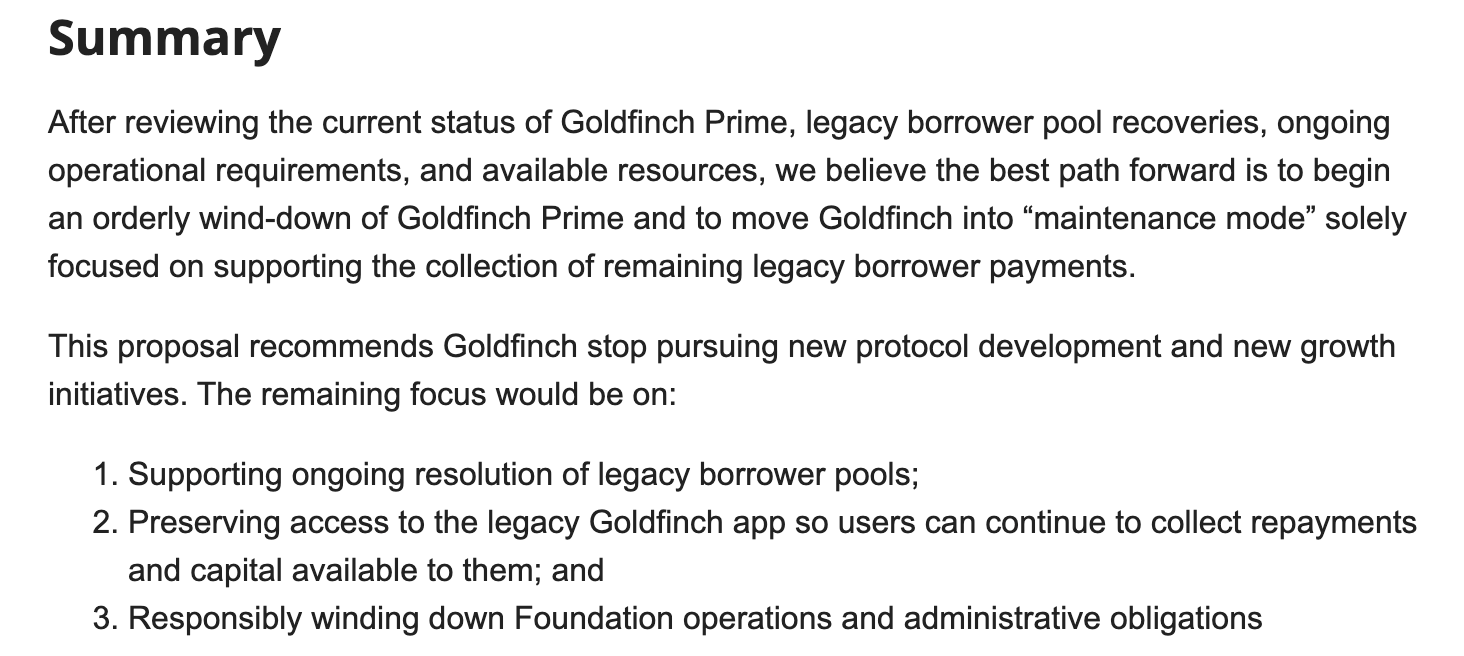
"Unsustainable model" is a very interesting cause of shutdown. Unsecured credit loans in traditional finance are mostly based on big data or individuals' past credit histories to formulate reasonable lending limits. Goldfinch, as an emerging "lending company," dares to offer unsecured credit loans in emerging markets without credit data support, which cannot be resolved solely through cryptocurrency and Web3. Clearly, the reason for this company, with nearly $40 million in funding, is hard to believe, and it remains unclear how top-tier institutions like a16z were convinced to get involved.
Additionally, some companies have failed due to regulation. Mango Markets shut down through community voting after reaching a settlement with the SEC; Tokenize Xchange failed due to a rejected license application. Another type of failure uniquely characteristic of Web3 involves being dragged down by a larger partner. Crypto bank Juno was operating reasonably well, but closed down due to the bankruptcy of a custodial partner; such intertwined risks in traditional financial chains are often beyond the control of the project team.
When it comes to risks, the four projects that closed due to security incidents are also very characteristic of Web3. L2 Kinto, Ctrl Wallet (formerly XDEFI), Radiant Capital, and zkLend, all faced direct funding chain breaks due to a hacker attack. Because they come into direct contact with real money, when Web3 projects are hacked, it is akin to banks losing money to hackers, and the collapse of trust leaves most projects with almost no chance of recovery.
These cases expose the fragility of Web3 projects. After being hacked, projects can only use their operating funds for compensation, while at the same time, the project token price plummets, losing the ability to sell tokens for funding and refinance; "death" becomes merely a matter of time. Except for a few well-capitalized projects that can weather this storm, most small teams simply cannot endure it, yet both face the same risks.
But from another perspective, being unable to survive security events may also warrant elimination.
The end of inward competition is a scene of chaos
When data analysis intersects with track dimensions, the patterns become clearer.
From 2023 to now, Bitcoin has gradually emerged from the shadows, breaking the $100,000 barrier and even nearing the "prophecy" of 1 million RMB made years ago; on the other hand, in proven tracks like DeFi, the head effect has become increasingly prominent while the bubble continues to be squeezed.
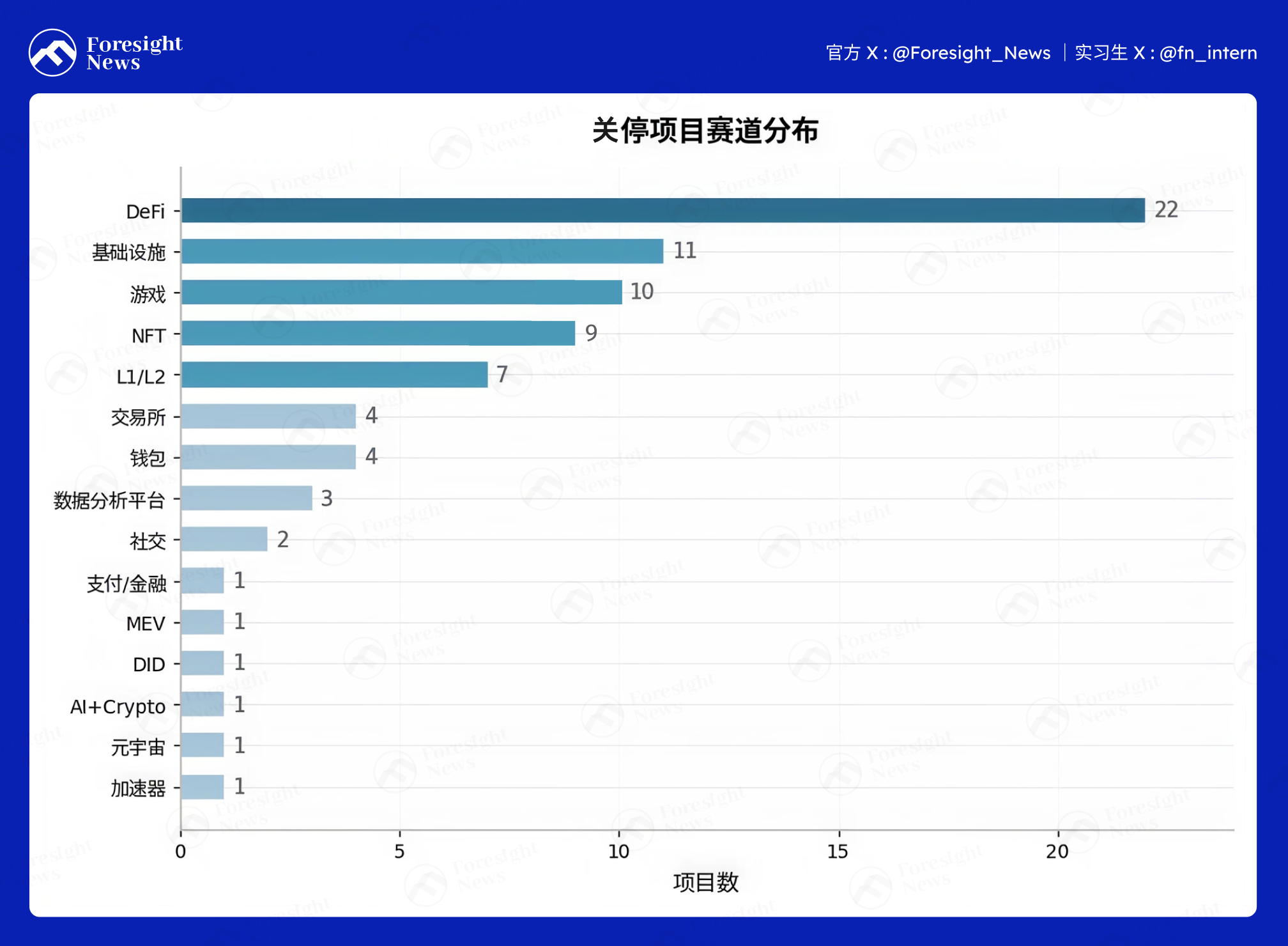
DeFi is a disaster area in this wave of shutdowns, accounting for nearly 30% of the 75 projects. This distribution itself highlights a long-avoided issue in the industry: finance is indeed one of the few real-world applications of blockchain technology, but not all financial products have sufficient market demand, nor are all suitable for independent operations. Among the 22 collapsed DeFi projects are stablecoin protocol Angle, derivatives protocol Polynomial, and re-pledging protocol MilkyWay; the causes of death are myriad: lack of funds, no demand, hacks, regulations, and unworkable models, with almost every fatal outcome having an example.
Homogenization is the underlying theme: when Uniswap and Aave absorb the vast majority of liquidity, the stories of the second-tier players are left with only narrative. Moreover, many DeFi protocols are essentially a feature, not a business. They can thrive as modules of leading protocols but must take on acquisition, security, and operational costs when operating independently. Market demand is limited, and when a niche area is flooded with players far exceeding the overall market size, some are bound to be eliminated.
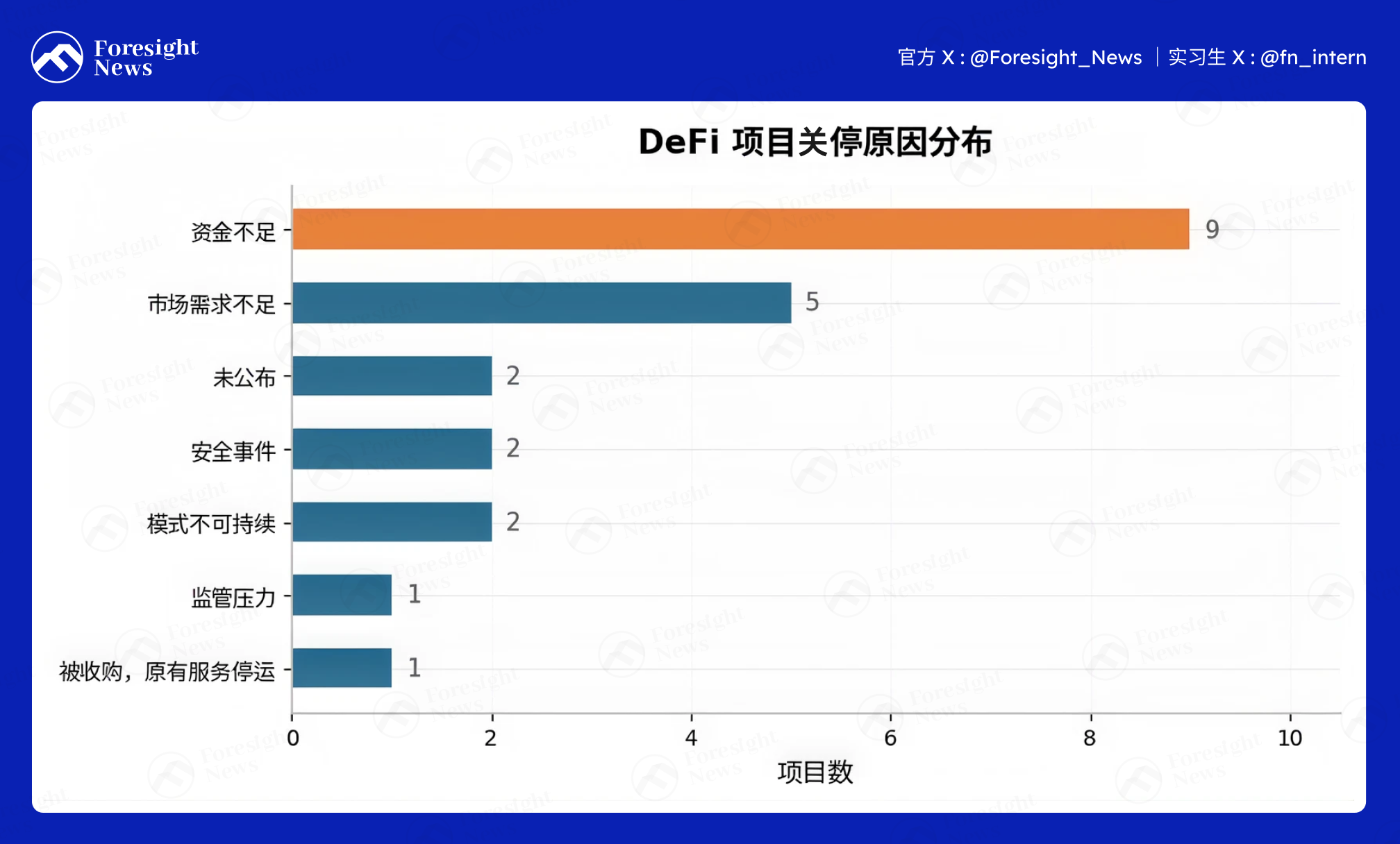
The primary reason for DeFi project shutdowns remains insufficient funding. For DeFi, which is one of the few income-generating projects in the Web3 industry, being stymied by funding issues indicates that the mature DeFi space is nearing saturation.
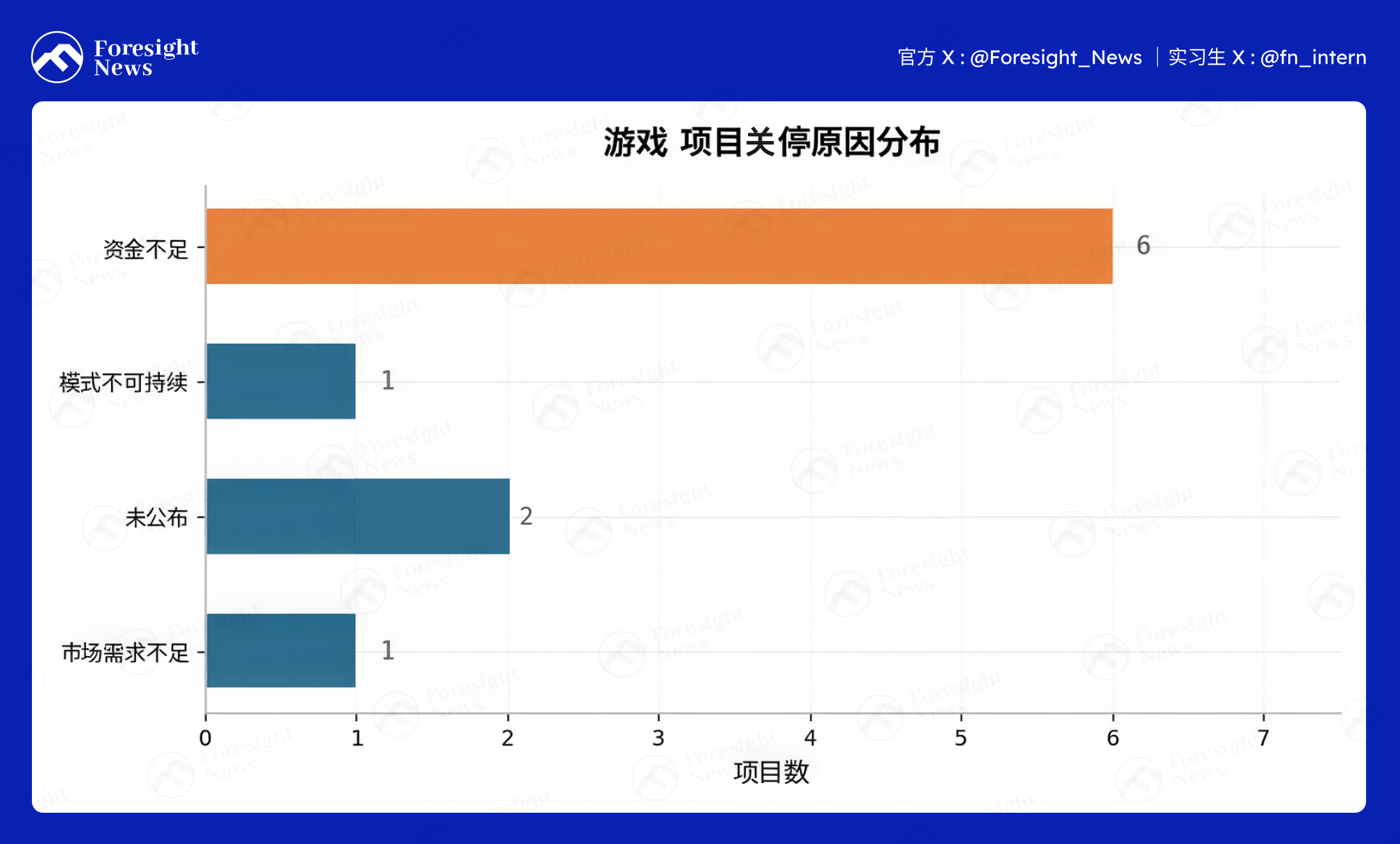
Of the nine shutdown projects in the gaming sector, six died due to "unable to secure the next round of funding." This aligns well with the logic of the content industry: game development often takes three to five years and burns cash aggressively; a $100 million budget is not exaggerated in traditional gaming, while chain game teams expect to replicate a AAA experience on a few million dollars, and once testing data fails to support the next round of funding, the project has no second chance. In the NFT and metaverse sector, four out of nine projects died due to the disappearance of demand: when X2Y2 shut down, the total NFT market transaction volume had dropped by about 90% from its peak; Bloktopia directly fell victim to the retreating metaverse narrative.
NFT and the metaverse can be considered among the first tracks in the history of Web3 to be "disproved." Currently, NFTs are barely surviving, while the metaverse has almost vanished. The metaverse didn't just mislead Web3; even Facebook renamed itself Meta in 2022 and almost fully invested in the metaverse. Looking back now, NFTs and the metaverse appear more like products born from excess funds during a bubble.
As the economy declines, the appreciation for these once-flourishing concepts fades. From another perspective, these projects were too late to gain popularity, and the market did not provide a long enough period of prosperity for them to educate the market and find a viable operating model. Even Yuga Labs, previously having secured hundreds of millions in funding, has recently reclaimed the authority of the DAO to control "how to spend money."
The downfall of L1/L2 and infrastructure points to another form of excess. Public chains were once the most expensive narrative in the funding market, but as Ethereum Layer 2s have become oversaturated to the point of fighting for users, a new chain without a unique ecosystem almost dies at birth. Established chains like Kadena and Evmos can only exit gracefully after bleeding out in the market. The same applies to the infrastructure track; cross-chain, sequencing, and account abstraction each have dozens of teams, while the true transaction volume of the entire industry cannot sustain that many "road builders."
The elimination game in the infrastructure field aligns well with our understanding of the industry. These projects are not without demand, nor have they been poorly managed; rather, they simply lost out in harsh market competition. The downfall of these companies also serves as a wake-up call for investors and industry participants: the market logic has qualitatively shifted; being new and having strong technological capabilities no longer guarantees survival. Blindly starting from scratch is inferior to incorporating good ideas into existing projects or systems.
As the tide recedes, veterans and whales are left stranded
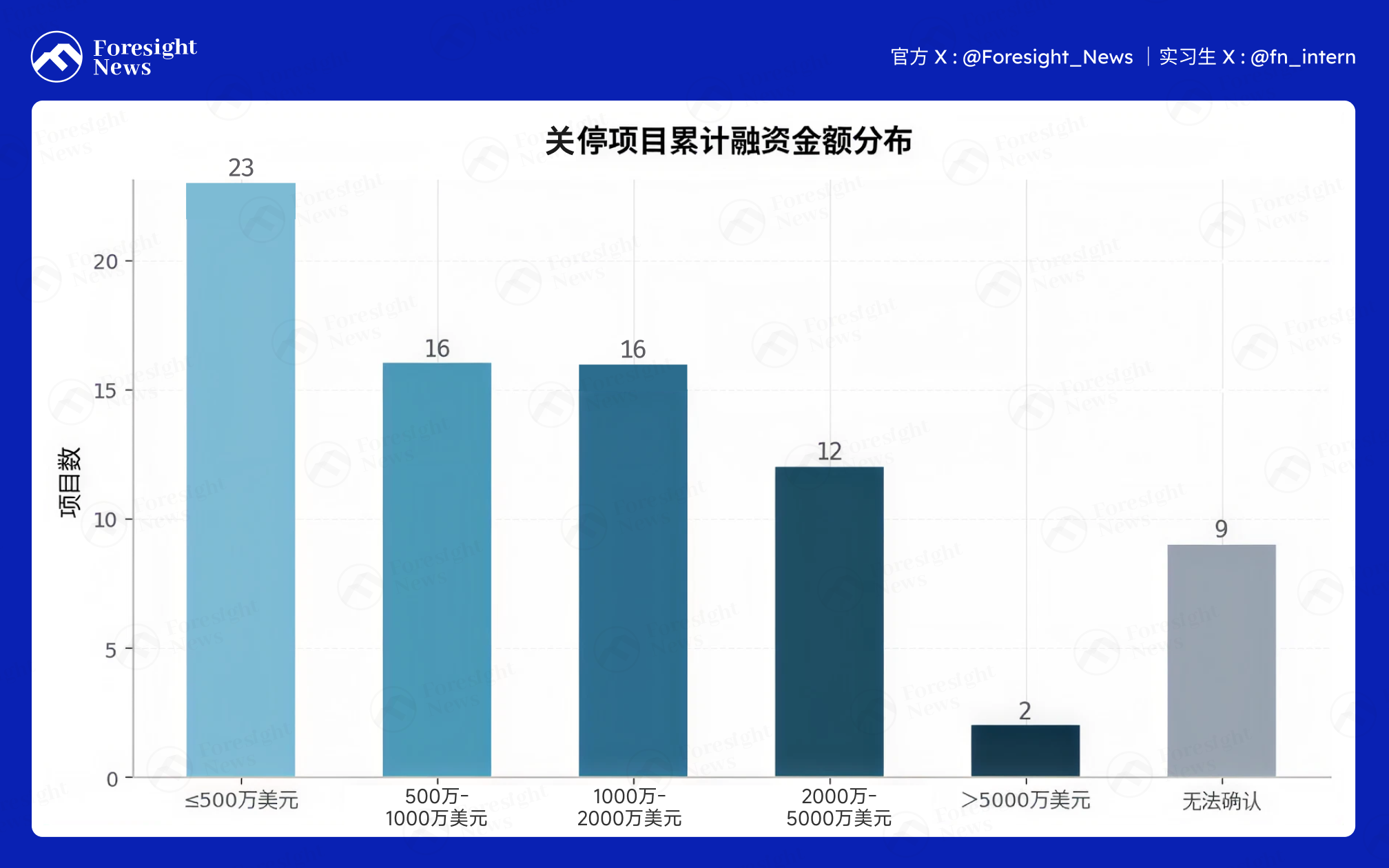
In this round of reshuffling, even the scale of funding cannot serve as a protective charm. Of the 75 projects, 23 had raised over $15 million (nearly 100 million RMB): Mango Markets secured $70 million, AscendEX raised $63 million, and Loopring obtained $45 million; regardless of whether they lacked funds to continue burning or had money that was meaningless to spend, these projects ultimately chose not to proceed.
What financing can buy is actually very limited. Loopring is one of the earliest trading protocols to implement zkRollup on Ethereum; technically it is not behind and the team is diligent, but under the pressure from leading DEXs and centralized exchanges, trading volumes have long been sluggish, leading to an announcement to shut down and transition to a next-generation product. Money can keep the team running, subsidize users, and maintain a decent appearance for a few years, but it cannot buy real demand. When a company's product is ignored, the more funding it has, the higher the cost of maintaining that "ignored" status.
A more widespread issue is that high financing only extends the error correction timeframe, not the probability of a business model's viability. When receiving funding far exceeding actual needs, team size, market outreach, and token incentives often inflate simultaneously, rapidly raising fixed costs. During good market conditions, these expenses are concealed by growing numbers; once the market cools, a bloated cost structure makes high-funding projects more difficult to turnaround than smaller teams. From this perspective, huge funding sometimes acts as not a cushion, but an amplifier; it amplifies the project's optimism during prosperous times and magnifies the speed of its fall when the bubble bursts.
"Blindly throwing money" in Polkadot is the best example.
The structural dynamics over time further illustrate the issue: projects established from 2021 to 2022 account for 45% of the total, corresponding exactly to the peak of the last round of financing bubbles. In those two years, annual funding in the primary crypto market soared to over $30 billion, and many projects were born under the logic of "get the money first, find demand later," with concentrated deaths three to four years later being a typical delayed clearing.
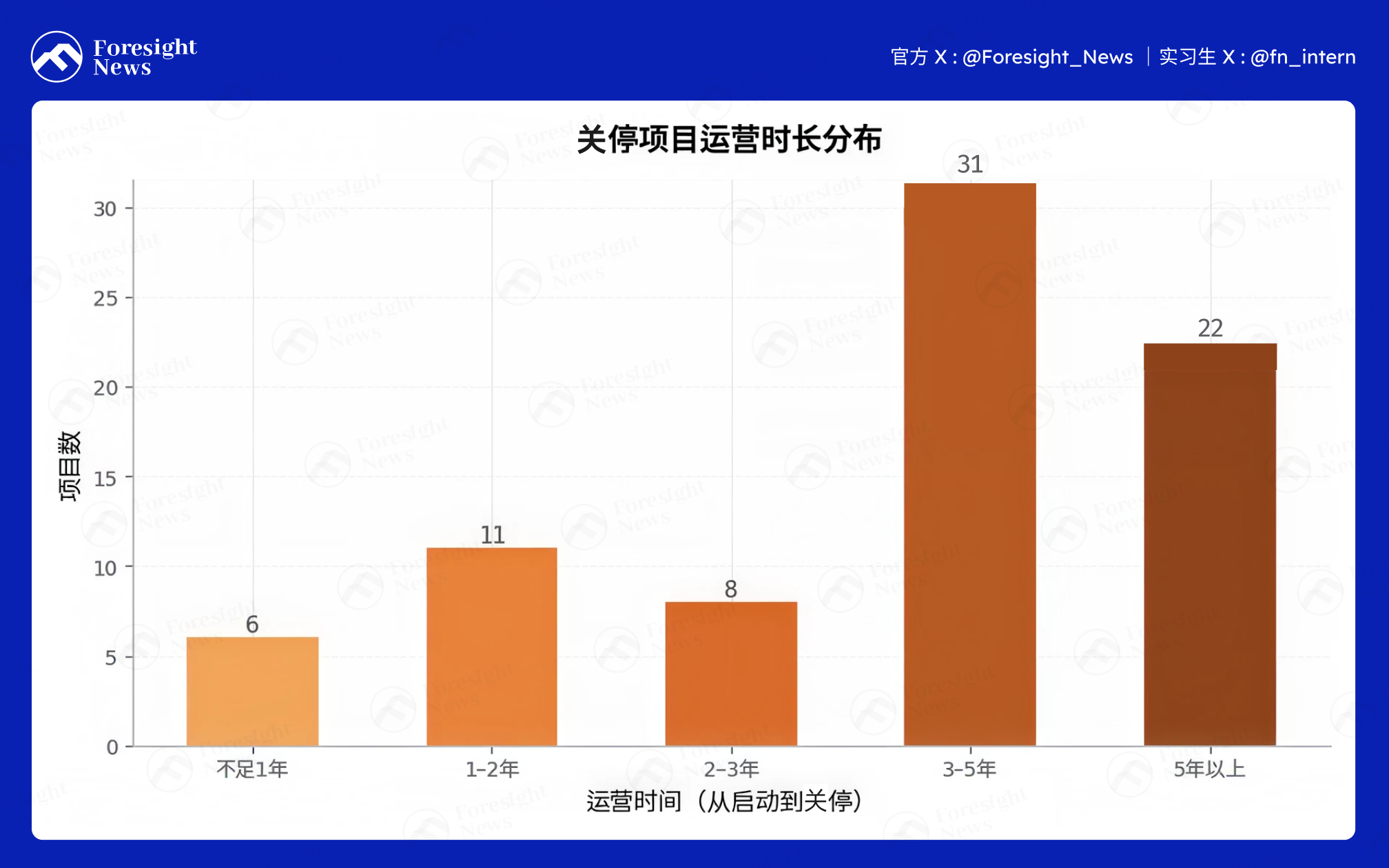
It is worth noting that among the nine "veterans" with over seven years of operation, some have also fallen in the past two years, including BitMEX established in 2014, Loopring established in 2017, and Blocknative established in 2018. The median lifespan of all 75 projects is four years. This set of numbers indicates that this round of reshuffling has eliminated not only speculative projects born from the bubble period but has also led to a re-pricing of a batch of business models that never truly materialized. Background, funding, and technological prestige cannot exempt one.
a16z has summarized a "crypto price - innovation cycle" over the span of ten years: after every cycle peaks in price, the number of developers, entrepreneurial activity, and infrastructure investment do not decline with falling prices; instead, they settle down and become the seeds driving the next cycle.
From this perspective, the shutdown list of the past two years is, on one hand, a delayed liquidation, targeting the excess capacity fostered during the 2021 funding bubble, rather than the industry itself. The basic data of the industry corroborates this: the total market value of stablecoins has now surpassed $300 billion, on-chain dollars are visibly infiltrating the payment and settlement sectors of the real financial system; Pendle, which introduced the concept of "yield tokenization" only in 2021, now has a TVL exceeding $10 billion, placing it among the top DeFi protocols; Ethena's synthetic dollar USDe saw its supply break through $14 billion in 2025, becoming the third-largest dollar stablecoin after USDT and USDC. The common characteristic of these projects is that they address real existing demands and have clear revenue models; they exist in cash flow, not merely in narratives.
On the other hand, the deteriorating economic environment has made some projects born in the new cycle after 2022 quickly realize they cannot survive in the current market conditions: the DeFi platform Dango chose to shut down less than four months after its launch. Additionally, in July, exchanges BitMax, BitMEX, and BitMart successively announced their closure; these exchanges once regarded as "money printers" can no longer continue, indicating that the underlying downturn is accelerating beneath the seeming prosperity.
The story is not over yet
Economist Steven Klepper, in studying the evolution of the American automotive industry, discovered that there were over 200 automobile manufacturers competing in the US around 1900, yet only the "Big Three" in Detroit survived decades later.
He summarized this pattern as a "reshuffling phase" that necessarily occurs in an industry's life cycle: after the birth of new technologies, a large number of companies flock in, and the number of enterprises balloons to a peak in a short time. Subsequently, when the technological dividends peak and demand growth slows down, the vast majority of players will be pushed out, while market concentration significantly increases.
Therefore, we should maintain confidence in the industry at this moment.
Amidst the overall downturn, older DeFi projects like Aave and Uniswap continue to develop; Aave has become the undisputed "king of lending," and Uniswap opened its long-debated "fee switch" and initiated token buyback and burn mechanisms, aligning the protocol's growth with token performance. Meanwhile, Pendle and Ethena mentioned earlier are shining brightly, and the new lending protocol Morpho's TVL is now only behind Lido and Aave, emerging as a new king in the lending space.
Moreover, the integration of crypto and traditional finance has entered the fast lane. Stablecoins are gradually evolving from trading pairs for Bitcoin to payment methods in emerging markets, and the trading of financial assets like stocks is beginning to migrate on-chain, with even Nasdaq and NYSE promising to ultimately move stock trading on-chain.
The reshuffling phase is never an industry death sentence but is one of the most painful and necessary steps in the industry's coming of age. After years of trial and error, Web3 is beginning to eliminate unreasonable existences, making way for true value, funding, and users.
The group buying war around 2010 saw over 5,000 group buying websites competing fiercely, leaving only a handful after two years, while Meituan rose to prominence atop thousands of "corpses"; the shared bicycle boom in 2017 brightly colored every corner of the city, but two years later, only a few colors remained. Looking back, the burst of the bubble was accompanied by the industry itself completing the popularization of infrastructure and the cultivation of user habits from the ruins.
Companies that left this game have left behind talent and a wealth of industry infrastructure, fulfilling their historical mission. Future arrivals can erect more magnificent buildings on this fertile ground formed from countless stacked corpses.
免责声明:本文章仅代表作者个人观点,不代表本平台的立场和观点。本文章仅供信息分享,不构成对任何人的任何投资建议。用户与作者之间的任何争议,与本平台无关。如网页中刊载的文章或图片涉及侵权,请提供相关的权利证明和身份证明发送邮件到support@aicoin.com,本平台相关工作人员将会进行核查。


