Author: BIT Broker
Last Friday, two noteworthy events occurred. These two events may provide two significant signals for the recently somewhat weak US stock market, indicating stabilization and recovery.
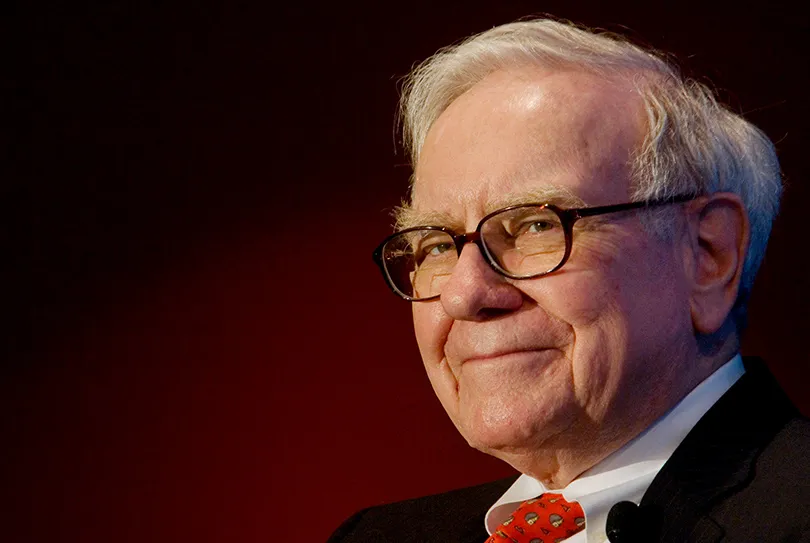
One signal comes from the non-farm macro data, and the other from Buffett's Berkshire.
1. Signal One: Non-Farm Data Greatly Exceeds Expectations
First, let’s look at the macro aspect. The US non-farm employment fell by 23,000 in July—this is not only the first decline since February, but more importantly, it far exceeds expectations: the market originally expected an increase of 80,000.
From an expectation of "+80,000" to an actual "-23,000," this extreme reversal signal elicited a market reaction that was not panic, but excitement. The logic is straightforward: a clearly weakening job market means that the threshold for the Federal Reserve to lower interest rates is significantly lowered, leading to a rapid increase in market expectations for rate cuts, and the return of liquidity easing trades instantaneously.
In the end, all three major US stock indices closed higher.
2. Signal Two: Berkshire's Cash Pool Decreased by $31.5 Billion
The other signal comes from Berkshire’s Q2 financial report.
The most critical number in this report is not profit, but the change in cash reserves. In the first quarter, Berkshire's cash reserves had reached a record high of $397 billion—at that time, the market was concerned: does Buffett holding so much cash mean he thinks the market is too expensive? Does it mean some black swan event may occur? After all, the oracle of Omaha being passive has never been a good sign for starting a bull market. Buffett has long proven that no matter when, he may not win every time, but he absolutely never loses and always survives in the market.
By the second quarter, cash reserves decreased to $365.5 billion. In one quarter, they spent $31.5 billion.
The significance of this number is that Berkshire, this large ship, has finally begun to change direction. When the most cautious funds in the whole market start shifting from "holding cash" to "making moves," this itself is one of the strongest endorsements of market valuation.
What’s even more interesting is where the money went—of this $31.5 billion, nearly $20 billion was poured into increasing holdings in Google stock.
3. From Storage Chips to Alphabet: Another Approach to AI Trading
Buffett's choice ironically connects to the judgment we discussed before.
In the current context of AI narrative-based trading, we have previously analyzed the issues with storage stocks: expectations have peaked ahead of fundamentals, valuations are trading at anticipated peaks, and rushing in now may lead to buying at the top. So, are there more stable AI beneficiary stocks?
Buffett provided his answer with $20 billion: Google.
The logic of Google is completely different from that of storage stocks. Storage stocks earn from the cyclical money of "supply-demand imbalance," with gross margins soaring to 80%, causing the upward slope to inevitably slow down; while Google earns from the ecological money of "AI application landing," benefiting from cloud services, search, and large models, with valuations not overextending expectations. Essentially, Buffett's choice indicates that in the second half of AI trading, certainty is more valuable than elasticity.
4. In Conclusion
However, a reminder is necessary: whether it is the rate-cut trading driven by non-farm data or the emotion repair brought by Buffett’s endorsement, neither is a straight line.
Rate cut expectations will fluctuate with each economic data release—when data is weak, expectations rise, and the stock market goes up; when data is strong, expectations cool, and the stock market goes down. Every upcoming CPI, every non-farm report, could cause severe market volatility. Similarly, "following Buffett to buy Google" is not mindlessly copying homework; Berkshire's cost of building positions and holding periods are completely on a different scale than retail investors.
免责声明:本文章仅代表作者个人观点,不代表本平台的立场和观点。本文章仅供信息分享,不构成对任何人的任何投资建议。用户与作者之间的任何争议,与本平台无关。如网页中刊载的文章或图片涉及侵权,请提供相关的权利证明和身份证明发送邮件到support@aicoin.com,本平台相关工作人员将会进行核查。


