Written by: When Shift Happens
Translated by: Plain Language Blockchain
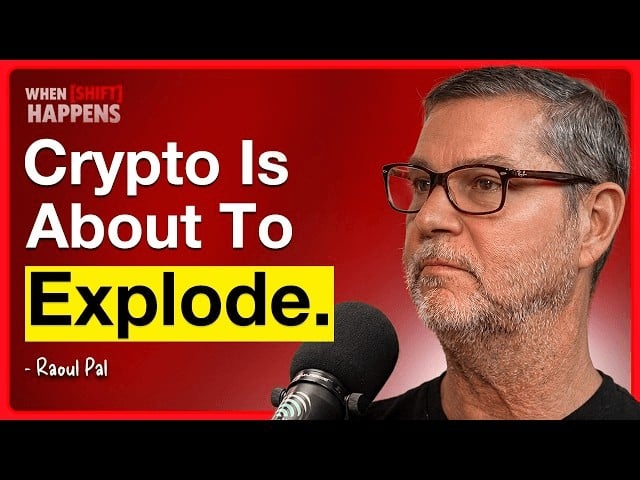
From a 22-year-old entrepreneur who vowed never to wear formal attire to a media giant conversing daily with the world's top financial minds, Scott Melker has witnessed the most crazy wealth creation myths in the crypto industry as well as the most brutal wealth destruction. In the face of a cryptocurrency market that is becoming increasingly institutionalized and undergoing regulatory reshuffling by 2026, do ordinary people still have a chance? Can one achieve financial freedom by relying on 'boring' investments without starting a business or monitoring the market? In this engaging conversation with the host, Scott candidly dissects his lessons from failures, insider knowledge, and his ultimate philosophy of never being bearish. If you are feeling lost in your investments, this dialogue is a must-read.
1. Breaking the Trading Myth: Why Dollar-Cost Averaging Bitcoin is the Only Solution for Ordinary People?
Host: If you work hard enough and never give up, what can you achieve in the crypto industry?
Scott Melker: It depends on who you are. I would love to say everyone will succeed, that we all will succeed, but the reality is that most people are just naïve and do not learn from their mistakes. So most people will not succeed. I'm not saying this makes me special, I just happen to be passionate about it and was able to carve out a business. But if I were just some ordinary guy still trading crypto in the trenches, I wouldn't succeed either.
Host: Do you believe that one can succeed in crypto later in 2026 without starting a business?
Scott Melker: Yes. How? Buy Bitcoin.
Host: Regarding investment, what is the biggest myth you have learned through your career and all your interviews that you want to help us debunk today?
Scott Melker: I think the biggest myth is that you can beat the market by trading. When I was trading altcoins early on, my biggest shock one day was when I pressed a button to switch my portfolio display from dollars to Bitcoin and found that after all that hassle, I had the same amount or even less Bitcoin. You can extrapolate this to investing in the S&P 500 or any other asset: how many times can you buy individual stocks better than dollar-cost averaging the S&P 500? It’s very boring, but it’s fantastic. It’s terrible to be boring when you're young because you want excitement; when you're older, boredom is great because it frees up a lot of your energy and time. I think investing in Bitcoin completely liberates you from speculating, diving into projects, reading whitepapers, and other pointless consumption.
Host: But for some reason, many traders in the crypto community love charts and one-minute candlesticks. For ordinary families or working people, seeing Bitcoin's crazy fluctuations still makes them think, "I can buy here, sell there, and then buy back at a lower point," trying to time the market. How do you tell these audiences to internalize what you just explained?
Scott Melker: Buy and hold, dollar-cost average, do nothing, don’t interrupt the process of compound interest. I think the most dangerous belief in trading and investing is, "I will sell and then buy lower." Because no matter what your lower target is, when you get there, you'll want to wait for even lower. If Bitcoin is at 80k, you think you will definitely buy at 70k; when it really gets to 71k, you’ll think, “Oh my God, this looks terrible; it might drop to 50k or even 30k.” Those who sold to wait for lower are the ones who are FOMO buying at the top and selling at the bottom. You’re not a genius; you will not time the market better than the smartest people, and you don’t have their complete equipment and information. You just should not trade this stuff.
Host: To summarize, how can ordinary people get rich through investing in crypto assets in 2026 and beyond?
Scott Melker: Should I say buy Bitcoin again? I think this is not a quick-rich game. Those quick-rich opportunities based on luck will not appear in the same way again. We will not see altcoin seasons like in 2017 where what you hold goes up 20 times, you sell and buy another that goes up, and you can randomly throw darts and have super luck. Those days are over. But that does not mean opportunities disappeared, being that boring buyer still holds huge opportunities. You just can't treat it like a lottery or a casino. And those who got rich quickly in previous cycles have lost almost everything afterward. Getting rich and staying rich are two completely different matters.
2. From Trench Trader to Media Curator: The Reconstruction of Crypto and Personal Branding
Host: You mentioned about dressing formally?
Scott Melker: When I started my first company at 22, the reason I wanted to be an entrepreneur was that I did not want to wear formal attire. Because I had only done two internships before, wearing that suit, I thought, "I can't stand wearing this crap." As a result, when promoting business intelligence and data analysis services, I still had to wear formal attire. At that time, I thought, "Damn, my goal of being an entrepreneur in a hoodie doesn’t work at all." So I did that for a few years. Since entering the crypto circle, I decided to never wear formal attire again, only wearing my Zara t-shirts.
Host: Right, you need a tuxedo t-shirt, one that looks like a tuxedo, and wear it when you need to dress formally. How have you been lately?
Scott Melker: Good, happy, nice day, very optimistic. I am always happy and optimistic, that’s my norm. I think there is no point in being a pessimist.
Host: Where does this super optimistic mindset come from?
Scott Melker: I just feel like things will eventually get better. Optimistic people will ultimately win, just as bulls in the market will eventually win. If you want to be a bear, you need a great sense of timing, and you will only be right temporarily. Even if you are right temporarily, when you are wrong at last, you will look like a fool because the market as a whole is going up. I feel life is generally getting better. Would you rather be a king in the medieval age or an ordinary person in 2026 with a job, healthcare, antibiotics, air conditioning, and plumbing? So I think the evolution of things always moves in a positive direction.
Host: Is there anything in your life that has completely not gone as planned, never improved, and you ultimately had to give up on?
Scott Melker: A million things. Most of the things I've tried have failed. Everyone only sees your success, but as the old saying goes, becoming “an overnight success” takes 30 years. Others say you are lucky, yet they don’t see all the failures you had along the way. I’ve run countless small businesses and ideas, some of which totally failed within one or two months; some were moderately successful but never really took off. In my music career, I've also had many painfully failed projects, songs I thought would be particularly successful, spending a lot of money and energy, only to never see the light of day. Countless. But I see all of these as “falling forward.” Just push the puck forward, that’s what matters.
Host: Who are you?
Scott Melker: I’m just an ordinary person. People always ask this, it’s quite funny. They say, “the Wolf of Wall Street” is such a self-centered name. I say that’s a joke. I’m just a guy with ADHD who has done lots of things at the same time since I was little. Once I find something worth focusing on, I can focus like crazy, it becomes everything for that phase, until the next thing comes along. At my core, I’m a pretty optimistic person. I like people, like chatting. So this job we have now is the best job in the world. Others ask me, “Don’t you feel exhausted from chatting?” I say no. It’s like going to university, but instead of paying, you’re being paid, and you get to talk one-on-one with the top professors in that field for an hour, who will answer any question, then you go to the next class. Who wouldn’t want that opportunity? I think it’s amazing.
Host: I actually talked with Pomp (Anthony Pompliano) about this as well. He probably understood podcasts around 2018 or 2019, but many podcasts really took off during the pandemic. But think about it, simple equipment—a few cameras, two microphones, a chair, two tables. If done well, this thing can propel you to the top through long-term compounding in a few years.
Scott Melker: It makes a lot of sense, it compounds like anything else. You just need someone willing to be interviewed to endorse you, and you gain credibility to bring on the next person. Ultimately, people love to hear themselves talk; it’s definitely a self-game. I’m not saying it in a negative way. Even though you and I enjoy sitting here asking questions and learning, people also very much enjoy the opportunity to teach you what they love or to spark a conversation.
Host: You were a DJ before you got into crypto media. I noticed that many DJs entered the crypto space early between 2017 and 2020; I also DJ’d for five years. Why did DJs jump into the crypto rabbit hole so early?
Scott Melker: Because DJs are inherently fidgety. Their work is mainly at night, leaving them with a lot of free time during the day, and they earned cash the previous night. For me, it was because the trading culture was rich in the DJ circles I knew, and at that time, crypto was the trendy thing. I entered the market at the end of 2016 and the beginning of 2017, during the first real altcoin season and the ICO boom. Some started saying, “I bought Bitcoin, sent it to Bittrex, bought this thing called Ripple.” People were making money, and the news spread. Moreover, trading inexplicably clicked with music production in my brain. Charting, drawing lines, I could do it endlessly; it has a formulaic feeling, just like making music in Logic, Ableton, or Pro Tools.
Host: Did you really make money trading? Or did you realize you were falling down a technical rabbit hole from speculation and wanted to build and be part of the industry?
Scott Melker: I made a lot of money trading, but mainly because of lucky timing. First, you think you're making money trading, and then you look at your Bitcoin balance, only to find that if you just held Bitcoin, you could have made even more. But trading doesn't suit me; it’s not that I don't do well, but I don’t have the mindset to monitor charts 24/7/365. I have a family, kids, and other things to do; I can’t always keep an eye on the charts. It’s a real hindrance to life and very stressful.
Host: At what moment did you decide to fully commit to doing things outside of trading?
Scott Melker: There wasn't a specific moment; everything happened organically. I was trading, so I started sharing my trades on Twitter. The people who followed me for music unfollowed, and I lost half my followers. But I found that from the remaining foundational fans from my music days, there were enough people interested in crypto. I still had the blue checkmark (back then it still mattered), and people thought I was blue-checked due to crypto, starting to believe I was some kind of expert. A tweet is too short, so I started writing a free newsletter, changing from writing twice a week to writing daily. Then someone suggested starting a podcast and a YouTube channel. Because of my personality, I now work 18 hours a day in this industry; it’s hard for me to say “no” to new things.
Host: When did you realize that building a personal brand is a game-changer?
Scott Melker: Building a brand is indeed important, but what's more important is building a "high-quality brand" and "good reputation." We have seen many people spectacularly explode in front of everyone. You have to be like Bitcoin and be a honey badger, getting through all rough times, enduring bear markets, and showing up every day. After the bear market of 2022, I realized that your reputation and brand are nearly everything. There are too many cartoon avatars on Twitter willing to blow up their integrity completely for compensation. But if you want to stick around here for a long time, you have to be very careful; it’s a minefield.
Host: What is the goal of your media company?
Scott Melker: My goal has not changed for a long time: to bring Bitcoin into the mainstream. I sincerely believe people should hold Bitcoin. I won't tell them what price to buy at, but I genuinely believe it is the most important financial asset ever.
3. Structural Disruptions: The Real Ecology of the Industry in 2026 and the Age of Institutions
Host: Is crypto still relevant in 2026?
Scott Melker: More relevant than ever. It’s just interesting now; things are finally happening, yet people are extremely bearish. It’s ridiculous. I think they are bearish because what they hold and believe has dropped. But this shows there is a huge disconnect between the tokens people hold and the fundamentals, and what is really happening is mostly hard to invest in directly. It turns out that most projects do not need tokens, and those that might need tokens do not have properly designed tokenomics to accumulate value onto the tokens. What you may be holding is just a lottery ticket with the project name on it, where the project or shareholders are making money, but the value doesn’t accumulate to the token holders. There are structural problems. But crypto is not dead; it’s just changing, and the next iteration will be built in ways that allow more value to accumulate to the actual tokens and their utility.
Host: What about you personally? You have a thriving business that may benefit from the industry’s fundamentals mixed in. But for those with ordinary jobs who don't want to start a business and only want to invest, how should they participate?
Scott Melker: I think you just buy Bitcoin and live your life. I have never been a Bitcoin extremist, but I think that’s the simplest and most effective way. Take a portion of cash flow — because you know inflation is real, quantitative easing is real — buy some Bitcoin, give it time. Most people come in through Dogecoin, NFTs, or meme coins, but most of those will not last.
Host: How do you distribute your earnings every month?
Scott Melker: Buy Bitcoin, just Bitcoin. Actually, I run something called Arch Public, an algorithm (I’m a shareholder) that basically buys back prices better. It helps you get the best price of the day or week, smarter than regular dollar-cost averaging. I currently have a portfolio of about 80% Bitcoin, 10% Ethereum, and 10% Solana. These three have institutional buyers and institutional adoption. I think the industry is now differentiated into the "haves" and "have-nots": either there is institutional adoption and funding entry, or it’s low-quality tokens ranked 75th. So I generate cash flow from the business, then buy and hold these assets long-term. For Ethereum and Solana, I use yield generation strategies (buying dips, selling highs), creating cash flow and then putting the profits back into Bitcoin. There are too many new Layer 1s and technical disruptors; you can’t claim they are "forever assets," but Bitcoin has already crossed that gulf. That’s why I have an opinion on those "Bitcoin treasury companies" — you can’t outperform Bitcoin by buying Bitcoin; you need to use cash flow generated from business operations to buy Bitcoin, not drag the market down with financial engineering.
Host: What about yield? What’s your view on DeFi and yield products now?
Scott Melker: I was one of the main creditors of Voyager and was deeply hurt by yield traps; there's serious PTSD about these yield products. It depends on where the yield comes from, the product structure, and the risk disclosure. There have been too many hacking incidents and security vulnerabilities in DeFi over the years, with over a hundred billion dollars flowing out of platforms in the past year due to fears of systemic risks. In an environment where bad actors and AI threats are so broad, putting large amounts of capital at high risk for minimal returns is unwise.
Host: How do you take the crypto media business to the next level?
Scott Melker: A few years ago, I made a decision to focus on the bridge between crypto and traditional finance (TradFi), focusing on institutional adoption. I shifted my content to primarily interview executives from institutions and industry giants. This changed my audience from twenty-something Degen traders to high-net-worth individuals with families, jobs, who are buying ETFs and want asset allocation. For example, I now own and host the first daily crypto show on Yahoo, which has a much larger traffic volume than CNBC. They want fewer people in suits delivering the news and more personality and real opinions.
Host: Among those who frequently watch our show, 71% have not subscribed yet. If you want to help us continue to create quality content, please help me and the team by clicking the subscribe button. It was Ran who connected us, right?
Scott Melker: Oh right, it was a long time ago. He even joked, “Oh my God, she now also often leaves me on read.”
4. Lessons from the Bear Market and the Ultimate Philosophy: Bitcoin and Chill
Host: What lasting memories did the crazy bear market of 2022 leave you with? What did you learn in 2022?
Scott Melker: Everything I do now is the result of lessons from 2022. Most of the lessons I learned were things I already knew but finally came to truly accept: if it seems too good to be true, it probably is. I used to chase high yields on CeFi platforms? Not interested anymore. Slow down, dollar-cost average, primarily focus on Bitcoin. I am now 49 years old, have kids, and I no longer have the appetite for high volatility I used to have. I want my life to be very boring, aligning investments and life.
Host: Is it much better financially this way?
Scott Melker: Yes. The biggest problem people have mentally when considering their portfolio is always measuring against the highest peak their portfolio has ever reached. If you start with $100,000, it turns into a million in a week, then crashes to $200,000 a week later, the human mind feels like they've "lost $800,000," instead of "made $100,000." I don't do that anymore; I don’t even track my portfolio; I’ve deleted all accounting software. That number is not real. I only care about how much cash flow I make each month, how much Bitcoin I can buy with that money, and then I continue living my life.
Host: What was the most surprising yet best interview you’ve had?
Scott Melker: It was probably my first interview with Michael Saylor in September or October 2020, just when MicroStrategy made its first Bitcoin purchase. We did a two-hour exclusive interview where he said many things that shocked me. I asked him, "You already are a billionaire, why choose this?" He said it was a decision about a belief system and legacy, not just a financial decision. He saw the future and built it.
Host: What are your personal goals for your media and investments?
Scott Melker: My goal has remained unchanged for a long time: to bring Bitcoin into the mainstream. It is the most important financial asset ever. Once you understand the nature of central banks, the US government, and money creation, those price fluctuations suddenly don't seem to be a problem. It’s a superior store of wealth. You don’t have to gamble in the meme coin casino guessing what the next hot thing is. Just like Netflix and chill, it's simply Bitcoin and chill. Buy some Bitcoin and relax; it's not that hard. Go have a chat with a girl.
Host: Bitcoin and chill, that’s a fantastic piece of advice. What is your ultimate goal in life today?
Scott Melker: The goal is always freedom. I can work very hard, but I must do it on my own terms. This means I can be very engaged as a parent and husband. If I want to ski, travel, or pick up my kids from school to go cycling, I have the power to choose how I spend my time. My kids are only six; I don’t miss any of their games or recitals. Being my own boss unlocked this freedom. My goal is to never stop working because I love what I do.
Host: What is the biggest risk for those who do not own Bitcoin?
Scott Melker: Continuing to be stuck on the hamster wheel of life, fighting against inflation and the theft imposed on you by irresponsible monetary policies. If you don’t hold some form of hard asset, all your efforts are being outpaced by inflation. No matter how much the government claims inflation is under control, you just can’t save money. You must jump off that hamster wheel. Even if it’s $10 or $20 a month, buy some Bitcoin or hard assets to benefit from the reality of monetary expansion.
Host: Give those who feel frustrated in the market some reasons to stay optimistic about the future.
Scott Melker: Many people feel this adjustment is the "worst ever,” which is totally recency bias. If you've experienced the crashes of 2021 and 2022, leaving you in doubt about the industry's existence, the current market feels like a joke. We have Bitcoin ETFs, Larry Fink from BlackRock, and even Jamie Dimon talking about blockchain and Bitcoin. We have full institutional adoption, discussions on strategic Bitcoin reserves, and the wave of tokenization. This is the best time in the history of the industry. From a broader perspective, Bitcoin spends most of its time being boring and sideways; there are roughly only 10 days a year when it completes all its gains. You just need to stay in the game, Bitcoin and chill.
Host: Thank you so much, Scott, for doing this interview; you really excel at this.
Scott Melker: Thank you, it's been fun, awesome!
免责声明:本文章仅代表作者个人观点,不代表本平台的立场和观点。本文章仅供信息分享,不构成对任何人的任何投资建议。用户与作者之间的任何争议,与本平台无关。如网页中刊载的文章或图片涉及侵权,请提供相关的权利证明和身份证明发送邮件到support@aicoin.com,本平台相关工作人员将会进行核查。


