Written by: WClemente
Translated by: Luffy, Foresight News
Last year, my personal market research focus gradually shifted towards commodities. At that time, a very clear reality was: the cryptocurrency market was oversupplied, and price performance was weak; meanwhile, apart from a few sectors like Hyperliquid, there was a lack of industry innovation, and compared to other markets, the appeal of the crypto space was inadequate, giving rise to the demand-side dilemma of absorbing massive supply. In the second half of last year, small-cap coins skyrocketed, and gold also experienced a strong bull market. I originally thought that Bitcoin would see a good market, but the final results were disappointing. In the several trading days before October 10, Bitcoin's upward breakout was declared a failure. In January of this year, I further reduced my personal holdings of Bitcoin as the market characteristics were extremely similar to the bear market of 2022.
To be honest, this year has not been easy for those who focus on Bitcoin and cryptocurrencies as a whole. Although the extent of Bitcoin's decline from its peak has been more moderate compared to previous downturns, this bear market has been even tougher than in 2022 for many reasons. At least in 2022, the triggers for the decline were clear: rising interest rates, market leverage and fraudulent projects being cleared out, and the FTX crash. At that time, the market could reach a consensus: if these external conditions changed, the market was already in a position where further deterioration would be difficult, and Bitcoin would likely represent a good long-term buying point.
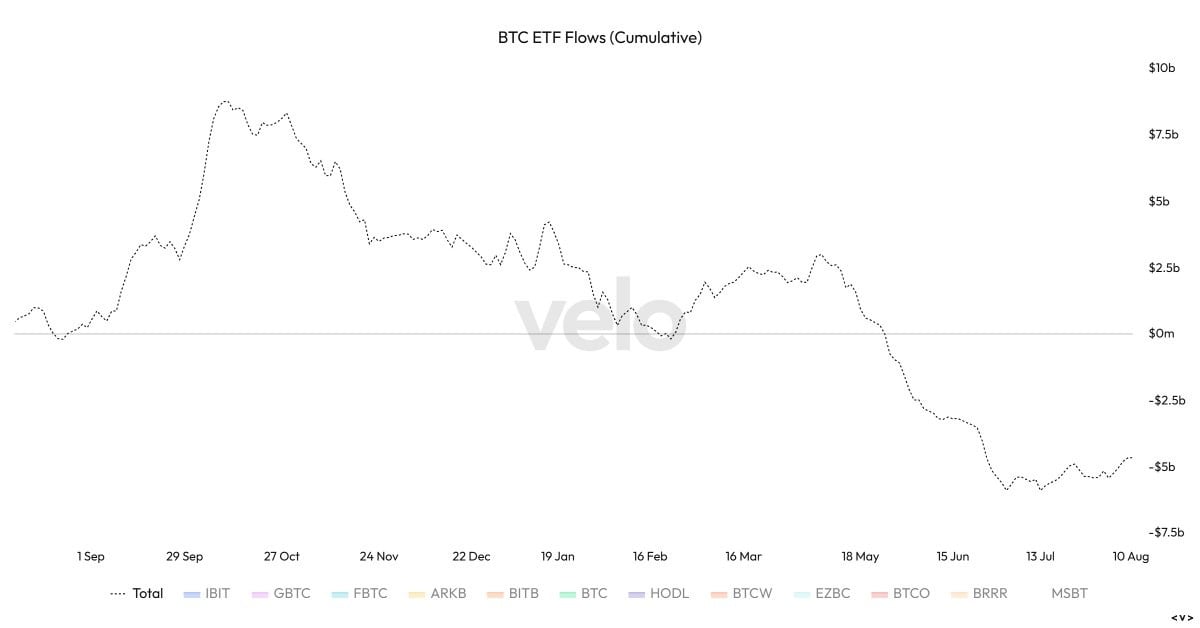
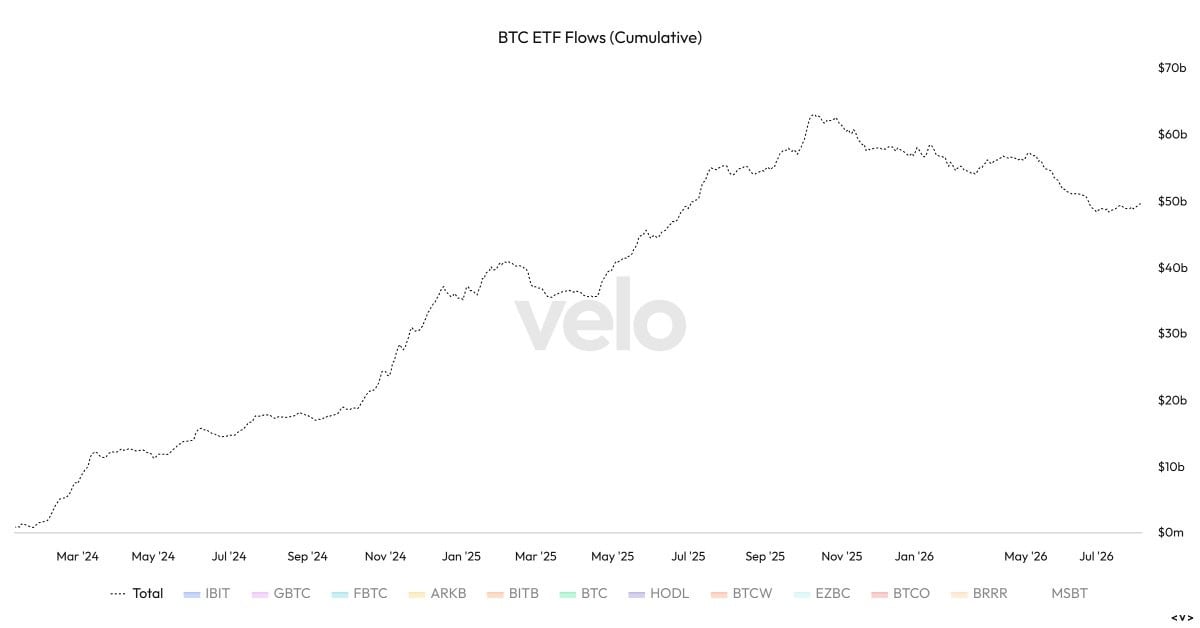
In contrast, there is no such clear reversal logic currently. Of course, crypto asset treasury companies (DATs) and quantum computing risks are two major variables that will be discussed later; in my view, some risks have already shown signs of mitigation. Bitcoin ETF assets under management reached $50 billion, setting a record for capital inflow, but earlier this year, this record has been surpassed by memory chip ETFs. Large traditional institutions have also started launching crypto lending products. Last year, driven by the reserve allocation needs of central banks and the narrative of "de-dollarization," gold had a remarkable performance, which should have been a window for Bitcoin to shine. Now, almost all individuals and institutions intending to invest in Bitcoin have entry channels, but the reality is disappointing: in the past year, Bitcoin ETFs experienced a net outflow of $5 billion, while DRAM-related ETFs achieved a monthly inflow of $10 billion.
Network Fundamentals
When discussing Bitcoin fundamentals, we do not use traditional financial valuation metrics, but instead, observe the operational state of the network itself. I will not pile up all the data, but will focus on two core points. In today's world, economies and markets are increasingly influenced by state power, and large technology companies bring highly centralized technological power. In this larger environment, decentralization itself holds unique value.
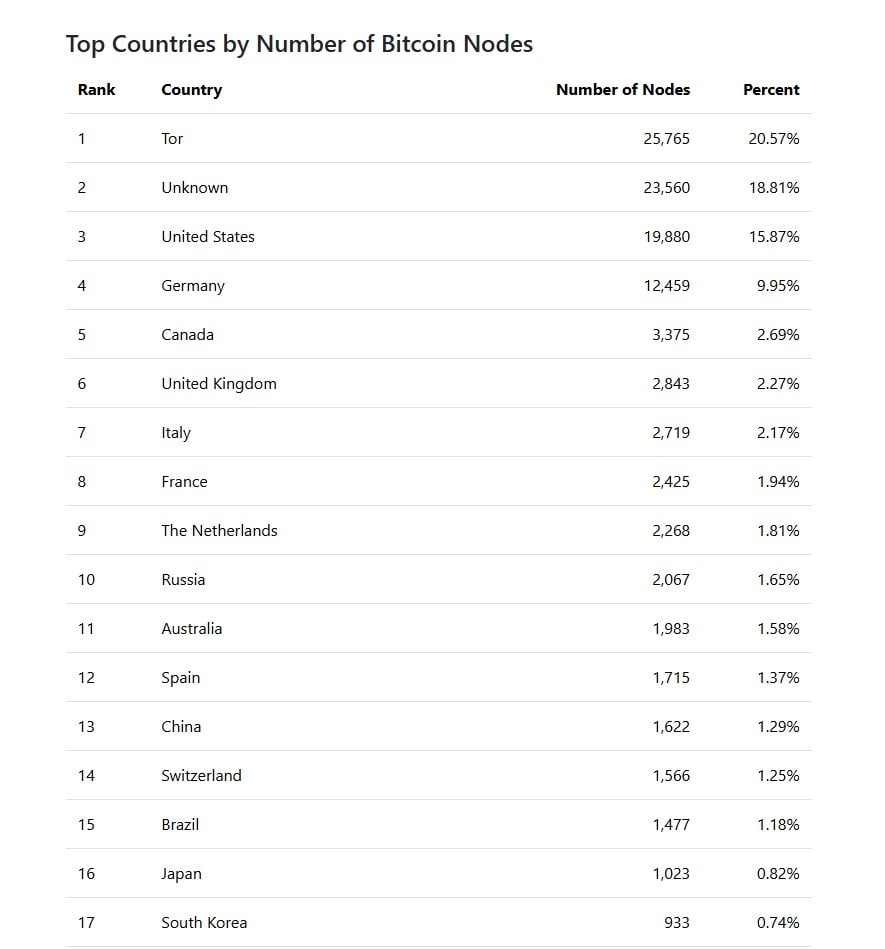
Readers unfamiliar with Bitcoin's underlying mechanism need to differentiate between miners and nodes. Miners are well known; nodes can be set up by anyone, responsible for executing network rules and completing transaction validation; miners, on the other hand, provide security for the network through large-scale computational power investment. Bitcoin nodes are distributed worldwide, and many nodes are difficult to trace; just the publicly available statistics cover nearly 200 countries.
Data source: https://bitref.com/nodes/
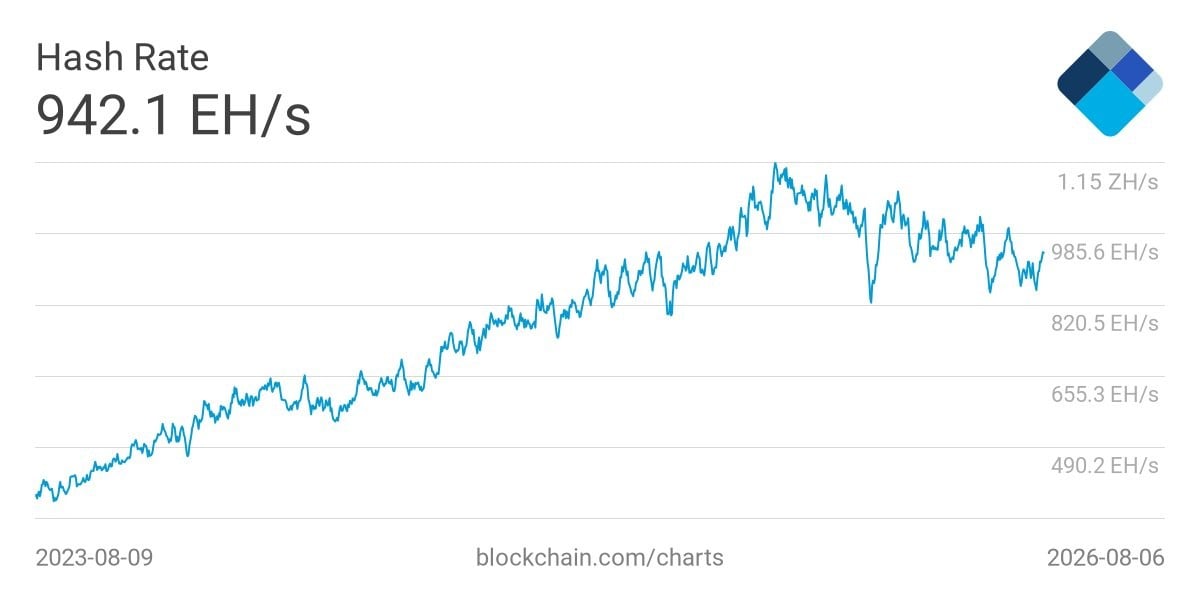
We can observe mining pool data, but mining pools cannot control individual miners; tracking every miner is very difficult. However, we can measure the scale of computational power supporting the entire network through hash rate. Objectively speaking, Bitcoin's hash rate has entered a downward channel.
After 2022, industry competition intensified and energy costs rose, squeezing miners' profit margins; more critically, many publicly listed mining companies have turned towards AI businesses, and for these companies, this business decision has proven to be wise. Bitcoin has underperformed compared to AI-related assets, and changes in computational power demand further exacerbate this trend.
This situation can be interpreted from two opposite angles.
Negative perspective: From the standpoint of computational power support, the security of the Bitcoin network has declined; as a digital commodity, the energy input and production costs corresponding to each token have also lowered. It is worth noting that Bitcoin has a difficulty adjustment mechanism: the system automatically adjusts mining rewards every two weeks based on the hash rate; when computational power declines, it incentivizes new miners to join the network's maintenance, and the network itself will not collapse.
Positive perspective: Despite almost all publicly listed miners investing in AI, the overall hash rate has only slightly fallen back to last year's mid-year levels. This indicates that there are still many entities holding cheap energy continuing to mine. Combined with the global distribution data of nodes, it sufficiently proves that the Bitcoin network still possesses good decentralized characteristics, and its operational state remains healthy.
In summary, the degree of decentralization and the health of the Bitcoin network, compared to the past, have not diminished.
Valuation System and Current Market Signals
Bitcoin itself does not generate cash flow, but there are several unique valuation methods that can compare current market conditions with historical cycles.
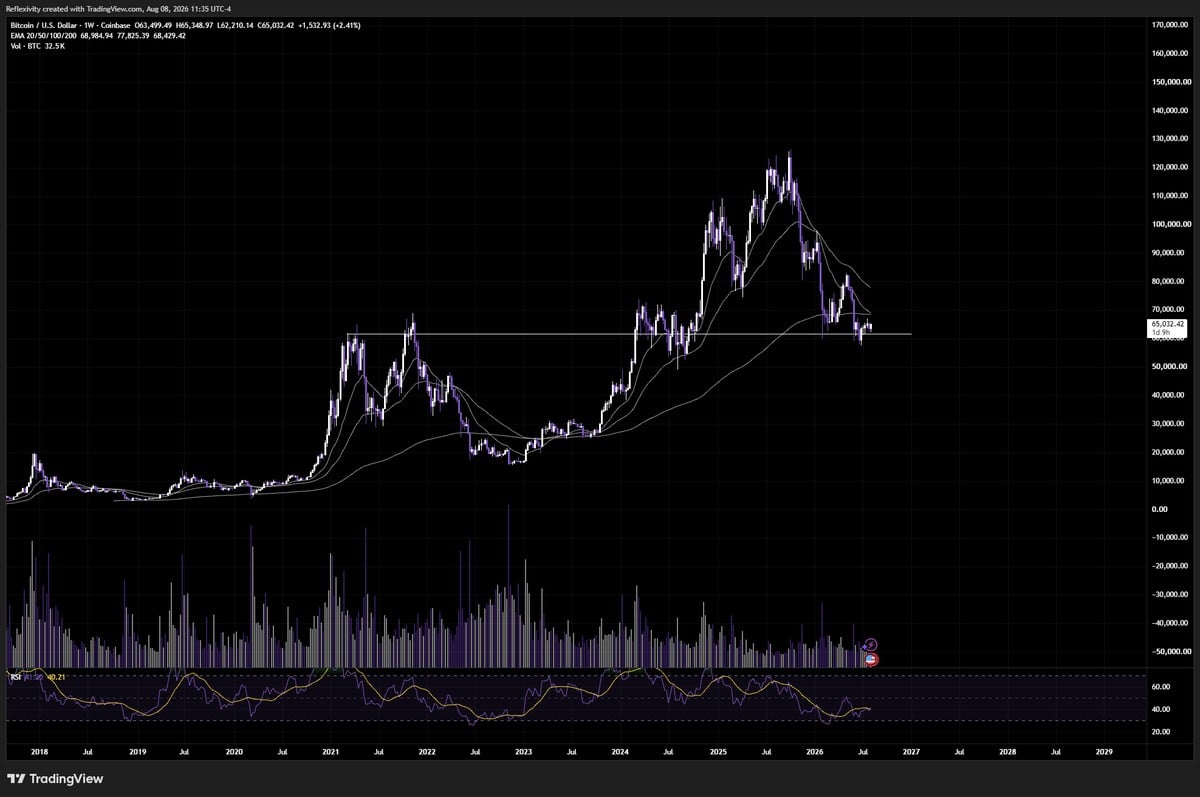
From a technical perspective, Bitcoin is currently consolidating near its historical peak in 2021, with prices slightly below the 200-week exponential moving average; the weekly RSI indicator has emerged from the oversold zone, forming a bullish divergence. The last time such an oversold state occurred was at the bottom of the last bear market. Looking back at history, the 200-week moving average is an important reference point; reaching this range could prompt consideration for accumulating physical Bitcoin.
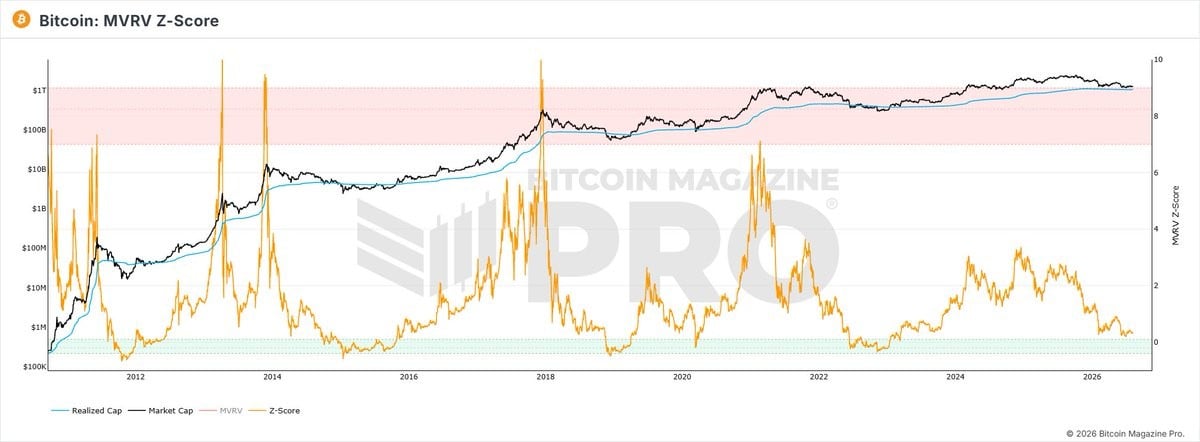
In the on-chain data-based valuation model, the realized market value to realized value (MVRV) ratio is the best-performing indicator. This indicator compares Bitcoin’s current market transaction price with the comprehensive holding cost of all tokens across the network, with the holding cost derived from the wallet clusters that last transferred the tokens.
When this indicator's value rises, it indicates that the market transaction price is far above the average holding cost across the network, and significant unrealized gains will generate pressure on profit-taking in the market. When the indicator falls below 0, it indicates that the overall market is in a loss state; historically, this range is suitable for accumulation.
It can be observed that during the 2024-2025 cycle, this indicator has not delivered the extreme euphoria peak readings typical of previous bull markets. This reflects that the asset is maturing, and volatility is narrowing. Each round's bull market peak gradually lowers, while the readings at bear market bottoms rise slightly. Based on this pattern, this round does not necessarily need the MVRV to drop to negative territory for the market to find its bottom. Accurately timing the bottom is nearly impossible; the core conclusion is: Bitcoin is already at the lower end of its historical valuation range.
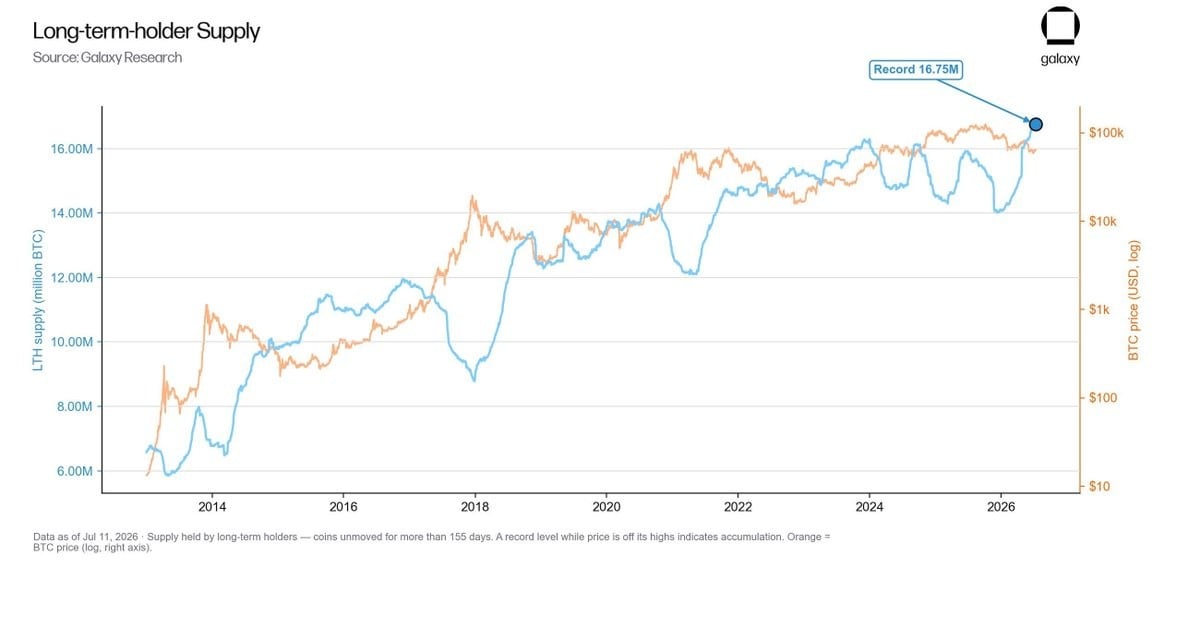
On observing on-chain data, long-term holders began a large-scale accumulation after completing a round of selling in the second half of 2025, indicating that long-term investors see value at current price levels.
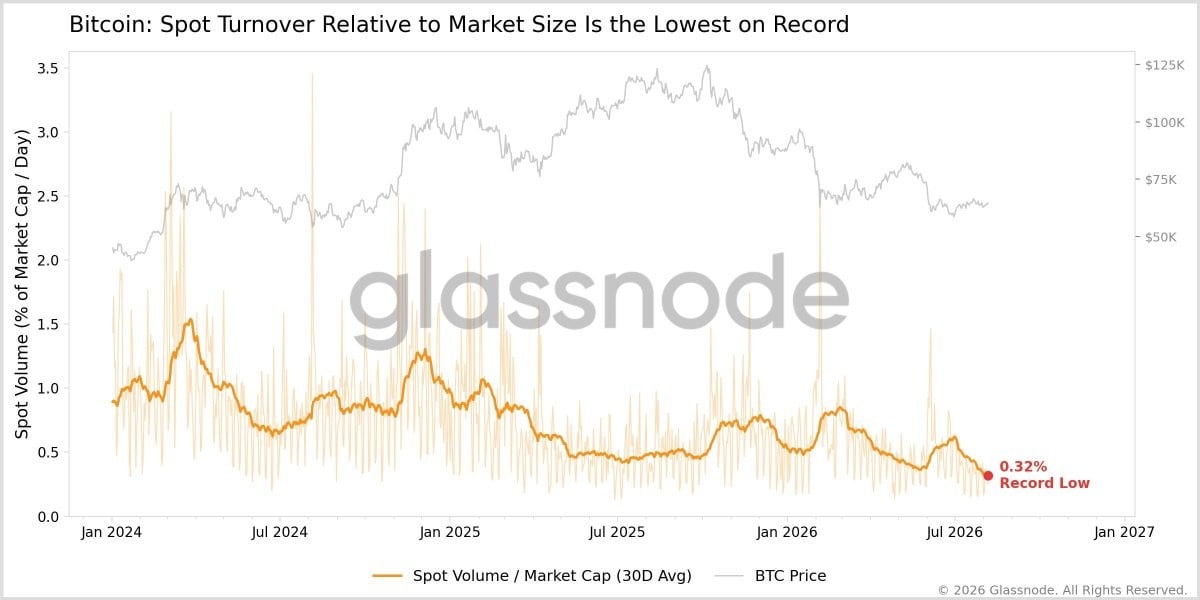
The trading volume in the spot market has drastically shrunk. A chart released by @n3ocortex shows that Bitcoin's spot turnover rate relative to market capitalization has dropped to a historical low. The trading volume of ETFs and DAT products is similarly sluggish.
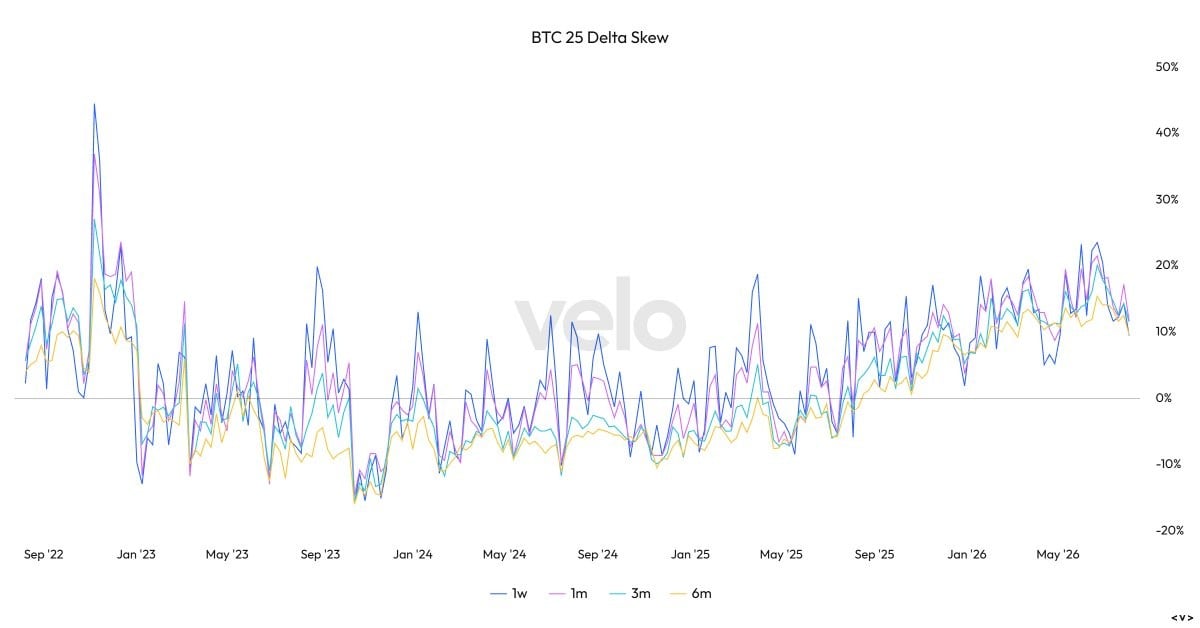
The short-term implied volatility in the options market has reached a multi-year low, and market pricing reflects a sentiment that Bitcoin has turned into a "dead asset" without any momentum. Meanwhile, the skew in options shows that for the past year, the market has continuously bought put protection to guard against price declines.
Another signal from the derivatives perspective is that the Bitcoin futures basis (the price difference between longer-term futures contracts and spot) has been declining for many years and is even struggling to catch up with short-term U.S. Treasury yields. This phenomenon indicates two points: first, a lot of capital is participating in futures basis arbitrage; second, the market has not given noticeable premiums for longer-term futures contracts over spot.
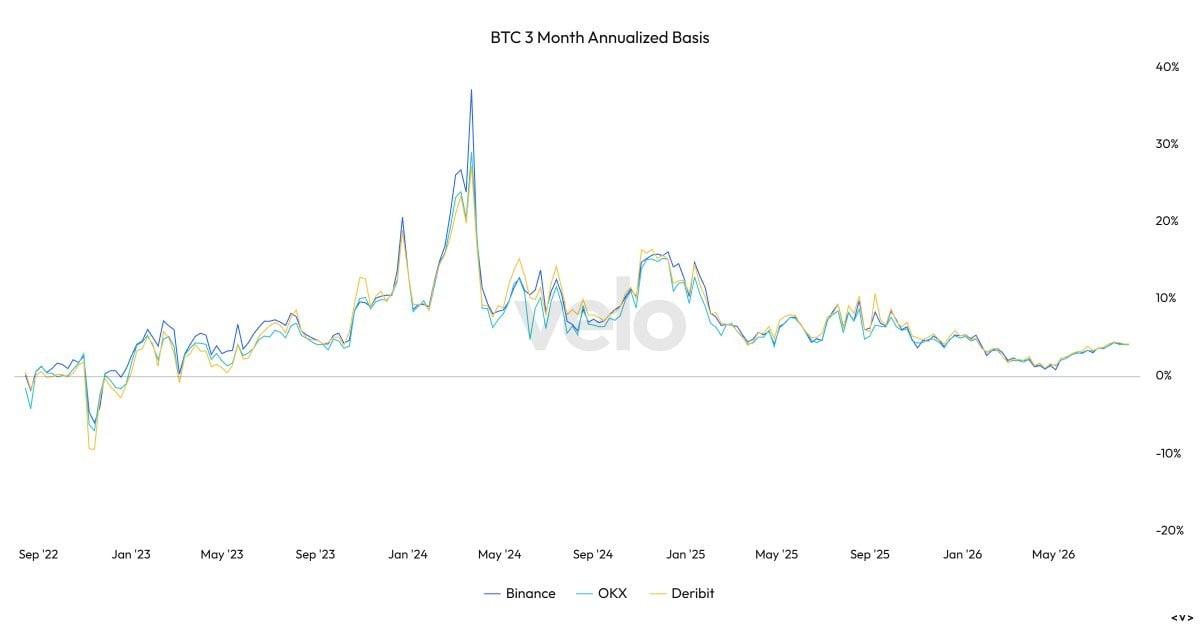
In summary, all signals can objectively conclude: the market is almost stagnant. In both the futures and options markets, there are no bullish expectations from traders, and market pricing indicates that Bitcoin's volatility will continue to remain low. However, the contradiction is that multiple valuation indicators show Bitcoin has already entered deep value territory, and long-term holders are continuously accumulating; meanwhile, over the past 52 weeks, Bitcoin ETFs recorded a net outflow of $5 billion, contrasting sharply with the behavior of traders and long-term holders.
Potential Threats from Crypto Asset Treasury Companies (DATs) and Quantum Computing
The biggest risk in this bull market from 2023-2025 comes from crypto asset treasury companies (DATs). The design logic of these products is theoretically to dilute ordinary shareholders' rights to raise funds to continuously buy Bitcoin, thus increasing shareholder value. However, after the successes of Strategy and Japan's Metaplanet, more participants entered the field, diverting large amounts of funds and directly leading to compression of product premiums relative to net assets.
In recent months, multiple news reports have indicated that several treasury companies are slowing down the pace of Bitcoin purchases, with some institutions directly selling Bitcoin, and a few entities are even completely adjusting their business strategies. In my view, this is a positive signal of market self-repair. Recently, an interesting phenomenon occurred: when Saylor announced that Strategy would sell Bitcoin, the price of Bitcoin actually increased; corresponding to the company's latest earnings call, Strategy is optimizing its capital structure and shifting focus to STRC. This is completely opposite to the past model where "official announcements of buying coins led to rising prices, while selling them caused declines." Looking ahead, the selling pressure from DATs is no longer as prominent as it was 6-9 months ago, especially since the current coin price has fallen over 50% from its peak.
The risk of quantum computing, I believe, poses a real and significant hazard that must be acknowledged as we look over a timeline of more than five years. In the past few months, I have participated in investment analysis work at STIX, engaged with several early startups, and communicated with industry professionals to gain some understanding of quantum computing, though I am by no means an expert in the field. My perspective is that the risk should be taken seriously. However, with Bitcoin's price currently around $60,000, having halved from its peak and underperforming many other assets, this risk has largely been priced into the current price.
Even in the case of extreme disaster scenarios, the market is publicly discussing quantum risks sufficiently, and future risks are likely to diminish marginally. The more Bitcoin underperforms other assets due to quantum risks, the more incentive there will be for large holding institutions and firms that profit from Bitcoin transactions, custody, and lending to fund developers and push the industry to present solutions. Just like the previous round of ETF listings, the market will speculatively anticipate the possibility of resolving the risk, and by the time the risk is completely alleviated, it will become very difficult for investors to obtain a very low entry price.
Potential Bull Market Logic
Even if we agree that Bitcoin has reached a good long-term positioning, from the perspective of mid-to-short term asset allocation, investing funds into Bitcoin will face a high opportunity cost. Over the past few months, everyone has been asking a core question: this year, as gold strengthens and high-beta equity markets thrive, why has Bitcoin failed to rise in tandem? What conditions are necessary for Bitcoin to initiate an independent rally?
The data mentioned earlier has shown: on-chain metrics indicate that long-term holders are aggressively buying; DATs' selling pressure is being cleared, yet ETFs continue to experience significant net outflows. Historically, the end of Bitcoin bear markets is often marked by the complete exhaustion of selling power, rather than the emergence of a strong new demand catalyst.
From a longer-cycle perspective, setting aside one-off risks brought by macro and geopolitical factors: the risks posed by DATs, quantum risks, and the pessimistic expectation of underperformance have already fully fermented; who could still continuously sell large-scale to push selling pressure beyond the levels of the past 6-9 months? Certainly, there are no very clear positive catalysts, and the CLARITY Act might bring some changes, but I don’t believe it will provide a decisive boost for Bitcoin. This is often the characteristic of bear market bottoms. Investors need to weigh the probability of further market deterioration, whether it has been fully priced in at current levels; this stands in stark contrast to the bullish speculation in a bull market when expectations are exceeded.
I do not rule out the possibility of a final downturn later this year, but overall, the vast majority of risks have been priced in by the market in the past year.
A potential driver comes from the continued passive buying by large institutions. The ETF's initial stage saw a surge in scale, but since last October, total managed assets have continuously declined, and the excitement has worn off. If large asset management firms decide to uniformly allocate a small percentage of Bitcoin in their portfolios, it would bring incremental funds that are insensitive to price. While this may sound one-sided, Bitcoin's correlation to most assets has been low over the past year, which provides a portfolio value for large managers looking to diversify risks by allocating a small part to Bitcoin.
Conclusion: How to Approach Asset Allocation Moving Forward
I believe Bitcoin is currently in the "undervalued" range, but there is still a possibility of experiencing one last drop this year. The overall health of the network fundamentals is good, and the vast majority of risks have been priced in by the market; those looking to sell due to various risks have probably completed their selling. Accurately buying at the absolute bottom is nearly impossible.
In my view, there are several allocation strategies at present:
- The first is to invest in the spot market through dollar-cost averaging over the next few months, which is the simplest strategy.
- The second is to wait for the market to complete a final drop or for the market to show clear warming or momentum signals before entering.
- The third is to complete the allocation directly now; current implied volatility is at a low level, which allows using options to hedge against potential downturns, avoiding being shaken out of positions by corrections.
I have not yet made an actual entry but will likely begin to position soon in some form. The four-year cycle sometimes makes one feel as though the world is merely a simulation. However, the coming months will be worth closely monitoring for this orange token.
免责声明:本文章仅代表作者个人观点,不代表本平台的立场和观点。本文章仅供信息分享,不构成对任何人的任何投资建议。用户与作者之间的任何争议,与本平台无关。如网页中刊载的文章或图片涉及侵权,请提供相关的权利证明和身份证明发送邮件到support@aicoin.com,本平台相关工作人员将会进行核查。


