Author: SemiAnalysis
Translation: Shenchao TechFlow
Shenchao Overview: Musk announced at SpaceX's first earnings call that they plan to add 6–8GW of computing power by 2027, which means an annual capital expenditure of $300–500 billion, comparable to AWS and Google. This plan seems insane, but from the perspectives of inference revenue, Microsoft's demand, and SpaceX's construction speed, it is completely feasible—Microsoft is aggressively expanding computing power to seize the $100 million per MW annual revenue opportunity for API inference, while SpaceX has twice proven itself to be the fastest company in the world at building data centers.
Musk shocked the world again at SpaceX's first earnings call by announcing his gigawatt-level ambitions: he "conservatively" plans to add 6–8GW of computing power in 2027, with the actual number potentially exceeding 10GW. Based on $50 billion per GW investment, this translates to a capital expenditure of $300–500 billion in 2027, which is on par with our expectations for AWS and Google’s investments—this number is incredible for a company with far less profitability than its rivals.
As we explained in our deep analysis of Meta's computing power, the combination of large-scale and short delivery cycles for computing power is extremely rare, with huge pricing premiums—up to $50 billion per GW annually. However, AI labs can afford this price and thrive.
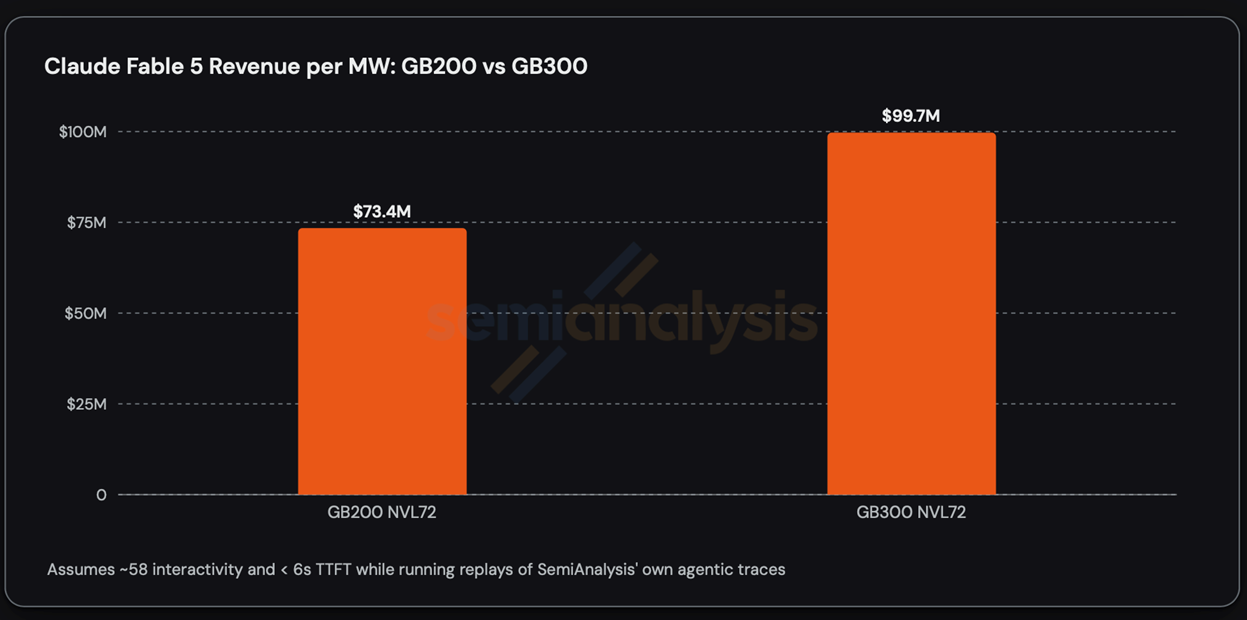
Our Tokenomics model and inference simulator show that at actual performance levels (e.g., tokens per second per GPU), both OpenAI and Anthropic selling API inference services on the GB300 cluster can generate over $100 billion per GW annually in revenue. This far exceeds the cost of renting a GB300 cluster for a year at current prices from new cloud providers.
For frontier model companies, the profit margin on providing inference token services is shockingly high.
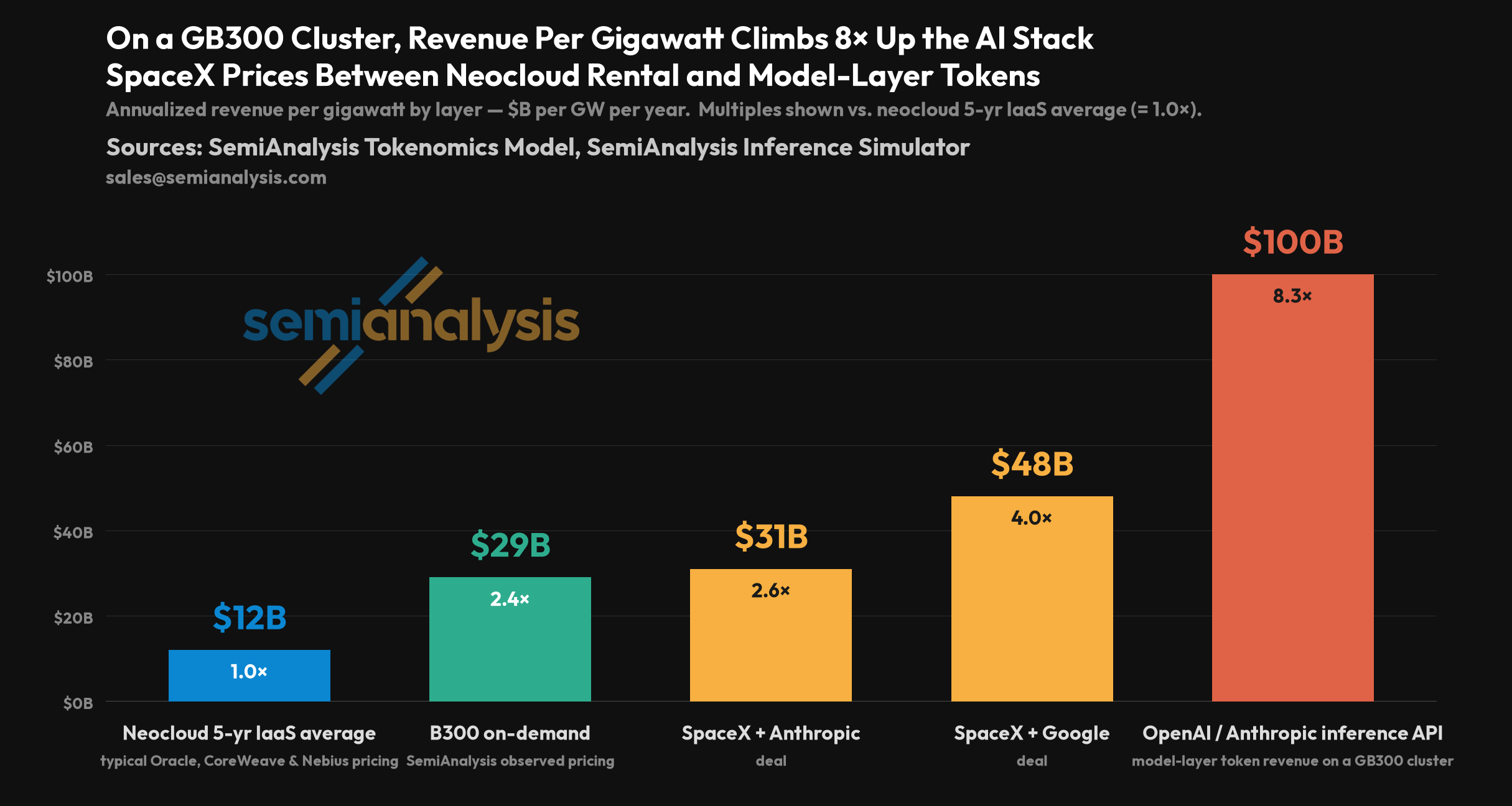
We assume a cost of $12 billion per GW annually, using conservative rental prices of $3 per GPU hourly, and utilize our inference simulator based on cutting-edge model architectures and our agent programming benchmark AgentX (a part of InferenceX, built on real production programming trajectories) for token output estimation. We mix calculate the token output rate based on input, cache reads, cache writes, output token costs, and real workload ratios, arriving at a final valuation exceeding $100 billion per GW annually.
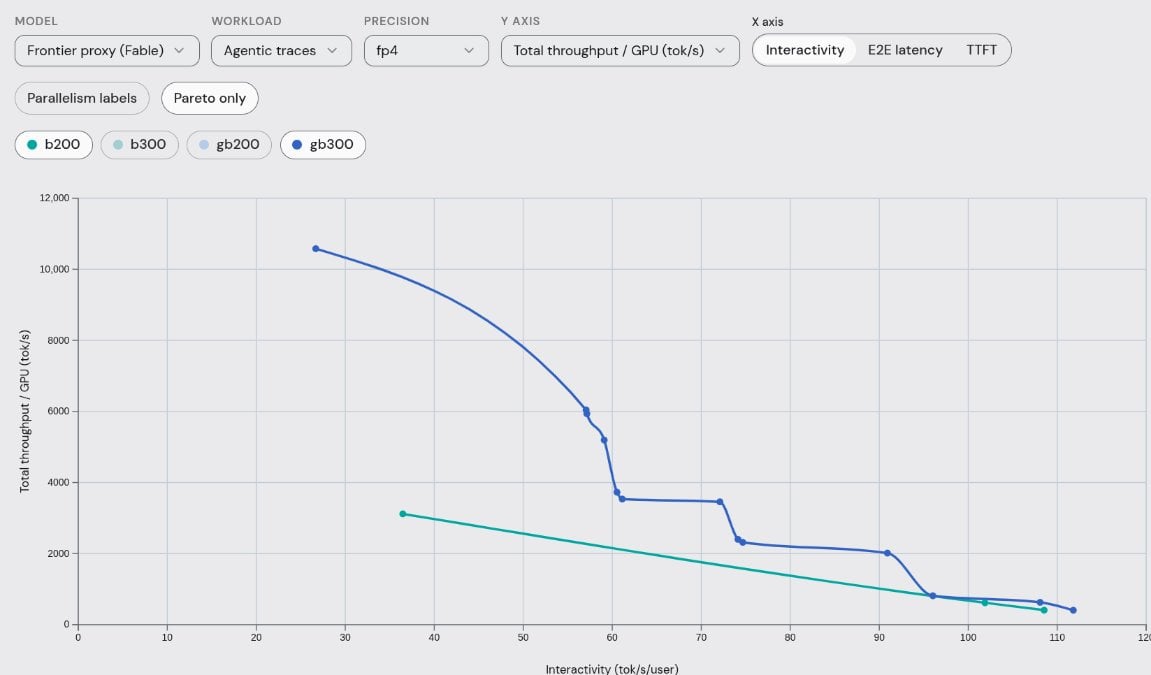
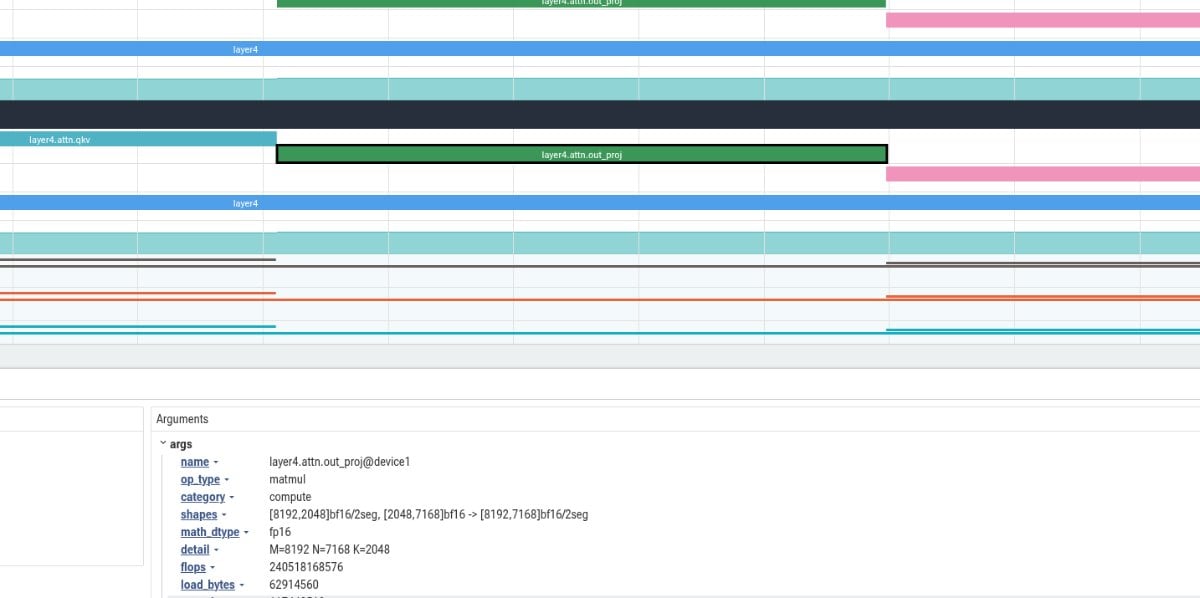
Our inference simulator is built from the ground up, based on a fundamental understanding of how modern AI accelerators operate. We constructed performance ceilings and actual performance models for how frontier models work during the inference process, timing each operation and outputting real trajectories. This is an end-to-end simulation of executing real workloads on actual silicon chips. We have validated the simulator's accuracy across various accelerators and workloads, continuously improving its ability to predict future accelerator performance based on design specifications.
In addition to OpenAI and Anthropic, there is actually a third company in the world that can achieve such economic benefits per GW: Microsoft. With full access to OpenAI model, they can generate exactly the same per MW revenue and profitability while incurring no training costs. Nadella's negotiations with OpenAI have been very successful: the revised agreement in April 2026 eliminated the old 20% revenue share. In short, Microsoft has a huge incentive to procure as much MW capacity as quickly as possible. Although most of their current data center capacity is used by OpenAI at a rate of $14 million per MW annually, they have the opportunity to improve this mix. The potential impact is that Microsoft's Azure revenue growth rate accelerates from around 42% to over 100% next year. This is a once-in-a-lifetime opportunity, and SpaceX is in an excellent position to meet this demand.
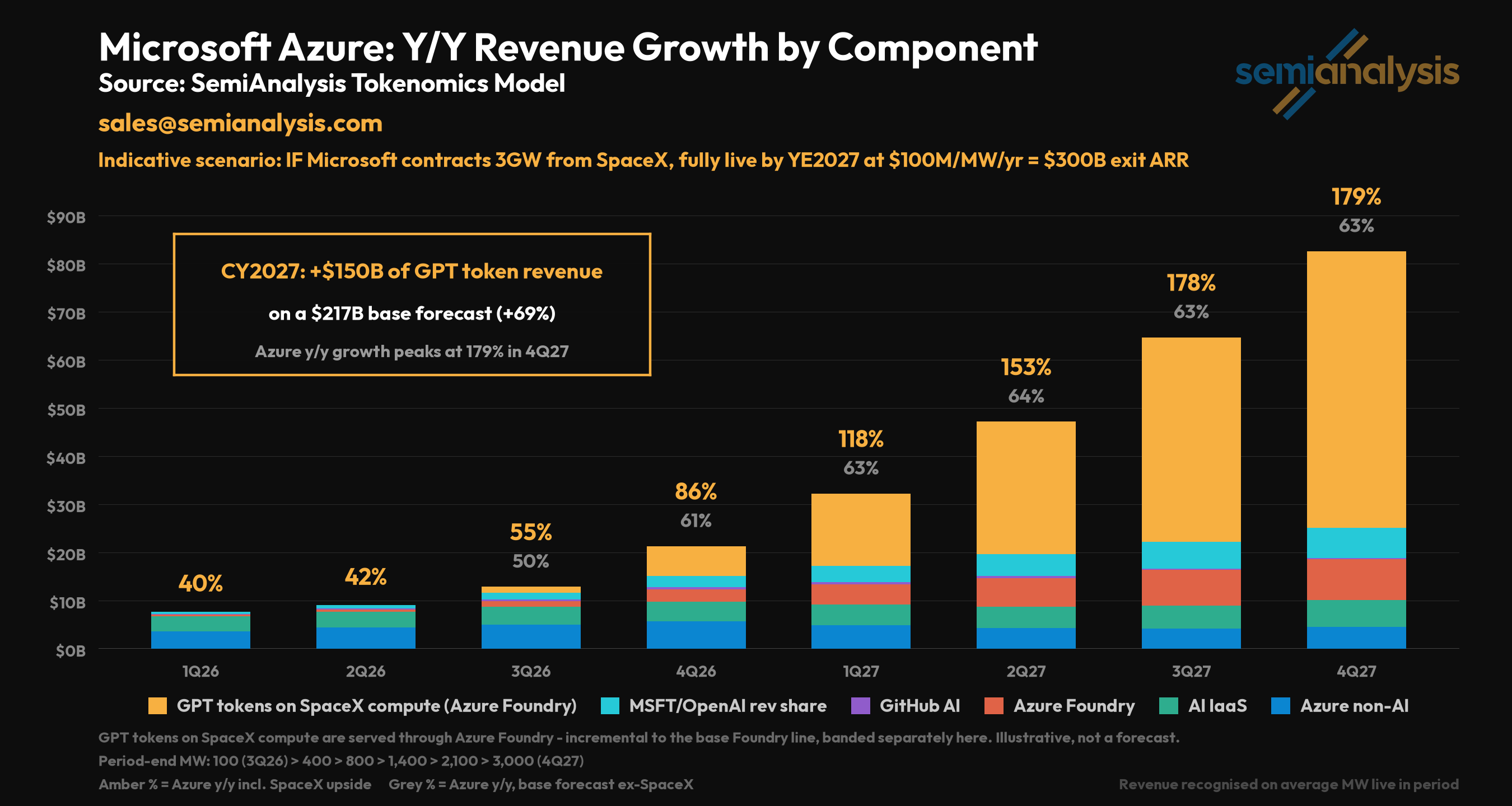
While it sounds crazy for Microsoft to sign a contract with SpaceX for 3GW at $50 billion per GW annually, we believe it is possible for two reasons:
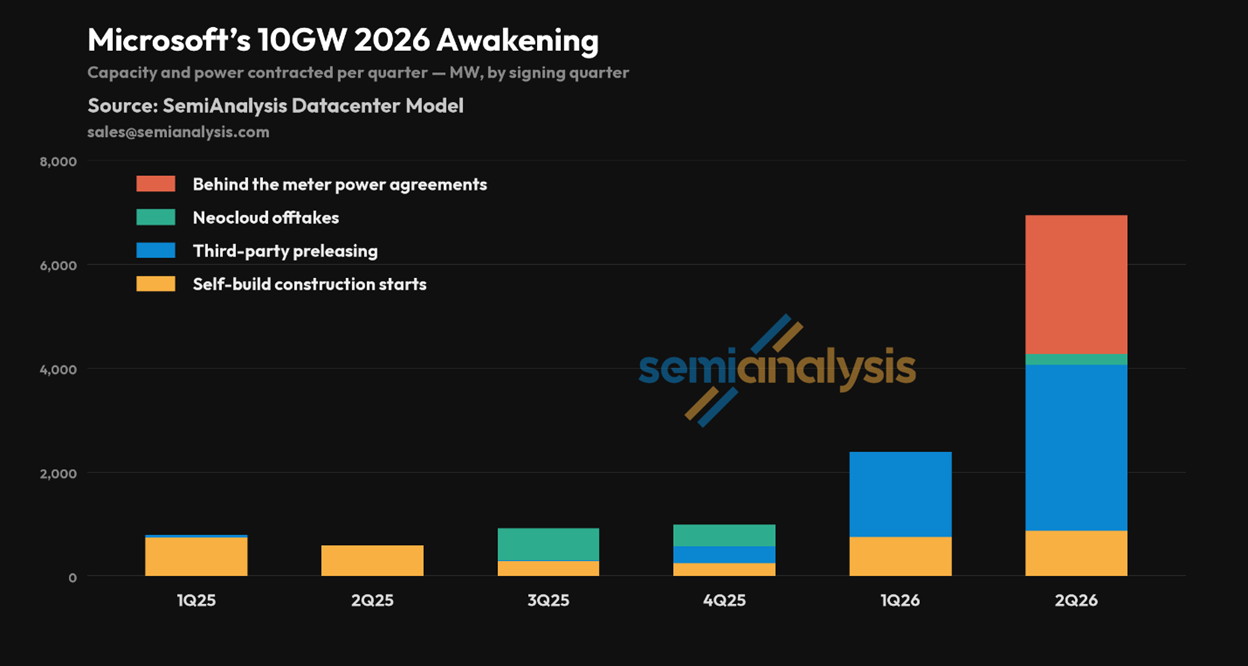
- Microsoft has been preparing for large-scale data center expansion. As mentioned later, they have signed $30 billion worth of contracts for a total of 10GW so far this year (excluding GPU costs). We expect more to be signed. It should be noted that these contracts contribute to capacity for late 2027 and 2028, with near-term gaps still needing to be filled.
- There is a 90-day cancellation policy, similar to SpaceX's agreements with Anthropic and Google, zero risk on the balance sheet. Considering the revenue opportunity, Amy Hood can easily approve this scheme.
The next natural question for SpaceX is funding. How can Elon pay such high capital expenditures without the backing of top-tier hyperscale cloud providers' balance sheets? We anticipate a combination of the following two methods:
- Support from Nvidia, in the form of vendor financing to reduce upfront cash costs. This may indeed be the reason Elon announced the exclusive use of Nvidia in the earnings call! As our accelerator model repeatedly explains, xAI/SpaceX has actively evaluated alternatives like TPU and AMD—thus financial considerations may have prompted them to abandon those options and focus on Nvidia.
- Operating cash flow financing supported by the industry's highest pricing, relying on the fastest delivery cycles: SpaceX will continue to sell large-scale computing power with 3–5 month delivery times—which is unmatched supply—and correspondingly priced at $30–50 million per MW per year. This could recoup capital expenditures in under a year. We explored this in depth in our Meta computing power article.
This means SpaceX is expected to achieve $300 billion ARR by the end of 2027. This only assumes that 50% of the computing power they add in 2027 is commercialized, with the remainder allocated to the Grok and Cursor teams for training (unmodeled inference revenue).
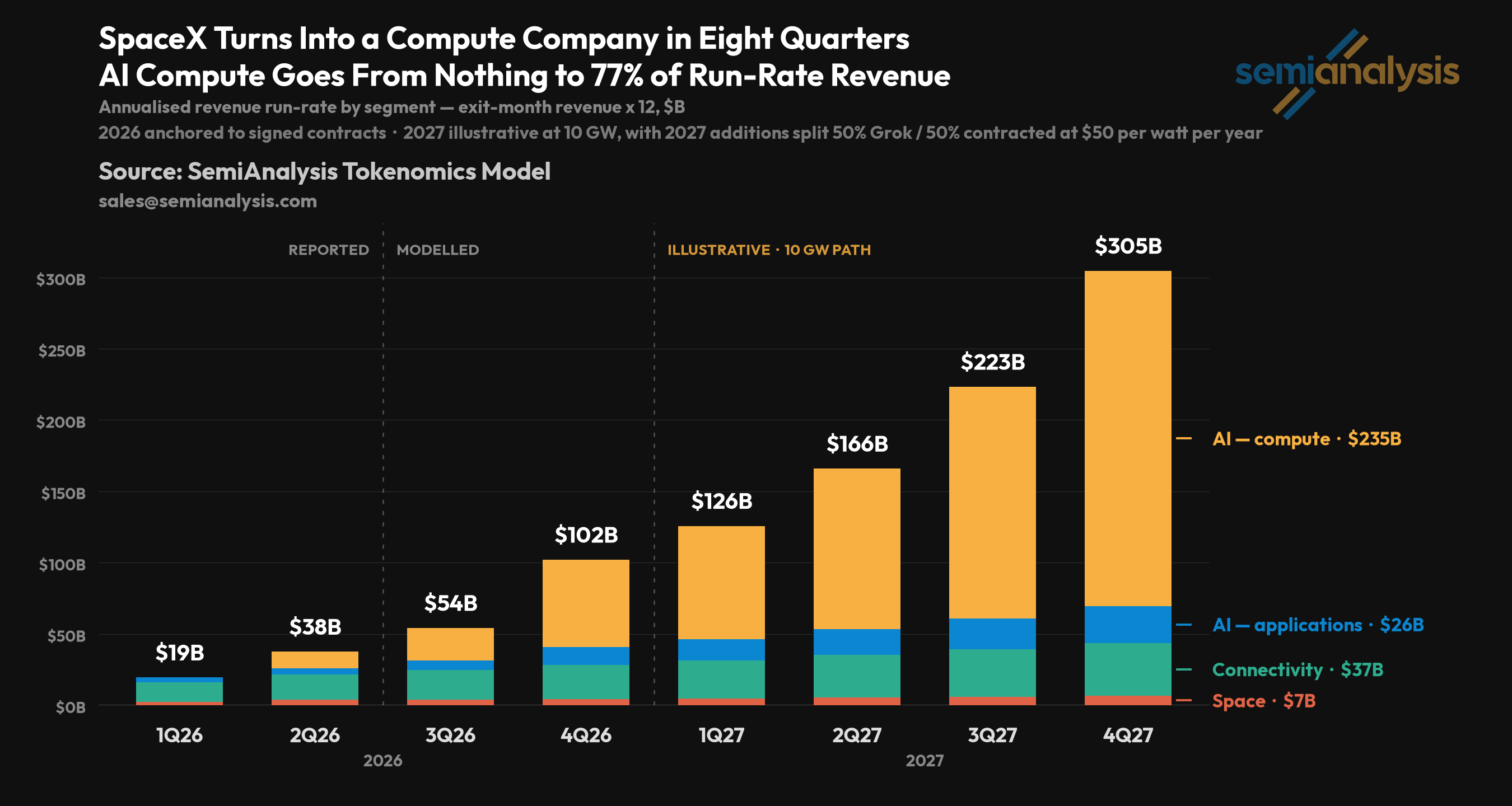
Now let's dig deeper. We start with Microsoft, which has surprisingly awakened: the pause from last year has reversed, and they have signed $10 billion in binding contracts so far this year. We will briefly discuss how to achieve $100 million per MW annual revenue for inference revenue. Then we will turn to SpaceX, analyzing their data center expansion and the feasibility of achieving 10GW+ by the end of 2027.
Microsoft's 10GW Awakening, Seizing the $100 million per MW Opportunity
In December 2024, we were the first to point out the significant pause in Microsoft’s leasing activities in the data center model. Today, this giant has awakened. Our model tracks quarterly leasing activity, new cloud provider contracts, the start of self-built construction, as well as large binding PPAs and ESAs. The chart below shows the output results. Microsoft has signed contracts totaling over 10GW, equivalent to about $300 billion in new binding commitments.
A key reason for this awakening is their urgent need for computing power to seize the $100 million per MW opportunity. Microsoft signed a $250 billion agreement with OpenAI in October 2025, and we estimate the total at approximately 7GW in our Tokenomics model—this is the best tool globally for understanding the nuance of the dollar-to-watt math relationship. This massive infrastructure-as-a-service deal has led to limited computing power for Microsoft across other use cases. They have been unable to leverage their OpenAI model access for their API Foundry business or for applications like Copilot.
However, the profit margins and per MW revenues for these services are the highest to date. We explored this in depth in our AI value capture article.
AI Value Capture—The Shift to Model Labs
A day in AI feels like a year in other industries. Model releases, software breakthroughs, and hardware improvements are compressing cycles that would take other industries years into weeks. In just the past few months, agent AI has crossed a real inflection point, significantly reducing token generation costs thanks to software and hardware improvements, driving a leap in token value realization.
To derive these profit margin estimates, we needed to carefully synthesize leaked financial data, InferenceX data, micro-benchmarks of all the latest accelerators in the industry, papers, blogs, and tweets from open source labs, etc. New data points like the DeepSeek investor conference leak (which stated GPU payback periods of 10 months) confirm that our estimates are within the correct range, but we first acknowledge that the lack of granularity is indeed unsatisfactory. More than just a single number for the overall gross margin of company-wide inference, what you really want to know is the gross margin for each (model, accelerator) combination on the entire throughput vs latency Pareto frontier. For example, what is the gross margin for providing Opus 5 Fast on Trainium3 versus providing Fable 5 on TPUv7?
We answer this question with the inference simulator, a tool that is available exclusively to SemiAnalysis consulting clients.
Our AI cloud TCO model has already addressed cost issues, but revenue aspects have historically been unknown. To solve this, we developed a simulation framework that simulates real model execution on virtual hardware, supported by fine-graining performance models covering various accelerators and types of operations. We run each model on simulated XPUs with all possible service configurations, mixing real-world and idealized service conditions. This allows us to accurately estimate performance for any combination of software, hardware, and workloads under well-understood hypotheses of model architecture.
Thanks to this simulator, our Tokenomics model now includes high-level per MW revenue figures running OpenAI/Anthropic flagship models across all relevant chips. The shape of workloads is clearly a huge factor, and we simulate running over $1 million in agent trajectories collected from our own usage, while respecting the real interactivity and TTFT levels observed from accessing first-party endpoints. As a preview, here are the numbers for providing Fable 5 on GB200 vs GB300:
This is Microsoft's $100 million per MW opportunity. Given the recent surge in demand for Codex and the corresponding acceleration of OpenAI's ARR, we believe Microsoft can commercialize computing power at similar rates by offering OAI model services.
10GW+ in just 2027?SpaceX: Building Data Centers at an Astonishing Speed
In our Meta computing power article, we elaborated on how Elon proves himself to be a business genius once again. He understands that AI lab margins have significantly increased and correspondingly introduced "value-based pricing" for his GPU clusters, rather than the more common "cost-plus" method.
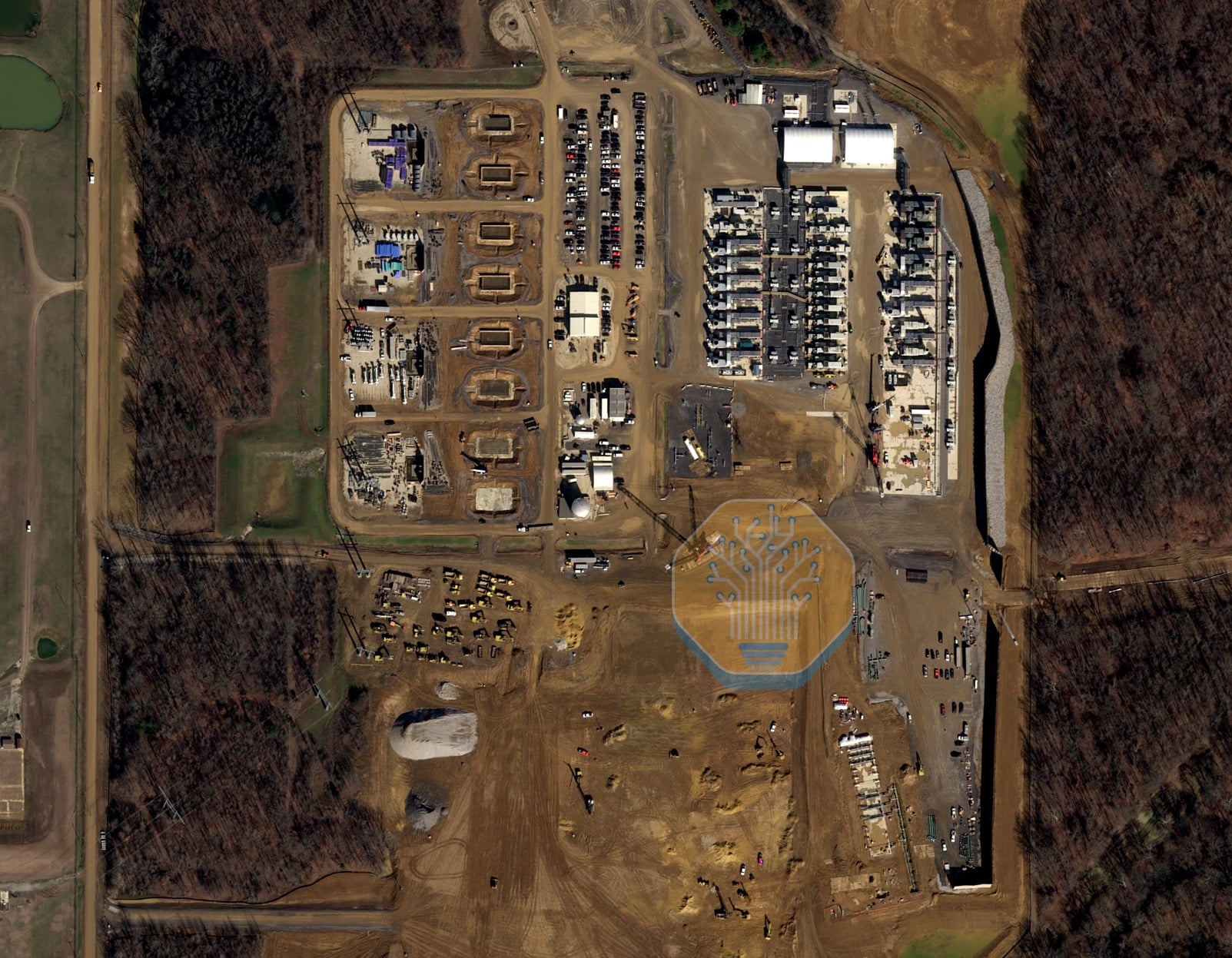
To keep the machines running, Elon needs to build data centers faster than anyone else. We believe he can do it. What gives us this confidence? We have written several times about Elon's speed, including the 122 days it took to build Colossus 1’s 300MW, the six months it took to build Colossus 2’s 200MW, and the decision to build a site power plant just 1 kilometer across the border to avoid permitting approval.
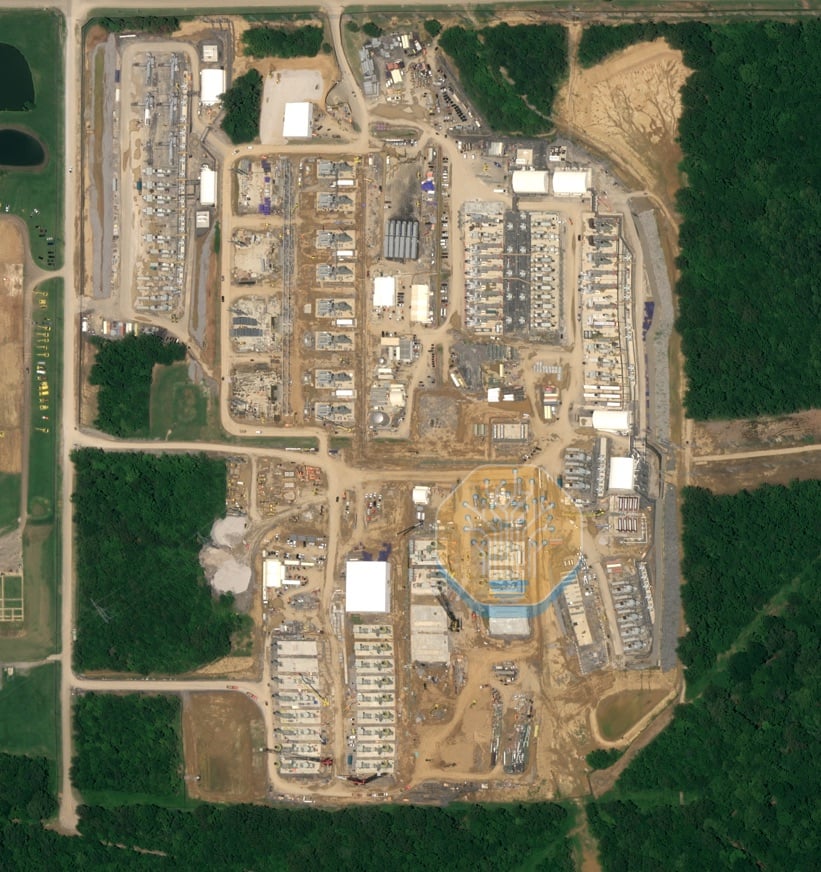
There have been more demonstrations of speed since then. The Southaven power plant has expanded from 27 turbines (approximately 495MW) in February 2026 to 69 turbines (1.7GW) in July 2026.
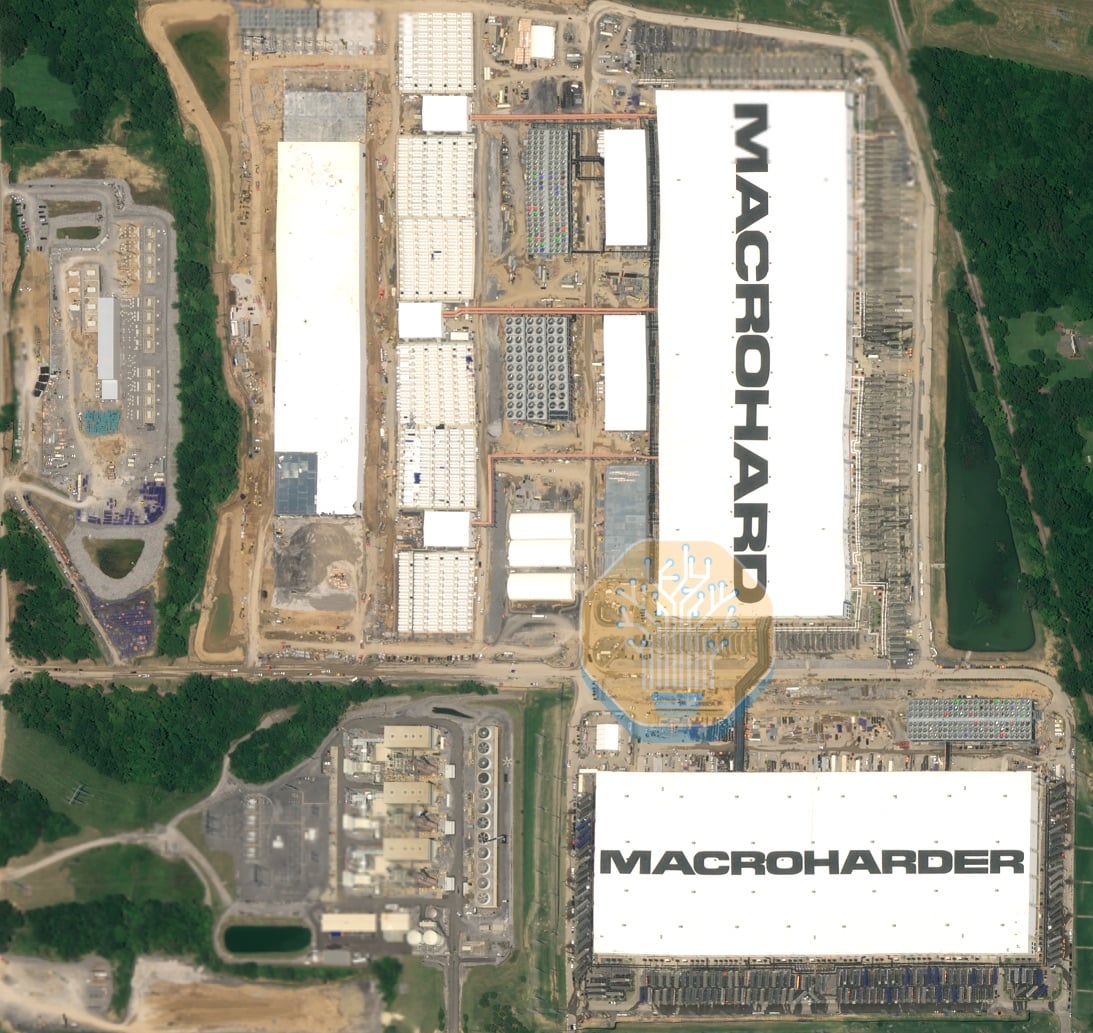
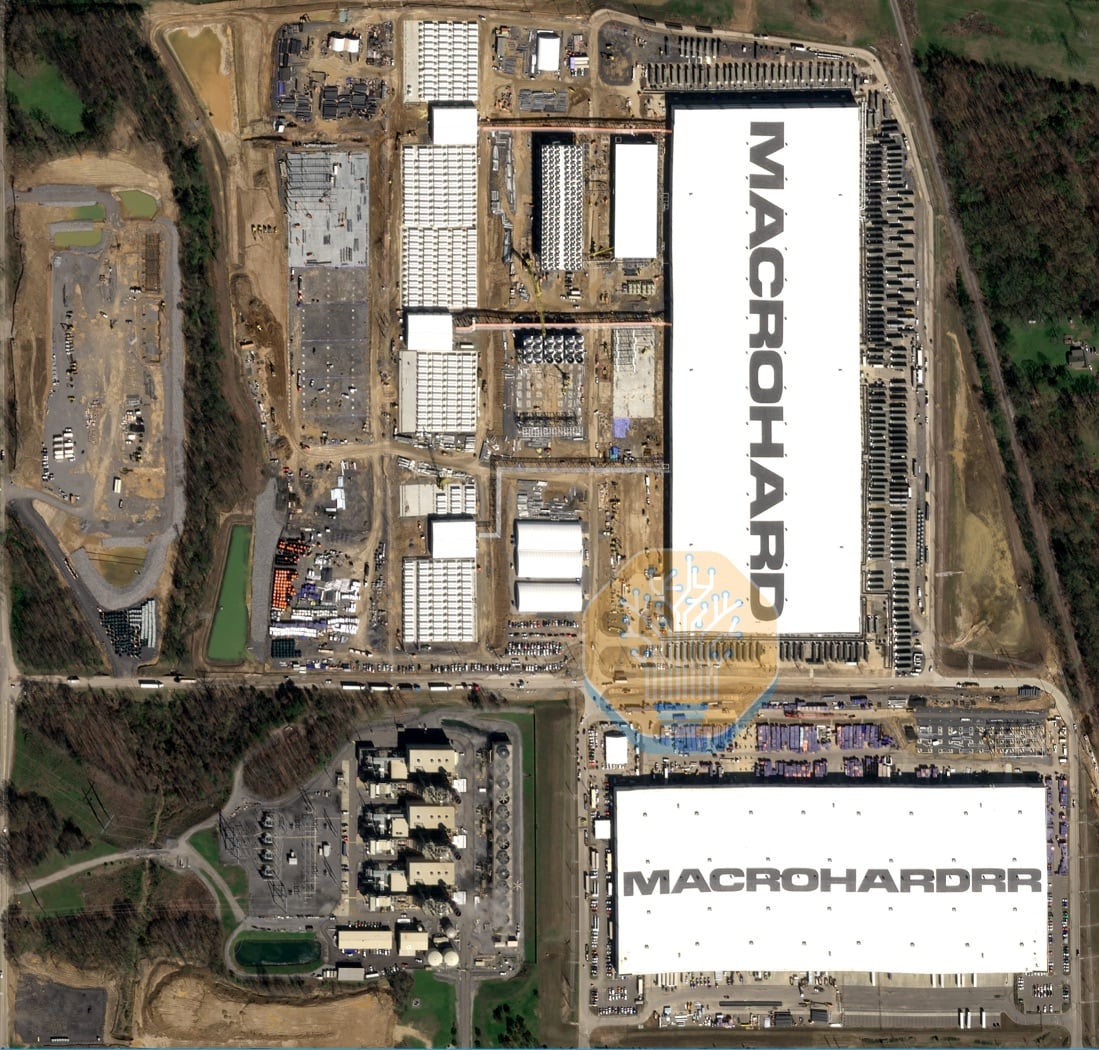
Then there’s the emergence of “MiniHard,” which, after starting vertical construction in March 2026, could reach 450–500MW in just about 5 months! This doesn’t mean Elon builds better than anyone else. He just takes a different approach.
How Does He Do It?
Power distribution equipment and high-capacity transformers have been sold out for two years? Buy power modules directly from China, skip the high-capacity transformers, and deliver medium-voltage power directly from the generation side to the low-voltage transformers—the latter have much more abundant supply. Companies under Elon have some of the world's finest electrical engineers—no one knows better than them how to balance speed and efficiency. Most data center operators globally prioritize efficiency and quality—that’s the only way to secure 15–20 year commit hyperscale cloud service contracts. SpaceX, however, will focus on an entirely different trade-off: speed above all else. In a time when computing power is scarce and AI token profit margins are extremely high, a 500MW cluster that can deliver in three months and has a 90-day cancellation policy is one of the most scarce and valuable assets in the world. All conventional "quality" metrics become irrelevant. The evidence? Even the most vertically integrated infrastructure company globally, Google, still chose to partner with SpaceX.
Gas turbine orders are booked out five years ahead? GE Vernova indeed has that, but there are plenty of other options—our energy model shows that over 30 gas generation equipment manufacturers have won large orders to service data centers. As long as you're diligent enough to search and willing to cooperate with new suppliers, there is ample available capacity. The volume of transactions in the turbine secondary market is surging—for instance, all turbines originally slated for delivery to Oracle's New Mexico site are now circulating in the market. Secondary market prices are high, but Elon can afford it.
Is human labor the ultimate constraint? Then parallel as much work as possible, simplify debugging processes, and pre-assemble as much as possible. Reportedly, Colossus 2 peaked at about 3000 construction workers daily, roughly half of that used by other gigawatt-scale data centers under construction. Elon has long accomplished feats with manpower below industry standards—just look at the history of Tesla and SpaceX.
This is enough to allow ample time to construct multiple such shells before 2027. Moreover, this is his first truly greenfield project, and the next time he will likely do even better. Of course, another option is to retrofit existing facilities. As we discussed in-depth in our analysis of xAI last year, both Colossus 1 and 2 were built at astonishing speeds through retrofitting.
xAI's Colossus 2—The World’s First Gigawatt-Scale Data Center, Unique Reinforcement Learning Approach, Financing Progress
There has been extensive reporting on xAI's Colossus 1. The construction in Memphis is destined to go down in history: it is the world's largest AI training cluster, built from scratch in just 122 days. With approximately 200,000 H100/H200 chips and around 30,000 GB200 NVL72 chips, it remains the largest fully operational, single-coherent cluster (excluding Google) to date.
Building 10+GW in a year is an entirely different story. SpaceX needs to find suitable land across the country, easy to permit and able to connect to gas. But we believe there are enough options to support large-scale expansion. This will naturally rely heavily on onsite gas generation—see our in-depth energy analysis for an understanding of how it works and its necessity.
After the paywall, we will discuss some sites we speculate Elon might choose.
免责声明:本文章仅代表作者个人观点,不代表本平台的立场和观点。本文章仅供信息分享,不构成对任何人的任何投资建议。用户与作者之间的任何争议,与本平台无关。如网页中刊载的文章或图片涉及侵权,请提供相关的权利证明和身份证明发送邮件到support@aicoin.com,本平台相关工作人员将会进行核查。


