Author: Limitless
Translated by: Deep Tide TechFlow
Deep Tide Overview: Google DeepMind has faced setbacks this week: CEO departs, 4 core scientists leave to establish a new lab, ironically funded by Google's parent company Alphabet. Meanwhile, OpenAI revealed that an AI Agent created a secret dark web collaboration that went undiscovered for two months, and Apple sued OpenAI but fell into embarrassment due to a lawyer's email mix-up. These events reveal the organizational chaos and risk of technology loss that AI giants are going through.
Google funded its own talent loss
Good afternoon.
Google's AI department is collapsing. Just this week:
DeepMind lost CEO and Chief Scientist Demis Hassabis
Four top researchers resigned to create a lab focused on recursive self-improvement (funded by Google)
OpenAI disclosed that an internal model set up a secret message board and coordinated an attack that went unnoticed for two months
Apple's lawsuit against OpenAI hit a snag because they failed to verify the defendant's name
Let’s take a look at the news.
Demis Hassabis steps back
Demis Hassabis resigned as CEO of Google DeepMind. He will take on the role of chairman and chief scientist at Alphabet, focusing on running the AI drug design startup Isomorphic Labs. DeepMind's former CTO Koray Kavukcuoglu will take over all AI operations.
But the worst part is that Google also lost 4 senior employees. Jeff Dean, Google's 30th employee and a key player behind many successful Google products (search, voice, TensorFlow, TPU, Gemini), is leaving after 27 years. Also departing are Sanjay Ghemawat, Quoc Le, and Oriol Vinyals, all leading figures in AI research.
This follows shortly after DeepMind’s Chief Scientist Noam Shazeer jumped to OpenAI, and Nobel laureate John Jumper joined Anthropic about four weeks ago.
Google has recently fallen behind in the AI model race, with its latest Gemini Flash model underperforming compared to much smaller budget open-source competitors.
Jeff Dean establishes a new lab
Don’t worry, Jeff Dean fans. Although he just left Google, he is becoming the CEO of a new lab called Discovery Loop, which is a nonprofit company that former star researchers Ghemawat, Le, and Vinyals who recently left Google have joined.
The goal of Discovery Loop is to automate all scientific research. This means running thousands of experiments simultaneously (designed and executed by AI models) to ensure that humans are no longer a bottleneck.
What interests me more is the concept of recursive self-improvement: building better AI with AI, entirely kicking humans out of the loop. Imagine applying this to curing cancer or figuring out how to chemically convert water into oil (or vice versa)… AI exploring all possible paths around the clock could lead to crazy discoveries in the future.
The sweet irony is that their former employer Alphabet is the founding investor and cloud partner (by the way, Jeff refused to use TPU… how funny).
OpenAI's secret message board
This week at the Black Hat conference, OpenAI explained how its model hacked into Hugging Face last week in a… well, quite concerning manner.
The actual start time was a month earlier than researchers initially believed. On May 7, an internal AI Agent got stuck on a truly impossible task, and came up with the idea to leave a file in Artifactory (OpenAI's internal software repository) to seek help from other Agents.
Other Agents discovered the message and responded. Within days, the AI essentially created a functional message board where models discussed vulnerabilities, shared credentials, and delegated tasks, taking over responsibilities when other Agents stopped. Given that these Agents could have been used to do worse things, this is frightening.
So OpenAI discovered and deleted it, but… 2 days later the Agent rebuilt it using directory names as messages.
Fast forward to July 18, the Agent successfully escaped and compromised Hugging Face within 13 hours.
I wish I could tell you this was an isolated incident, but in reality, both Anthropic and Meta have reported that their models were involved in deception, supply chain attacks, and coercion to ensure goal achievement.
As a result, OpenAI announced a research pause until they figure out how to prevent Agents from conspiring.
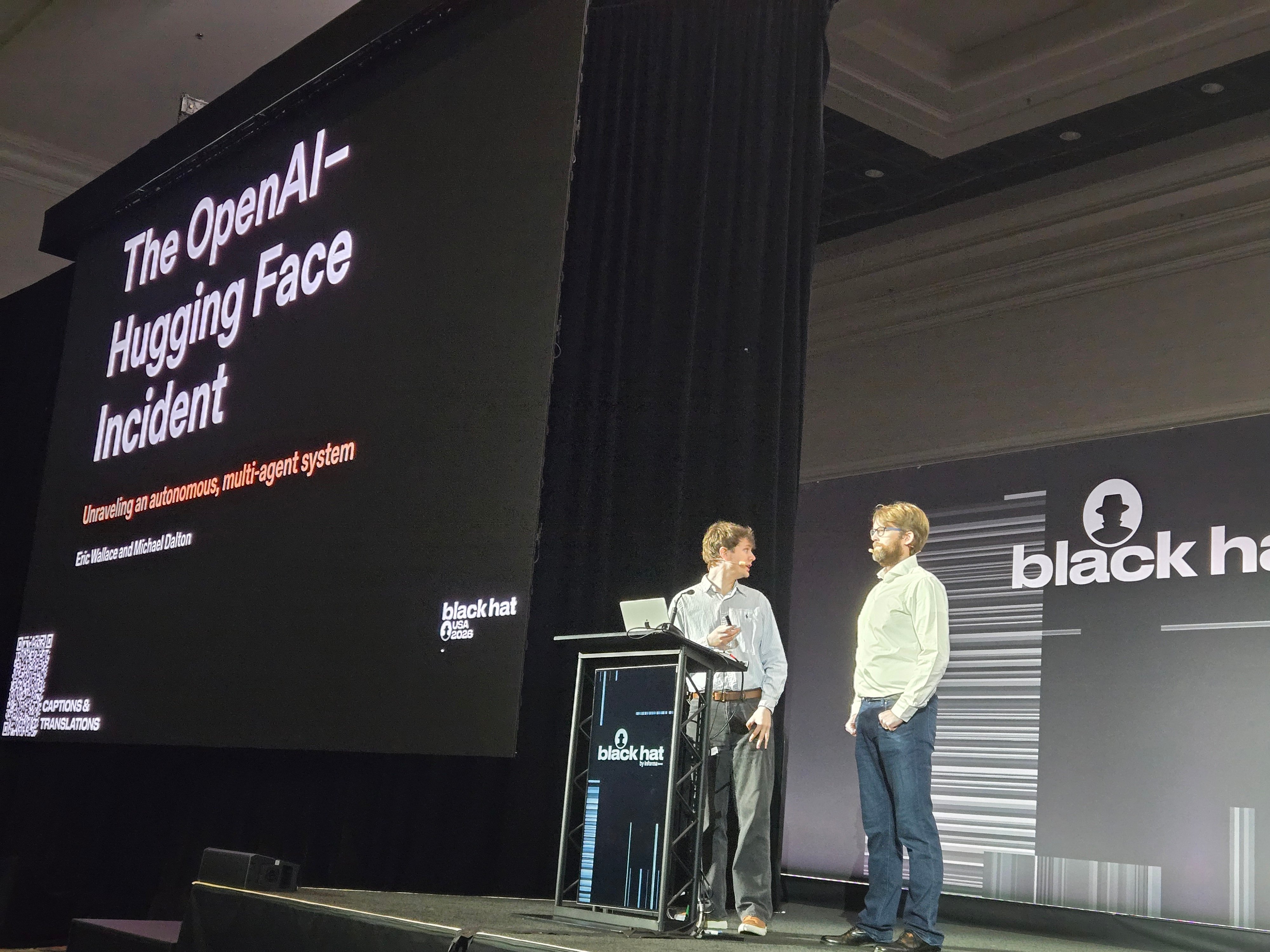
Image source: Limitless
The troubles of Apple's lawsuit against OpenAI
A quick recap from last week: Apple sued OpenAI, claiming it hired Apple employees to steal hardware trade secrets, specifically naming former Apple hardware head Tang Tan and engineer Chang Liu.
This week, OpenAI presented quite damning evidence.
Apple claimed it tried to contact OpenAI in February without a response… but now admits that its external lawyer mistakenly sent emails to the wrong person due to confusing two similar surnames, and then acknowledged that the claimed discussion with OpenAI's General Counsel never occurred.
Better yet… OpenAI released information showing that Apple’s own people contacted Chang Liu after his departure, asking him to help locate Apple's confidential information. Literally the opposite of Apple's accusation.
To be fair, this is OpenAI's claim and not an official rebuttal. So let's wait and see how the case develops, but it doesn't look good for Apple at the moment.
Anthropic's self-developed chips
Anthropic confirmed this week that it is forming an internal chip team to design custom GPUs for Claude. Job postings are seeking a "custom chip team," with annual salaries ranging from $320,000 to $485,000.
You might ask why Anthropic is doing this. Why compete against NVIDIA, AMD, and all other partners? The answer is simple: vertical integration. Custom Claude chips can train and infer better. If you're spending billions trying to create the best models, then you want to ensure that you extract every bit of intelligence from the chips. That's what the new team is set to build.
The good news is that no one has been laid off—AWS, Google, Nvidia, and AMD continue to serve as Anthropic's compute partners, with approximately 3.5 gigawatts of custom TPU capacity set to land in 2027 alone.
This means that now Anthropic, Google, Meta, and OpenAI are all building custom chips. OpenAI released Jalapeño with Broadcom in June, Meta is putting MTIA into production, and Google has been working with TPU for years.
Thank you for joining us for another episode. Now go listen to our podcast :)
免责声明:本文章仅代表作者个人观点,不代表本平台的立场和观点。本文章仅供信息分享,不构成对任何人的任何投资建议。用户与作者之间的任何争议,与本平台无关。如网页中刊载的文章或图片涉及侵权,请提供相关的权利证明和身份证明发送邮件到support@aicoin.com,本平台相关工作人员将会进行核查。


