
Written by: Bu Shuqing
Chip stocks suffered heavy losses, bond yields soared, and geopolitical conflicts continued—Wall Street's list of concerns is growing longer, but the flow of funds tells a completely different story.
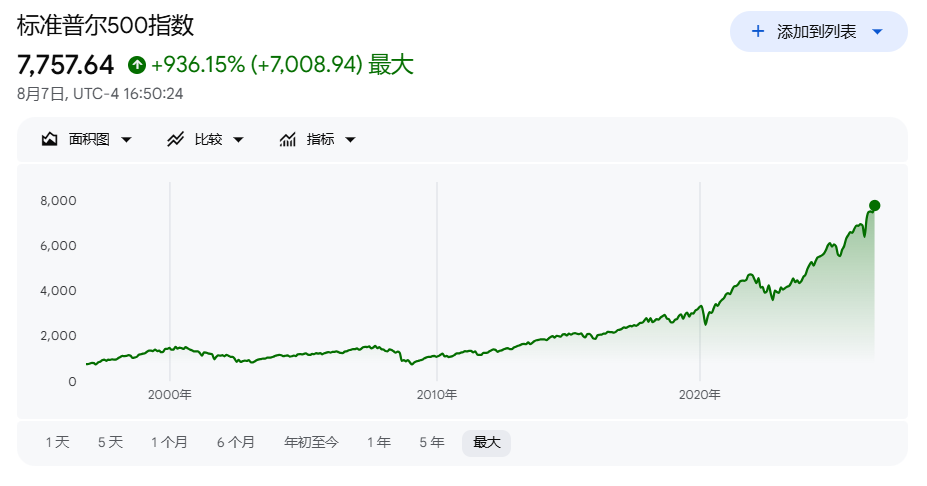
Last week, the S&P 500 index hit a historic high, and the Nasdaq 100 index recorded its largest weekly gain in two months; meanwhile, high-yield bond funds attracted $4 billion in a single week, the highest record in two years, and Bitcoin ETF saw a net inflow of $500 million over five trading days. Bank of America's bull-bear index rose to its highest level since 2021, indicating a complete shift in market sentiment towards optimism.
This all happened after the collapse of the AI hedge fund Situational Awareness—founded by "Silicon Valley stock god" Leopold Aschenbrenner. The incident at one point lowered the Philadelphia Semiconductor Index by 29% from its June peak. However, instead of retreating, investors viewed this turmoil as a buying signal, injecting over $11 billion into semiconductor ETFs within just two trading days, subsequently leading to a significant surge in related funds.
Heavy Losses in Chip Stocks Become a Buying Signal
The collapse of Situational Awareness has been one of the most dramatic scenes in the recent market. The predicament of this AI-themed hedge fund momentarily plunged the Philadelphia Semiconductor Index by 29% from its June peak, triggering severe volatility in tech stocks.
However, the market's reaction was contrary to traditional risk-averse logic. According to Bloomberg data, the Direxion Daily Semiconductor Bull 3X ETF, which is three times leveraged on semiconductor stocks, attracted over $2 billion in fund inflows within just two trading days, and its cumulative gain over seven trading days exceeded 50%.
The two largest non-leveraged semiconductor funds combined attracted over $7 billion during the same period, each rising about 16%.
Michael O'Rourke, chief market strategist at JonesTrading, characterized this as a "tsunami" of momentum buying. "The Situational Awareness event created a temporary low for AI trading, thereby unleashing a massive wave of momentum chasing," he said, "however, it is worth noting that many investors still tend to focus on mega-cap stocks, with the seven giants still being the main drivers of index gains."
From Retail Investors to Institutions, Risk Appetite Fully Warms Up
What is driving the market is not just the rebound in chip stocks but also a broad influx of funds across asset classes.
According to Bloomberg citing Bank of America data, high-yield bond funds had a net inflow of $4 billion last week, the largest weekly scale in two years; Bitcoin ETF saw a net inflow of $500 million over five trading days ending last Thursday, despite Bitcoin prices having been stagnant within a narrow range for months. In the stock market, investors injected over $11 billion into leveraged and non-leveraged ETFs related to semiconductors last week.
As a result, the Bank of America bull-bear index rose to its highest level since 2021. The team led by strategist Michael Hartnett pointed out that the stock rally has expanded from the core tech sector, with strong inflows into high-yield bonds and narrowing credit spreads, together supporting this optimistic sentiment.
Garrett Melson, a portfolio strategist at Natixis Investment Managers Solutions, believes that current market concerns are overly amplified, and the fundamentals of risk assets remain solid. He maintains an overweight position on US stocks, focusing on large-cap tech stocks while keeping a moderate underweight in fixed income but selectively holding longer-duration and credit exposures. "Ultimately, economic growth remains strong," Melson said, "sentiment and positioning can sometimes extend too far, but this overheating is localized, and the rotation helps digest excess bubbles while maintaining index support."
The Shadow of High Yields: Bond Market Pressure Not Yet Dissipated
The rally in risk assets is not playing out in a worry-free environment. Although the yield on 30-year US Treasuries has retreated on four of the last five trading days, it still hovers near a 20-year high, posing an undeniable background pressure on the market.
Analysts differ regarding the causes of high yields. Some attribute the spike in yields at the end of July to Federal Reserve Chairman Kevin Warsh's deliberate avoidance of clear interest rate guidance, raising doubts about the market's perception of his anti-inflation resolve; others believe the bond market's performance reflects investor confidence in sustained economic expansion.
Last Friday, data released by the US Department of Labor showed that US employers unexpectedly cut jobs in July, with data from the previous two months also revised down. This unexpectedly weak employment report actually boosted the stock market, subsequently causing bond yields to fall, as the market bets that the Federal Reserve will not be forced to raise interest rates in the short term.
Lindsay Rosner of Goldman Sachs Asset Management stated that as the data becomes clearer and oil prices stabilize, the overall picture of the economy and capital expenditure returns is becoming clearer. "From what we see, the economy remains strong, and the market is gradually adapting to the current AI supply while pricing in future trends," she said.
Ayako Yoshioka, senior investment strategist at Wealth Enhancement, warned that semiconductors are still at the core of AI infrastructure construction, but as the process advances, the bottleneck may shift towards power supply shortages. "Higher yields are still a risk—especially against the backdrop of AI infrastructure continually knocking on the doors of the bond market," she said.
Transient Pullbacks Further Reinforce Bullish Confidence
Another factor supporting current market sentiment is a repeatedly validated investor psychology—that every pullback is temporary and every panic is a buying opportunity.
Nathan Thooft, senior portfolio manager at Manulife Investment Management, pointed out that price corrections have repeatedly proven to be fleeting, which continuously reinforces investors' psychological confidence. Those who chose to exit during the highest uncertainty paid the price, because the largest gains often occur at the most turbulent moments in the market.
"Currently, there are still no compelling alternative options," Thooft said, "cash may feel safe, but in the long run, it struggles to outpace inflation and stock-like profit growth. As for bonds, we believe term premiums remain undervalued. Over the past decade, investors who have been waiting for a better entry point have largely been left behind by the market."
The Cboe Semiconductor ETF Volatility Index fell nearly 9 points this week, the largest weekly decline this year, visually reflecting the rapid recovery of market sentiment. Despite the extended list of concerns, the direction of fund votes continues to clearly point towards risk assets.
免责声明:本文章仅代表作者个人观点,不代表本平台的立场和观点。本文章仅供信息分享,不构成对任何人的任何投资建议。用户与作者之间的任何争议,与本平台无关。如网页中刊载的文章或图片涉及侵权,请提供相关的权利证明和身份证明发送邮件到support@aicoin.com,本平台相关工作人员将会进行核查。


