Written by: Xu Chao, Wall Street Watch
The S&P 500 index has recently broken historical highs under the influence of a wave of short covering, while the Nasdaq 100 index has yet to catch up. Bloomberg macro strategist Simon White believes there are still a large number of open short positions in the Nasdaq, which, once stop-losses are triggered, may become the next driving force to push the index to new highs.
The S&P 500 index has seen significant increases for two consecutive trading days this week, rising 1.5% on Monday and a further 1.8% the next day, strongly breaking previous highs. This concentrated and rapid surge exhibits clear characteristics of short covering—stop-losses for short positions previously set near historical highs were triggered one after another, and Goldman Sachs' "most shorted" basket has risen a cumulative 13% over the past four trading days, confirming this assessment.
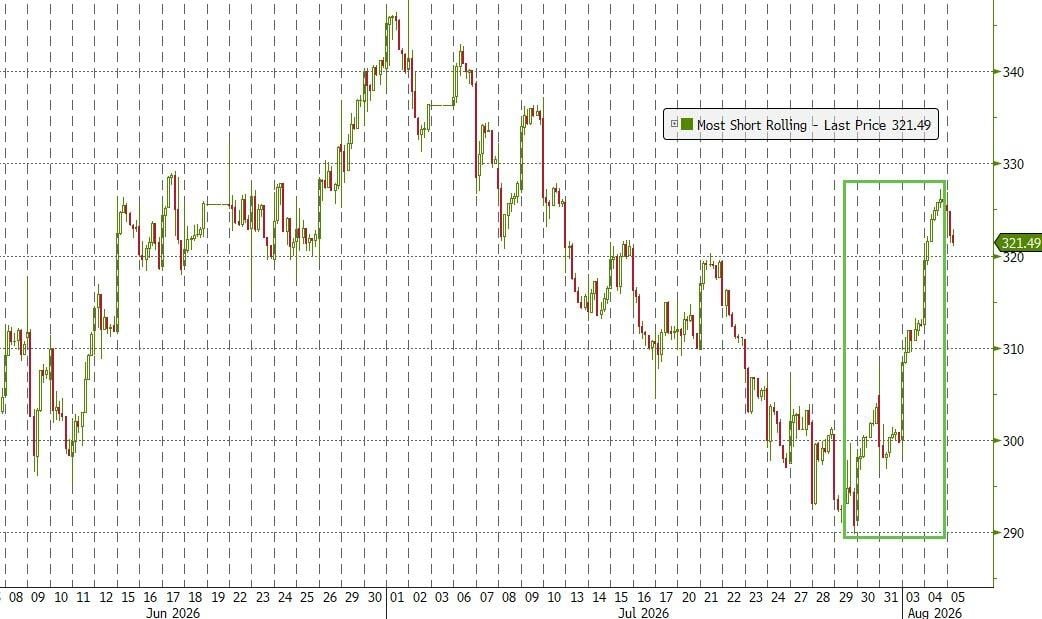
Meanwhile, the short interest ratio of the Nasdaq QQQ ETF remains high, while the short ratios for the S&P 500 and Russell 2000 corresponding ETFs have notably decreased. Simon White pointed out that the intensity of short covering in the Nasdaq yesterday was not as strong as that in the S&P 500, suggesting that a larger scale of covering may not have arrived yet. However, he also warns that inflation and real interest rate risks remain, and this round of rising could potentially evolve into a "bull trap."
Short covering drives S&P to new highs
The strong performance of the S&P 500 index in recent days is closely related to the concentrated clearance of market short positions.
Simon White's analytical framework shows that when the market experiences a daily increase exceeding 1.5 standard deviations of the monthly average volatility, a significant reduction in open futures contracts occurs, and the index itself reaches a near eight-week high, it often means that shorts are being forced to cover. The aforementioned signal has been triggered in the S&P 500.
From historical data (dating back to 1998), the average return one month after this signal is triggered is higher than the overall average; however, if the time window is extended to three months, six months, or even twelve months, the return rate is slightly lower than the historical average. This suggests that the upward momentum brought by short covering is relatively clear in the short term but does not necessarily indicate the initiation of a trending market.
Shorts in Nasdaq remain, covering trend may continue
Compared to the S&P 500, the Nasdaq 100 index has not yet broken its historical highs, and its unclosed short covering space may be larger.
According to Bloomberg data, the short interest ratio of the Nasdaq QQQ ETF remains high based on the latest data from about 10 to 14 days ago, while the short ratios for the S&P 500 and Russell 2000 corresponding ETFs have simultaneously declined. A similar analysis of open futures contracts for Nasdaq indicates that the short covering intensity of the index yesterday was relatively mild, meaning that more short positions have yet to hit stop-losses.
The software sector is a noteworthy case. With the rise of coding agents and thematic short selling of software stocks, the median short interest ratio in this sector has recently experienced a noticeable jump, and the corresponding stop-loss prices may not yet have been touched by the current market.
Chasing gains may provide additional momentum
Besides short covering, previously underexposed investors returning to the market may constitute the next layer of driving force for the market.
Simon White believes that as the S&P 500 breaks through previous highs, some underexposed investors may enter the market to chase gains, becoming a supplementary force driving this round of rebound.
But he also raises a clear warning: inflation risks and upward pressure on real interest rates still exist, and the current market carries risks of evolving into a "bull trap." Investors chasing upward momentum must remain cautious about the macro environment.
免责声明:本文章仅代表作者个人观点,不代表本平台的立场和观点。本文章仅供信息分享,不构成对任何人的任何投资建议。用户与作者之间的任何争议,与本平台无关。如网页中刊载的文章或图片涉及侵权,请提供相关的权利证明和身份证明发送邮件到support@aicoin.com,本平台相关工作人员将会进行核查。


