Written by: Jake Koch-Gallup, Sam Schubert
Translated by: AididiaoJP, Foresight News
This article focuses on how the market structure of Backpack and xStocks differs in tokenizing US stocks on Solana, and how these differences are directly reflected in execution costs.
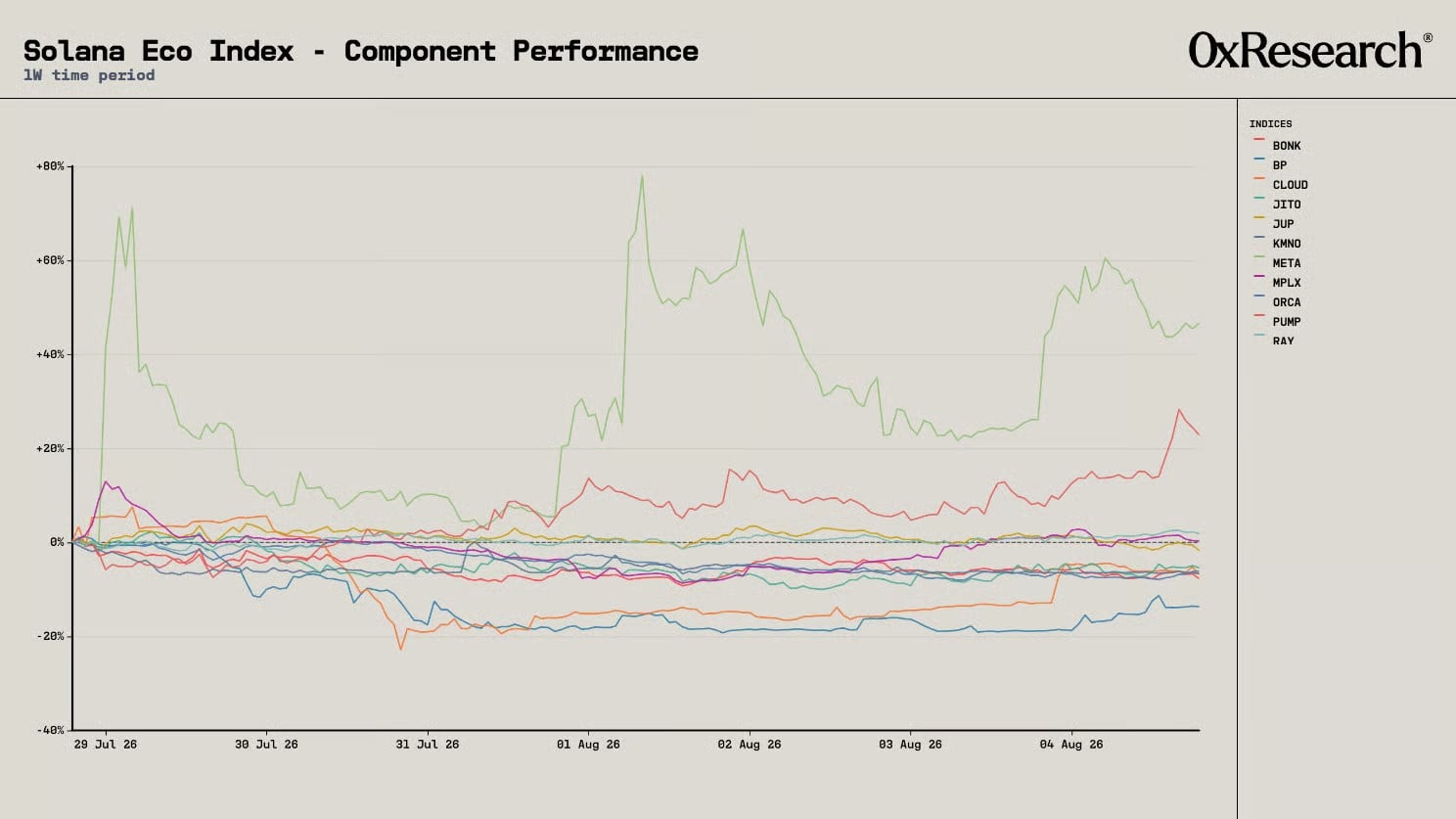
Market performance is divergent. The Solana ecosystem index rose by 8.0%, but almost all the gains came from the two tokens META and PUMP, rather than a broad rally across the entire ecosystem.
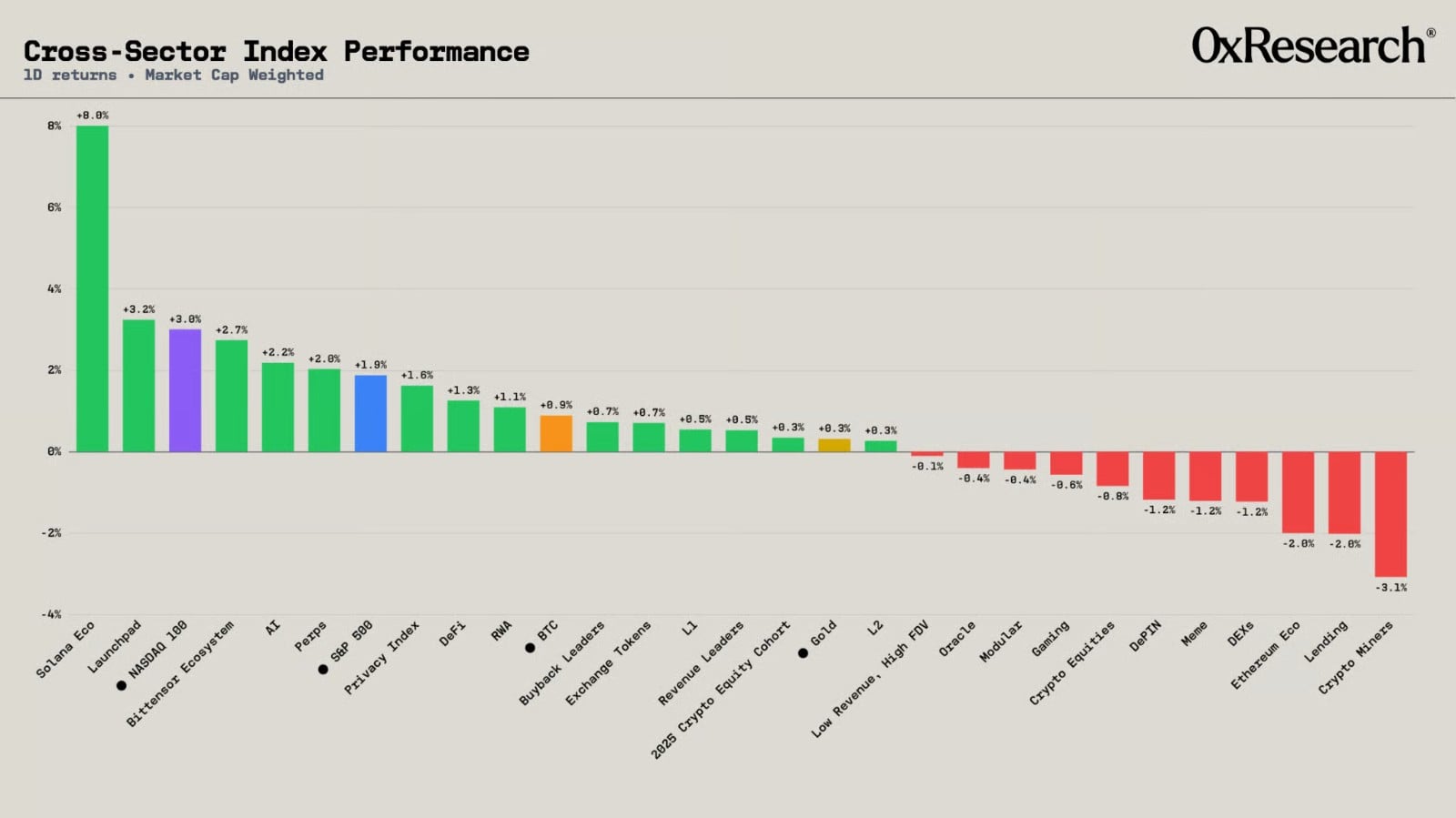
Yesterday, the Solana ecosystem index continued to lead, with an increase of 8.0%, which is more than double that of the second place. Launchpad (+3.2%), Bittensor ecosystem (+2.7%), AI (+2.2%), and perpetual contracts (+2.0%) followed. Traditional US stocks outperformed most crypto assets: the Nasdaq 100 rose by 3.0%, the S&P 500 rose by 1.9%, while Bitcoin only increased by 0.9%. Crypto mining firms had the worst performance, falling by 3.1%; the Ethereum ecosystem and lending sectors both decreased by 2.0%.
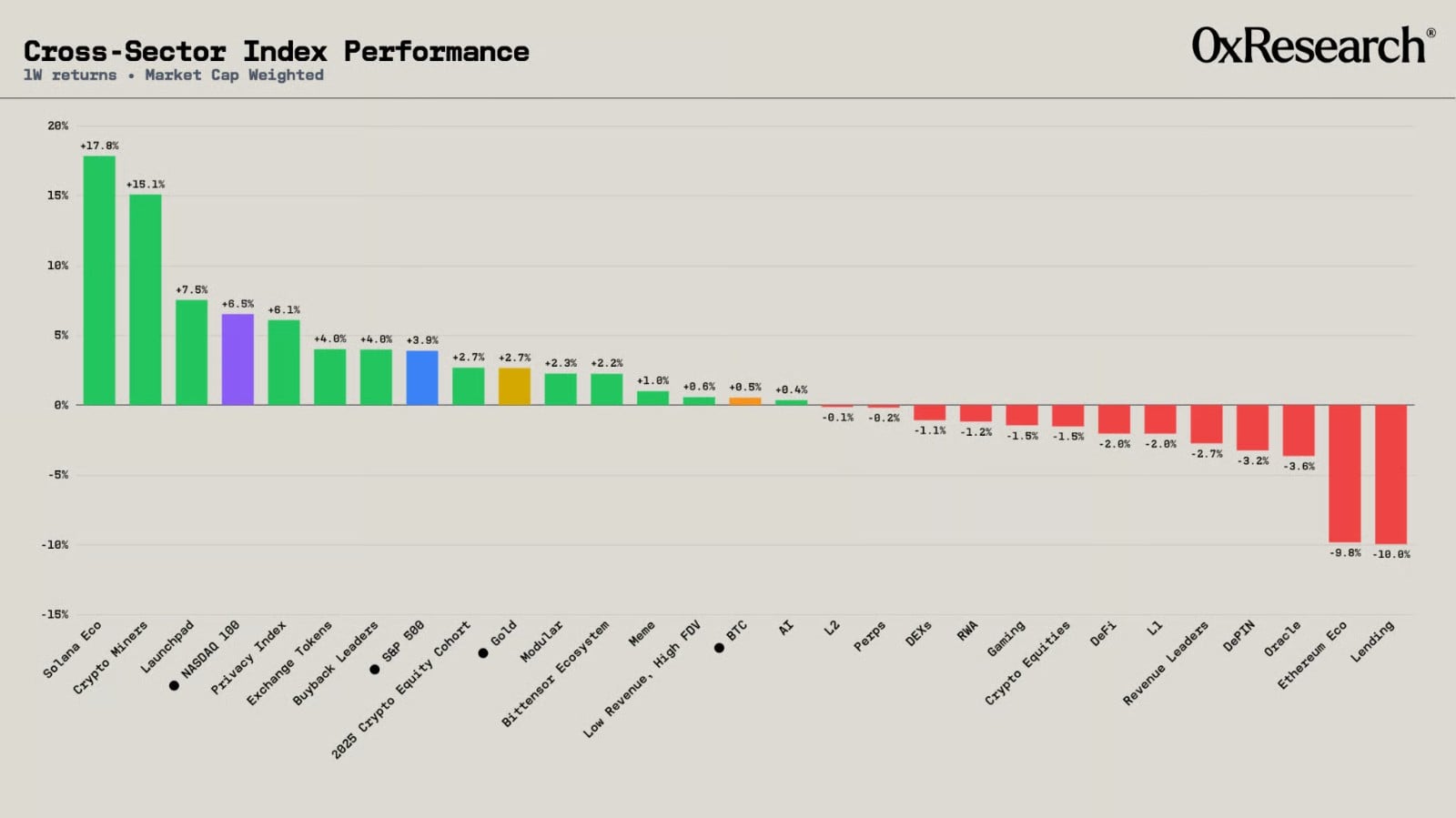
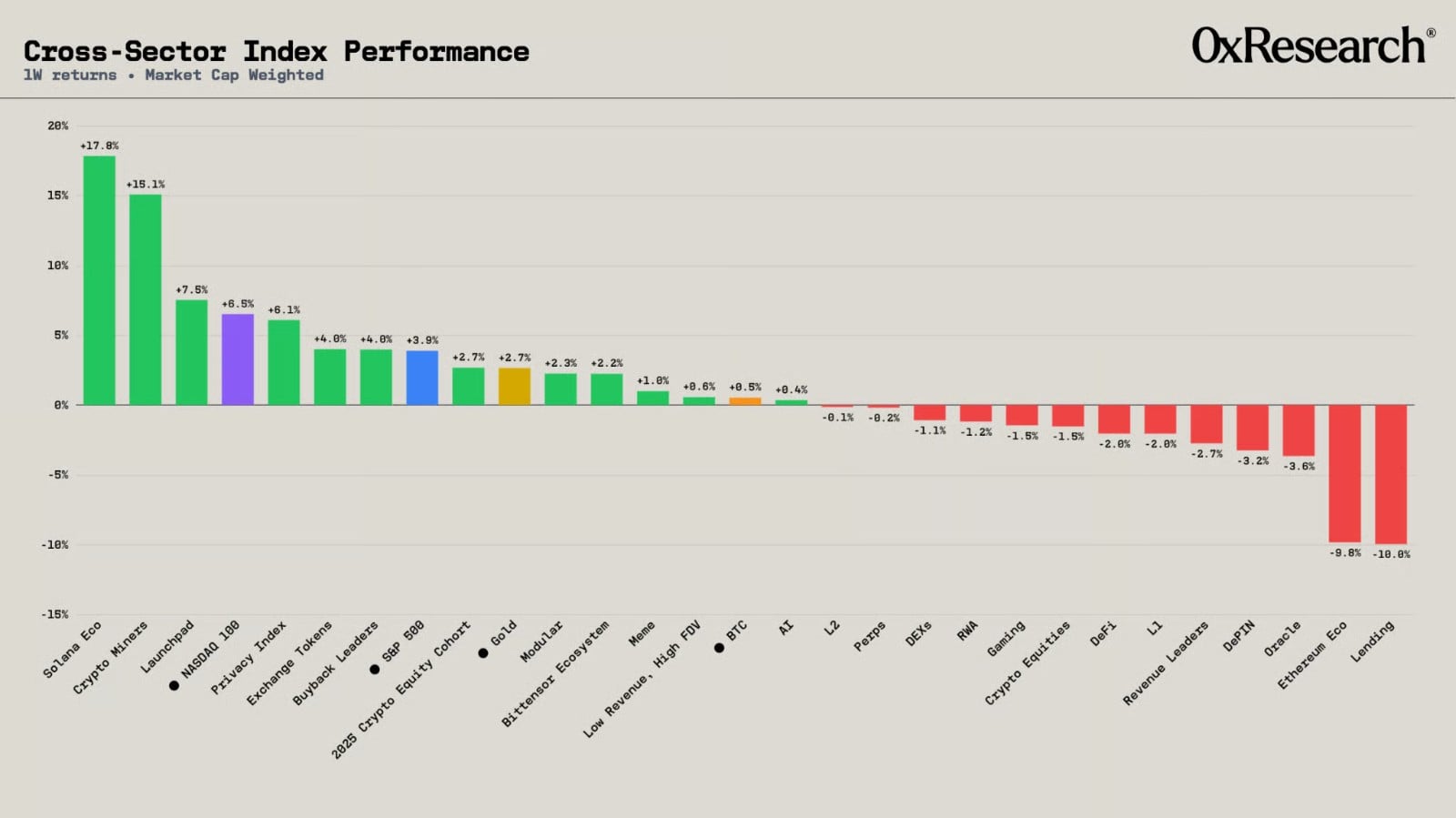
From a weekly perspective, sector rotation is very fast. Even with a large drop yesterday, crypto mining firms still ranked second for the week with a 15.1% increase. The DEX, which was also in second place on Monday, has retraced all its gains this week and is currently down 1.1%. The lending sector is the worst performer this week, dropping by 10.0%, closely followed by the Ethereum ecosystem, which fell by 9.8%. The public chain sector is down 2.0% for the week, with SOL currently priced at about $73, having dropped about 10% over the month.
The rise in the Solana index is actually very narrow. Since launching on Upbit, META has risen 46.6% weekly, while PUMP has increased by 22.9% and accounts for about one-third of the index's weight; these two tokens nearly contributed to the entire weekly gain of 17.8%. Out of the 11 components, 7 have declined, with BP falling 13.7%, BONK down 7.7%, and the median component stock down 5.4%. The rise in Solana is due to these two tokens, not because the entire ecosystem is attracting capital.
This week, both Solana and Ethereum proposed to reduce their issuance. Solana's "double deflation proposal" aims to double the annual deflation rate from 15% to 30%, moving the 1.5% terminal inflation lower limit from 2032 to 2029, resulting in about 18.9 million fewer SOL issued over the next six years. Ethereum's EIP-8361 plans to gradually destroy more validator rewards, eliminating incentives for staking exceeding 50% of total supply, leading to a net consensus issuance of zero at that threshold and roughly halving the current yield to about 1.1%. Both proposals are drafts, and the prices of both cryptocurrencies have not yet reflected these proposals.
Tokenized US Stocks on Solana: Backpack vs xStocks
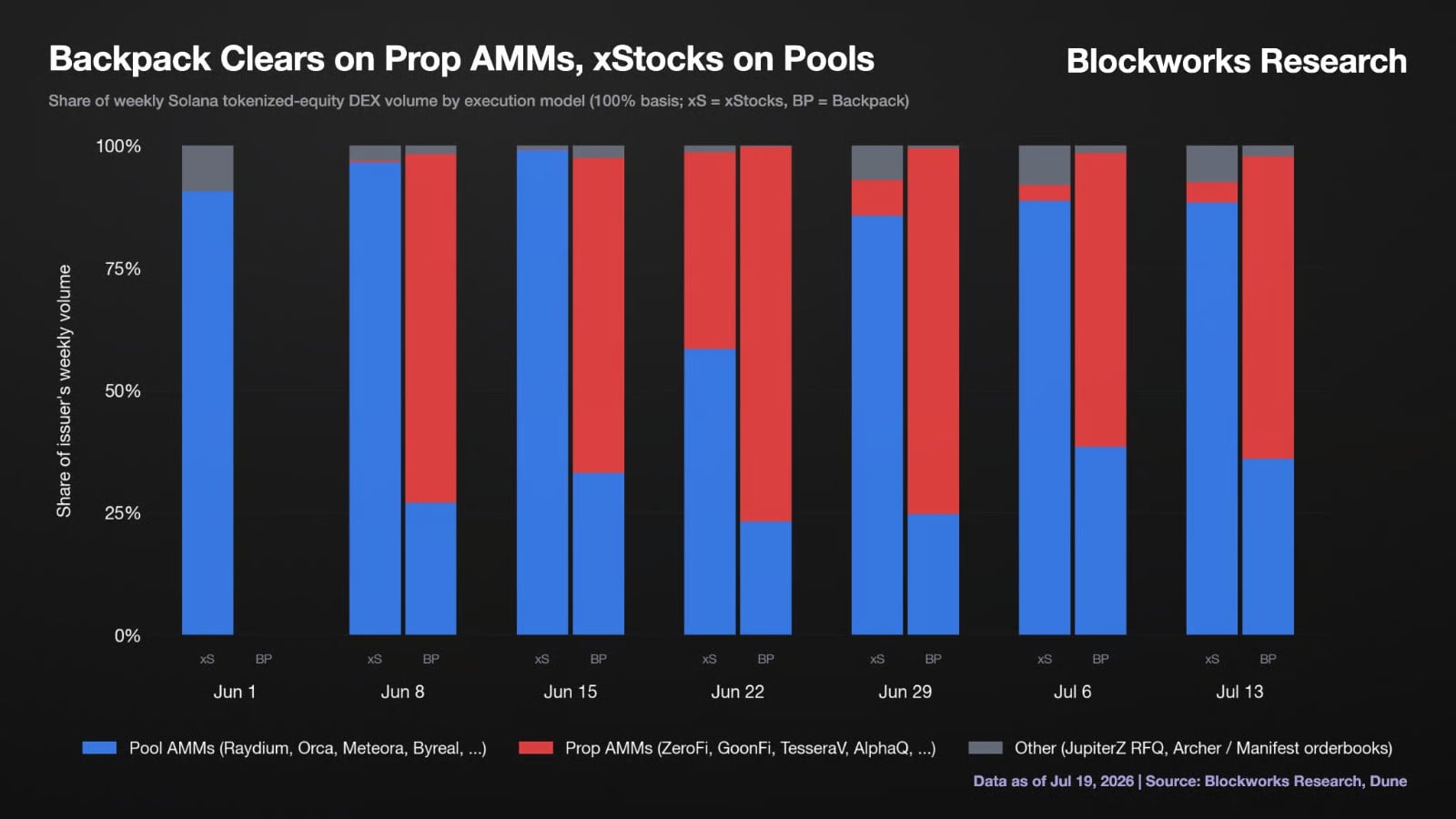
Backpack Securities and xStocks both launched overlapping tokenized US stocks on Solana, but the market structure is very different. Backpack primarily uses proprietary market making (Prop AMM) for pricing transactions from market maker inventory, while xStocks' trading volume is highly concentrated in public liquidity pools on Raydium and Orca.
On the surface, trading volumes look similar: from June 12 to July 30, xStocks traded $2.43 billion, whereas Backpack traded $2.10 billion. However, SPYx alone contributed $1.70 billion, accounting for 70% of xStocks' total trades, and a large portion consists of internal circling transactions. Excluding SPYx, comparable xStocks trades drop to only $726 million, far below Backpack's $2.10 billion.
Since the launch of SPCX, 66%–74% of Backpack's weekly trades have been completed through Prop AMM, with an average of about 71% over the past four complete weeks. In contrast, xStocks only has about 33% of its trades through Prop AMM, and this number is severely inflated by AlphaQ's $284 million trading volume in a single week; excluding that week, it is basically below 10%.
Redeemable and hedgable assets are what make professional quotes reasonable. This was evident on the first day: within a few hours of SPCX's launch on June 12, market makers began posting two-way quotes of $10,000, rather than waiting weeks to enter the market.
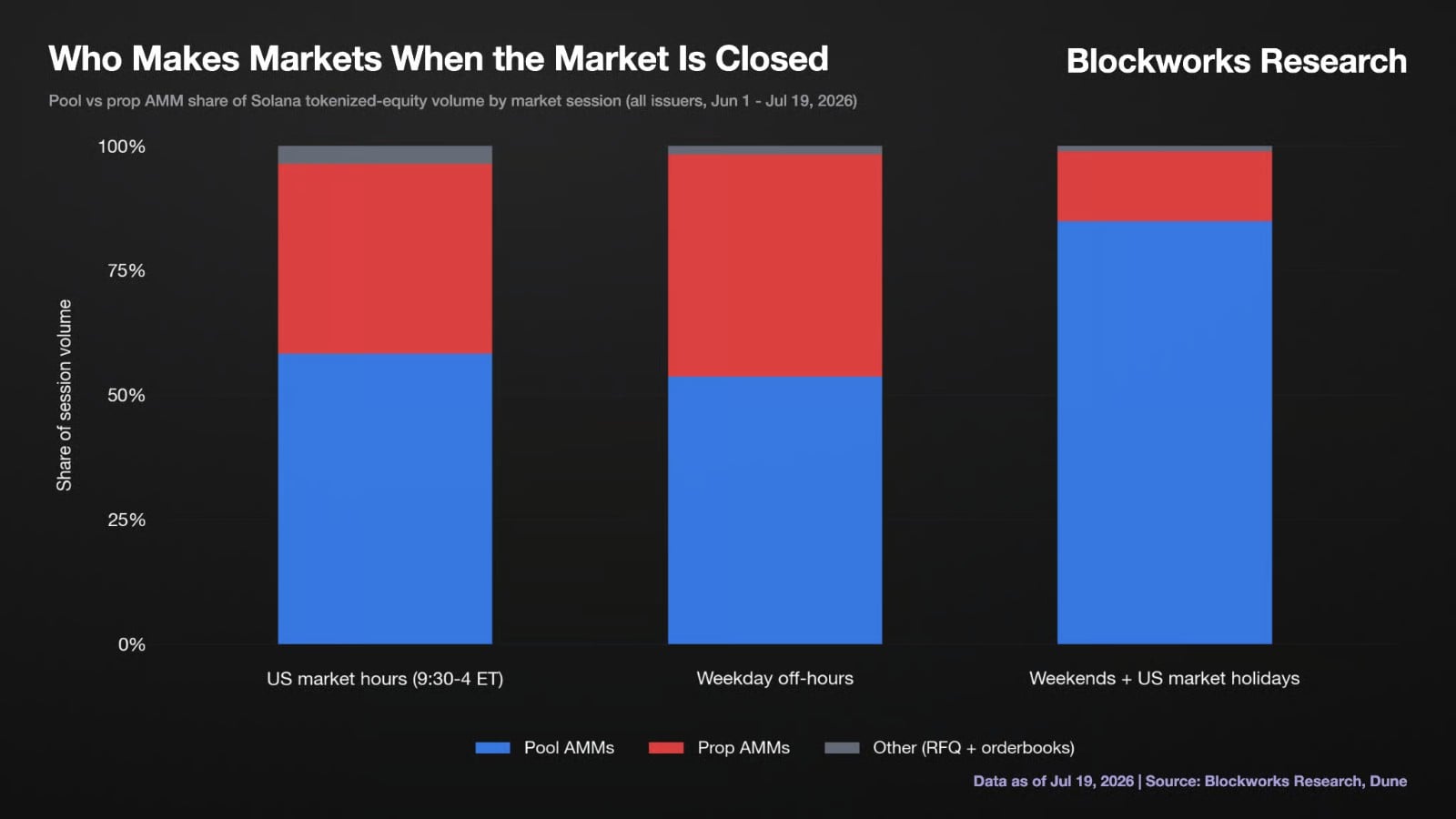
Intra-day data also adds two points. Prop AMM provides continuous quotations: on working days, the median transaction during 30-minute periods has 69% of trades occurring through Prop AMM (with the middle 80% of periods between 62%–84%), and even on weekends, the median remains at 64%. Market makers widen the spread and shift quotes when the US stock market is closed, rather than canceling orders. The remaining pool and order book flows account for about one-fifth to one-third of most periods, with pool transaction volumes visibly spiking around the open and close of the US stock market, consistent with the characteristics of arbitraging and hedging underlying assets; therefore, the gross pool transaction volume may significantly overstate the actual active capital choosing the pool.
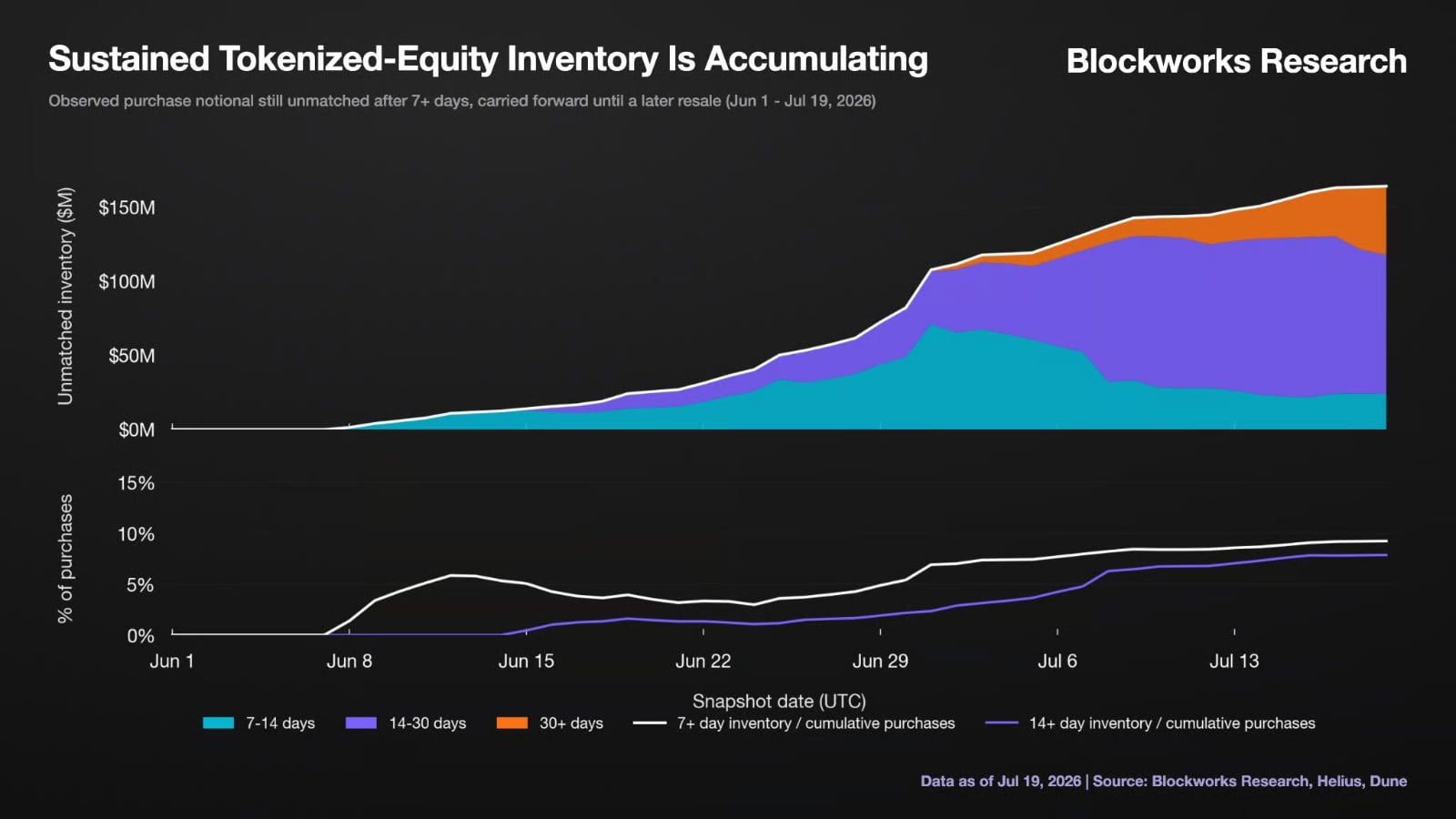
The flow itself is mostly transitory capital. Of the transactions in Solana's tokenized stocks, about 68% are circular trades: 31% exit and re-enter within minutes (including atomic completion within a single transaction), and 34.5% within the same day, with only 7.1% representing real positions held for a longer period; about a quarter remains unclassified. Meanwhile, the number of holders continues to rise—from 129,000 in early May to 211,000 by the end of July, and by the end of July, there was still $164 million in buying flow that had not matched with selling for at least a week.
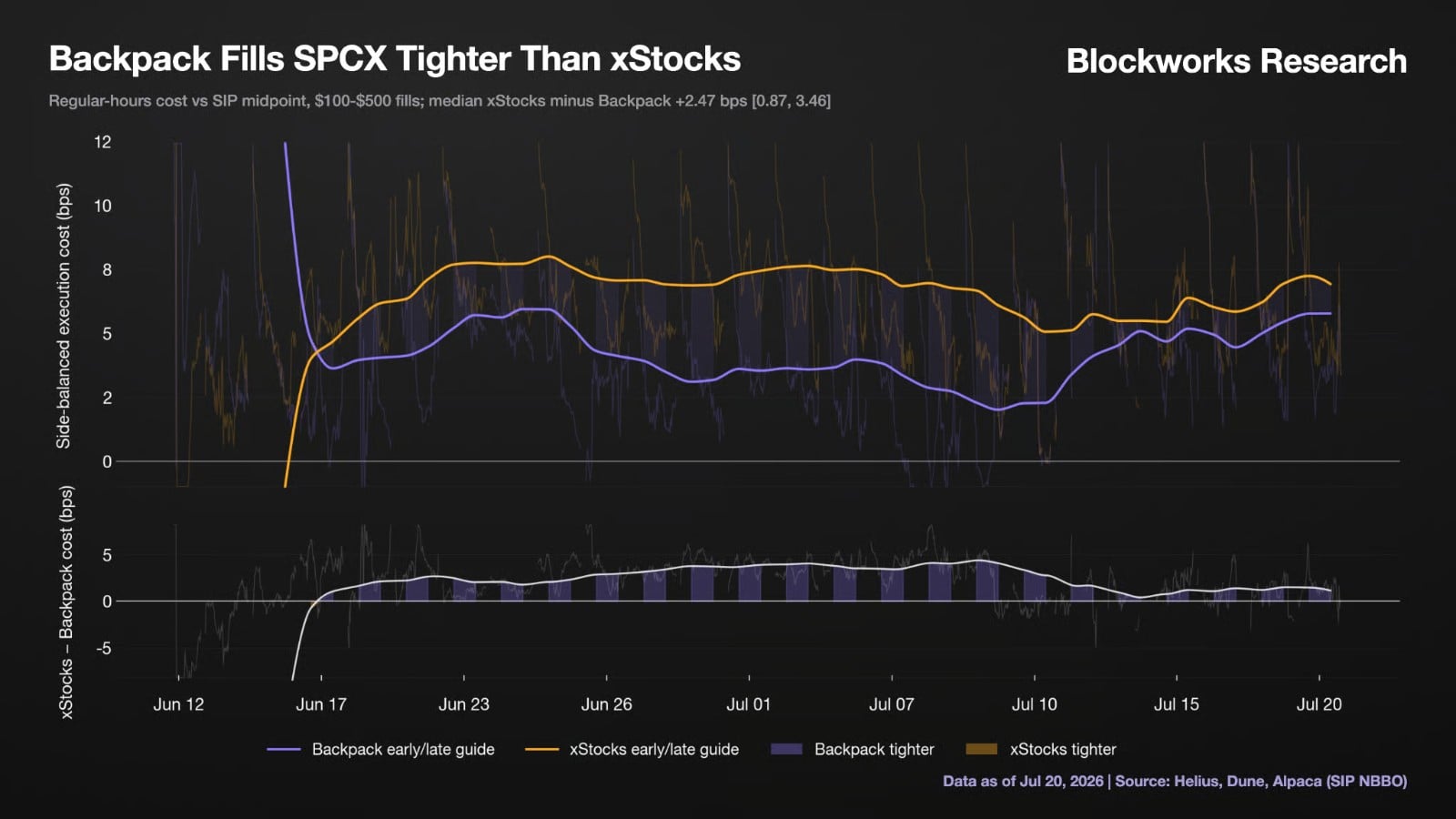
In terms of the scale of matched orders, Backpack’s SPCX execution costs are consistently lower than xStocks. We compared transactions from June 12 to July 20 within the $100–500 range, against the NBBO during regular trading hours and overnight Blue Ocean quotes. The analysis used the actual trades of different traders within the same time window rather than routing the same order twice. During regular hours, xStocks is approximately 2.4–2.5 basis points more expensive, and overnight 2.8–2.9 basis points more expensive. Out of 25 qualifying regular trading days, Backpack was cheaper on 22 days; all 17 overnight periods were also cheaper. This aligns with Prop AMM's logic of competing for flow around real-time reference prices.
免责声明:本文章仅代表作者个人观点,不代表本平台的立场和观点。本文章仅供信息分享,不构成对任何人的任何投资建议。用户与作者之间的任何争议,与本平台无关。如网页中刊载的文章或图片涉及侵权,请提供相关的权利证明和身份证明发送邮件到support@aicoin.com,本平台相关工作人员将会进行核查。


