Compiled & Edited: Deep Tide TechFlow
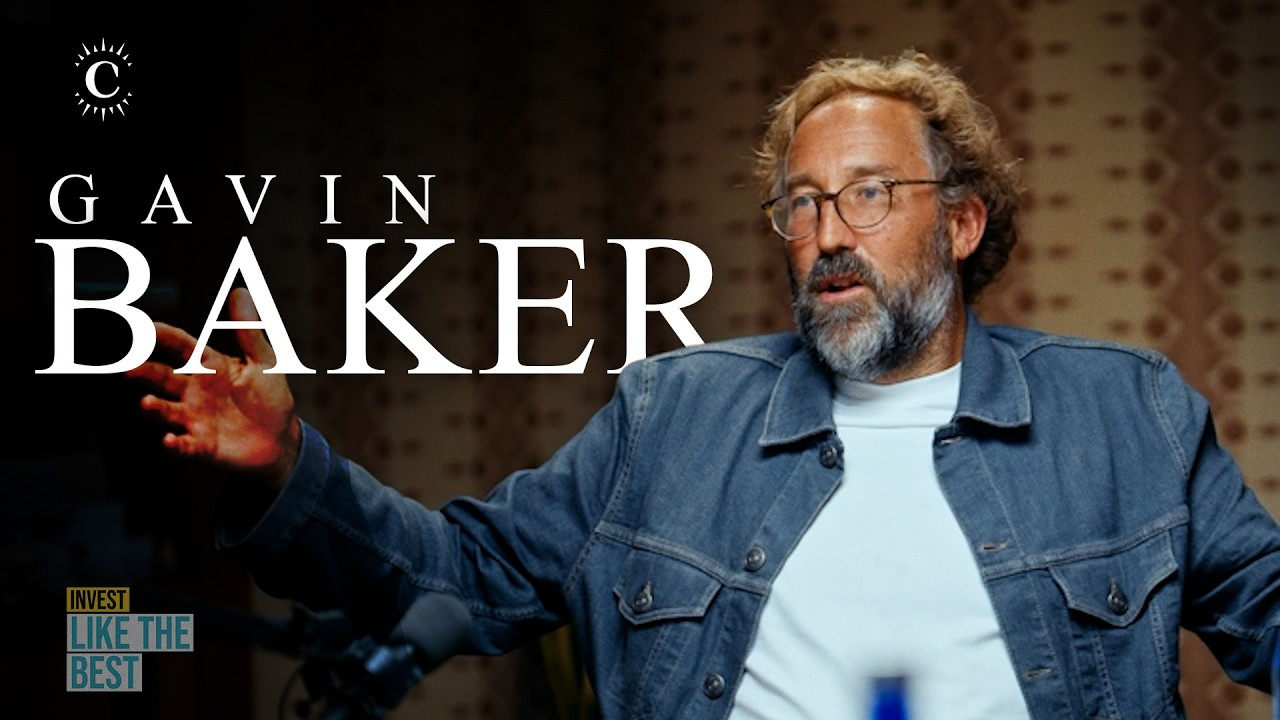
Guest: Gavin Baker, Founder and Chief Investment Officer of Atreides Management
Host: Patrick O’Shaughnessy, Host of Invest Like The Best, CEO of Positive Sum
Podcast Source: Invest Like The Best
Original Title: The AI Selloff Doesn’t Match the Data | Top AI Investor Explains
Broadcast Date: August 4, 2026
Conflict of Interest Statement: This guest Gavin Baker founded Atreides Management, which manages about $5 billion in assets, heavily investing in AI infrastructure targets discussed in this article like NVIDIA (over 20 years), Astera Labs (about 10% of the fund), Micron, Cerebras, etc. His views have direct financial connections to his holdings.
Nonetheless, he is indeed one of the top tech investors in the U.S., having served as a Managing Director at Fidelity Investments and managed technology funds worth over $10 billion. As an early and long-term investor in NVIDIA, Tesla, and SpaceX, Gavin has over 20 years of experience in semiconductor and frontier technology investments. In the AI wave, he is renowned in Silicon Valley and Wall Street for his deep insights into the chip supply chain, power bottlenecks, and AI commercialization pathways.
Key Takeaways
Gavin Baker is the founder of Atreides Management, who has been heavily invested in NVIDIA for the past 20 years, making him one of the staunchest bulls in the AI infrastructure sector. This episode was recorded after a significant drop in AI stocks in July, during which he returned to "stress test" all of his assumptions. The core conclusion is: the July selloff is completely at odds with fundamental data; all quantitative metrics are accelerating, while stock prices are in free fall.
Baker describes July as “compressing 2022 into one month.” A large number of AI stocks dropped 40% to 60% from their peaks, but GPU spot prices have increased instead of decreased (rising 50%-60% within six months), operational cash flow from hyperscale cloud companies accelerated from 28% to 35% (after adjusting for one-time items), and token output is continually growing. He believes the market has made three misjudgments: misreading Meta renting out computing power as an oversupply (actually modeling after SpaceX’s high-price sales), misreading the explosion of open-source models as a shrinking demand (it simply shifted profits from cutting-edge models to infrastructure), and misreading the widening CDS spreads as a signal of credit crisis (it is simply banks hedging their commitments). The only thing that genuinely makes him nervous is the rise in real yields and a tightening credit market, but his calculations show that if installed computing power is repriced at current spot prices, hyperscale cloud companies can finance the AI infrastructure investment primarily with operational cash flow, with little need for debt.
Highlights of Insights
1. On the divergence between selloff and fundamentals
“I spent two months in Silicon Valley and did not hear a single negative quantitative metric. GPU availability, GPU rental prices, DRAM spot prices, token growth, all metrics are accelerating.”
“NVIDIA currently has the lowest forward P/E ratio in the past decade. The market believes 100% that AI companies are severely overestimating profits.”
“OpenAI is accelerating, Anthropic is growing vigorously, and open-source models are surging. But the public market cannot see the data from Anthropic and OpenAI, creating information asymmetry.”
2. On open-source models and computing demand
“One token is one token. Whether generated by cutting-edge models or open-source models, it requires the same amount of computing power, memory, and electricity to produce.”
“Open-source models take away profit margins from cutting-edge models, not computing demand. It transforms tokens with 90% gross margins into tokens with 30% gross margins, but the underlying GPU hours consumed are actually more.”
“Jensen is the largest supporter of open-source in the world. If this isn't good for his business, would he really treat it as a signature issue?”
3. On Claude's impact on the market
“Claude is basically Walter Cronkite of the stock market. Everyone feeds news into Claude and trades based on Claude’s interpretations. Claude is smart, but it isn't always right.”
“Somebody posted a chart of Japanese capacitor stocks, saying ‘we completed the entire capacitor cycle in six weeks.’ The fundamentals haven’t arrived, and the stock prices have already skyrocketed and then plummeted.”
4. On the game theory of the memory market
“Suppose in 2027 or 2028 you want to tear up an LTA (long-term agreement) to get a lower price. However, if leverage swings back to memory makers in the next two or three years, you are out. You might ruin your entire business.”
“What NVIDIA is doing is essentially providing GPU buyers with a credit wrap, plus a revenue share above the bottom price. This allows them to rapidly build a gigantic cloud business through royalties.”
5. On SpaceX and orbital computing
“SpaceX has accessed more computing power faster and at lower prices than anyone else in the past three years. Now there are reports they aim for 8 gigawatts of computing power; I never bet against Elon, but that indeed is an astonishing figure.”
“Orbital computing becomes more realistic every day. Benchmark invested in StarCloud, an orbital computing company without the internal launch cost advantage of SpaceX. If the people at Benchmark thought this was unreliable, they wouldn’t invest.”
6. On regulation and PR crises
“Data centers are the best thing for blue-collar wages I’ve ever seen. But the Democrats, who should be representing blue-collar workers, are pushing their jobs away.”
“Someone overstated data center water usage by ten thousand times in an academic book. The author has repeatedly admitted the error, but it’s like the story of spinach's iron content: when the lie runs around the world, the truth is still putting on its pants.”
Chapter One: “2022 Compressed into One Month”
Patrick O’Shaughnessy: What happened this month?
Gavin Baker: I would describe July as “compressing 2022 into one month.” There are certainly some negative fundamental factors to discuss, but overall, the balance of fundamentals is significantly improving. A large number of AI stocks dropped 40% to 60% from their highs, falling straight down. I ask you, after spending a summer in Silicon Valley, did you hear even one negative quantitative metric about AI?
Patrick O’Shaughnessy: A signal of deceleration?
No. In fact, every metric is accelerating. Whether it’s GPU availability, GPU rental prices, DRAM spot prices this month, or token growth, all are accelerating.
I believe a large part of the problem is that the public market lacks visibility into Anthropic and OpenAI. There are also these open-source inference clouds, like Fireworks, Baseten, Modal, and Together, which are commercializing inference. Open-source models are significantly speeding up because of GLM 5.2 and Kimi K3, and Nemotron is making steady progress. OpenAI is accelerating, and Anthropic is growing strongly, likely generating substantial free cash flow.
Everyone has seen that chart: semiconductor cash flow is rising, while the free cash flow of hyperscale cloud companies is falling. But you are missing out on those private companies. The cash flows of OpenAI and Anthropic are not in that chart. I think that chart misses another important point: in 2024 and 2025, even if you’re the most bullish person, you think GPU rental prices will decline slowly. The bears believe they will crash. I don’t think anyone in 2024 or 2025 is thinking that in 2026, old GPU prices will be climbing again.
Chapter Two: Who Will Foot the Bill for AI Construction
Patrick O’Shaughnessy: What will the financing environment be like for the next six months? How much credit will this construction need?
This involves a classic capital cycle issue. If supply and demand are imbalanced, things can deconstruct very quickly, just like the internet bubble. If you believe that hyperscale cloud companies can fund this construction with operational cash flow, then credit tightening isn’t so scary.
My calculations are as follows: the consensus assumption regarding hyperscale cloud companies is that they are monetizing with Blackwell and Rubin's computing power at the rate of Ampere (two generations of chips behind). They are projected to have operational cash flow of 1.3 to 1.4 trillion. If they monetize at a rate lower than current Blackwell but higher than Ampere, that gets closer to 2 trillion. This reduces credit needs by about $700 billion. Moreover, as installed computing power is repriced and operational cash flow continues to accelerate, credit metrics will improve and financing will become easier.
It’s indeed hard to overlook the signals in the credit market. Meta issued bonds last week, pricing worse than you’d expect. The CDS of all companies are widening. Real yields are rising. These are facts. If we require debt to finance this construction, that would indeed be a significant negative signal. But if computing power is repriced at current spot prices, we might barely need much debt at all.
Chapter Three: GPU Spot Prices Rising Instead of Falling
Patrick O’Shaughnessy: What specific data have you heard in Silicon Valley?
This morning, I spoke with a company that rented a batch of several thousand Blackwell GPUs at about mid-$2 per GPU hour. Seven months later, for the same cluster and scale of B200, they hope to renew the lease for less than $4. In other words, it has risen by 50% to 60% within seven months.
Another inference cloud company publicly said on a podcast that upon the contract expiration, they plan to pay 100% more for Blackwell. This means all hyperscale cloud companies are underreporting revenues.
There were several catalysts for the selloff in July. First, Meta announced it would rent out computing power, which led the market to believe they have excess capacity and need to cut capital expenditures. That’s not the case at all. Meta saw that SpaceX has a large amount of installed computing power and is selling transaction-optimized clusters to the market at prices far above the contractual rates. Meta saw the opportunity to first demonstrate a high IRR on a small piece of capacity, then raise equity, and further increase capital expenditures. Meta's capital expenditure telemetry data has remained completely unchanged, and if anything, it has become more aggressive. Shortly afterward, they released Muse 1.1, their best model in a long time.
Then Kimi K3 came out, and the market panicked about open source. Meanwhile, the token index of Silicon Data flattened out. But that happened because the proportion of open-source tokens is rising, and the way these tokens are weighted in the index has caused a structural flattening. One token is one token; regardless of whether it comes from a cutting-edge model or an open-source model, the amount of computing power, memory, and electricity required to produce it is the same. Open-source takes away profit margins from cutting-edge models, not computing demand.
Chapter Four: Claude is Walter Cronkite of the Stock Market
Patrick O’Shaughnessy: How do you think the market digests this information?
There’s something I’ve been thinking about. Mike Mauboussin has a theory that a collapse of diversity leads to bubbles and crashes. Now in the public market investment circles, whether retail or institutional, every piece of news is fed into Claude, sometimes via Claude Code or Claude Agent. Claude is probabilistic, but the way everyone interprets the news probably doesn’t differ much.
Claude is essentially Walter Cronkite of the stock market. Everyone believes what it says and trades accordingly. Claude is smart, but it isn't always right. The stock market is essentially a probabilistic Bayesian interpretation of the future. You see a piece of news; it gets fed into Claude, Claude interprets it in some way, and then a large group of people trade based on that.
There’s an anonymous semiconductor account called TBU that posted a chart of Japanese capacitor stocks, saying, “We completed the entire capacitor cycle in six weeks.” Stock prices doubled, tripled, quadrupled, then crashed. The fundamentals hadn’t even arrived, and you had already completed a normal cycle that would typically take three years in just six weeks.
Chapter Five: What Can Break This Argument
Patrick O’Shaughnessy: If you had to identify a scenario that would genuinely frighten you, what would it be?
Operational cash flow not accelerating would be the core negative signal. This largely depends on the overall performance of Anthropic, OpenAI, Grok, Cursor, xAI, and open-source.
If GPU spot prices experienced sustained drastic declines, that would also be quite scary. But have you heard anyone say they have too many GPUs? Not a single one. In fact, it’s quite the opposite; it sounds more like some sort of black market.
From a technical standpoint, I believe the most interesting potential risk is continuous learning and sample-efficient learning. If these are solved, it could mean a temporary disruption in training demand. If you train the model with 300 trillion tokens, and then you switch to training with only 100 trillion tokens and let it learn sample-efficiently in the world, that wouldn't be good for training demand. But the share of training in semiconductor demand is approaching a very small number but not zero; inference is where the bulk lies. SSI says they will release a model in August, and a number of new labs are focusing on this direction. That’s good for the world, but it’s hard to say if it’s positive or negative for infrastructure demand.
Chapter Six: Game Theory of the Memory Supply Chain
Patrick O’Shaughnessy: Everyone’s talking about LTAs; could you elaborate?
We need to shift from “squeezing short-term numbers” to “exchanging long-term agreements (LTAs) for durability.” Customers prepay, having a price floor and ceiling. It’s similar to the “labor hoarding” discussion from a few years ago when nobody wanted to lay off workers.
Now, let’s consider the game theory of tearing up LTAs. There are four companies that are critically important at scale: Amazon’s Trainium, Google’s TPU, AMD, and NVIDIA, which is larger than the other three combined. Suppose in 2027 or 2028 you feel like tearing up an LTA to get a lower price. But the next few years’ market share will be determined by supply chain allocation and your pre-purchase volumes. If you tear up the LTA and then leverage swings back to memory manufacturers, you're out.
What if Google tears up its LTA? It likely means oversupply, prices will fall, and capacity will naturally contract. Then this cyclical industry will shift from oversupply to undersupply. By that time, how do you think memory manufacturers will allocate Google’s volumes? You might ruin your entire business and brand.
It wasn’t like this before. Apple was the largest buyer, and they could dictate terms because no one could replace their volume. But this time it’s different; you have at least four buyers competing, along with a bunch of startups. If you tear up the LTA, memory manufacturers can say “Fine, you broke the price agreement, now we’ll break the volume agreement and allocate your volumes to your competitors.”
Chapter Seven: NVIDIA’s New Play
Patrick O’Shaughnessy: What do you think of NVIDIA’s current strategy?
NVIDIA has launched a very clever new business model, which I would describe as a kind of “credit wrap,” along with a revenue share above the floor price. This could allow them to rapidly build a giant cloud business through royalties. This is also another way to mitigate cash flow mismatches.
This is not traditional vendor financing. They are not lending money to GPU buyers. Others are lending money to the buyers; NVIDIA is merely investing equity and providing credit enhancement. NVIDIA has included in all equity investment agreements, “this money cannot be used to purchase NVIDIA chips,” but money is interchangeable, right?
If I were the CEO of SK Hynix, I would do exactly what NVIDIA is doing. I would go to GPU buyers saying, “I’m participating in NVIDIA’s credit wrap, I also have some cash to front-load, and then I want a continuous revenue share.” It’s like an extension of the LTA logic: you’re exchanging short-term upside for durability, and now you can also gain a royalty on continuous revenue.
NVIDIA’s competitive advantage is stronger than ever. If you need financing for chips, there is nothing easier than fundraising with NVIDIA GPUs. Do you need land and electricity? They are excelling in making those chess moves. Their revenue per gigawatt is rising, and their competitive position is strengthening.
Chapter Eight: Regulation is the Biggest Risk, and the AI Industry’s Enemy is Itself
Patrick O’Shaughnessy: What is the worst-case scenario in the AI field? Regulation?
Regulation is undoubtedly the biggest risk, and that’s the most obvious reason I wanted to be “scared” this week. I don’t want to be that person who watches stocks become cheaper and sees expected returns rise, but feels like a madman. The fundamentals in July improved significantly compared to June, yet I still believe that regulation is the biggest risk that cannot be overlooked.
New York has already enacted a data center ban. We live in a political world of “post-fact, post-logic.” The AI industry has done a terrible job in public relations. The narrative in Washington and among many ordinary Americans is: data centers raise your electric bills, deplete your water, and take away your jobs.
But the reality is completely the opposite. The agreements signed by today’s data center developers involve more than just buying new cars for police and fire departments. They are constructing hospitals, schools, new police stations, and firehouses for communities while also aiming to lower residents’ electric bills. Due to behind-the-meter agreements, after the establishment of data centers, the nearby residents’ electricity costs generally tend to decrease. Moreover, these jobs are ongoing, not one-time. You need plumbers, electricians, and HVAC technicians to maintain and upgrade these facilities. Data centers are the best thing for blue-collar wages I’ve ever seen.
The issue of water usage is even more absurd. An academic book overstated data center water consumption by ten thousand times, not one or two orders of magnitude, but four. The author has repeatedly admitted the error and has been thoroughly debunked. But this is just like the story of spinach's iron content: an academic book mistakenly placed the decimal point two places, and so everyone believes spinach is the food highest in iron; 80 years later, some still think so. When the lie runs around the world, the truth is still putting on its pants.
At the ASCO (American Society of Clinical Oncology) annual meeting, this year’s atmosphere was “this has the most scientific breakthroughs of any single meeting in history,” much of which is related to AI. If you have a sick child, parent, or loved one, AI is substantially improving their chances of recovery. These stories need to be told. The industry needs to advertise during the NFL, college football, and the World Series, explaining what data centers are actually doing.
People in Silicon Valley feel all of this is obvious; hence, they assume others know too. They are unable to understand that this represents a completely different, even opposing perception for most Americans. Even those deep-red growth-oriented states are saying: you haven’t told your story well; if you did, we could help you retell it, but you are the experts.
Chapter Nine: China DUV, Open Source Ecosystem, and SpaceX Orbital Computing
Patrick O’Shaughnessy: What do you think about China having DUV machines?
Both interpretations could be correct. To illustrate, DUV is a propeller aircraft, while EUV is a jet turbine. China did not have this before, but it is said to now; this is a phase change. Although that jet engine is 25 years behind, it is indeed significant and should not be overlooked. However, the market may have overreacted. If this truly affects ASML's orders, it might be in five years, during which the market will have forgotten and remembered several times.
This is indeed very important for China. They are very smart and hardworking, viewing this as a key task at the national level. But you cannot accelerate the “learning curve"; you must truly go through those learning cycles.
Patrick O’Shaughnessy: What about the influence of open-source models on the industry?
Open-source models are approaching the cutting edge, combined with inference clouds like Fireworks that make customizing models very easy, presenting a godsend for the software industry. AI Native companies can use open-source models for their own RL fine-tuning, transforming 1 to 3 cutting-edge models to only occupy 30%-60% of token consumption, with the rest using their own models. You are no longer just “ChatGPT rebranded”; you have proprietary data and genuine defenses.
Cheap tokens might make the most cutting-edge tokens more valuable. If you have an open-source model with an IQ of 120 that can run cheaply, doesn't a cutting-edge model with an IQ of 160 that can direct them become even more valuable?
Another overlooked aspect is SRAM accelerators. These chips are not constrained by HBM DRAM capacity bottlenecks, typically manufactured using older processes, and do not compete with the latest GPUs for capacity. If you break down inference, there are two stages: prefill and decode. The decode phase further divides into attention and feed-forward network. The ideal situation is to perform prefill on chips without HBM, execute attention on high-performance chips with HBM, and carry out feed-forward on SRAM chips. Regardless of how you adjust the computing, HBM DRAM, and SRAM ratios, workloads are always changing, being able to break this into three parts would greatly enhance the overall ROI of AI.
Patrick O’Shaughnessy: Are there any “dark horse” players not currently on everyone’s radar who might become significant actors like in “Game of Thrones”?
Lee Buu might be a dark horse. Lynn from Fireworks is also a definite killer. And our friend Scott Wu is also worth keeping an eye on with Cognition.
Patrick O’Shaughnessy: What about SpaceX? Does the market understand this company?
Since its IPO, SpaceX's fundamentals have been improving. Grok 4.5 and the Cursor acquisition have clearly accelerated progress. Over the past three years, they have accessed more computing power faster and at lower prices than anyone. They came in at the peak of spot prices, yet the market has fully absorbed the massive computing power they deployed, and the freight trains showed no signs of slowing down.
A Substack writer cited public reports stating that SpaceX aims for 8 gigawatts of computing power. I never bet against Elon, but that is indeed an astonishing feat. They are currently monetizing at a rate of approximately $50 billion per gigawatt, with consensus estimates for next year at $73 billion. Even without considering Starlink V3, direct mobile connectivity, or Grok 4.5 and Cursor, if they indeed tap into even close to 8 gigawatts of computing power, that vastly exceeds market expectations.
The market's current interpretation isn’t that way. There are hedge funds in New York shorting, believing that spot prices for computing power will plummet by 90%, and the massive computing power deployed by SpaceX won’t generate that much revenue. Perhaps. But Elon’s company has been doing incredible things over the years. In his words, “We excel at making the impossible late.”
Orbital computing becomes more real by the day. Benchmark invested in StarCloud, an orbital computing company with no internal launch cost advantage of SpaceX. If the people at Benchmark think this is unreliable, they wouldn’t invest. So either I’m crazy, or Elon is crazy, or Benchmark is also crazy, or SpaceX engineers are also crazy. The probability of that is low.
免责声明:本文章仅代表作者个人观点,不代表本平台的立场和观点。本文章仅供信息分享,不构成对任何人的任何投资建议。用户与作者之间的任何争议,与本平台无关。如网页中刊载的文章或图片涉及侵权,请提供相关的权利证明和身份证明发送邮件到support@aicoin.com,本平台相关工作人员将会进行核查。


