Written by: Shaunda
Translated by: AididiaoJP, Foresight News
The market is becoming increasingly cautious. AI-related spending will only be rewarded if it can deliver growth without significantly eroding cash flow; the cryptocurrency market continues to face pressures from ETF outflows and rising yields.
Within crypto, leadership has again rotated back to Solana and DEX. We dive deep into the ongoing discussions about how the value surrounding TradeXYZ, Hyperliquid, and the ultimate allocation of HIP-3 will be divided.
In the past week, major benchmarks showed differentiated performances. The S&P 500 and gold rose slightly by 0.74% and 0.65% respectively, while the Nasdaq remained essentially flat. BTC performed the weakest, dropping 3.0% over the week.
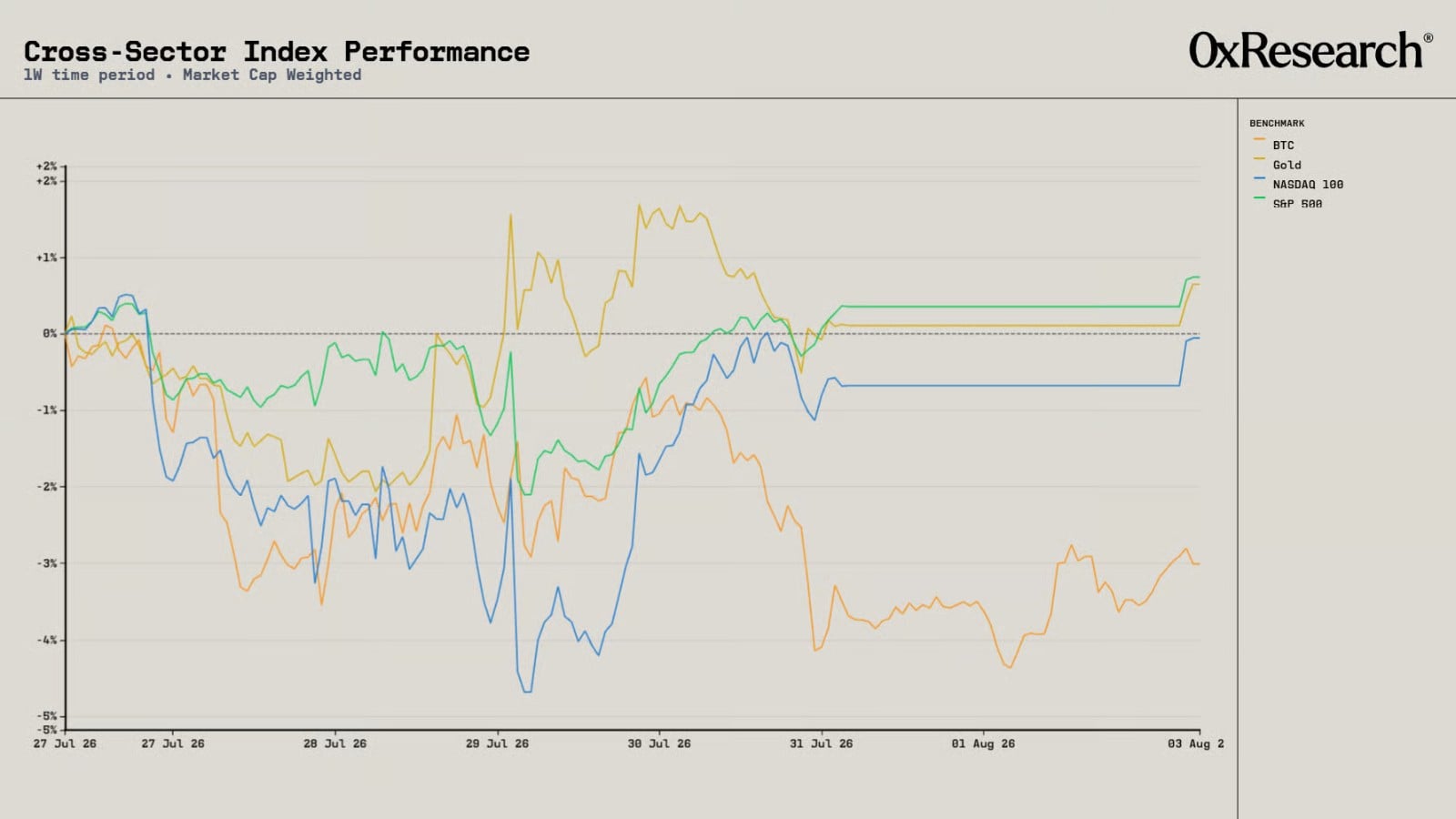
Last week, AI giants released earnings reports in quick succession. Amazon surged over 15%, recording its strongest quarterly revenue growth in more than four years, with AWS revenue up 37% year-over-year to $42.2 billion. Microsoft also rose over 15%, exceeding expectations in cloud business growth, while its capital expenditure guidance was below Wall Street expectations. In contrast, Meta fell 10%, with its free cash flow dropping 91% in the second quarter, weighed down by AI-related capital expenditures. One theme is becoming increasingly clear this earnings season: the market no longer simply rewards AI investments but favors companies that can demonstrate a return on investment without sacrificing cash flow.
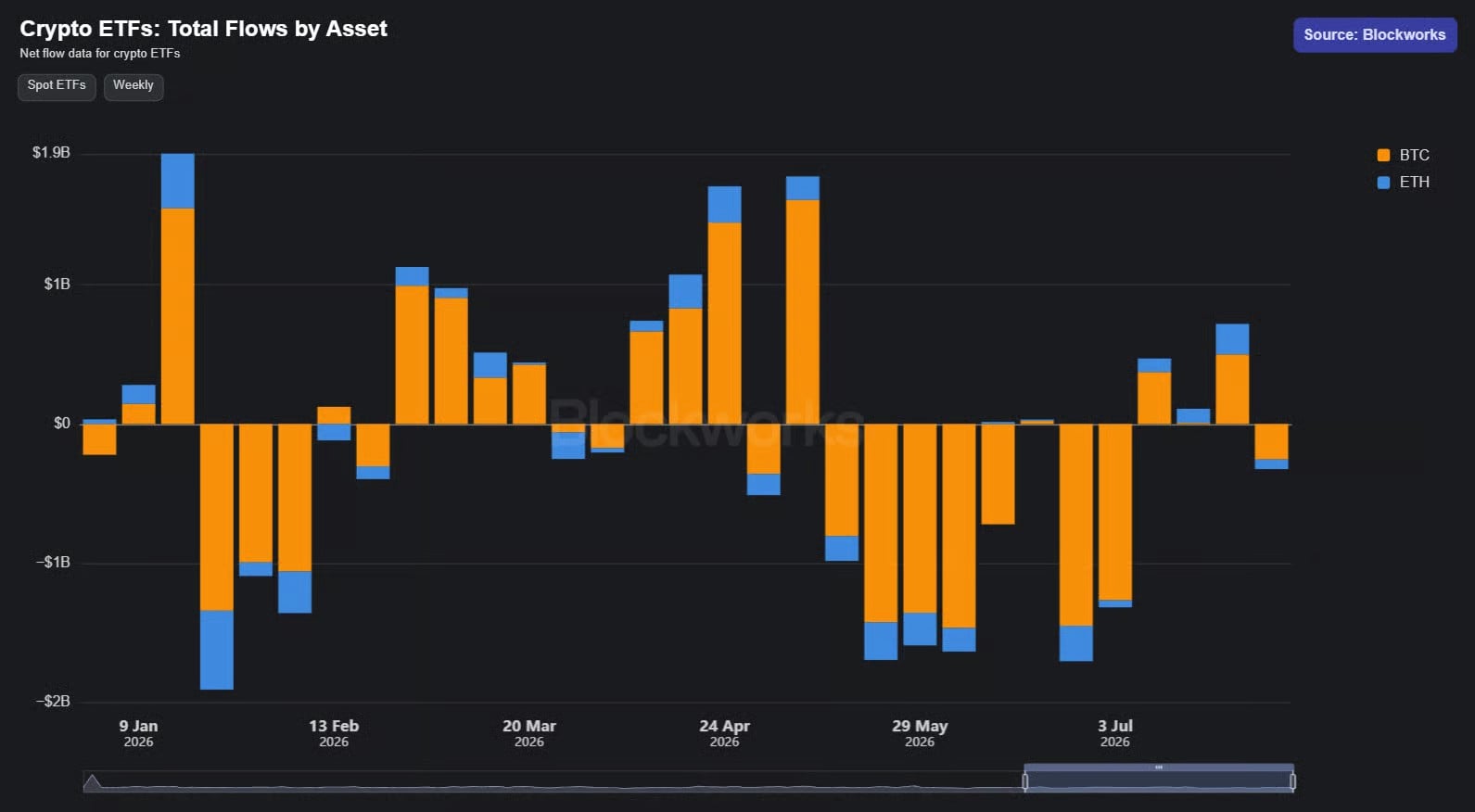
The cryptocurrency market continues to feel the pressure. ETF funds saw net outflows again, with BTC and ETH ETFs experiencing net outflows of $255 million and $69 million respectively. Risk sentiment is also being suppressed by the bond market, with the yield on the U.S. 30-year Treasury rising to 5.23%, the highest since June 2007.
The internal leadership within crypto has rotated again. The Solana ecosystem performed the best this week, rising 8.5%; the Ethereum ecosystem dropped 8.8% after several weeks of strength following the launch on the Robinhood Chain. The DEX sector ranked second, with a rise of 5.2%.
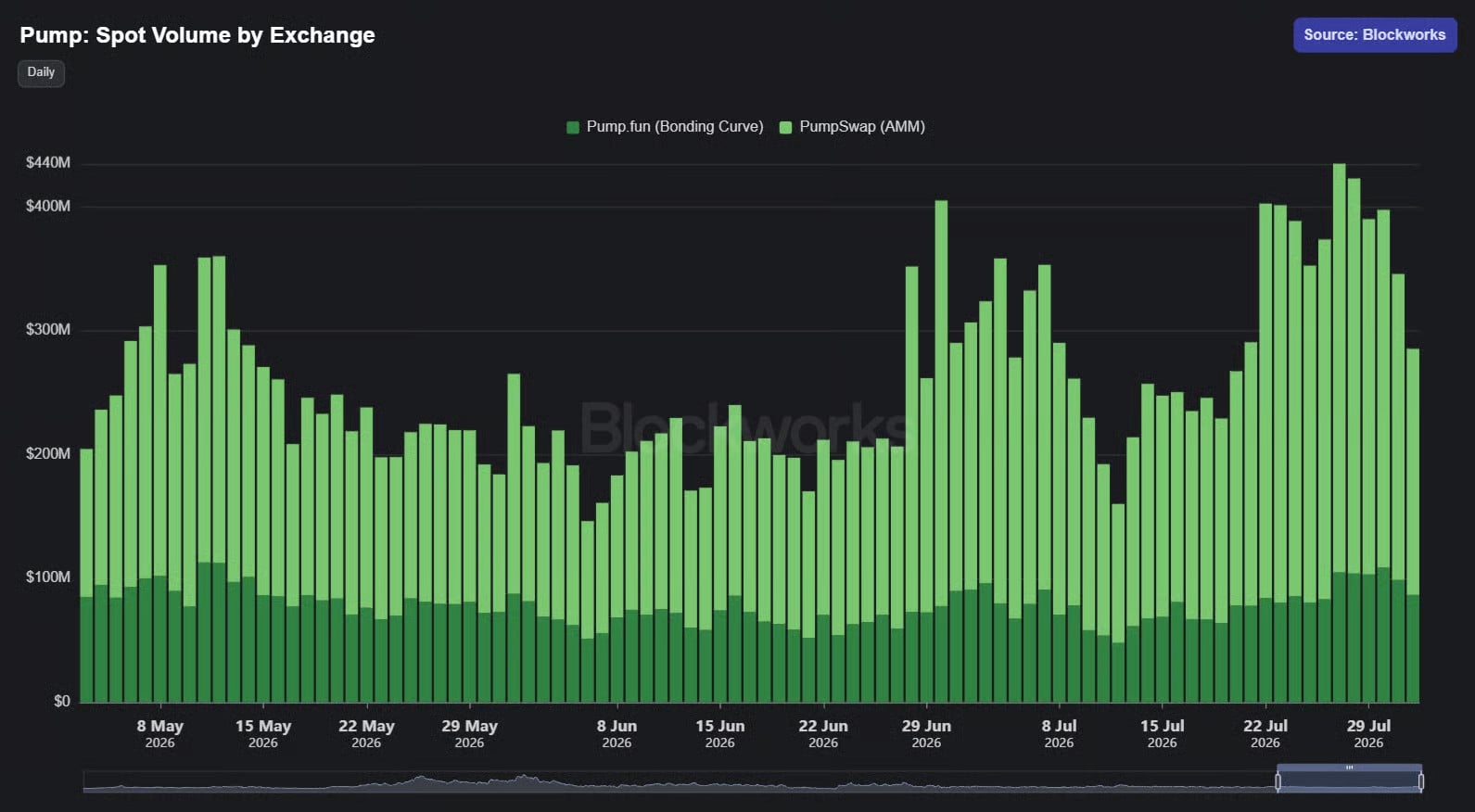
The Solana ecosystem was primarily driven by META, which surged 36% due to its listing on Upbit; PUMP increased 3%, accounting for roughly one-third of the index weight. More importantly, the trading volume and revenue of Pump.fun have continued to rebound from the June lows, indicating that the "trench" activities may be returning.
The DEX sector was led by Uniswap, which rose 6.5% over the week. UNI benefited from the fee switch being extended to the Robinhood Chain, as well as some v4 deployments starting to charge protocol fees.
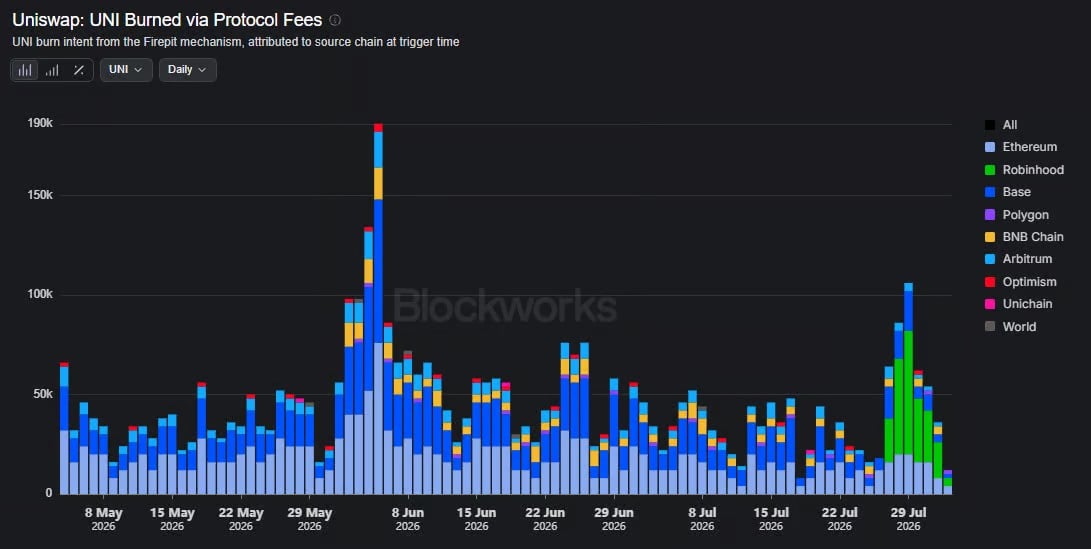
Many interesting on-chain innovations (including the FWA we covered last week) are being built through Uniswap v4 hooks. Uniswap and its broader ecosystem are definitely worth keeping an eye on.
TradeXYZ Debate
As TradeXYZ continues to dominate crypto trading volume, RWA has accounted for over 50% of Hyperliquid's trading volume. Discussions about its alignment of interests and its high concentration on Hyperliquid are intensifying. Concerns range from reasonable (how Hyperliquid will monetize HIP-3 in the long term) to rather far-fetched (will TradeXYZ leave Hyperliquid?), making it necessary to clarify the current relationship.
First, let’s clarify one point: TradeXYZ is an independent team building on Hyperliquid. It is required by the protocol to share 50% of the HIP-3 revenue with Hyperliquid, with the remaining half being at its discretion. We found that TradeXYZ (which is the same team as Unit) has always used, and continues to use, its HIP-1 spot revenue to buy back HYPE, but has not done the same with HIP-3 revenue.
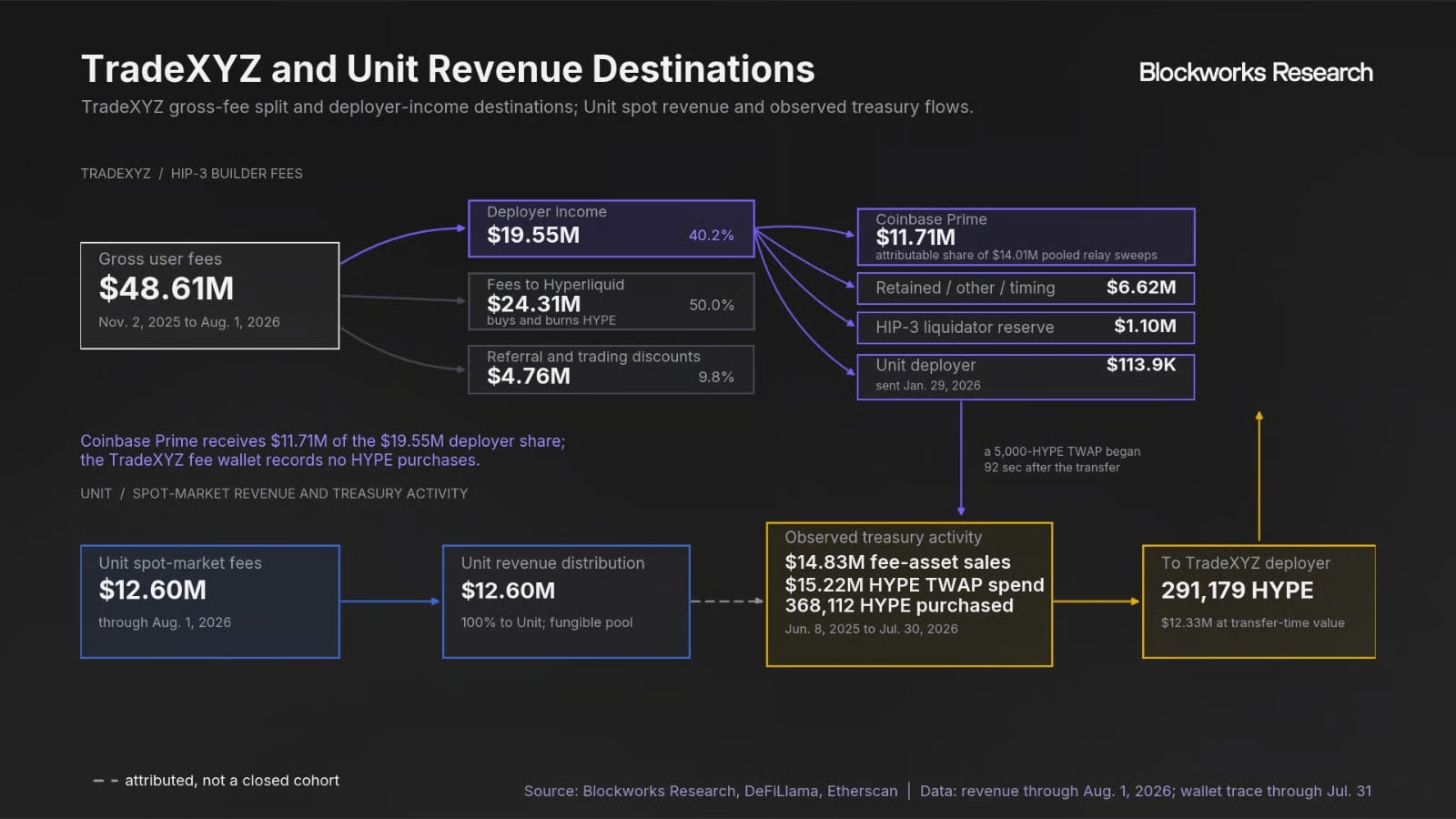
The first concern, which we consider the weakest, is that TradeXYZ would leave Hyperliquid because the 50% split is too high and it could capture more value elsewhere. I expressed a completely opposite viewpoint as early as April: Hyperliquid is outsourcing too much of the value of the largest market to deployers. Let’s look at what each side provides. Hyperliquid offers infrastructure, collateral, and most importantly, a user base that supports the vast majority of TradeXYZ's trading volume. To leave, TradeXYZ would need to rebuild the exchange layer (the most difficult part of the entire tech stack), almost give up its entire trader base, and in the process, harm its reputation in a self-destructive manner. For Hyperliquid, bringing RWA in-house would also be reputational suicide: weakening the dominant deployer that has sustained so much success would signal to all future HIP-3 deployers and all builders on Hyperliquid that any sufficiently successful team could be replaced. This is one of the most typical symbiotic relationships in the crypto field; from reputation, economic, and architectural perspectives, both sides have no reason to leave each other.
The second concern is about monetization, which is more plausible but requires close examination. Firstly, to ignore TradeXYZ's execution capability is disingenuous; Hyperliquid's RWA market could not reach today's scale without it; 100% ownership of a much smaller pool is worth less than half of the current pool. Secondly, the 50% revenue share is not the only way Hyperliquid can monetize: it also profits through priority fee writes and read fees paid by market makers.
It also benefits from second-order effects, such as the increase in USDC supply - the revenue from adjustments after the on-chain balance costs, with Hyperliquid retaining 90%. The trading volume is a proxy indicator: since the launch of HIP-3, its trading volume has increased by $3.68 billion, while USDC supply growth over the past year has been $1.38 billion, with crypto trading volume decreasing towards the end of the year. As more traders bring USDC in to long RWA, the revenue from this supply also belongs to Hyperliquid. This revenue is estimated to be around $30 million per month, already exceeding the entire HIP-3 perpetual fee pool that Hyperliquid shares with TradeXYZ.
For us, the most interesting question is not the 50/50 split between TradeXYZ and Hyperliquid, but how both can evolve out of the growth model and ultimately shift from a low fee structure to a more stable and higher fee base.
免责声明:本文章仅代表作者个人观点,不代表本平台的立场和观点。本文章仅供信息分享,不构成对任何人的任何投资建议。用户与作者之间的任何争议,与本平台无关。如网页中刊载的文章或图片涉及侵权,请提供相关的权利证明和身份证明发送邮件到support@aicoin.com,本平台相关工作人员将会进行核查。


