Author: Peng Kunfang
Over 200 years ago, British textile workers took hammers to smash machines. More than 200 years later, similar sentiments emerged in a car factory in South Korea.
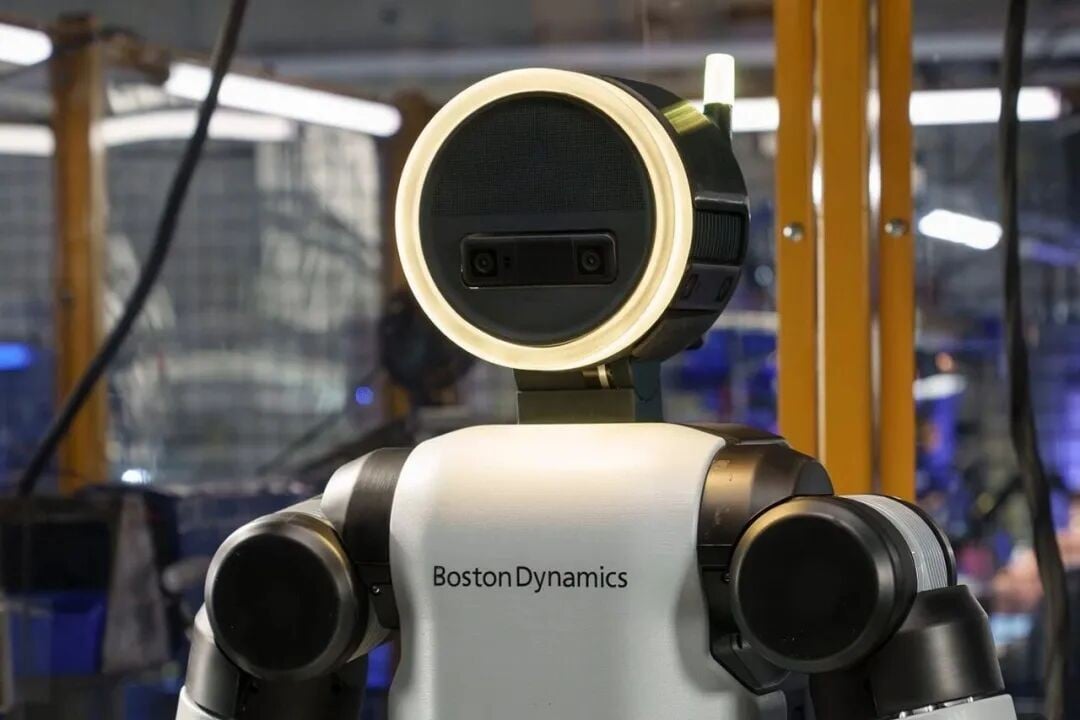
In July this year, the Hyundai Motor Korean Union initiated a series of partial strikes. On the surface, this remains a familiar labor negotiation: salary increases, performance bonuses, and retirement age are among the union's demands. However, there is an additional aspect this year that is quite timely—the job security in the age of AI and robots. As early as the voting phase in June, the Hyundai Motor Union expressed a desire for job security concerning advanced robotic technology. South Korean media soon linked this demand to Boston Dynamics' Atlas humanoid robot that Hyundai Motor Group plans to introduce. Ultimately, over 86% of the approximately 40,000 union members supported the strike.
Therefore, it is not accurate to simplistically summarize this event as "modern workers protesting robots taking their jobs." The strikes that truly occurred in July primarily arose from the breakdown of labor negotiations over wages, with robots not being the sole or even the most direct trigger of this round of strikes. But another fact is equally worthy of attention: robots have officially entered the negotiation horizon of the union, and even before they have been integrated on a large scale into Hyundai's production line, they have already caused thousands of industrial workers to start thinking about a question that seemed quite distant in the past—what will happen to humans?
This scene easily evokes thoughts of the "Luddite movement" during the British Industrial Revolution two centuries ago. However, what is truly worth discussing today may not be whether "humans are going to start smashing machines again," but rather a more subtle dislocation: robots may still have a long way to go before truly replacing a significant number of skilled industrial workers, yet the social conflicts surrounding robot replacement have already begun to surface.
At a time when this anxiety is emerging, Musk's recent interview provides a vision of the future that is almost entirely opposite. In the latest interview published by The Economist, Musk again discussed the long-term outcome of AI and robots: digital AI will take on more and more cognitive labor, while robots will become the execution arm for AI entering the physical world. Continuing down this path, ultimately almost all necessary work could potentially be done by machines.
While Hyundai workers worry that Atlas will take away some jobs on the production line, Musk envisions a day when the vast majority of work no longer needs to be done by humans.
The real divergence thus becomes clear: the issue may not be just whether robots will replace labor, but how humans understand "losing jobs." Today's society is still built on a solid chain—work generates income, income supports consumption and life, so losing a job naturally means losing economic security.
Musk depicts another scenario: when AI and robots elevate the production capacity of goods and services to a sufficient level, society enters "extreme abundance" where the supply costs of food, housing, transportation, healthcare, and numerous services continue to decline, people no longer have to rely on selling labor to obtain the necessities of life, and work will gradually transform from a means of survival into a personal choice.
This is also the background for his repeated proposal of "Universal High Income" in recent years. AI and robots create enormous productivity, and technological dividends eventually translate into universal prosperity, with robots "taking jobs" potentially becoming a prerequisite for humanity to escape the need to "work to live."
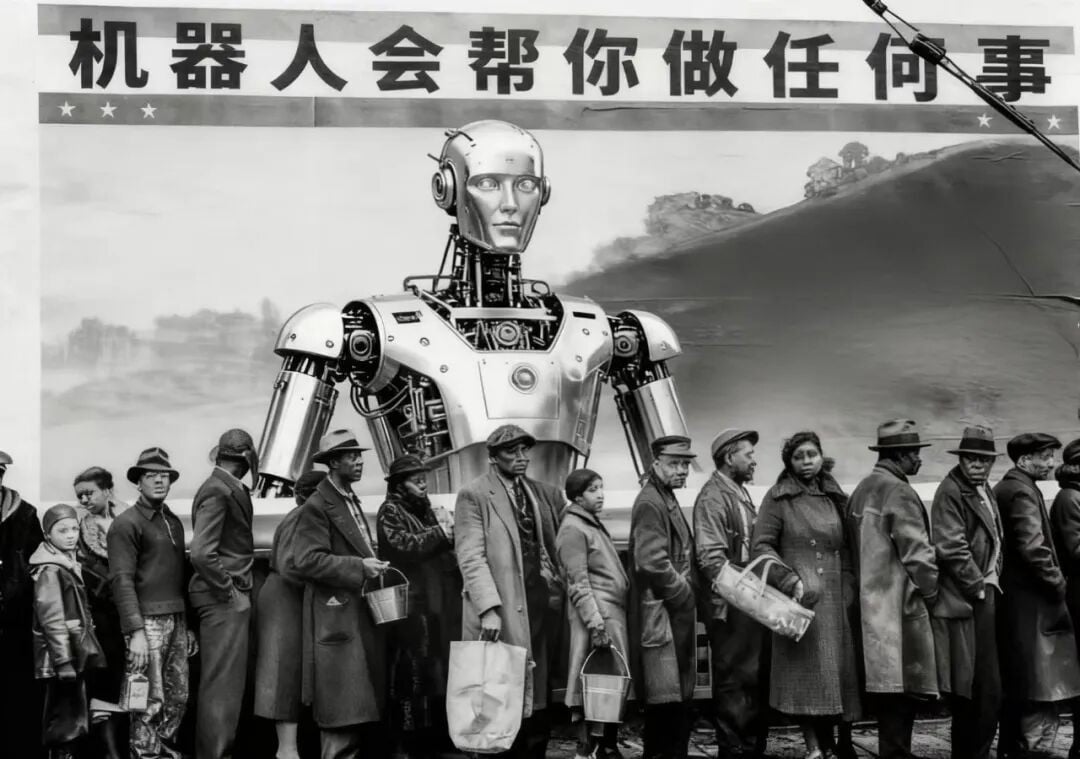
Thus, Luddism sees the unemployment risk behind machines, while Musk sees the potential for freedom behind machines; modern Hyundai workers hope to protect their jobs before robots enter factories, whereas Musk looks forward to robots ultimately eliminating the very necessity of "having to work." These two seemingly opposite logics sharpen the same question: as machines create more and more wealth, who ultimately shares this wealth?
The robots haven’t become workers yet, but the anxiety of unemployment has arrived
The concerns of Hyundai workers are not hard to understand. Hyundai Motor Group has openly showcased an aggressive robotic layout, and Boston Dynamics' Atlas is continuously transitioning from laboratory demonstrations to industrial operations. In such an industrial context, a car worker watching Atlas transport, walk, and operate components, while seeing the company emphasize AI, smart manufacturing, and automation, would naturally ask: in five years, will the person standing beside the production line still be me?
Social media further compresses this anxiety into an easily spread logic chain: businesses buy robots, robots enter factories, and human workers are laid off. The advancement of a robot's capabilities, a purchase plan, or a short experimental video can quickly be woven into a narrative of "countdown to a certain profession." Long-term technological trends are folded into an immediate reality, thus making the imagination of robot replacement run faster than the robots themselves.
The problem is, real industrial production is far from this simple. Automobile manufacturing is already one of the most automated industries globally, with highly standardized processes such as welding, painting, stamping, and handling covered by industrial robots decades ago. Today, the challenges that humanoid robots truly need to overcome are precisely the parts that traditional automation has not completely resolved: flexible assembly, harness operation, inter-station mobility, temporary exception handling, and numerous subtle yet complex variations between different components and operating conditions.
The most valuable aspect of a mature industrial worker goes far beyond just having two arms. How to install when parts show slight tolerance, what a change in the feeling during tightening means, where to prioritize inspection when a machine makes a certain sound, how to compensate for slight deviations in the previous process—these accumulated experiences over years constitute enormous implicit knowledge in industrial production. They are rarely written into SOPs but determine whether a production line can genuinely operate stably.
This is precisely the portion of current robots that is the most challenging to overcome. Being able to pick up a part in a demo environment is entirely different from being able to consistently perform the same action for eight hours, thousands of times in a stable manner; being able to complete one assembly does not guarantee the ability to meet real production line requirements for yield, rhythm, safety, and the costly risk of line stoppage. For many robotics companies, the journey from "capable of doing" to "capably doing it stably in the long term" remains a lengthy industrialization road.
Therefore, from the current technical reality perspective, the notion that "tens of thousands of auto workers will soon be replaced by humanoid robots" is obviously an oversimplification. Today, the more realistic situation may be that the long-term potential of technology has been anticipated by public opinion, and people have already begun to feel uneasy about that future before robots truly possess comprehensive replaceability.
This does not mean that the concerns of Hyundai workers are meaningless. On the contrary, when a technology has the potential to redefine production relationships, social emotions often ferment prior to the large-scale maturity of the technology. This prematurely appearing anxiety is not necessarily about accurately predicting tomorrow, but it may have raised a question that will eventually need to be seriously answered.
Reinterpreting Luddism; What they truly worry about is never just one machine
"Luddism" is often used today as a somewhat pejorative term. Those who reject new technologies may be labeled as Luddites; those who express concerns about AI or robots are easily categorized as conservative or anti-technology. Over time, Luddism has almost become synonymous with "technological regression."
However, the historical Luddite movement is far more complex than this label. In the early 19th century, as the British textile industry rapidly mechanized, many involved in the Luddite movement were actually skilled craftsmen who had undergone years of training. The machines brought not only higher production efficiency but also disrupted the old skill systems, wage structures, and labor relations. The once scarce craftsmanship could rapidly devalue, low-skilled laborers could enter production with the help of machines, the bargaining power of skilled workers diminished, and the livelihoods of some were directly impacted. Machines ultimately became the most intuitive carrier of their anger.

Looking back more than 200 years later, we certainly know that machines did not ruin human society. The Industrial Revolution ultimately created a vast economic scale that dwarfed the handcrafted era and generated many jobs that previously did not exist. Hence, judging Luddites from today's standpoint seems easy: they overestimated the threats posed by machines and underestimated the ability of technological advances to create new opportunities.
Yet this "hindsight correctness" overlooks a very crucial issue. Faced with the workers of 1811, they did not know how much global economic growth would occur 100 or even 200 years later or when new jobs would appear. All they could feel was that their wages were decreasing, their skills were depreciating, and they did not know where the next job would come from. The overall benefits brought by technological advances often take a long time to diffuse, but the costs of technological replacement can quickly concentrate on a specific group of people.
Today's Hyundai workers facing Atlas are actually still in a similar position. Robotics companies might tell them that automation can improve efficiency, economists might tell them that new technologies will ultimately create new positions, and tech companies might paint a future where humans are freed from repetitive labor—all these judgments may hold truth. However, the questions workers genuinely care about are much more specific: When will their positions disappear? How much will the skills accumulated over 20 years be worth in five years? Will the productivity gains obtained by the enterprise through robots translate into benefits for employees? If industrial transformation indeed incurs costs, why should these costs first fall on those being replaced?
Therefore, interpreting the re-emergent Luddite sentiment in the age of robots as merely a fear of new technologies by some individuals is overly simplistic and labeling. The textile workers of two centuries ago and today’s auto workers are actually probing the same question: after machines create greater efficiency, who will ultimately share in that efficiency?
The hardest part has never been the endgame, but how to reach it
Musk envisions a society where "work becomes optional." According to his judgment, by around 2036, the productivity brought by AI and robots could be so high that "money" itself would become less important than it is today, and people will no longer have to work for survival; labor will increasingly become a choice.
This endgame is certainly enticing, but it carries an extremely important implicit condition: the enormous productivity that robots create and the material abundance it brings must ultimately be shared by society as a whole.
This viewpoint is disbelieved by some. As the renowned scholar Zhang Xiaoyu said in "Technology and Civilization: Our Era and Future," "If slaves benefit from technological progress, it is only because the productivity development brought about by technological progress turns past luxuries into today's consumer goods."
If the machines belong to a few enterprises, computing power is concentrated in a few firms, and data and capital are similarly focused in a handful of companies, while the goods and services created by robots still entirely rely on existing income systems for distribution, then continuous increases in production efficiency would not automatically ensure that everyone gains more wealth.
It should be noted that during the last wave of the internet boom, the term "technological oligarch" became a label for Silicon Valley entrepreneurs.
This is also why Musk ultimately must propose "Universal High Income." In a sense, he appears to be standing at another extreme of Luddism but still needs to answer the question raised by the Luddite movement 200 years ago—how should the wealth created by machines be distributed?
The real complexity may not be the distant endgame Musk describes. If one day robots can genuinely carry out the vast majority of necessary labor, society might have already formed a new income system, security framework, and social contract to match it. The most likely points of conflict, on the contrary, are the intermediate stages leading to that future, which many predict will be a "pain period."
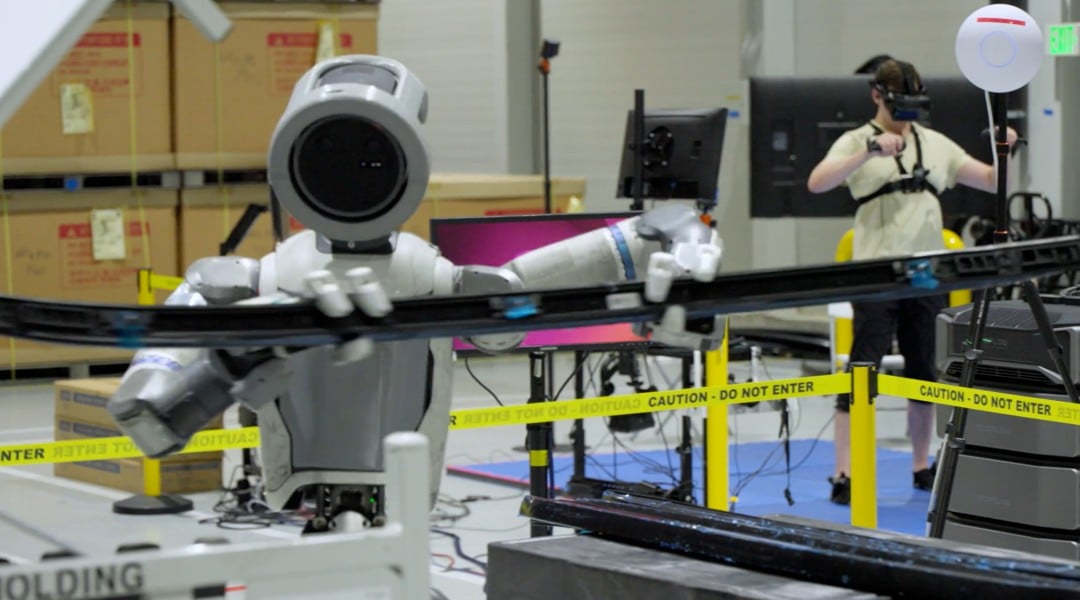
Robots will not suddenly leap from replacing 0% of jobs to replacing 100%. A more likely scenario is that they first replace 5%, then 10%; certain highly standardized positions will be reduced first; some skills will begin to depreciate; some people will become direct beneficiaries of the productivity gains through AI and robots, while others will first bear the costs of transformation. The worst-case scenario is that companies gain higher profits, but the retraining systems for workers remain immature; new positions are emerging but may not necessarily be available to those who've lost old jobs.
Technological capabilities usually improve along a continuous curve, but social systems do not automatically upgrade in sync with technology. This is why Michael Burry, the real-life figure behind "The Big Short," left a striking remark when responding to Musk's views on AI, robots, and universal high income, saying, "Before that, a revolution will happen first."
Whether this statement is overly pessimistic is certainly up for discussion, but it at least accurately highlights a segment of the process that Musk-style futurism is most likely to overlook: how society will transition from today’s labor-based income system to a future where work becomes optional? What will happen during the intervening decades?
The anxiety of Hyundai auto workers occurs right at the forefront of this long transitional road.
A wood becomes straight under a rope, and technology also needs its "rules"
Therefore, the re-emergence of "Luddism" in the age of robots need not be simply ridiculed. Destroying machines certainly cannot stop industrial revolutions; history has proven long ago that when a technology can consistently improve production efficiency and reduce production costs, it becomes very hard to resist it and remain excluded from society. Today's humanoid robots are no different; as long as the costs continue to drop, reliability improves, and return on investment gradually becomes established, their entry into factories, warehouses, commercial services, and even domestic life will become a long-term industrial trend.
However, acknowledging that trends are irreversible does not mean that society must wait for technology to decide everything. The past two hundred years of industrial civilization have never relied solely on the advances of engines, electricity, computers, and robots. The eight-hour workday, minimum wage, occupational safety, labor contracts, social insurance, product liability, and various industrial standards are also part of the institutional legacy created by the Industrial Revolution. Many of these regulations were initially seen as constraints on efficiency but eventually formed the foundation upon which technology could broadly enter society.
Increasingly, the development methods, management techniques, and industry standards emerging around artificial intelligence, robots, data, safety, and ethics are actually part of a new round of technological revolution searching for boundaries. As robots truly enter production and life, these rules will also become increasingly specific: what labor negotiations must take place before robots enter the production line, how the productivity gains from automation should be distributed, who should bear the retraining costs for those losing jobs due to technological replacement, how responsibilities are determined after robots cause safety accidents, and which high-risk scenarios must keep humans involved—eventually, these issues will all become part of the industrialization of robotics.
They may seem less exciting than robots running, doing backflips, or completing complex operations, yet they could determine whether robots can truly cross the final barrier between technological demonstration and industrial application.
"A wood becomes straight under a rope, while metal becomes sharp under a grindstone." The rope appears to restrict the direction of timber but allows it to ultimately become a column. Regulations are similar for technology. True mature technological optimism does not need to pretend that technology won't create problems. The more a society believes that robots can eventually create enormous productivity, the more it should discuss issues like benefit distribution, employment transition, safety responsibilities, and human dignity beforehand, before that productivity is genuinely released on a large scale.
Thus, the anxiety of Hyundai auto workers may indeed have come a bit early. Today's humanoid robots are still quite far from becoming truly reliable replacements for skilled auto workers. However, discussions about how society should confront robots after they genuinely enter factories are not premature at all.
In fact, they should have started even earlier.
免责声明:本文章仅代表作者个人观点,不代表本平台的立场和观点。本文章仅供信息分享,不构成对任何人的任何投资建议。用户与作者之间的任何争议,与本平台无关。如网页中刊载的文章或图片涉及侵权,请提供相关的权利证明和身份证明发送邮件到support@aicoin.com,本平台相关工作人员将会进行核查。


