Source: "The Diary Of A CEO"
Compiled by: Felix, PANews
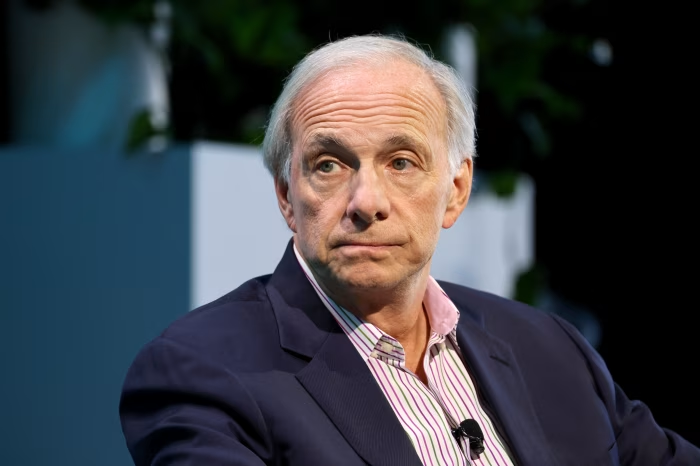
Ray Dalio, founder of Bridgewater Associates who predicted the 2008 financial crisis, developed the company from his two-bedroom apartment into a giant managing about $150 billion in assets. Additionally, Dalio has authored books such as "Principles," "Principles for Navigating the Changing World Order," and "How Countries Succeed or Fail."
Recently, Dalio delved into the "big cycle" theory driven by debt accumulation, wealth disparity, and geopolitical turmoil on "The Diary Of A CEO" podcast. He pointed out that the current AI boom exhibits clear bubble characteristics, which historically often precede significant economic upheaval. With heavy government debt and increasing internal social conflicts, the global order is entering a declining phase of power transition, posing serious challenges for traditional countries like the UK and the US.
To protect personal wealth in an uncertain future, Dalio suggests that investors hedge through diversified assets like gold instead of solely relying on cash or single stocks. He emphasized that maintaining strong adaptability and understanding historical trends are crucial for survival and development for both individuals and nations amidst technological innovation and social change.
PANews has compiled the highlights from the interview.

Host: Have you seen signs that we are in an AI bubble that might lead to an economic collapse?
Dalio: Yes, classic bubble signs are emerging. This impacts the economy negatively and harms society, resulting in losses for everyone. At the same time, other issues are also at play. As a global macro investor, we are very excited about AI, which will bring revolutionary changes, replacing human physical labor and some cognitive logic. However, we are also facing geopolitical issues, such as China becoming the largest trading partner for many countries, surpassing the US, indicating a shift in the world order. Additionally, we have significant wealth disparity and government funding shortages. When the economy slows down, people will start to attack one another.
Host: Investor Jeremy Grantham once told me that we are facing an AI bubble and a potential economic collapse. Looking at the data, it aligns with history; the peak may come soon. He believes this could be the largest investment bubble in American history. What are your thoughts on this?
Dalio: He is right. A bubble refers to a significant price increase, where companies perform well, followed by a bubble burst impacting the economy, similar to the bubbles of 1929 or 2000. When revolutionary new technology emerges, people perceive it as miraculous and borrow money to invest, neglecting the intrinsic asset price. People see many becoming wealthy, but book wealth does not equate to cash; you must liquidate assets to gain cash for consumption. The bubble is punctured when people need money to repay debts due to changes like tax adjustments or rising interest rates. This leads to price declines, losses for people, forced asset sales to repay debts, reduced demand, lower consumption, and ultimately economic recession and depression.
Host: Suppose I am optimistic about AI and I buy a stock from an AI company for $100. Then I take a loan of $50 from the bank against the $100 book value. If something happens to the economy (like war), and everyone rushes to sell, my stock drops to $25, but I still owe the bank $50. I must quickly sell, asset prices fall broadly, people stop dining out, the bubble bursts, and we enter a recession, right?
Dalio: Absolutely correct. Additionally, there’s the supply and demand issue for stocks. In AI manufacturing companies, nobody can accurately predict how much they will earn in the future; you may underinvest and get eliminated by competition, or invest heavily but fail to calculate the returns precisely. It is common now to spend $50 million, but the company is valued at $1 billion. On paper, you become a billionaire, but that is merely the accounting value of the stock. When market frenzy leads to inflation, central banks will hit the brakes and raise interest rates. This means those with debt need to raise more money to repay obligations. Furthermore, when markets crave stocks, there is often a large issuance of stocks. When the cost of debt exceeds equity investment returns, along with surplus stock supply and the need for cash, the bubble will burst.
Host: You mentioned the "big cycle" aside from the bubble. What is that?
Dalio: It's a big cycle that averages around 80 years, and the last time we experienced the start of this new cycle was in 1945. It encompasses several dynamic factors occurring simultaneously: first, political conflicts driven by widening wealth disparity (such as left-right divisions); second, governments facing large fiscal deficits, lacking enough money to pay bills; and lastly, changes in geopolitical conditions (state-to-state conflicts). People who do not understand this cycle only see daily news and cannot connect these isolated events.
Host: How should ordinary people respond to the potential bursting of an economic bubble to secure their future? For instance, a 30-year-old with only $100 disposable income per month.
Dalio: The most important thing is "diversification." People often think that keeping money as cash is safest, but in the long term, this is actually the worst investment, as inflation will erode its value. Even if you capture short-term interest rates, considering a 3.5% to 4% inflation rate and the taxes on returns, this is still a poor return. You need a diversified investment portfolio that includes stocks, gold, bonds, real estate, etc. When stocks or bonds decline, assets like gold often perform well. Diversification can reduce risk without lowering returns. For young people with few assets, your only asset is yourself. You need to figure out how to enhance your skills to exchange for good income, working to blend your job and passions, but never forget the factor of "money."
Host: Since we mentioned money, many people are now discussing Bitcoin. What are your thoughts on Bitcoin? How does it compare to gold?
Dalio: About 1% of my investment portfolio is in Bitcoin. It is a hard currency that cannot be arbitrarily printed. But I personally prefer physical gold. Gold cannot be hacked through technology; it is the only financial asset that does not carry someone else's liabilities and is still the second largest reserve currency held by major central banks. Digital currencies like Bitcoin could be threatened by quantum computing or government surveillance and taxation. When governments do not want it, they have the power to do anything. For reasons of transaction privacy and control, central banks in various countries will not hold large amounts of Bitcoin.
Host: What impact will AI have on ordinary people's jobs? There's a prevailing mainstream argument in Silicon Valley that AI will create new jobs we cannot predict yet and that everyone will be fine. They use the example of tractors and factories replacing manual labor during the Industrial Revolution, believing humans will always find a new avenue. Do you agree with this?
Dalio: This perspective in Silicon Valley arises because they are technology producers who have made a lot of money and do not want to be attacked. It is an evolutionary process. The Industrial Revolution replaced human labor with machines, while today's AI is replacing human cognitive and reasoning faculties on a higher level. In this process, the biggest beneficiaries are the "capitalists" who possess ideas and can replace workers with capital. The share of income flowing to workers from companies is decreasing, while the share going to business owners is increasing, which will further exacerbate wealth disparity. After human bodies and minds are replaced, what can we sell? Humans possess emotions and intuition, which AI currently lacks. In the foreseeable future, those who can apply exceptional human wisdom in their work and partner with AI will be at the forefront.
Host: In the UK and the US (like New York and Los Angeles), the debate over imposing a "wealth tax" on the rich is very intense. Is this a good idea or a bad idea?
Dalio: Operationally, this is a very difficult idea. Because rich people must sell wealth to gain cash to pay taxes, this could ironically trigger the puncturing of the bubble. Additionally, it would reduce investment, as wealth is typically used for capital expenditures that create productivity. If consumption occurs merely through wealth transfer without enhancing the overall productivity of society, problems will emerge. If the government attempts to enforce this, it might face issues of capital flight among the wealthy. To prevent this from happening, the government might modify laws for retroactive taxation or impose strict capital controls. The UK is currently a classic "counter-example," caught in excessive debt, low productivity, and ongoing internal political conflicts. To resolve these issues, society needs a strong "centrist" force for bipartisan cooperation to share the pain and make difficult reforms to improve the productivity of the majority.
Host: You mentioned "changing world order" has cyclically occurred over the last 500 years. When a new recession arrives, will there be a coexistence of two superpowers, or will there typically be only one dominant power?
Dalio: Before World War I and World War II formed the world into "one world," the globe was divided into different regions with their own major powers. However, in the "one world" system, if divergences arise, they are typically resolved through some form of conflict (cold or hot war), ultimately determined by force rather than relying on a so-called "rule-based order." For the future, I believe the most likely and beneficial outcome is for the world to become "more regionalized." China, heavily influenced by Confucian thought, aims to be competitive and not sever ties with the world, rather than aiming to conquer and control other nations. If both the US and China remain strong and we can avoid large-scale destructive wars, the world may split into developing areas such as the Americas region, China, and the Asia-Pacific region.
Host: You mentioned conflict, but the US is currently mired in conflict with Iran, seemingly unable to extricate itself. Will this also affect the macro cycle you described?
Dalio: This reveals a weakness of the US. Now there is a consensus internationally (particularly in Asia) that the US does not actually want to go to war. Due to public concerns over rising oil prices and casualties, Americans want swift resolutions to wars, but you cannot win a war that requires long occupation and control in such a manner. Asian countries are also gradually recognizing that the US may retreat, and its military bases there could actually become liabilities. We are seeing a phenomenon similar to the decline of the British Empire (as during the Suez Crisis) regarding power shifts. People realize that the economic and military force that the US previously wielded, simply requiring a hint to command other nations, is being weakened. Getting involved in the Iranian conflict is a huge mistake, exposing this vulnerability of the US to the world.
Related reading: Dialogue with the "King of Liquidity": Global liquidity has peaked and is expected to bottom out in the second half of next year.
免责声明:本文章仅代表作者个人观点,不代表本平台的立场和观点。本文章仅供信息分享,不构成对任何人的任何投资建议。用户与作者之间的任何争议,与本平台无关。如网页中刊载的文章或图片涉及侵权,请提供相关的权利证明和身份证明发送邮件到support@aicoin.com,本平台相关工作人员将会进行核查。


