Author: Uda
"Losses are so bad, losses are so bad, this past month has really been a loss!"
This is the sentence I have seen the most online in the past month.
After more than a month of World Cup matches, the stock market has also been declining for over a month, as if all the money in the market has been sucked away by sports lotteries and polymarket.

But six months ago, you guys were not saying this, weren't you claiming that the US stock market was in a perpetual bull market? Why am I the only one left waiting for Nasdaq pensions?
Where are the SpaceX devotees from a month ago? Didn't we agree to go to Mars together? How come as soon as the stock price breaks, the rockets haven't ignited and the people have run away?
The devotees of optical modules are the same, saying they will pull out at critical moments; even Brother Feng has started to cry out in panic.

So you all aren’t really believers after all. As soon as SanDisk and Hynix start to plummet, you get scared, and as soon as Google’s earnings report falls short of expectations, you think the AI bubble is about to burst.
No wonder in these days, financial bloggers on Twitter are collectively switching to fortune-telling, calculating when the next financial crisis will occur, all trying to exit with the very last penny intact, all feeling like they can transform into 'The Big Short' at any moment.
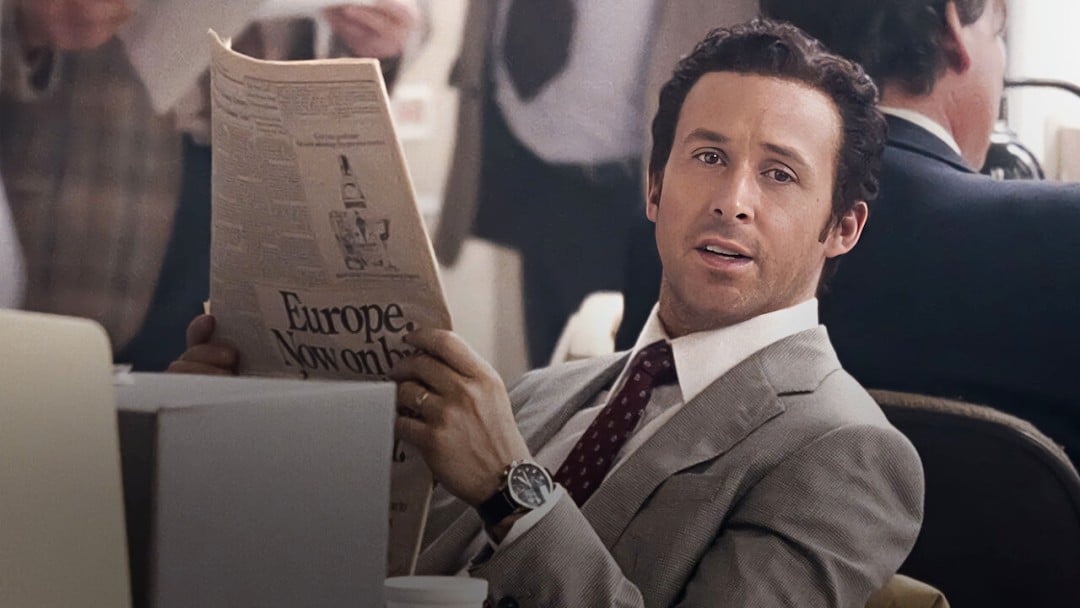
You people, when the market rises, everyone is a disciple of Musk, but when it falls 20%, you all collectively want to be that thirteenth disciple. I’ve figured it out: not many retail investors' beliefs can withstand a big bearish candle.
This article is not investment advice, but rather a shift in perspective. Let’s look beyond the Chinese and American markets to a vast yet hidden "market oasis": halal stocks.
Halal Index, Prophet's Selection
Believing that the quality of Dr. X's readers will not naively think that the term "halal" is limited to prefixes for beef noodles and other foods, but is instead a way of life and ideology.
The flow of money is also linked to people's ideologies.
Have you ever thought about how people in other countries, aside from the US stock market and the A-shares we buy, trade stocks?
Let’s take the Middle East as an example.
There are nearly 2 billion Muslims in the world, though far from us, they also have their own stock trading. Even war-torn Palestine has its own stock market, not to mention the oil-rich Gulf countries.
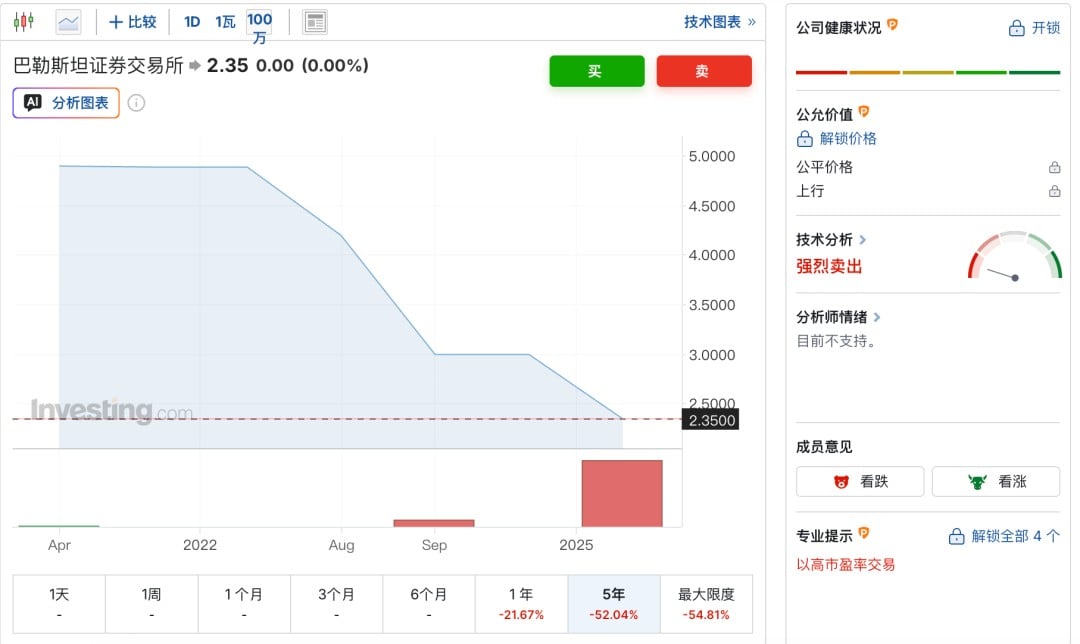
The Palestine Securities Index, technical analysis by investing.com: strong sell.
However, due to strict doctrinal restrictions, the financial systems of Muslim countries differ significantly from ours.
Halal is not just about words and actions, but also involves money.
Under Islamic doctrine, money cannot be created out of thin air. Lending money and just earning interest without working is prohibited; this is known as "usury" (Riba) and is strictly forbidden. A pious person cannot profit without labor or shift all risks onto the borrower.
Thus, Western banking giants like JP Morgan and Deutsche Bank are considered very evil from their perspective.
Those who have taken high school political economy classes may quickly realize that although the Prophet's theory is righteous, it clearly does not take inflation into account!
Think about it: lending money without allowing interest to be collected while prices rise every year means that money lent today for a goat will only be enough for half a goat next year. Isn't that essentially a loss? Who would want to lend?
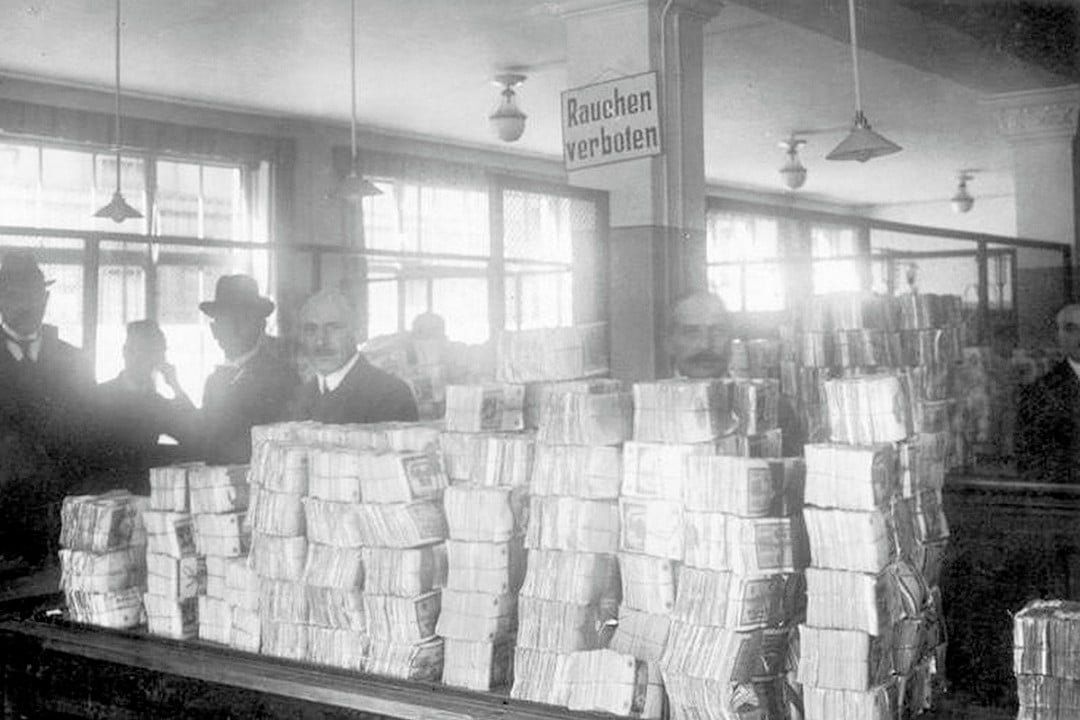
But actually, the Prophet had his own arrangements. His idea was: don’t be a creditor, be a shareholder.
Since the path of "lending money and collecting interest" is blocked, sincere Muslims aiming to preserve and grow their wealth have only one lawful avenue left — investing in real businesses directly, becoming partners and shareholders, earning money and sharing risks alongside the businesses.
When prices rise, corporate revenues and profits follow suit, and your stake naturally appreciates. The inflation problem is thus resolved.
Did you notice: this worldview has completely turned the financial views of Muslims against ours. Here, investing in bonds and earning interest from banks is considered the safest and most conservative way to manage finances; but for Muslims, directly investing in stocks is the optimal solution, which has become the most legitimate way to manage finances.
After all this, I’ve become a conservative!

But the problem arises: under strict doctrine, not just any stock can be purchased. You can't be reciting the Quran while investing in a distillery, a casino, or... a bank that lends at high interest, right?
So what kind of stocks deserve to be called halal?
It’s not complicated, mainly two criteria.
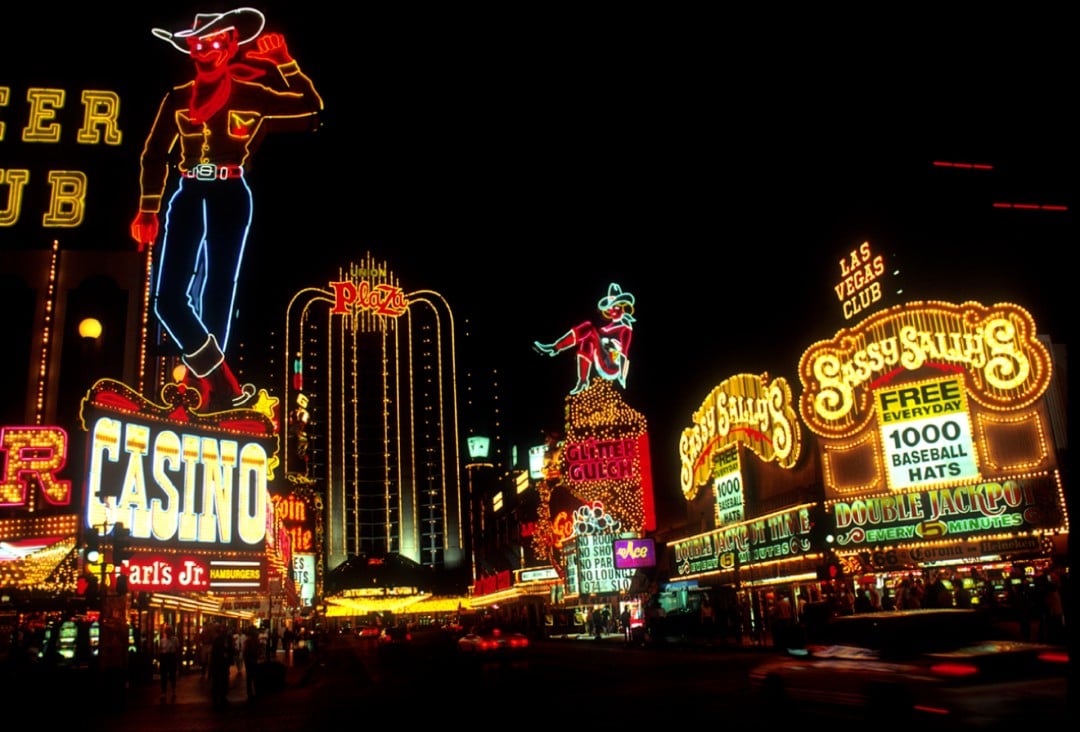
First criterion, see what it is doing. Distilleries, casinos, pork sales, and adult entertainment are obviously “unclean” industries and are immediately disqualified.
Also, banks and insurance companies that are highly regarded in other countries are based on lending for profit, which is also considered very evil in the Islamic world. As for the famous names on Wall Street like JP Morgan, Goldman Sachs, and Deutsche Bank, they are viewed as opposing Allah.
Second criterion, check the accounts. Even if your main business is clean and you are a legitimate technology company producing products that save humanity’s future, scholars will still need to examine your balance sheet for discrepancies: How much have you borrowed? How much income comes from interests?
Those with too much debt or heavy interest income are also disqualified. Even though you haven’t lent at high interest, if you are deeply embedded in this interest arbitrage game, it still stinks of Riba (interest).
For example, you know about SpaceX, right? Even though making rockets is a clean activity, Musk is on the verge of becoming celebrated as a savior of humanity. However, this industry burns money like water and relies on rounds of financing and debt to push forward. Such “living on the edge” players, no matter how appealing their story is, will be rejected upon examination of their accounts and cannot enter the halal cafeteria.

In contrast, companies like Apple and Microsoft are considered high-quality companies with clean core businesses and cash that cannot be spent. The Prophet would nod in agreement, seeing their value.
If we filter by these standards, anyone with a bit of financial sense should have noticed: these are exactly the "low debt, high-quality blue-chip stocks" that fund managers always talk about!
Of course, Wall Street will not miss this opportunity.
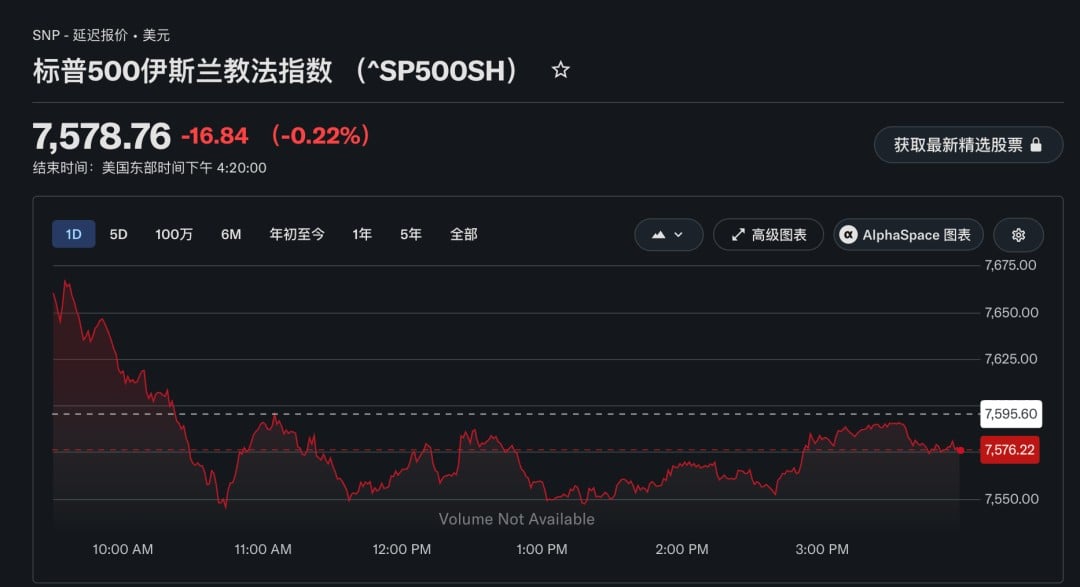
As early as 1999, Dow Jones launched something called the "Islamic Market Index," specifically listing companies filtered through Islamic law. Later, FTSE, MSCI, and S&P followed suit, each establishing its own halal index, often employing a group of Islamic scholars to oversee the selection of stocks.
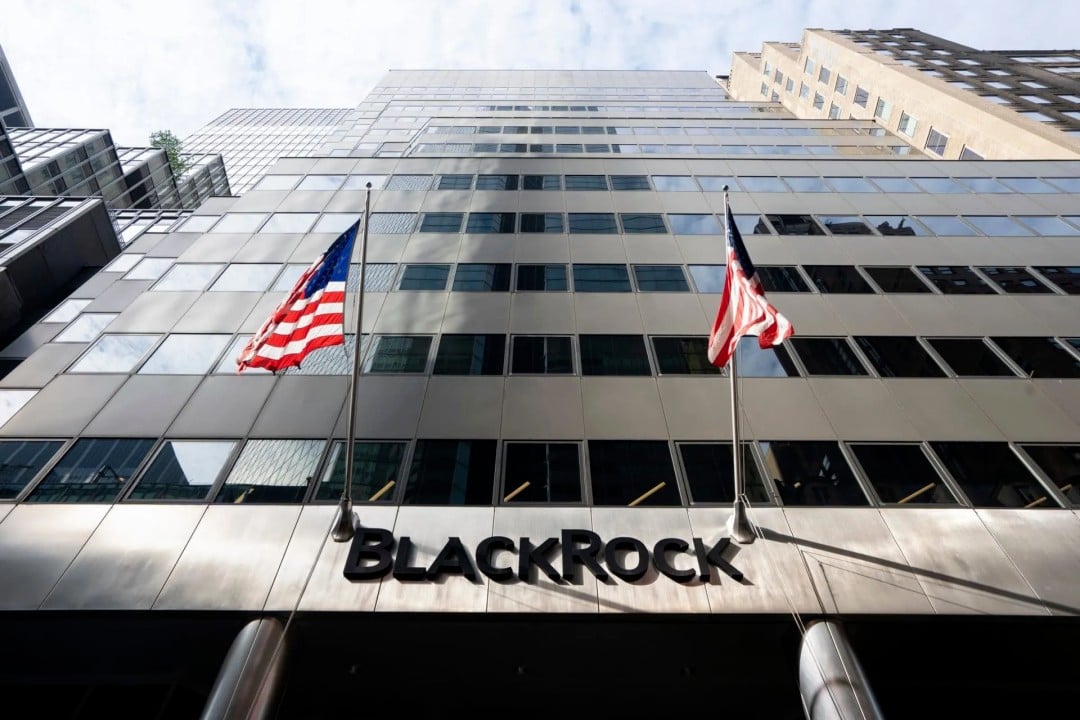
Eventually, even the world’s largest asset management firm, BlackRock, joined in by launching a halal ETF that tracks the "Islamic Market Index."
Upon looking at it, it's filled with familiar faces: Apple, Microsoft, Nvidia, TSMC, ASML, Samsung, SAP, and venerable companies like Nestlé, Roche, and Novartis. All are industry leaders, cash cows, and low-debt blue-chip stocks. Compared to most people's holdings that are completely invested in chasing trends, this is miles away from being steady.
No wonder the Prophet, peace be upon him, was insightful enough to summarize a sound investment strategy in the US stock market as early as the 7th century.
Ah, but ironically,
These Wall Street firms selling halal funds are themselves part of that batch of "evil assets" excommunicated by the Prophet. In other words, your "evil assets" have gone through great efforts to hire a group of religious scholars to filter through quality assets like Apple and Nvidia, packaging them into products and selling them to faithful believers.
Making money through religious law is, in itself, a rather convoluted business. But hey, as long as it’s profitable, it’s all good.
The Prophet Guides You Through Financial Crises
As the saying goes, to test a person's stock trading skills, you need to let them endure a bearish market. Indices are the same.
The halal index has records of surviving bear markets that can be verified through historical data.
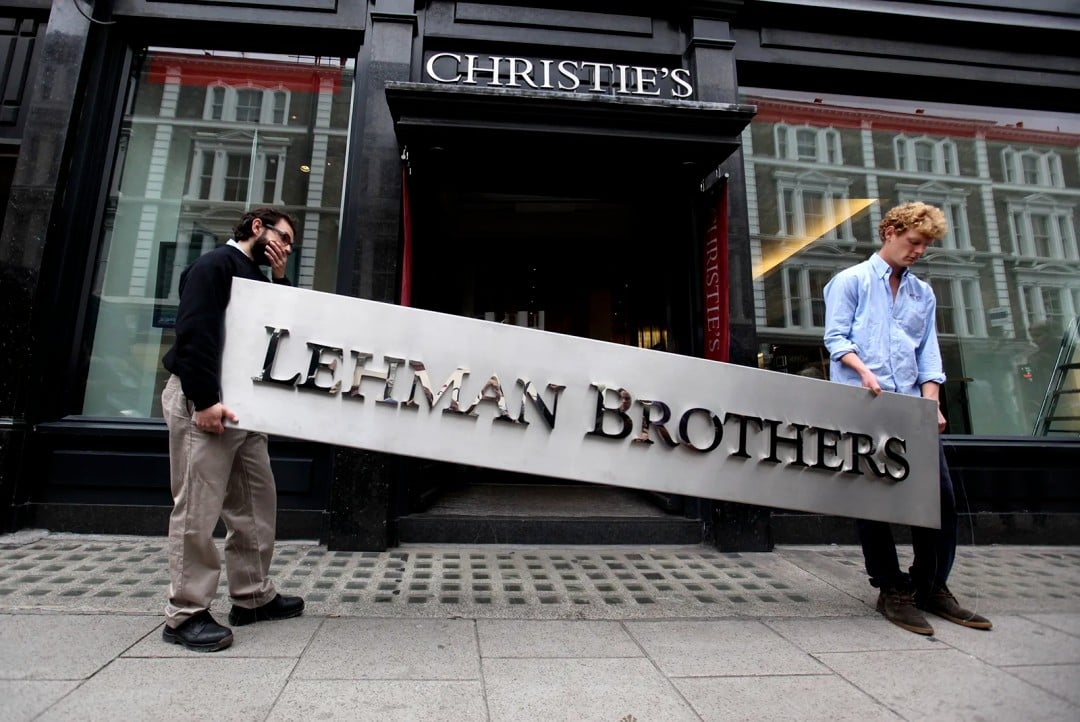
During the 2008 financial crisis, the collapse of Lehman Brothers dragged the entire world into a financial tsunami, with countless leverages on Wall Street exploding. While bank stocks were diving one after another, halal investors looked at their accounts: they were clean, not a single bank stock in sight.
The halal index perfectly avoided the hardest-hit bank sector and was hardly influenced by the wave of high debt bankruptcies.
Several scholars from Durham University conducted a study, analyzing the crisis period from 2007 to 2009. The result showed that in the global, US, European, and Asia-Pacific markets, the halal index fell less than the conventional indices and exhibited lower volatility.
Whenever the market drops by 10%, the halal index excluding bank stocks only declines by less than 8%.
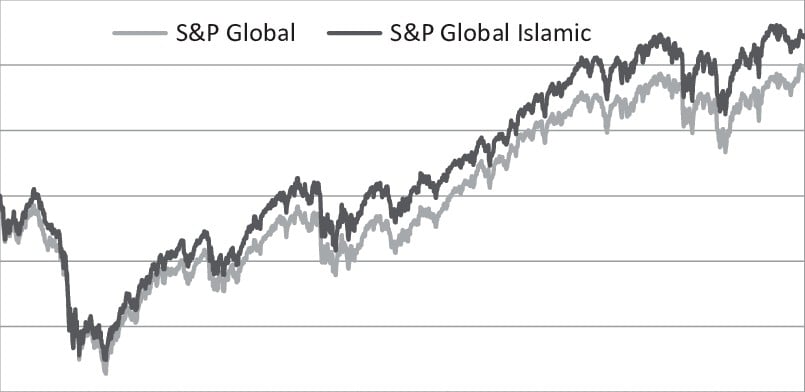
S&P halal index vs S&P 500
Don’t underestimate this data; during extreme market conditions, it's what differentiates between cutting losses and holding on.
The script for every financial crisis is surprisingly similar. Is it any wonder that everyone loves to reference the 2000 internet bubble to understand the present moment?
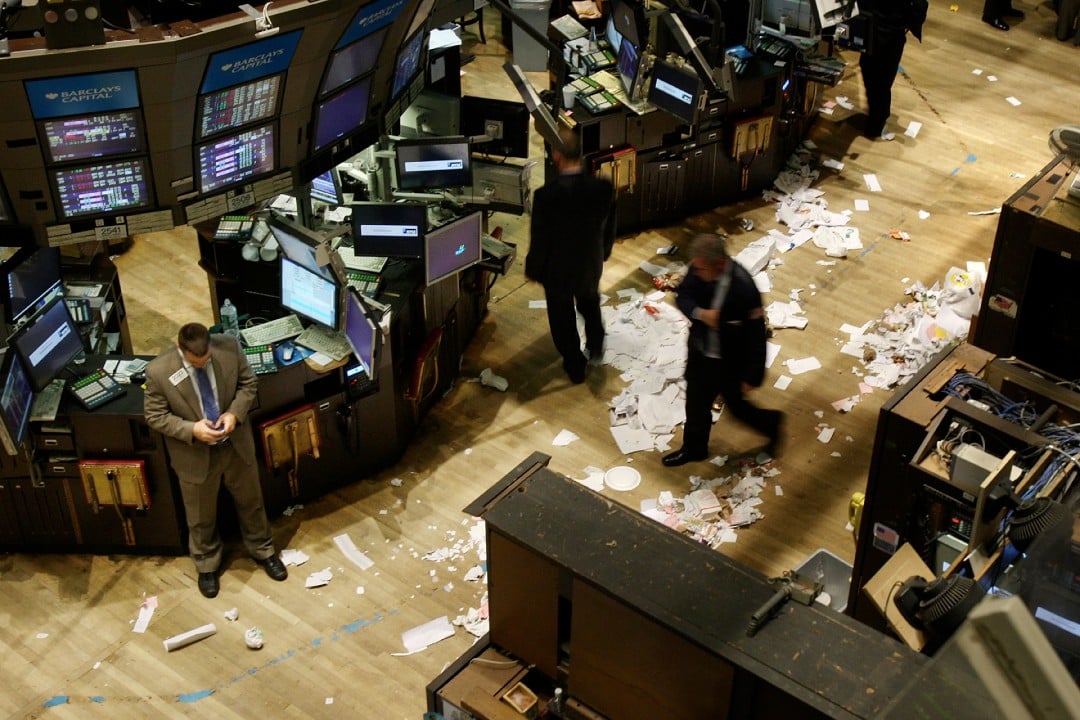
Right now, everyone is worried that the AI bubble is about to burst, and the concerns are essentially just a few points:
First, everyone is stepping on both feet: chip manufacturers, cloud vendors, and AI companies are mutually investing and buying from each other, and the money keeps circulating among a few companies.
Second, there's the critical level of debt: the capital expenditures that giants are pouring out each year are in the multi-hundred billion dollar range, but that money is increasingly not from profits.
Third, it’s pure leveraged betting: like MicroStrategy, which keeps issuing debt to buy Bitcoin, essentially using borrowed money to bet that its price will only go up.
Do you see it now? All three points boil down to five words: too much borrowing.

It is said there are a thousand ways to lose money in stocks, yet every crisis tends to have a similar outcome. Greed is humanity's greatest weakness.
The halal index takes the initiative to address this point. While this is a simpler method of stock selection that may not be thrilling enough to brag about, it does attach a lock to people's greed.
So if you start to fear that the AI bubble is about to burst, then you can take a page from this, which ultimately comes down to just five words: don’t take risks for quick gains.

The reasoning is simple, but very few can truly achieve it.
After all, you all like to make quick money; even if you get carried away and leverage bets on whether Cape Verde can beat Argentina, you are still unwilling to genuinely bet on what the world will be like in 20 years.
Humans love gambling more than they love faith, a fact that both the Prophet and Christ have critiqued, and I hope everyone can learn from this.
免责声明:本文章仅代表作者个人观点,不代表本平台的立场和观点。本文章仅供信息分享,不构成对任何人的任何投资建议。用户与作者之间的任何争议,与本平台无关。如网页中刊载的文章或图片涉及侵权,请提供相关的权利证明和身份证明发送邮件到support@aicoin.com,本平台相关工作人员将会进行核查。


