Author: Scott Galloway & Ed Elson
Translation: Deep Tide TechFlow
Deep Tide Insight: Apple sues, Oracle's rating downgraded, price war begins — OpenAI has the worst week in its serious history. Even worse, if all these risks materialize, its revenue forecast for 2030 could plummet by 70%, and cash flow losses could reach $165 billion. Will this AI giant, valued at hundreds of billions, become the largest tech bubble in history?
OpenAI may not achieve its 2030 revenue forecast by 70%, here's why
It has been another terrible week for OpenAI. The company has been reported to sell advanced AI models to Chinese companies on the Pentagon's blacklist, the first AI device has leaked (allegedly a portable speaker), and according to Emarketer's latest forecast, OpenAI's advertising business is expected to be 95% lower than its own prediction.
And it's not just that. Apple sued OpenAI last week, accusing its consumer hardware plans of being products of stolen intellectual property. S&P Global Ratings also downgraded Oracle's debt to BBB-, just one notch above junk status, citing that OpenAI poses "key credit risks." Additionally, DeepSeek is reportedly preparing for an IPO, possibly submitting an application as early as this year. A cheaper Chinese AI model provider successfully went public, which could make it even harder for OpenAI and Anthropic to attract funding.
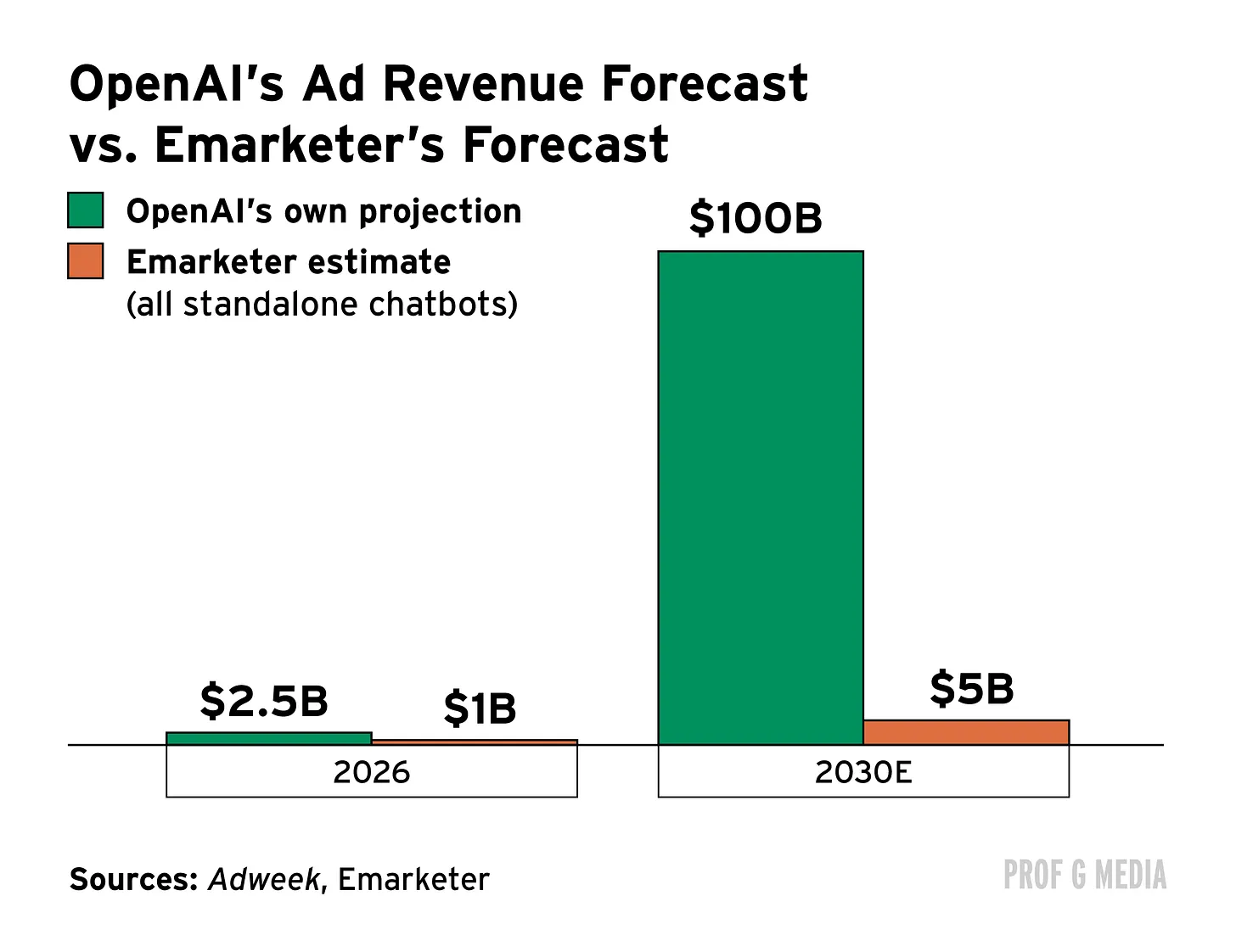
Overall, these issues raise doubts about OpenAI's ability to meet its revenue forecasts and fulfill its obligations under the hundreds of billions of dollars in contracts signed with computational power suppliers and chip companies.
First, Apple's lawsuit could potentially halt OpenAI's entire hardware business. Apple accuses OpenAI of poaching over 400 Apple employees to extract confidential information from them and enticing Apple's suppliers to do proprietary work for OpenAI without permission. Apple is seeking monetary damages and an order for OpenAI to return or destroy all misappropriated property.
Secondly, an AI price war has already begun, with Chinese companies like DeepSeek posing the greatest threat. Open-source Chinese models now account for nearly 50% of enterprise token usage in OpenRouter (an AI model marketplace), whereas this figure was only 4.5% in the first half of 2025.
In response, American companies are significantly lowering prices. Last week, Meta announced the launch of its new model Muse Spark 1.1, priced 75% cheaper than OpenAI and Anthropic. Under industry pressure, OpenAI released a model priced 80% lower than its own.
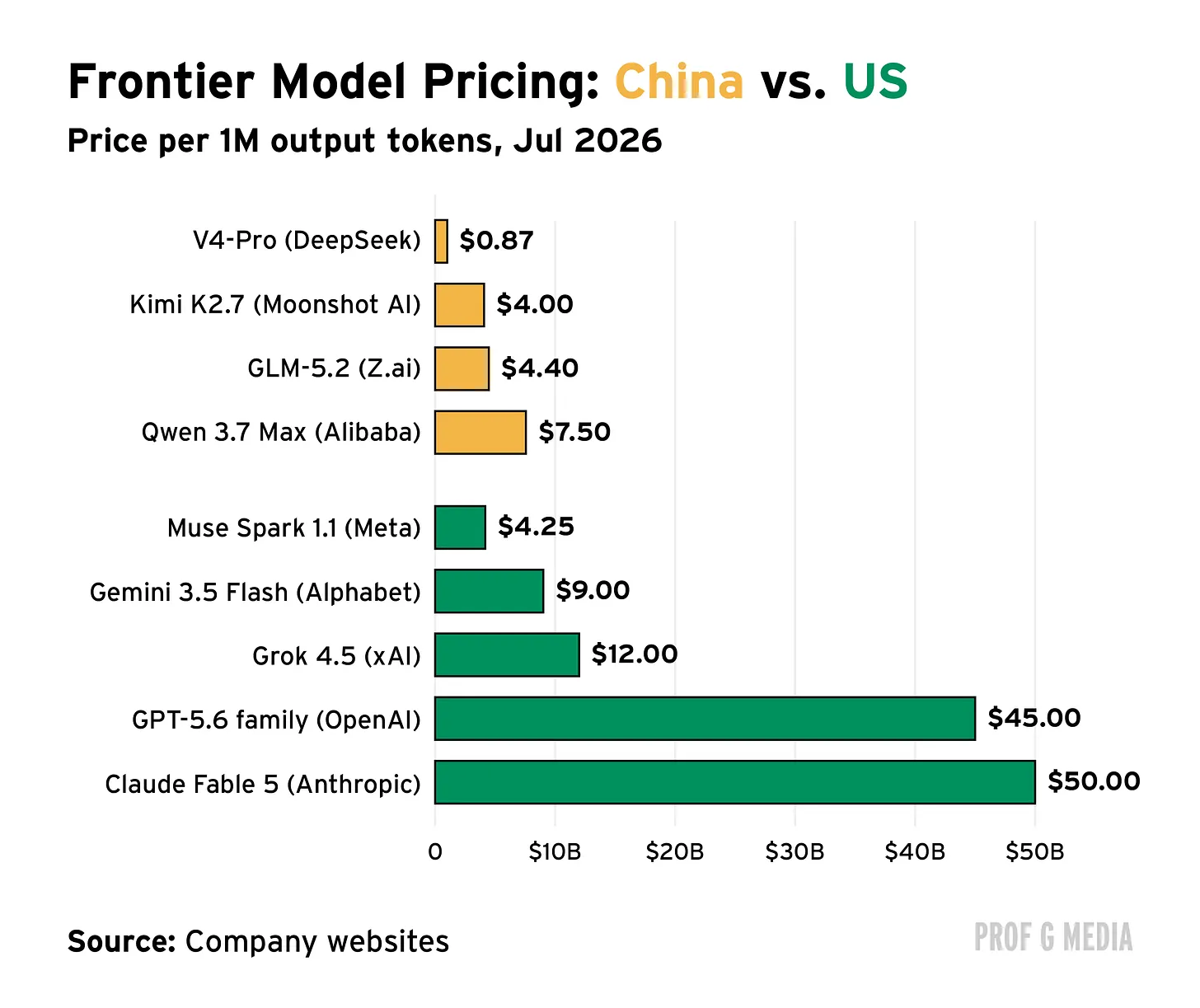
In the worst-case scenario, if Apple’s lawsuit shuts down OpenAI's hardware business, ChatGPT's advertising revenue plummets as predicted by EMarketer, and the price war forces OpenAI to cut model prices by 80%, then OpenAI's revenue will drop by 40% in 2026 and by 70% in 2030.
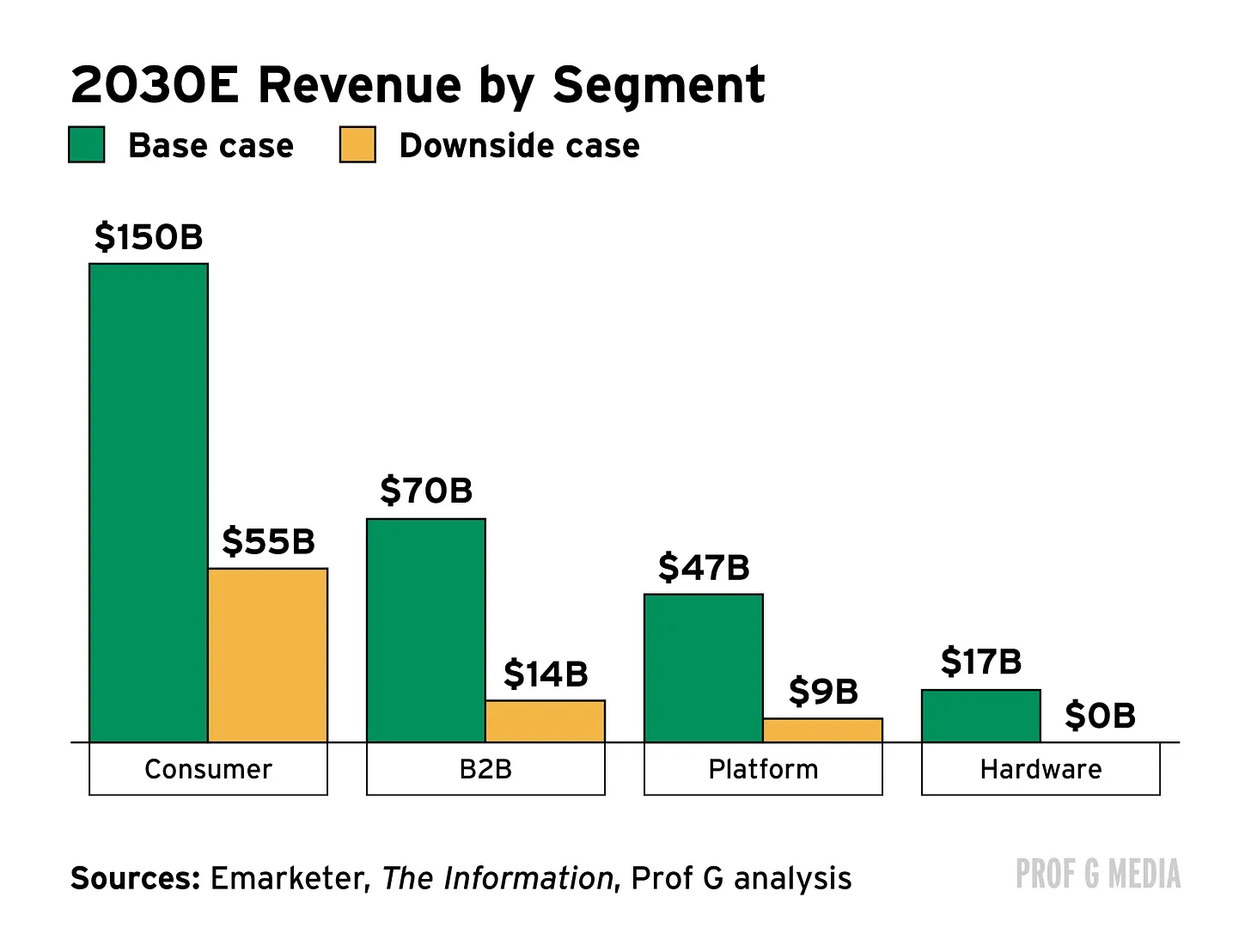
For a company that, in an ideal scenario, could only cover about 80% of its cash burn by 2030, this situation would be catastrophic.
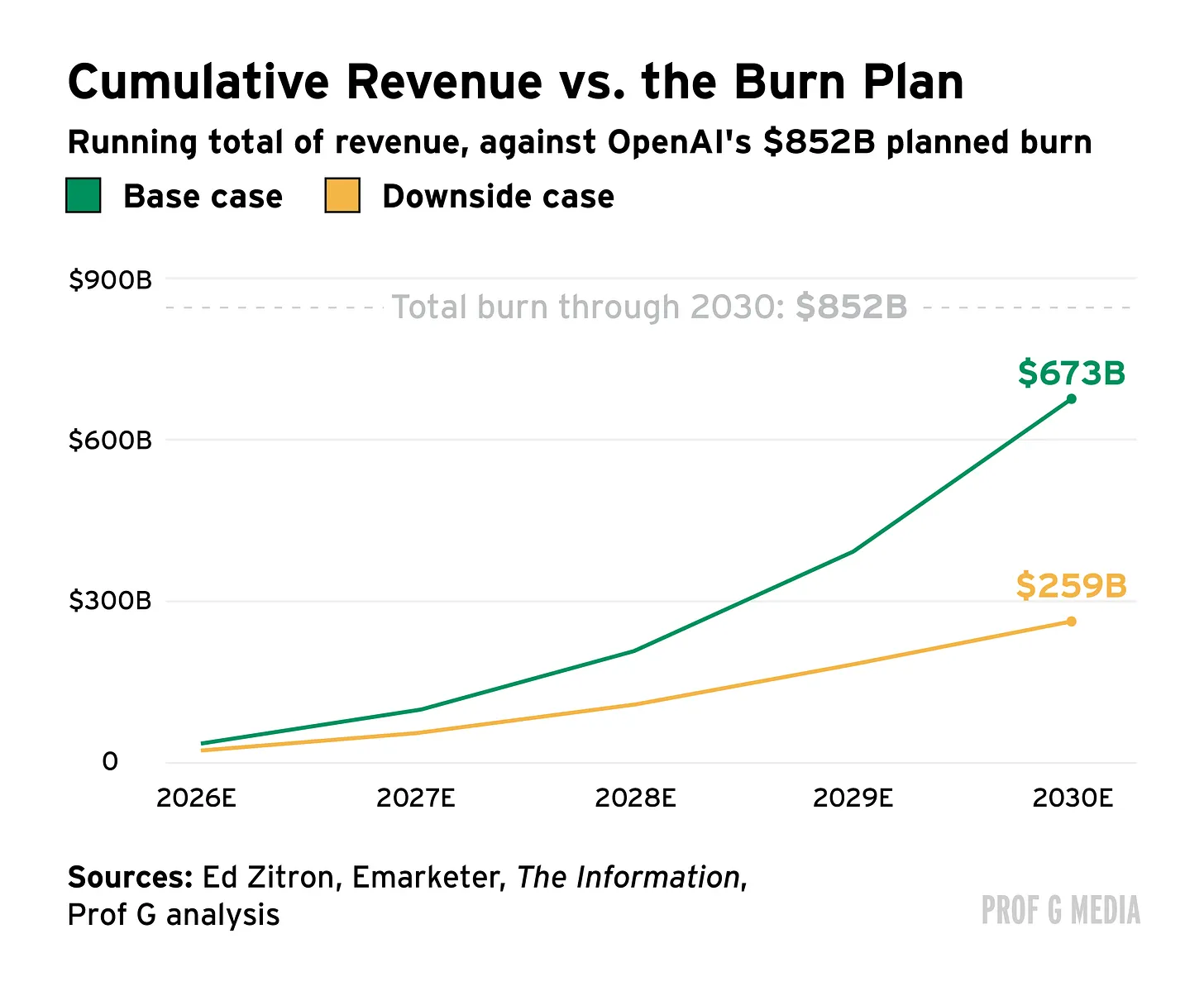
This will also affect when OpenAI achieves positive cash flow. According to internal forecasts, OpenAI would achieve positive cash flow by 2030. But in this downturn scenario, it would instead lose $165 billion that year.
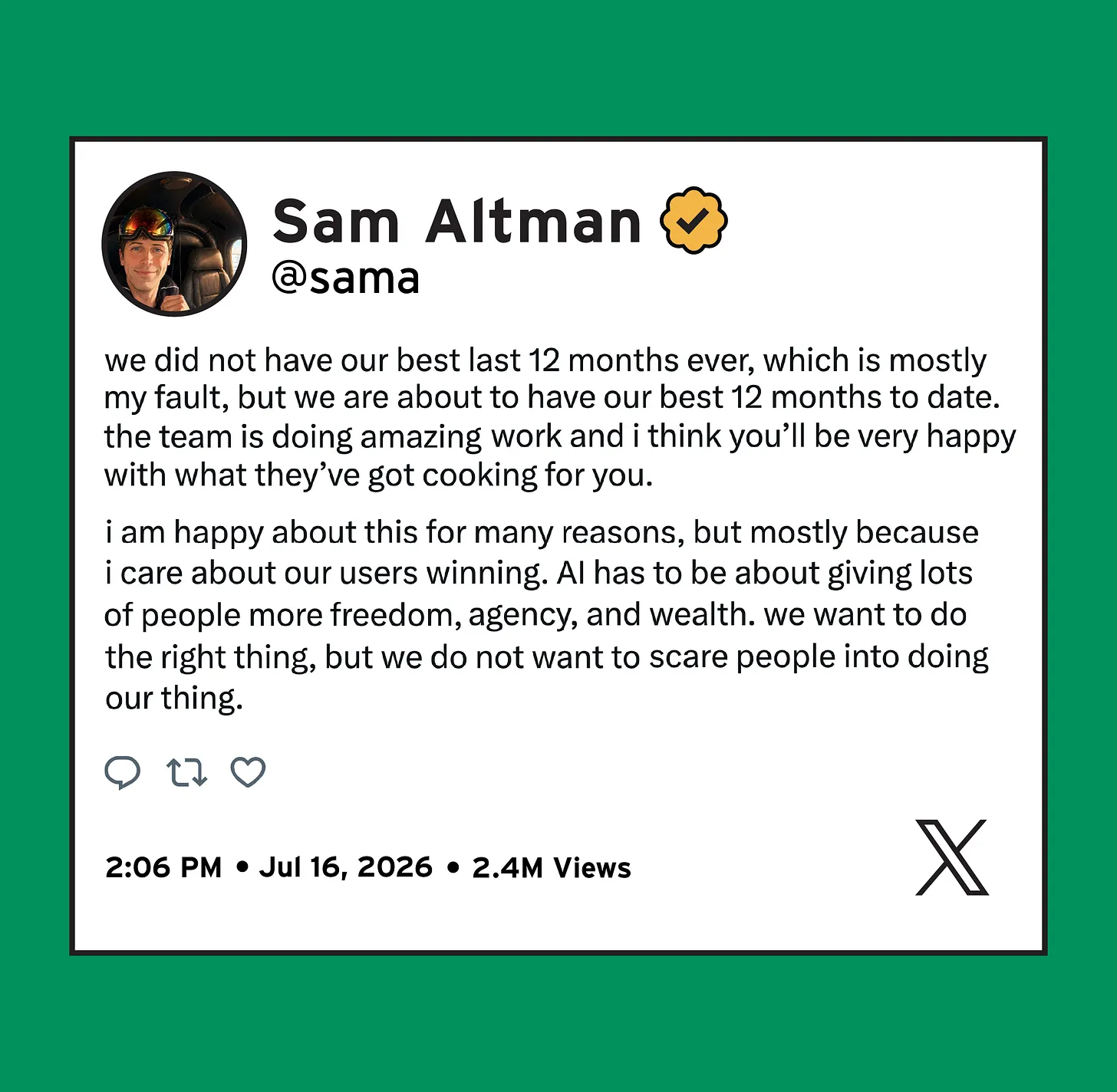
OpenAI CEO Sam Altman tried to soothe investor worries with a tweet, but his statement ultimately just promised to "do the right thing." Whatever that means.
The best business model historically is stealing intellectual property. The second best is: providing 80% value at half the price. This is exactly what DeepSeek and other Chinese open-source weight models are trying to do now.
The U.S. has placed huge bets on AI, while China has just rolled out a product close to the cutting edge at only a fraction of the cost. Once Trump figures out what's happening, this will become the next geopolitical football.
The market has not broadened — it has just become better at hiding AI
Investors have been hearing that the stock market is broadening. But is that really the case? The deeper you look, the harder it is to argue that stocks, bonds, or even alternative assets are now a big bet on AI.
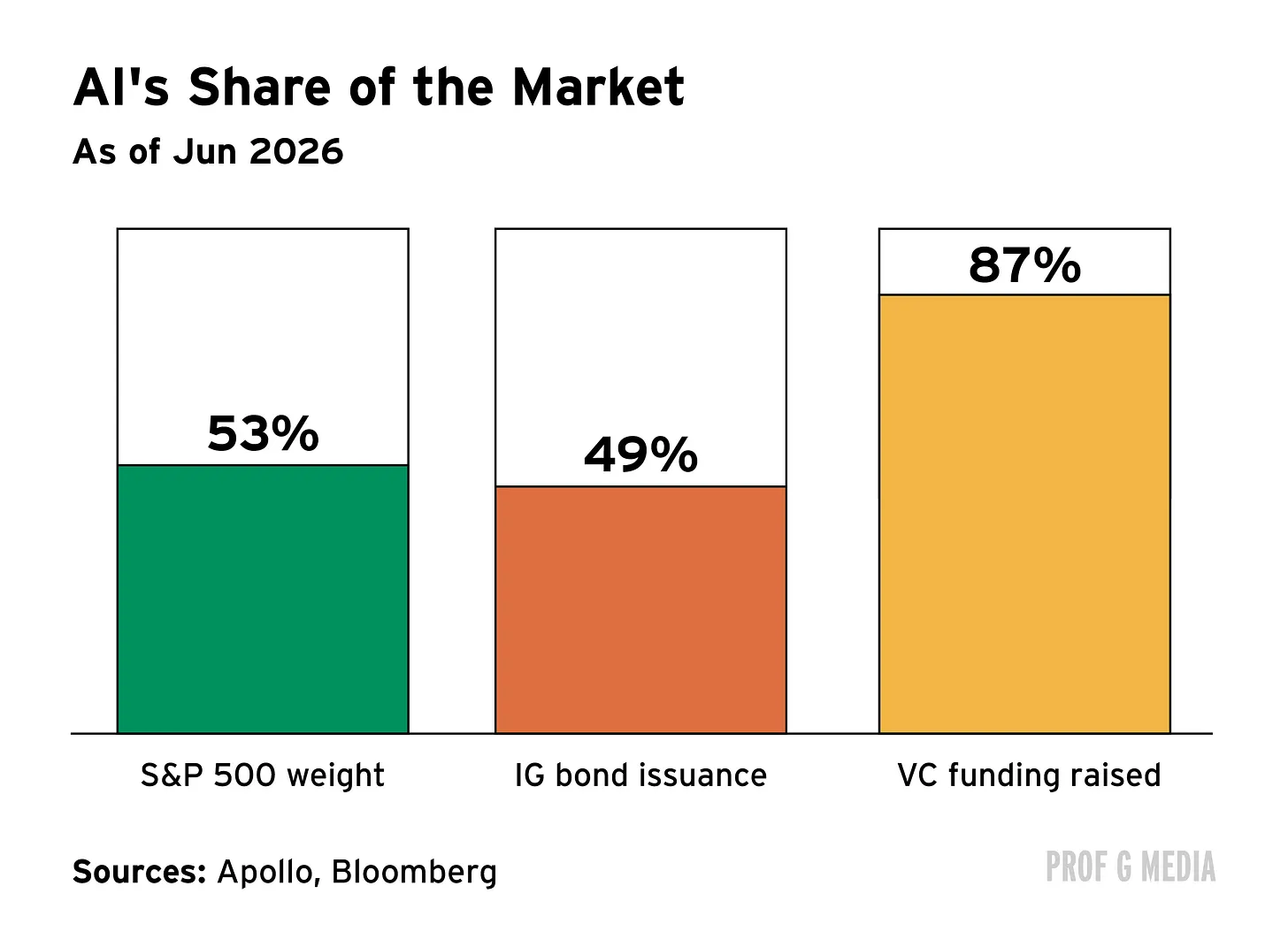
This pattern is most evident in the stock market. AI-related stocks account for more than 50% of the S&P 500 index by weight, and if we exclude AI and energy from the S&P 500 this year, the index would be in the negative.
AI is the hidden catalyst driving returns in seemingly unrelated sectors. For example, of the four best-performing companies in the S&P 500 real estate sector, three are REITs focused on developing AI data centers.
Utility companies are benefiting from the soaring power demand for AI. Last year, U.S. electricity demand surged to an all-time high, with data centers accounting for about 50% of the demand growth.
Industrial stocks have soared due to construction demands for AI data centers. In fact, for the first time since 2021, the forward P/E ratio of S&P 500 industrial stocks (26 times) is higher than that of tech companies (24 times).
The financial sector also relies on AI. Major banks are charging record fees from AI company IPOs and M&A activity, and making record trading revenues from the market hype around AI. Financial Times' Robert Armstrong even wrote, "It is not an exaggeration to summarize it this way: big banks are now direct AI investment targets."
Even the Russell 2000 small-cap index saw 52% of its returns in the first half of this year come from AI-related companies.
Emerging markets are no exception. South Korea and Taiwan account for 75% of emerging market returns, most of which come from three AI semiconductor suppliers: TSMC, Samsung, and SK Hynix.
In Europe, just nine AI winners account for about 47% of this year's Stoxx Europe 600 index returns.
Apollo's chief economist Torsten Slok succinctly articulated the implications of this dependence: "This AI thing better work out."
Real estate investment trusts (REITs) are companies that own, operate, or finance real estate — apartment buildings, hotels, or increasingly data centers. Many REITs are publicly traded like stocks, so buying a share means buying a professionally managed portfolio of real estate. REITs are required to distribute at least 90% of their annual taxable income as dividends to shareholders.
CNBC experts hold stocks, so they will always find reasons for others to buy more stocks. But don't be fooled: the market hasn't broadened; it has just found new ways to buy Nvidia.
Everything is turning into AI stocks. This doesn't necessarily look bearish, but pretending to call it "broadening" while diversifying away from AI is self-deceptive. It is not. Buying "AI adjacent stocks" and calling it broadening is like ordering a Diet Coke with a Double-Double burger at In-N-Out. Let's be clear: you still bought a cheeseburger.
Among the big tech companies, who has the least dependency on AI? Apple. Apple's stock has risen 60% over the past year, recently surpassing Nvidia to become the world's most valuable company again. Amazon, still related to AI but more diversified than other massive cloud service providers, rose 11% over the past year. Microsoft, a core player in AI, dropped 23%.
If I could go long on a basket of stocks, it would be GLP-1. If I could short one, it would be AI. But to be clear: I am not suggesting you hold gold bars or cash. I am always in the market — you never know how fast or how irrational it will run. But you should understand the actual exposure the market has to a sector.
I am a staunch fan of index funds and passive investing: put the money in there and let the market do the work. But now we must ask what real diversification actually means. Putting money into the S&P 500 no longer does the job, which means you must start doing some homework.
The question is: can you find sectors that are truly distant from AI?
I would point to one sector: healthcare. This was one of my picks at the beginning of the year, and I stand by it. AI has not yet touched it — which means real returns may still be ahead. But finding those sectors is the challenge investors are facing now.
Netflix engagement declines, competitive pressure increases
Netflix reported disappointing second-quarter earnings. Revenue grew by 13%, below expectations, and the streaming giant released weak engagement data, then announced it would reduce the frequency of releasing engagement metrics, unsettling investors. The stock price fell by as much as 8% on Friday.
Netflix once boasted about its transparency; now, that claim seems rather ironic. In the first quarter of 2025, Netflix will stop reporting quarterly subscription numbers, telling investors to focus on engagement. Last week, the company decided to reduce the frequency of its What We Watched engagement reports from twice a year to once a year starting in 2027.
The last semiannual engagement report looked weak. Total watch time grew by only 2%, while the subscription user base is estimated to grow by 10%, indicating an 8% decline in daily engagement per subscriber.
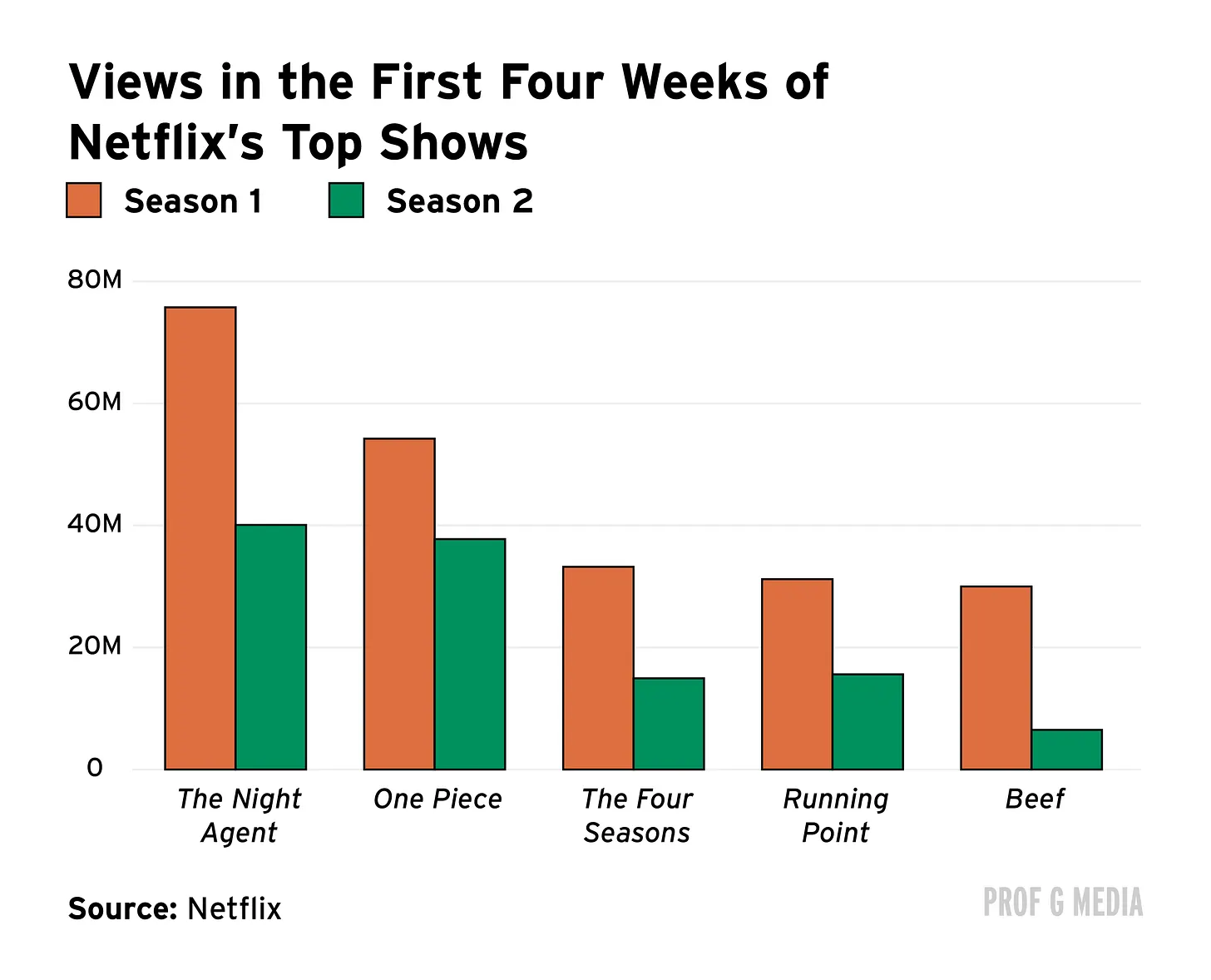
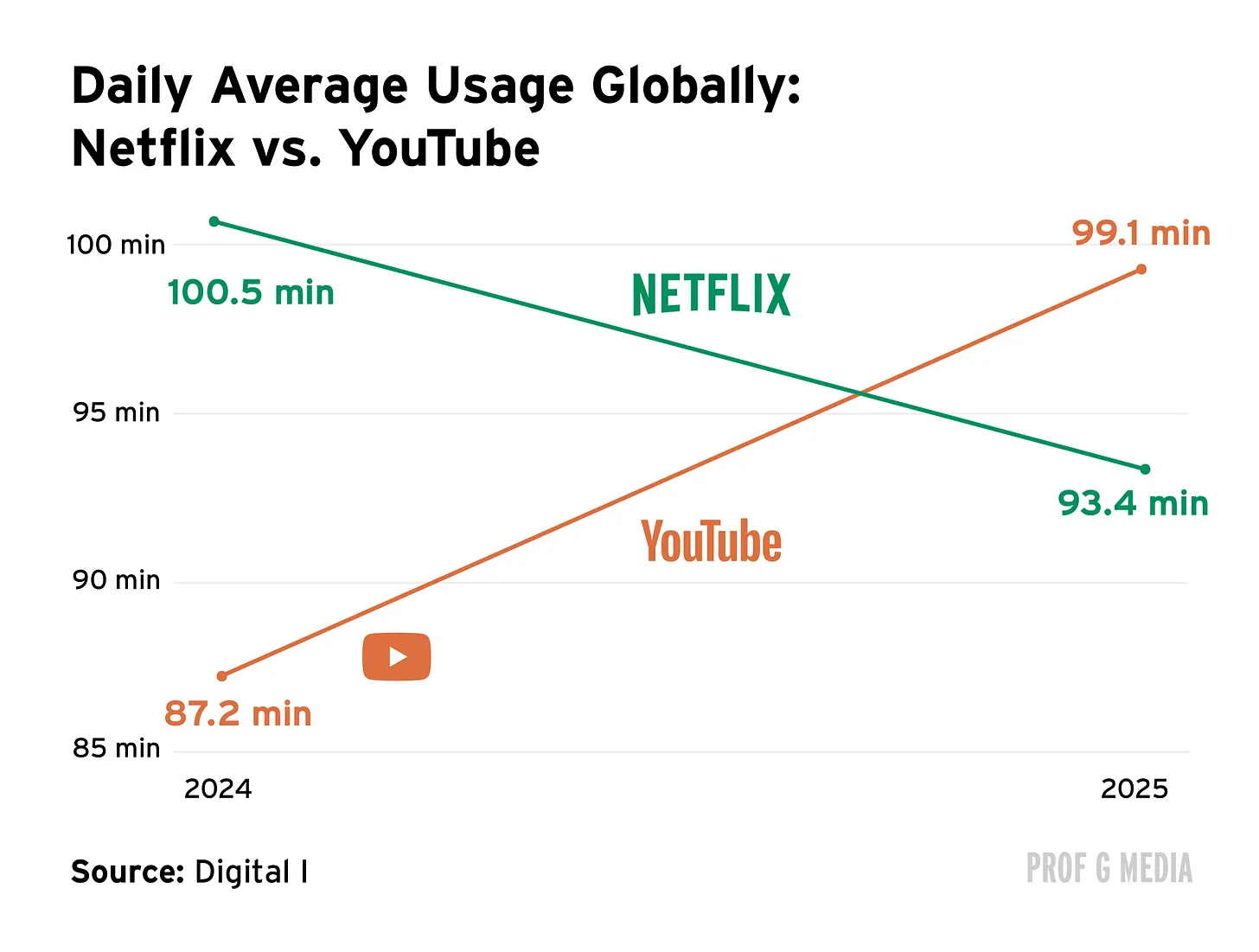
Netflix has been facing increasing competition from short video providers (especially YouTube). In response, it has added "Clips," a TikTok-style scrolling feature to showcase short content from its library, entered video podcast deals with Spotify and Barstool, and signed new licensing agreements with external publishers (BuzzFeed, Condé Nast) to bring new short video content to the platform.
Netflix has lost over $250 billion in market value over the past year, while rival streaming giant Disney has lost nearly $50 billion. Both are well-managed companies, with revenues and subscriber numbers growing, and prices increasing — yet they are being punished for it. This raises an important question: Is streaming just a bad business? Or have Netflix and Disney run out of creativity? Let us know your thoughts in the comments.
In the next six months, OpenAI will acquire the enterprise AI company Sierra and appoint Bret Taylor as CEO. Sam Altman will be promoted to Chairman. Altman is an innovator, not an operator, while Bret Taylor may be the best enterprise software operator of his generation.
免责声明:本文章仅代表作者个人观点,不代表本平台的立场和观点。本文章仅供信息分享,不构成对任何人的任何投资建议。用户与作者之间的任何争议,与本平台无关。如网页中刊载的文章或图片涉及侵权,请提供相关的权利证明和身份证明发送邮件到support@aicoin.com,本平台相关工作人员将会进行核查。


