Author: ZDNet Korea
Translation: Deep Tide TechFlow
Deep Tide Reading: Samsung, SK Hynix, and Micron have collectively abandoned the independent development of CXL controllers, shifting towards procuring Fabless chip solutions. The reason is quite pragmatic: creating expensive integrated modules would take away traditional DRAM orders, and customers prefer to use cheaper separated solutions. This is not a retreat from technology but rather a calculated decision—design is left to professional companies, manufacturing is still done in-house, with each making their own profits.
The three major global memory manufacturers have collectively given up on the independent research and development of CXL (Compute Express Link) controllers. The reason is the concern that aggressively promoting their own chips in the market would undermine their core revenue source—the demand for generic DRAM (DIMM)—leading to a self-cannibalization dilemma. These memory giants are rapidly transitioning to outsourcing strategies, adopting chip designs from specialized Fabless companies.
On July 20, semiconductor industry news revealed that Samsung Electronics, SK Hynix, and Micron have scaled back or canceled the commercialization plans for CXL extension device controllers. The vacancies will be filled by Fabless companies such as Montage, Astera Labs, and Primemas.
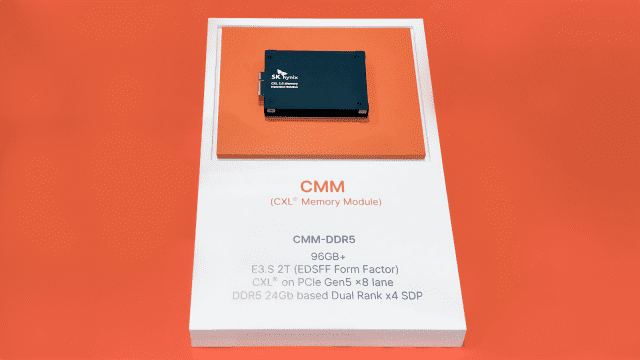
Micron and SK "Concede," Samsung "Waits": Three Different Exit Strategies
The first to abandon independent research and development was Micron in the United States. Micron has closed its independent controller R&D line and turned to Primemas's solution. Products from Micron's catalog have also started to feature Primemas's solutions.
SK Hynix has recently also formally communicated to its major partners the decision to cease its independent R&D on CXL controllers. SK Hynix is reallocating related personnel to the next-generation computing memory semiconductor PIM (Processing In Memory) field, concentrating limited R&D resources on more definitive future businesses.
Samsung Electronics’ self-developed CXL controller is only for use in internal research by the development team. This team is studying unverified areas such as the basic CXL solutions for LPDDR (Low Power DRAM). When it comes to external sales, Samsung purchases controllers from Fabless sources.
This differs from Samsung Electronics' original plan. Samsung originally intended to launch a module that combines self-developed controllers and CMM, but has now removed the formal productization plan for internal controllers from the official roadmap.
Sources familiar with the matter in the semiconductor industry disclosed: "The internal product planning department of Samsung Electronics has excluded its internal controllers from formal commercialization topics, retaining them solely as pure advanced R&D topics. The current development team is only researching uncertain short-term commercialization possibilities for mobile DRAM (LPDDR) running on CXL, essentially transitioning to a market exploration battle."

"Want to Promote CXL but Fear Impact on DRAM": A Self-Cannibalization Dilemma
According to semiconductor industry news, the original concept of the three memory companies was to sell "integrated CXL modules," which would combine self-developed controller chips and DRAM on a single board as high-priced end products.
However, the demands of major data center customers differ. To save on massive infrastructure construction costs, they prefer a "separated" structure—independently installing CXL controllers on the system motherboard, with back-end slots that accommodate common, inexpensive generic DRAM (DIMM) available in the market.
Industry analysis suggests that the conflict in commercial models at this juncture is a primary reason for the strategic adjustment. If memory manufacturers invest heavily in developing standalone controllers and then aggressively push expensive integrated products, cost-conscious customers will keep their wallets shut. To make matters worse, the demand for generic DRAM, which was previously sold in large quantities, would also decline. Forcing the promotion of CXL end products could end up destroying the DIMM market, which is the company's largest cash cow, leading into self-cannibalization contradictions.
Industry insiders analyze: "For memory manufacturers, if their self-made CXL extension device end products ultimately have to compete directly with their core cash cow DIMM products in the market, it would be hard to proceed aggressively with the business. This is a result of careful judgment from management—the forced commercialization of internal controllers, which conflicts with existing core business, yields no actual benefits."
Experts emphasize that the actions of the three memory companies should not be interpreted as a retreat or abandonment of CXL technology and market. It is more about risk elimination in the early stages of market uncertainty, returning to the original efficient division of labor in the semiconductor ecosystem.
Another semiconductor industry insider stated: "Rather than irrationally monopolizing CXL dominance, it is better to choose practical division of labor with Fabless. In the future, as the global semiconductor market becomes increasingly sophisticated, the optimal ecological division of labor with design by specialized Fabless and manufacturing by memory manufacturers will accelerate further."
免责声明:本文章仅代表作者个人观点,不代表本平台的立场和观点。本文章仅供信息分享,不构成对任何人的任何投资建议。用户与作者之间的任何争议,与本平台无关。如网页中刊载的文章或图片涉及侵权,请提供相关的权利证明和身份证明发送邮件到support@aicoin.com,本平台相关工作人员将会进行核查。


