Author: XU Shan
This year’s WAIC is hard to complete in just one day.
On July 17, 2026, the World Artificial Intelligence Conference opened in Shanghai. The exhibition has expanded for the first time to "three locations, four venues," covering an area of over 100,000 square meters, with more than 1,100 enterprises presenting over 3,000 exhibits, among which over 300 products had their global premieres during the conference. Intelligent computing and embodied intelligence have become parallel core tracks, each gathering more than 200 enterprises. From the queues after opening to the phones raised in front of the robot booths, AI remains one of the most discussed technological topics.
However, entering the exhibition hall, the most noticeable change this year is not how much model parameters have increased, nor what difficult actions robots have learned, but rather that more and more enterprises are beginning to address the same question: How can AI transition from looking like an impressive technology to a truly usable product capable of completing tasks?
This change first occurs in the physical world. Industrial robots are now entering automobile, 3C, and renewable energy production lines, home robots are busy folding clothes and tidying toys, and robot dogs are being led by spectators as they move freely through the crowd. The competition in embodied intelligence is shifting from motion control and demo displays to stable operations, large-scale delivery, and real-world scenario validation.
Meanwhile, AI is also seeking closer entry points to people. Headphones have become intelligent assistants available all day, smartphones have been redesigned around smart agents, plant sensors are beginning to "translate" the needs of a potted plant, and personal servers are attempting to become local AI nodes within homes. AI hardware is beginning to rethink: What form should hardware take when agents can understand intent, invoke services, and continuously perform tasks?
The competitive standards for the models themselves are also changing. Whether it can reduce inference costs, remember long-term experiences, understand real physical laws, and deliver usable results directly are replacing the simple competition of parameters and leaderboards. Around these capabilities, development tools, enterprise intelligent agents, and computing infrastructure are also beginning to lower the thresholds: a single phrase can generate hardware solutions, companies can invoke "simulated consumers" to conduct research, and even a device in an office can become a local "Token factory."
A relatively clear main thread is: The AI industry is further moving toward "planning and execution," progressing toward real-world delivery. Models are still the foundation, but the industry is now competing more for entry points, context, execution capabilities, as well as costs and reliability after entering real scenarios.
This year’s WAIC theme is "Intelligent Partners, Co-creating the Future." For an AI to truly become a partner, it cannot just chat. It must remember you, understand the environment, use tools, complete tasks, and integrate smoothly into factories, offices, and homes under a sufficiently low threshold.
With this clue, we found these noteworthy products and technologies on the first day of WAIC.
1. Stability in Work Matters More Than Showcasing Skills
This year’s robotics exhibition is still lively, but we are more concerned with whether robots can keep working in real environments after leaving the stage.
The standard for judging whether embodied intelligence has made progress is changing to "Can it operate stably, deliver in bulk, and are there people willing to use it?" Therefore, we selected three samples from different scenarios, each with a different form, but all answering the same question: How can robots transition from an impressive demo to actual operational products in factories and homes?
Micro Yi Intelligent Manufacturing: Witnessing the True Presence of Industrial Embodied Intelligence
At the Micro Yi Intelligent Manufacturing booth, a clear impression is that they have brought real industrial embodied intelligent robots that are actively entering factories and participating in production.
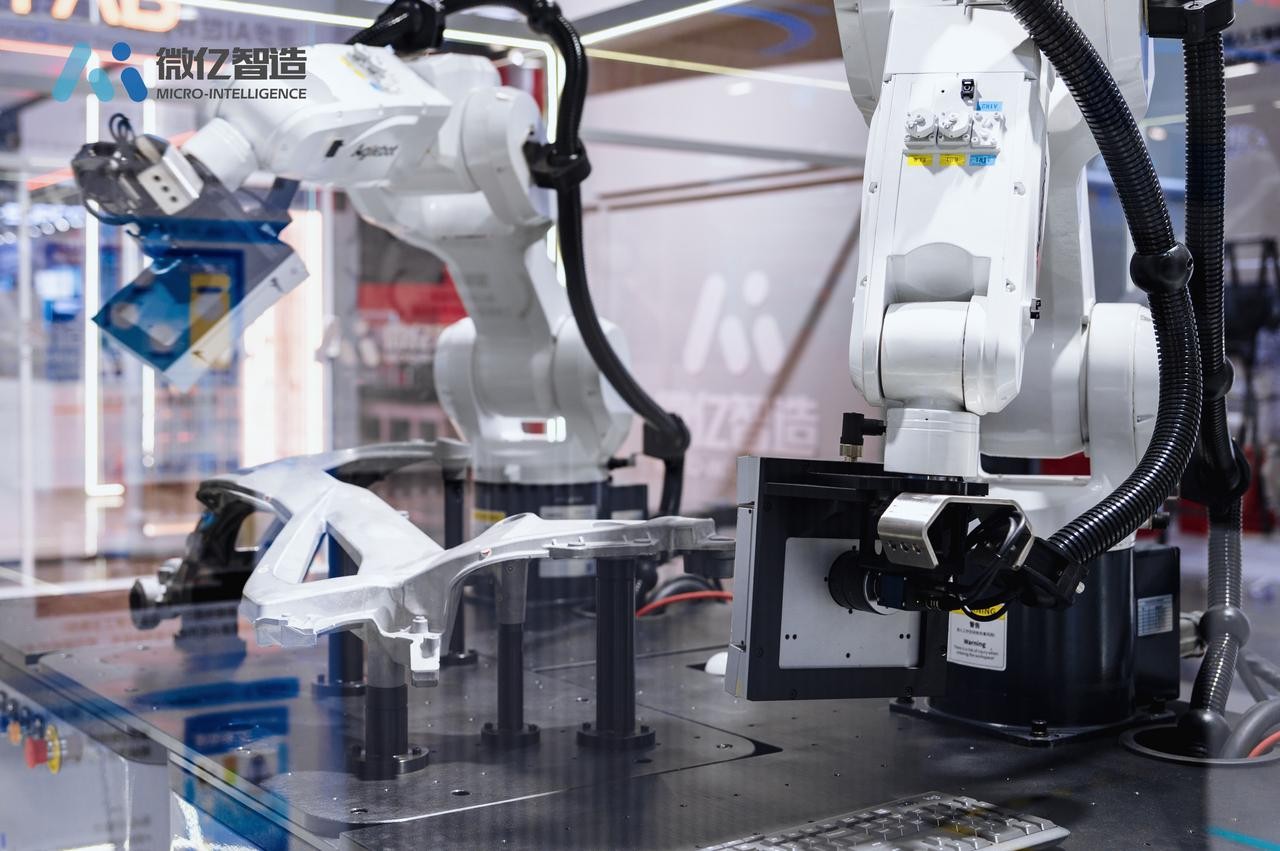
As a leading supplier of industrial embodied intelligent robots (EIIR) with a market share of 31% in China, Micro Yi has long focused on the physical AI track. Their products have landed in automobile, 3C, and renewable energy industries, serving over 25 Fortune 500 companies, making them a frontrunner in industrialization progress.
The two products showcased are very representative. The globally debuted "Embodied Quality Inspection | Multi-Arm Collaborative Robot" features a detection precision of 0.2μm and high-speed imaging capabilities, freeing itself from traditional manual teaching modes, and has been operational on production lines in the world's top automotive companies’ factories located in China, the US, and Germany; the "Embodied Operation | Intelligent Assembly Robot" is based on a “eye-hand-brain-cloud” collaborative architecture, able to autonomously learn assembly processes with just one visual observation, reducing production line changeover times from several days to just a few hours, significantly enhancing flexible manufacturing capabilities.
The greatest value of embodied intelligence is actually on the production line. Micro Yi’s practical experiences also demonstrate that industrial scenarios remain the fastest track for the large-scale application of physical AI. As Chinese enterprises begin transitioning from outputting single devices to outputting intelligent manufacturing standards and solutions, it also means they are participating in reshaping a new paradigm for global manufacturing.
Vita Power Big Head: At WAIC, Some People Are Really "Walking" Robot Dogs
At WAIC, we often saw a few spectators leading robot dogs through the crowd. Without remote controls or complex operations to learn, a single leash allows for free-following, and a backpack can be entrusted to it. It can even automatically record the journey, acting like a considerate companion and attracting quite a few audience members’ attention along the way.

Autonomous navigation without a remote is a core technological advantage of Vita Power. A noteworthy change at this exhibition is that staff no longer need to spend much time teaching spectators how to operate it. Ordinary people can directly walk alongside it just by holding the leash.
This "walk it and go" experience is a microcosm of how Big Head is moving from a technical product to a consumer-level product, completing scaled mass production delivery. While many quadrupedal robots are still competing on movement performance and hardware parameters, Vita Power hopes to lower the usage barriers for professional equipment, transforming the robot dog from a curious product in exhibition and laboratory to a consumer-friendly smart partner that ordinary people can easily use and integrate into daily life.
The Future is Not Far: Bringing Home Robots into Real Life
At WAIC, the Future is Not Far exhibited family scenarios at the booth.
We can see that the second-generation family general-purpose robot F2 spends most of its time washing clothes, folding clothes, tidying toys and slippers, playing chess with people, and serving drinks among other tasks, with numerous people lining up to experience it. Instead of showcasing difficult actions like flips, F2 is more focused on a practical issue: once robots enter homes, what exactly can they do for people?
As a company focused on family-oriented embodied intelligence, Future is Not Far's F2 is positioned as a "family housekeeper," able to accompany children, elder people, and pets, while also performing inspections, organization, and basic household chores. It is equipped with the company’s self-developed robot brain Self-Evolving WAM, which can continuously learn and adjust according to the home environment and usage habits.
Homes are among the most challenging scenarios for robots: rooms can become messy, items can be moved, and every household’s needs are different. Therefore, being able to work long-term and stably is more important than a successful live demonstration. According to Future is Not Far, their robots have already entered more than 500 paid households and have accumulated over 50,000 service hours.
2. Everything is Growing AI Interfaces
In the past, AI hardware mostly added a voice assistant to existing devices; this year, a more obvious trend is: manufacturers are starting to redesign hardware itself around AI.
Headphones aspire to become all-day online assistants, smartphones aim to integrate smart agents into their operating systems, printers allow suggestions from chat boxes to be printed onto paper, and plant sensors translate environmental data into reminders that ordinary people can understand.
AI can be worn on the ears, held in hands, placed on desks, and can also become a tool for creating other hardware. We selected these products because they reveal more attempts — finding new ways for AI to interact and enter daily life.
Zhi Li Gua Gua AI Printing Desk Pet: Let AI "Spit" Suggestions into Reality
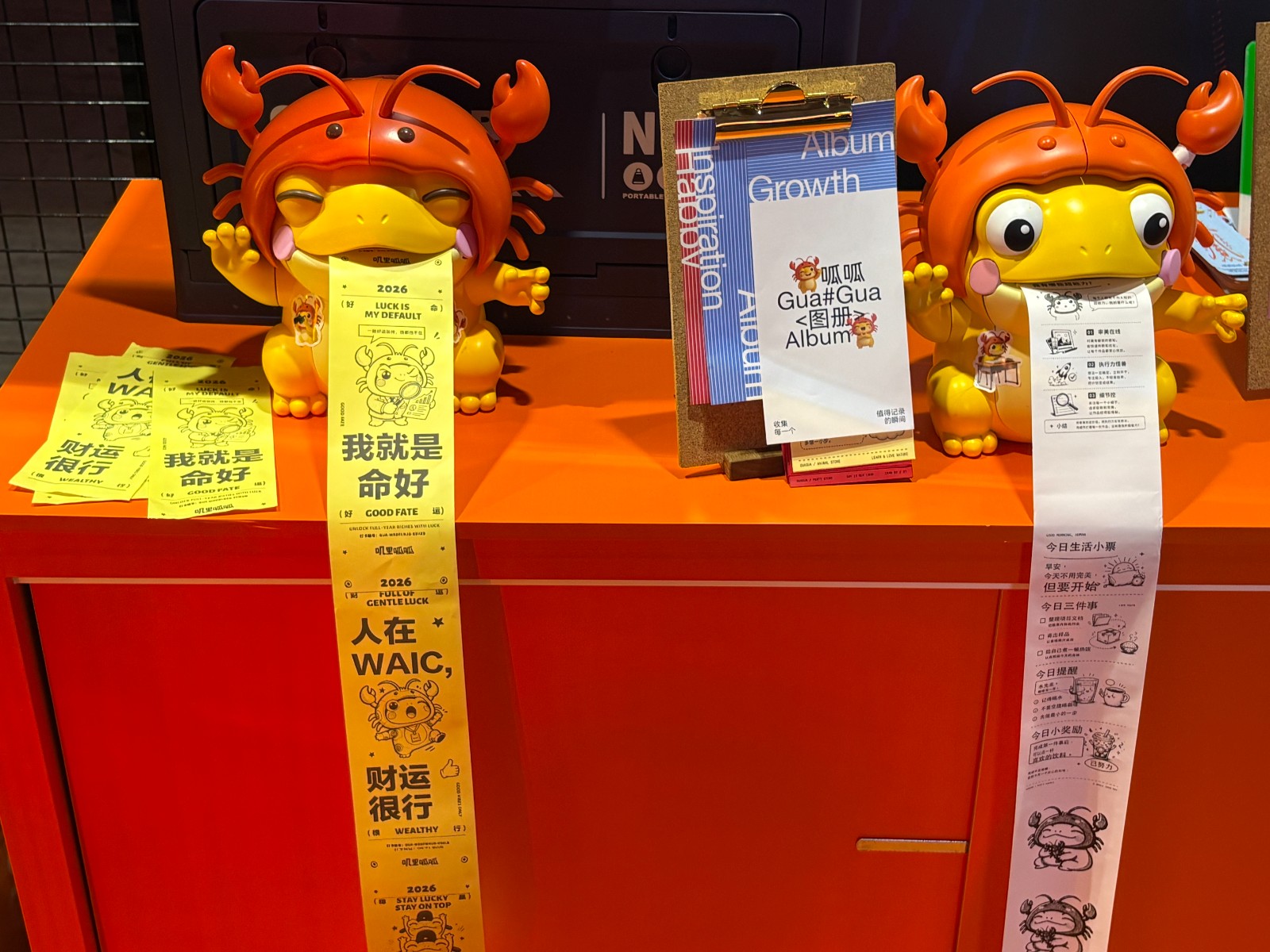
The Zhi Li Gua Gua booth resembles a wishing wall covered in lucky receipts. Several "Golden Toads" are placed among them, occasionally "spitting" out to-do lists, knowledge cards, and thermal paper notes saying "Good Luck" and "Wealth," making it hard for passing spectators not to take a second glance.
This product is not merely a cute shell for a printer. Users can converse directly with it; after understanding the user's needs, the AI will convert suggestions originally just lingering in the chat box into a piece of paper that can be torn off, stuck up, or carried around. The device supports various printing materials including adhesive-backed ones, with a print quality reaching 300 DPI, and the team plans to further explore color printing.
Zhi Li Gua Gua has iterated through three versions over six months and is still in the prototype stage. The team hopes it will eventually become an information interaction hub in households: capable of printing out children’s knowledge cards, family messages, and daily to-do lists while also cultivating its content ecosystem around the Golden Toad IP. It presents an interesting product idea — paper can also serve as a lighter and more tactile interactive interface.
NoonWake Good Luck Calendar Device
At a glance, this is a product that sparks strong purchasing desire.
This is an AI metaphysical jewelry bracelet. One of the beads contains a sensor that can recognize changes in people's emotions.
Today, there are already enough utility-oriented AIs, and NoonWake.AI aims to provide companion-type AI in a very light manner.
The AI metaphysical bracelet is one of their products. Staff informed us that the company currently has three product lines: "All Things Have Spirits" targeting young domestic users, "Starot" for overseas markets, and an upcoming "Good Luck Calendar Device" AI hardware designed as a desktop companion for young people, further enhancing the sense of ritual in their daily lives.
Those fond of metaphysics should feel fortunate.
Photosynthesis Plant Language Plantiemoji: Plants Can "Talk" Now
Approaching the Photosynthesis Plant Language booth, a potted plant attached to Plantiemoji is expressing its state using emojis: lack of water, lack of light, or "I'm doing well today." Staff pick up a phone to photograph the leaves, and the AI plant doctor promptly analyzes the leaf color, spots, and edge conditions, providing diagnosis and care suggestions. For those who often struggle to differentiate whether a plant needs water or has rotten roots, this experience is quite intuitive.
Photosynthesis Plant Language is a company focused on AI plant care and smart hardware. Plantiemoji can monitor soil moisture, environmental temperature and humidity, and light while translating professional data into expressions and reminders understandable to the average person.
At this WAIC, the company also showcased a plant growth model. It aims to identify regular patterns between multi-dimensional environmental indicators and plant representations, gradually understanding the different growth habits of each plant. The underlying product logic is that the value of smart hardware lies not only in data collection but in interpreting data for users and providing actionable recommendations.
Plants obviously cannot truly speak, but AI is transforming plant care from guessing based on experience into a continuously understandable dialogue.
Viewpoint Leap STACK ANYWAY: Say a Phrase, AI Helps You Build Hardware
Opening STACK ANYWAY and inputting a hardware idea, the AI on the screen starts breaking down requirements, matching circuit boards and components, and generating corresponding designs and codes. After talking with the staff, it seems the goal is similar to a "hardware version of Cursor": users simply need to clarify what they want to create, and the rest of the engineering issues are left to AI.
Viewpoint Leap is a startup focused on AI hardware development tools, with its core product STACK ANYWAY aimed at makers and hardware developers. The platform completes proposal design, component selection, BOM generation, and code adaptation through multi-agent collaboration, and connects the supply chain, supporting the packaging and ordering of necessary materials. The staff introduced that the platform can match over 1,000 real hardware solutions, backed by a community of over 10,000 developers.
Creating a software prototype is now possible with just a few words to generate code; but for a hardware device, one must repeatedly switch between design tools, circuit boards, suppliers, and code. STACK ANYWAY aims to shorten the distance from concept to device. While Vibe Coding has changed software development, the next step may be allowing more people who don't understand hardware engineering to participate in the creation of the real world through natural language.
Qwen Clip: Bringing Qwen "Close" to Your Ear
On the first day of WAIC, Alibaba Qwen brought its first AI smart ear clip — Qwen Clip to the venue.
This clip-on earphone can be worn all day and has suddenly emerged as a niche in the headphone segment this year — the design logic is straightforward: an AI assistant must always be present, provided you are willing to wear it continuously.
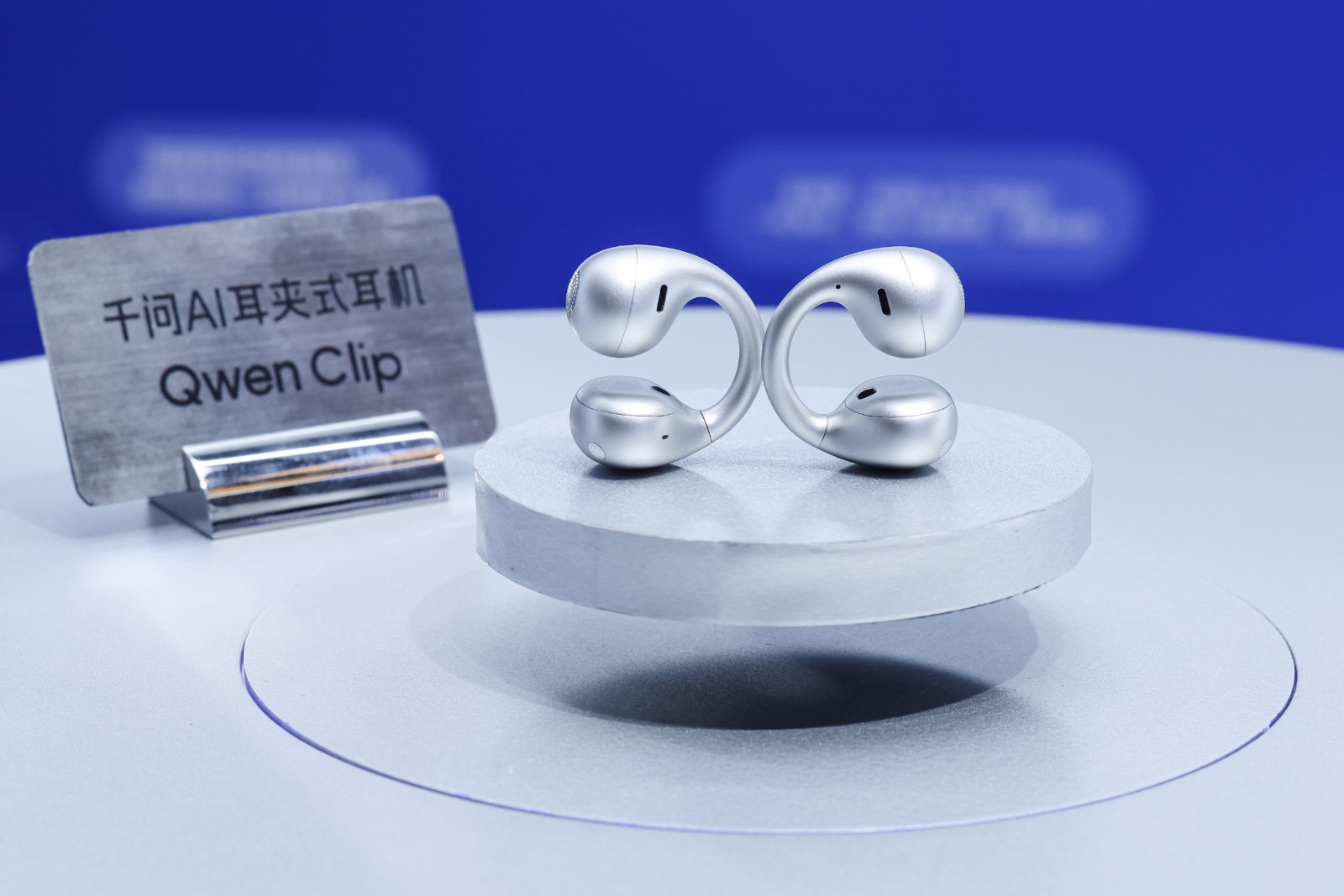
According to the Qwen team, the Qwen Clip was jointly developed by Qwen and Bose, with the Bose acoustic team responsible for tuning it. It balances comfort and sound quality within an open-ear clip design. Functionally, it embeds several key capabilities of the Qwen AI assistant, including real-time translation, meeting notes, and health records, allowing these features to be accessed during conversations without needing to pull out a smartphone.
For large model manufacturers, the competition for entry points is shifting from screens to bodies. Headphones may have the lowest barrier to entry among them — they do not alter usage habits, yet grant AI the opportunity to be present continuously.
StepX Neo: Why Large Model Companies Are Building Phones Themselves
Just launched, the STEPX Neo might be one of the most talked-about mobile phone products at this WAIC.
Coinciding with the phone launch, there is also the native AI terminal brand STEPX, the agent-native operating system Step AOS, and the personal intelligent agent “Step Amoo.”
On Step AOS, users no longer navigate through apps step by step but directly express their intents, while the intelligent agent independently handles the follow-up tasks; the system dynamically allocates models based on task complexity using a “dual-domain three-step memory structure” to remember user preferences, and is equipped with a safety loop for trustworthy execution, operation auditing, permission control, and one-click withdrawal of misoperations. Ecologically, Step has already partnered with Alipay, Meituan, Didi, Amap, WPS, and Jianying, employing an interface rather than simulating GUI clicks to connect services.
While most manufacturers are adding "AI" into their phones, Step has chosen to rebuild the phone for intelligent agents. Whether this route can be validated remains to be seen, but it at least raises a question the industry must address: In the era of intelligent agents, should phones still look like they do now?
Dobao Phone 2nd Generation NaviX Ultra: Dobao Is Back to "Play" Phones for You
Following last year’s first Dobao phone, Nubia has directly launched the debut of its second generation series product, NaviX Ultra, at WAIC and gave it a more aggressive official position — the world’s first AI smart agent phone.
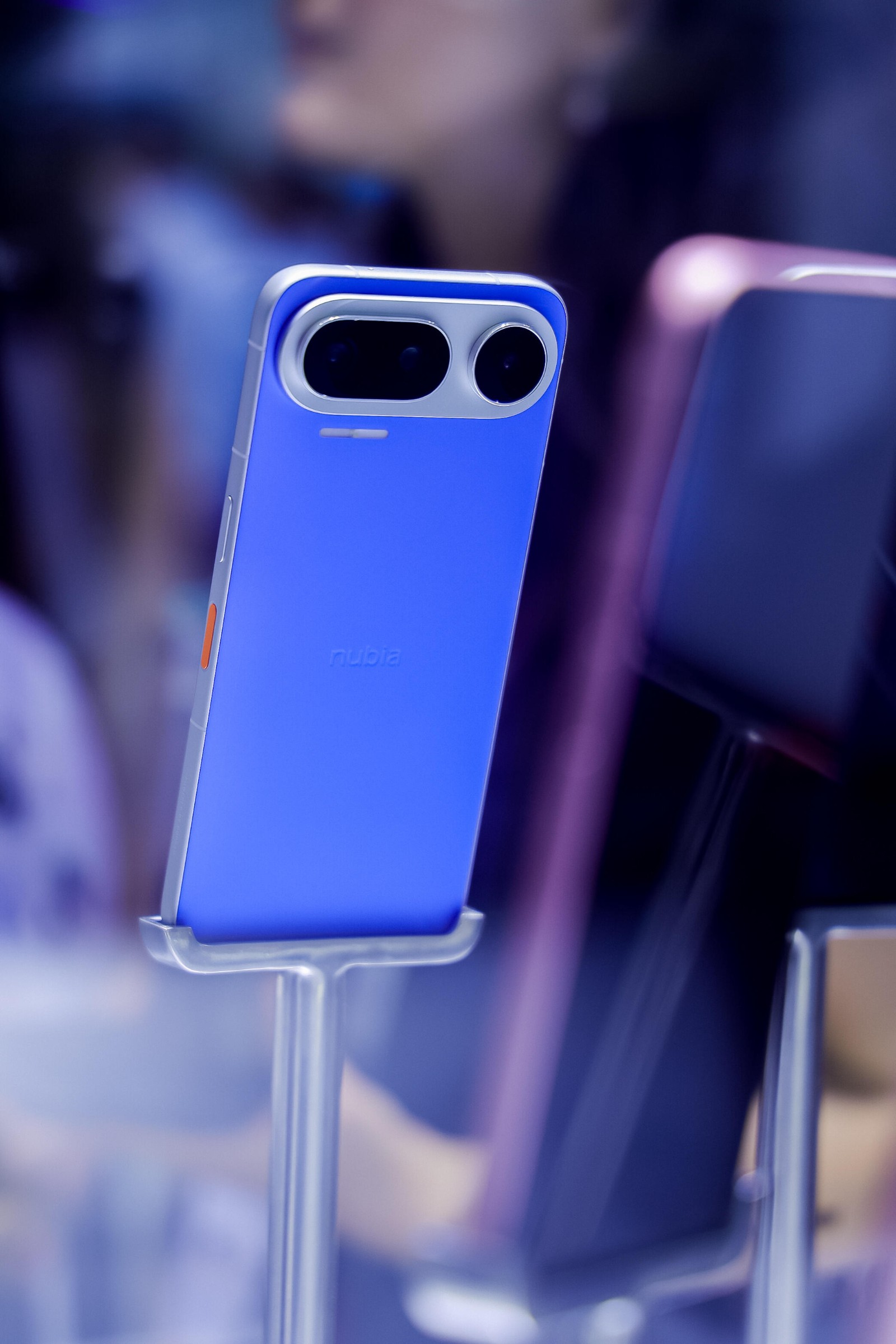
NaviX Ultra, developed in deep collaboration between Nubia and Volcano Engine, features an in-built Dobao assistant: a system-level GUI agent capable of understanding screen content, executing user commands, and completing cross-application operations.
Compared to the first generation, the second generation has made significant advancements in AI permission openness and system-level integration — Dobao is no longer just an app embedded in the phone but is woven into the system itself. In terms of appearance, the new model offers four color options: black, pink, white, and blue, and the lens module is supplied by Sunny Optical. Some color options also feature an orange AI physical button. According to supply chain information, the overall inventory of the new phone is about 200,000 units, with the first batch being less than 100,000 units.
This number is not large, but Byte's intention is clear: using the complete chain of "Dobao large model + Volcano Engine + terminal" to make intelligent agents a standard configuration for phones. When Step, Honor, and Byte provide three different answers at the same WAIC, the competition for AI phones has shifted from functional addition to the positional warfare of intelligent agent entry points.
3. When Models Become the Main Characters, the Hardware-Software Boundary Disappears
This year's model tracks reveal an interesting change: the roles of host and guest are reversed. Previously, hardware manufacturers took center stage while models played a supporting role, but this year, almost every model booth has a pile of hardware products beneath it.
We noticed that the understanding capabilities of models are gaining attention, with each company refining its own understanding layer. However, it has become difficult to find purely vertical players within the general model track, as everyone competes in similar directions.
In this context, here are some products we saw on site that exhibit more innovative ideas:
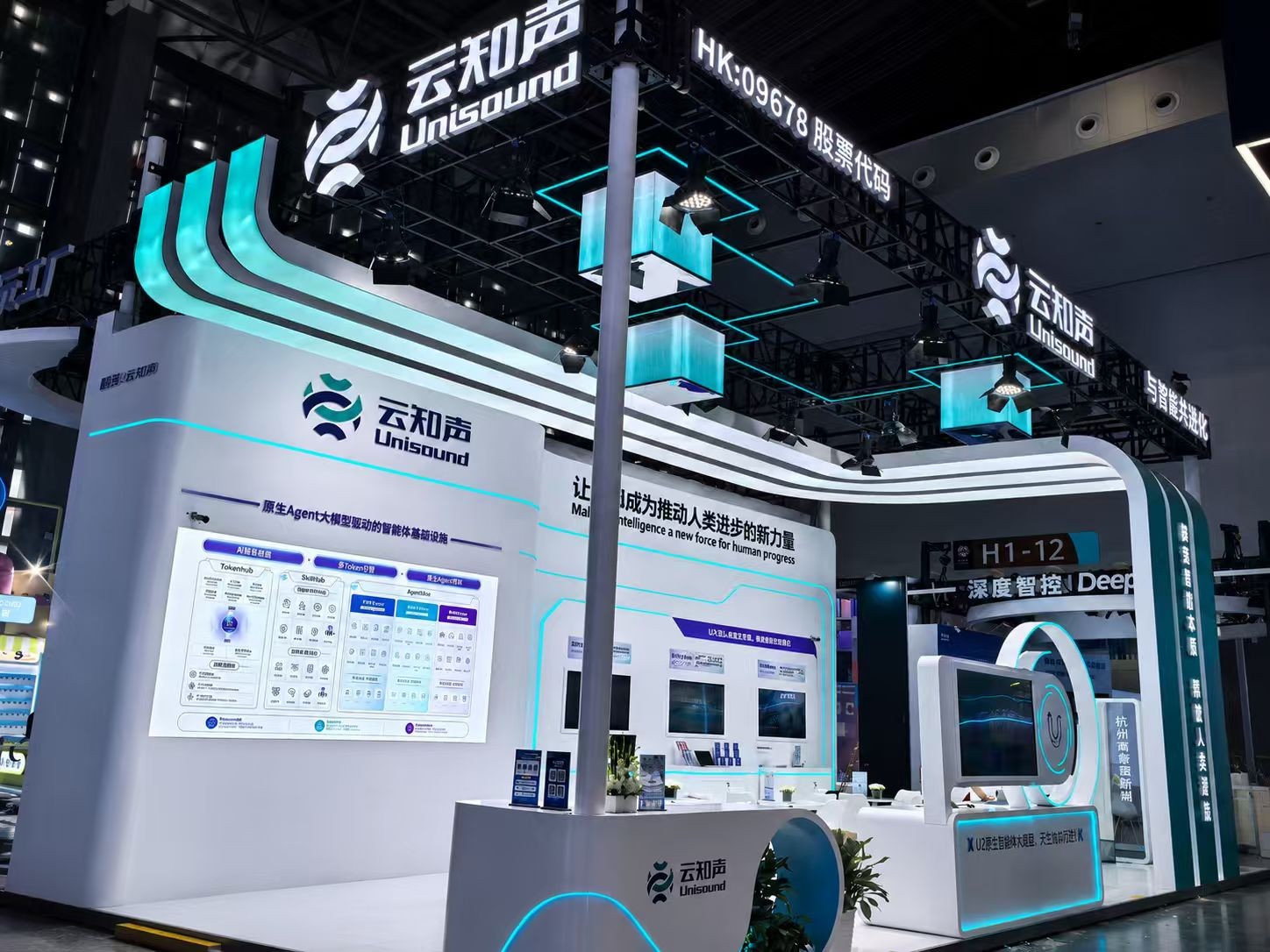
Yunzhisheng U2 Large Model: Introducing a Hybrid Thinking Mechanism, Focusing on Token Consumption Cost-Effectiveness
The large model is shifting from "understanding and generating" to "planning and execution," and whether it can really complete a task correctly is gaining greater attention. Yunzhisheng showcased its native intelligent agent large model U2 at WAIC, offering a "hybrid thinking" approach for more cost-effective token consumption.
In simple terms, it allows the model to autonomously switch between two reasoning methods during inference. Implicit reasoning involves internal quick thinking without expanding steps, functioning quickly and consuming few resources but can easily "go off course"; explicit reasoning lays out every step clearly for verification, which is slower. Previously, models always adopted explicit thinking for token consumption, while U2 efficiently explores during early stages of tasks, transitioning to explicit mode for precise logical verification once the complexity increases.
Reportedly, the model can perceive its uncertainty in real-time, triggering explicit reasoning to correct it once its thinking diverges. The use of implicit reasoning helps to eliminate ineffective steps, with token consumption during thinking reportedly reduced by about 25%.
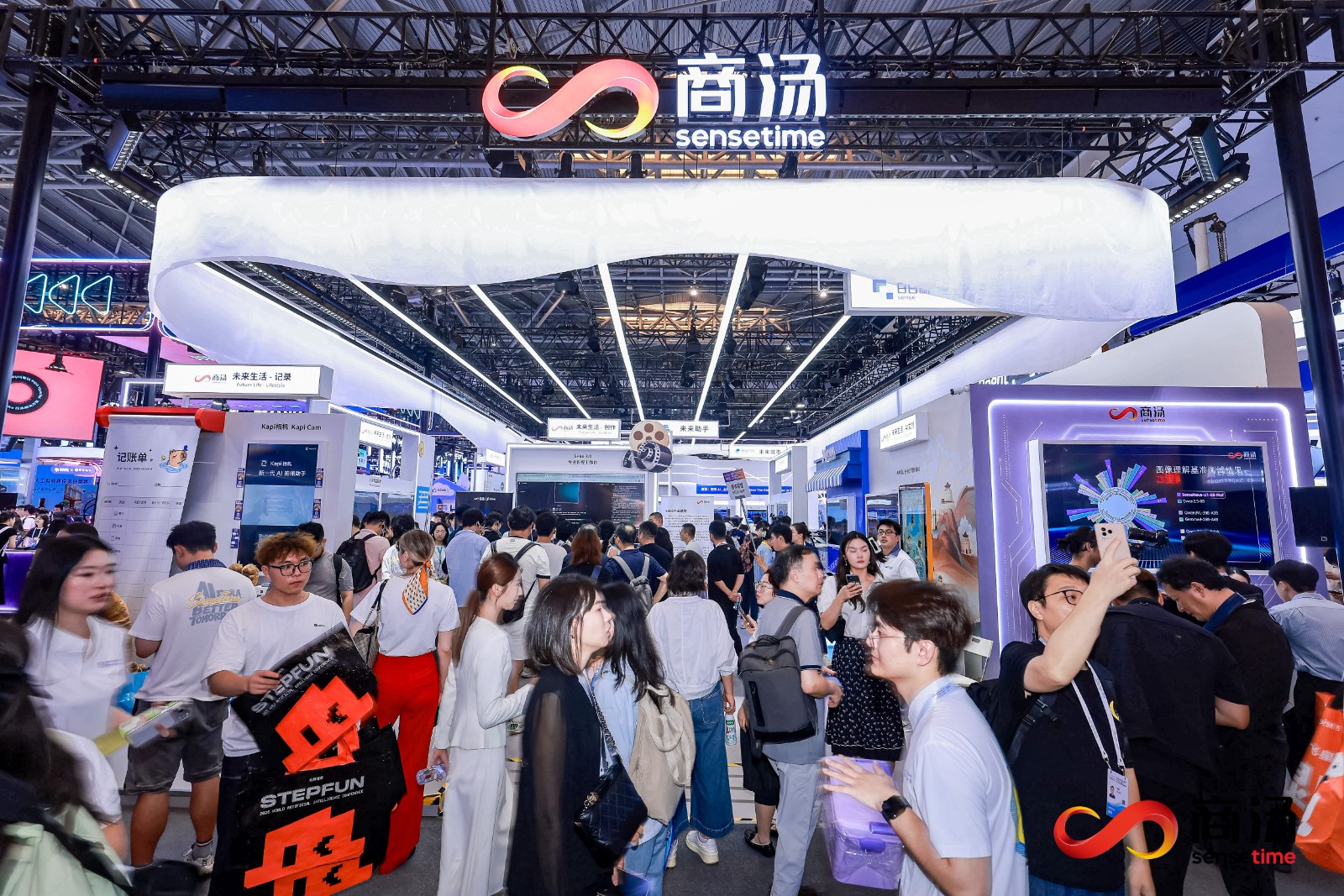
SenseTime SenseNova U1 Pro Multi-Modal Intelligent Agent Foundation: Supporting Production-Level Image Creation, Native 8K Output
As the generative abilities of large models are repeatedly verified, "design" is becoming a new direction in the multi-modal model competition.
SenseNova U1 Pro unifies multi-modal understanding, reasoning, and generation in its architecture, achieving efficient synergy between language and visual information, and enabling deep creation through intrinsic image-text interleaving thinking, delivering directly.
Thus, it competes with top overseas models in generating content accurately, designing beautifully, and producing usable image materials. It has been reported that rendered images can meet industrial-grade requirements for commercial printing and outdoor posters.
In the content creation field, SenseTime also showcased its AI video creation intelligent agent Seko. It connects script conception, character setting, storyboard planning, video generation, and post-editing all on a single platform, allowing for simultaneous creation and editing.
Seko has already attracted over a million young creators and 1,300 enterprise clients, significantly reducing the barriers to creation and making "one-person crews" a reality.
MiniMax M3: Let the Model "Directly See Images", Highlighting "Sufficient and Affordable"
MiniMax’s flagship model M3 presents two interesting concepts worth comparing.
First, M3 "sees images" differently. Currently, many models process images by first extracting text from images using detection tools, converting it into text, and then feeding it to the model, which is equivalent to going through a "translation" step. M3 breaks down the image into chunks, converting it directly into language that the model can understand. With one less intermediary step, more information is retained, speed is increased, and details in the image are less likely to be lost.
The second point is the cost-effectiveness of the model. It has been stated that M3 has a total of 428 billion parameters, but only 23 billion are actually engaged when performing tasks; the secret lies in its self-developed MSA sparse attention architecture. Before the model thinks, it filters out the most relevant content linked to the current problem, optimizing its efforts. This allows it to support 1 million tokens with extended context while keeping costs as low as 2.1 yuan for every million tokens input, and 8.4 yuan for output, reportedly much lower than overseas flagship models.
The MiniMax Code has also added financial capabilities this time; connecting to third-party databases allows for instant generation of research reports, surveys, and due diligence reports.
4. AI Products/Solutions: No Longer About "Creating," But About "Executing Well"
If last year’s solutions were competing on "I made it," this year’s keyword has shifted to "I do it better."
Everyone is beginning to focus on engineering refinement rather than the stunning factor of moving from zero to one. Purely innovative technical solutions are indeed fewer, with more players choosing to solve previously insurmountable problems with new methods on existing tracks.
Here are some AI products and solutions we found particularly noteworthy this year:
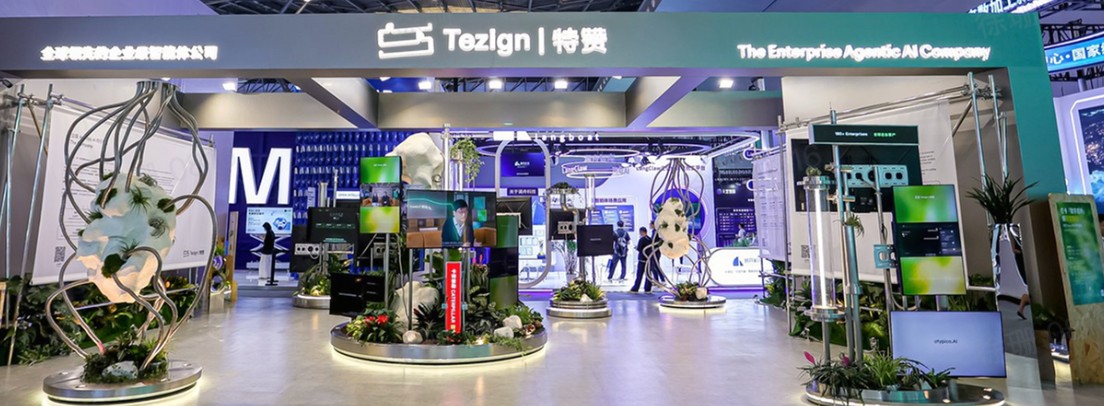
Tezang: The Competition for Enterprise-Level AI is Moving to "Context"
At the Tezang booth, we noted how enterprise-level AI can create value across various industries. Tezang provides an enterprise-level intelligent agent GEA which constructs a four-layer closed loop from business intent to business outcomes, consisting of intent layer, orchestration layer, skill layer, and context layer. The orchestration layer is driven by proprietary divergent reasoning models that can orchestrate over 30 foundational models and invoke over 400 modular skills. However, what truly constitutes the moat of Tezang GEA is the context layer.
Context goes beyond just internal data assets of enterprises. Understanding consumers is also a form of context and is difficult to replicate. The "Subjective World Model" proposed by the Fan Ling team attempts to answer how AI can truly understand a consumer? It solves this question through intrinsic motivation, unexpressed preferences, and cross-context judgment patterns.
Tezang has also combined real social data with in-depth interview data to build a large-scale simulated consumer system that can replace traditional user recruitment and interview phases in research by being operational 24/7, compressing time and costs to just one-tenth of traditional models.
This means that understanding consumers can transition from periodic project-based research to a continuously operating capacity asset. This is the direction Tezang will continue to optimize in the future.
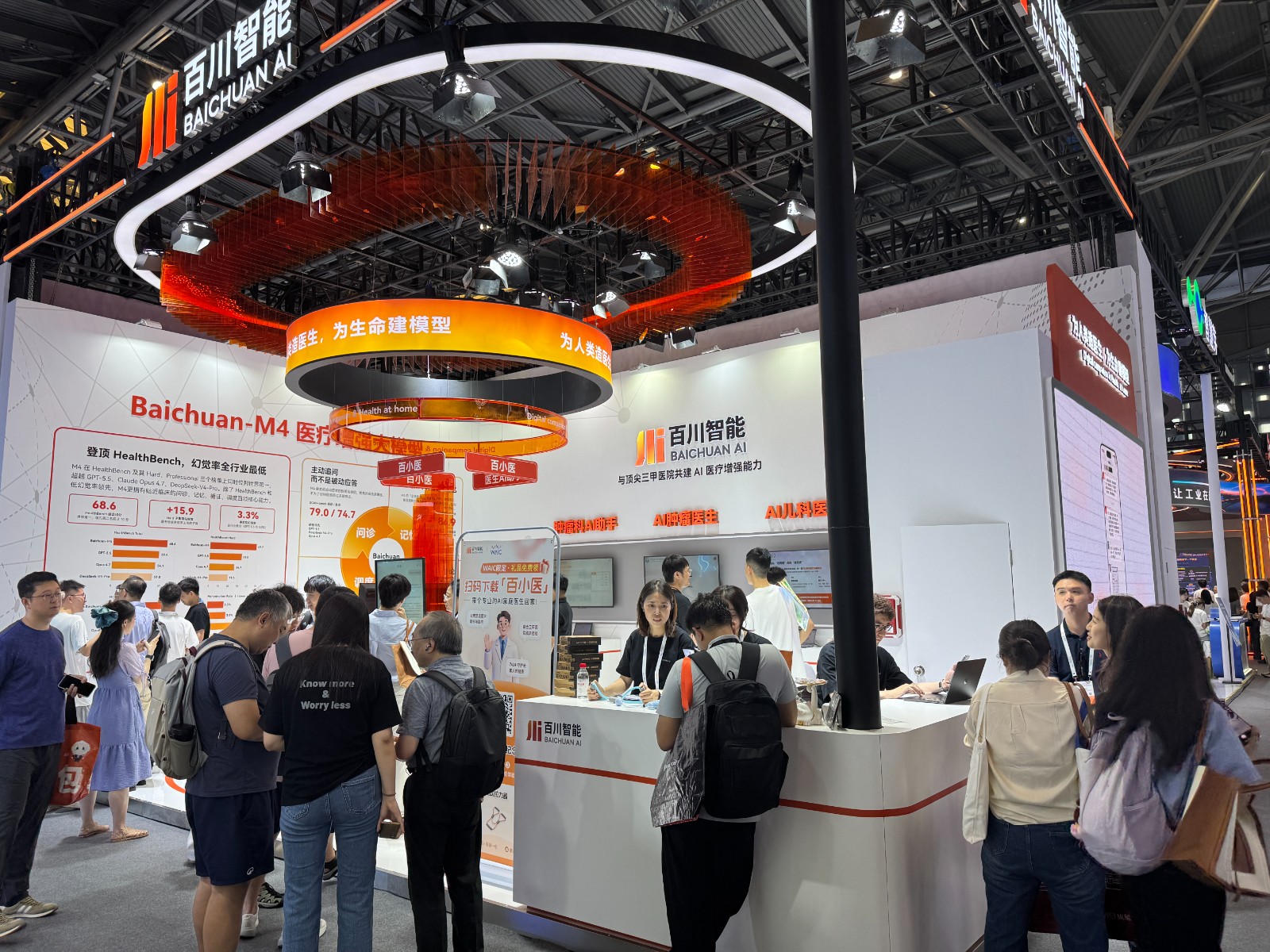
Bai Chuan Intelligent: AI Family Doctors Enter WeChat, Extending M4 Capabilities to Oncology and Pediatrics
Bai Chuan Intelligent has brought large models into a more complete medical health scenario. At WAIC 2026, Bai Chuan showcased its next-generation medical enhancement large model Baichuan-M4 and its AI family doctor "Bai Xiao Yi" for family health services.
Bai Xiao Yi consists of both an app and a WeChat Bot. The app primarily serves single medical visits, while the WeChat Bot is better suited for long-term use, focusing on continuously recording health information for family members and providing reminders for follow-up visits, medication, and check-ups.
Building upon M4, Bai Chuan has extended the model to fields like oncology and pediatrics, which demand higher levels of professionalism and reliability. It was reported that in the oncology direction, Bai Chuan has co-created an AI assistant with the Cancer Hospital of the Chinese Academy of Medical Sciences to provide evidence-based search and plan analysis support for doctors around treatment guidelines, clinical trials, drug instructions, and medical literature; in the pediatrics field, Bai Chuan has collaborated with Beijing Children’s Hospital to jointly build an AI pediatrician covering consultation, judgment, evidence, and medication, conducting validations in real clinics, consultations, and family service scenarios.
Face the Wall Intelligent: Robots Can Work Offline, and "AI Creates AI" Training Experiment
Embodied intelligence has an old problem: dazzling demos, awkward implementation. The exhibition tour guide and park inspection Agent solution jointly released by Face the Wall Intelligent and Leju Robotics specifically target this pain point — the idea is to equip models to work locally, allowing robots to operate stably in any network environment.
In the guided tour scenario, the robot can continue to explain based on a local knowledge base even when offline, understanding the exhibition hall environment and human instructions in real-time, planning its own routes and obstacle navigation, while also supporting multilingual and customized voice. In the inspection scenario, relying on multi-modal capabilities, it can identify irregularities like illegally parked vehicles, road surface abnormalities, and facility malfunctions — it’s worth noting that sensitive images are analyzed on-site without needing to send data elsewhere, keeping data sovereignty in the hands of the customer, which adds real value for government and enterprise clients.
Even more interesting is an underlying experiment: the ForgeTrain Agent system enabling "AI to make AI." Simply put, this allows the Agent to optimize its training framework independently. It spent 18 hours continuously tuning, pushing the utilization rate of computing power to new highs, and successfully completing large-scale training of tens of thousands of steps on the Ascend 910 series chip with stable loss reduction. The final results are quite persuasive: it surpassed or matched Google’s 270M parameters Gemma 3 with just 130M parameters, completing the entire process within a closed loop of domestic software and hardware.
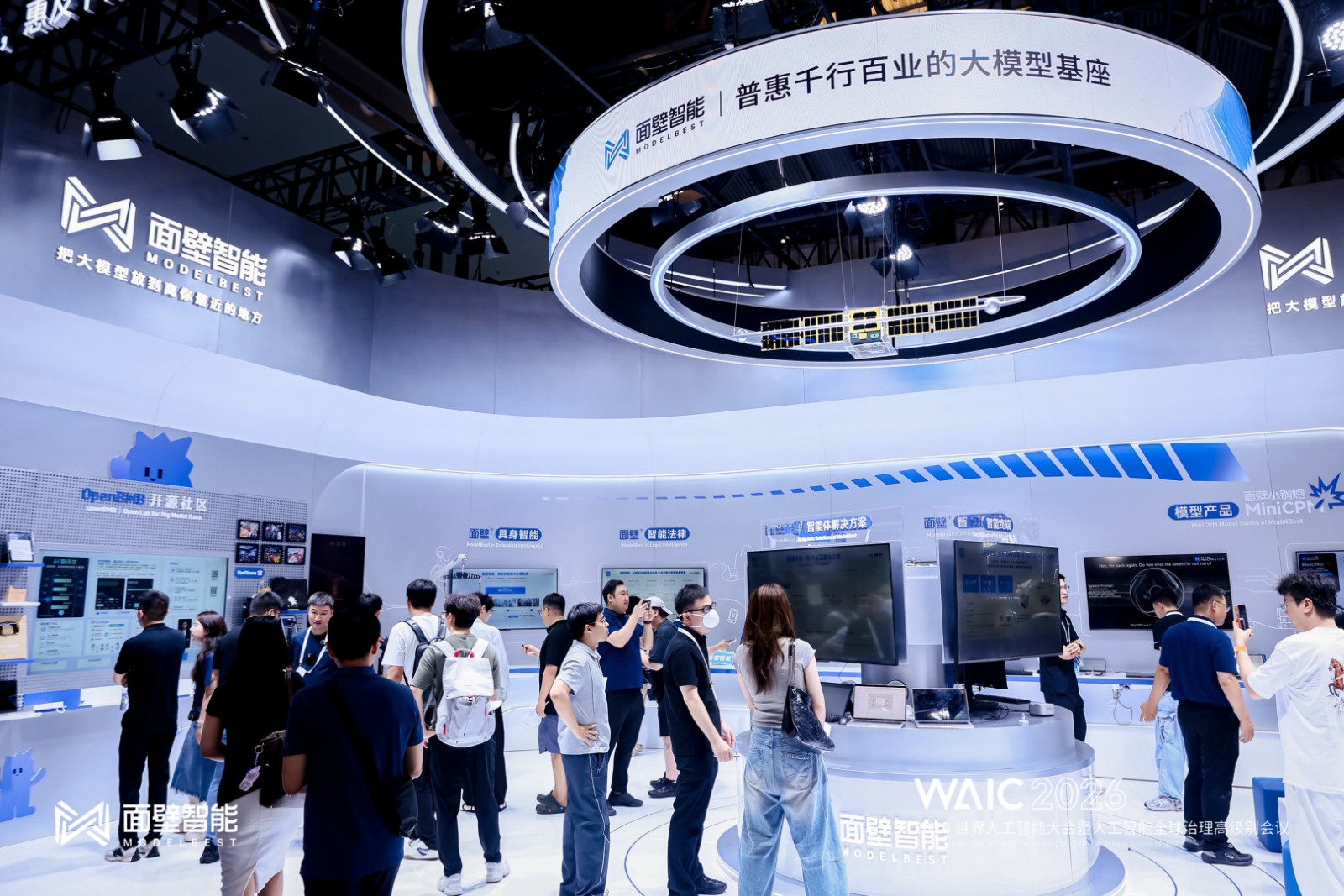
Memory Tensor: Let AI Not Reintroduce You Every Time
In the "Foundational Partners" area of the WAIC 2026 Shanghai ecological exhibition, computing power, data, and models still attract the most attention. However, at the Memory Tensor booth, a more relatable experiential question was raised: Why do we have to reintroduce ourselves each time we converse with AI?
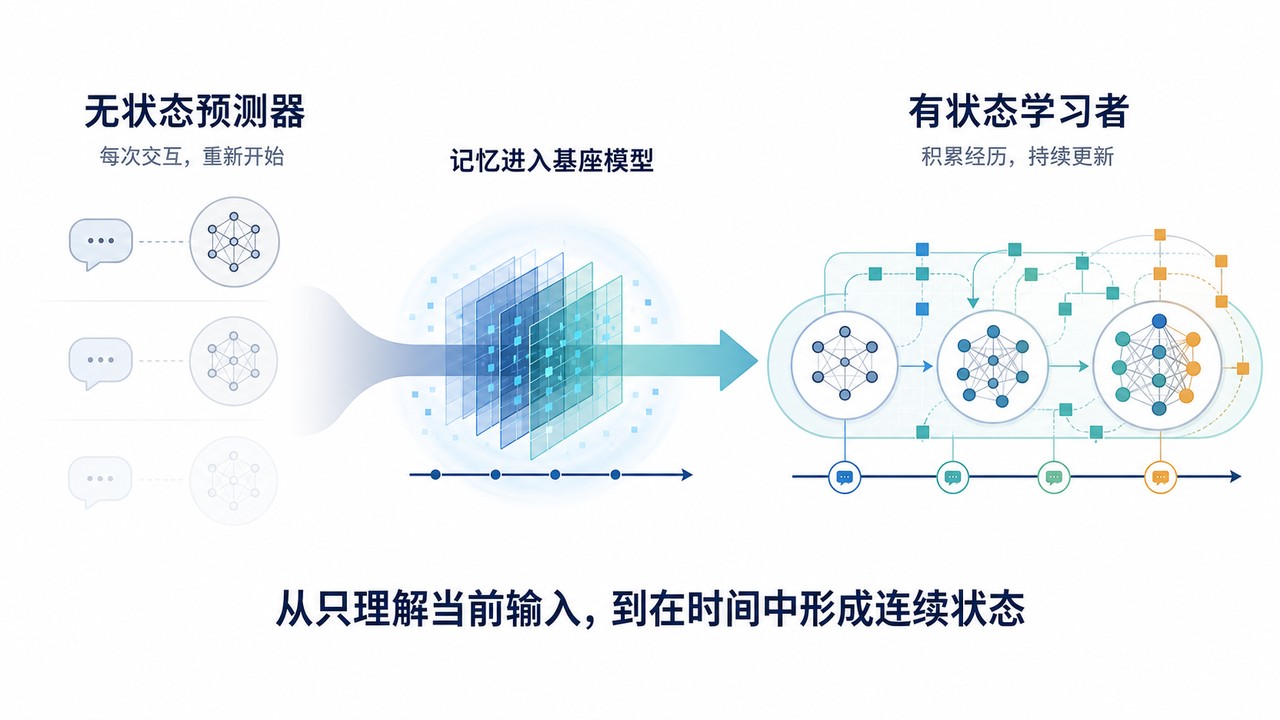
Memory Tensor is a startup focused on AI long-term memory and memory-native base models. The current common practice is to store user profiles and historical conversations externally, retrieving them when needed to allow the model to read again, akin to preparing AI a notebook. Memory Tensor aims to make memory part of the model's inherent capabilities, allowing AI to retain and update statuses continuously through long-term interactions, understanding past events and their relevance to current tasks.
As AI transitions from being a question and answer tool to becoming personal assistants and intelligent partners, the ability to remember users and continue tasks is emerging as a new product threshold. Of course, this also raises issues of privacy, forgetting, and false memories. But from an industrial perspective, the next generation of more usable AI may not only need to be smarter but also truly "remember you."
Suochen Technology: Robots Understanding the World Don't Necessarily Rely on "Eyes"
Currently, embodied intelligence almost all follows the same path: relying on cameras to see images and making judgments based on visual input. Suochen Technology, coming from computational physics simulation (CAE), offers a rare alternative path: enabling robots to understand the world through "force" and "fluid."
Vision has inherent blind spots. Airflow, liquid pressure, internal stress of materials, and the deformation trends of flexible objects — these invisible physical phenomena are crucial for precise operations. For example, when plugging and unplugging joints, a visual solution necessitates camera accuracy of mere millimeters, while humans rely on tactile feedback from their hands.
Suochen’s method involves using its own fluid dynamics and solid mechanics solvers to simulate physical fields in various scenarios, thereby training AI models; robots only require minimal force and fluid sensor data to infer the complete physical field around them, anticipating upcoming motions, deformations, and risks. For instance, being able to pre-determine friction changes during wet weather or whether liquid containers will spill — this kind of predictive capacity can directly inform actions' strength and extent.
This "physics-driven-first" approach has already been operational in low-altitude economic scenarios, providing meter-level refined wind field predictions for urban aeronautical service centers, with collaborations in the robotics domain ongoing. In a time when vision nearly monopolizes embodied intelligent perception, this direction is worth paying attention to.
Super Fusion: Bringing the "Token Factory" into the Office
The form of computing power provision can also be an innovation point. This time, Super Fusion showcased the TokenBox, a concept that removes the supernode from data centers and creates a liquid-cooled integrated machine that can be directly placed in an office, operating without the need for a data center with a power supply of 4 to 6 kilowatts, and is quiet enough.
This "mini server" is about the size of a small refrigerator and can run a large model with 1.6T parameters, supporting approximately 50 digital employees online simultaneously. The machine features four flexible slots for GPUs and CPUs that can be easily swapped, and upgrades can be accomplished by changing out modules. To this end, Super Fusion's R&D team has even transformed traditionally air-cooled accelerator cards into liquid-cooled ones, standardizing their packaging for installation.
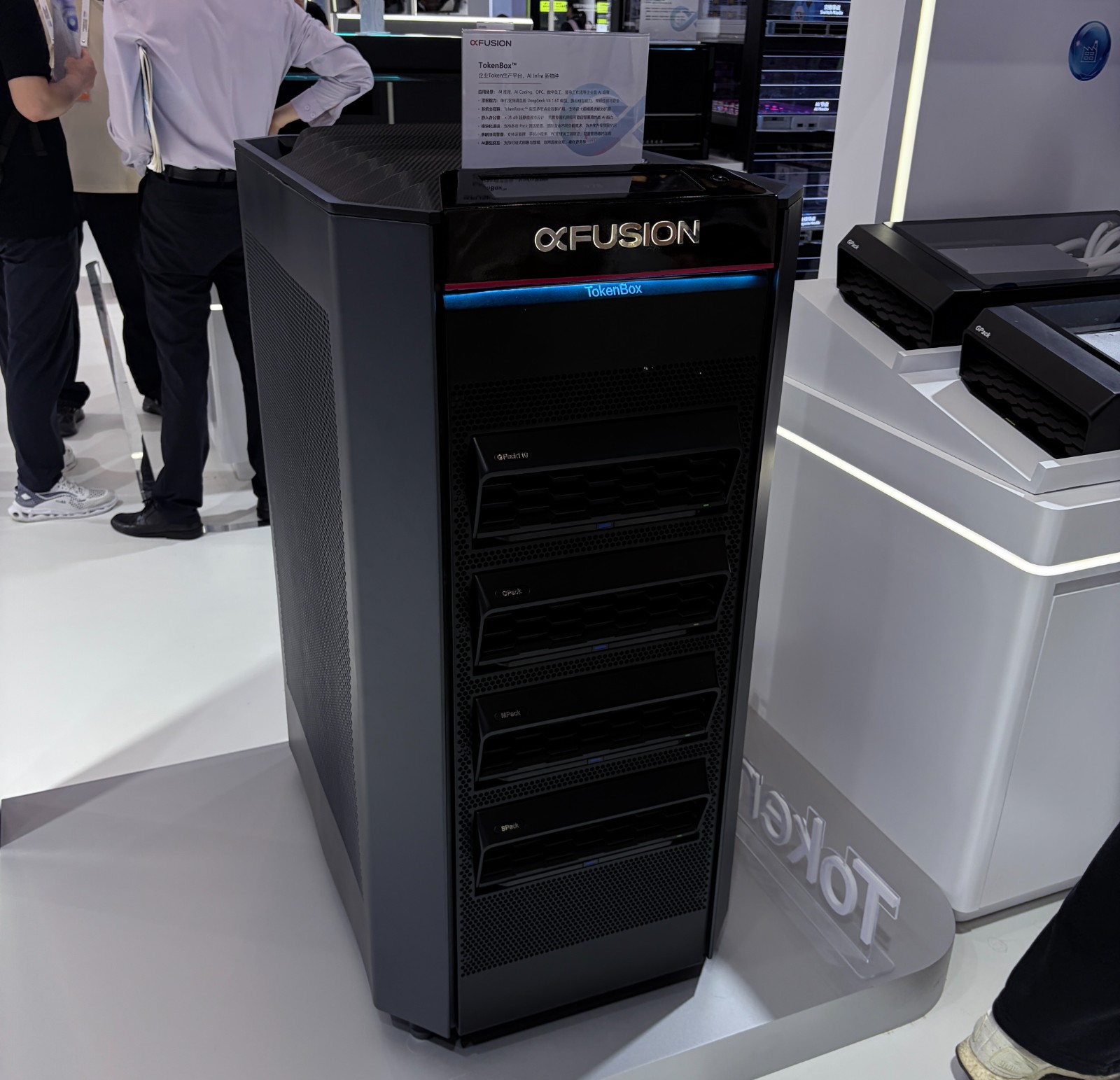
Its positioning lies between cloud APIs and self-built data centers: hardware solves "from power to computing," while software addresses "from computing to tokens," ultimately exposing only a single API interface to enterprises for internal Agents to invoke directly.
Who is footing the bill? The answer may be surprising. Short drama production teams are typical customers. They frequently call upon video generation models, leading to high token costs; instead of continuously paying cloud vendors, they prefer to invest around one million to transition their computing power into their production teams. Another category are government and enterprise clients who require local computing power but are hesitant to let internal data leave their domains.
Realization: One Click, "One-Button Understanding" of Life
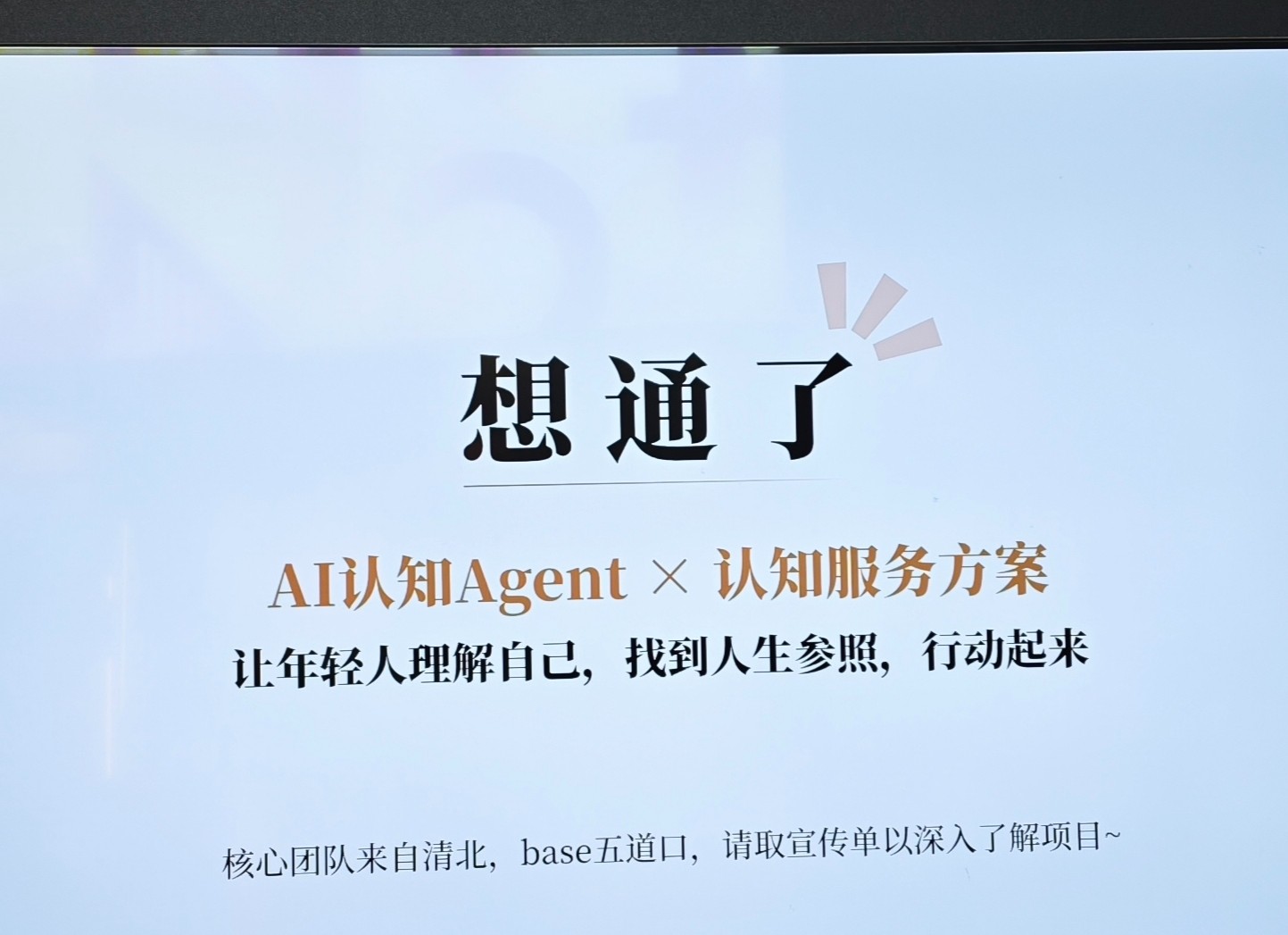
The product interface features a prominent button labeled "One-Button Understanding."
According to the description, their positioning is "AI Cognitive and Thought Coach." They aim to use AI dialogues as a gateway to help users work through emotional root causes, thought patterns, and life dilemmas through cognitive assessments, long-term memory, and mental model construction. They intend to establish a "life sample library," providing young people nuanced and tailored life references based on real-life experiences. In the future, it could also connect to schools, psychological institutions, cognitive education platforms, and elderly companionship scenarios.
Conclusion: Behind the Buzz, Innovation Has Changed Its Approach
Upon finishing a tour of this year's WAIC, the intuitive feeling is that AI is no longer a matter of a single industry but is now everyone’s concern. A ticket can be resold for two to three thousand yuan, reflecting the event's fervor. But this excitement is not superficial; it indicates that AI is transitioning from a technical issue to a strategic direction that various parties are betting on.
A rare signal this year is "localization." In hall H2, regional forces such as Shenzhen Futian Artificial Intelligence Town and Shanghai Jing'an grouped together for exhibition, with state-owned entities like China Southern Power Grid and the China Meteorological Administration also fully participating. The fact that local governments and traditional giants are now seriously incorporating AI into their agendas indicates that this transformation has crossed the boundaries of the tech circle. However, for traditional enterprises, the journey of AI transformation remains long and arduous.
This year, it is indeed hard to find stunning, game-changing breakthroughs; however, traveling through the exhibition halls reveals that innovation has not disappeared — it has simply changed its methods. It resides in some fine details, such as the stable offline operation of edge models, the liquid-cooled "Token factory" in the office, and the actual service hours accumulated by over 500 paid households.
From "creating stunning demos" to "finding secure landing spots," this shift does not signify a retreat of innovation but rather its maturity. When a technology begins to seriously address "who is using it, how well it works, and whether it is worth using," it has truly arrived at the doorstep of changing reality. At next year’s WAIC, we anticipate seeing more answers that have crossed through that door.
免责声明:本文章仅代表作者个人观点,不代表本平台的立场和观点。本文章仅供信息分享,不构成对任何人的任何投资建议。用户与作者之间的任何争议,与本平台无关。如网页中刊载的文章或图片涉及侵权,请提供相关的权利证明和身份证明发送邮件到support@aicoin.com,本平台相关工作人员将会进行核查。


