
Author: Jae, PANews
When the tide recedes, Avalanche has built a stronghold in the deep waters of RWA (Real-World Assets).
In July 2026, the crypto market remains cold, with AVAX token prices under continued pressure, and market sentiment has nearly plummeted to freezing point.
However, on-chain data presents a completely different picture. According to RWA.xyz statistics, the value of tokenized assets on Avalanche has risen to $2.1 billion, with a month-on-month increase of over 60%, ranking among the top five public chain networks in the RWA space.
This counter-trend growth is attributable not only to Avalanche's quiet efforts in the field of tokenization but also to a vote of confidence from global industry giants; the story of assets being brought on-chain is happening rapidly and intensively on Avalanche.
Avalanche Secures Compliance Ticket, BUIDL Unlocks Capital Efficiency
The determining factors in the RWA space have always been capital efficiency, composability, and compliance depth. In this regard, Avalanche has taken the lead in securing a compliance entry ticket due to the explosion of the BlackRock US Treasury Fund BUIDL and the on-chain native issuance of US stocks by tokenization infrastructure provider Securitize.
In March 2024, BlackRock, the world's largest asset management firm, partnered with Securitize to launch the tokenized money market fund BUIDL, primarily investing in US Treasury bonds, cash, and repurchase agreements, aiming to provide on-chain dollar interest-bearing tools for qualified investors, becoming a benchmark product in the industry.
At that time, this was seen by the market as a symbolic "test." Two years later, this test has transformed into a tidal wave.
Today, BUIDL on the Avalanche chain has seen significant growth. According to RWA.xyz’s latest statistics, its asset size achieved a 105% exponential increase within just one week, surging from $464 million to over $900 million, with a net inflow of up to $436 million in a single week. Thanks to BUIDL's strong performance, the on-chain tokenized RWA TVL (Total Value Locked) on Avalanche has reached $2.1 billion, a 60% increase compared to the same period last month, indicating a close strategic synergy between the two.
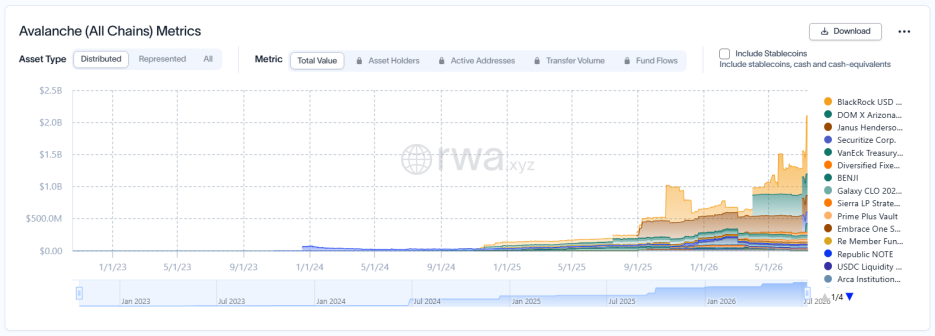
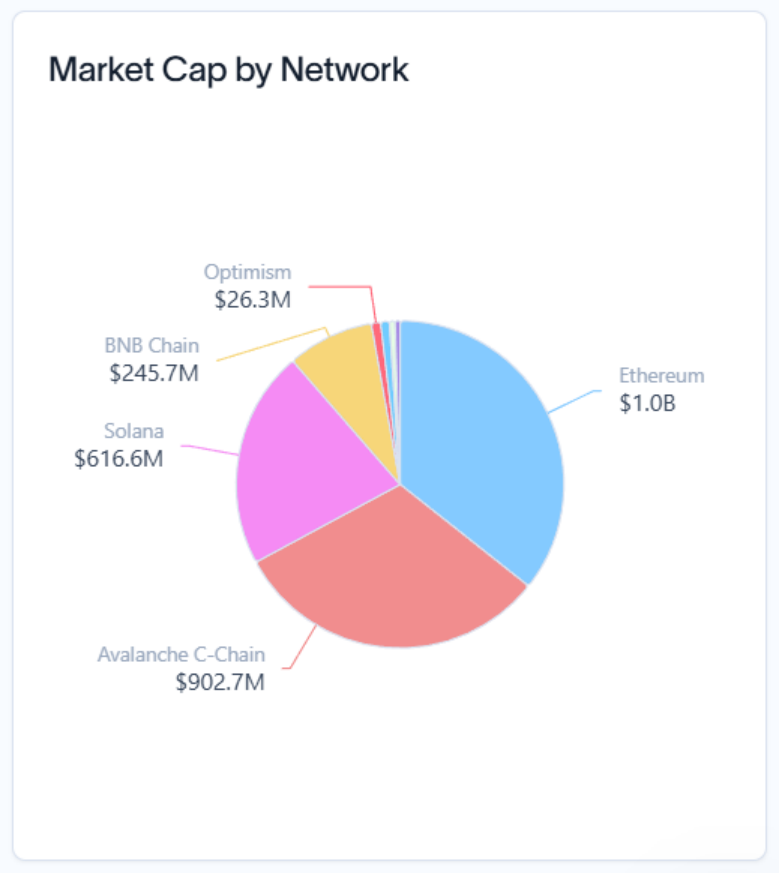
So far, BUIDL's total management scale across the network has approached $2.87 billion. The shares of BUIDL held on the Avalanche chain now make up more than one-third of the fund's total assets, making it the second-largest distribution network after Ethereum. In Avalanche's RWA ecological map, the proportion of BUIDL's single asset reaches as high as 43%;
It is worth mentioning that the derived asset sBUIDL, which is 1:1 pegged to BUIDL fund shares, has also been approved as qualified collateral for the non-custodial lending protocol Euler. Compliance users staking sBUIDL can borrow on-chain liquidity like USDC or AUSD. This means that for the first time, traditional asset management products have genuinely accessed the composability ecosystem of DeFi, retaining the interest-bearing properties of government bonds while releasing the multiplier effect of capital.
Additionally, Securitize has completed “Issuer-Sponsored Tokenization” for its common stock SECZ listed on the NYSE (New York Stock Exchange) on Avalanche and Solana.
Unlike offshore packaged synthetic assets, the on-chain native issuance of the same stock proves the feasibility of tokenized stocks under the current securities law framework, and extends Avalanche's identity as a "crypto public chain" into the compliance system of mainstream securities settlement.
Partnering with Industry Giants, Acceleration of Tokenization Wave in Japan and South Korea
Compared to the Western markets that focus more on compliance at the top level of securities and asset management, the tokenization exploration in Asia is more deeply rooted in micro-industries: retail payments, corporate settlements, cross-border fund transfers, real business scenarios are being brought on-chain in bulk.
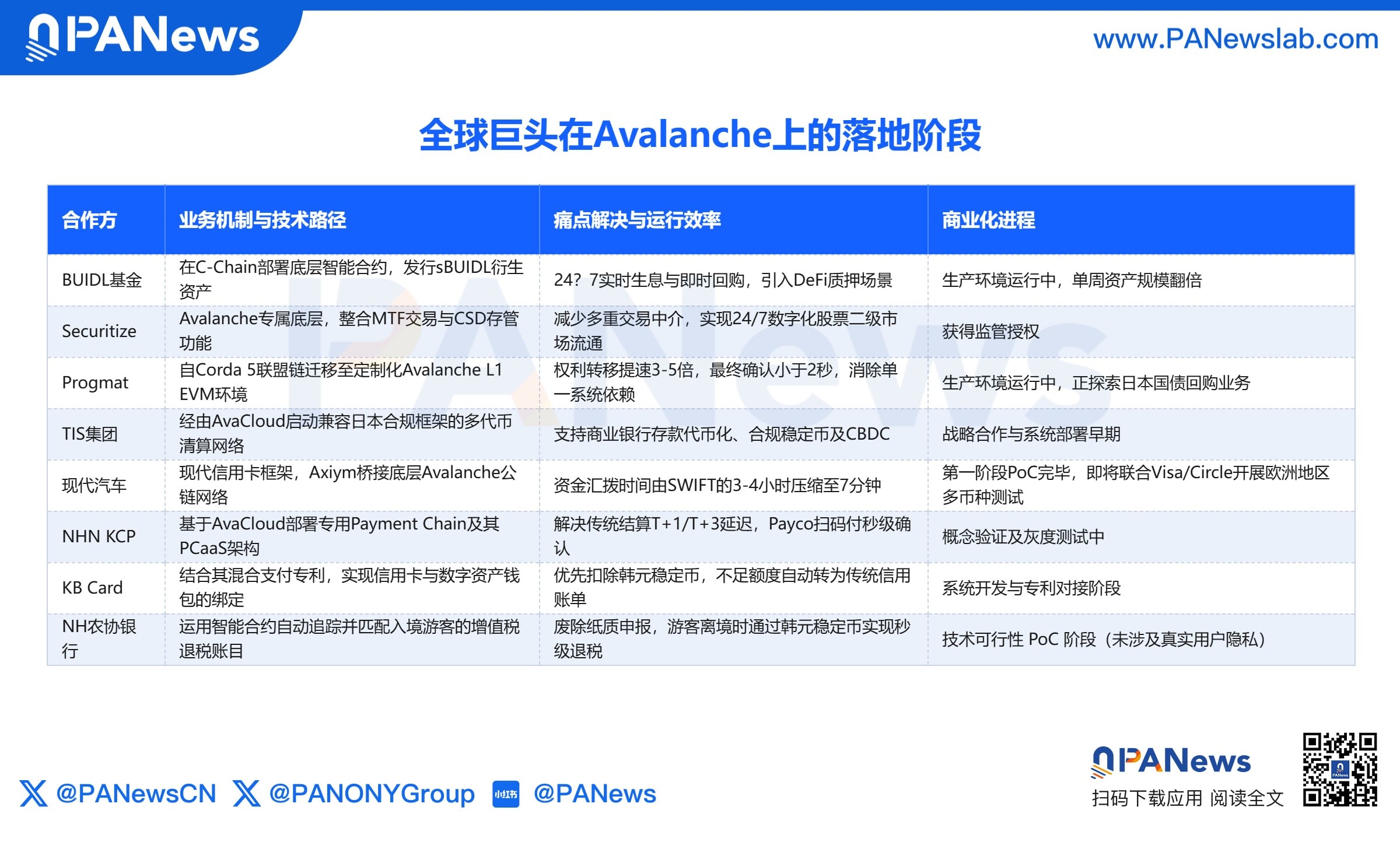
On July 13, Progmat, endorsed by giants such as Mitsubishi UFJ Trust, Mizuho, the Tokyo Stock Exchange, and SBI, completed a major upgrade of its underlying architecture, migrating its tokenized assets totaling over 452 billion yen (approximately $2.7 billion) from a Corda 5 based private permissioned chain to Avalanche.
Progmat occupies 53% of the market share in the Japanese securities token market, with its issued tokenized assets accounting for 64.6% of the total issuance in Japan, widely covering asset categories such as real estate and corporate bonds.
The reason for the migration mainly lies in the fact that the alliance chain is a closed liquidity island, and assets cannot access a broader DeFi ecosystem, limiting the flow of value. After switching to Avalanche, the speed of asset rights transfer can increase by 3-5 times, and the time for final transaction confirmation can also be compressed to within 2 seconds. More importantly, Progmat will gain the ability for seamless interoperation with the global blockchain ecosystem, paving the way for 24/7 real-time settlement for future businesses like Japanese government bonds and on-chain repurchase agreements.
Furthermore, Japan's market layout in the payment sector is also accelerating. TIS, a Japanese payment giant with annual credit card and payment transaction processing volume reaching $2 trillion, has launched a multi-token payment and settlement platform through AvaCloud, supporting not only stablecoins and tokenized deposits issued by banks and enterprises but will also accommodate CBDC (central bank digital currency) for instant settlement in the future.
The landing in the Korean market is closer to daily consumption and corporate operations, showing a blooming pattern.
Cross-border Fund Transfer: On July 10, Hyundai Motor Group's credit card department launched an internal cross-border remittance system on Avalanche, becoming the first large Korean enterprise to publicly adopt stablecoins for cross-border financial settlement. In the initial phase, a $20,000 test transfer between Hyundai's subsidiaries in the US and Mexico averaged only 7 minutes, reducing the time cost by 97% compared to SWIFT's 3-4 hours.
Payment Infrastructure: In mid-April, Korea's largest e-commerce payment company NHN KCP built Korea's first payment-dedicated mainnet through AvaCloud, compressing the traditional T+1 to T+3 settlement delay to sub-second levels. In a pilot with the mobile payment application Payco, the time from scanning to payment confirmation was only 2 seconds, validating Avalanche's commercial maturity in high-concurrency retail scenarios.
Retail Consumption: At the end of March this year, KB Kookmin Card, a large Korean credit card company, collaborated with Avalanche to develop a hybrid stablecoin credit card payment system, prioritizing the deduction of the Korean won stablecoin balance during purchases, with any insufficient amounts automatically using the traditional credit limit, optimizing the stablecoin usage experience; last November, Korea's Agricultural Cooperative Bank piloted a visitor tax refund service based on stablecoins on Avalanche in collaboration with Mastercard and other institutions, replacing paper verification with smart contracts, enabling tax refund funds to arrive instantly through the Korean won stablecoin.
Technology Advantages Drive Ecological Expansion, Subnet Mechanism Shows Double-Edged Sword Effect
From Wall Street to the Japan and South Korea markets, from securities to payments, industry giants are collectively transitioning from alliance chains to Avalanche, driven by profound technical necessity.
The primary conflict for enterprises on the blockchain is: they want the security, efficiency, and immutability of distributed ledgers, yet they also want data sovereignty, access control, and compliance isolation. Avalanche's customizable L1 (subnet, Subnet) mechanism provides a solution that accommodates both.
Through low-code tools like AvaCloud, enterprises can freely customize their dedicated L1 based on business needs:
Geographical Restriction: Enterprises can specify that validating nodes must be located within specific countries to meet data sovereignty and outbound regulatory requirements;
Access Control: Embedding KYC/AML (Know Your Customer/Anti-Money Laundering) rules at the protocol layer, denying unverified wallets from interacting with assets on the chain, creating a compliant operating environment;
Performance Isolation: Dedicated L1 has independent computing resources and gas pricing mechanisms, unaffected by congestion in the public network, ensuring the stability of enterprise-level services.
In simple terms, enterprises will possess a "sovereignly controllable blockchain" while also sharing the public network's security consensus and ecological interoperability. This “sovereignty isolation + public safety” compromise perfectly aligns with the fundamental demands of industry giants.
It should be noted that even as Avalanche gradually emerges in the RWA space, value capture has become its most challenging structural problem in its tokenization strategy.
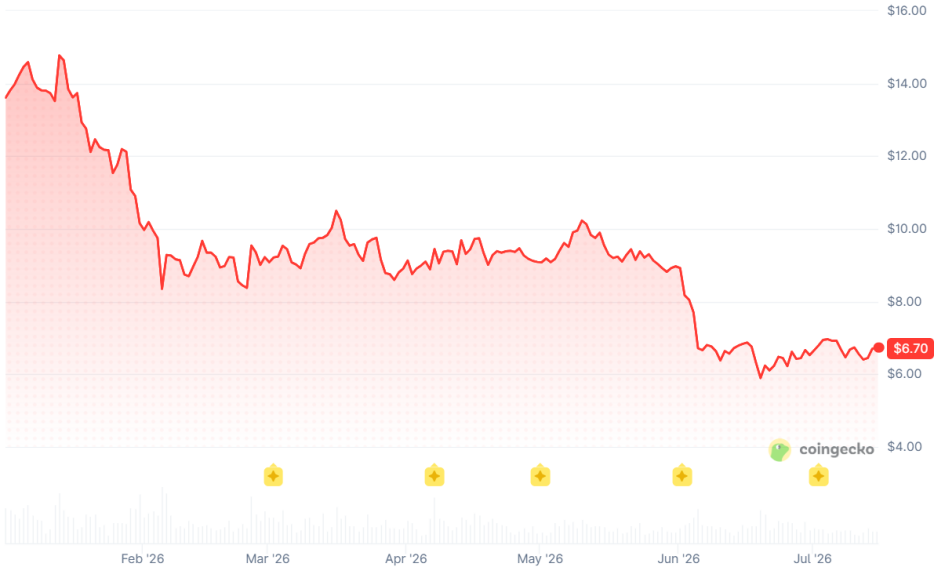
Despite the total RWA volume on Avalanche exceeding $2.1 billion and industry giants pouring in, the price of its native token AVAX has long been detached from ecological prosperity, with a decline of over 50% this year.
The root cause is also hidden in the subnet mechanism. To avoid the financial risks of token volatility, enterprises in dedicated L1 rarely use AVAX as a trading medium, instead prioritizing stablecoins or tokenized deposits as gas. Enterprises merely view the Avalanche mainnet as a cheap final settlement ledger and security guarantee, making it difficult for the immense value generated from transactions to be effectively transmitted to token holders through mechanisms like gas burn.
Token holders bear the risks of price volatility and lock-up, yet do not share in the dividends of the tokenization ecosystem's development. This disconnect characterized by "strong ecosystem, weak token" is testing the foundations of community consensus.
The cold winter has not yet passed, but spring will eventually come. Whether Avalanche's bet on RWA will write a key note on public chain value capture or become a tragic infrastructure tale of "making garments for others," remains to be seen over time.
免责声明:本文章仅代表作者个人观点,不代表本平台的立场和观点。本文章仅供信息分享,不构成对任何人的任何投资建议。用户与作者之间的任何争议,与本平台无关。如网页中刊载的文章或图片涉及侵权,请提供相关的权利证明和身份证明发送邮件到support@aicoin.com,本平台相关工作人员将会进行核查。


