
Author: danny
Marble Laundromat: The real money laundering infrastructure, never underground. In April 2006, in Del Carmen City Airport, Campeche, Mexico. The military detained a DC-9 passenger plane, the door opened, and there were no passengers inside, only 128 suitcases, containing 5.7 tons of cocaine... Do you know whose plane this is?
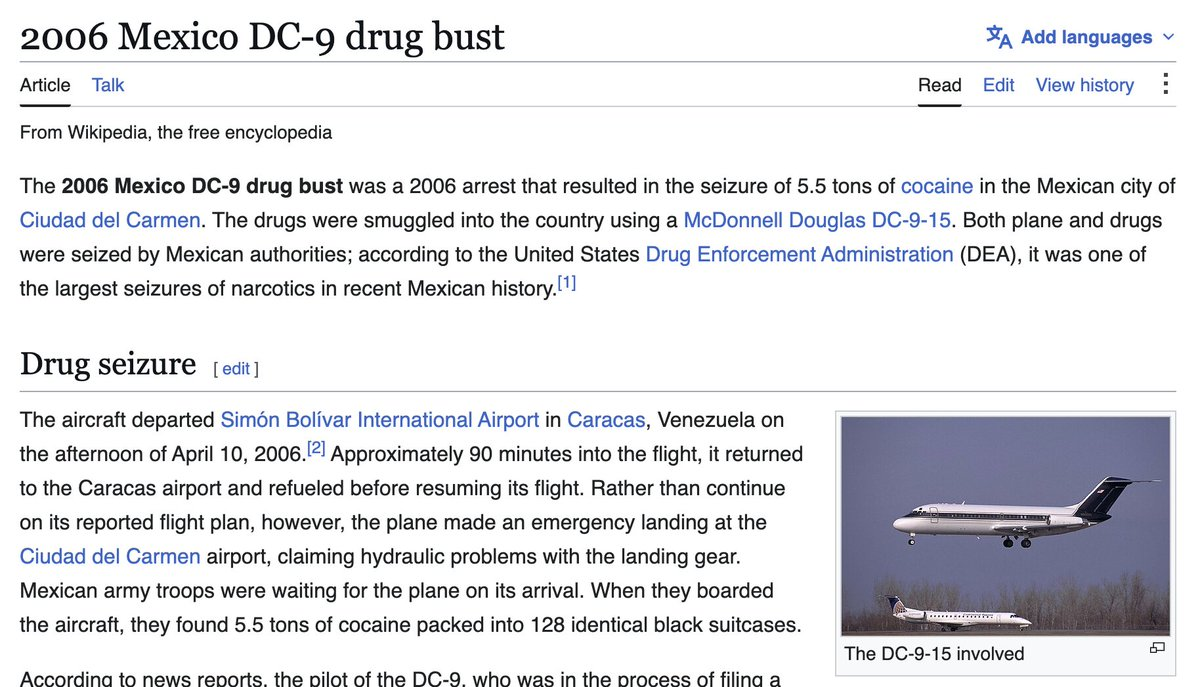
There are drug cases every year, but the uniqueness of this plane loaded with cocaine lies in what follows: tracing the money used to buy the plane leads not to underground banks, not to black-market currency exchangers, but to a glass building in Charlotte, North Carolina—headquarters of Wachovia, the fourth largest bank in the United States.
I have written about the water sellers in Chaoshan, about score running, about the pawnbroker guarantees of Huiwang, and about how USDT moves between fraudulent electronic fraud parks and underground money houses. After writing so much, some people might ask, Danny, do you think the main battlefield for the money laundering business is in these places—or rather, has stablecoin completely rewritten this business?
Regarding today's article, I want to turn the lens 180 degrees to let you know: the biggest laundromat happens to be located on the busiest street.
Real big money never goes underground. It comes in through the front door, and someone opens the door for it. The person who opens the door wears a tailored suit, with the business card printed as Relationship Manager (aka Banker), with offices on Bahnhofstrasse in Zurich, Raffles Quay in Singapore, and Pennsylvania Avenue in Washington—note that it is only two blocks away from the White House.
How much difference in scale? Estimates from the UNODC suggest that globally, 2% to 5% of money is laundered every year, amounting to $800 billion to $2 trillion. Huiwang has handled over $20 billion in over four years, already dubbed “the Amazon of criminals”; while Danske Bank’s Estonian branch processed approximately €200 billion of non-resident funds from 2007 to 2015. What does it mean to dwarf small players? What does it mean for a small ant to shake a big tree?
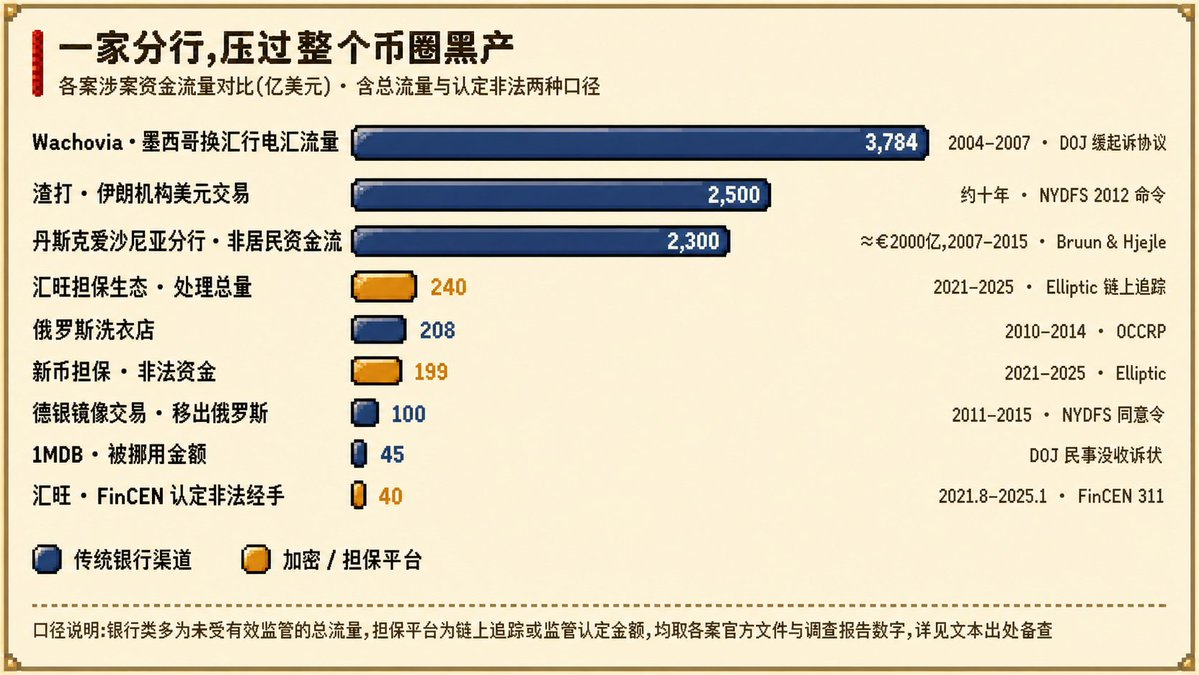
A single bank branch has handled a volume of "dirty money" far exceeding the entire cryptocurrency black market.
1. Suppose you have $5 billion of illicit funds
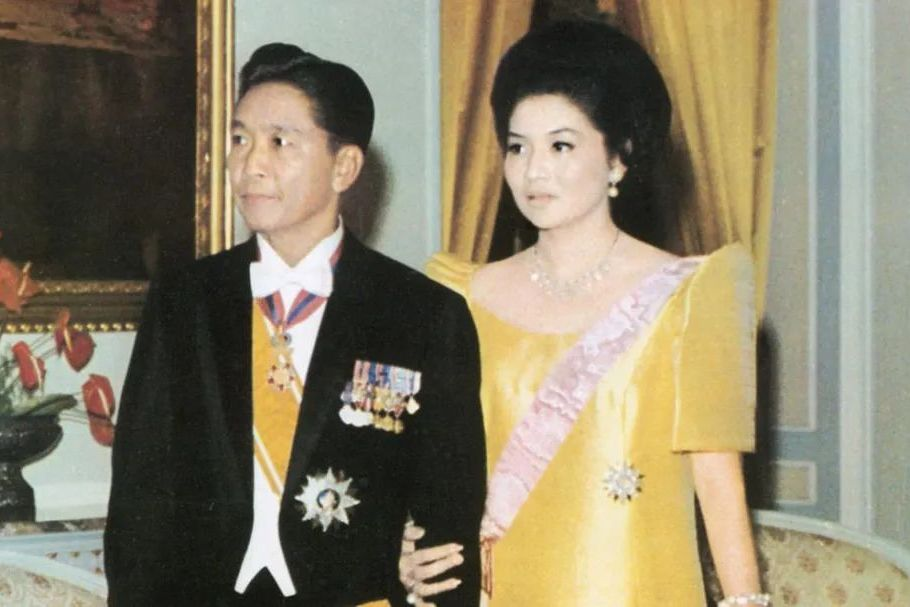
Suppose you are Marcos from the 1970s, and the money you amassed during your term is estimated to be between $5 billion and $10 billion.
The question arises: what to do with this money?
Find an underground bank? Underground banks can only handle a few million at a time, and they can only help you move the money—it’s still dirty, can’t be seen in the light, and can’t buy property. What Marcos lacked was never in the transfer, it was about giving this money a legitimate origin.
Thus, in March 1968, a Credit Suisse representative flew to Manila for a meeting. The name that Marcos wrote on the signature card was William Saunders, while Imelda signed as Jane Ryan. These two signature cards were later found among the documents left behind in Malacañang Palace after the revolution in 1986 and now lie in the archives of the Philippines' Commission on Anti-Corruption.
Pseudonyms were just the entrance, but what’s truly valuable is the following operation: the money never stays merely in pseudonym accounts, but is moved into a foundation registered in Liechtenstein—the foundation holds the accounts, a local lawyer serves as the trustee, and the beneficiaries' section states, “as defined in the separate saved statutes.” The foundation is legal, the lawyer’s trust is legal, and the bank’s acceptance of the foundation for opening accounts is legal; each layer taken out alone is clean. The connection of dirty money between layers, but there is no document in the world that presents all layers at once. (Fun fact: That’s why so many rich people are keen to buy identities.)
This is the core product of private banking. Not a safe, but a structure—a one-stop service.
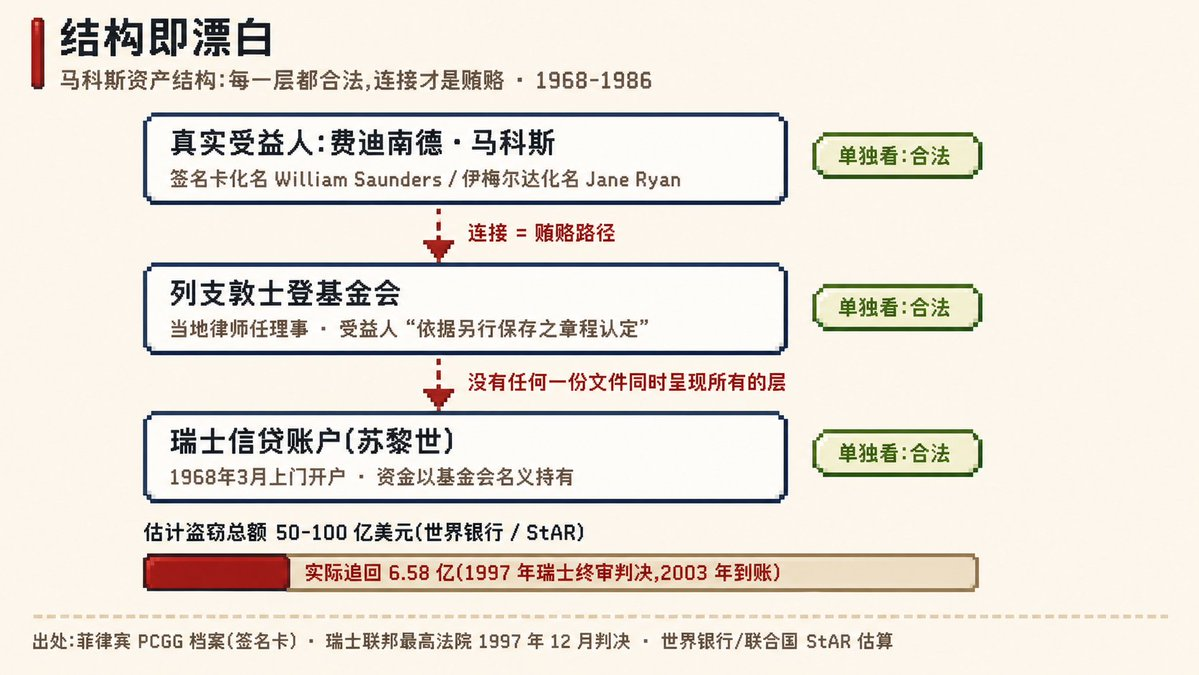
The outcome: In 1986, Switzerland abruptly froze $356 million; the Federal Supreme Court ruled in 1997 for its return, with both principal and interest totaling $658 million. Compared to the total of $5 billion to $10 billion, the recovery rate is less than 15%. What about the rest? No one knows.
Well, this is the best advertisement for this industry.
Thirty-two years later, the same script was replayed in the same country: in 2000, President Estrada signed a pseudonym Jose Velarde at a bank in Manila, and while signing, the bank’s vice president stood within a foot's distance, and this eyewitness account later directly ignited the impeachment. The product of opening accounts using pseudonyms spanned two generations of Philippine presidents....
2. Banks of Presidents
Washington, D.C., Riggs National Bank, self-proclaimed “the most important bank in the most important city in the world.” Because besides being the bank where the founding father Lincoln opened his account, the $7.2 million check for the purchase of Alaska by the United States in 1868 came from Riggs.
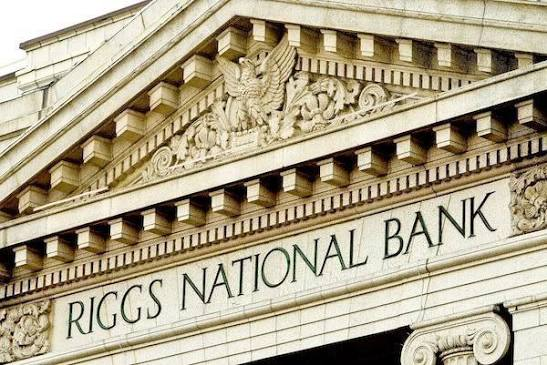
Now let’s look at its two distinguished guests in its later years. Pinochet, with an account under the alias Daniel Lopez, during his arrest in London and global asset tracing, Riggs’ response was to help him move his assets, rename them, and continue the service. The President of Equatorial Guinea, Obiang, had his oil revenue deposited with Riggs, peaking at around $700 million—evidence contained within the Senate Report of 2004: Equatorial Guinean officials were seen carrying briefcases into the Washington branch, filled with sealed stacks of $100 bills, with a single briefcase weighing up to 60 pounds, which the bank accepted.
Sealing means—the bills came out of the mint in that packaging, and arrived at the bank still in that packaging, without ever being opened in between. What this money has gone through is self-evident, and no one behind the counter intends to ask.
Riggs was fined about $41 million, and its 140-year-old sign was taken down. This bank is only two blocks from the White House, one block from the Treasury, and regulators see its rooftop as they walk in every day.
3. The Logistics of Cash
Back to that DC-9 at the beginning.
The drug business has a segment that all movies dare not portray: when the money becomes a logistics issue. Cocaine is shipped by the ton, and cash also comes back by the ton, while U.S. dollars have volume and weight. How do the Sinaloa cartel solve this?
The first route: Mexico's chain of currency exchange offices. Drug dealers hand over cash to the exchange offices, which have a proxy account at Wachovia; the money pours into Wachovia in three forms: wire transfers, cash shipments, and traveler's checks, and then flows into the global dollar circulation. From 2004 to 2007, Wachovia processed total wire transfers for Mexican currency exchange offices amounting to $378.4 billion, nearly one-third of Mexico's GDP that year. This is the total flow that has not been effectively monitored, and although not every dollar is drug money—however, the black-and-white text of the 2010 Department of Justice deferred prosecution agreement states that the bank knowingly failed to establish effective anti-money laundering procedures. Interestingly, the money used to buy that DC-9 is also included in this account.
In London, there’s a compliance officer named Martin Woods who has continuously raised alarms, only to be pressured into resigning by the bank; subsequently, after the case broke out, he was the only name on the entire case file that was clean, and he was also the only one in that case permanently excluded from the banking system… (Isn’t it a bit ironic?!)
The final fine: $160 million, about 2% of Wells Fargo’s (the acquirer) annual profit.
The second route: The 2012 340-page Senate report on HSBC includes a detail: Sinaloa customized special cash boxes, the box sizes perfectly matching the window openings at HSBC’s Mexico branch. What level of cooperation is required to achieve this step?
From 2007 to 2008, HSBC Mexico transported $7 billion in cash to its U.S. affiliate, during which its internal compliance system rated Mexico at the lowest risk level. Even more absurd: HSBC’s Cayman branch, operating without any offices or employees, holds around 50,000 accounts with $2.1 billion in deposits.
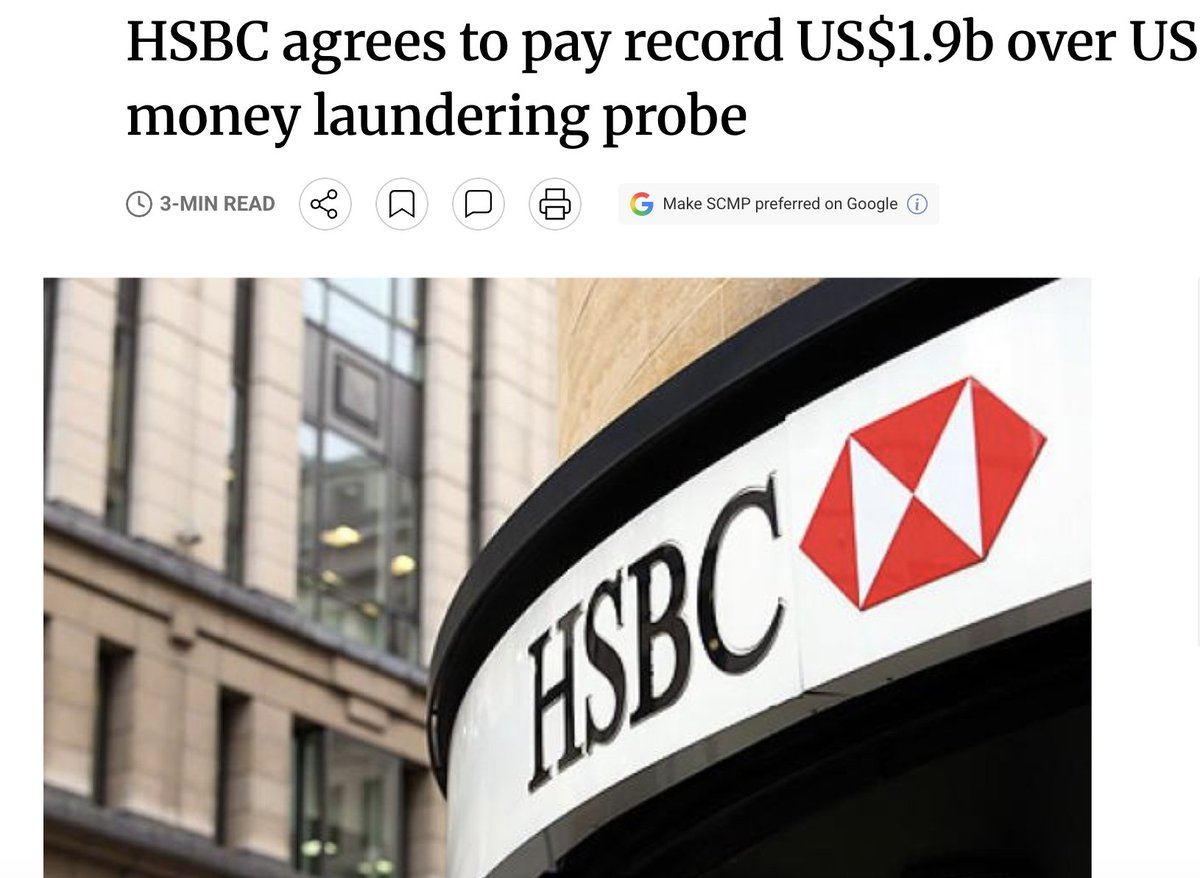
On December 11, 2012, the Department of Justice and HSBC signed a deferred prosecution agreement, imposed a fine of $1.92 billion, recognizing that at least $881 million was directly used to launder drug money. That day, HSBC's shares rose both in London and Hong Kong—the market understood: the shoe has dropped, the license is preserved, and no one was prosecuted. The next year, Attorney General Holder stated in Congress a line that will be recorded in history: prosecuting a bank of this size could have a negative impact on the global economy.
Too big to jail has never been a conspiracy theory but has been the official stance.
4. Cutting Up the Message
Cash is an old-fashioned play; in the electronic age, the skill is in the messages.
The Achilles' heel of the dollar lies in clearing: all dollar transactions worldwide must eventually go through New York, and New York sees every field in the SWIFT messages. What if money under sanctions wants to pass through? The method revealed is of little value: delete the fields, known as wire stripping.
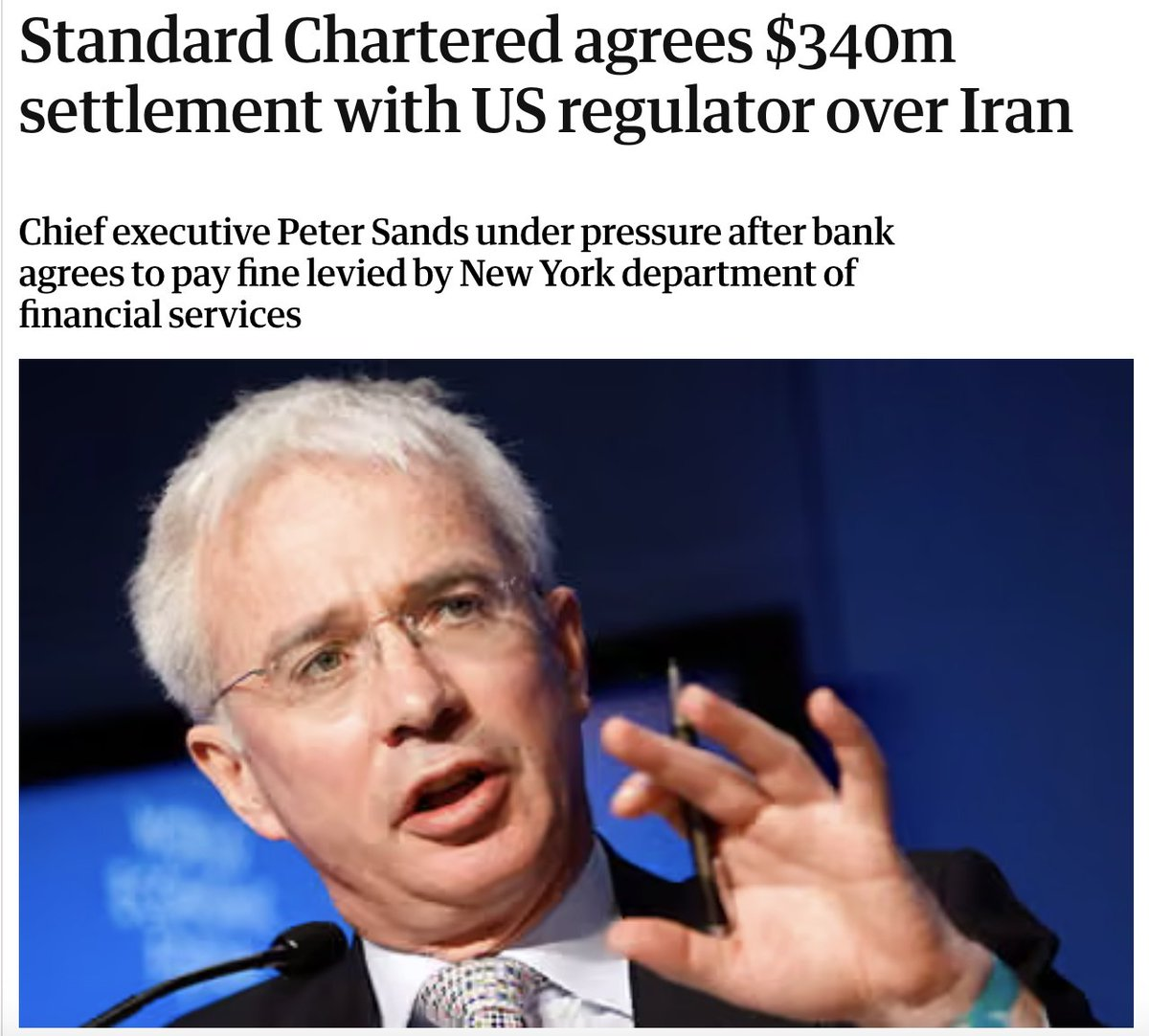
Standard Chartered used this method to handle about $250 billion for Iranian institutions over nearly a decade. In a 2012 order from the New York State Department of Financial Services, it designated the bank as a rogue institution, and included a statement from a group executive from 2006:
“You f---ing Americans. Who are you to tell us, the rest of the world, that we’re not going to deal with Iranians?”
The answer was soon revealed: through dollar clearing in New York. Standard Chartered first paid $340 million to settle, and in 2019, due to failure to completely cut off during the regulatory period, paid another $1.1 billion. That sentence had nineteen words, and distributing one word cost over $70 million, the most expensive blunder in history.
The most exaggerated case was BNP Paribas. On June 30, 2014, BNP Paribas pled guilty in New York—not a deferred prosecution, but a guilty plea, for conducting dollar clearing for Sudan, Iran, and Cuba, leading to fines and confiscations totaling $8.97 billion, which still stands as a global record. Their technique surpassed mere deletion: the Geneva branch designed a “satellite bank” for Sudan’s oil dollars, inserting intermediary banks without sensitive names into the message chain, so that every dollar passing through New York had a public face. Sudan was then in the middle of the Darfur war, recognized by America as an ongoing genocide; internal memos from BNP acknowledged they were aware but still neglected to manage the situation, continuing with the business as usual.
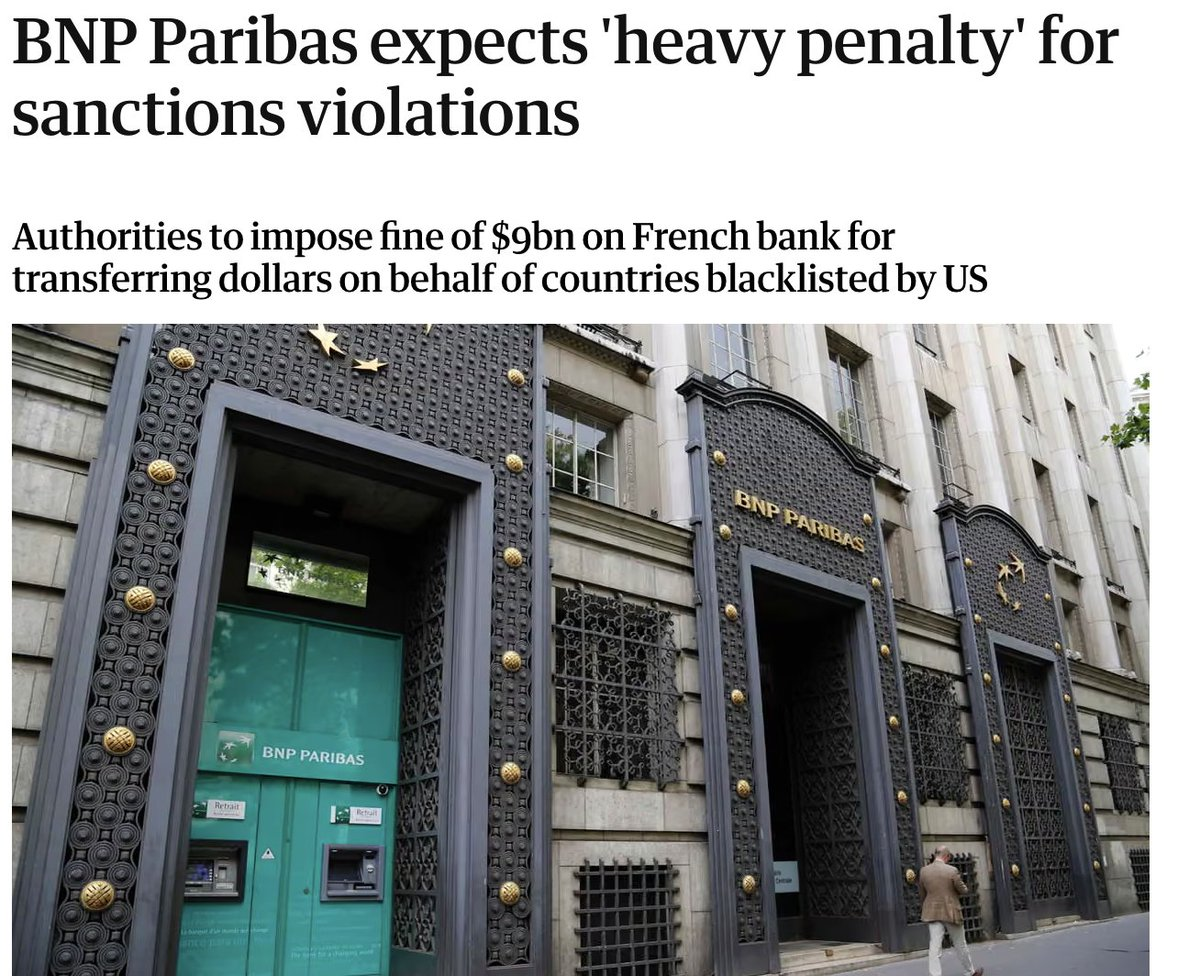
Without comparison, there’s no harm; let’s give everyone a direct comparison: BNP never laundered a cent of drug money, but its fine is over four times that of HSBC, based on what?
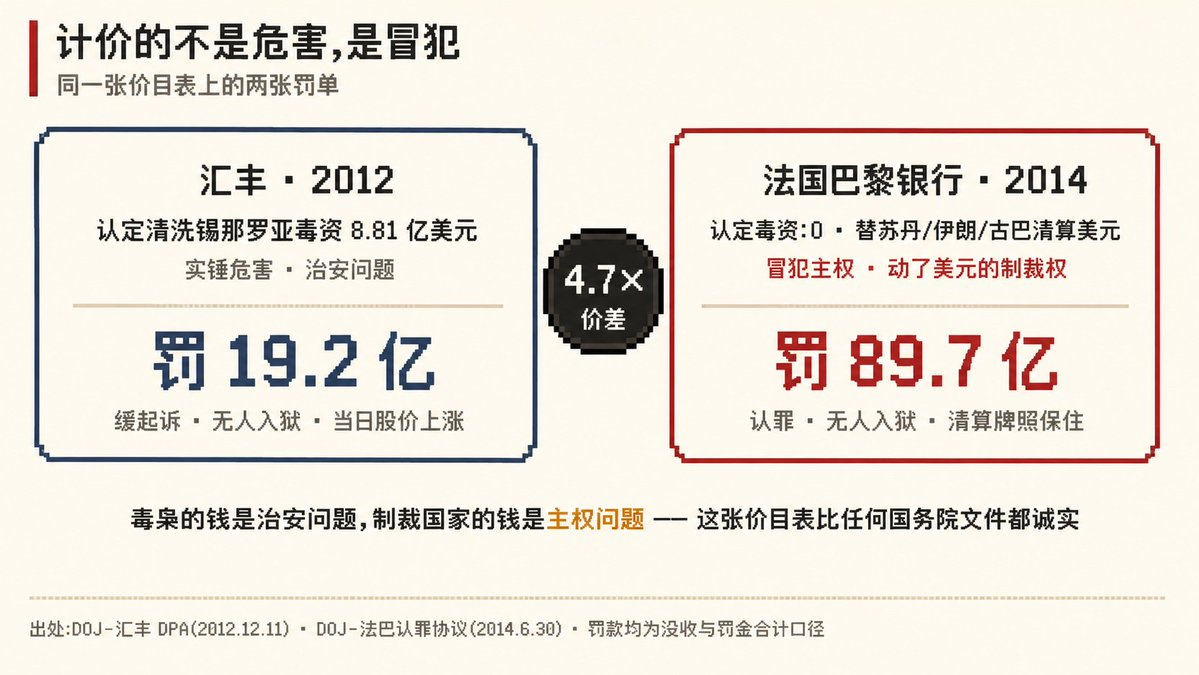
This pricing sheet does not value harm but offense—the drug lord's money is a public safety issue, while money from sanctioned countries is a sovereignty issue. Which is more significant? All in the price list.
But pay attention to the true core of the negotiation: after BNP’s guilty plea, it did not lose its clearing license in New York. Fines can be imposed, but doors cannot be shut.
5. At the same second, in two cities
From 2011 to 2015, in Moscow. Client A buys a basket of Russian blue chips at the Moscow Exchange with rubles; at the same moment, associated client B sells the same basket and the same quantity in London, receiving dollars. The buy and sell mirror each other, with market and economic risks at zero—the only function is converting rubles into offshore dollars.
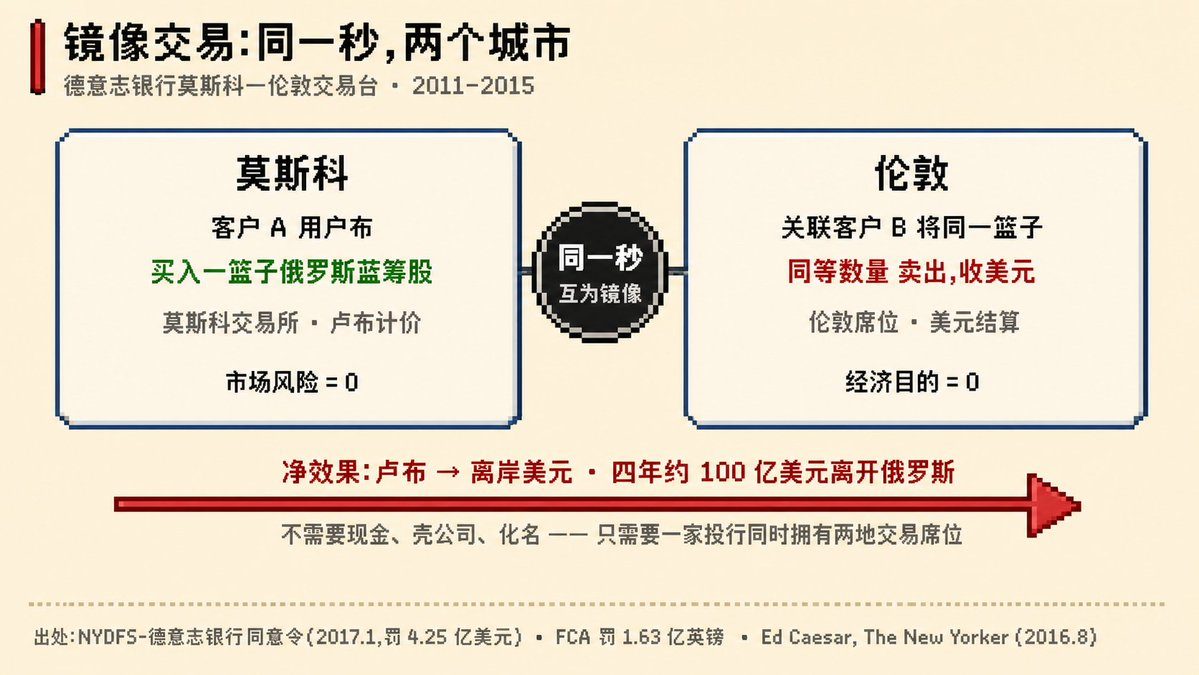 This is called mirror trading. Over four years, about $10 billion left Russia. The executors: Deutsche Bank’s own dual-location trading desks. New York State fined $425 million, the UK FCA fined £163 million, and the evaluation in the consent order was incisive: no economic substance, the sole purpose and effect was the secret transfer of funds.
The most thought-provoking aspect of this case: no cash needed, no shell corporations needed, no pseudonyms needed, nor even lies. The highest form of money laundering looks exactly like normal financial business—because it is normal financial business, just with the steering wheel handed over to another group of people.
6. What a full-service system looks like: 1MDB
If I could only choose one case to explain what systemic money laundering is to outsiders, it would be 1MDB, because its configuration and method are like a movie; no, not even movies would dare to shoot it this way.
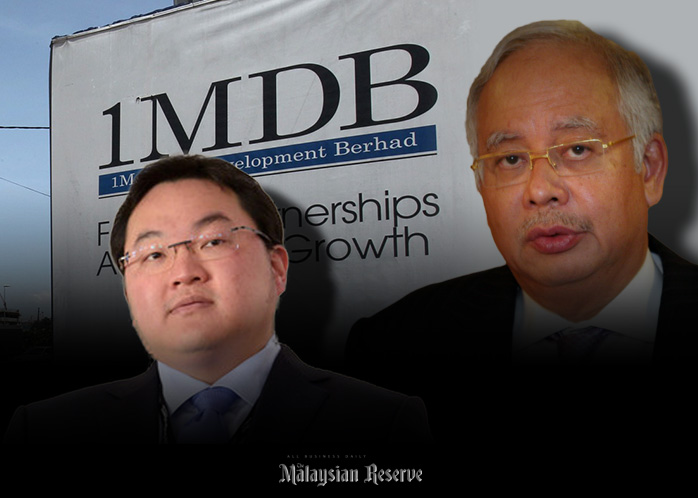 A Malaysian sovereign fund. Goldman Sachs underwrote its bonds three times, financing $6.5 billion, charging about $600 million—ten times the rate of similar underwriting fees. What’s the tenfold premium for? To have the name Goldman Sachs printed on the prospectus. A sovereign fund combined with a top investment bank provides a substitute for due diligence itself: every private bank downstream sees “funds raised from Goldman Sachs underwritten sovereign debt,” and the KYC is automatically cleared.
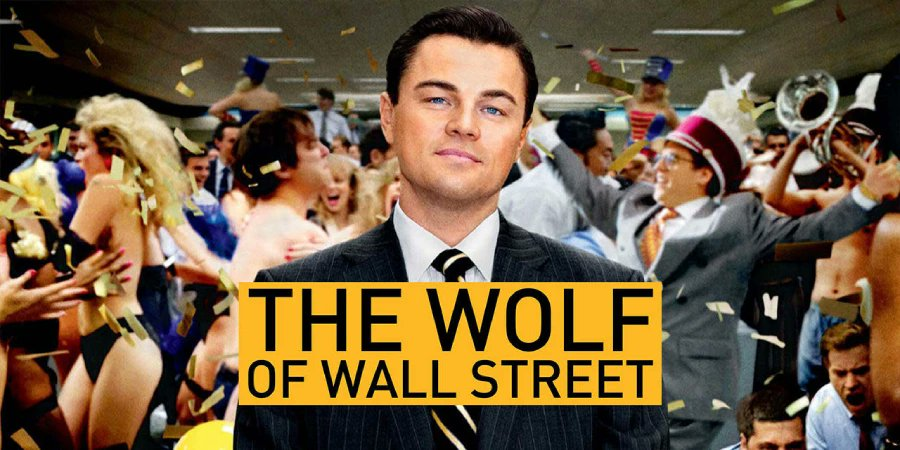
The Department of Justice identified about $4.5 billion as misappropriated. What the money turned into can be found item by item in court documents: a $250 million superyacht, a $27.3 million pink diamond necklace for Mrs. Najib, Monet and Van Gogh stored in a Geneva freeport, and about $100 million for the production of “The Wolf of Wall Street”—a film about financial fraud made using stolen sovereign fund; star Leonardo DiCaprio later returned the Oscar statuette presented by the production company to the Department of Justice.
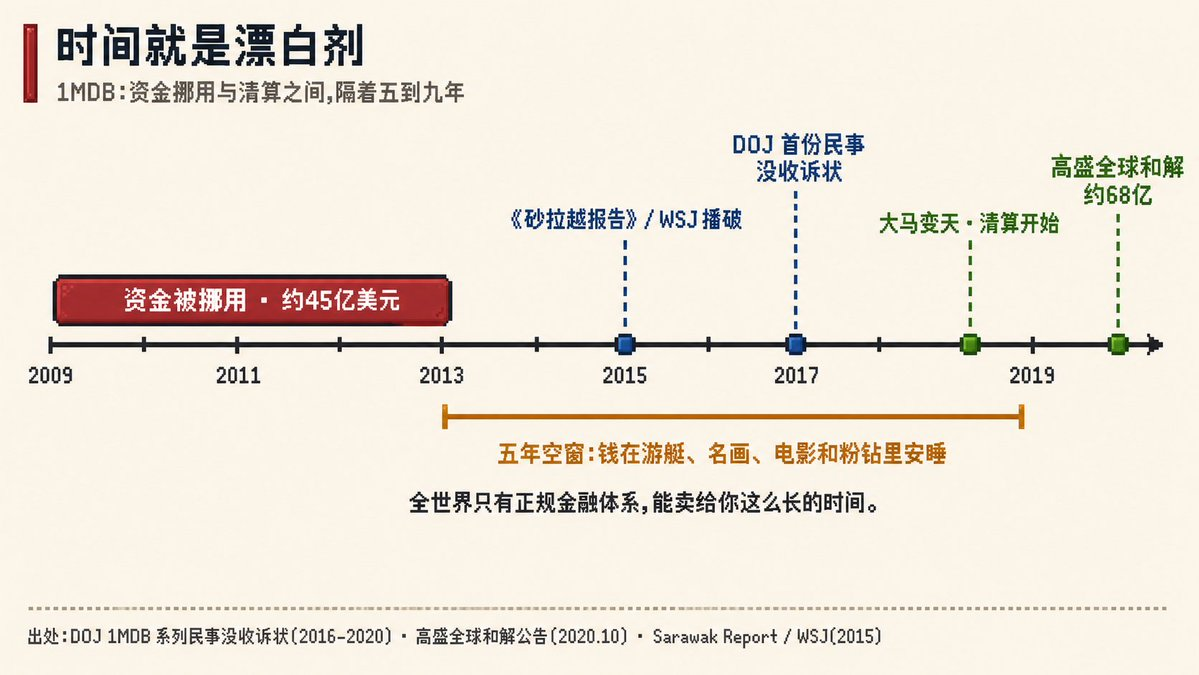
 The clearing list is equally magnificent: Swiss private bank BSI was ordered to dissolve; Singapore, for the first time in over thirty years, directly shut down a commercial bank; Goldman Sachs paid Malaysia $3.9 billion, later reaching a $2.9 billion settlement with the Department of Justice, and former partner Leissner pleaded guilty. However, the money was moved from 2009 to 2013, while the full clearing took place after 2018, with a gap of five to nine years in between.
This is the golden rule of this craft: time itself is a bleach. And there’s only one place in the world that can sell you such long time—within the legitimate financial system. Huiwang cannot provide this, nor can crypto.
7. Fines are not punishment; they are the rates
Now, let’s put the fine slips together:
HSBC $1.92 billion, with over $20 billion in pre-tax profits that year, and no one went to jail;
Wachovia $160 million, about 2% of the annual profit, and no one went to jail;
Standard Chartered $340 million plus $1.1 billion, maintaining its license;
BNP Paribas $8.97 billion, the highest ever, pled guilty, still keeping its license, and no one went to jail;
Deutsche Bank $425 million plus £163 million, and no one went to jail;
Danske Bank $2.06 billion, pled guilty, and U.S. business was already minimal, so it didn’t hurt its main body;
In the 1MDB case, Goldman Sachs globally accounted for about $6.8 billion, one partner wore handcuffs, while the institution remained unharmed.
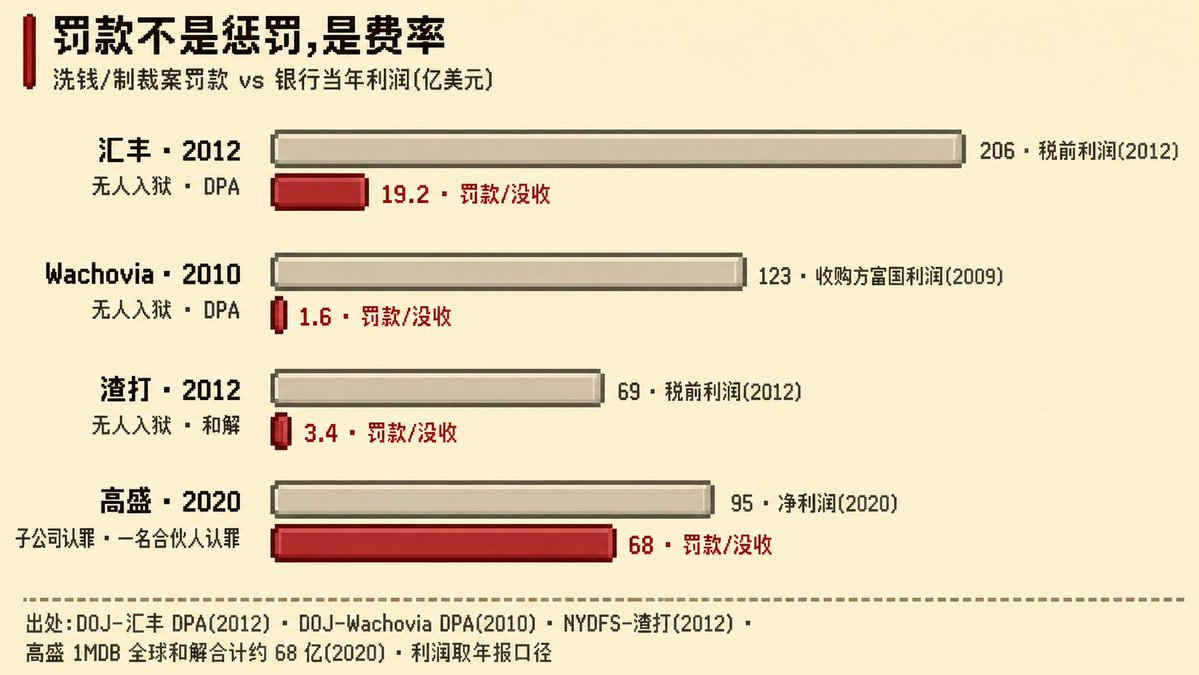 Do you see it? The fines and profits maintain a long-term ratio that is acceptable to both sides. Rather than saying it is punishment, it is more accurate to say it is a rate. Compliance risks have been fully priced as a business cost, with a positive expectation—rational shareholders shouldn’t even demand it go to zero, as that would block too much genuine profitable business from entering the door.
The deferred prosecution agreement is the contractual form of this rate: admit to fines without admitting guilt, invite a monitor into the institution for three to five years, and after the expiration, charges are automatically dropped—HSBC’s monitoring period ended in 2017, and the Department of Justice’s notice cleaned the case of $880 million in drug money records. Who pockets the fines? The U.S. Treasury and New York state. In other words, the true name of this money is: a franchise tax levied by the dollar clearing system on global banking.
In 2022, Switzerland had an exception: Credit Suisse was criminally convicted for laundering money for a Bulgarian cocaine group—this was the first time a domestic major bank in Switzerland was convicted.
Binance was fined $4.3 billion for violating U.S. anti-money laundering laws; one would expect such a big case for Credit Suisse to have an astronomical fine, right? Guess how much the fine was?
— 2 million Swiss francs.
8. What is the Dao: Who has the qualification to say this money is clean
The private banking and agency bank system is not truly selling secrecy—the secretive edge was a selling point last century, and since FATCA and CRS, it has become virtually meaningless. What it sells is the appearance of legitimacy, and it's wholesale.
There are three layers. The first layer, KYC is a ritual, a ticket to entry, not a review: foundation articles, lawyer's opinions, statements of capital sources, each document's function is not to prove the money is clean but to prove that the bank “has reason to believe” the money is clean. With all documents complete, responsibility is legally transferred. That Cayman branch without employees has 50,000 accounts, each in “indexed” status. The second layer, the economics of fines, has been discussed above, so no need to repeat here. The third layer, and the deepest level: within the dollar clearing system, the power to judge whose money is clean itself constitutes a part of monetary hegemony. CHIPS and Fedwire are toll booths, the OFAC list is a blacklist, and deferred prosecution agreements are renewal negotiations.
The judging court and the laundromat are merely two departments within the same company, and they share an elevator.
This is the Dao. The Dao is not a specific technique—pseudonyms, erasure, mirroring, foundations; these are all methods and will become outdated. The Dao is a system holding the authority to declare a sum of money “purified,” and this authority can be purchased, but the counter is set in a VIP room and does not serve walk-ins.
9. What has USDT changed
Some may say, hasn’t USDT already taken the efficiency of underground finance to the sky—or rather, the off-chain transfer of funds is borderless and requires no permission; isn’t this a disruption to the entire system?
Yes, but only part of it is disrupted. The complete money laundering chain consists of three segments: placement, layering, and integration. In plain language: putting dirty money into the system, muddling its source (a real-world mixer), and then returning the money to be spent in a clean identity.
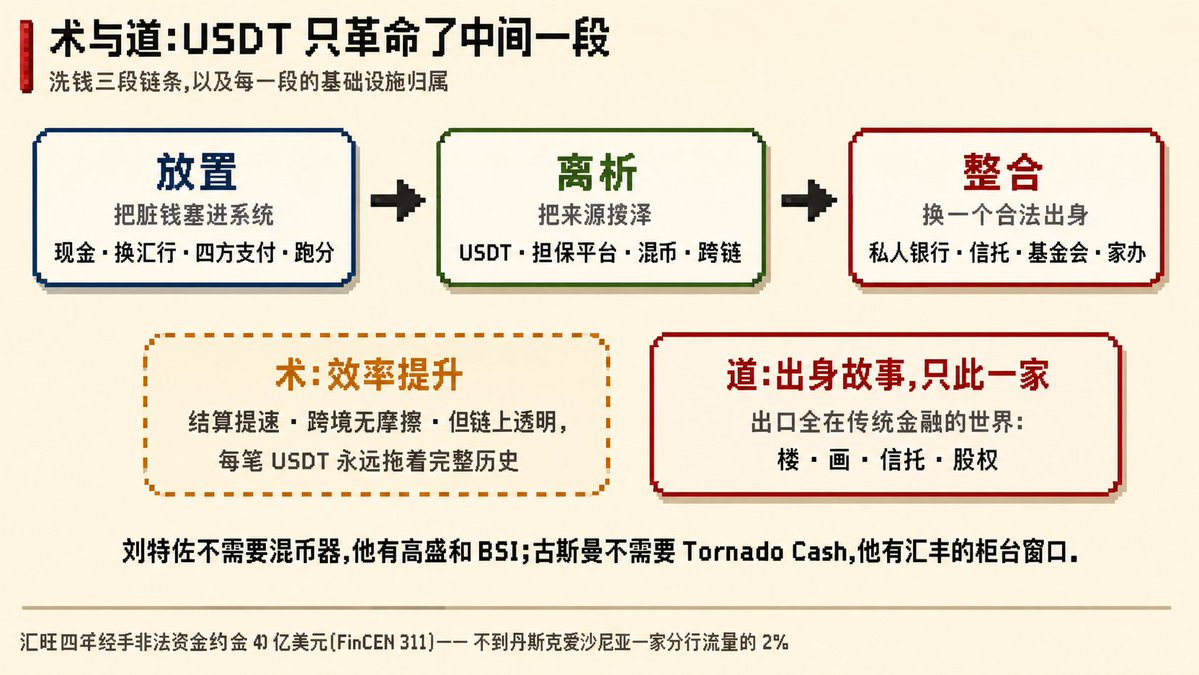 USDT revolutionized the logistics system of the second segment (aka layering). The consolidation of score running speeds up, cross-border does not have to wait for SWIFT, Huiwang established the custodial guarantee for illegal transactions as standardized infrastructure. FinCEN invoked Section 311 to separate Huiwang from the dollar system at an estimated scale: it handled at least $4 billion in illegal funds over four years. In the crypto realm, that's astronomical; compared to the cases discussed in this article, it's less than 2% of the flow of just one Danske Bank branch.
Moreover, pay attention to two things. First, the chain is transparent. Every single USDT carries its complete history, and the label library gets thicker every year; you can mix coins, but the act of mixing itself is a mark, equivalent to stamping “I'm guilty” on the money. Technical anonymity and legal cleanliness are two different things, and on the chain, the former may actually be more difficult to achieve. Second, and crucially: integration. A suspiciously sourced USDT ultimately has to morph into a building in Manhattan, a Monet in a freeport, or a trust fund for children—each exit is set in traditional financial territories, and every exit must answer the same question: what is the origin story of this money?
There’s no origin story available on the chain. The origin story can only be sold in that VIP room.
So you see: Jho Low's $4.5 billion traveled around the world without needing a mixer because he had Goldman Sachs and BSI behind him; Guzman didn’t need Tornado Cash because he had HSBC’s counter; Sudan’s oil dollars didn’t need cross-chain bridges because they had BNP Paribas’s satellite banks. The more primitive the player’s tools, the more it signifies that they can’t afford the real services. Underground banks and score running fleets are essentially substitutes for those who cannot afford the VIP room’s ticket—crypto has upgraded the performance of the substitutes a full generation, but no matter how fast the substitutes become, they ultimately cannot rise to the occasion.
Some might ask, will stablecoins someday, in their own way, grow from techniques to Dao?
免责声明:本文章仅代表作者个人观点,不代表本平台的立场和观点。本文章仅供信息分享,不构成对任何人的任何投资建议。用户与作者之间的任何争议,与本平台无关。如网页中刊载的文章或图片涉及侵权,请提供相关的权利证明和身份证明发送邮件到support@aicoin.com,本平台相关工作人员将会进行核查。


