Author: Flora, CryptoPulse Labs
A highly anticipated semiconductor IPO is about to take place.
Recently, Changxin Memory Technologies, the world's fourth largest DRAM manufacturer, announced plans to go public on the Shanghai Stock Exchange on July 27, with an aim to raise 29.5 billion yuan. If successful, this will not only become the largest IPO in Asia in 2026, but also the largest semiconductor IPO in the A-share market after SMIC's listing on the STAR Market.
For the capital market, this is a heavyweight financing. For China's semiconductor industry, it signifies a new development stage for domestic memory chips. In the AI era, computing power determines the limit, while storage determines efficiency.
As the global wave of artificial intelligence continues, the importance of DRAM is increasing, and Changxin Memory is becoming one of the most watched companies in China's high-end manufacturing sector.
1. How did a company established for less than ten years become the world's fourth largest DRAM manufacturer?
If we were to select the fastest-growing company in China's semiconductor industry in the past decade, Changxin Memory would undoubtedly hold a place.
Founded in 2016, Changxin Memory focuses on the research, design, and manufacturing of DRAM (Dynamic Random Access Memory). DRAM is an essential core storage chip in computers, servers, smartphones, data centers, automotive electronics, and AI servers, known as the "data warehouse" of the modern digital economy.
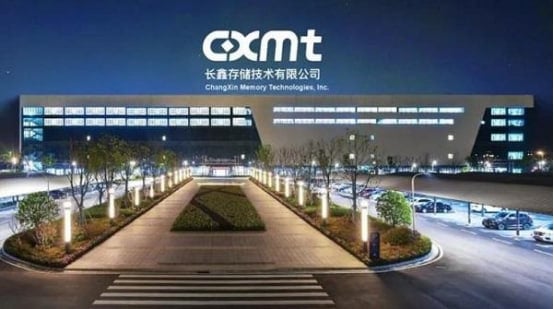 Unlike processors that are responsible for calculations, DRAM undertakes the temporary storage of data. Each time the CPU and GPU complete a calculation, they need to frequently access data in memory; therefore, memory performance directly impacts the overall system's operational efficiency.
For over twenty years, the global DRAM market has been almost entirely monopolized by three companies: Samsung Electronics, SK Hynix, and Micron, with a long-standing industry concentration exceeding 90%, known as the "Three Giants Era."
The reason is simple—DRAM is one of the tracks in the semiconductor industry with the highest technological threshold and the largest capital investment.
Building an advanced DRAM wafer fab often requires an investment of several hundred million yuan. The research and development cycle for a generation of process nodes typically takes several years. Additionally, substantial R&D expenses must be continuously invested to optimize processes, improve yields, and reduce power consumption. Consequently, very few new entrants can truly establish a foothold.
However, Changxin Memory achieved rapid growth in less than ten years.
According to industry statistics, by 2025, Changxin Memory's global DRAM market share has reached approximately 7.7%, making it the world's fourth largest DRAM manufacturer after Samsung, SK Hynix, and Micron, and one of the few companies capable of achieving large-scale mass production of DRAM.
This achievement not only signifies the company's growth but also marks China's first real entry into the global mainstream DRAM competitive landscape.
2. Behind the 29.5 billion IPO: Why is capital betting on Changxin Memory?
This planned fundraising of 29.5 billion yuan is not merely a financing; it is a strategic investment aimed at the next decade.
There is a classic saying in the semiconductor industry: "Without capital, there is no advanced process." For DRAM companies, funding almost determines the speed of their development.
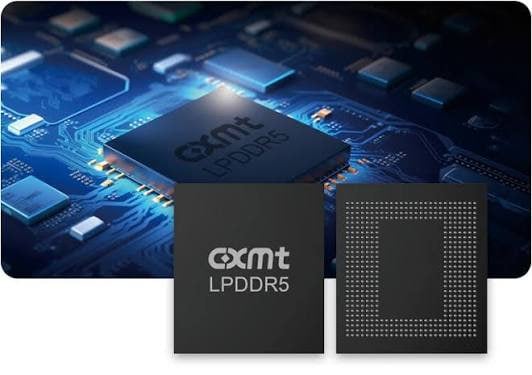 On one hand, advanced production lines require continuous expansion. With the development of AI servers, high-performance computing, cloud computing, and smart vehicles, global DRAM demand is constantly increasing. Without ongoing expansions of wafer fabs, it is impossible to meet market demand or dilute production costs.
On the other hand, new technology research and development requires long-term investment. From DDR4 to DDR5, and then to LPDDR, HBM, and other products, each technology upgrade means new R&D investments. Especially in the AI era, high bandwidth memory (HBM) has become an essential supporting product for GPUs, and market demand is rapidly growing.
At the same time, developing advanced processes is becoming increasingly expensive. From process optimization, equipment procurement to material validation, each link requires continuous investment of substantial funds.
As a result, the capital market has become an important financing channel for semiconductor companies.
Changxin Memory's IPO funds are expected to focus on the construction of advanced production lines, technology research and development, process upgrades, and capacity expansion. This means the company will further enhance its product competitiveness and manufacturing capabilities in the coming years.
For investors, they value not only Changxin's current profitability but also the long-term growth prospects of the storage industry in the AI era.
In recent years, with the rapid development of large model training, inference computing, and cloud services, AI server configurations are continuously upgrading. A high-end AI server not only requires a large number of GPUs but also needs to be equipped with memory systems of larger capacity and higher bandwidth.
In other words, every upgrade in AI computing power is inseparable from the simultaneous upgrade of storage chips. This is also a significant reason why global capital continues to focus on the DRAM industry.
3. The AI era reshapes the storage industry, and Changxin Memory embraces new historical opportunities
If the past decade was primarily driven by the smartphone and PC markets, in the next ten years, AI will become the biggest growth engine.
Emerging industries such as generative AI, large model training, autonomous driving, robotics, and edge computing require larger memory capacity and faster data read and write speeds.
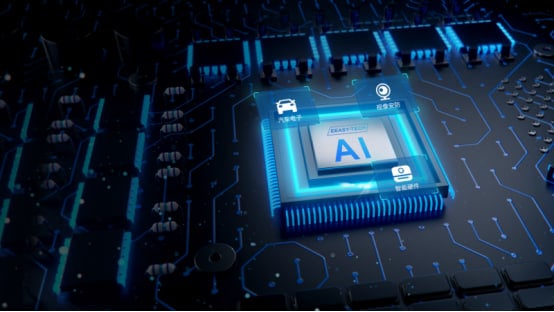
Especially in AI servers, a high-performance GPU often requires hundreds of GB or even TB of high-speed memory to ensure data can be transmitted in a timely manner; otherwise, the GPU's computing power cannot be fully utilized.
Therefore, it is widely believed in the industry that future AI infrastructure will include not only GPUs but also DRAM, HBM, and key technologies such as high-speed interconnects.
With global AI investment continuing to rise, the storage chip industry has entered a new prosperity cycle.
At the same time, the demand in the Chinese market for self-controlled, high-end manufacturing continues to grow.
In recent years, from wafer manufacturing, EDA software, semiconductor equipment to key materials, China's semiconductor industry chain has been continuously improved, with storage chips being one of the most important yet challenging fields.
The development of Changxin Memory not only fills the gap of domestic high-end DRAM but also promotes the mutual growth of domestic industry chain upstream and downstream.
As the company continues to expand its production capacity, its driving effect on domestic equipment, materials, components, and packaging testing companies will also be further enhanced, forming a more complete industrial ecosystem.
From the perspective of the capital market, Changxin Memory's listing is expected to become a new ballast for the semiconductor sector.
Following SMIC, the A-share market finally welcomes another large semiconductor company with global competitiveness. This not only helps enhance the voice of Chinese tech companies in the capital market but also further strengthens investor confidence in the domestic high-end manufacturing industry.
Of course, alongside opportunities there are still challenges.
The global DRAM market has clear cyclicality with significant price fluctuations; international leading companies still have strong advantages in advanced processes, HBM products, and customer resources; and the accelerating pace of technology iteration also means R&D investments will continue to grow.
In the future, Changxin Memory not only needs to continuously expand its market share but also needs to break through in advanced processes, product innovation, and globalization to truly grow into a world-class storage chip enterprise.
Conclusion
Changxin Memory's push for a 29.5 billion IPO appears, on the surface, to be a large financing in the capital market, but in reality, it reflects the important process of China's semiconductor industry moving towards high-end, autonomy, and globalization.
In the past, China relied heavily on imported memory chips. Now, domestic companies have grown into the world's fourth largest DRAM manufacturer and are about to enter the capital market, starting a new development stage. This not only signifies that the domestic storage industry has transformed from a follower to a competitor but also indicates that China's semiconductor industry is moving up the global value chain.
免责声明:本文章仅代表作者个人观点,不代表本平台的立场和观点。本文章仅供信息分享,不构成对任何人的任何投资建议。用户与作者之间的任何争议,与本平台无关。如网页中刊载的文章或图片涉及侵权,请提供相关的权利证明和身份证明发送邮件到support@aicoin.com,本平台相关工作人员将会进行核查。


