Author: KK.aWSB
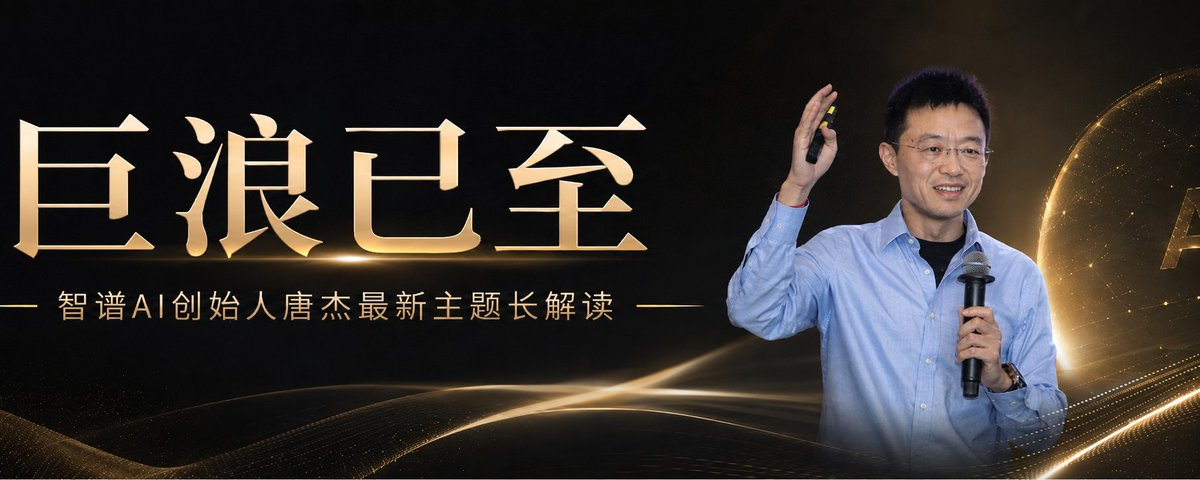
On July 11, Tang Jie, founder of Zhipu AI, sent an internal letter to all employees titled "The Giant Waves Have Arrived."
The letter itself is not long, but the timing of its release is extremely subtle—just a few days before it was issued, Zhipu had just experienced a significant stock price fluctuation.
Half a year ago, on January 8 of this year, Zhipu debuted on the Hong Kong Stock Exchange with an issue price of 116.2 Hong Kong dollars, becoming the "first stock of large models." Subsequently, as the flagship model continued to iterate, the stock price soared, peaking at 2980 Hong Kong dollars—an increase of over 24 times compared to the issue price, with a market capitalization at one point exceeding 1.3 trillion Hong Kong dollars, surpassing Xiaomi and nearing Baidu’s three times.
However, shortly before and after the release of this letter, following the lifting of the initial batch of lock-up shares, the stock price dropped by more than 19%, and the market began to intensively discuss a question: Is Zhipu actually a bubble? Can its valuation hold?
Tang Jie did not directly respond to the stock price, nor did he address the pressure of the lock-up release or the valuation controversy. He chose to take this moment to communicate in a letter something that almost all investors had not anticipated: Being listed is not the endpoint; the company will not expend resources on short-term monetization in the next two years, but will continue to bet on foundational research directions that lack immediate returns and require significant funding.
In this article, I will fully outline the core content of this letter, along with the market background that is crucial for understanding this matter but was not mentioned in the letter, and finally provide my independent interpretation.
Part One: What Does This Letter Actually Say
The letter is divided into five parts, which I will summarize one by one.
1. Who are we: A set of "counterintuitive" methodologies
Tang Jie begins not with products, but with Zhipu’s underlying methodology—to summarize in his own words, it involves three words: "essence, counterintuitive, focus": only by thinking deeply enough can one dare to make sufficiently unconventional choices; once chosen, one must be able to persist long enough.
He cited three examples that connect Zhipu's key decisions over the past twenty years:
In 2006, the predecessor team of Zhipu was operating a single machine running an academic search system. Though it seemed unremarkable, they judged that behind it was a ten-year worthwhile question of "exploring the mechanism of discipline evolution."
From 2021 to 2022, when "making machines think like humans" still seemed like a fantasy to most, the team redirected resources to bet on trillion-parameter scales, producing GLM-130B—this point in time was a full year and a half earlier than when ChatGPT exploded globally.
On January 8, 2026, the day Zhipu rang the bell for its listing on the Hong Kong Stock Exchange, Tang Jie stated that the team did not celebrate it as an endpoint but as a brand new starting point—when others celebrated ringing the bell, they chose to "reset" and return to fundamental model research.
These three examples collectively point to one attitude: short-term commercial interests and industry fads are, in Tang Jie's view, merely "scenery along the way," while the true endpoint is AGI (Artificial General Intelligence).
2. How to understand this era: The "ceiling" of intelligence is being rewritten
The second part represents the core judgment of the entire letter, which Tang Jie states very plainly: The greatest lesson from the past twenty years is that real business opportunities never hide within small adjustments to products and business models, but rather in the moment when the "ceiling of intelligent capabilities" itself is raised.
He describes the evolution of AI capabilities as a clear path—from "perceptual intelligence" (being able to see and hear) to "cognitive intelligence" (being able to understand and reason), ultimately pointing toward AGI. He also provided a stringent definition of AGI: it is not the intelligence of a single genius but the total wisdom of all humanity, capable of creating original knowledge at a level equivalent to relativity, that counts as truly reaching the summit.
On the road to this goal, he believes there are three mountains that must be overcome:
The first mountain, long-term task capability. Making AI no longer just "answer questions instantly," but able to plan and execute complex projects spanning weeks, months, or even years—like top security experts tirelessly continuing to find vulnerabilities in software.
The second mountain, fully autonomous intelligent systems. Upgrading from the past discussion of "one-person companies" (where one person plus AI can perform all tasks of a company) to "unmanned companies"—a group of intelligent agents, each with specialized abilities, capable of collaborating and autonomously operating 24/7. He particularly mentioned that challenges once thought to require a paradigm shift—memory, continuous learning, and self-evaluation—are being progressively tackled.
The third mountain, the most difficult and imaginative of all: self-evolution. AI begins to train AI—writing code, cleaning and synthesizing data, and training itself. Tang Jie believes that, although this will consume more computing power, it saves the most valuable resources: human energy and time.
He also mentioned an important external reference—a report from Google DeepMind estimates that even if the capabilities of a single model remain at human level, if the number of AGI instances can be increased tenfold each year, theoretically, one can reach one hundred million instances within five years. These instances would share underlying intelligence and collaborate with hundredfold efficiency, replicating experiences at nearly zero cost—on a group level, this equates to superintelligence (ASI).
His conclusion is that this wave will penetrate the entire technology stack from the top down—operating systems may be rewritten as "LLM OS," the Von Neumann architecture itself may face challenges, and no industry—finance, law, e-commerce, etc.—will escape.
3. Strategic direction: "High-reaching" plan, four core engines
After clarifying the judgment of the era, Tang Jie laid out Zhipu's specific strategies for the next two years, calling it the "high-reaching" plan—eschewing short-term application monetization to directly target the next high ground of AGI, making significant strategic investments in four core areas:
The first engine: Long-term tasks. To develop a new generation of memory architecture that allows models to learn, act, and accumulate knowledge throughout the entire lifecycle of a project. He provided a vivid example—breaking down a grand goal such as "designing a new anticancer drug molecule" into thousands of independently executable subtasks.
The second engine: Autonomous intelligent systems. Upgrading from "intelligent assistants" to "digital employees," with the goal of building a society of hundreds or thousands of intelligent agents, each possessing independent specialized personalities and skills, allowing them to debate, collaborate, review code, and allocate resources autonomously.
The third engine: Complete self-training. In the context of dwindling high-quality human data, transforming computing power into fuel for evolution—constructing synthetic data factories that generate new knowledge from zero through competitive interactions between AI and AI, and enabling systems to reconstruct their own code within secure sandboxes.
The fourth engine, which Tang Jie particularly emphasized and elaborated on: Extreme security governance. His principle is that the stronger AI capabilities are, the stricter the security constraints must be. Zhipu rejects "patchwork" security solutions and hopes to encode human ethics, social norms, and national laws directly into the model’s value functions as axioms. He revealed plans to invest tens of billions in tackling "mechanical interpretability" research—essentially figuring out the neural logic behind every model decision to transform black-box systems into transparent, interpretable systems. Additionally, he stated that he would actively participate in international AI governance to prevent misuse of technology.
In this section, Tang Jie specifically noted a judgment: when the leading overseas models are delayed in their public release due to safety concerns, and when the leaders of those companies openly warn that the far-reaching impacts of AI will reshape the global power structure, the development of superintelligence and research on "super-alignment" must advance in parallel—safety is no longer an optional component of technology but a prerequisite for the technology to exist.
4. Open ecology: One hand reaches high, the other lays the road
In the fourth part, Tang Jie speaks about the open-source strategy, clearly positioning it alongside the "high-reaching" plan as two sides of the same strategy.
The justification he provided is that true safety is not built through technological closure and barriers but requires extensive participation, sharing, co-construction, and public oversight.
In product terms, this refers to Zhipu's recently released GLM-5.2—currently the company’s strongest open-source model, supporting truly usable millions of contexts, maintaining its lead in long-term task capabilities, and is fully open-sourced under the most lenient MIT license: anyone can download, deploy, and commercialize without distinction of user type or organizational nature.
His original logical reasoning is: cutting-edge intelligence should not belong exclusively to a few individuals, nor should it be subjects to immediate revocation by a small group of rule-makers. It should be open, usable, and buildable, serving every developer. One hand reaches high, challenging the limits of intelligence; the other hand lays the road, making the forefront capabilities as open and equitable as possible—the heights reached belong to all humanity, and the roads made belong to everyone.
5. Conclusion: Turning mountains into roads
At the end of the letter, Tang Jie addresses a question that almost everyone would ask: Why, after being listed, is there a need to continue investing core resources toward the most uncertain directions?
His answer is rooted in a belief: "Those who truly reach the summit will turn mountains into roads." He reflected on Zhipu's early participation in the Wudao large-model project, where that cognition had once coalesced into a shared belief among hundreds of scientists, later transformed through Zhipu's industrial investments and ecosystem into a foundation that the next generation of entrepreneurs could leverage to take off. He hoped to build this road even higher and wider today—high enough to safeguard safety boundaries, and wide enough to allow humanity to explore more unknowns; wide enough for every developer and every team to find a pathway upward.
At the end of the letter, he summarized with a weighty statement: "Not reaching the summit is failure." He emphasized that this pursuit of summit height belongs to all humanity.
Part Two: Background Not Mentioned in the Letter, But You Must Know
If one only looks at the letter itself, it is easy to see it as a purely inspiring strategic declaration. However, when placed back into the real market context, it reveals more layers.
First, the timing of this letter coincides closely with a real stock price crisis. Zhipu's stock price rose from the issue price of 116.2 Hong Kong dollars to a maximum of 2980 Hong Kong dollars, with a 24-fold increase behind it, reflecting the market's extreme optimism about the narrative of "the next OpenAI." However, following the lifting of lock-up shares, the stock price dropped by more than 19%, indicating that this optimism was being tested by reality at that moment.
Second, the strategic direction of this letter did not appear out of thin air. Tang Jie’s bet on Coding capabilities traces back to early 2025 after the release of DeepSeek R1, when he judged that "the exploration of the dialogue paradigm has basically peaked." Thus, he redirected resources toward programming and reasoning capabilities—this decision's direct result was that Zhipu's MaaS platform's annualized revenue (ARR) has grown by 60 times over the past year. GLM-5.2 has already entered the top three tiers of global authoritative evaluation rankings. These specific commercialization outcomes are precisely where the confidence for this letter's declaration of "not pursuing short-term commercialization" emanates from.
Third, a lateral comparison shows that this is not just Zhipu's choice. Around the same time, OpenAI continues to roll out various Agent products, Anthropic is focusing on coding capabilities like Claude Code, Google is advancing the Gemini Agent, and Meta is comprehensively laying out personal AI assistants. Top global AI companies almost uniformly regard "autonomous intelligent agents" as the next battleground—the "unmanned company" (NPC) concept proposed by Tang Jie in the letter fundamentally competes for the same thing: the exclusive interaction interface between humans and the digital world in the future.
Part Three: My Interpretation
Putting all this information together, I believe the real issue this letter wants to solve is not "what Zhipu is doing," but a sharper question: After obtaining real cash post-listing, why continue to invest huge resources in directions where immediate commercial returns are not visible?
This, in essence, is a redefinition of "valuation anchors."
Tang Jie’s answer, whose core logic essentially adheres to a straightforward principle in financial markets: The value of a high-growth tech company today is never determined by how much profit it makes this quarter, but rather by whether the capital market believes it can become the next platform-level company of the era.
If the market believes this story, then all massive R&D investments today can be reconsidered as "reasonable costs for the future"; if the market does not believe, then even if current revenues are brilliant, they may not support the valuation of a trillion-dollar company.
This letter is essentially an attempt to persuade the market again during the window of lock-up pressure and stock price volatility: please continue to believe in this grand narrative about AGI instead of viewing us through the short-term perspective of quarterly financial reports.
A point of tension worth pondering: Is "high-reaching" and "open" really not contradictory?
The letter juxtaposes "high-reaching" (overcoming cutting-edge technology) with "openness" (opening up the strongest current model for free), reasoning that "true safety cannot be built through closure."
This logic holds, but deserves a deeper consideration: While Zhipu argues that frontier intelligence "should not be monopolized by a few individuals, nor should it have its permissions revoked at any time by a few rule-makers," it's simultaneously racing toward a goal that—if achieved—things like "complete self-training" and "autonomous intelligent social" would essentially make Zhipu itself the minority that possesses the strongest technology and ability to define rules.
I believe a more realistic interpretation is that: "High-reaching" and "openness" are indeed two sides of the same coin, but these two sides correspond to two different monetization methods, rather than simply idealism. Opening up the current generation of models leads to developer ecosystems, technical reputation, and market share—this is a "trading present for the future" approach: the more you use it, the more indispensable this ecosystem becomes, and when Zhipu establishes a comparative advantage in cutting-edge areas like long-term tasks and autonomous agents, these ecosystem users will become its most natural commercialization foundation.
What this letter truly references is not stock price but "the credibility of the narrative."
I think the key point to understanding this letter is: it is not written for ordinary users; fundamentally, it is a "confirmation of belief" letter addressed to the capital market and the core team.
To the capital market, it says: short-term stock price fluctuations are not important; what matters is our judgment on the path toward AGI and the historical track record of our past "counterintuitive" choices ultimately being validated—the track record of ten years of dormancy in 2006, rushing ahead of ChatGPT by a year and a half in 2021, and the exponential 60 times growth due to the pivot to Coding after DeepSeek—this track record is the true collateral behind this "continued spending" commitment.
To the internal team, it says: being listed is not the endpoint; the company's self-identity is not just "a company that produces great products," but as "builders of the next generation of intelligent infrastructure"—this is a more grandiose narrative framework that can also retain top talent.
An unresolved question remains.
This letter talks about grand aspirations and belief, but it does not, nor can it, address several real issues that determine success or failure: Can technological leadership be sustained? Can the massive R&D investments eventually translate into a stable, sustainable business loop? Can the open ecology and self-research chip layout truly form a competitive barrier that others cannot replicate?
These issues are deliberately omitted in the letter, not because they are unimportant, but because at this stage, "clarifying a sufficiently credible direction" is more effective than "precisely answering every realistic detail" for stabilizing market confidence. As for whether this direction can ultimately deliver, it will take at least the next two years of genuine technological breakthroughs and commercialization data to answer, not merely through this letter.
Finally
A more than two-thousand-word internal letter superficially discusses AGI, long-term tasks, intelligent agents, and security governance, but its real battlefield is, in fact, "how to persuade everyone to believe in a sufficiently grand future during a round of stock price fluctuations."
This itself typifies the current era: when a company's valuation anchor shifts from "how much it earns today" to "whether it can define an entire era," the most important competitive edge, apart from technology itself, is the ability to tell this story and the proven credit records of those past "counterintuitive" choices.
Zhipu this time bets not only on the technical direction but also on whether this narrative can sustain itself until the next real technological breakthrough arrives.
Tang Jie sent this letter, with the core message being: do not pursue short-term monetization, continue to invest in AGI.
Four directions:
Long-term tasks—AI transforming from "instant answers" to being able to handle months of work
Autonomous agents—from "one-person companies" to "unmanned companies," with hundreds and thousands of AIs collaborating
Self-training—AI writing code, creating data, and training itself
Extreme security governance—invest tens of billions in "interpretability" to make black-box models transparent
免责声明:本文章仅代表作者个人观点,不代表本平台的立场和观点。本文章仅供信息分享,不构成对任何人的任何投资建议。用户与作者之间的任何争议,与本平台无关。如网页中刊载的文章或图片涉及侵权,请提供相关的权利证明和身份证明发送邮件到support@aicoin.com,本平台相关工作人员将会进行核查。


