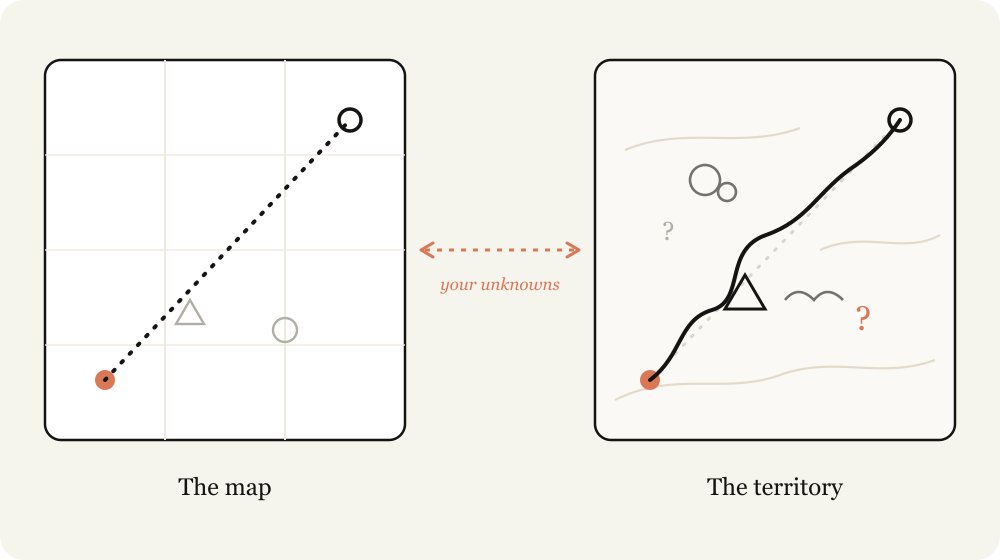
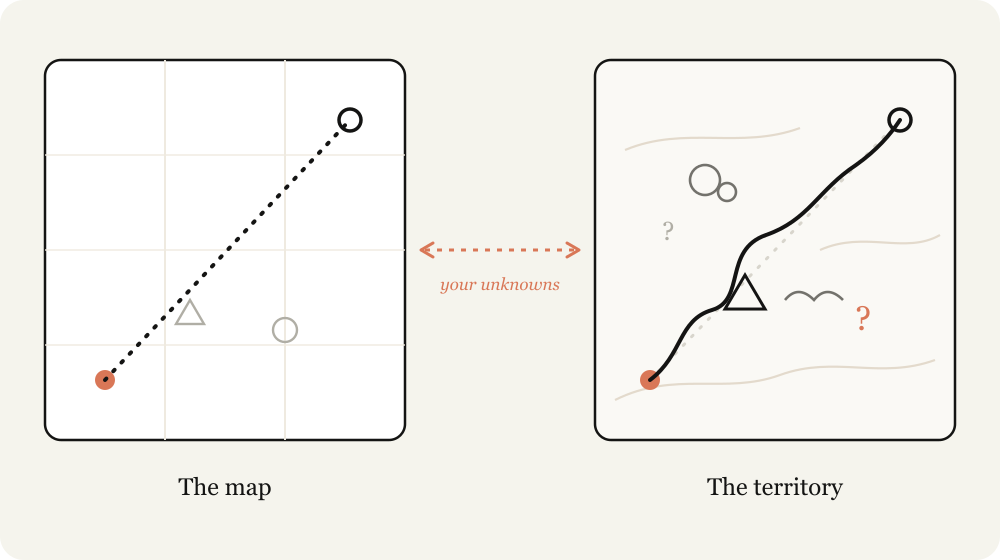
On July 6, 2026, Thariq Shihipar, an engineer of Claude Code at Anthropic, publicly released "A Field Guide to Claude Fable: Finding Your Unknowns." This is not yet another document on prompt techniques. Just a month earlier, Thariq used Claude Code to edit Fable 5 from scratch, during which he had the model scan for its "unknown unknowns," learning color grading knowledge along the way. This methodology marks a shift in the core contradictions of AI collaboration: when Fable 5 cuts system prompts by 80% and the model's IQ is no longer a bottleneck, the ceiling on output quality becomes the developer's ability to clarify the unknowns themselves.
Claude Fable Field Guide: Discovering Your Unknowns | Anthropic Official Blog
Maps Are Not Territories: The New Bottleneck After Cutting 80% of Prompts
On June 9, 2026, Anthropic officially released Claude Fable 5 and Mythos 5 models. Fable 5 is a widely released version with a safety classifier, while Mythos 5 is an invited version with some restrictions lifted. The field guide released in July is essentially an official confirmation of the workflow in the Fable 5 era.
In the traditional AI response model, developers are used to thickening the "map." Faced with a not-smart enough model, developers need to pile detailed Few-shot examples and strict constraints into system prompts. The original system prompts of Claude Code once reached 65k tokens. After Fable 5 launched, Anthropic directly reduced the system prompts by 80%, shifting the strategy from "giving constraints" to "providing context."
This reduction is not arbitrary compression but a direct response to the model's capability leap. Among the 65k tokens of system prompts, there were many hard rules regarding coding style, file operation specifications, and safety boundaries. These rules were necessary bottom-line mechanisms in the era of weak models to prevent the model from drifting off-course in long conversations. However, Fable 5's reasoning capability is strong enough that it can autonomously determine the correct operational path without these hard constraints. Anthropic engineers found in internal tests that retaining too many hard rules actually interfered with Fable 5's decision-making. The model would bypass better solutions to comply with a certain rule or hesitate when conflicts exist between rules.
This shift is based on a harsh fact: Fable 5 is smart enough that once the developer's "map" does not mark the "unknown," it will run wildly in the wrong direction with extreme efficiency. In the weak model era, developers desperately thickened prompts to serve as a safety net to prevent misunderstandings by the model. But in the Fable 5 era, overly thick constraints have become shackles. If the system prompts set too many rigid rules, Fable 5 may bypass the actual goals to comply with those rules. Anthropic's act of reducing prompts effectively liberates the model, allowing it to rely on context and its reasoning capabilities rather than mechanical rule matching.
Traditional models often "fill in" actions based on industry best practices when confronted with ambiguous instructions or directly reject with an error. This has led developers to often find that AI introduced hidden architectural biases after code merges. A typical scenario is when a developer describes a user authentication module's needs in a prompt but does not specify the password encryption algorithm clearly. Traditional models default to using common but insecure algorithms like MD5 or SHA1 because they have seen a lot of such implementations in training data. Developers only discover this problem during security audits. Fable 5 changes this logic. The bottleneck for output quality shifts from the model's reasoning capability to the developer's expertise and ability to define the unknown. If the developer cannot clearly define the boundaries and potential risks of a task, Fable 5's powerful reasoning ability actually accelerates the generation of erroneous code.
| Comparison Dimension | Traditional AI Response Model (such as Opus 4.8 and earlier) | Claude Fable 5 Paradigm (Combined with Field Guide) |
|---|---|---|
| Prompt Strategy | Stack thickness, provide detailed Few-shot examples and strict constraints (System Prompt up to 65k Tokens) | Simplify, reduce 80% constraints, provide starting context, liberate the model |
| When Encountering Ambiguity | Fill in execution based on industry best practices or directly report an error | Proactively ask questions, require humans to clarify, transform Unknown Unknowns into Known Unknowns |
| Human-Machine Roles | Humans are "contractors/architects," AI is "execution workers" | Humans are "domain experts/thought partners," AI is a "Socratic questioner" and "prototype generator" |
| Acceptance Method | Humans review code diffs | AI generates reports and quizzes humans, ensuring that humans understand the black box operations |
| Core Bottleneck | The model's reasoning capability and context memory | The developer's own domain expertise and ability to define the unknown |
Four Categories of Unknowns Matrix: How AI Questions Developers
The core of the field guide is to categorize task problems into four types: known knowns, known unknowns, unknown knowns, and unknown unknowns. Combined with Claude Code, these four types of unknowns map to specific prompt patterns, covering the entire lifecycle from pre-implementation to post-implementation.
Known knowns correspond to implementation plans. In large codebase restructuring, developers clearly know which modules need modification but are unsure about the order of modifications. Developers can ask the AI to review the most likely changing data models first and mechanical restructuring later. This ensures that the AI aligns with developers on core architecture before execution, avoiding the generation of extensive upper-level business code when the underlying interfaces are still undecided. In a migration of a Stripe-level codebase containing 50 million lines of Ruby code, this sorting strategy can significantly reduce rework. If the AI first completes rewriting the upper-level business logic and then underlying data model changes occur, all upper-level code will need to be rewritten.
Known unknowns correspond to interviews. This is one of the most disruptive modes of Fable 5. AI is no longer passively waiting for instructions but actively interviewing developers. When designing a high-concurrency API interface, a developer may clearly handle numerous requests but has no conclusion on specific throttling strategies or caching consistency plans. Developers can ask the AI, "Prioritize questions where my answers will change the architecture design." The AI may ask follow-up questions about data consistency requirements, peak QPS expectations, or degradation strategies. Through this questioning, the AI forces developers to visualize fuzzy ideas.
In a microservices architecture design scenario, a developer tells Fable 5 that an order service needs to be implemented. Fable 5 will not directly start writing code but will ask: Does order status change need cross-service transaction guarantees? If so, will it use Saga pattern or two-phase commit? Is inventory deduction pre-deducted at order creation or real deducted upon successful payment? Each of these questions directly alters the final architectural design. As developers respond to these questions, they are, in fact, completing their own architectural design.
Unknown knowns correspond to brainstorming and prototyping. For aesthetic or intuitive issues where "seeing is knowing what you want," developers can ask the AI to generate multiple different-direction prototypes in HTML for humans to choose from. When developing a data dashboard, developers might struggle to accurately describe the ideal interactive layout in words. By having Fable 5 generate four HTML prototypes with different focuses, developers can visually select and combine elements. This model acknowledges the limitations of human cognition and uses rapid prototyping to compensate for gaps in language descriptions.
Unknown unknowns correspond to blind spot scanning. Developers can directly instruct the AI, "Help me identify my unknown unknowns in this module." When dealing with seemingly simple payment callback logic, developers may overlook risks of duplicate charges due to concurrent requests or timeout retry mechanisms of third-party gateways. The AI will point out boundary conditions, historical legacy pitfalls, or potential security vulnerabilities that developers may have overlooked, based on its global perspective of the codebase.
When Thariq edited the Fable 5 release video, he utilized blind spot scanning. He knew nothing about color grading, and by having Claude Code scan the blind spots in the video processing workflow, the model actively pointed out key knowledge points regarding color space conversions and LUT application. The specific operation process was: Thariq first had Claude Code load the video file and analyze its color metadata, then instructed the model to "identify the technical details I might have overlooked in the color grading process." Claude Code returned a list, including differences between Rec.709 and Rec.2020 color spaces, timing of Log encoding to linear encoding conversions, and the effects of applying LUT files at different nodes. Thariq learned from this list, transforming "unknown unknowns" into "knowns," ultimately completing the video editing.
During implementation, Fable 5 requires maintaining an implementation-notes.md file, documenting AI's conservative decisions that deviate from the plan. When the AI finds the original plan infeasible while implementing a certain feature, it adopts a fallback plan, and this decision is recorded. This ensures that humans always grasp the project's actual progress rather than letting AI evolve independently in the dark. In a database migration project, if the AI discovers that the batch import tool originally planned has a known bug in the target database version, it may adopt a conservative plan of importing record by record. This decision will be documented in implementation-notes.md, allowing developers to understand the AI's judgment logic during subsequent reviews and overturn it if necessary.
The most counterintuitive operation occurs in the acceptance phase. After long conversations, merely reviewing Code Diff cannot provide insight into the AI's deeper changes. Thariq requested Claude to generate an HTML report that included context and intuitive explanations, along with a set of quiz questions at the bottom. Code merging would only be allowed if the quizzes were answered correctly. This thoroughly overturned the traditional paradigm of "humans testing AI," using AI's questioning to compensate for humans' lack of understanding of black box operations in long conversations. The quiz questions might include: "Why was optimistic locking used instead of pessimistic locking in this function?" "What scenarios might this cache invalidation strategy lead to data inconsistencies?" Developers must accurately answer these questions to prove their understanding of the AI's modifications.
| Type of Unknown | Definition | Corresponding Prompt Pattern | Specific Action |
|---|---|---|---|
| Known Known | Parts that the developer clearly knows and has considered | Implementation Plan | AI prioritizes reviewing easily changeable data models and defers mechanical restructuring |
| Known Unknown | Parts that the developer knows are unclear | Interview | AI questions developers, prioritizing questions that can change architecture design |
| Unknown Known | Parts understood through intuition or visual recognition | Brainstorming and Prototyping | AI generates multiple HTML prototypes for humans to choose from |
| Unknown Unknown | Blind spots not realized at all | Blind Spot Scanning | AI actively scans for hidden risks in the codebase and system design |
| In Progress | Dynamic changes during the development process | Documenting on the go | Maintain notes recording conservative decisions that AI deviates from the plan |
| Post-Implementation | Acceptance before code merging | Acceptance Quiz | AI generates reports and quizzes, merging code only if humans answer all correctly |
Dual Track System of Fable 5 and Mythos 5: Capability Release and Safety Reversion
Anthropic released both Fable 5 and Mythos 5 simultaneously, reflecting a balance between capability release and safety control. Mythos 5, as part of Project Glasswing, has lifted some restrictions, such as in cybersecurity, targeting invited users. Fable 5, as a widely released version, comes with a strict safety classifier built-in.
When Fable 5 encounters sensitive issues such as cybersecurity or bioinformatics, it will automatically revert to the Claude Opus 4.8 response. The official statement claims that in early data, over 95% of Fable sessions wouldn't trigger any safety reversion, with false positive rates below 5%.
This dual track system ensures that Fable 5 can be safely pushed to the mass market but brings about a fragmented user experience. Some developers encounter forced reversions while performing normal low-level networking or bioinformatics research. For example, when writing a security audit tool that involves network packet sniffing, Fable 5 may trigger the safety classifier, interrupting the originally efficient workflow dominated by Fable 5 and instantly downgrading its capabilities. Developers writing firewall rule testing scripts may also face a fallback to Opus 4.8 because the code contains port scanning logic. Although the official promise includes narrowing the classifier's scope in future updates and launching a trusted access program for researchers, safety reversion remains a pain point reported by developers at the current stage.
| Parameter/Feature | Claude Fable 5 | Claude Mythos 5 |
|---|---|---|
| Release Date | June 9, 2026 | June 9, 2026 |
| Pricing | $10 per million tokens for input, $50 per million tokens for output | By invitation, pricing not disclosed |
| Context Window | Default 1 million tokens | Default 1 million tokens |
| Safety Mechanism | Built-in safety classifier, sensitive questions revert to Opus 4.8 | Lifted some restrictions (like cybersecurity), no forced reversion |
| Applicable Scenarios | Widely released, targeting general developers | Project Glasswing invited users, specific research and security studies |
Token Burn and Interaction Fatigue: The Cost of Proactive Clarification
The mechanism of proactively clarifying unknowns has brought about significant costs and experience issues during actual use.
Token burn is the most concentrated pain point reported by developers. Fable 5 enforces adaptive thinking, not allowing the closure of thought chains, and can only control the depth of thinking through the effort parameter. Many users in the Reddit community complain that Fable 5 is "eating my Max plan" because the output is excessively lengthy and thought remains constantly active, resulting in uncontrollable token consumption. Fable 5 is priced at $10 per million tokens for input and $50 per million for output, with a default context of 1 million tokens, causing significant economic pressure on individual developers. Some users report that during a moderate-scale code restructuring, Fable 5's thought process and questioning output consumed hundreds of thousands of tokens within minutes. Under the Max 20x subscription plan, users have reported that Fable 5's consumption rate reaches $2 per minute, far exceeding expectations.
Community feedback indicates that Fable 5's medium effort often surpasses Opus 4.8's maximum effort. This means that even when handling simple tasks, Fable 5 still consumes extensive computing power for deep thinking. For developers with limited budgets, it is crucial to strictly utilize the effort parameter or avoid using Fable 5 for simple tasks. Some developers have summarized practical experiences: for clear CRUD operations or simple string handling, using low effort is sufficient; for complex tasks involving architecture design, medium or high effort should be enabled. Even so, Fable 5's token consumption remains significantly higher than previous models.
Interaction fatigue also troubles developers. Having AI interview developers improves architectural design quality but significantly increases interaction rounds and time costs. For clearly defined CRUD tasks, this Socratic collaboration becomes a burden. Developers need to continuously answer AI's questions to drive code generation. In fast-paced agile development environments, such frequent interactions may disrupt development efficiency. A simple user registration feature might require answering 5 to 10 questions about password policies, email verification, and user roles using Fable 5's interview mode, while developers may just want to quickly generate a prototype. The value of Fable 5 lies in blind spot checking within complex projects rather than serving as a universal alternative for all scenarios.
False positives from the safety classifier also affect the coherence of workflows. While the official promise includes narrowing the classifier's scope in future updates, interruptions in normal development processes due to safety reversions still occur at this stage. This fragmented experience has led some developers to question Fable 5's stability. In specific fields like security audits, penetration testing tool development, and bioinformatics data analysis, developers may frequently need to switch to Mythos 5 or await approval from the trusted access program, increasing the complexity of workflows.
From Instruction Engineering to Unknown Management: The Developer's New Skill Tree
The launch of Claude Fable and the release of the field guide convey a clear signal: the model is smart enough, now it's the developers' turn.
The new abilities that developers need to cultivate are not about writing thicker prompts but about defining the unknown, managing uncertainty, and recognizing their blind spots through AI's questioning. This reflects a shift from "instruction engineering" to "unknown management." OmniTools believes that this restructuring of workflow is more disruptive than mere parameter upgrades.
In traditional instruction engineering, developers focus on how to describe requirements more clearly and unambiguously. In unknown management, developers need to acknowledge their cognitive limitations and utilize AI's questioning capabilities to address these gaps. This requires developers to have stronger domain expertise and to provide accurate judgments when AI poses questions. When AI asks, "Does this payment callback need to handle duplicate notifications caused by network jitter?" developers must be able to assess the severity of this issue and provide reasonable answers. If developers lack an understanding of the boundaries within the payment system, AI's questioning cannot bridge this knowledge gap.
However, this mechanism is not foolproof. Its applicability lies within complex engineering and system designs while being overly designed for simple tasks. When AI ceases to pretend it is omniscient, developers must confront their cognitive voids. Fable 5's proactive clarification mechanism essentially trades interaction costs for code quality. For developers willing to invest time in architectural thinking, this mechanism can significantly reduce the risk of later rework; while for teams pursuing rapid iteration, this mechanism may become a stumbling block for efficiency.
From the dual track of Fable 5 to Mythos 5, to the methodological consolidation of the field guide, Anthropic is redefining the collaborative boundaries between AI and developers. The model is no longer a passive execution tool but a collaborating partner with autonomous thinking capabilities. The role of developers shifts from "the ones who write instructions" to "the ones who manage the unknowns." This transformation demands developers reassess their workflows to find a new balance between efficiency and quality.
免责声明:本文章仅代表作者个人观点,不代表本平台的立场和观点。本文章仅供信息分享,不构成对任何人的任何投资建议。用户与作者之间的任何争议,与本平台无关。如网页中刊载的文章或图片涉及侵权,请提供相关的权利证明和身份证明发送邮件到support@aicoin.com,本平台相关工作人员将会进行核查。


