Source: "Commodity Culture"
Organizer: Felix, PANews
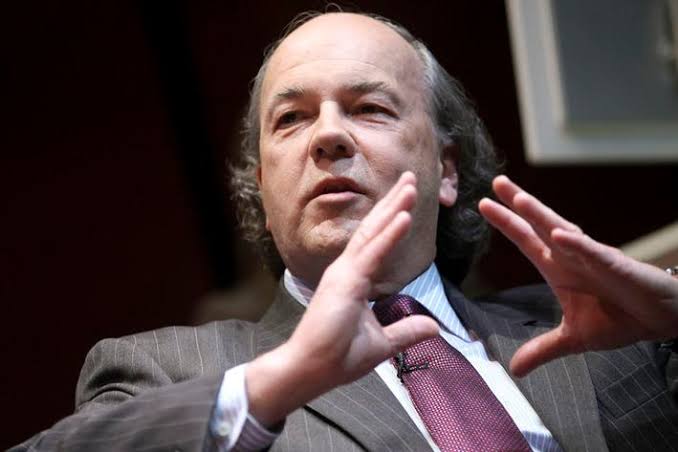
The author of the American version of "Currency Wars," renowned American financial writer James Rickards, recently appeared on the "Commodity Culture" podcast. In the interview, James Rickards believes that the recent decline in gold prices presents an excellent buying opportunity and predicts that gold prices could reach $10,000 by the end of 2026. James outlined the catalysts he believes will drive gold prices to a historical high while warning that an economic crisis worse than that of 2008 may be imminent.
PANews has organized the essence of the interview.
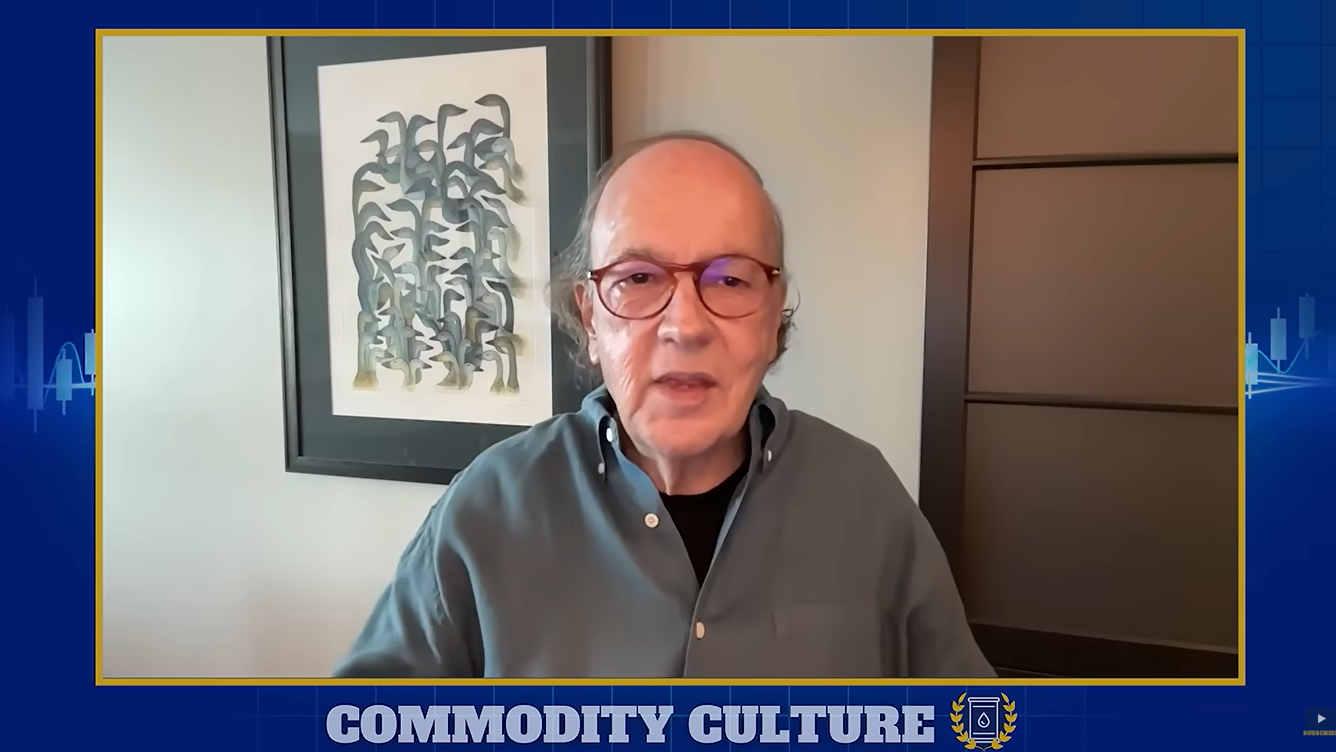
Host: In January this year, gold and silver both reached historical highs, with gold around $4,000 and silver around $60, but then there was a rather sharp correction. What is your view on the recent price trend? Is this a buying opportunity, or should we be cautious?
James: In short, this is a very good entry point and buying opportunity. Gold prices indeed reached a historical high at the end of January, closing around $5,355, or often referred to as the round number of $5,400. Subsequently, gold prices dropped to around $4,000 per ounce, even briefly falling below that level, fluctuating between $3,900 and $3,950, but now seem to be stabilizing around $4,000. This is not a bubble burst, but a normal price retracement of commodities, laying a good foundation for the next wave of increases. My previously predicted target of $10,000 for gold by the end of this year or early next year remains unchanged.
Host: What are the factors supporting this judgment?
James: The fundamentals have not changed. Uncertainty in the Persian Gulf, the Ukraine war, net purchases by central banks, large-scale purchases by China, as well as stable mineral supplies and rising demand, coupled with inflation issues, are all factors pushing up gold prices.
So why did gold prices decline earlier? When the war in Iran broke out at the end of February, the Strait of Hormuz was blocked, creating a dual blockade situation: Iran would not allow non-allied countries to pass, while the US Navy intercepted pro-Iranian vessels that did pass. This led to global transportation disruptions for 20% of oil, 20% of liquefied natural gas, and essential sulfur, helium (used for semiconductor manufacturing), aluminum, and nitrate needed for fertilizers.
Although the US has enough oil and does not rely on the Persian Gulf, this caused a serious dollar shortage in other parts of the world because these commodities are priced in dollars, and when commodity shortages lead to rising prices, you need more dollars. To obtain dollars to buy the scarce oil, some countries (like Turkey, Russia, China, and others) were forced to sell gold for dollars. This urgent demand for dollars triggered the initial drop in gold prices, followed by leveraged traders hitting stop-loss thresholds, and commodity trading advisors (CTAs) selling off in a trend-following manner, exacerbating the decline. However, as some oil transportation resumed and oil prices fell from $110 per barrel to around $67-70, the urgent demand for dollars has weakened.
I recall the words of the most famous commodity trader in history, Jim Rogers, who told me about eight or nine years ago. At that time, gold had dropped significantly from its peak of $1,900 in 2011, and he told me: "In commodity trading, nothing can go to the moon without experiencing a 50% retracement. If you're not ready for that, you're in the wrong market."
This relates to the concepts of "fractal mathematics" and "scale invariance" in mathematics, meaning that market patterns repeat across different time scales. From the low of $250 in 1999 to $1,900, a 50% retracement from that $1,900 peak is $1,070, and the bottom in 2015 was precisely $1,050. Rogers was extremely accurate. Applying the same rule today, we take around $1,800 as the new baseline, rising to $5,355, and the 50% difference when subtracted from $5,355 gives approximately $3,600. I am not sure if gold prices will necessarily drop to $3,600, but I wouldn’t be surprised if it did. This is a normal 50% retracement pattern. We are ready for the next phase to take off, so now is a very good entry point.
Host: A concern for many is that gold has officially surpassed US Treasury bonds, becoming the most widely held asset in global reserves. Is the massive accumulation of gold by central banks because they foresee a currency reset, or is it because the West led by the US has frozen Russian foreign exchange reserves, prompting countries to awaken to eliminate counterparty risk?
James: You are correct that gold's share in global reserves has indeed surpassed that of dollar assets, but it is important to understand why. Central banks have been net buyers of gold since 2010, but the reason for gold surpassing Treasury bonds is not because they sold Treasury bonds and massively bought gold. The real reason is that Treasury bond prices fluctuate very little, while gold prices have nearly tripled in a relatively short period. Due to the soaring prices, the dollar-denominated asset proportion naturally increases.
That being said, why are central banks buying gold? What do they see? I believe the crisis has arrived. This goes back to Russia's military actions in Ukraine in 2022. This war has been ongoing for over four years, and Russia is winning. Before the war, the Governor of the Central Bank of Russia, Elvira Nabiullina (whom I believe is the only central bank governor in the world who understands her job), had approximately $600 billion in reserves, of which $150 billion (25%) was held in physical gold stored in Moscow, along with about $300 billion in US Treasury bonds. These Treasury bonds were held in Belgium's Euroclear, trusting the Belgians and Americans, which was a major mistake.
The US and Europe jointly froze these assets. The US often freezes foreign assets (such as Syria, Iran, North Korea), but completely confiscating and stealing assets is a matter of a completely different level. The US and Europe are trying to confiscate or even directly steal Russian assets, and their absurd plans include: Europe borrowing money to lend to Ukraine, and after the war, repaying with Russian war reparations; if they can't repay, they will mortgage confiscated Russian assets. But Russia will not lose and will not pay reparations. When the entire world (countries like Saudi Arabia, China, Japan, which hold large amounts of US debt) sees all of this, they will think: "If one day the US does not like my foreign policy, will they also confiscate my Treasury bonds?" The answer is possibly yes. So they start to hedge and begin to buy gold. Physical gold bars, as long as stored in your own vault, are geopolitically safe; the US cannot steal them, and hackers cannot breach them. The US has diluted and damaged its reputation as a rule of law country, giving other countries a reason to hold gold.
Host: In a recent interview, you mentioned that we are approaching a financial crisis on a scale that exceeds the Federal Reserve's ability to respond. Can you explain in detail? Does excessive government and Federal Reserve intervention in the market exacerbate future potential crises?
James: I have experienced many crises: the 1974 bankruptcy of Germany's Herstatt Bank, bank defaults in Argentina and other countries in the early 1980s, the 1987 single-day drop of 22% in the Dow, the 1994 Tequila crisis in Mexico, the 1998 LTCM (Long-Term Capital Management) crisis (at that time, I was the chief lawyer and led the rescue negotiations), and the 2008 financial crisis. During the 2008 crisis, I was an advisor to the McCain campaign. At that time, the government had just bailed out "the two Fannies," thinking that the crisis was over, but I warned them that the crisis was far from over, that Lehman Brothers would soon collapse, and they needed to prepare a plan to calm the public. They didn’t listen, and as a result, when Lehman failed over the weekend, Obama appeared calm, while McCain was like a headless chicken, and polling turned completely on that day.
I have seen various bailouts. In 2008, Morgan Stanley was just days away from bankruptcy, and the Federal Reserve made an exception to convert them into a bank holding company and bail them out in under 48 hours. Recently, during the 2023 Silicon Valley Bank crisis, the FDIC (Federal Deposit Insurance Corporation) announced on Friday night that it would only cover deposits within the $250,000 limit. As a result, over the weekend, hedge fund bigwigs ran to the White House, claiming that not bailing out startups would lead to massive bankruptcies and layoffs. So on Sunday night, the FDIC reversed its stance and said all deposits would be fully guaranteed without limits; the Federal Reserve also stepped in, allowing banks whose Treasury bonds had fallen to 70% of face value due to rate hikes to use those bonds at par value (100%) as collateral for loans. This means that the Federal Reserve and FDIC guaranteed every Treasury bond and every deposit in the system (including large accounts at cryptocurrency exchanges).
You have guaranteed everything that can be guaranteed, what else can you do next? What magic can you pull out of your hat when another crisis erupts? Over the past 45 years, every bailout has been larger than the last. When a crisis is so large that even the Federal Reserve's bailouts are ineffective because all rescue measures have been priced in and anticipated by the market, the situation will be completely out of control. I believe we are at that point now. This is also another reason for holding gold.
Host: With this crisis approaching, what do you think it means for Wall Street and the average person? Will it be worse than 2008? Which asset classes will be most affected after the crisis, and where will you look for bargains?
James: It could be worse. The 2008 crisis was primarily driven by the $1 trillion subprime mortgage market, along with an additional $5 trillion in derivatives, which dragged AIG and Goldman Sachs into the mire. But now, we are facing crises on multiple dimensions. First is the global dollar shortage; the money printed by the Federal Reserve is essentially "offset" on the balance sheet and has not entered the economic stimulus system. Second, we face a significant crisis in the private credit market (repackaged junk bonds), with hundreds of billions in high-risk loans given to "large-scale companies" and AI data center builders, which are now collapsing. Investors want to redeem their funds, but top fund managers like Blackstone and Apollo use "subsidiary clauses" after 50 pages of contracts to refuse refunds during market turmoil (only returning a very small percentage, such as 5% of funds). Assets are plummeting, but no one is willing to price them at market value to avoid triggering a chain reaction, and everyone is tiptoeing around pretending everything is fine.
If we look at oil prices, the situation in the Persian Gulf, Ukraine, the private credit crisis, dollar shortages, excessive leverage, and the AI bubble all together, this is not just one stress point, but four or five bubbles existing simultaneously. Any one of them could trigger a crisis, and combined they represent the "mother of all financial crises."
In constructing a portfolio, I would allocate 10% to gold, not too much, 10% is a good proportion. I would hold 30% in cash. Cash has intrinsic "optional" value, which allows those with cash to "scoop up" cheap assets when the market crashes, and it can also defend against deflation risk. I prefer income-producing real estate (farms and residential properties, not commercial real estate in city centers). I am also bullish on Treasury bonds; once interest rates drop to 1%-2%, you will see significant capital gains on 10-year, 5-year, or 2-year Treasury bonds.
For the stock market, I would reduce holdings, pulling back from bubbles in AI, large-scale computing enterprises, and software. I favor the defense, energy, and healthcare sectors. Healthcare always leads in every employment statistic, and as 80 million baby boomers reach old age (increased likelihood of Alzheimer’s, heart diseases, etc.), there is an acute shortage of quality healthcare providers. I am also optimistic about natural resources, minerals, and agriculture.
免责声明:本文章仅代表作者个人观点,不代表本平台的立场和观点。本文章仅供信息分享,不构成对任何人的任何投资建议。用户与作者之间的任何争议,与本平台无关。如网页中刊载的文章或图片涉及侵权,请提供相关的权利证明和身份证明发送邮件到support@aicoin.com,本平台相关工作人员将会进行核查。


