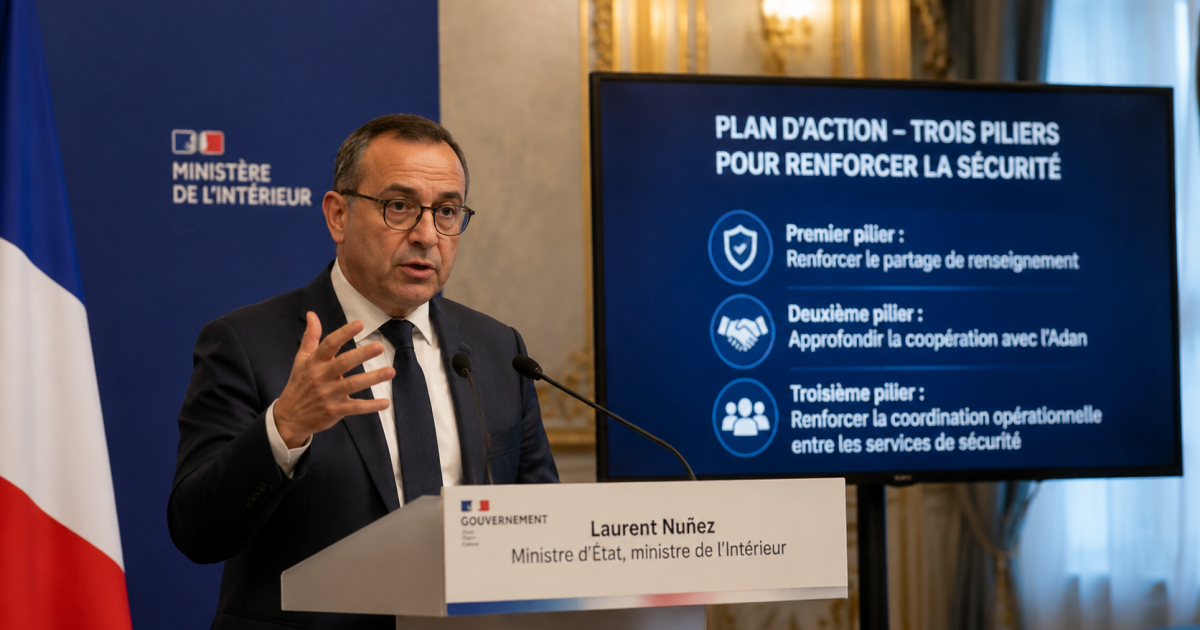
"These are serious events and your concern is legitimate."
On June 30, when France's Minister of the Interior Laurent Nuñez spoke this sentence in front of the Association of Digital Asset Holders (Adan), his tone was more serious than usual.
On his desk lay a set of data: In the first half of 2026, France recorded 77 cases related to cryptocurrency of kidnapping, illegal detention, extortion, or attempted cases.
In comparison, the total for the entire year of 2025 was 45 cases. In just half a year, this number surpassed the entire previous year, an increase of 71%.
This means that in France, an average of one violent crime against cryptocurrency holders occurs every 2.3 days.
From "Wrench Attack" to Finger Amputation Extortion: Criminal Techniques Are Evolving
The term "Wrench Attack" comes from a famous webcomic—it satirizes a brutal reality: no matter how secure a wallet is, it cannot withstand the threat of physical violence.
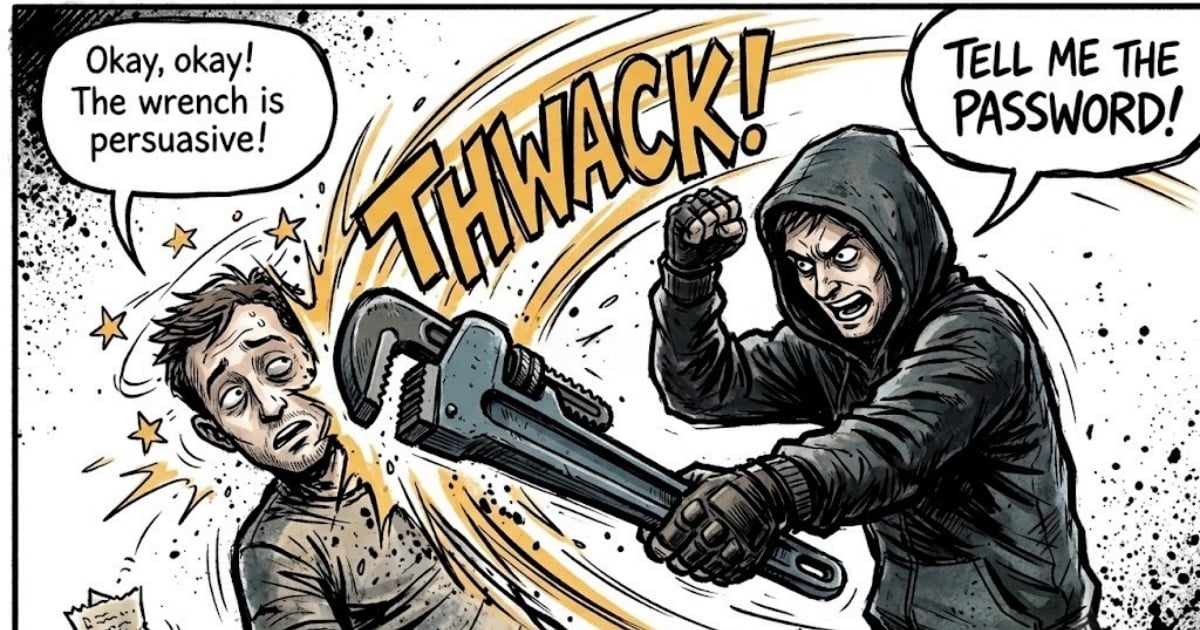
In France, this threat has transformed from an internet meme into real tragedy.
In January 2025, David Balland, co-founder of cryptocurrency hardware wallet company Ledger, and his partner were kidnapped at their home in the Cher department in central France. The kidnappers sent a video to another Ledger co-founder—the video showed Balland's severed fingers. The ransom was demanded in cryptocurrency. The police ultimately rescued him through an elite task force operation.
On May 13, 2025, in the 11th arrondissement of Paris, in broad daylight. Three masked men attempted to drag the daughter and grandson of Pierre Noizat, co-founder and CEO of the French cryptocurrency exchange Paymium, into a white van. Bystanders intervened, one holding a fire extinguisher to drive off the attackers. This attempted kidnapping shocked the entire French cryptocurrency community.
On April 13, 2026, in the Burgundy region, the wife and 10-year-old son of a cryptocurrency entrepreneur were kidnapped in their home and taken to a hotel room in the Val-de-Marne department, where the crime gang demanded "hundreds of thousands of euros" as ransom.
These are not isolated incidents. Data from the French National Prosecutor's Office for the Fight Against Organized Crime (PNACO) shows: 18 cases in 2024, 67 cases in 2025, and 47 cases as of April 2026. 88 people have been prosecuted as a result, including over 10 minors.
PNACO prosecutor Vanessa Perrée pointed out that behind these crimes are structured criminal networks, rather than isolated cases.
Why France?
France has become one of the largest hotspots in the world for "Wrench Attacks".
According to government estimates, about 7.3 million French people (about 11% of the total population) hold some form of cryptocurrency. This large base of holders means that criminals have plenty of "prey" to choose from.
CertiK's analysis points out that there are three reasons why France has become a center for attacks: many leading cryptocurrency companies and their executives are based locally, there is a "show-off culture" within the community, and a habit of voluntarily disclosing identities, as well as multiple sensitive data leaks.
Telegram founder Pavel Durov recently even hinted that some of these attacks in France may stem from the leak of tax data—a former tax official allegedly leaked information about cryptocurrency investors. Although the authorities have not confirmed this, it reveals the vulnerability of personal information protection in the digital asset age.
Criminals' methods are also becoming increasingly sophisticated. They typically identify victims through social media, cryptocurrency forums, or even personal relationship networks, having completed intelligence gathering before executing physical attacks.
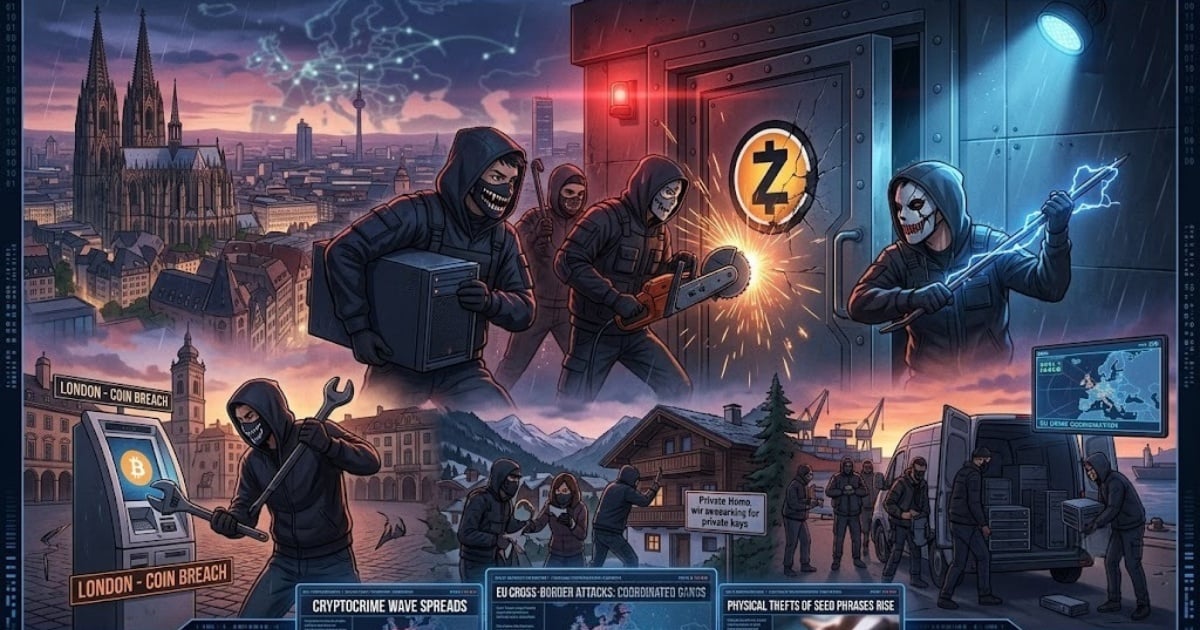
A Crime Wave Spreading Across Europe
The phenomenon of cryptocurrency-related violent crime in France is not isolated.
Belgium, Spain, and Germany have all reported similar cases. Since 2026, at least 33 cryptocurrency kidnappings have occurred worldwide, spanning several countries including Spain, Estonia, Germany, Canada, Japan, South Korea, Uganda, Pakistan, and the United States.
WTW (Willis Towers Watson) noted in a risk report that cryptocurrency-related attacks that occurred between July 2024 and November 2025 accounted for more than one-third of all such attacks since the end of 2014. Europe has become the largest hotspot region for cryptocurrency violent crime, accounting for over 40% of global incidents.
Data from blockchain security company CertiK show that in 2025, global "Wrench Attack" cases increased by about 75%, causing confirmed losses of over $40.9 million.
Another notable trend is that Chainalysis's research has found a correlation between "Wrench Attacks" and Bitcoin price trends—these attacks spike significantly during periods of rising coin prices. Criminals are more motivated to commit violent crimes when prices are high.
The Ministry of the Interior's Three-Pillar Plan
Faced with a rapidly deteriorating security situation, Minister Nuñez described the situation as **"very severe"**.
He announced a three-pillar action plan which he described as **"more ambitious"**:
First Pillar: Enhance Intelligence Sharing. Nuñez pointed out that the masterminds are sometimes **"abroad"**, and there is a need to strengthen intelligence gathering on these criminal networks.
Second Pillar: Deepen Cooperation with Adan, establishing a network of experts that brings together industry participants and relevant national departments.
Third Pillar: Strengthen operational coordination between security departments and cross-border cooperation with the countries where the masterminds are based.
Nuñez revealed that the emergency measures taken over the past year have shown "results"—200 people have been arrested, some after incidents, others preemptively. In a recent case in the Somme department, the suspect was arrested within 8 hours of the incident.
Currently, 724 cryptocurrency industry professionals have registered for a rapid identification and alert platform.
A Warning for Holders: Security Is Not Just a Digital Issue
For the 7.3 million cryptocurrency holders in France, this data conveys a clear signal: the security risks of digital assets have extended from the digital world into the physical world.
Prosecutor Perrée urged cryptocurrency holders to strengthen personal security measures, particularly warning that **"excessive exposure on social networks may make them targets"**.
Security experts have provided specific recommendations:
Use hardware wallets and store them in secure locations. Avoid publicly disclosing cryptocurrency holdings— you never know who is watching. Enable multi-factor authentication. Report any suspicious activities to law enforcement immediately. Do not share portfolio details on social media.
Future Trends to Watch...
Whether the French government's action plan can effectively curb the spread of violent crime remains to be seen.
However, three trends are worth continuous attention from the industry:
First, the level of specialization among criminal organizations is increasing. Investigations by PNACO show that these criminal networks recruit accomplices through social media and organize their actions, which means the difficulty of combatting them is rising.
Second, cross-border collaboration will be key. The masterminds of kidnappings are sometimes based abroad, requiring France to establish closer cooperative mechanisms with law enforcement agencies in other countries.
Third, a cultural shift within the industry is imminent. The "show-off culture" and voluntary disclosure of identities—actions that were once viewed as expressions of confidence within the industry—are becoming sources of intelligence for criminals. A shift from "showing off" to "keeping a low profile" may be a cultural transformation that the cryptocurrency industry must experience.
The wave of cryptocurrency-related violent crime in France reveals a deeper issue: as the amount of digital wealth grows to a certain degree, physical world security measures must keep pace. This is not only a challenge for France but a common issue faced by the entire global cryptocurrency industry.
FAQ
Q1: What is a "Wrench Attack"?
A "Wrench Attack" refers to a criminal act where perpetrators use physical violence, coercion, or kidnapping to force cryptocurrency holders to hand over their wallet private keys or transfer assets. The term originates from a webcomic that satirizes the harsh reality that "no matter how secure the digital wallet is, it cannot withstand physical threats." Such attacks typically include home invasion, kidnapping, and extortion.
Q2: How severe is cryptocurrency-related violent crime in France?
In the first half of 2026, France recorded 77 cases related to cryptocurrency involving kidnapping, extortion, or attempted incidents, a 71% increase from the 45 cases recorded in the entire year of 2025. France has become one of the largest hotspots globally for "Wrench Attacks." Data from PNACO shows 18 cases in 2024, 67 cases in 2025, and 47 cases by April 2026; the number of cases and the level of violence are both continuing to rise.
Q3: How can cryptocurrency holders prevent physical attacks?
Security experts recommend: using hardware wallets and storing them in secure locations; avoiding publicly disclosing holdings on social media; enabling multi-factor authentication; and reporting any suspicious activity to law enforcement. PNACO prosecutors particularly warn that "excessive exposure on social networks may make holders targets for criminals," so maintaining a low profile is an important self-protection strategy.
免责声明:本文章仅代表作者个人观点,不代表本平台的立场和观点。本文章仅供信息分享,不构成对任何人的任何投资建议。用户与作者之间的任何争议,与本平台无关。如网页中刊载的文章或图片涉及侵权,请提供相关的权利证明和身份证明发送邮件到support@aicoin.com,本平台相关工作人员将会进行核查。
