Author: Honest Mai Zong
Q. Why did Samsung and SK Hynix's announcement of investment expansion plans lead to a drop instead?
A. The logic is essentially the same as why cloud companies like Google, Meta, and Microsoft have dropped; the market only recognizes performance, only cares about high-margin cash cows that can print money now. It does not favor investments in capex that will only show returns in the future. Additionally, once production increases, it means high product premiums will disappear along with the high margins.
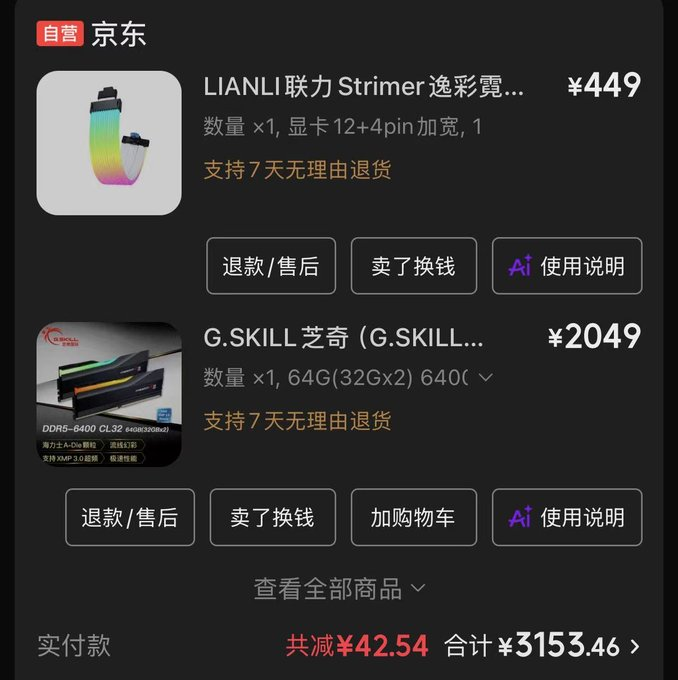
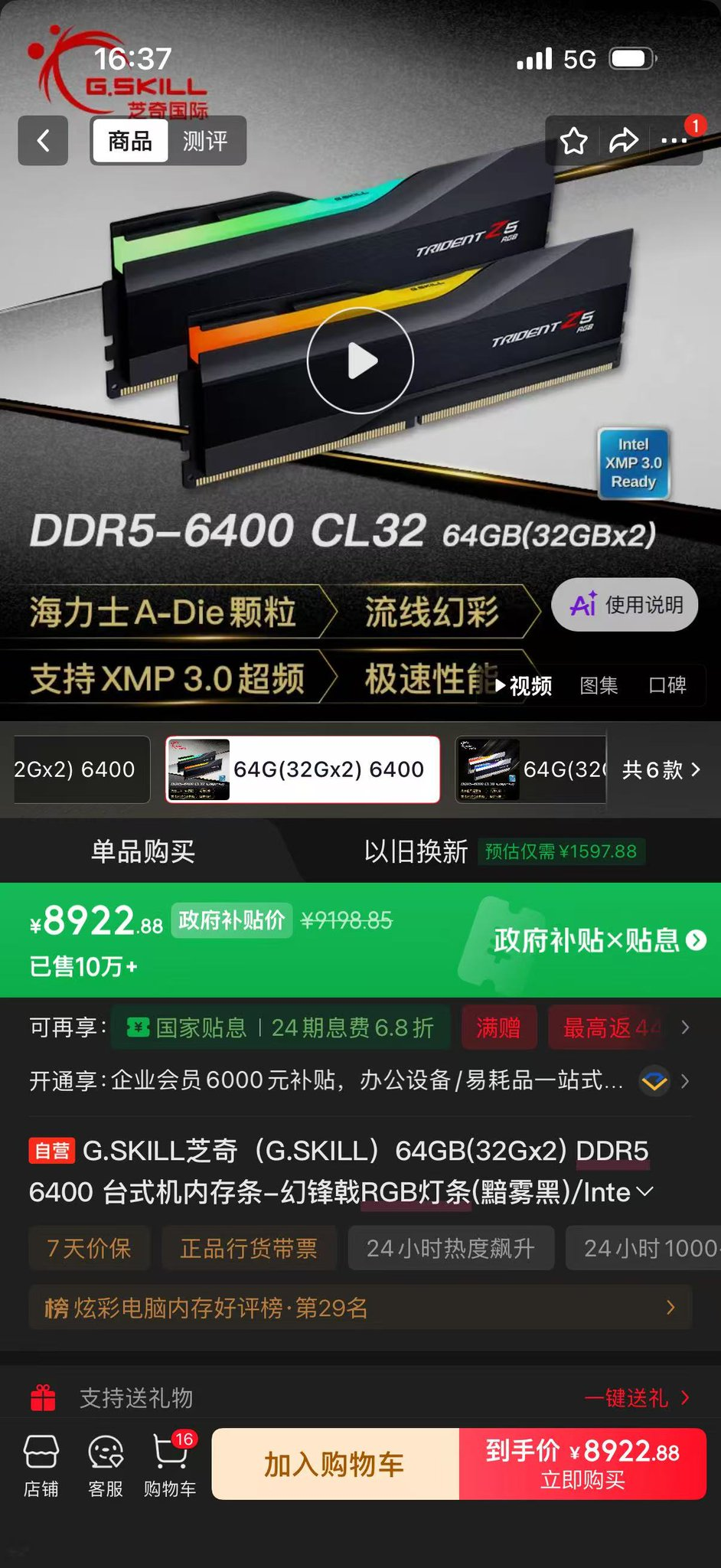
Last September, I gave @timotimo007 a computer. A couple of days ago, he casually asked me how much I bought the memory stick for last year. When I checked, I realized how much memory prices have surged. The memory I bought for 2049 yuan last September is now nearly 9000 yuan. In nine months, the price of memory has increased by 4.5 times, while SK Hynix has risen by 6.3 times and Micron by 5.7 times during the same period.
Thinking about these numbers makes me less bullish on storage stocks, because this means that 80% of the increase in market value of storage stocks is due to the rise in storage prices. However, the factory capacity is already maxed out. If I bet that the performance of storage stocks will continue to double next year, the revenue growth for next year can only rely on the continued rise of memory prices, but how much more can it rise? Will a 9000 yuan 64GB memory stick sell for 18000 next year?
Once the factories start production and capacity increases, the price of memory products will inevitably drop significantly, which is why the market reacted negatively to the news of Samsung and SK Hynix expanding production.
I think this might be the peak moment for storage companies, at a time when cloud companies are heavily investing, and memory capacity is insufficient, leading to a four to five times price increase in less than a year. The capex for building new factories hasn't even started yet, and MU's earnings report shows margins higher than drug trafficking.
By next year, the capacity has already been secured by several cloud companies. Once memory prices stagnate, and with new capacity not yet available, there will be significant capex investments starting, and the market will definitely question "Is the high price and high margin sustainable?", "Will cloud companies continue to increase their investments?", "Is the capex for building new factories too large?" Such questions are definitely not easy to answer, just like Microsoft and Google have to answer similar questions to the market now.
At this point, I won't short storage (maybe I'll reconsider in the second half of the year), but I also won't continue to go long; it might be better to look at companies that will benefit from SK Hynix and Samsung's future capex, such as equipment manufacturers.
免责声明:本文章仅代表作者个人观点,不代表本平台的立场和观点。本文章仅供信息分享,不构成对任何人的任何投资建议。用户与作者之间的任何争议,与本平台无关。如网页中刊载的文章或图片涉及侵权,请提供相关的权利证明和身份证明发送邮件到support@aicoin.com,本平台相关工作人员将会进行核查。


