Author: Claude, Deep Tide TechFlow
Deep Tide Reading: Seb, the founder of Sophon, was previously the DeFi head of ZKsync and built his own chain with $70 million in funding using ZK Stack a year ago. On June 25, he announced the shutdown of this chain and transitioned to building consumer-grade apps using Base with OP Stack technology.
The SOPH token has dropped 94% from its historical peak, with a market value of less than $20 million. Meanwhile, Sophon is not an isolated case: in the past two months, L2 projects such as Zero Network, Syndicate Labs, Everclear, and Redstone have shut down intensively, while the three major leading chains control about 75% of the market share. The elimination race for L2 in the crypto bear market has shifted from "whose technology is better" to "who has users."
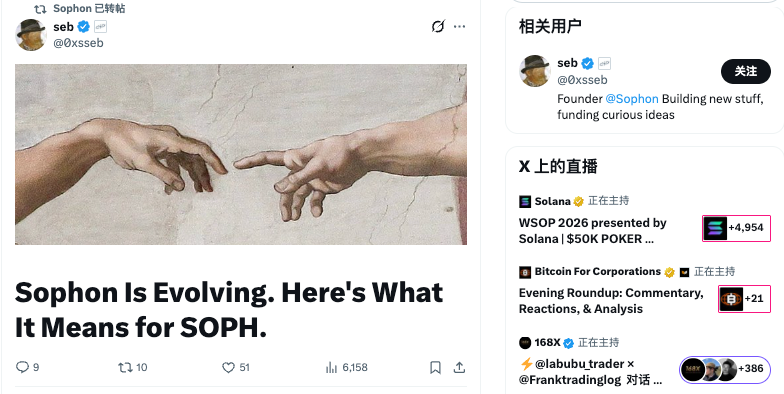
On June 25, Sophon updated its profile on the X platform. It was originally written as "ZK-powered L2," now changed to "All in on Apps."
Behind those six words are $70 million and a year of time. Sebastien (alias Seb), the founder of Sophon, posted a long message on X announcing the shutdown of his L2 chain and a complete shift to Base for developing consumer applications. The first product is called Pyre and has not yet launched.
Seb's background adds another layer of meaning to this matter.
According to The Block, he previously served as the DeFi head at Matter Labs, the development company of ZKsync. In 2024, Seb left ZKsync and built the Sophon chain using ZKsync's open-source ZK Stack technology. The seed round raised $10 million, and node sales raised another $60 million, led by Binance Labs.
One year later, he shut down the chain built using ZKsync technology and moved to Base. Base uses OP Stack, which has no technical connection to ZK.
$3.4 million a year to maintain a chain that no one uses
According to The Block, Seb revealed in an interview that Sophon's annual chain maintenance cost is about $3.4 million, covering the entire chain infrastructure, Rollup services, data, and analytics... After shutting down the chain, the annual burn rate is expected to decrease by about $3 million.
In the announcement, Seb wrote that the team paused for nine months and asked themselves a fundamental question:
Has operating its own chain resulted in doing anything worth spending this money on? The answer is no.
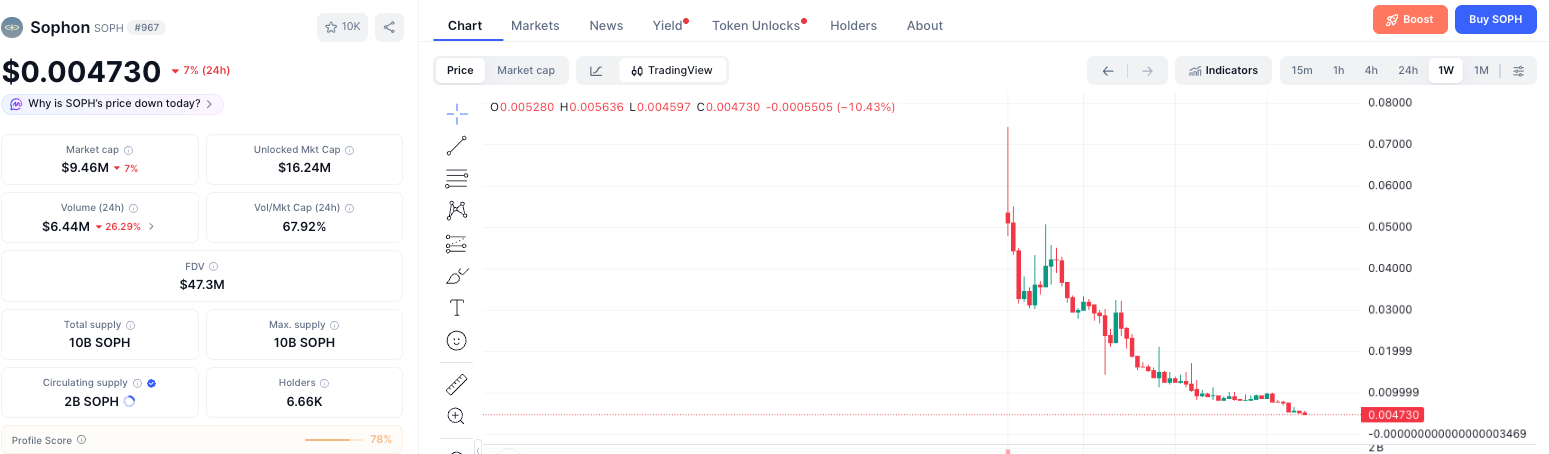
According to CMC data, the current price of the SOPH token is about $0.0047, down about 94% from its historical high of $0.093 at its launch in May last year, with a circulating market value of about $18.5 million. The $3.4 million annual maintenance cost of the chain is higher than the circulating market value of all the tokens on this chain.
What’s more awkward is the structural issue of supply and demand.
According to a report by 21Shares at the end of last year, there are over 50 L2s currently operating, but Base, Arbitrum, and Optimism together process about 75% of the transaction volume. According to Dune Analytics data, Base alone accounts for over 80% of L2 transaction fee revenue. In 2025, Base's chain revenue reached $75.4 million, accounting for 62% of the total L2 revenue of $120.7 million. Coinbase has 9.3 million monthly active trading users, a distribution channel that all other L2s lack.
The barrier to building chains is lowering. After the Ethereum Dencun upgrade in March 2024, the cost of data publishing for L2 has significantly decreased, and both the technical and financial barriers for building a chain are declining. The result is that there are more and more chains, but each chain has fewer users. Seb said bluntly in the announcement:
Every dollar spent on the chain is a dollar not spent on the product.
Three shut down in one day in May, a concentrated wave of L2 shutdowns
Sophon is not the first L2 to shut down, nor is it even the first this month.
On May 21, three projects announced shutdowns or stopped development on the same day. According to CoinReporter, Zero Network (a gasless L2 built using ZK Stack technology by wallet company Zerion) confirmed its closure after only 18 months of operation; Syndicate Labs (a Rollup infrastructure company funded by a16z with $20 million) announced it would cease operations, stating that the Rollup market has "fundamentally changed"; Everclear (formerly Connext, a cross-chain settlement protocol that once processed over $500 million in transactions monthly) also announced the shutdown of its foundation and product development.
Earlier, in April, Redstone L2 shut down. The Lattice team behind Redstone operated for five years, admitting in the shutdown statement that they "failed to find a sustainable business model." According to PANews, Redstone officially ceased operations on May 16.
These shut down projects have a common characteristic: they could run technically, but economically could not sustain themselves.
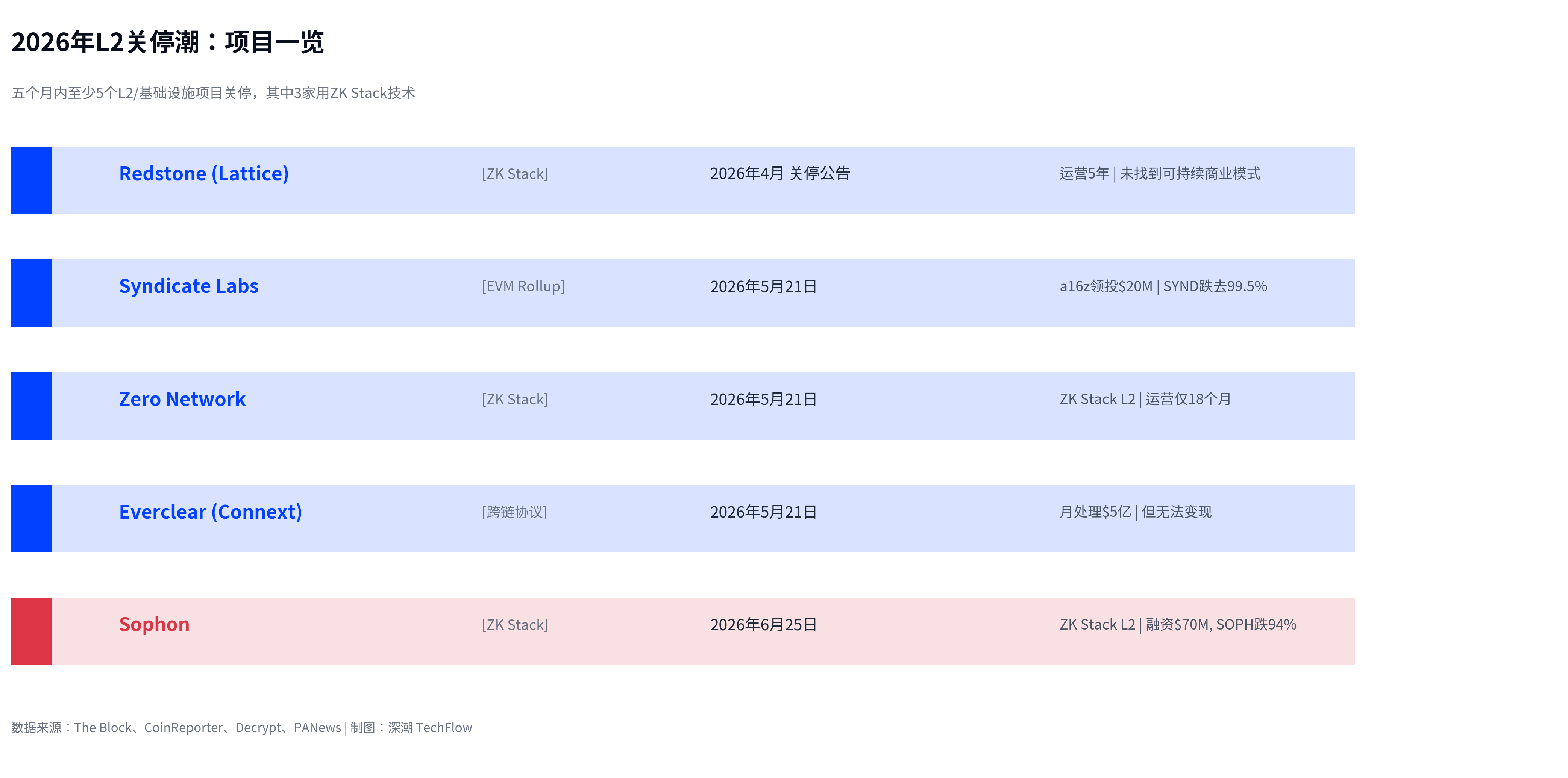
The total locked value of Zero Network on L2Beat is approximately $1.3 million, at Stage 0 level. Everclear's TVL on DefiLlama is less than $7,000, with zero fee revenue in the past 24 hours. The SYND token of Syndicate dropped another 21% within hours of the shutdown announcement, down about 99.5% from its peak last September.
Ryan Yoon, a senior analyst at Tiger Research, told Decrypt that the Rollup infrastructure market has consolidated around a few leading L2s, with project parties increasingly inclined to use existing infrastructure rather than build new chains.
Even the mid-tier L2s are not having an easy time. According to CoinDesk data, Linea's bridge deposits dropped from $976 million in November last year to $367 million in May this year, a decline of over 60%. The overall TVL of Rollup has decreased by about 36% from its peak of approximately $50 billion last October.
Shut down the chain, move to Base, and then what
Seb stated in an interview with The Block that Sophon chose Base because Base is building a chain economy at a billion-user scale and is leading in agent economy (x402 protocol and surrounding infrastructure), aligning with Sophon’s product roadmap direction.
After moving to Base, Sophon plans to launch five products sequentially. The first is Pyre, a gamified daily payment app launching next month. SophEarn is an independent version of a vault product, also launching next month. Sophon Play is expected to launch in the third quarter, opening Pyre's gamified technology API to developers. XP.app is designed as a payment tool for high-net-worth users, scheduled to launch in the third to fourth quarters. SophAI is an AI product currently in development.
The role of the SOPH token is changing as well. According to Seb, the token is transitioning from a chain's Gas Token to a tool for repurchasing and burning product revenue. Revenue generated from Pyre, XP, SophEarn, SophPlay, and SophAI will be used to repurchase and burn SOPH in the open market.
The problem is, these products have not yet generated any revenue.
Pyre is launching next month, and other products are further away. Seb did not disclose how much of the $70 million funding remains. According to The Block, Seb stated that shutting down the chain can save about $3 million annually, which will be directly used for App development and distribution.
This may also be a reflection of most current crypto projects, seeking blood transfusions, cutting costs, huddling together for warmth, waiting for a turnaround.
免责声明:本文章仅代表作者个人观点,不代表本平台的立场和观点。本文章仅供信息分享,不构成对任何人的任何投资建议。用户与作者之间的任何争议,与本平台无关。如网页中刊载的文章或图片涉及侵权,请提供相关的权利证明和身份证明发送邮件到support@aicoin.com,本平台相关工作人员将会进行核查。


