Author: Wall Street Journal
Apple and Microsoft announced price increases on the same day. This may not be a coincidence; as the bills from the AI arms race begin to be passed on to ordinary consumers, a new wave of inflation driven by data centers is quietly taking shape.
On Thursday, Apple announced global price increases for Mac, iPad, and various hardware products, with increases of up to 300 dollars. Microsoft also announced on the same day that its Xbox gaming console would increase prices for the third time starting August 1, with some models rising by as much as 150 dollars. The reasons given by both companies are highly consistent: the prices of storage and memory components have soared sharply.
Apple CEO Tim Cook had previously warned the media. He described this supply crisis as a "once-in-a-century flood" and stated, "In over 40 years of experience in the industry, I have never seen anything like it." In a statement, Apple cited the reason directly: "The rapid expansion of AI data centers has resulted in an unprecedented surge in demand for memory and storage; the company has never seen a single component’s price rise so much and so quickly."
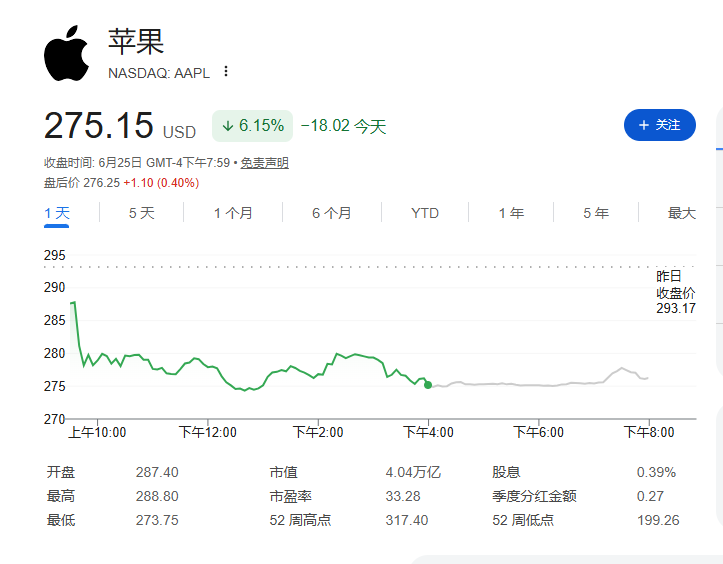
After the news was released, Apple’s stock price fell 6.15% on Thursday, while Microsoft dropped 3.45%.
Details of the Price Increase: Significant, Broad Coverage
This price adjustment from Apple covers multiple product lines including MacBook, iPad, HomePod, Apple TV, and Vision Pro.
Specifically: the starting price of the MacBook Air rises from 1099 dollars to 1299 dollars, an increase of about 18%; the 16-inch MacBook Pro jumps from 2499 dollars to 2999 dollars, a single increase of 500 dollars; the iPad Air rises from 599 dollars to 749 dollars, an increase of 25%; the entry-level iPad rises from 349 dollars to 449 dollars; the Apple TV rises from 129 dollars to 199 dollars, an increase of over 54%.
The iPhone is not included in this price increase. However, Apple’s wording is thought-provoking—stating that it has "reached the point where it is necessary to start raising prices on multiple products," leaving room for further price increases.
On Microsoft’s side, the standard Xbox Series X price will rise to 800 dollars, cumulatively increasing 300 dollars since its original price when launched in 2020. Microsoft stated on its official blog: "We hope not to raise prices again; we have been negotiating various plans with suppliers over the past months, but component prices have risen more than 2.5 times and are expected to double again by fall 2027."
Xbox CEO Asha Sharma revealed in an internal email that by the 2027 holiday season, the company will pay five times as much for storage and memory components as it did in 2024.
Root Causes: AI Computing Power Arms Race Competing for Storage Capacity
The root of this price increase lies in the massive competition for storage resources fueled by the construction of AI infrastructure.
According to FactSet data, the capital expenditures of the five major hyperscale cloud providers: Alphabet, Amazon, Meta, Microsoft, and Oracle are expected to reach 741 billion dollars this year, a nearly 75% year-on-year increase.
Where is this money flowing? Economist Stijn Van Nieuwerburgh of Columbia University pointed out that the construction of AI data centers is highly physical—requiring specific cooling equipment, power and fiber optic cables, backup generators, and large amounts of high-bandwidth memory (HBM). He estimates that the total cost of AI infrastructure construction over the next six years could reach 8 trillion dollars.
Suppliers’ response has been to tilt production capacity towards AI servers. According to Counterpoint Research, memory and storage prices have quadrupled over the past three quarters. This trend is directly reflected in the financial data of chip manufacturers: Micron’s latest quarterly gross margin surged from 39% a year ago to 84.9%, surpassing Nvidia and Meta, reaching an all-time high.
The result is: AI companies have taken away storage capacity originally supplied for consumer electronics, forcing manufacturers like Apple and Microsoft to compete for the remaining supply at higher prices, ultimately passing the costs onto consumers.
Inflationary Pressure is Spreading
This cost pressure has left traces in macro data.
According to the U.S. Department of Labor, in May of this year, the price of consumer-level computer software and accessories increased by about 15% year-on-year; the wholesale price of electronic components and accessories soared by 27% year-on-year.
Electricity prices are also under pressure. Goldman Sachs predicts that data centers will account for nearly half of the new electricity demand in the U.S. before 2030, and forecasts that consumer electricity prices will rise at an annual rate of about 6% in 2026 and 2027.
The price increase trend in the gaming hardware industry is also spreading. Sony's PlayStation has increased prices multiple times, and the suggested retail price of Nintendo Switch 2 will rise to 500 dollars in September, with Valve’s Steam Machine console also exceeding 1000 dollars.
Counterpoint Research director Tarun Pathak estimates that the higher component costs could add about 200 dollars to the cost of each iPhone, and expects an overall price increase of 150 to 200 dollars across Apple’s product line.
Debate: Is AI-Induced Inflation Temporary or Sustained?
On Thursday, The Wall Street Journal published an article stating that the boom in AI infrastructure is creating the third wave of inflation in the U.S.
The article cites EY-Parthenon chief economist and National Association for Business Economics (NABE) president Gregory Daco, stating, "In the early stages of any major technological revolution, limited resources often come under pressure, which usually drives up prices."
Unlike one-time economic shocks such as tariffs and oil prices, the impact of AI on demand could last for years. A NABE survey conducted earlier this week showed that 81% of respondents believe that AI infrastructure construction will drive up inflation in the coming year.
However, there are also voices pointing to the other side. Current Federal Reserve Chairman Waller wrote in The Wall Street Journal last November that, "AI will become a significant deflationary force, enhancing productivity and increasing U.S. competitiveness," and believes that "a 1% annual increase in productivity will double living standards in a generation."
UBS economists believe that there is at least a few years time lag between the current construction boom and the actual price reductions driven by AI.
免责声明:本文章仅代表作者个人观点,不代表本平台的立场和观点。本文章仅供信息分享,不构成对任何人的任何投资建议。用户与作者之间的任何争议,与本平台无关。如网页中刊载的文章或图片涉及侵权,请提供相关的权利证明和身份证明发送邮件到support@aicoin.com,本平台相关工作人员将会进行核查。


