At the two consecutive shareholder meetings on Tuesday and Wednesday, Masayoshi Son dismissed concerns about an AI bubble, announced that SoftBank has started mass production of robots, and set an ambitious goal of 1,000 trillion yen in net assets over the next decade. He plans to work until the age of 70 to achieve "artificial superintelligence." Regarding Elon Musk's advocacy for space data centers, he bluntly stated that due to bottlenecks such as launch costs and delays, they are "not very meaningful," reiterating that the outcome depends on ground computational power.
Written by: Zhang Yaqi
Source: Wall Street Insights
The founder of SoftBank made a series of significant statements at the annual shareholder meeting, endorsing the AI investment boom and outlining a grand ten-year blueprint for the company.
During the two consecutive shareholder meetings on Tuesday and Wednesday, Masayoshi Son announced that SoftBank has started robot mass production while setting a net asset value target of 1,000 trillion yen for the next decade. He refuted market concerns about an AI bubble, calling such statements "blasphemy against AI," and directly responded to Elon Musk's proposal for orbital data centers, stating that the value of such projects is limited.
These statements have a direct impact on market sentiment. A series of initiatives by SoftBank to bet on AI—including its stake in ChatGPT developer OpenAI and chip designer Arm—have pushed the company's stock price to an all-time high this month, although the significant volatility in the AI sector still makes this trade a double-edged sword for investors.
Masayoshi Son admitted during his speech that some shareholders are "half-convinced" about SoftBank's valuation, while he himself "has 100% confidence, without any doubt." He stated that he does not plan to retire and intends to lead the company until the age of 70 to achieve what he defines as "artificial superintelligence"—an AI system that is ten thousand times smarter than humans.
Significant Increase in Net Asset Target, Valuation Discount Issue Remains Unresolved
Masayoshi Son revealed at the annual shareholder meeting in Tokyo that SoftBank's long-term goal is to set a net asset value target of 1,000 trillion yen over the next decade. He admitted that this goal is extremely ambitious but stated that SoftBank has continuously validated its ability to create value.
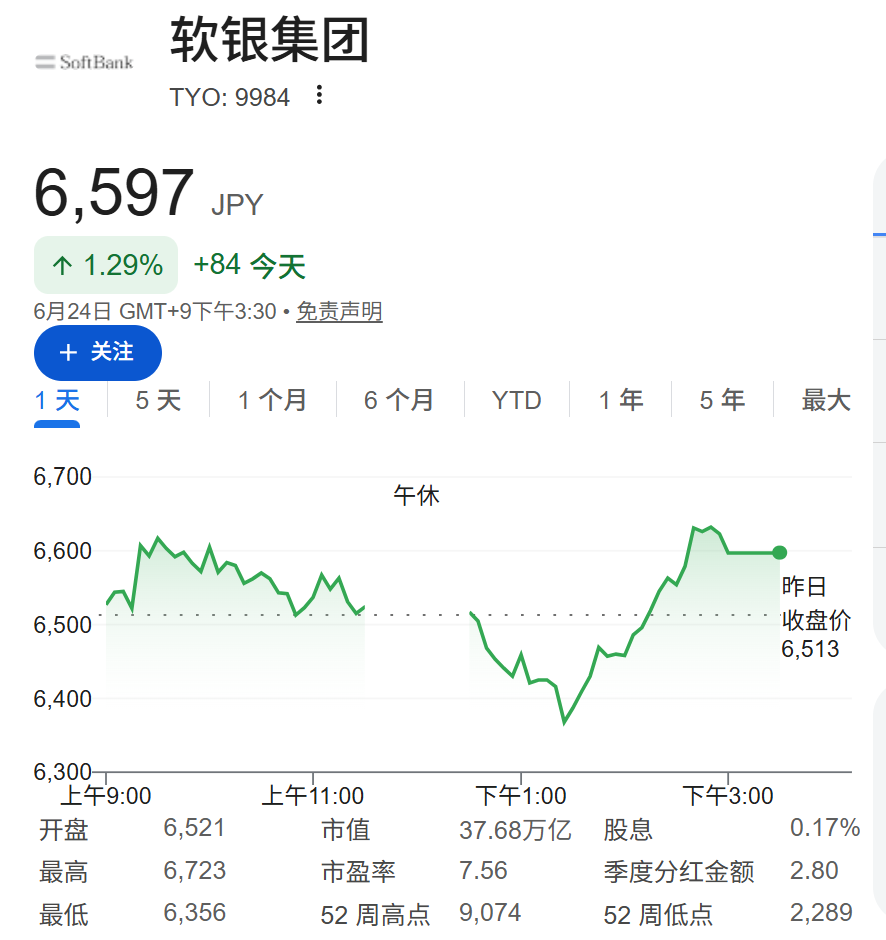
He likened SoftBank to "the goose that lays golden eggs" and further extended this image: "Eggs do not hatch from eggs; it's the goose that lays the eggs. The SoftBank Group is that egg-laying factory." He also complained that the current market value of about 37 trillion yen is significantly discounted compared to the total asset value of 74 trillion yen. "How much longer do I have to fight to make you believe that this goose is doing well?" he asked.
Masayoshi Son claimed that he has become "greedier" and hopes to achieve something substantial in the next 10 to 15 years, stating that he will do his utmost to maintain his health.
Refuting Bubble Claims, Announcing Entry into Robot Mass Production Phase
Masayoshi Son strongly refuted external concerns about an AI bubble. "If you say this is a bubble, I think that is blasphemy against AI," he said. "This has just begun; the potential of AI will be unleashed."
He also disclosed that SoftBank has started robot manufacturing at its "physical AI factory" and stated that the company will soon issue a formal announcement regarding this. "I believe we are the first company in the world to achieve large-scale manufacturing of robots," he said, but did not disclose more details.
Masayoshi Son believes that as the world moves towards "physical AI superintelligence," industry bottlenecks have shifted from model design itself to the chip, power, and data center capacity needed to support the operation of large-scale advanced systems. This aligns closely with SoftBank’s strategy to bet on becoming a leading robotics company.
Arm's Valuation Potential is Huge, Intel Investment's Value Needs Reassessment
Regarding its key assets, Masayoshi Son stated that Arm has decided to start producing chips independently, which has pushed the company’s valuation to about $391 billion. As AI computing evolves towards processor-centric architectures, Arm is expected to become one of the world's most important central processor suppliers, with a valuation growth potential of "more than ten times." SoftBank currently holds nearly 90% of Arm’s shares.
In defense of SoftBank's controversial investment in Intel, Masayoshi Son asserted that the initial $2 billion investment has significantly increased in value due to the adjustments in U.S. national security priorities and new partnerships between Intel and companies like Nvidia and Apple. "America has no choice but to strengthen Intel," he said.
Accelerating Data Center Layout, Continuing to Advance "Stargate" Plan
In the field of data center infrastructure, Masayoshi Son revealed that SoftBank is finalizing a letter of intent related to a data center development in Ohio. While he did not disclose the client’s name, he said that the project is expected to bring "huge" profits. He also indicated that multiple projects in various regions, including Texas, France, and Japan, are still in preparation.
Domestically in Japan, Masayoshi Son confirmed that SoftBank remains an important candidate for Tokyo Electric Power Company (TEPCO) to introduce external capital and build AI data centers. He said, "If Tokyo Electric joins us, we will expand power supply and bring AI data centers to Japan." However, he also warned that local regulatory processes in Japan are lengthy and struggle to keep pace with AI development.
Additionally, he mentioned that the "Stargate" AI infrastructure project involving SoftBank, OpenAI, Oracle, and others plans to further scale up, synchronizing with the global demand for AI infrastructure, but did not provide more details on progress.
Direct Response to Musk: The Key to Victory Lies on Earth, Not in Space
Masayoshi Son clearly stated his lack of enthusiasm for constructing data centers in space. In response to a shareholder's question during the SoftBank mobile shareholder meeting, he remarked that the main advantage of orbital data centers is the reduction in electricity costs, but compared to chips and other hardware, electricity accounts for a very small proportion of the total operating costs of data centers. Meanwhile, the higher costs of transporting equipment to space, maintenance costs, and communication delays would offset any savings from reduced power costs.
He described Musk as "an outstanding driver of change" but stated that SoftBank will focus on building "strong" data center capacity on Earth. "The first mover wins," he said.
According to Bloomberg, both Musk's SpaceX and Jeff Bezos's Blue Origin have announced plans to construct and launch orbital data centers to address energy and space constraints on Earth. Masayoshi Son, however, holds a different view, believing that "the battles in the next few years are far more critical than what will happen in ten years."
免责声明:本文章仅代表作者个人观点,不代表本平台的立场和观点。本文章仅供信息分享,不构成对任何人的任何投资建议。用户与作者之间的任何争议,与本平台无关。如网页中刊载的文章或图片涉及侵权,请提供相关的权利证明和身份证明发送邮件到support@aicoin.com,本平台相关工作人员将会进行核查。


