Translated by: ShenChao TechFlow
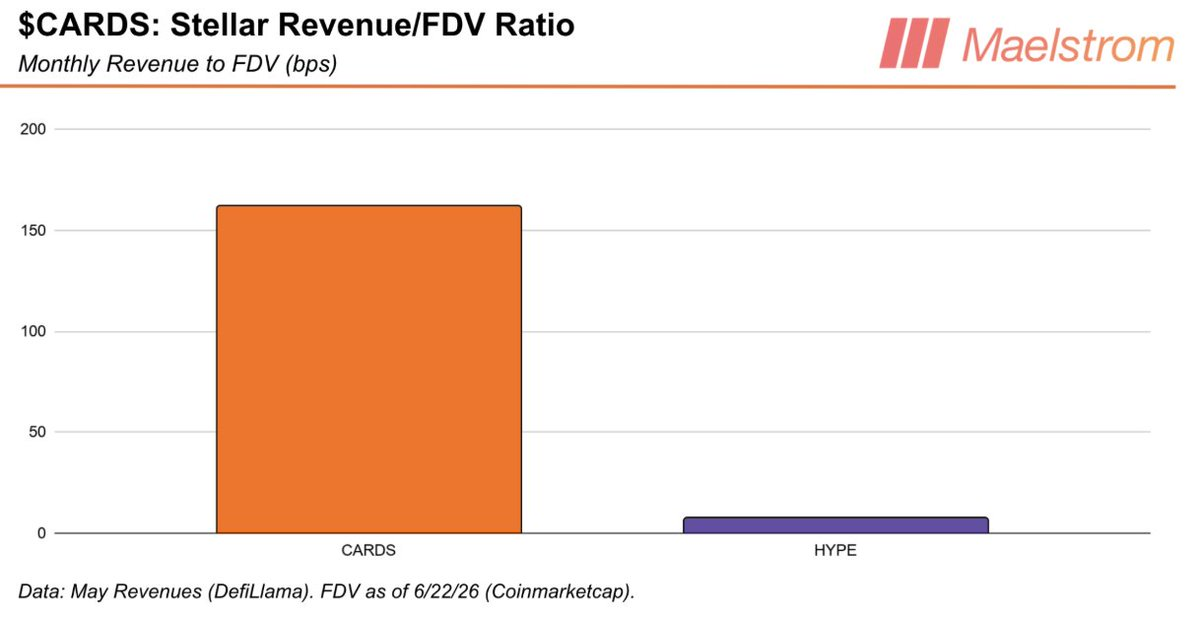
Collector Crypt (referred to as "CC") tokenizes graded trading cards on the Solana platform, generating cash in the process: the annualized profit was around 53 million dollars in May, and calculated at this rate is about 109 million dollars in June, with a final issuance price of about 500 million dollars. This is a true product that goes beyond cryptocurrency, achieving a deep alignment with the market. It brings in real cash and returns profits to holders, currently in a rapid growth phase.
We are still in the early stages. The rotation from eBay to CC has just begun, and since this token was launched first on a decentralized exchange (DEX), liquidity has not yet materialized. The increase potential at venture capital levels is one of the lowest valuation multiples in the industry.
Expectation Value Collection
Most of Collector's profits come from gacha machines (digital card pack openings). Collector purchases trading cards in bulk at a discount of 5-15%. After opening packs, users have two options: keep the cards or sell immediately at a price 7-15% below market value. Most users will seek rare cards and sell most of their cards. This creates a strong business model: users obtain card packs, with expected returns of around 2%, while Collector earns about 4.5% in profit.
Players looking to build a collection of cards worth 100,000 dollars can average cards valued at 102,000 dollars. In addition to the gacha, users can also trade cards directly on the secondary market. Since CC launched its native trading platform in late April, trading volumes have surged, with weekly cumulative transactions reaching approximately 650,000 dollars.
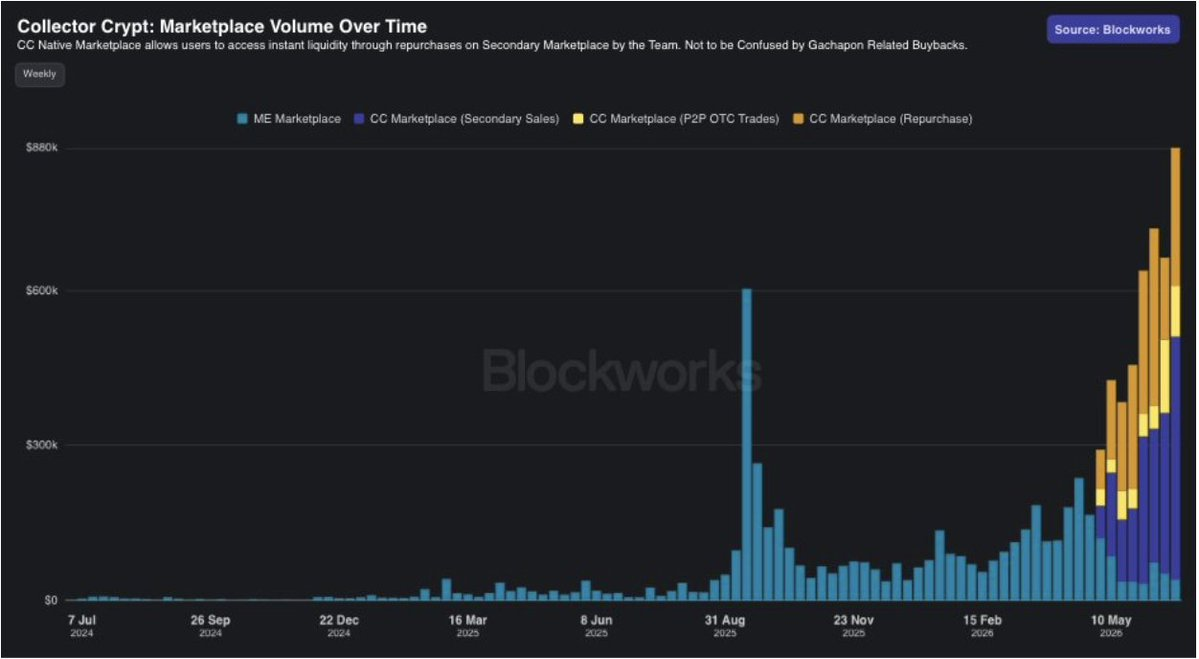
Defeating eBay
Stablecoins have disrupted cross-border payments. Hyper-liquid tokens have revolutionized round-the-clock trading. They both have achieved a tenfold enhancement of the originally flawed Web 2 processes on-chain, realizing the liberalization of funds. CC is bringing the same transformation to collectible card trading. This is a huge opportunity: eBay set a record with a total transaction volume of 22.2 billion dollars in Q1 2026, with revenues reaching 3.1 billion dollars. Collectibles are its largest growth driver.
Today, most trading card transactions occur through eBay. The total cost of selling a Pokémon card on eBay accounts for 16% to 20% of total sales. This includes standard transaction fees (13.25%), fixed order fees, optional promotional product information, packaging, and shipping fees. It is an exploitative market structure with enormous operational costs.
Credit cards are a completely different matter: fees are only 2%, with instant settlement, cards stored in insured custodial facilities, and trading at the touch of a button. This is undoubtedly a disruptive change, and it seems natural in hindsight.
Star Number
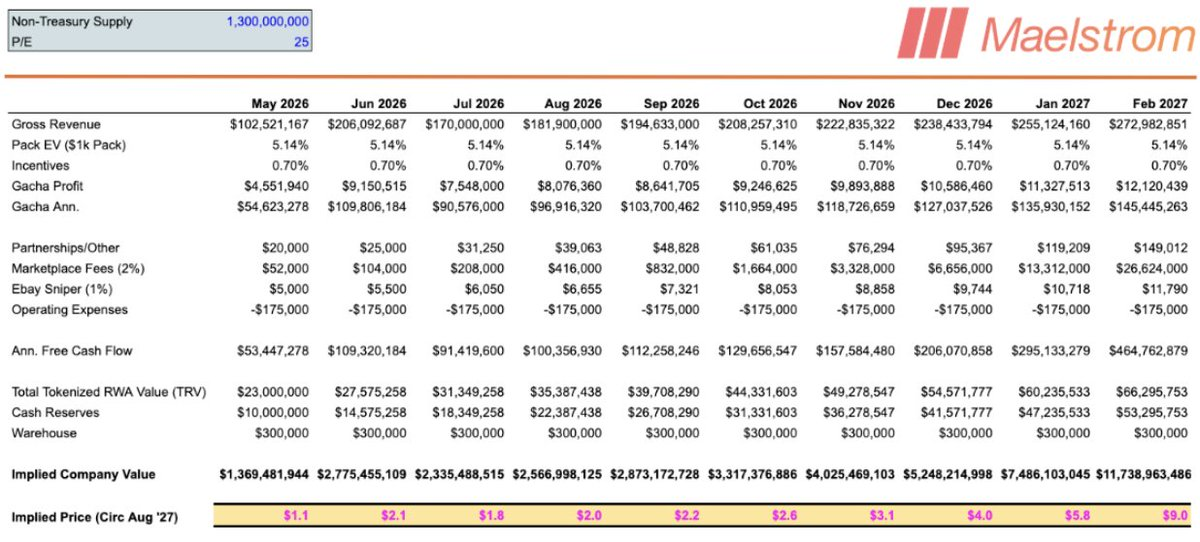
Industry value; with a 93% repurchase rate); this can well approximate the overall profit margin of all card packs. After deducting incentives, the net profit margin is about 4.44%.
Last month, CC's annualized total revenue was 1.2 billion dollars, indicating that the annualized profit from the gacha business was 54 million dollars. In June, we anticipate achieving 2.4 billion dollars in annualized total revenue and 109 million dollars in annualized gacha business profits.
In addition to the gacha mechanism, other profit drivers include
- Market fees: secondary market trading fees
- Partnerships: projects based on CC infrastructure
- eBay Sniper: allowing collectors to set maximum bids in eBay auctions using USDC.
The gacha machines continuously chain-up inventory, and we are moving towards a point where CC on-chain liquidity can rival eBay. Secondary market trading activities and fees are expected to grow significantly.
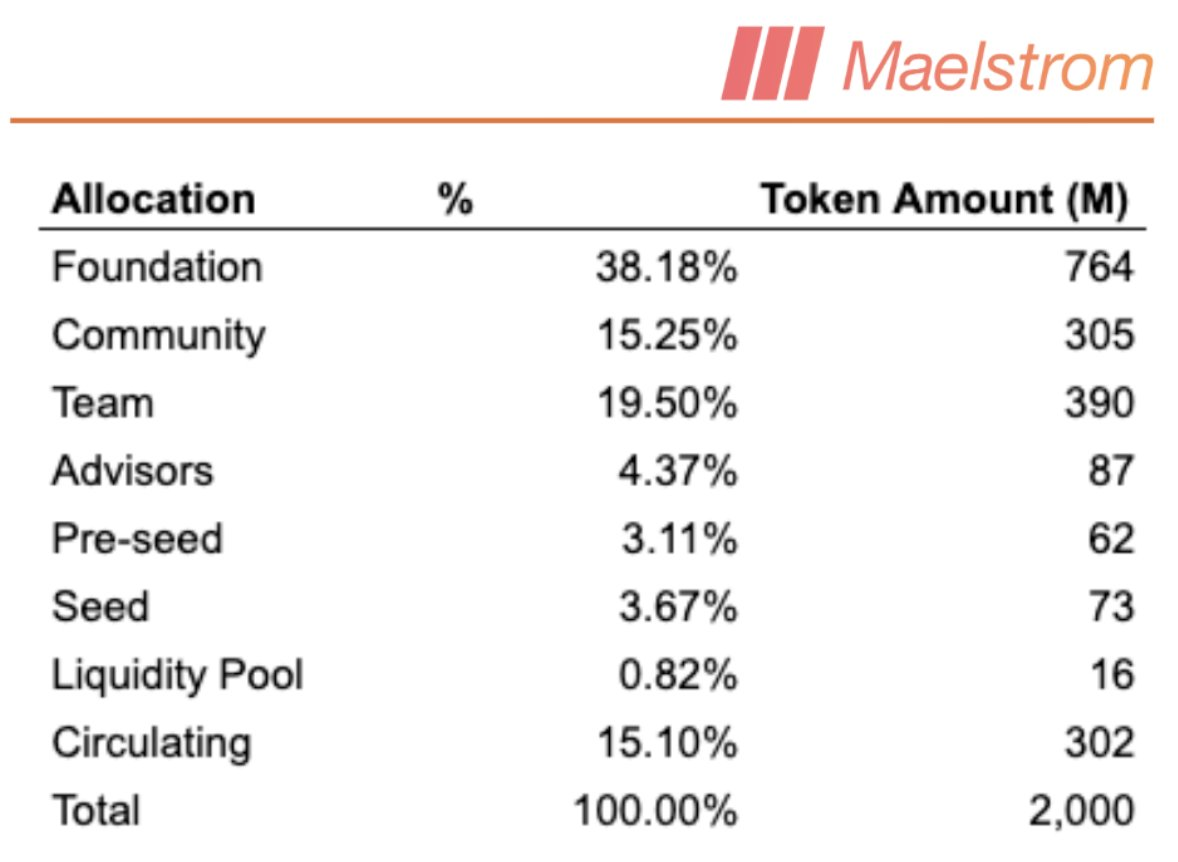
Supply is about 40% tighter than what FDV forecasts.
FDV is calculated based on a total supply of 2 billion. This greatly overestimates the final supply after all tokens are unlocked in September 2027. Over 50% of the total supply is allocated to the foundation and community, most of which will never enter circulating supply.
- Community: used to pay incentives. 2.5% allocated at the token generator event (TGE), with 0.75% distributed to users every three months. As the price of the token rises, the team will slow down the distribution rate. Conservatively estimated, by September 2027, half of the community token supply may enter circulation.
- Foundation: used for future staffing and job postings. Due to strong profitability, it may remain completely unchanged. Conservatively estimated, by September 2027, 30% of the supply may enter circulation.
Even under the most optimistic assumptions, only 1.3 billion tokens would be actively circulating after all unlocks are complete. When purchasing at a final valuation (FDV) of 500 million dollars, you are essentially buying approximately 325 million dollars in valuation until all unlocks.
Repurchase
As of now, CC has accumulated an inventory of trading cards valued at approximately 23 million dollars and about 10 million dollars in cash. This cash can be used for new growth opportunities and token repurchases.
The repurchase has begun. On May 12, CC acquired shares from a pre-seed round investor:
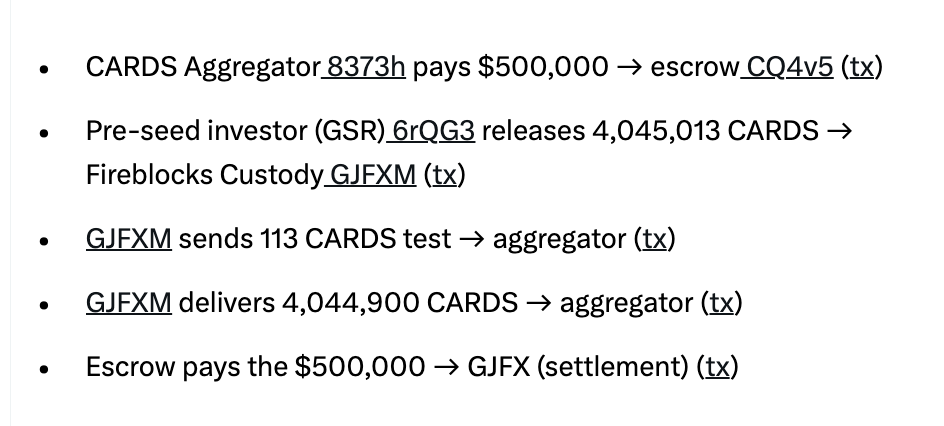
The settlement in this case was very clear—the funds were paid directly from the fund pool in the form of a custodial account, belonging to both parties diluting the burden. The team may have also cleared the seed round investor's funding.
Additionally, CC seems to have been buying back from the market since June 11. For a detailed analysis, please see the section below.
Liquidity Funding Marginalized
Like Hyperliquid, CC has not yielded to the expensive onboarding fees of centralized exchanges (CEX) but chose to prioritize a strategy focused on decentralized exchanges (DEX). Trading volumes have rebounded, but they are still insufficient to establish a substantial liquidity position.
The Next Hot Product Initially Looks Like a Toy.
CC is not just a trading card company. It is building a financial infrastructure for a completely new asset class. Trading cards and more broadly collectibles have become an emerging high-yield asset class—but, so far, institutional investors have been unable to participate.
Imagine you run a family office and want to allocate 10 million dollars to purchase trading cards. Would you go on eBay to place 10,000 orders and then have sellers ship the cards to your office? Clearly not. The emergence of trading cards has opened the doors for a whole new group of market participants.
Watches, cars, and wine—collectibles have long been a way for the wealthy to showcase their status and identity. For younger buyers, trading cards are currently a huge trend. With the acceleration of intergenerational wealth transfer, trading cards are becoming the next major category of collectibles.
CC, with its small yet highly promising user base, is building a rocket-like growth vehicle at the intersection of cryptocurrency and Pokémon. The company has about 800 daily active users, and its profitability surpasses that of many major players in the cryptocurrency space. Today, the CC team is expanding its business into more collectible areas, such as sports cards, and is making inroads into Web 2.0. It has become one of the most profitable companies in cryptocurrency—and this is just the beginning.
Maelstrom Target Price: 4 dollars by the end of summer. Non-financial advice. Please conduct your own research.
免责声明:本文章仅代表作者个人观点,不代表本平台的立场和观点。本文章仅供信息分享,不构成对任何人的任何投资建议。用户与作者之间的任何争议,与本平台无关。如网页中刊载的文章或图片涉及侵权,请提供相关的权利证明和身份证明发送邮件到support@aicoin.com,本平台相关工作人员将会进行核查。


