Organized & Compiled by: Deep Tide TechFlow
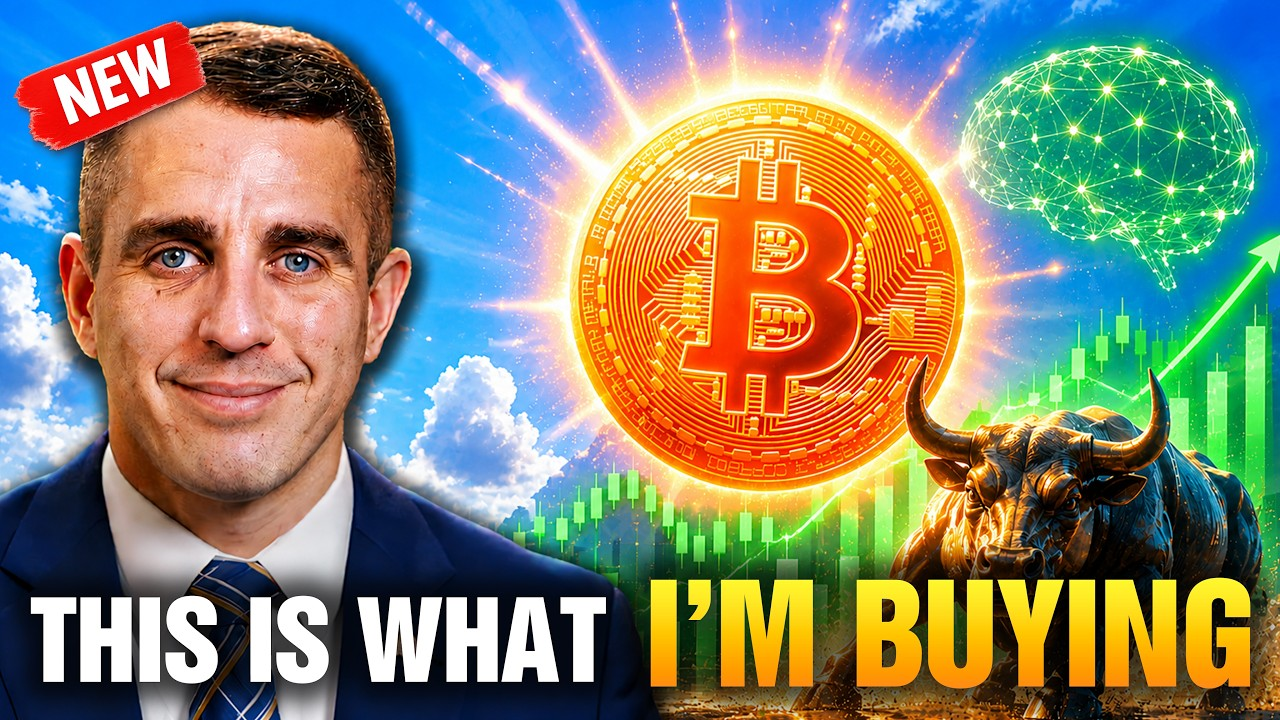
Guests: Anthony Pompliano, Founder and CEO of Professional Capital Management
Host: John Pompliano, Associate at Pomp Investments
Podcast Source: Anthony Pompliano
Original Title: I Just Revealed My Current Portfolio…
Broadcast Date: June 24, 2026
Key Points Summary
Anthony Pompliano and John Pompliano reunite in this episode to deeply analyze the dramatic sell-off of the seven major tech giants (Mag 7) in the US stock market, the societal panic over AI capital expenditure (CapEx), and why the underlying inflation data is actually much safer and more controlled than what media headlines suggest.
This episode's guest is Anthony Pompliano, Founder and CEO of Professional Capital Management, who has been actively involved in the cryptocurrency investment field, and his podcast is one of the most listened-to finance podcasts in North America.
In addition, we will fully review Anthony's latest portfolio, exclusively revealing the real political chess behind the new Federal Reserve Chairman Kevin Warsh's interest rate decision and deeply dissect why in the long-term expedition heading into the next decade, Bitcoin's "high volatility" is not a risk but rather its most core ultimate advantage.
Exciting Points Summary
The Real Logic Behind the MAG 7 Pullback
- "The core reason MAG 7 is being sold off is that they essentially belong to long-duration assets, which are very sensitive to inflation."
- "For MAG 7, these AI companies won't suddenly explode or go to zero."
- "If inflation falls in the third and fourth quarters, the valuation multiples of MAG 7 could very likely expand again."
- "Google's current valuation is cheaper than Apple's, but it is growing faster. Why is that? The core reason is that the market is concerned about AI capital expenditure. Now there is actually a good opportunity to buy into some of the best companies in the world at a lower valuation."
- "Many value investors have consistently underperformed over the years because they are too attached to measuring today's companies with old frameworks. Of course, you should respect history, but you can't just point to old data saying 'these companies are too expensive' for 15 years straight."
- "It is likely that a company first claims it will spend $10 billion on capital expenditure in the next two years, but the actual expenditure ends up being only $6 billion. $6 billion is still a very high number, but it is 40% less than what the market initially feared. Now the market is overly preoccupied with the path of inflation, I believe this has been mispriced."
Repricing of AI Capital Expenditure and ROI
- "The real issue now is the cost of Tokens. Talk to a group of CEOs, and you'll find everyone saying the same thing: we are spending too much on Tokens but have no idea where the ROI really is."
- "Everyone is starting to move towards the same goal: getting the same output efficiency with fewer Tokens."
- "What is the bottleneck limiting the spread of this technology? Electricity, data centers, chips."
- "Just a few days ago, I saw a report about a company adjusting employee working hours to 1 AM to 10 AM, partly because they believe that calling the model during this time is cheaper, with lower system load and more accurate responses."
Investment Strategy: Stay Away from the Middle Ground
- "If you summarize the investment approach, I think there are generally two paths. The first is to buy large indices; investing in the large-cap index itself is already a very good strategy. The second path is to invest in highly asymmetric opportunities. I believe the worst place to be is the middle ground. You shouldn't allocate money to companies that are mid-sized, have only average growth, and offer mediocre returns."
- "The two most interesting technologies in the world today are Bitcoin and AI."
- "I own Tesla. I believe that if Elon creates a monopoly in humanoid robots and autonomous driving, it will be extremely valuable."
- "Once he can use AI, machine learning, and computer vision to give hardware such abilities, he effectively captures the embodiment entry point into the direction of 'physical AI,' which I believe will be extremely valuable."
- "What do I want to expose myself to? I will hold a certain amount of cash in the long term and also hold Bitcoin."
- "Anduril's model is to let a group of startups first achieve technological breakthroughs, and once that technology is verified, it goes in to acquire these drone companies. They are very good at mergers and acquisitions and have a strong business development team that can quickly push the acquired technology into commercial contracts. In other words, it is a platform that 'buys technology and then commercializes it.'
His Actual Investment Portfolio
- "In the private market, I hold many software AI companies, like Replit, Lovable, and Micro One, which are very strong in their respective verticals; in the public market, I am more focused on physical AI and robotics."
- "Whether in the public or private market, whether in software or hardware, I have a relatively complete exposure to AI."
- "I own Tesla not because of cars but because I believe that if Elon forms a monopoly in humanoid robots and autonomous driving, it will be extremely valuable."
- "He will eventually merge SpaceX and Tesla, likely before 2030. Once this happens, he will integrate the most important projects into a giant conglomerate."
Bitcoin Enters a New Phase
- "Unhappiness is essentially the gap between expectations and reality. So you cannot set outrageous expectations for Bitcoin. If you set expectations at 25% to 30%, and it does better, you will be pleasantly surprised. But if you expect it to increase 100% each year, you are asking for disappointment."
- "The government will continue to print money; the core investment logic of Bitcoin has not been undermined. The change is that it has now entered a different stage of competition."
- "Bitcoin used to be like playing high school basketball; you were one of the standout players on the court. Now it feels more like playing college basketball. All the players are stronger, the gaps aren't as exaggerated as before, but the quality of the game is higher, and it's more worth watching."
- "At some later stage, it will enter the NBA, which may be when sovereign wealth funds fully enter the market. We have not reached that point yet, but now it resembles college basketball, even the power teams like Duke."
John Pompliano: Do you think this bear market is already different from 2022? Because subjectively, I feel that retail sentiment is worse than before, but institutional interest in Bitcoin might be higher than in the past.
Anthony Pompliano: The sentiment around Bitcoin in the internet world is indeed very low.
John Pompliano: It may also be because we used to live in Miami and are now in New York, so it feels different, but I do feel this is different.
Anthony Pompliano: Right now, internet retail sentiment is very low. I've seen some people I've known for many years attacking each other, saying exaggerated things, and some are emotionally breaking down and exiting the market. But in the institutional world, you hardly see such situations.
They may not be adding more capital to Bitcoin, but the overall state is much calmer and more orderly. They have investment committees, risk management, and more data-driven processes. So a general conclusion is: retail investors are usually more emotional, while institutions tend to be less so. Of course, there are still people in institutions with emotions, but to a different degree.
So I prefer to describe the current situation as: the sentiment among retail investors in the internet world is quite poor, but institutional sentiment is actually not bad. I don't think institutions have entered a state of frenzy, nor do I perceive a bubble everywhere in the market. They continue building various technologies, still creating Bitcoin-related funds, still developing custody solutions, and still acquiring relevant teams.
For example, Franklin Templeton has made moves recently. Likewise, OKX and ICE have just partnered to launch a batch of products. You will find that things have been progressing.
So when someone says "investor sentiment is very low," they are often just using internet opinion as a proxy variable. But the current market is no longer solely defined by the internet. In the past, everything about Bitcoin happened almost exclusively online; I could even predict Bitcoin’s daily price movement by just watching the online atmosphere. But that is no longer the case, as a whole new group of players has entered the arena.
Perhaps today, the market has turned into a 50-50 situation, with half of the important information and influence still in the internet and half having shifted to the institutional world. Don’t forget, the past structure was 100 to 0, where the institutional side was nearly blank. What about in 10 years? Could it become 80-20 or 90-10? It is entirely possible.
This indicates that the importance of institutions is continuously rising, and they hold more capital; while some individual investors are capitulating, exiting, or turning to other assets.
So I know that internet sentiment is low, and I don't like seeing friends argue amongst themselves, but from a market structure perspective, this is partially a common part of the bottoming process. Are we at the bottom? I don't know. But we have indeed fallen quite a bit, and there are many signs indicating that the bottom may not be far off, or it may have already occurred. Next, it depends on how the market moves.
免责声明:本文章仅代表作者个人观点,不代表本平台的立场和观点。本文章仅供信息分享,不构成对任何人的任何投资建议。用户与作者之间的任何争议,与本平台无关。如网页中刊载的文章或图片涉及侵权,请提供相关的权利证明和身份证明发送邮件到support@aicoin.com,本平台相关工作人员将会进行核查。


