Author: Yan Wai Zhi Yi, Wall Street Watch
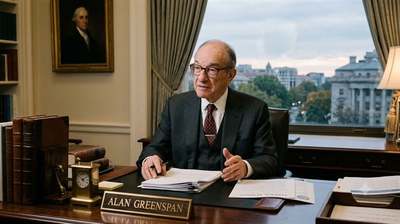
On June 22, 2026, NBC reported a piece of news that was not surprising: former Federal Reserve Chairman Alan Greenspan passed away due to complications from Parkinson's disease, at the age of 100.
He had been out of the public eye for a long time. However, what he left behind has not left the market for a moment.
Today, more than half of the pricing logic in global financial markets still bears his fingerprints. The phrase "the Federal Reserve will provide liquidity" after "Black Monday" in 1987, the question that triggered global stock market tremors about "irrational exuberance" in 1996, and the creed that traders have recited for 30 years— "Don’t Fight the Fed." These are not history; they are codes that are currently running.
Just days before Greenspan's death, current Federal Reserve Chairman Kevin Warsh had just initiated a comprehensive review of how the Federal Reserve operates. The timing almost feels like a deliberately arranged metaphor: one person takes a bow, while the rules he personally wrote are being dismantled and rebuilt by another.
The Birth of the "Greenspan Put"
To understand what Warsh is changing, one must first comprehend the system he is inheriting—that system is almost entirely of Greenspan's making.
On August 11, 1987, 61-year-old Greenspan was nominated by President Reagan, succeeding Paul Volcker as Chairman of the Federal Reserve. This was quite an unexpected appointment. Greenspan was not a traditional academic economist; his doctoral dissertation took decades to complete (he received his doctorate from New York University in 1977 at the age of 51). His background was as a Wall Street consultant—he co-founded Townsend-Greenspan & Co. in 1954 with lawyer Nathan Wolff, specifically providing economic forecasting services for businesses and financial institutions. His intuition regarding data and business cycles was honed through making money for clients, not derived from chalkboards.
This experience profoundly influenced his subsequent 19 years at the Federal Reserve.
Just 69 days after taking office, on October 19, 1987, "Black Monday" struck. The Dow Jones Industrial Average plummeted 22.6% in a single day, marking the most severe single-day drop in the history of the U.S. capital markets. Programmatic trading triggered a chain reaction, throwing the market into a liquidity black hole, with no one knowing how low it would go.
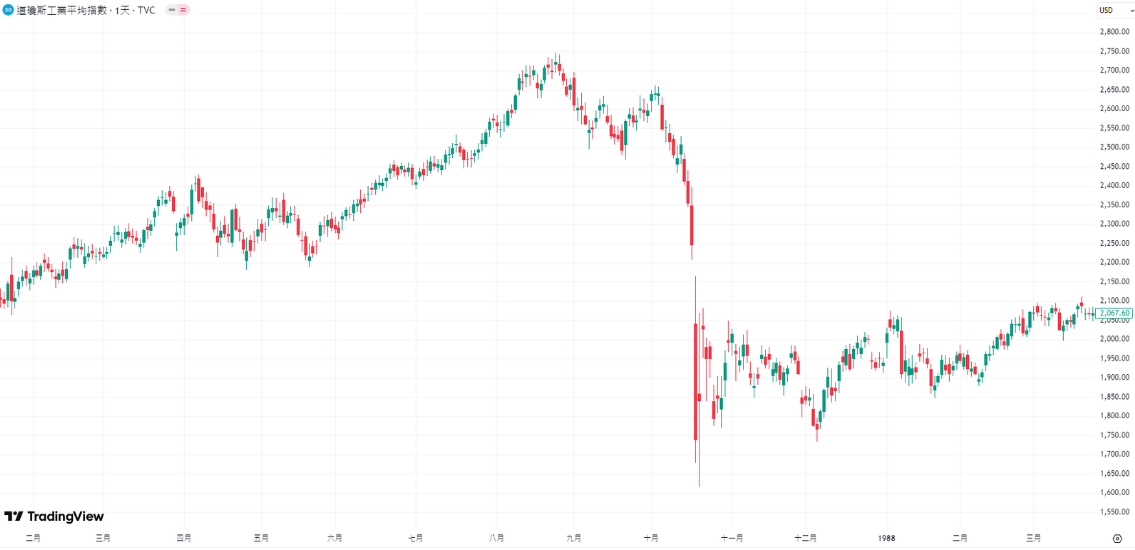
Greenspan's response defined the Federal Reserve's behavioral paradigm for the following 30 years. He did not wait for the market to clear itself—that would have been the textbook answer of classical economics—rather, he quickly issued a statement: the Federal Reserve would "provide liquidity to support the economy and financial system," and tacitly allowed banks to increase loans to brokers. This statement stabilized the market.
This logic was later condensed by the market into one word—"Greenspan Put." It means: when the market falls deep enough, the Federal Reserve will certainly intervene, equivalent to giving all market participants a free put option. Once this expectation takes shape, it cannot revert.
"Irrational Exuberance" and the Power of Language
Greenspan shaped the market not only through action but also through language.
On December 5, 1996, he delivered a speech at the American Enterprise Institute (AEI), where he casually posed a rhetorical question: "How do we know when irrational exuberance has unduly escalated asset values?"
This statement was a question in itself, with no policy implications. However, the market's reaction was nearly instantaneous: the Tokyo stock market opened the next day down 3%, with global markets following suit.
This demonstrates the power of "Greenspan speak." He later proudly summarized his own linguistic style as "purposeful ambiguity"—using four or five increasingly obscure sentences to avoid answering questions he did not want to address, making the questioning lawmakers believe they received an answer, then contentedly moving on to the next question.
However, "irrational exuberance" was not ambiguous language; it was precise like a scalpel. It conveyed a signal: I think the stock market is too expensive. Just that was enough to trigger global shocks. The market soon realized that this statement did not change any policies—interest rates remained unchanged, liquidity was not withdrawn. The stock market briefly fell before continuing to rise, ultimately peaking in March 2000 at the height of the internet bubble.
This further reinforced the credibility of the "Greenspan Put": if he was unwilling to genuinely tighten monetary policy even after verbally warning, then he must be on the side of the bulls.
1994: The Forgotten "Hard Hand"
Today, people mainly remember Greenspan for the "Put"—feeling that he was always on the market's side. However, the events of 1994 tell a completely different story.
At the beginning of 1994, Greenspan assessed that inflationary pressures were building up and decided to take preemptive action. Contrary to market expectations of a dovish stance, he rapidly raised the federal funds rate from 3% to 6% within a year. This move was not communicated adequately to the market in advance and was deemed a "sneak attack" by it.
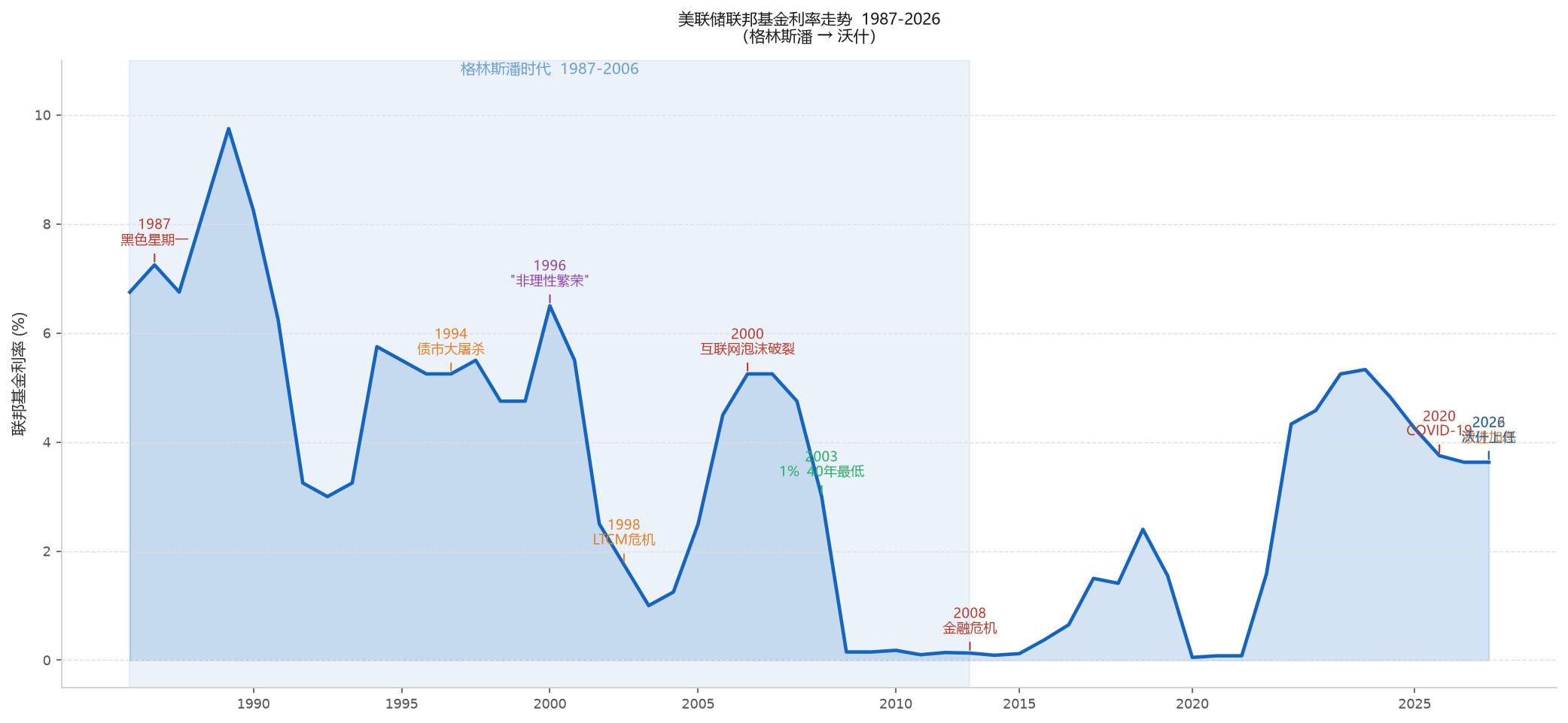
The result was a disaster—a "bond massacre," with bond portfolio losses of up to $1.5 trillion; Orange County, California, went bankrupt due to massive losses in bond derivatives, and Greenspan's approval rating in the financial markets plummeted.
However, the outcome actually solidified Greenspan's market reputation. He proved that he was not afraid to offend the market. His real priority was controlling inflation rather than pleasing Wall Street. This reputation allowed him to maintain lower interest rates in the late 1990s without triggering inflation expectations to become unanchored—market participants trusted him and believed he would intervene when necessary.
This was the prerequisite for the "Greenspan Put" to exist: the market believed Greenspan had the ability to control inflation, which is why they believed he would cushion the blow during crises. The two are two sides of the same coin.
1998: LTCM and the "Too Big to Fail" Precedent
In 1998, two crises almost erupted simultaneously: the Russian sovereign debt default and the nearing bankruptcy of Long-Term Capital Management (LTCM)—a hedge fund run by Nobel Prize-winning economists.
Greenspan's response once again shaped market expectations. He decisively lowered interest rates and personally took the lead in organizing Wall Street investment banks for a private bailout of LTCM (the Federal Reserve did not provide direct funding but coordinated private sector intervention).
The historical significance of this event is often underestimated. It is one of the important sources of the "Too Big to Fail" logic in modern financial markets—when the failure of an institution is sufficient to trigger systemic collapse, whether it is a bank, investment bank, or hedge fund, there will be some entity (central bank or government) to organize the rescue.
Since then, the "Greenspan Put" expanded from the stock market to the entire financial system. The market began to systematically expect that the risks of systemically important institutions would ultimately be backed by monetary authorities.
Greenspan himself did not resent this role. He wrote in his memoirs, "The duty of a central banker is not to prevent every bubble from forming, but to ensure that the financial system does not collapse when a bubble bursts." This statement sounds prudent, but the market’s understanding was: "So I can stay in the bubble a little longer; after all, the Federal Reserve will handle it when it bursts."
The Dark Side of Legacy: 1% Interest Rates and Questions of 2008
With the burst of the internet bubble in 2000, followed by the "9/11" terrorist attacks in 2001, Greenspan's response was to lower the federal funds rate from 6.5% in mid-2000 to 1% in mid-2003—this was the lowest federal funds rate in over 40 years in the U.S., maintained for a year.
Cheap funds flowed into the real estate market. From 2000 to 2006, U.S. home prices rose over 80% cumulatively. Subprime mortgages—loans to borrowers with very weak repayment abilities—expanded explosively during this period. Wall Street bundled subprime loans into CDOs (collateralized debt obligations), convincing themselves these products were "safe" through complex mathematical models.
In 2008, all of this collapsed.
Critics pointed their fingers directly at Greenspan: by keeping the interest rate at 1% in 2003 for a year, you inflated the real estate bubble with cheap funds. You are the culprit of the 2008 financial crisis.
Greenspan's defense was equally strong. In a 2007 interview with USA Today, he said: "On this one, I’m innocent." In his memoir "The Age of Turbulence," he shifted the blame to the "Global Savings Glut"—emerging markets, represented by China, invested massive trade surpluses in dollar-denominated assets, which lowered long-term interest rates, thus being the fundamental source of monetary easing, rather than the Fed’s short-term interest rate policy.
This debate remains unresolved. In 2016, a working paper from the Bank for International Settlements (BIS) concluded through quantitative analysis that maintaining overly low interest rates in the late period of Greenspan's tenure significantly pushed up housing prices. However, some economists pointed out that U.S. inflation levels from 2003 to 2005 were quite low, and the "neutral interest rate" was itself declining, so Greenspan's rate cuts were not entirely unreasonable.
Regardless, the 2008 crisis fundamentally challenged the logic of the "Greenspan Put": when the market firmly believes that the central bank will rescue it at every downturn, moral hazard accumulates to a level of systemic risk. This is precisely the legacy that the subsequent three Federal Reserve Chairmen—Bernanke, Yellen, and Powell—have had to face: how to provide crisis support without further reinforcing the market’s expectation of moral hazard.
Later Years: From "Economic Tsar" to Controversial Figure
On January 31, 2006, Greenspan concluded his 19-year tenure as Chairman of the Federal Reserve. Upon leaving, his popularity was at its peak— the U.S. economy had experienced one of the longest expansion cycles in history, inflation was suppressed at low levels, and the stock market enjoyed a historic bull market in the 1990s.
However, the financial crisis arrived two years later, and Greenspan’s reputation subsequently collapsed. In October 2008, he attended a Congressional hearing and admitted he was "shocked and could not believe" that the free market could fail so badly. This statement was interpreted by the media as a "public confession of Greenspan’s faith in the free market," marking a pivotal moment in the decline of his public image.
After leaving office, Greenspan did not completely fade from public view. He founded a consulting firm, Greenspan Associates, continuing to provide economic advisory services to financial institutions. He occasionally made media appearances— in 2018, he warned investors on CNBC to "run for cover," as the U.S. Treasury yield curve had inverted, which he considered a strong signal of an impending recession. In 2024, he joined other former Federal Reserve and Treasury officials in a statement condemning the criminal investigation into Fed Chairman Powell, calling it "an unprecedented attempt to undermine the independence of the Federal Reserve through prosecutorial attacks."
His personal life was also quite newsworthy. His first marriage (to painter Joan Mitchell) ended in under a year. In 1997, at the age of 71, Greenspan married NBC's chief foreign affairs correspondent Andrea Mitchell, with the ceremony officiated by Justice Ruth Bader Ginsburg. This marriage lasted until his death.
Greenspan also had a little-known early identity: a jazz saxophonist. He attended the Juilliard School and actually played in Woody Herman's jazz band at one point. This experience may explain his natural preference for "improvisation" and "ambiguity"—whether in monetary policy or in dealing with journalists' questions.
What is Warsh Changing After Greenspan's Death?
When news of Greenspan's death broke, current Federal Reserve Chairman Kevin Warsh had just initiated five special task forces less than a week prior.
Warsh is not an outsider to the Federal Reserve. From 2006 to 2011, he served as a Fed Governor and witnessed the transition from Greenspan's era to the early Bernanke era. After leaving the Federal Reserve, he went to Stanford University’s Hoover Institution and began systematically criticizing the Federal Reserve's increasingly expansive "ultra-loose monetary path" post-crisis—particularly how the balance sheet expanded from less than $900 billion before 2008 to a peak of over $9 trillion. He believes that such a scale of asset purchases distorts asset pricing and leads to a pathological reliance on central bank intervention in the markets.
This is exactly the first thing he intends to tackle once in office.
On June 17, 2026, Warsh chaired his first FOMC meeting. Keeping interest rates unchanged was expected, but the notable change in the post-meeting statement’s format was that Warsh placed "interest rate decision" at the forefront of the statement, rather than starting with an economic assessment followed by the decision as had been customary since 2009. This detail is a move towards the statement format of the latter Greenspan era.
The larger action was the establishment of the five special task forces: reexamining the Federal Reserve's communication strategy, data framework, theory of inflation, size of the balance sheet, and the impact of new technologies like artificial intelligence on the transmission mechanisms of monetary policy. Warsh's directive for these task forces is to "start from first principles"—in other words, do not assume that any existing framework is a given.
Among these, the most intriguing possibility is that "forward guidance" may be weakened or even eliminated. Warsh is skeptical of the Federal Reserve's long-held practice of "clearly telling the market what we intend to do next." He deleted all guiding language regarding future policy paths from the first post-meeting statement. Former Cleveland Fed President Loretta Mester provided an accurate metaphor for this: the Federal Reserve has long had a "Hotel California problem"—once a statement is written into the protocol, it can never be deleted. Warsh is undertaking a long-overdue "liquidation."
If this indeed happens, the "Greenspan Put" will lose its most important communication vehicle. Over the past 15 years, the main source of information that the market relied upon to price "when will the Fed rescue me" has been the FOMC statements and forward guidance from the Chairman's press conferences. If this information is intentionally obscured or even eliminated, the meaning of "Don’t Fight the Fed" will fundamentally change— the Federal Reserve may not necessarily show up when you expect it or in the way you expect it.
Conclusion: The End of a Paradigm
Greenspan lived for 100 years, long enough to witness the legacy he left being questioned by the 2008 financial crisis, magnified by quantitative easing, and distorted by the average inflation targeting regime.
He represented an era of confidence in which "the Federal Reserve can manage the market."
During his 19-year tenure, the U.S. experienced one of the longest economic expansions in history, inflation was kept low, and "Don’t Fight the Fed" became the creed on the lips of all traders. He was referred to by Fortune magazine as "In Greenspan We Trust," and by Bob Woodward’s biography as the "Maestro."
In contrast, Warsh faces an era of skepticism regarding "whether the Federal Reserve can still control inflation expectations." Global supply chain disruptions, fragmented geopolitical landscapes, and challenges to the credit of the dollar—these issues extend far beyond what monetary policy alone can address. His chosen method of response is to rewrite the very DNA of the Federal Reserve.
On June 22, 2026, Greenspan passed away. The playbook he left behind—the "Greenspan Put," the art of ambiguous yet powerful language, and the expectation management that supports the market with the Fed's credibility—officially became history at this moment. Meanwhile, the Federal Reserve is facing a world that is far more complex than that of 1987, without the guidance of a "master."
免责声明:本文章仅代表作者个人观点,不代表本平台的立场和观点。本文章仅供信息分享,不构成对任何人的任何投资建议。用户与作者之间的任何争议,与本平台无关。如网页中刊载的文章或图片涉及侵权,请提供相关的权利证明和身份证明发送邮件到support@aicoin.com,本平台相关工作人员将会进行核查。


