Author: CryptoSlate
Compilation: Deep Tide TechFlow
Deep Tide Introduction: SpaceX's stock price surged over 50% in the week following its IPO, and Musk's personal wealth reached $1.32 trillion, surpassing Bitcoin's market capitalization of $1.29 trillion. This is not a failure of Bitcoin, but rather speculative capital is withdrawing from the crypto market and flowing into SpaceX, the "meme stock at the $2 trillion level." However, the company is projected to lose nearly $5 billion in 2025, and its current valuation bets on Musk's promise of trillion-dollar revenues by 2030—how long can this wager last?
According to the Bloomberg Billionaires Index, as SpaceX's stock price broke through $200, Musk's net worth has risen to approximately $1.32 trillion, exceeding Bitcoin's market capitalization of about $1.29 trillion.
This milestone highlights how the rapid rise of SpaceX post-IPO is reshaping wealth rankings and shifting the focus of market discussions on speculative risks.
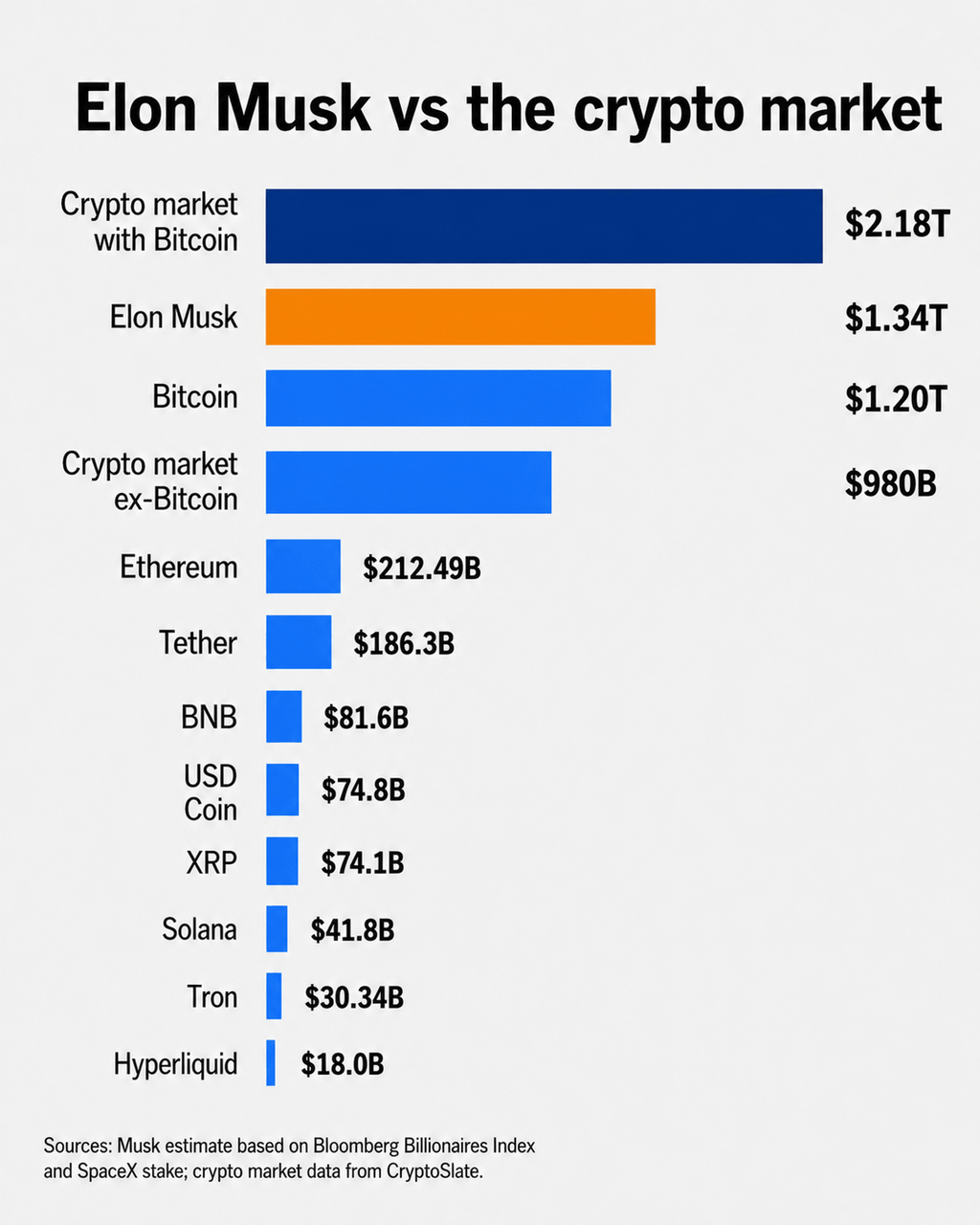
While this comparison is not precise, it vividly demonstrates how SpaceX's rapid rise has become the focal point of global markets, pushing Musk's wealth to unprecedented heights.
Bitcoin's Retracement Makes the Comparison Possible
Bitcoin remains the largest digital asset by market value, but with the broader crypto market retreating from last year's highs, its lead has narrowed.
According to CryptoSlate data, the total market value of cryptocurrencies has dropped from around $4.21 trillion at its peak to about $2.23 trillion over the past year. During the same period, Bitcoin has fallen more than 50% from its historic high of nearly $126,000 at the end of 2025, facing months of selling pressure and reduced risk appetite.
This reversal began during Trump's 2024 presidential campaign and continued through his strong rise back to the White House. At that time, Bitcoin first broke through $100,000 as investors reacted to industry-friendly appointments, regulatory proposals, and expectations of a softer Washington stance on digital assets.
However, those gains have faded this year, crypto exchange trading volume has declined, leveraged positions have been liquidated, and capital has flowed back into large tech stocks, private market agents, and newly listed growth companies.
This backdrop makes Musk's wealth milestone more a reflection of Bitcoin losing its benchmark status in crypto rather than SpaceX rapidly becoming a symbol of speculative capital's competitive exit.
Meanwhile, this comparison becomes even clearer beyond Bitcoin. The total value of the crypto market is approximately $2.23 trillion, with Bitcoin accounting for about $1.29 trillion, indicating that Musk's estimated wealth now exceeds the total of the remaining digital asset market.
SpaceX Becomes the New Crowded Trade in the Market
The direct driving force behind Musk's wealth surge is SpaceX, which trades on Nasdaq under the ticker SPCX.
The company’s IPO was priced at $135 per share and has since risen over 50%, pushing its market cap to around $2.7 trillion. This places SpaceX among the most valuable public companies globally, surpassing Amazon and nearing the market value of Microsoft.
This surge is fueled by a rare combination of scarcity, brand strength, and momentum. CryptoSlate reported earlier that only a small portion of SpaceX shares entered the public market, leading investors to scramble for limited float of one of the most anticipated IPOs in years. This imbalance helped convert demand into price pressure.
Meanwhile, retail investors have been a core force behind the rapid increase in stock prices.
According to market flow data quoted by Global Market Investor, South Korean retail investors purchased approximately $795.9 million worth of shares on SpaceX’s first trading day on June 12th. This made SPCX the most purchased US stock by South Korean retail investors in a single day.
This purchase volume exceeded the net purchases of several major American tech stocks over three months. According to the same data, South Korean retail investors bought $748.3 million of Micron Technology, $696.2 million of the Nasdaq 100 ETF, and $694.5 million of Marvell Technology over the past three months.
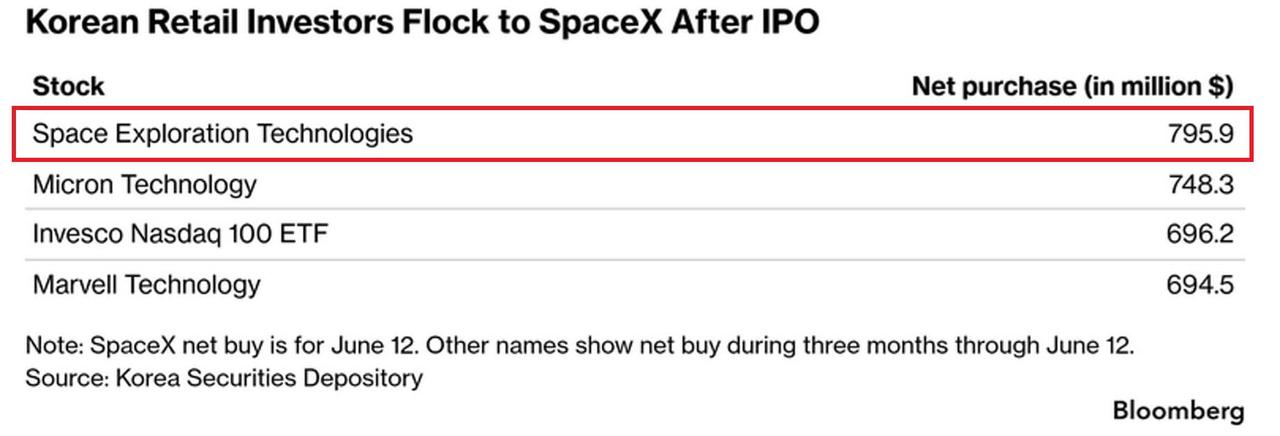
Meanwhile, the purchasing frenzy for SPCX is also reflected in leveraged exchange-traded funds linked to the company, which saw explosive trading in the initial days after its listing.
Bloomberg Intelligence senior ETF analyst Eric Balchunas stated that the total trading volume of the 2x SpaceX ETF surpassed $3 billion, up from about $1 billion the day before.
One product with the ticker SPCH had a trading volume of about $1.3 billion the next day. Balchunas noted that this was the second-highest trading volume on the second day for an ETF ever, surpassing the approximately $500 million trading volume on the second day of BlackRock's spot Bitcoin ETF (IBIT).
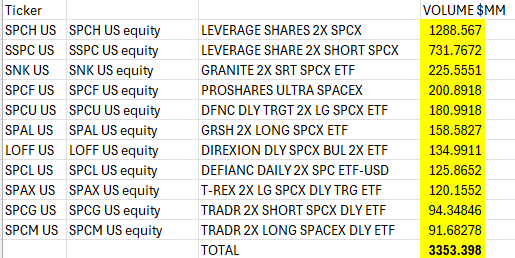
This demand is notable, as many products track the same underlying stocks and offer similar leverage. This suggests that investors are not merely seeking long-term exposure to SpaceX; many are using these funds to express short-term directional bets.
Ultimately, these numbers indicate that SpaceX is treated as a global momentum trade rather than a traditional aerospace public company.
Investors who missed the IPO allocation have been buying shares on the open market, while others have turned to exchange-traded funds, options, and crypto derivatives for exposure to the same product.
Questions About SpaceX’s Valuation Are Growing Louder
The pace of the rise has intensified questions about whether SpaceX’s valuation has outstripped its business fundamentals.
Musk has stated that SpaceX could achieve $1 trillion in annual revenue by 2030, a goal that has helped investors price the company as something beyond just its rocket and satellite business. The market is also assigning value to Starlink, Artificial Intelligence, launch infrastructure, and Musk’s broader technological ecosystem.
Current financial data shows that the company is still spending heavily to build this future. SpaceX recorded a net loss of $4.94 billion on revenues of $18.67 billion in 2025. The company incurred $4.27 billion in losses in the first quarter of 2026, reflecting capital expenditures on Starlink, launch capabilities, computing infrastructure, and AI initiatives.
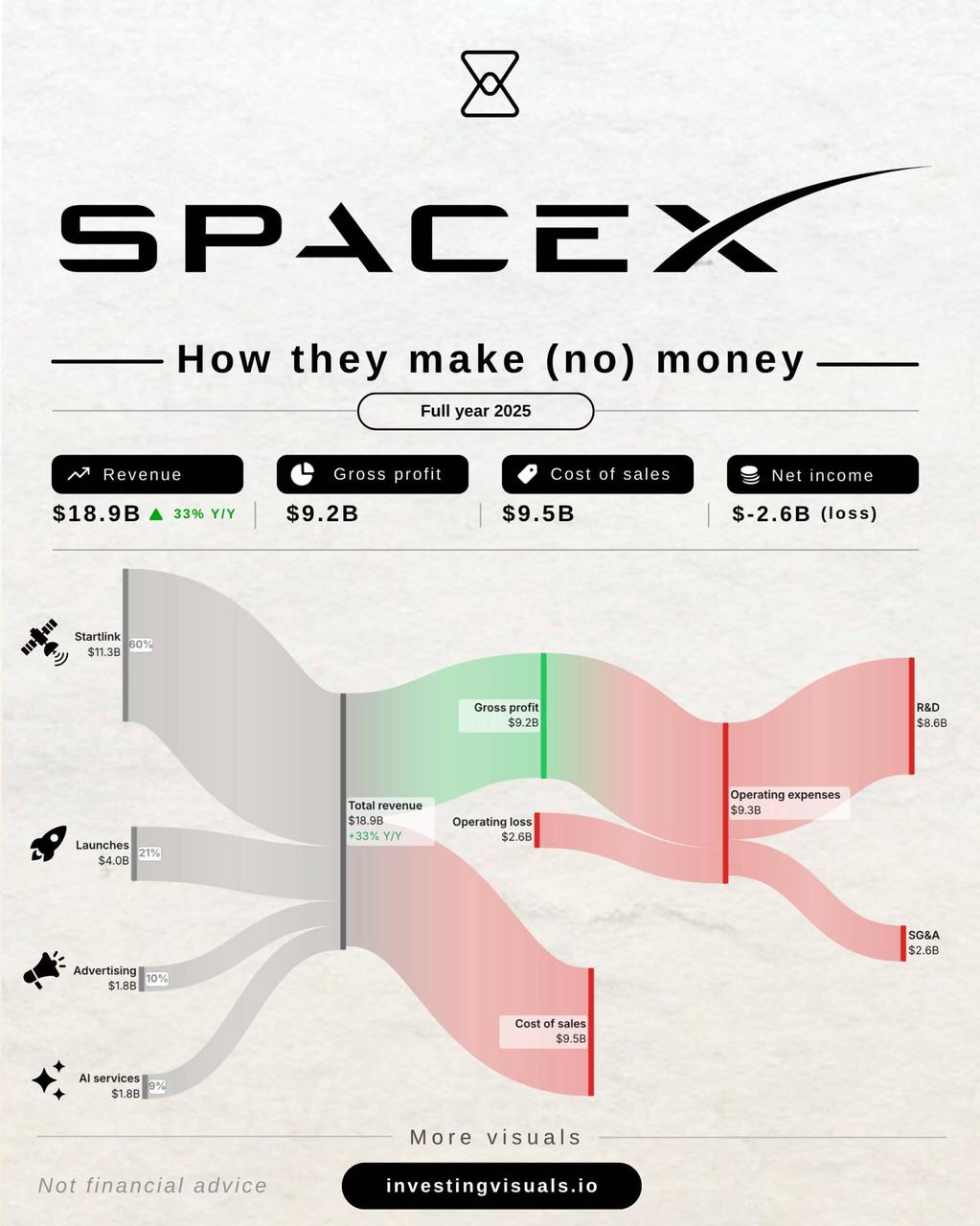
These losses have not deterred the rise. However, they have widened the gap between SpaceX's current state and the price investors are willing to pay for its future.
This is where the comparison with Bitcoin becomes useful. The market cap of Bitcoin has always depended on the price buyers are willing to pay for scarcity, network strength, and future monetary relevance. SpaceX is now being priced similarly with forward-looking logic, albeit through the structure of a publicly traded company associated with Musk.
Currently, the public market rewards this story more aggressively than the crypto market.
While Musk's wealth may not forever exceed Bitcoin’s market value—because SpaceX's stock price may fall, Bitcoin may rebound, or both may fluctuate violently in opposite directions—this milestone captures the current state of risk appetite: the largest speculative trade in the market is no longer necessarily a token, but a rocket company.
免责声明:本文章仅代表作者个人观点,不代表本平台的立场和观点。本文章仅供信息分享,不构成对任何人的任何投资建议。用户与作者之间的任何争议,与本平台无关。如网页中刊载的文章或图片涉及侵权,请提供相关的权利证明和身份证明发送邮件到support@aicoin.com,本平台相关工作人员将会进行核查。


