Author: Flora, CryptoPulse Labs
Recently, WLD has become one of the focal points in the crypto market. Market data shows that WLD continues to rise and has surpassed $0.6, with a total market capitalization exceeding $3 billion.
The main reason driving the warming of market sentiment is that World has officially announced its entry into the third phase of "The Simple Plan," with its growth logic shifting from early token incentives to utility-driven approaches. Now, the question worth contemplating is whether World is truly becoming an important infrastructure in the AI era?
1. From Iris Scanning to Real Applications, World Enters a New Phase
Since its inception, World has had a clear core goal: to build a global "personality proof" network.
In simple terms, it aims to solve an increasingly critical problem in the world of the internet: how to prove that you are a real person and not a robot, script, or AI-generated identity.
In the past few years, this problem seemed distant, but with the explosion of generative AI, it is rapidly becoming a real demand. Nowadays, AI is capable of generating highly realistic images, videos, and voices, and can even operate social accounts in bulk and automatically perform complex tasks.
In the future, a significant portion of active users on the internet may no longer be real people, but AI Agents. In this context, how to verify that the person on the other side is real is beginning to become one of the fundamental issues of the internet.
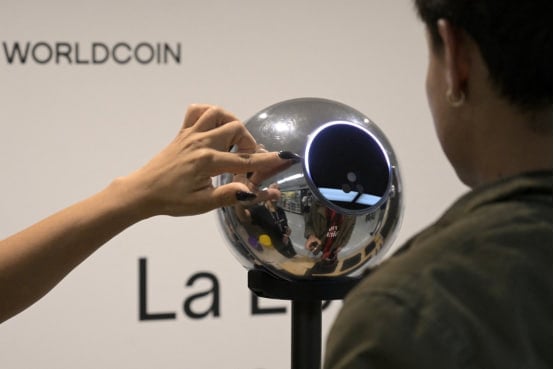
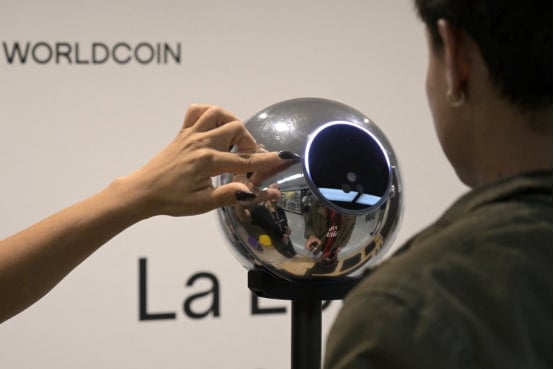
This is exactly the market that World wants to enter. Its core product, World ID, scans users' irises with Orb devices to generate a unique digital identity credential for everyone. This system attempts to achieve "one person, one ID," which can verify authenticity while protecting user privacy as much as possible and supports on-chain calling.
In the past, the biggest skepticism about World in the market was that although the identity system has much potential, it has always lacked real usage scenarios. However, after entering the third phase, this problem is changing. World has clearly stated that it will promote implementation around three main directions: the enterprise sector, the individual sector, and the AI Agent sector.
In the enterprise sector, World is collaborating with companies like Zoom, Okta, and DocuSign to launch identity verification products targeting deep forgery issues. As AI fraud and deep forgery attacks become more common, the demand for authentic human certification by enterprises is rising quickly. Whether for video conferencing, remote work, or electronic signing, verifying identity authenticity is becoming increasingly important.
In the individual sector, World is focusing on more frequent pain points of the internet. For example, Tinder can use World ID to verify whether users are real, and the Concert Kit in concert ticket purchasing scenarios can reduce bot ticket grabbing and scalper behavior.
This means that World is attempting to solve the long-standing problems of fake accounts and bot traffic in the internet industry.
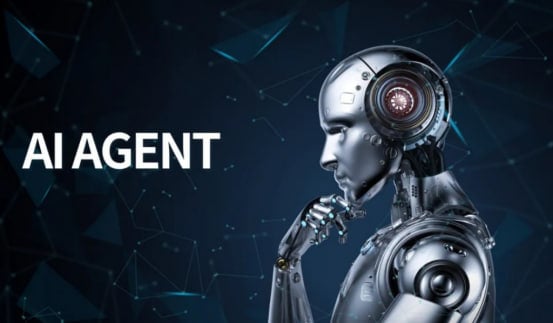
What is most noteworthy is the AI Agent sector. World has launched AgentKit, aiming to establish a trustworthy authorization relationship between humans and AIs. In the future, if everyone has their own AI assistant, these Agents might help users manage assets, execute transactions, sign agreements, and even participate in on-chain governance.
However, before this can happen, the system must be able to verify who this AI actually represents and whether it has received authorization from real humans. The value of AgentKit lies in establishing a foundational trust framework for the future AI economy.
2. In the AI Age, "Real Human Identity" is Becoming Scarce
The core reason for the rise of WLD is not just pure news stimulation, but the market's beginning to revalue the scarce value of "real human identity."
In the past few years, there have been many identity-related projects in the crypto market, but most have struggled to sustain themselves due to insufficient demand. While there is a demand for identity verification in traditional internet, it is not enough to support a large independent track. However, the arrival of the AI era has completely changed this logic.

As the cost of AI-generated content approaches zero, what is truly scarce becomes humanity itself. The most important resources in the past internet were traffic, content, and attention, while in the future, increasingly scarce resources may be real human identities, real human actions, and real human authorizations.
The reason is simple. AI can infinitely replicate text, images, sounds, and even videos, but it cannot inherently possess an independent human identity. This means that in the future internet, real humans may become an increasingly scarce resource. Whoever can verify "real humans" will hold the key entry point.
This is also why the market is starting to reassess World’s long-term value. It is betting not just on a crypto narrative, but on a vital infrastructure need in the AI era.
Meanwhile, World’s operational strategy has also undergone significant changes. The team announced that it will concentrate resources on a few high-density, high-value cities, including San Francisco, New York, and regions such as the UK, Germany, Japan, and South Korea, while reducing operations in non-key areas. This indicates that the team is no longer pursuing widespread deployment but is prioritizing establishing network effects in high-value markets.
The business logic behind this strategy is clear. The value of the identity system essentially comes from network effects. When an area has enough users, enterprises, and application scenarios, the value of World ID can truly be realized. Otherwise, even if the number of users grows, it's difficult to form a stable value closed loop.
Another key change is the hardware upgrade. The next generation of Orb will develop towards self-service, aiming for 95% self-operation by the end of 2026. This is very important.
The past bottleneck in the expansion of Orb was the high labor costs; every additional user required offline operational support. However, once the device can operate on a large scale autonomously, the customer acquisition costs and expansion costs will significantly decrease, making the business model healthier.
3. In the AI Agent Era, World May Become a Key Entry Point
From a more macro perspective, World’s advancement may have a profound impact on the crypto industry.
Firstly, it may extend the crypto narrative from finance further into identity. Past market discussions around Crypto typically revolved around DeFi, stablecoins, ETFs, and RWAs, all essentially grounded in financial logic. But World represents an alternative path: identity infrastructure.
In the future, identity itself may become a composable asset. Users with trustworthy identities may receive privileges for empty investments, credit scores, governance rights, and even AI usage rights.
Around the identity layer, the market may give rise to new tracks, such as identity protocols, human credit protocols, and AI authorization protocols.
Secondly, World may become important infrastructure for the AI Agent economy. If AI Agents indeed become the next generation of productivity tools, the entire industry must address three questions: Whom does the Agent belong to? Is the Agent trustworthy? Is the Agent verifiable? World addresses precisely these three core needs.
From this perspective, World’s ambition is not just to create a crypto project but to become the identity entry point of the AI era. Just as Google became an information entry point and Meta became a social entry point, World aims to become an identity entry point. Once this positioning is established, the valuation logic of WLD will be completely reconstructed.
Finally, the market's most pressing question remains: how will WLD capture value? This is also a significant change brought about by World ID 4.0. The new version of the protocol introduces a fee mechanism, allowing credential issuers and protocol receivers to charge fees, while end users can still use it for free.
The significance of this model lies in that it allows World to begin generating real revenue sources. Users use the protocol for free, and ecosystem participants pay, which is highly similar to the business model of internet platforms.
As the number of identity verifications increases, enterprise access scales up, and protocol calling frequencies rise, the whole network has the opportunity to create a continuous cash flow.
For the market, this may be the most critical change, as it signifies that World is no longer just telling future stories, but is starting to establish verifiable business models and value capture paths.
Conclusion
The rise of WLD, on the surface, appears to be a revival of market sentiment, but at a deeper level, it reflects a change in market perception. What World is truly betting on is not the short-term price of the coin, but the core issue of the AI era: how to prove that you are human.
As AI becomes more human-like, the value of real human identity may continue to rise. And whoever can master the personality proof network may hold a crucial entry point to the next generation of the internet. For World, this may just be the beginning.
免责声明:本文章仅代表作者个人观点,不代表本平台的立场和观点。本文章仅供信息分享,不构成对任何人的任何投资建议。用户与作者之间的任何争议,与本平台无关。如网页中刊载的文章或图片涉及侵权,请提供相关的权利证明和身份证明发送邮件到support@aicoin.com,本平台相关工作人员将会进行核查。


