Re TGE is approaching, and the token has been included in Coinbase's listing roadmap.
Written by: angelilu, Foresight News
Reinsurance may be the last large financial market that has not yet been digitalized. Last year, the global RWA tokenization scale grew by more than 10 times, with the market capitalization of stablecoins exceeding $32 billion, but there has been almost no substantial on-chain infrastructure in the reinsurance sector.
One reason is the extremely high regulatory thresholds. Reinsurance entities need to obtain licenses in their jurisdictions, meet solvency requirements, and reach isolated custody standards—common DeFi teams find it difficult to circumvent these.
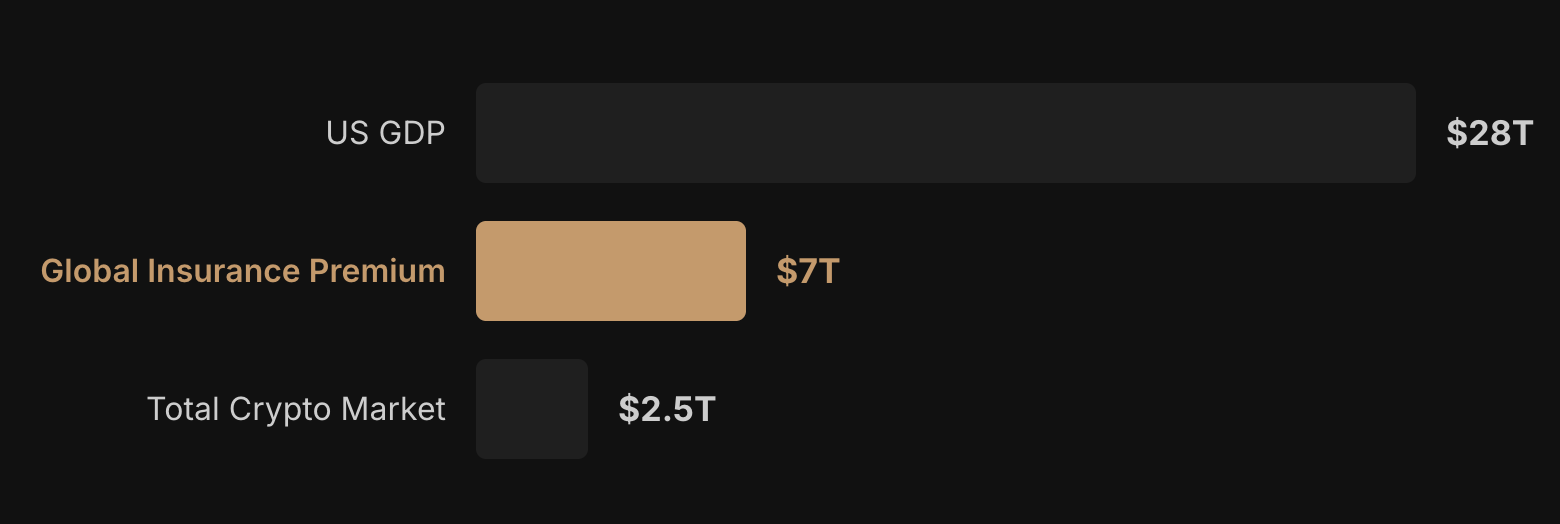
A team of insurance technology veterans and on-chain developers is leveraging a crowbar to pry open the door to the "global reinsurance market."
Moving Reinsurance Companies' Capital Pools On-Chain
The global reinsurance market is dominated by a few giants like Munich Re and Swiss Re; external capital cannot enter, underwriting conditions are opaque, and solvency cannot be verified. The Re Protocol aims to move the capital pools of reinsurance companies on-chain, allowing anyone to invest money and earn premiums.
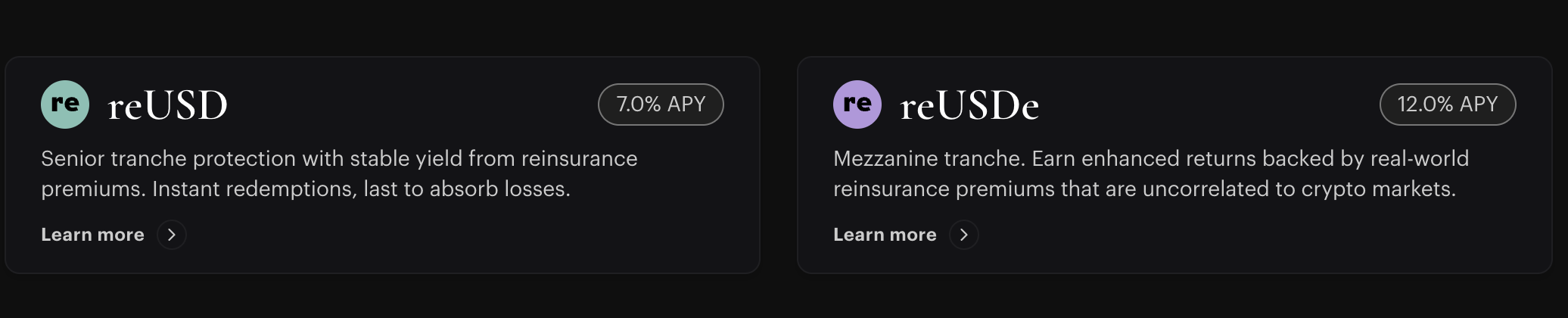
Its core model is not complex: insurance companies package part of their risks into reinsurance contracts, which are compliantly addressed through their licensed reinsurance entity Cover Re. Decentralized liquidity providers can deposit stablecoins in two types of tokenized positions to earn insurance underwriting returns, with the two product forms corresponding to different risk appetites:
reUSD is a priority (stable version) position that offers principal protection with fixed returns (benchmark interest rate + 250 basis points), with risks absorbed primarily by the junior tier; reUSDe is a high-yield tier that bears the first loss risk, with the current annualized yield reaching approximately 23%. The order of loss triggering is: first absorbed by reUSDe holders and Re Capital, only then reUSD.
To address regulatory hurdles, Re's solution is to operate the on-chain protocol separately from the licensed entities: Cover Re SPC (Cayman Islands) serves as an independent reinsurance entity that undertakes compliant contracts, while the Resilience Foundation is responsible for issuing governance tokens. This legal isolation separates compliance risks from protocol-layer technical risks through independent licensed entities.
Token and TGE
Re will soon release the governance token RE, which serves to allow market users to establish protocol rules, but specific revenues, incomes, or insurance capital flows will still be operated by the licensed entity.
Re's token plan aims to reward wallets that provide and store funds within the ecosystem. Its Season 1 points activity recently concluded, with 7% of the total supply of RE allocated to Season 1 participants, although the specific claiming window and unlocking mechanism have not yet been announced. Season 2 will commence on June 1, 2026, with 2904 active users and a total of 4.12 billion points.
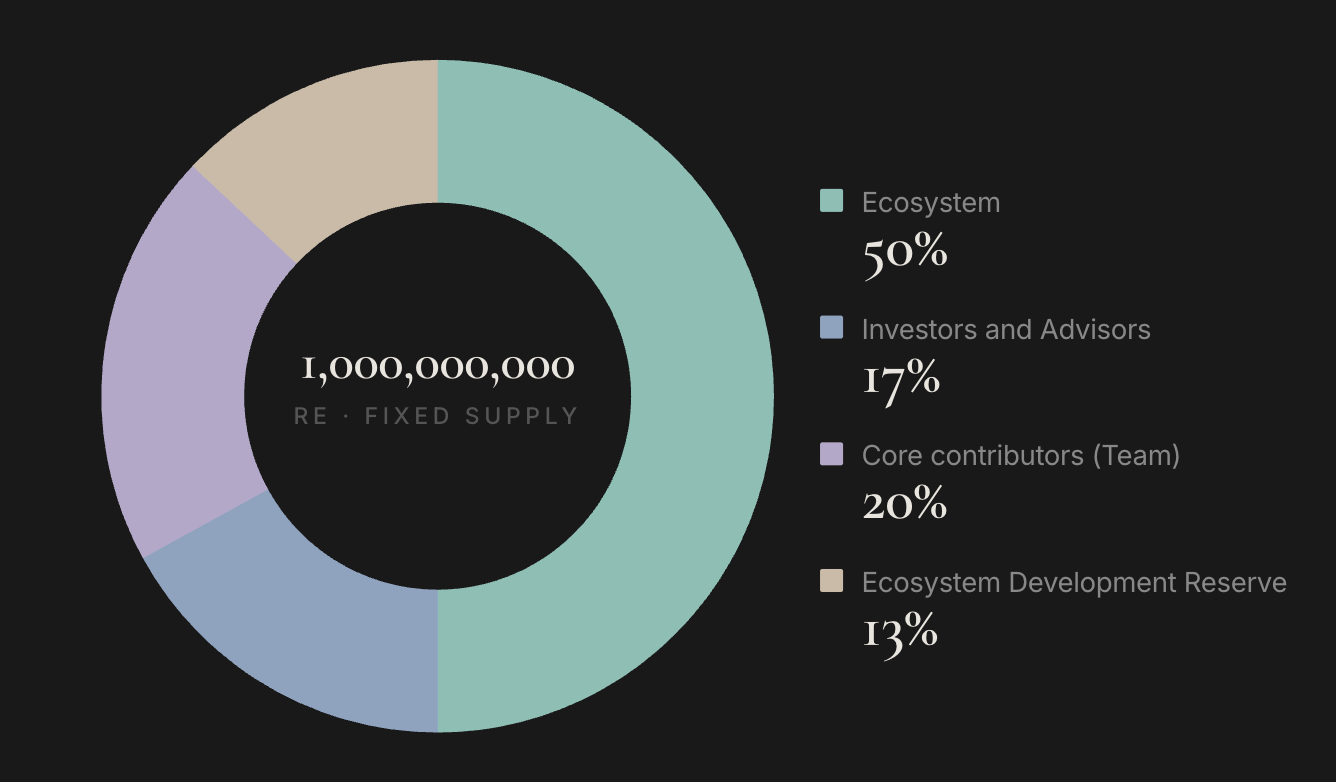
The total supply of RE is fixed at 1 billion tokens, divided into four parts:
- Ecosystem (50%): 500 million tokens, for community incentives, points program redemptions, and other ecological allocations, with the 7% supply for Season 1 drawn from here.
- Core Contributors / Team (20%): 200 million tokens, the team’s share which typically comes with a vesting period, with specific lockup arrangements not yet disclosed.
- Investors and Advisors (17%): 170 million tokens, corresponding to seed and strategic round investors, also expected to have lockup periods.
- Ecosystem Development Reserve (13%): 130 million tokens, for future collaborations and protocol development, managed by the foundation.
RE has been included in Coinbase's listing roadmap, but the specific TGE date has not been announced.
Re Reinsurance Data
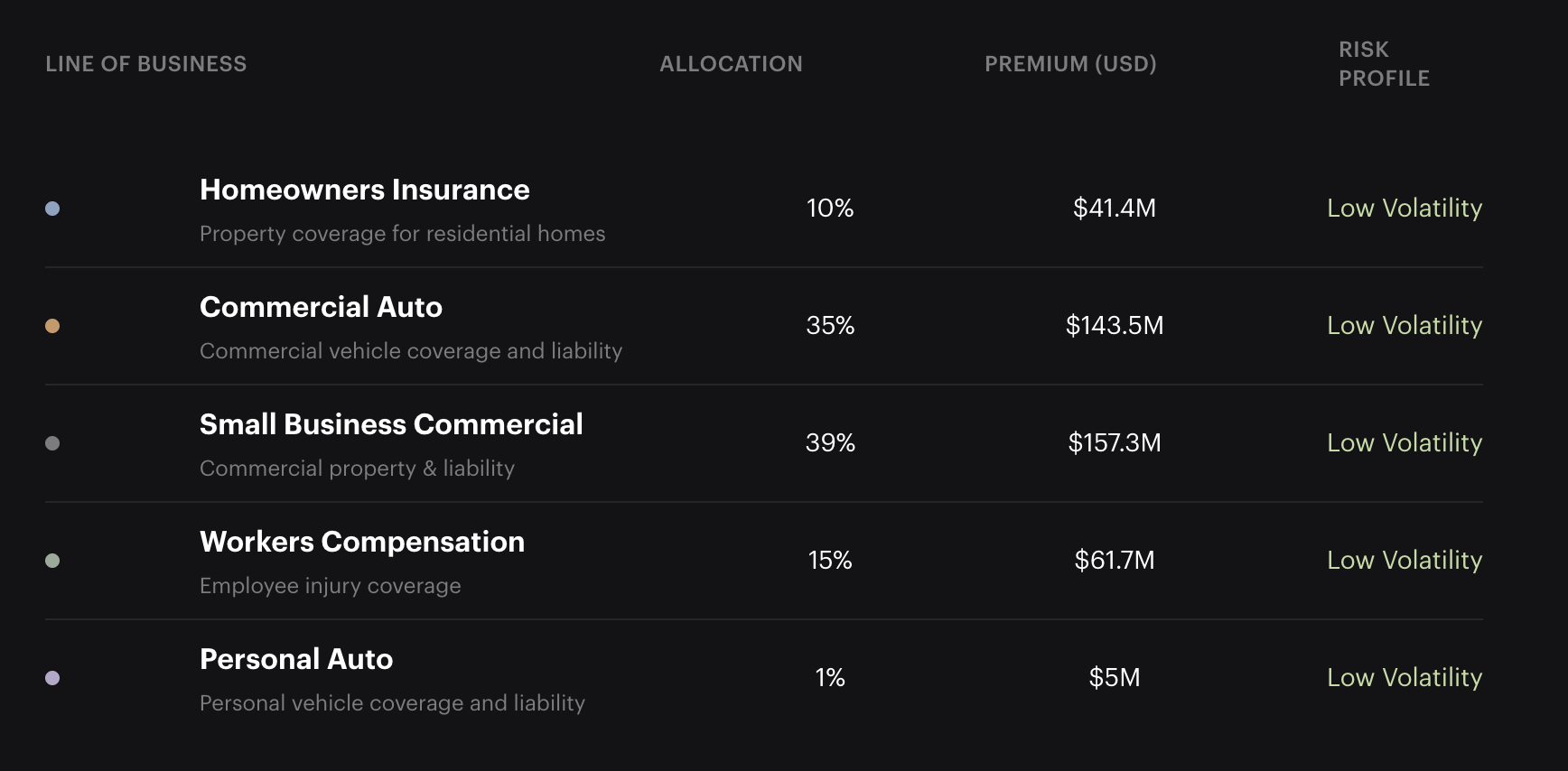
Another significant feature of Re is the low correlation of assets. The income from reinsurance comes from the rates of car accidents, workplace injuries, and house damage occurrences, which do not fluctuate with BTC prices. As the crypto market repeatedly fluctuates under geopolitical conflicts and macro policy pressures, the scarce value of truly non-correlated assets is being repriced.
According to its official data, as of early June 2026, its underlying underwriting portfolio totaled $409 million, distributed among commercial auto insurance (35%), small and micro business commercial insurance (39%), workers' compensation insurance (15%), residential insurance (10%), and personal auto insurance (1%). All are in low-volatility everyday insurance categories, without high-volatility catastrophe risks. Each reinsurance contract is fully collateralized, with 100% cash or investment-grade assets deposited in an isolated Regulation 114 trust, with solvency verifiable on-chain.
Team and Financing
The CEO of Re, Karn Saroya, has undergone a complete entrepreneurial grind in the insurtech sector. He previously co-founded the insurtech platform Cover, which launched in 2016 and raised $27 million from institutions like Exor and Tribe Capital, before closing due to business adjustments. Earlier, he also founded the fashion app Stylekick, which was acquired by Shopify.
Other co-founders include Anand Dhillon, Ben Aneesh, Cliff White, and Tribe Capital co-founder Arjun Sethi (the project started under the Tribe Capital crypto incubation system). The specific functional roles of team members have not been fully disclosed through official channels.
Re completed a $14 million seed round financing in September 2022, with investors including Tribe Capital, Framework Ventures, Morgan Creek Digital, and global reinsurance company SiriusPoint, Exor, and Stratos, with an estimated valuation of about $100 million after the seed round. In May 2024, an additional $7 million strategic round was raised, led by Electric Capital, with Nexus Mutual and Avalanche Labs participating, totaling around $21 million in financing.
Competitors in the Space
Comparable projects in the same field are diverse in direction.
Nexus Mutual is the protocol with the longest history in on-chain insurance, but it covers DeFi smart contract vulnerabilities, hacker attacks, and other crypto-native risks, without involving real-world insurance contracts.
Neptune Mutual focuses on parametric insurance (automated payouts based on preset triggering conditions), with a TVL of about $13 million, significantly smaller than Re, primarily targeting DeFi protocol security scenarios and not entering the real-world insurance market.
Ensuro is positioned most similarly to Re—holding a regulatory license in Bermuda and partnering with Nexus Mutual to connect on-chain capital and real insurance risks, but publicly disclosed scale data is limited, and it has yet to form visibility in mainstream markets.
The core difference from the aforementioned three is that: Re covers commercial auto insurance, workers' compensation insurance, and other types of insurance that have very low correlation with the crypto market; the compliant structure of the licensed reinsurance entity Cover Re allows institutional funds to enter legally; while the $400 million of premiums already underwritten is the only on-chain protocol currently reaching a true commercial scale in the sector.
免责声明:本文章仅代表作者个人观点,不代表本平台的立场和观点。本文章仅供信息分享,不构成对任何人的任何投资建议。用户与作者之间的任何争议,与本平台无关。如网页中刊载的文章或图片涉及侵权,请提供相关的权利证明和身份证明发送邮件到support@aicoin.com,本平台相关工作人员将会进行核查。


