This "company" is now doing things that far exceed anyone's imagination of a VC.
Written by: Bibi News
In 2026, a venture capital institution's total federal donations reached $115.5 million.
It surpassed Soros, surpassed Musk, becoming the largest single financier in this round of U.S. elections.
This institution is not a foundation, nor a family office of a super-rich individual, it is Andreessen Horowitz (a16z), one of the most well-known VCs in Silicon Valley and one of the largest institutional investors in the cryptocurrency industry.
Four years ago, this figure was $2 million.
What did $115.5 million buy?
a16z's money flowed in three directions.
First, cryptocurrency. By the end of 2024, a16z injected over $23 million into the Fairshake Action Committee and its affiliated organizations, aiming to support cryptocurrency-friendly candidates in the 2026 election. Fairshake proved its worth in 2024. It spent over $130 million, successfully influencing the outcomes of multiple key legislative seats.
Second, AI. In August 2025 and February 2026, a16z invested $50 million in two rounds into the Leading the Future AI Action Committee, supporting candidates opposed to AI regulatory legislation. At the same time, it established a lobbying organization called the American Innovators Network, which spent over $350,000 in New York State alone to block AI safety legislation.
Third, direct bets in Washington. a16z and its two founders injected $12 million into the current president's super PAC. Marc Andreessen himself spent a lot of time at Mar-a-Lago assisting with the electoral transition before the new administration took office.
To compare: as of mid-2025, Sequoia Capital's federal lobbying expenditure was $120,000, and General Catalyst's was $500,000. a16z's total lobbying expenditure for the entire year reached $3.53 million. Roelof Botha, head of Sequoia, publicly stated: Sequoia would not take sides.
In the entire Silicon Valley VC industry, no other firm is doing the same scale of activity.
Is this investment worth it? Just do the math. The parent company of a16z has roughly $90 billion under management, and completed a new round of fundraising of $15 billion in January 2026. The total donation of $115.5 million is about one-thousandth of the total, which is less than one month's management fee income. And what did it buy? The first fund of the cryptocurrency industry has already achieved a 5.4x multiple of returns (i.e., the ratio of actual distributions received by LPs to invested capital), with exit quality directly influenced by the regulatory environment.
Fairshake spent $130 million in 2024 to help friendly legislators gain office, followed by a series of cryptocurrency bills starting to advance. Improving the exit environment for the remaining 999 parts out of a thousand at the cost of one part, this is not a donation; this is an investment.
Two-way channel
Money is just the first step. a16z is also building a personnel channel from Silicon Valley to Washington, and it's a two-way street.
First, look at the outflow: former GP Sriram Krishnan is now a senior advisor on federal AI policy; managing partner Scott Kupor has been nominated to lead the federal Office of Personnel Management; cryptocurrency policy director Brian Quintenz has been nominated as chairman of the CFTC (Commodity Futures Trading Commission); another investor, Jamie Sullivan, is reportedly providing advisory services for DOGE.
Four key regulatory and policy positions, four people from a16z.
And there’s the inflow. In June 2026, a16z announced that Anne Neuberger would join as a general partner and head of global affairs. Her resume: previously deputy national security advisor, in charge of cyber warfare and emerging technology policy; prior to that, worked for over ten years at the NSA, managing a global intelligence operations division of 19,000 people and creating and leading the NSA Cybersecurity Agency.
Ben Horowitz stated in an interview: "Once you reach a country, you need to know key figures from the president to the largest buyers. No one before could reach the level of Anne."
A VC sends its own people to Washington to write rules, then recruits from the national security system to build official global relationships. This is not a revolving door. A revolving door is a personal choice. This is a systemic project at the institutional level.
This approach is not something a16z invented. Peter Thiel figured out the entire path ten years ago: co-founding Palantir, starting with money from the CIA's venture capital arm, In-Q-Tel, and then securing billions of dollars in defense and intelligence contracts; funding JD Vance's Senate campaign with $15 million and personally bringing Vance to Mar-a-Lago to introduce him to the current president. Vance is now vice president. Thiel is not in any public office, but the people he funds are all over Washington's core circles.
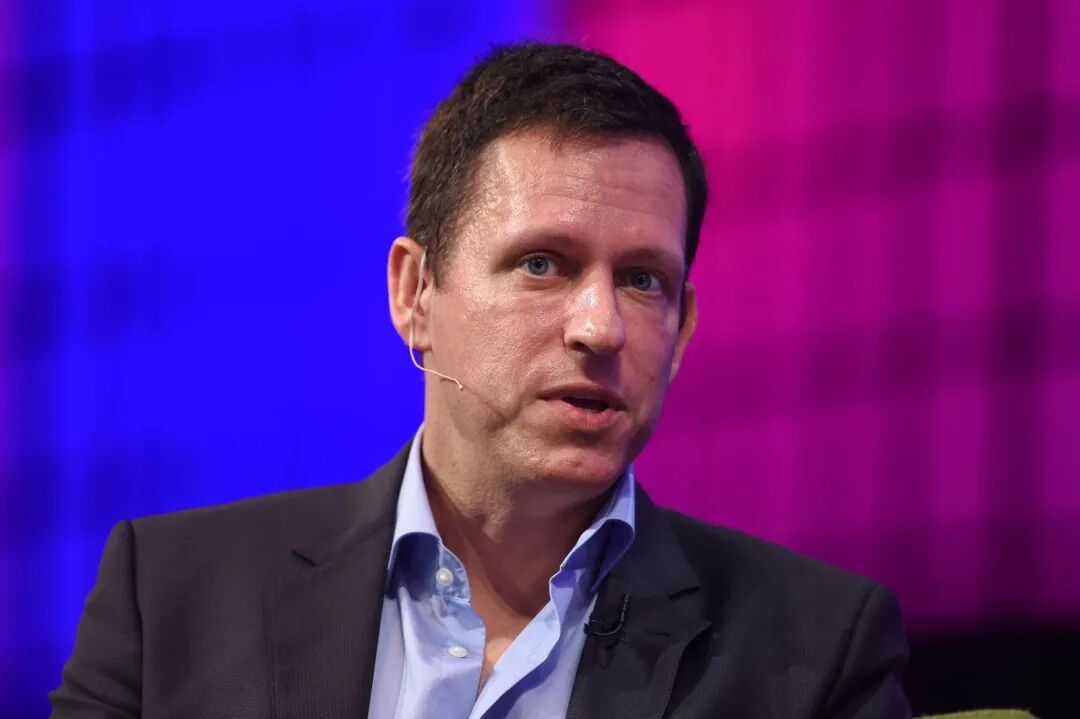
The difference is that Thiel operates as an individual game, relying on personal wealth and personal network. a16z is institutionalizing this path: using the company's money, company's people, company process to systematically replicate what Thiel has built over twenty years.
From investment to manufacturing
Spending money and sending people still fall within the realm of "influence". a16z's next step has already entered the physical realm.
In May 2026, a16z co-led a $5 billion Series H financing round for defense technology company Anduril with Thrive Capital, achieving a valuation of $61 billion, doubling in 11 months. Anduril operates an autonomous weapons factory, Arsenal-1, in Ohio, which will mass-produce combat drones, interceptors, and cruise missiles by the end of 2026.
In the same month, a16z's cryptocurrency department announced the fifth special fund, raising $2.2 billion. Including the previous four rounds, a16z's total dedicated funds for cryptocurrency have reached approximately $10 billion.
Investing in missile production lines while also investing in cryptocurrency infrastructure. Traditional VCs invest in SaaS, consumer products, fintech, where the return logic is IRR. What a16z now invests in produces not only financial returns but also rule-making authority.
Creating its own media
Spending money to influence rules, delivering talent to Washington, investing in physical entities. These all require a supporting capability: controlling the narrative. a16z realized this early on.
In 2010, the second year after a16z was founded, it hired a full-time PR head, Margit Wennmachers, which had almost no precedent in the VC industry at the time. Back then, Sequoia and Benchmark's strategy was to work quietly and stay away from the media, while a16z did the opposite: actively created noise. In 2014, it launched a podcast that quickly racked up millions of downloads. In 2021, it became more aggressive, directly founding an online magazine, Future, hiring a team of professional journalists, attempting to compete for narrative authority with TechCrunch and The Verge.
Future was shut down in 2022, but a16z did not abandon its media strategy, instead, it changed its form: building its own podcast network, Substack matrix, YouTube channel, producing content every weekday.
There have been remarks: "a16z is essentially a media company, just monetizing through VC."
a16z's founding model is not derived from any VC, but from Hollywood talent agency CAA, helping creators bypass traditional gatekeepers and directly establish their own distribution channels.
Marc Andreessen's 2011 article "Software is Eating the World" itself was a textbook-level narrative operation: it was not promoting a specific portfolio company, but defining a proposition for an era, allowing all subsequent investments to gain legitimacy automatically.
This calculation also adds up. a16z's annual investment in media infrastructure is about $3-5 million.
2025 was the worst year for VC fundraising in the last five years, with an industry average of 16 months to close a fund. a16z took 3 months and raised $15 billion, exceeding the total of the second and third places combined, capturing 18% of the total VC fundraising amount in the U.S.
Based on a 2% management fee, this round of fundraising will bring in about $300 million in management fee income per year. With $5 million in media expenses and $300 million in annual management fees, the leverage ratio is 60 times.
When you have capital, a network in Washington, and narrative ability, you are not just participating in the game; you are defining the rules and narratives of the game.
So what is it?
a16z manages approximately $10 billion in dedicated cryptocurrency funds, making it one of the largest institutional investors in the industry. The legislators it financially supports are passing cryptocurrency bills, its nominees are taking over cryptocurrency regulatory agencies, and former national security officials it recruited are helping the companies it invested in connect with regulatory bodies around the world.
It is not waiting for rules to come out to adapt. It is participating in writing the rules.
When an institution managing hundreds of billions of dollars is simultaneously engaging in venture capital, large charitable donations, personnel arrangements, weapon manufacturing, media operations, and regulatory lobbying, how should it be defined?
Ben Horowitz's own statement is: "From day one, a16z has been a company, not a fund."
A fund can only manage money. A company can do everything. He is right, but this "company" is now doing things that far exceed anyone's imagination of a VC.
免责声明:本文章仅代表作者个人观点,不代表本平台的立场和观点。本文章仅供信息分享,不构成对任何人的任何投资建议。用户与作者之间的任何争议,与本平台无关。如网页中刊载的文章或图片涉及侵权,请提供相关的权利证明和身份证明发送邮件到support@aicoin.com,本平台相关工作人员将会进行核查。


