整理 & 编译:深潮 TechFlow
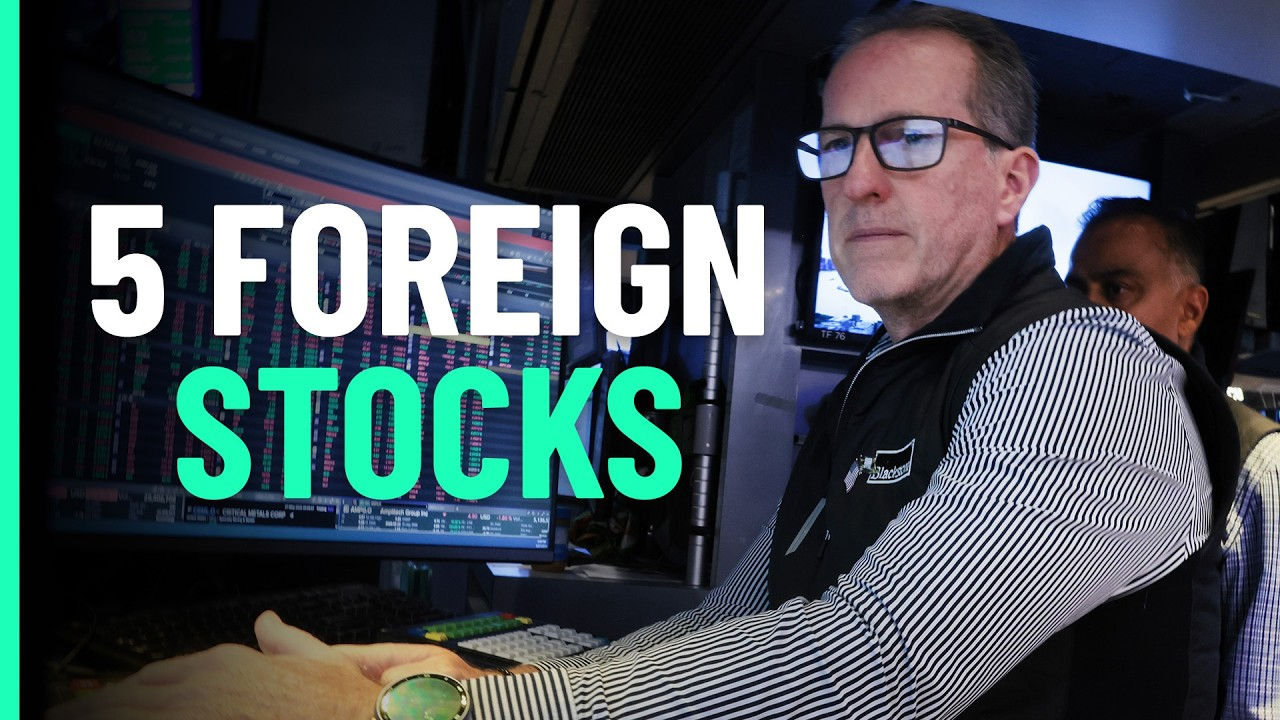
Guest: James E. Demmert, Main Street Research CIO
Host: Caroline
Podcast Source: TheStreet & James E. Demmert
Original Title: 5 Foreign Stocks That Could Beat The S&P 500
Broadcast Date: June 2, 2026
Key Takeaways
Main Street Research CIO James Demmert, while targeting the S&P 500 at 8100 points within the year, candidly states that the returns of overseas stock markets will surpass US stocks—he provides five international targets that are significantly undervalued compared to similar US stocks, but directly benefit from the AI revolution: HSBC with a price-to-earnings ratio of 9, BHP with a price-to-earnings ratio of 16, and ASML, which he believes "if you can only hold one for five years, choose this one."
Demmert suggests that Europe and Japan are taking over global growth with unprecedented fiscal stimulus, and this trend of international stock markets outperforming the US "will last for several years," recommending that investors allocate 45% of their positions overseas.
Exciting Points Summary
- "If investors are currently only holding US stocks, they are missing out on diversification first, and secondly on amazing opportunities outside of the US—where stock prices are more reasonable, and growth rates are equally attractive, if not higher."
- "Overseas markets have already outperformed the US, and we believe this trend will continue."
Ultimate Global Chip Layout: $ASML
- "We hold Nvidia and Micron, but ASML plays a different role in the AI trade—it provides chip design and manufacturing technology and also grants us diversification outside of the US."
- "The dollar continues to weaken, and allocating assets in overseas company stocks helps mitigate concentrated risks priced in dollars."
High-Value Global Bank: $HSBC
- "HSBC has a price-to-earnings ratio of only 9, cheaper than JPMorgan, and has better forward growth prospects. As a global investment bank, its influence in Asia is unmatched by JPMorgan."
- "I do not think Chinese stocks are investable at this point, but companies that can safely operate or potentially operate in China are very meaningful."
Energy Infrastructure Layout: Siemens Energy
- "The world is facing an electricity crisis—AI consumes power, cryptocurrencies consume power, and electric vehicles consume power. Siemens Energy's core business is helping the world build power grids."
- "The AI revolution is currently in the third and fourth innings of a nine-inning game, still in its early stages. The performance of this type of stock—if you remember the tech boom of the 1990s—the trading patterns in the first few years are very similar, and this trend can continue for quite a long time."
Hidden AI Mining Stocks: $BHP
- "Most people think this is just a commodity trade, but when you consider the demand from all these data centers, it is absolutely an AI investment—I call it the second derivative of AI."
- "The world needs more copper. The more data centers we build, the more important copper's role becomes. BHP has a price-to-earnings ratio of only 16, and valuations overseas are far superior to those in the US."
Undervalued Healthcare Stock Rebound: $AZN (AstraZeneca)
- "Healthcare has been overlooked by the market for too long, AstraZeneca has a strong pipeline of drugs and biomedical products, a price-to-earnings ratio of 18, and annual growth exceeding 20%."
- "Investors will start to shift to the healthcare sector at some point in the second half of this year, as they will feel the value-added effects of AI in the medical field starting to manifest."
Why International Markets are Outperforming the US
- "This is a valuation story, but it's also a story about global policy shifts. The US is tightening fiscal spending, while Europe is taking a page from the script—we are witnessing unprecedented large-scale government fiscal spending trying to maintain low interest rates."
- "For the first time in years, overseas markets have outperformed the US, and we believe this is a trend that will continue for several years."
Fast Q&A: Favorites and Biggest Risks
- "If I could only hold one stock for the next five years, it would be ASML. The first to double would be ASML. The first I would buy on a dip would be Siemens Energy."
- "The most undervalued international market is Europe. The biggest mistake US investors make is being too conservative in their overseas allocations. We recommend 45% allocated overseas and the rest domestically."
Introduction
Host Caroline: The S&P 500 rising to 8100 points—this is a bold prediction made by my next guest. While he remains optimistic about US stocks, he says that some of the biggest opportunities right now may actually be overseas. Joining me is James Demmert, founder and CIO of Main Street Research. James, it's great to have you.
James:
Great to see you, Caroline.
Host Caroline: You still believe the S&P 500 can reach 8100 this year, but none of the top five stocks you recommend are in the S&P 500. What does this indicate?
James:
This indicates that we believe the S&P can reach 8100—this target seemed very high in the past, and while it does not seem as unattainable now, it is indeed closer than expected. This also indicates that our inclination towards overseas markets is because we believe they can genuinely outperform the S&P 500.
Host Caroline: What would investors miss if they are currently only holding US stocks?
James:
I think they are missing out on diversification first, and secondly on amazing opportunities outside of the US—where stock prices are priced more reasonably, and growth rates are equally attractive, if not higher. You may have noticed that so far this year, overseas markets have outperformed the US, and we believe this trend will continue.
Recommendation One: Ultimate Global Chip Layout
Host Caroline: Okay, let’s look at your top five recommended stocks, starting with ASML. This stock has risen a lot this year; why are you still buying it?
James:
I know that everyone in the tech sector is rushing towards Micron and memory chip trades. But don’t forget, ASML is a company involved in chip design, manufacturing, and technology; they are an indispensable part of the entire chip manufacturing process. Headquartered in the Netherlands, it currently has a price-to-earnings ratio of 38, but their annual growth rate far exceeds this level. This is a great entry point for investing in overseas stocks.
Host Caroline: You mentioned Micron; so why hold ASML instead of directly buying Micron or even Nvidia or other chip stocks?
James:
We hold Nvidia and we hold Micron. ASML’s inclusion in our portfolio is due to its entirely different role in the AI trade—it does chip design technology and also provides us with exposure to diversification outside the US. You also know that as the dollar continues to weaken, allocating assets in overseas company stocks helps mitigate concentrated risks priced in dollars.
Recommendation Two: High-Value Global Bank
Host Caroline: Next is HSBC Holdings. There are plenty of quality bank stocks available in the US; why are you looking overseas for banks?
James:
This is a very good question. The core lies in the valuation. Caroline, HSBC has a price-to-earnings ratio of only 9. In comparison, while JPMorgan is a very good company—we hold it as well—HSBC offers better valuation and better forward growth prospects because you are witnessing a resurgence in overseas investments. That is why overseas indices are outperforming the US. HSBC is a vital component of the overseas index, and as a global investment bank, its scope of operations covers not just the US and Europe, but also has an unmatched presence in Asia compared to JPMorgan.
Host Caroline: Even so, how should investors view the risk of China?
James:
I am not sure that the Chinese market itself is investable, but I do believe you can invest in companies that can safely operate in China. I know that this is also one of the reasons Nvidia is eager to open the Chinese market and sell products there. So, I do not think Chinese stocks are investable at this point, but companies that can safely operate or have the capability to operate there are very meaningful.
Recommendation Three: Energy Infrastructure Layout
Host Caroline: The next on your list is Siemens Energy, with the stock code SMERY in the US. It has risen about 40% year-to-date; why are you optimistic about this stock?
James:
It has indeed performed well this year, and I believe this performance will continue. We must be clear about one thing—the world is facing an electricity crisis. AI is consuming a lot of power, cryptocurrencies are consuming power, and electric vehicles are consuming power. While we are all thinking about how to increase electricity supply, this is precisely the area Siemens Energy focuses on. They are helping us build power grids globally, not just in their headquarters in Germany, but all over the world. This stock has a price-to-earnings ratio of about 37, but the earnings growth far exceeds this level.
Host Caroline: I mentioned it has performed well this year, but its one-year performance is even more impressive—over 90%. How should investors handle stocks that have already risen significantly? Is it too late to get in if they haven't already?
James:
If they haven't gotten in yet, my advice has always been to wait for a correction, to buy when the stock shows weakness, or they could start with a third of a position and build up gradually. If you already hold, remember that the volatility of these types of stocks can be quite significant; the volatility of the entire AI trade is quite large as well. But from our perspective, the AI revolution is currently in the third and fourth innings of a nine-inning game, still in its early stages. The performance of this type of stock—if you remember the tech boom of the 1990s—has very similar trading patterns in the first few years, and this trend can continue for quite a long time.
Recommendation Four: Hidden AI Mining Stocks
Host Caroline: Next is BHP Group, which has also risen more than 40% year-to-date. Why are you still optimistic about the mining sector?
James:
The world needs more copper. The more data centers we build, the more important copper's role becomes. We also believe we are in a period of global economic expansion, which means the demand for raw materials will only increase, and BHP is a great way to be involved in this trend. The company is headquartered in Australia, and it has a price-to-earnings ratio of only 16. Again, overseas valuations are far superior to those in the US.
Host Caroline: So is this a commodity trade or an AI infrastructure trade?
James:
This is precisely its essence. Most people think this is just a commodity trade, but when you consider the demand from all these data centers, it is absolutely an AI investment—I call it the second derivative of AI.
Recommendation Five: Undervalued Healthcare Rebound
Host Caroline: Finally, a healthcare stock, AstraZeneca, which has actually underperformed the market this year, essentially flat. Why buy a healthcare stock that is lagging?
James:
This is that "little train engine." We truly believe that the healthcare sector has been overlooked by the market for too long; AstraZeneca has a very strong pipeline of drugs and biomedical products. It has a price-to-earnings ratio of 18 and grows more than 20% annually. We believe the market will recognize these stocks' value again.
We also believe that investors will start shifting to the healthcare sector at some point in the second half of this year, as they will feel the value-added effects of AI in the medical field start to manifest and make actual contributions. So, I think this will ultimately also become an AI investment. And in terms of valuation and exposure to international markets, it’s a great way to diversify the portfolio.
Why International Markets are Outperforming the US
Host Caroline: So, from a valuation perspective and looking at the overall five recommended stocks, is the logic of international stocks being superior to the US merely a pure valuation story now?
James:
This is a valuation story, but it's also a story about global policy changes. You know that the US is tightening fiscal spending, or trying to do so. What we are doing is essentially handing over the growth momentum to Europe—it's now Europe's turn to follow our old script. In Europe, overseas, and Japan, you are seeing these economies really heating up because they are undertaking unprecedented large-scale government fiscal spending while trying to maintain low interest rates. This is why overseas markets have outperformed the US for the first time in years, and we believe this is a trend that will persist for several years.
Fast Q&A: Favorites and Biggest Risks
Host Caroline: Next, we enter the fast Q&A segment. If you could only hold one stock for the next five years, which one would you choose?
James: ASML.
Host Caroline: If you had to remove one stock from this list first, which one would it be?
James:
AstraZeneca.
Host Caroline: Which one would you buy first on a dip?
James:
Siemens Energy.
Host Caroline: Among these five, which one would double first?
James:
ASML.
Host Caroline: If the economy slows, which one is likely to be the most resilient?
James:
AstraZeneca.
Host Caroline: Which one has the greatest competitive advantage relative to its competitors?
James:
Siemens Energy.
Host Caroline: What is the biggest risk these five stocks collectively face?
James:
Bear market.
Host Caroline: If a sixth stock were to be added to the list, what would it be?
James:
Nvidia.
Host Caroline: What is currently the most undervalued international market?
James:
Europe.
Host Caroline: What is the biggest mistake US investors make when allocating overseas assets?
James:
Being too conservative in their overseas allocations.
Host Caroline: In a standard investment portfolio, what should the allocation ratio be between US and international positions?
James:
We recommend 45% allocated overseas and the rest domestically.
Host Caroline: For a US stock to hold for five years that is not Nvidia, which one do you recommend?
James:
Costco.
Host Caroline: What type of US stocks would you currently avoid?
James:
Anything in the real estate and discretionary consumer sectors.
Host Caroline: Is this due to interest rate issues?
James:
It is due to interest rates and also related to the K-shaped economy.
Host Caroline: Okay, one word to describe your feelings about the current US market.
James:
Bullish but always worried.
Host Caroline: One word to describe your feelings about the international market.
James:
Very optimistic—that's two words.
免责声明:本文章仅代表作者个人观点,不代表本平台的立场和观点。本文章仅供信息分享,不构成对任何人的任何投资建议。用户与作者之间的任何争议,与本平台无关。如网页中刊载的文章或图片涉及侵权,请提供相关的权利证明和身份证明发送邮件到support@aicoin.com,本平台相关工作人员将会进行核查。


