Author: Brian Merchant
Translation and Compilation: BitpushNews
The data center protest movement has swept across the United States. From Vermont to Oklahoma, from Indiana to California, various communities are organizing to stop the tech industry's frantic expansion of data centers in their backyards. This week, the New York State Legislature passed a one-year moratorium on data center construction, which has been submitted to the governor's desk for signature. The governor of Illinois has also suspended tax incentives for data centers. Few issues have politically stirred such waves or cohesiveness as this; the rare bipartisan consensus exhibited by the United States in 2026 is precisely the scorn for data centers and hostility towards artificial intelligence (AI).
This article will bring an exclusive report from a data scientist who has conducted an in-depth analysis of the data to accurately assess who is obstructing the construction of data centers and how successful these protests have been.
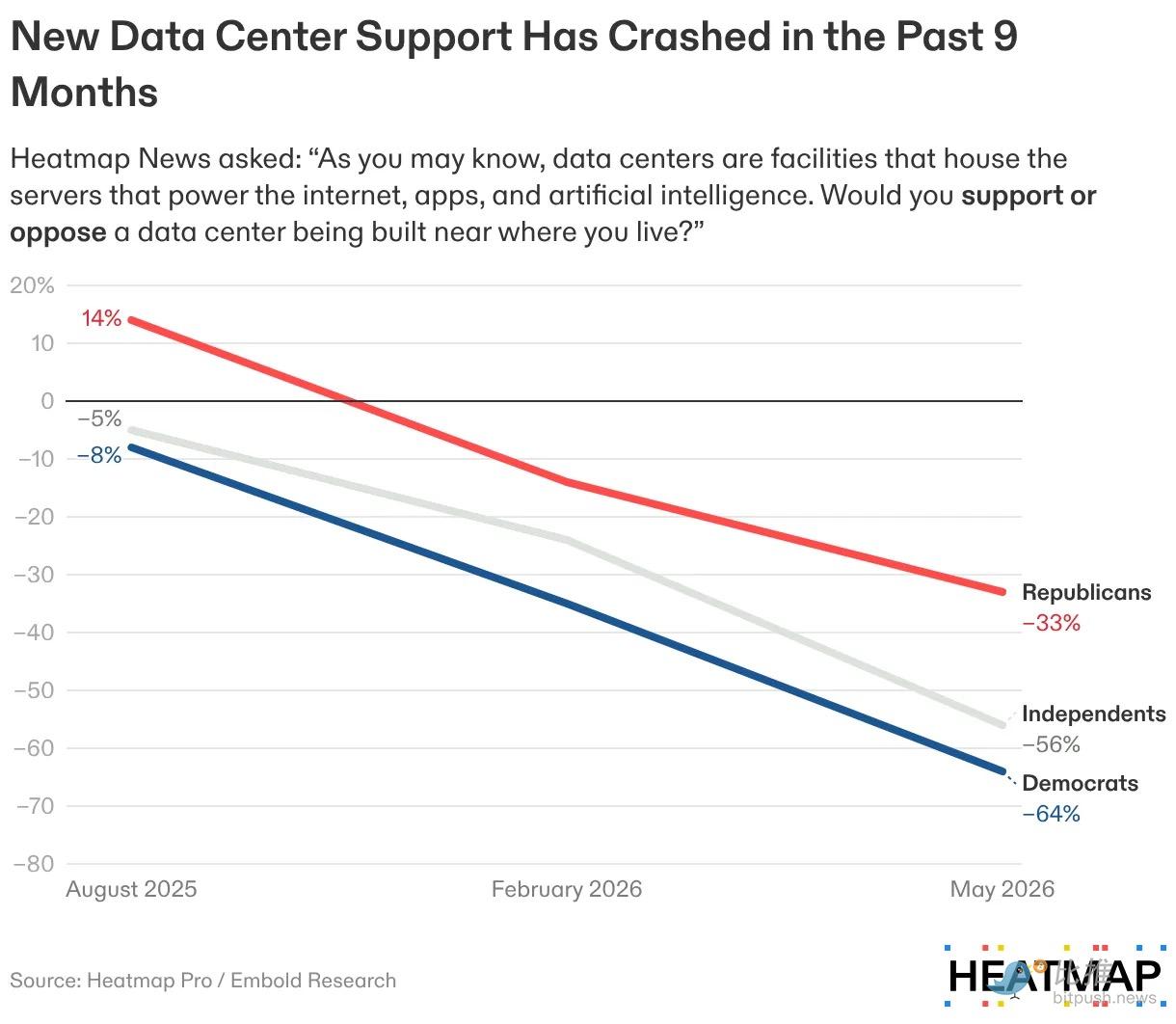
If you think I am exaggerating, take a look at a recent survey released by Heatmap. The survey interviewed over 4,000 Americans about their attitudes towards data centers and whether they support the construction of such projects near their residences.
The results show that the public's negative sentiment towards data centers is completely irreversible. Polls indicate that 55% of Americans strongly oppose the construction of data centers in their areas. This marks a "record low point, revealing a remarkable shift in public opinion regarding facilities that support the AI boom."
Profile of the Opposition Group
The opposition is particularly strong among Democrats, rural residents, and young people: among respondents aged 18 to 35, as many as 80% oppose data centers. (This aligns perfectly with the current overall trend in public opinion; other polls and countless anecdotes have long confirmed that Generation Z holds a deep-rooted hostility towards AI. Just look at the roaring boos that erupted during graduation speeches championing AI this summer.)
However, as readers may know, there has been debate and skepticism regarding the driving forces and nature of this expanding resistance movement.
Some assertively argue that opposition to data centers is nothing but conservative "Not In My Backyard" (NIMBYism), led by environmentally conscious individuals dressed in Patagonia apparel and living comfortably. While the absolute numbers of Americans opposing data centers shown in the Heatmap survey suggest otherwise, the poll did not specifically examine these class factors.
If you want to counter this viewpoint—like I, Astra Taylor, and Saul Levin do, asserting that the opposition to data centers is actually rooted in working-class politics—then having solid data to support your argument is crucial, and this is where data scientists come into play. After I published my report on the "Data Center Rebellion" (which relied on my firsthand interviews and a review of national news), researcher Geoff Holtzman reached out to share his quantitative analysis results, focusing on who is truly participating in the protests.
Holtzman describes himself as “a philosopher and data scientist writing about quantitative advocacy and scientism rhetoric,” and he frequently publishes articles in his Science & Power newsletter. His peer-reviewed works have been published in authoritative journals such as the Proceedings of the National Academy of Sciences (PNAS) and the American Journal of Bioethics. He, too, had heard the widespread claim that the data center protest movement is led by affluent NIMBY groups, so he decided to investigate. He compared current and proposed data center project datasets with U.S. Census data through a comparative analysis (Note 1) and has agreed to exclusively share his findings here. He arrived at at least three exceedingly distinct conclusions.
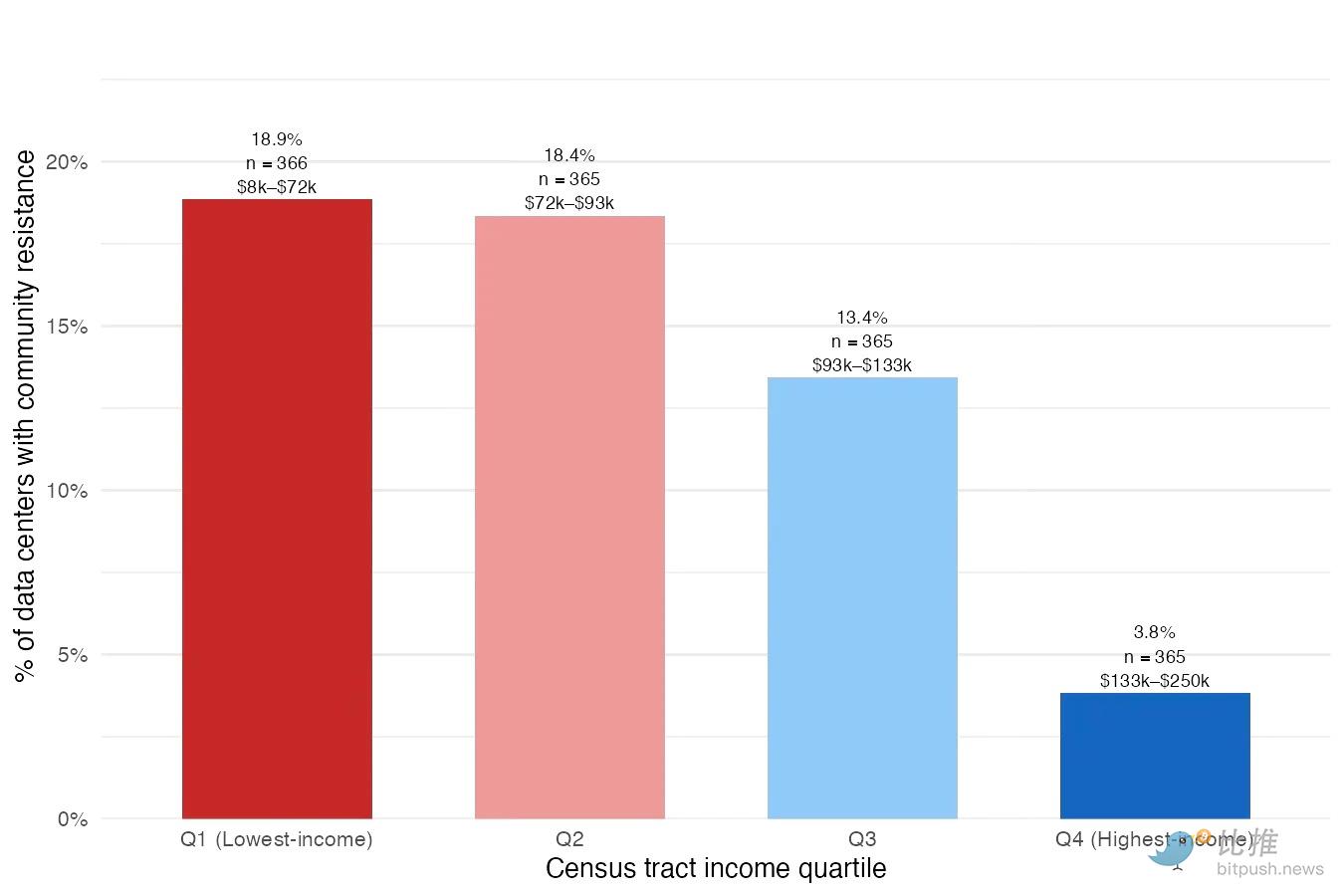
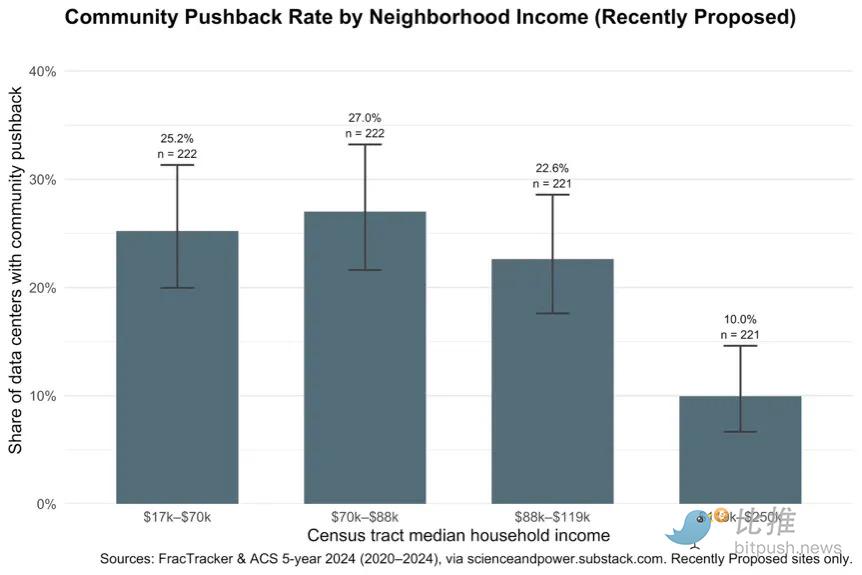
1. The resistance rate to data centers in the poorest communities is nearly five times that of the wealthiest communities (19.0% vs. 3.8%).
(Chart Note: These quartiles are calculated only for census tracts within the data center dataset, not nationally.)
“The highest frequency of resistance comes from communities with median household incomes between $8,000 and $72,000,” Holtzman notes. “In contrast, the communities with the lowest resistance rates have average annual household incomes between $133,000 and $250,000.”
This directly shatters the political myth that the opposition to data centers is led by well-off, Patagonia-clad upper-middle-class individuals; protests from poor or blue-collar communities occur far more frequently than those from affluent communities.
As Holtzman states: “Putting aside all moral or justice-related issues, from a pragmatic standpoint, it is actually much easier for tech companies to build computing centers in higher-income neighborhoods.”
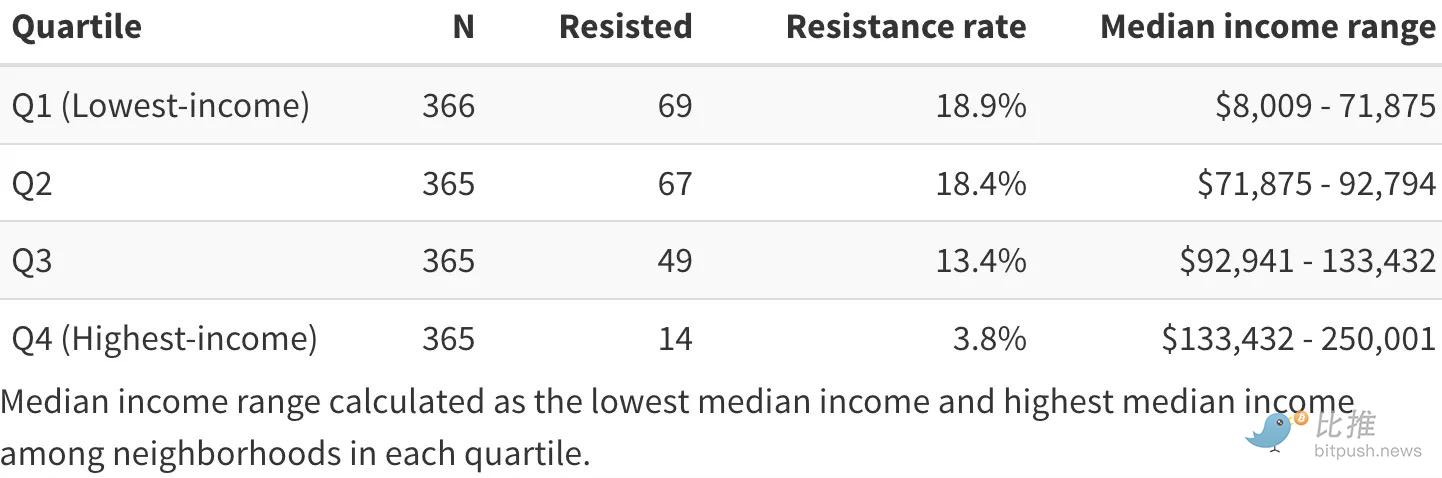
He adds, “In low-income, less-educated communities facing project proposals, the communities with the lowest income and education levels are the most resistant.” Meanwhile:
Highly educated, high-income communities show an unusual lack of protest. In terms of the role home ownership may play, we are not talking about old money resisting affordable housing—we are talking about people who may actually live in affordable housing.
Moreover, Holtzman’s data confirms that the data center resistance movement is proving effective. We have seen numerous headlines about cancelled or scaled-back development projects—just this week, under immense public pressure, Ken O'Leary's massive project in Utah was cut in half by the state governor. Other projects have been completely cancelled.
Based on Holtzman's analysis:
2. Proposed data centers that have recently faced resistance are more than five times more likely to be cancelled or paused than those that have not encountered protests (28.2% vs. 5.2%).

This is an astonishing figure. When new data center projects are met with community resistance, almost one-third of them ultimately get cancelled, paused, or shut down. This is an extremely significant success rate that should provide more inspiration to those weighing whether to initiate a new round of protests against data centers.
Finally, combining insights from the first two points, Holtzman found:
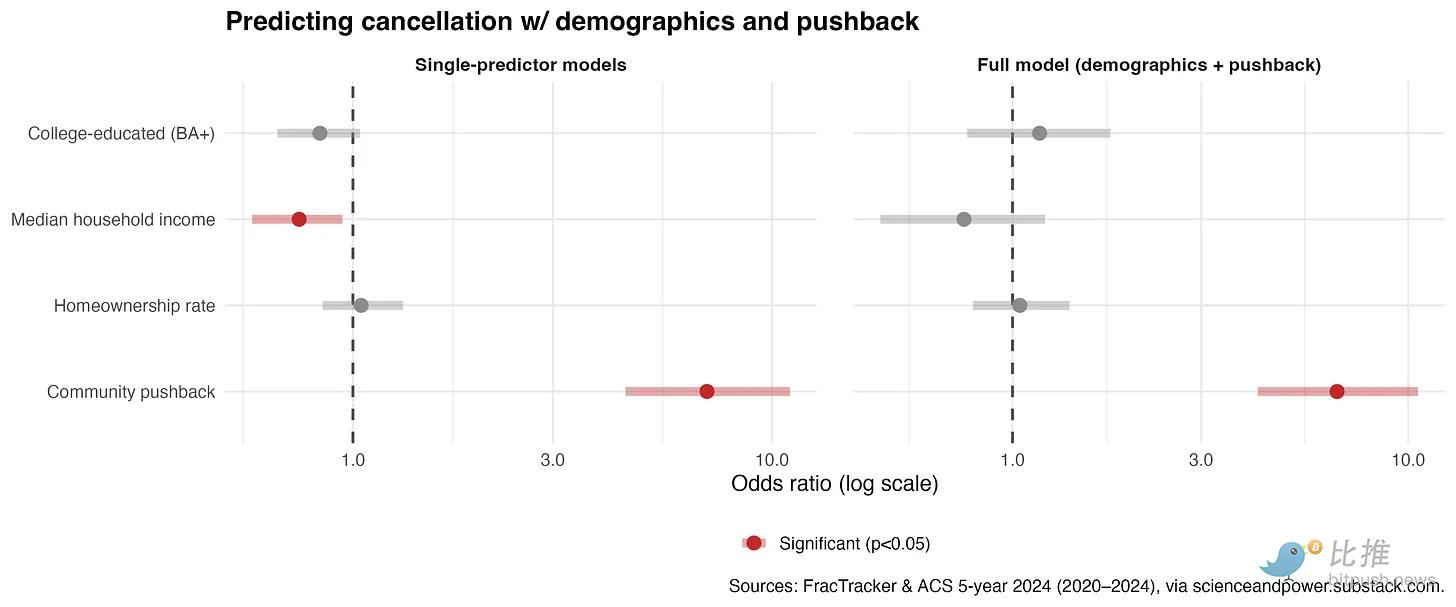
3. The highest cancellation rates of projects occur in low-income areas, a fact that can be entirely explained by their higher resistance rates.
“In communities that are rising up in protest, the likelihood of projects being cancelled is six times that of communities choosing compliance,” Holtzman notes. He adds, “The increase in cancellation rates in low-income areas is entirely due to these communities' high protest rates. Therefore, pushing forward project proposals in these areas could incite more public outrage, lead to stronger resistance, and further increase the cancellation rates of projects.”
I hope this data helps to shatter the arrogant bias that the data center resistance movement is led by affluent NIMBY groups. In reality, the vast majority of those standing up against it are residents and communities from the working class. I also hope these conclusions provide powerful tools for cities, residents, and organizers facing the challenges of data center development.
Once again, sincere thanks to Holtzman for allowing me to publish these research findings on my blog. For those interested in studying or further validating his data, he has made the entire code repository available on GitHub.
The United States as a Whole Becoming the Most Opposed Country to New Data Centers
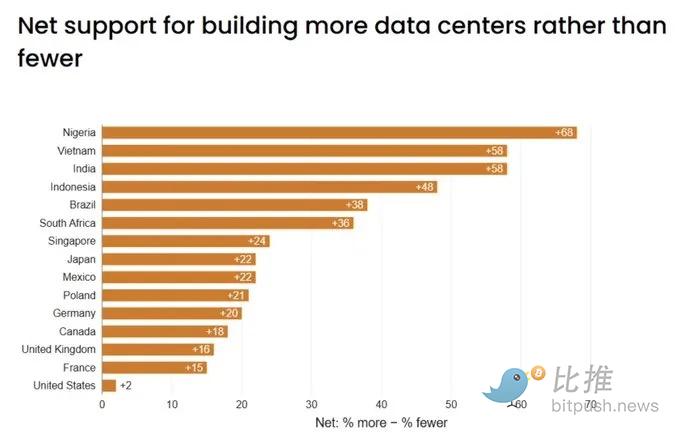
Data from the research institution Public First (thanks to WIRED journalist Molly Taft for sharing): How did the United States, a center of AI prosperity, become its stumbling block? Our survey provides several explanations.
– Informed Opposition
The public is more aware than ever of what AI is, what it does, and what data centers are and do. When we conducted an AI survey five years ago, it was at best a marginal interest. Now we see a significant increase in public awareness and understanding, and a more mature use of tools, especially among those aged 25-44. Our analysis of who understands AI needs to shift from “who has opened a large language model” to “who uses large language models in complex, integrated ways.”
Our survey shows that the U.S. ranks in the middle in terms of self-reported knowledge of data centers, higher than other “developed” markets. Given the prevalence of data center construction in the U.S., this is not unexpected.
And this “informed opposition” has led to a greater disgust for data centers than in any other surveyed country, which is interesting!
Note 1:
According to Holtzman: I used the 5-Year American Community Survey data from 2020-2024, so the income figures may be lower than you expect. I needed to do this to obtain data at the census tract level; thus, for the national median, I insisted on using the same dataset.
免责声明:本文章仅代表作者个人观点,不代表本平台的立场和观点。本文章仅供信息分享,不构成对任何人的任何投资建议。用户与作者之间的任何争议,与本平台无关。如网页中刊载的文章或图片涉及侵权,请提供相关的权利证明和身份证明发送邮件到support@aicoin.com,本平台相关工作人员将会进行核查。


