Author丨Li Hailun, Tencent Technology
Editor丨Xu Qingyang
On June 2 local time in the United States, the Microsoft Build 2026 Developer Conference opened in Mason, San Francisco. This conference focused on the practical application of cutting-edge AI technologies, and Microsoft announced a series of products and updates covering self-developed AI models, agent applications, operating system security, developer tools, cloud services, and new types of hardware platforms.
At the 2025 Developer Conference, Microsoft established the direction of the "Age of AI Agents," released Copilot Studio for multi-agent orchestration, Windows AI Foundry, and announced full support for Model Context Protocol, with GitHub Copilot introducing the coding agent, Coding Agent.
In Microsoft's narrative, the problem tackled in 2025 was "what standards and frameworks should be used in the age of agents," while 2026 focuses on "how to truly leverage its own models and products"—the model layer has reinforced self-developed main forces capable of bearing heavy burdens, and the product layer has pushed agents from demonstration to full-stack implementation across systems, hardware, and cloud.
The core announcements at this conference can be divided into six sections: the self-developed MAI model family, the agent ecosystem represented by Scout and GitHub Copilot applications, the Windows system-level AI security sandbox MXC, the developer-focused Surface RTX Spark Dev Box with system optimization, the Project Solara new type of agent device platform, and developer tools and governance frameworks including Microsoft IQ, Rayfin, ASSERT, and ACS.
01 Seven Models Trained from Scratch, Refusing Distillation
The entire keynote speech unfolded along the vision statement of Microsoft CEO Satya Nadella. After introducing the "agent-first" strategic framework, executives from various business lines took the stage sequentially to launch specific products to implement this framework.
At the conference, Suleiman announced the launch of seven new models developed internally by Microsoft AI, collectively referred to as the MAI family.
He described MAI's mission as building a "mountain-climbing machine" that achieves iterative self-improvement through continuous investment in computational power, better data, and more accurate evaluations, keeping users at the forefront of technology.
In terms of training computation scale, Suleiman pointed out that the computational power used for training cutting-edge models has increased by one trillion times, with a further increase expected in the next three years by a thousandfold. All MAI models from Microsoft are "trained from scratch, zero distillation," without relying on third-party model outputs for training.
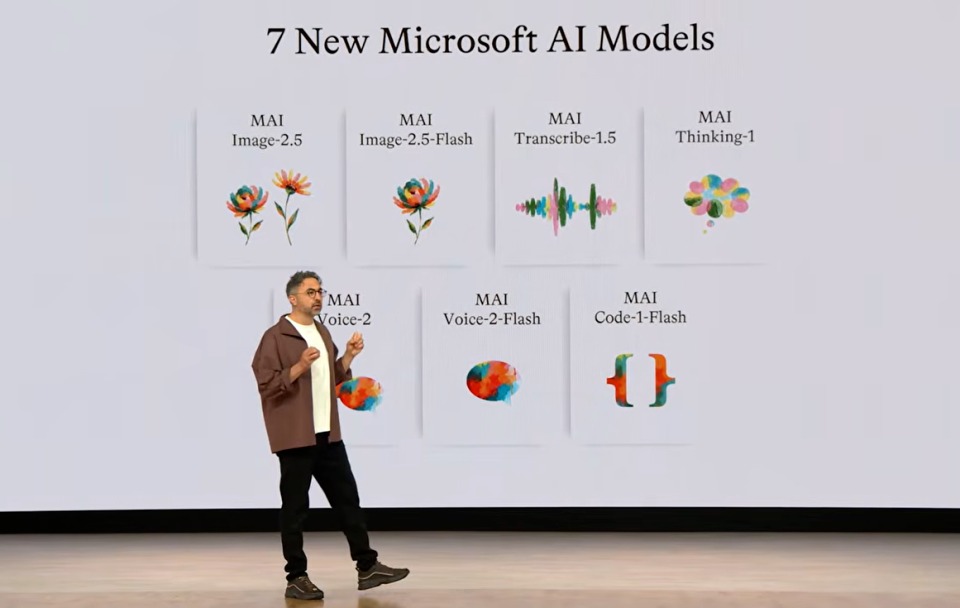
Suleiman, head of Microsoft AI division, introduces seven self-developed models
The specific models are as follows:
Flagship Inference Model MAI-Thinking-1, a medium-sized model. Microsoft states it can perform on par with the best models on the market in key software engineering tests. In blind tests, human evaluators showed a preference for it similar to that for Sonnet 4.6. This model was trained from scratch with clean data without using third-party model distillation.
Coding Model MAI-Code-1-Flash, a computationally efficient agentic coding model with 5 billion parameters, specifically tailored and deeply integrated for GitHub Copilot, VS Code, and Microsoft's technology stack. Microsoft claims it rivals Haiku but at lower costs.
Image Generation Model MAI-Image-2.5 and its ultra-efficient Flash variant, support text-to-image and image editing, and Microsoft states it surpasses Google’s Nano Banana Pro in Arena scoring.
Transcription Model MAI-Transcribe-1.5, which features SOTA-level accuracy. It is claimed to be five times faster than competing models and supports domain-specific terminology recognition in 43 languages.
Voice Generation Model MAI-Voice-2, offers high-quality, natural-sounding voice generation, supports 15 languages, adapts voice based on short samples, and includes anti-abuse protections. Its Flash variant is forthcoming, enabling the same functionalities at lower costs.
All models share the same data specifications, infrastructure, and evaluation frameworks. Besides being distributed on Azure Foundry and optimized for Microsoft’s first-party products, these models will also be available to developers on Open Router, Fireworks, and Baseten. For the first time, developers will be able to adjust the model weights themselves.
During the event, Nadella introduced Microsoft Frontier Tuning, a method that allows enterprises to customize models using their own operational data. The logic is that the most valuable data is not generic corpuses, but the actual trajectories, steps, and decisions that agents take while performing tasks in a company.
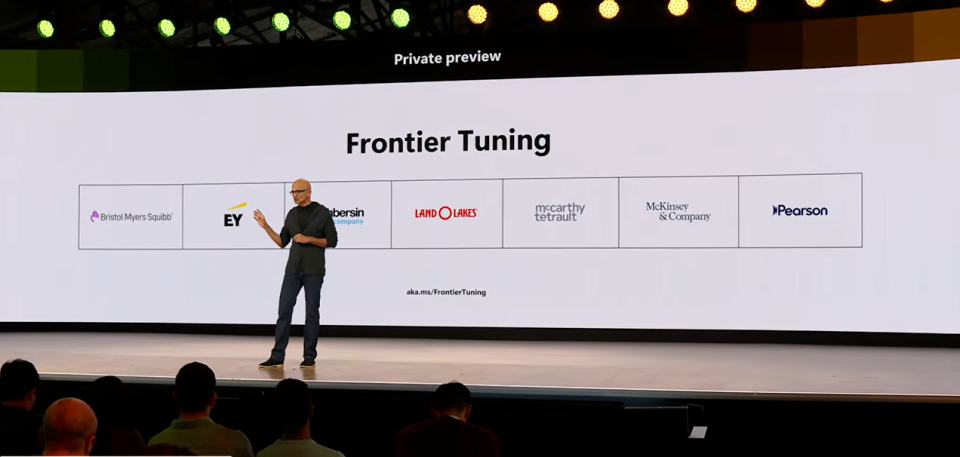
Microsoft CEO Nadella introduces Frontier Tuning
This mechanism connects MAI models to actual business processes, allowing the models to learn in real environments. Suleiman stated: “You are building your own models: trained in your environment, with your data, under your control. Your institutional knowledge will become part of the model and will be exclusively yours.”
In terms of effectiveness, the MAI model adjusted for Excel is comparable to GPT-5.4, while increasing efficiency by tenfold. After adopting Frontier Tuning, McKinsey achieved the highest win rate across all test models, reducing costs by approximately tenfold.
In the healthcare sector, Microsoft announced a collaboration with the Mayo Clinic to jointly create a cutting-edge AI model for healthcare. This model will combine the Mayo Clinic’s clinical expertise and de-identified clinical data with Microsoft’s foundational AI capabilities.
Microsoft also revealed that MAI models are being co-designed with the self-developed Maia 200 chip, achieving an efficiency increase of 1.4 times through joint optimization of hardware and software.
02 Full Implementation of Agent Ecosystem
At the conference, Microsoft announced a grand transformation towards an "Agent-first" approach, aiming to automate the way knowledge workers use software by embedding AI assistants into everyday office interactions.
Scout is the core agent product released this time. This AI Agent, referred to as "always on," is built on the OpenClaw framework and can interact within Microsoft Teams like a human colleague.
Scout can browse the user's work messages, calendar, and email inbox, automatically completing tasks, rescheduling conflicting meetings, and drafting professional-sounding replies. Users can send instructions directly to it in Teams and can also assign it a name.
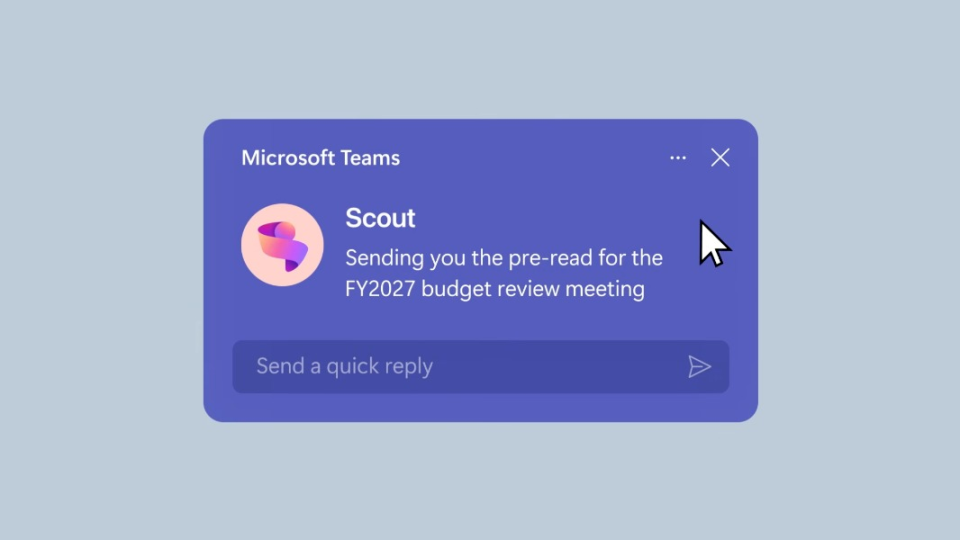
Microsoft's newly appointed corporate vice president Omar shahin explained the design philosophy behind Scout: "Your company essentially hires your assistant. The whole point of having a personal assistant is that they are still working when you are not."
Scout is available through the Microsoft Frontier program and requires a GitHub Copilot subscription. Microsoft is testing a Scout desktop application, which will be rolled out to subscription users who choose "frontier" feature access. Internally at Microsoft, Shahin mentioned that the sales department is the largest and fastest-growing group using this tool.
The GitHub Copilot desktop application is another important release. Mario Rodriguez, GitHub's Chief Product Officer, introduced it as a "desktop experience native to Agent built on GitHub."
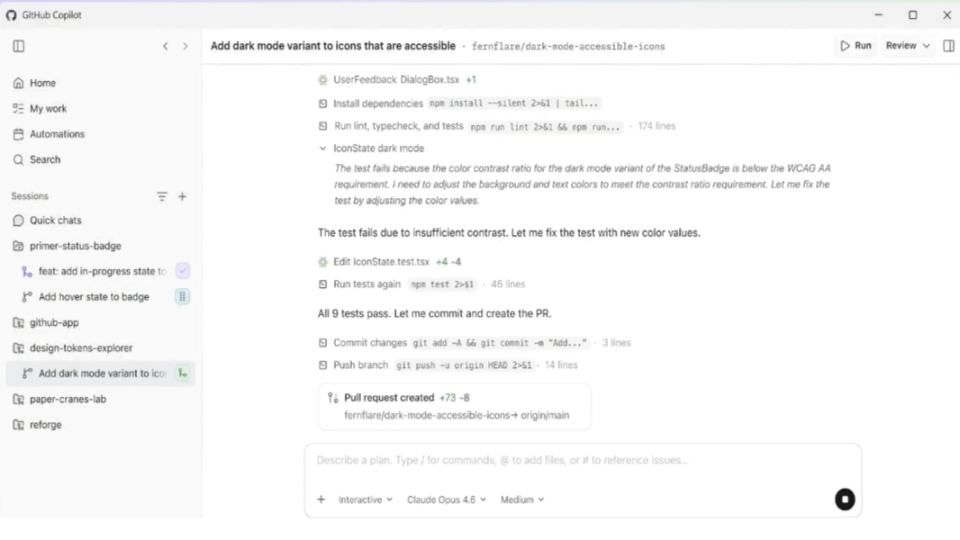
Through the unified "My Work" view, developers can see dynamic works across connected repositories, including active sessions, issues, pull requests, and backend automation. Each session operates within its own Git worktree, and parallel agents do not interfere. The application features Agent Merge capabilities, which guide pull requests through review, checks, and merging. The Canvas interface is used for bidirectional interaction between humans and machines, allowing developers to inspect, guide, and verify the work performed by the agent on their behalf.
The GitHub Copilot application is available as a technical preview for Windows 11, Windows 11 on Arm, Mac, and Linux and requires a GitHub Copilot subscription, with plans to open it to Copilot Free users in the future. The application supports cloud and local sandboxes, with both featuring policy support.
In terms of agent security governance, Microsoft launched the Agent Control Specification (ACS), a new open-source standard designed to provide developers with a more consistent and granular way to control AI Agent behavior. ACS allows development, compliance, and security teams to define policy files for agents, specifying what agents can and absolutely cannot do, when human approval is needed, and what evidence should be logged for review.
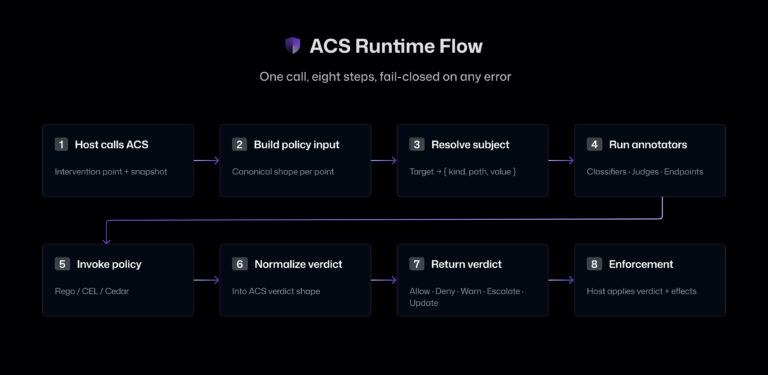
ACS is released as an SDK, accompanied by plugins for LangChain, OpenAI Agents SDK, Anthropic Agents SDK, AutoGen, CrewAI, Semantic Kernel, Microsoft.Extensions.AI, MCP tools, and others. Because policies can be expressed as a single file, they can be bundled with the agent, following the agent across different frameworks and environments.
ASSERT (Adaptive Spec-driven Scoring for Evaluation and Regression Testing) is another testing tool. This is an open-source framework that uses AI to translate high-level natural language descriptions of objectives, strategies, or expected behaviors into structured scoring tests.
ASSERT receives concise language descriptions of expected AI model behaviors, generating sets of acceptable and unacceptable behaviors, problem scenarios, and test cases to run and score against the target system. It can also log the paths taken by the AI system, including intermediate operations and tool invocations, for developers to check where failures occur.
03 The More Autonomous Agents Become, the More Dangerous They Are; Microsoft Draws Red Lines at the System Level with MXC
As AI Agents grow increasingly powerful and autonomous, Microsoft has identified a key issue: the more autonomous agents become, the more useful they are, yet it is increasingly dangerous to let them operate unencumbered on corporate networks. Microsoft's official blog describes this as a "multi-layer system problem," where every interaction between agents and humans, tools, applications, models, and other agents "exposes new attack surfaces and introduces different failure modes."
To address this issue, Microsoft introduced Microsoft Execution Containers (MXC), a policy-driven execution layer integrated into the Windows operating system itself. Pavan Dhanuraj, Vice President of Windows and Device Execution at Microsoft, emphasized the importance of this for making AI Agents commercially viable, as they "focus on security, containment, isolation, and enabling user control," which will make agents safe enough for general consumers and enterprise deployment.
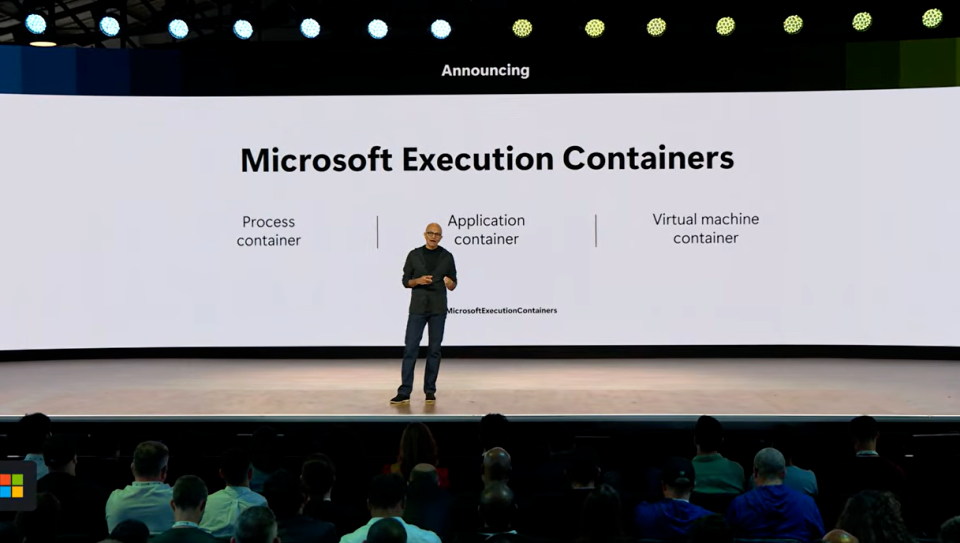
Microsoft CEO Nadella introduces the system-level security sandbox MXC
MXC is essentially an SDK and policy model embedded in Windows and Windows Subsystem for Linux, offering what Microsoft calls a "composable sandbox spectrum." This spectrum ranges from lightweight process isolation (adopted by GitHub Copilot's command-line interface) to micro virtual machines, Linux containers, and full cloud instances running on Windows 365.
The system separates agent execution from the user's desktop, clipboard, user interface, and input devices. Each agent is bound to an identity, either a local ID or a cloud-provisioned identity supported by Microsoft Entra, ensuring that every action taken by the agent can be attributed, audited, and governed.
MXC is now available in early preview. Agent 365, integrated with Microsoft’s enterprise security stack, will launch a preview in July 2026, layering Entra identity services, Intune device management, Defender threat protection, and Purview data governance capabilities on top of MXC, enabling IT departments to manage agent isolation centrally.
Regarding partnerships, OpenAI, NVIDIA, Manus, Nous Research (manufacturers of the Hermes Agent), and the OpenClaw open-source project have announced they are building on MXC.
Notably, the partnership with OpenClaw began when creator Peter Steinberger reached out to Microsoft to express interest in collaboration, eventually evolving into a comprehensive platform-level partnership.
04 Three Updates Allow Edge's AI to Run Without Internet
The Microsoft Edge browser also received upgrades to its local AI capabilities. Microsoft stated that since the introduction of Phi-4-mini at Build 2025, the team has expanded on-device AI capabilities based on feedback from web developers.
The first is Aion-1.0-Instruct, a smaller, faster, and more efficient local language model than Phi-4-mini. It can run on PCs with limited GPU and CPU capabilities and is available as a developer preview, expected to launch on Hugging Face in July.
The second is a language detection and translation API available with Edge version 148. These two APIs, powered by the on-device AI model built into Edge, allow websites and browser extensions to recognize text languages and translate between language pairs. Microsoft claims it "provides fast, high-quality translations, supporting over 145 languages, and optimized for translation workloads on the web," and this service is free.
The third is voice recognition via the Web Speech API, offered in experimental form in the Edge Canary and Dev channels. This API helps developers integrate voice or audio input into websites and browser extensions, running locally on devices, and can also leverage cloud-based speech-to-text and text-to-speech services as a backup.
05 Iterations of Developer Tools and Cloud Services
In terms of data intelligence, Microsoft released Microsoft IQ, merging four previously independent contextual sources into a shared foundation for agents.
Amir Nez, Chief Technology Officer of Microsoft Fabric, likened it to the green code waterfalls in "The Matrix," which are not just decoration but the foundation of building that world. He stated, "What we do in the data world is create a reality for agents based on data."
The four contextual sources of Microsoft IQ are: Work IQ, capturing how organizations operate daily using emails, documents, meetings, and scheduling; Foundry IQ, managing institutional knowledge through curation and indexing of knowledge bases; Fabric IQ, modeling the real-time operational state of businesses through data, defining entities, relationships, and business rules anchored by real-time signals of Fabric's real-time intelligence, expected to be officially released in the coming months; and Web IQ, adding live global context from the web.
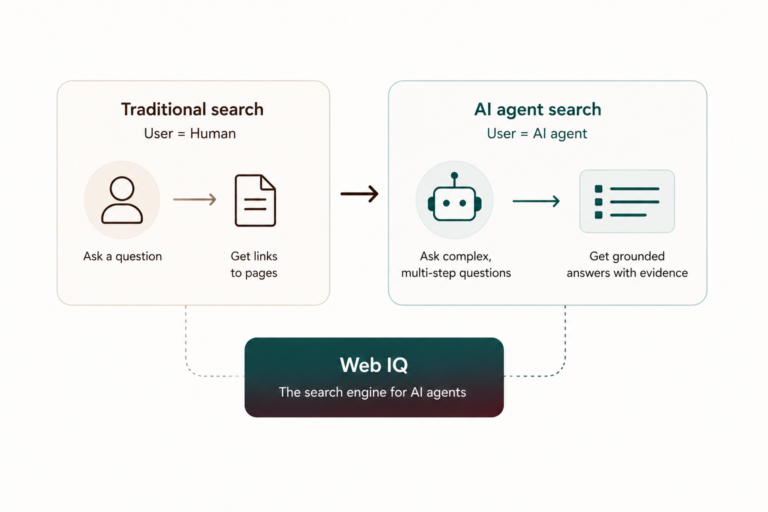
With this contextual system, an agent is no longer just a tool that executes commands but a virtual employee that understands the company's operations.
Having a shared "foundation" is not enough. When agents begin generating applications, each application needs a backend, and if left unchecked, these applications will create new data silos outside the context layer. To address this, Microsoft released Rayfin, an open-source SDK and CLI that directly deploys applications built by agents onto the Fabric platform as governed production backends, with application data by default entering the unified OneLake data lake and then feeding back into Microsoft IQ, rather than accumulating outside.
Microsoft positions it as a competitor to Supabase and Neon, with the core distinction being governance: all applications follow the same data and compliance channels. Nez noted that this is a bidirectional process, as agents draw information from the enterprise’s data rules when building applications, and the data generated when applications run in turn updates these rules, allowing the next agent to use the latest information.
Microsoft also introduced the WSL container feature, allowing developers to directly create and manage Linux containers on Windows. Microsoft has equipped it with a command-line interface and API, allowing Linux containers to run within native Windows applications; this functionality will be available for public preview in the coming months.
To prevent developers from wasting time on environment setup, Microsoft also launched Windows Developer Configurations, which quickly sets up a new machine and applies developer-optimized configurations, automatically installing WSL, PowerShell 7, and Visual Studio Code, along with enabling Git version control in the file explorer and displaying hidden files.
06 Two New Hardware Units Bringing AI Workloads Back to Local
This Build was not just a software show featuring models, agents, and developer tools; hardware was also present. As AI computations demand more processing power and agentic workflows need to run continuously, Microsoft has turned its focus onto the devices at developers' fingertips, suggesting that instead of renting expensive cloud GPUs, these tasks can be completed directly on local machines.
Andrew Hill, Vice President of Surface Product Company, announced two new devices:
The Surface RTX Spark Dev Box is a compact developer PC equipped with NVIDIA RTX Spark super chip, combining NVIDIA Blackwell RTX GPU and NVIDIA Grace CPU, providing up to 1 Petaflop of AI computing power, and equipped with 128 GB unified memory.
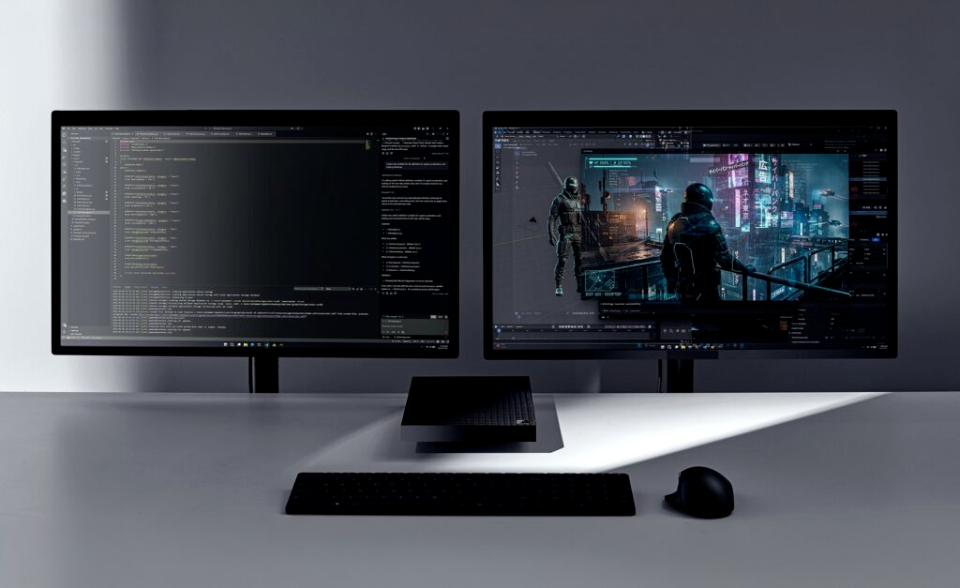
This device features an aluminum chassis that also serves as a heat sink, designed for long-running training tasks, large model inference, and complex agentic processes. It comes pre-installed with Windows 11 Pro and is pre-configured at the image level for developers: dark mode, simplified taskbar for development, removal of widgets, "Do Not Disturb" mode enabled, developer mode activated, and PowerShell 7 as the default shell. WSL 2 has GPU passthrough and CUDA support configured, with VS Code, GitHub Copilot, Git, Python, and Node.js all pre-installed.
In terms of security, Surface RTX Spark Dev Box is built on Microsoft's zero-trust principles from chip to cloud security, including Secured-core PC architecture, BitLocker encryption, and Microsoft Defender protections, and can integrate with Entra ID and Intune for large-scale management and governance.
Hill explained: "The way developers build software is undergoing fundamental change. The capabilities and complexities of AI models are increasing, agentic workflows require ongoing computing power, and even tasks that do not require the latest models can incur cloud costs with each iteration."
The other device, the Surface Laptop Ultra, is a high-performance laptop designed for developers, creators, and technical professionals, which had been launched earlier. Together, they represent the next step for Surface: creating dedicated devices for those building the future. The Surface RTX Spark Dev Box will be available later this year in the United States, exclusively sold on Microsoft.com.
07 A New Platform to Run AI Agents Instead of Applications
Steve Bartish, head of Microsoft’s application science division, introduced an internal project called Project Solara.
This is a new platform from chip to cloud, based on Android rather than Windows, aimed at enabling devices to run AI Agents instead of applications. Bartish explained the starting point: "The boundaries are crumbling. You don’t necessarily need traditional application models. You don’t need traditional methods to develop experiences."
Two concept devices were showcased at the Build conference:
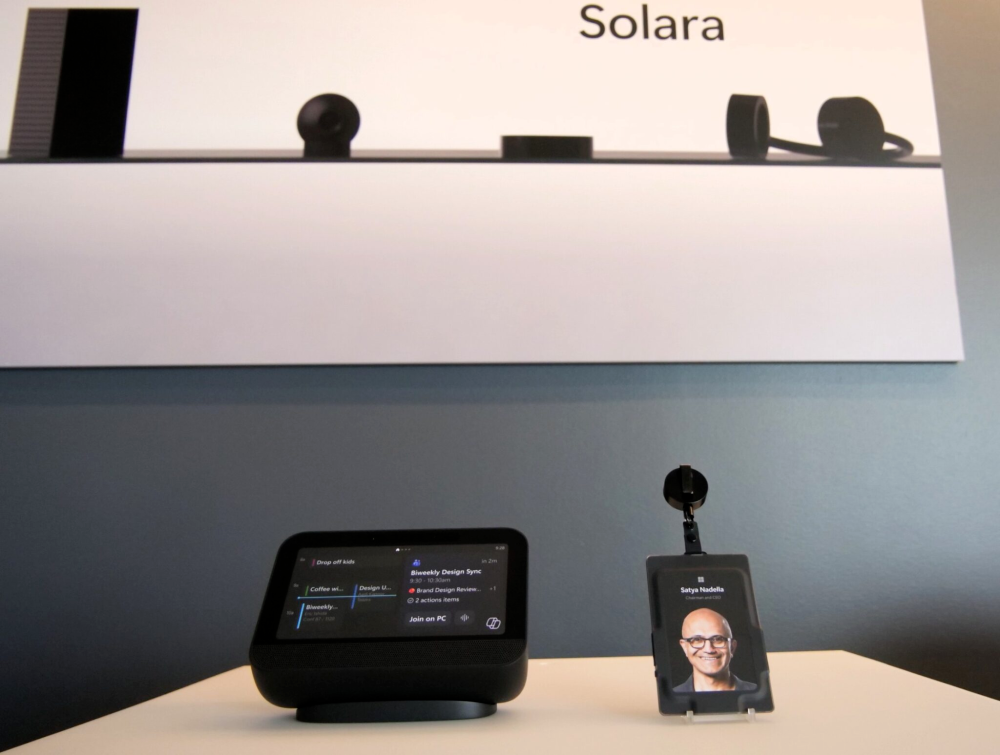
A desktop hub device that sits next to the PC, responds to voice commands, logs in users via facial recognition, and presents the most urgent matters of the day. When connected to a monitor, it can turn into a full Windows machine running in the cloud.
A wearable ID badge device reimagining the standard employee ID card. Pressing a fingerprint can wake the Agent, allowing quick recording and transcription of conversations, with a built-in camera enabling the Agent to act based on what the user sees.
In a healthcare demonstration, this badge ran an agent designed for healthcare personnel, capable of scanning patient QR codes, recording and transcribing consultation processes, logging vital signs, and issuing prescriptions. In another application, the built-in camera scanned a brainstorming board with office renovation ideas and suggested the addition of green plants.
Bartish indicated that Microsoft will not produce these devices itself but envisions hardware manufacturers and other industry partners transforming these reference designs into their products, each tailored for specific industries, companies, or scenarios.
08 Quantum Chip Upgrade, Reliability Boosted a Thousandfold
Microsoft also released the next-generation topological quantum chip, Majorana 2.
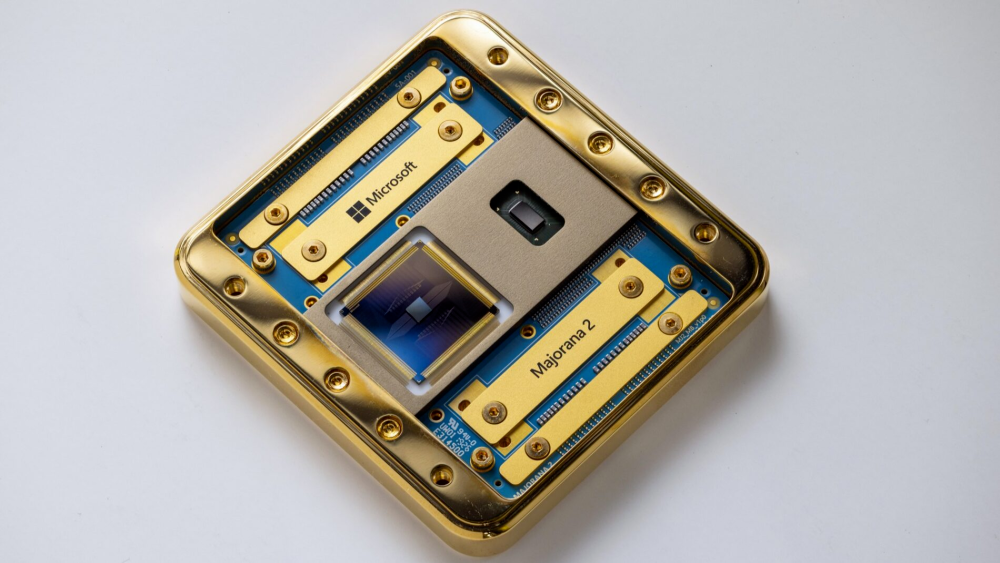
Compared to its predecessor Majorana 1, the core change this time is that the superconducting material has switched from aluminum to lead, improving the reliability of qubits by a factor of 1000 and increasing the average qubit lifespan to 20 seconds, with some instances lasting up to a minute.
Other technical routes for qubit lifetimes typically only reach microsecond levels. Based on this progress, Microsoft has halved the expected timeline for scaling quantum computers, now predicting completion before 2029.
The development of this chip utilized the Agentic AI capabilities of the Microsoft Discovery platform throughout the process. AI agents managed tasks such as manufacturing oversight, automated quantum state measurement, and interdisciplinary data analysis, compressing measurement cycles that would have taken weeks by several orders of magnitude, identifying connections that humans would have difficulty perceiving from nearly two decades of accumulated data.
Microsoft technical fellow Chetan Nayak stated: “Agentic AI permeates almost everything we do.” However, he emphasized that AI only provides guidance, as "it is always scientists who remain in the loop."
The Microsoft Discovery platform was formally launched at this conference, aimed at frontier research and development as an organization-level platform, allowing researchers to deploy human-guided autonomous agent teams for hypothesis generation, experimental optimization, and theoretical validation. Microsoft also released an early preview of the Microsoft Discovery application, available for individual download, running locally with a GitHub Copilot account.
免责声明:本文章仅代表作者个人观点,不代表本平台的立场和观点。本文章仅供信息分享,不构成对任何人的任何投资建议。用户与作者之间的任何争议,与本平台无关。如网页中刊载的文章或图片涉及侵权,请提供相关的权利证明和身份证明发送邮件到support@aicoin.com,本平台相关工作人员将会进行核查。


