The current bear market logic of Bitcoin has changed, "scarcity is no longer sufficient."
Written by: Long Yue
Source: Wall Street News
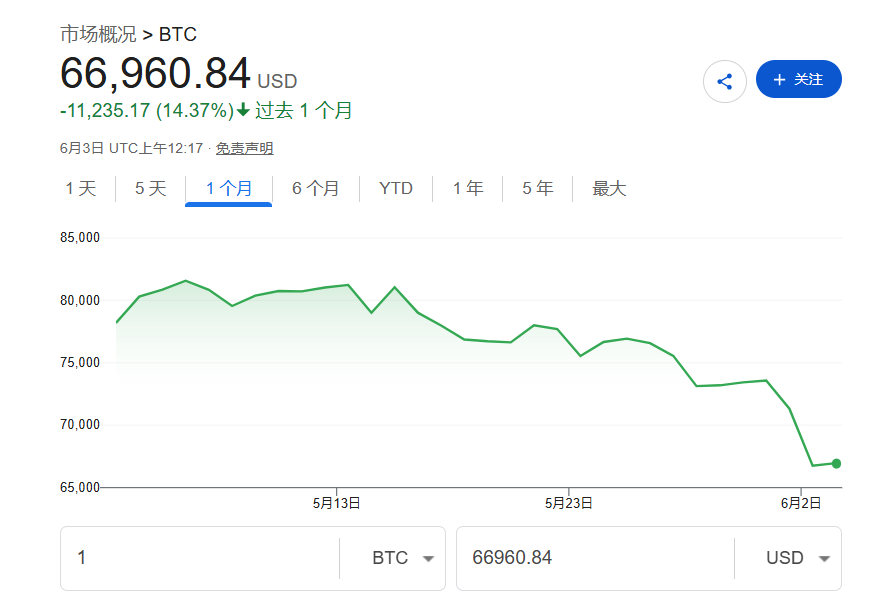
Bitcoin has been continuously declining recently. During the trading, it once dropped to $66,123, reaching a two-month low, and the latest report is $66,620; Ethereum concurrently fell to $1,837, the lowest in three months, with the latest report at $1,855.
Many explanations are circulating in the market: ETF capital outflows, geopolitical tensions, and the unexpected reduction in holdings by Strategy (formerly MicroStrategy). According to Bloomberg analyst Sid Verma, these claims are not wrong, but they may only be the surface. The real problem runs deeper—Bitcoin is losing an asset competition.
For a long time, interest rates were near zero, cash was depreciating just sitting there; stock valuations were too high; AI was still just a concept; gold had limited gains. Analysis pointed out that at that time, Bitcoin's competitors were not specific assets, but rather the "discontent of investors"—fear of inflation, dissatisfaction with existing choices.
But now, the market has changed.
Three territories, Bitcoin is losing all
Analysts describe Bitcoin's predicament very straightforwardly: it is now stuck in an "awkward middle ground," attacked from three sides.
Hedge against inflation? Gold has won. Investors worried about inflation now prefer to buy gold, energy stocks, and commodity producers instead of Bitcoin. These assets have physical support and pricing power, with more direct logic.
Pursuing growth? AI has won. Investors looking for high growth can now buy AI beneficiary companies with real revenue and real profits. Bitcoin does not generate cash flow and has no advantage in this arena.
Getting into crypto? Stablecoins and infrastructure have won. Even investors wanting crypto exposure do not have to buy Bitcoin. They can invest in exchanges, stablecoin businesses, payment networks, or tokenized financial companies—these assets' performance is directly linked to the actual adoption rate of the crypto industry, with operational leverage and clearer logic.
To summarize in one sentence: Bitcoin is neither the best hedge asset nor the best growth asset, and it is no longer the only crypto asset.
Inflation has arrived, but Bitcoin hasn't risen
A detail illustrates the problem well.
This week, Beth Hammack, president of the Federal Reserve Bank of Cleveland, warned that inflation risks may be becoming "more persistent." A few years ago, such a statement would almost certainly have been interpreted by the market as good news for Bitcoin—high inflation, depreciation of fiat currency, buying Bitcoin as a hedge.
But this time, the market did not react that way.
Investors' responses to inflation have changed now—they prefer to buy assets with direct exposure to energy, commodities, and pricing power. The narrative of Bitcoin as "digital gold" is being eroded by real gold and energy stocks.
ETF outflows and Strategy's reduction
Returning to the direct triggers of this recent decline.
ETF capital outflows and Strategy's reduction in holdings are real events. However, Bloomberg's analysis suggests that treating them as the "cause" is a misreading—they are more like "symptoms," reflecting the same underlying reality: capital has more places to go, and investors have higher expectations for Bitcoin.
Investors are becoming more selective: they do not just want "crypto exposure," they want to know what returns this exposure can bring and why it should be Bitcoin rather than something else.
The bear market logic of Bitcoin is no longer "it's a scam," "it's a bubble," "it's a failed technology." The new bear market logic is—scarcity itself is no longer enough.
免责声明:本文章仅代表作者个人观点,不代表本平台的立场和观点。本文章仅供信息分享,不构成对任何人的任何投资建议。用户与作者之间的任何争议,与本平台无关。如网页中刊载的文章或图片涉及侵权,请提供相关的权利证明和身份证明发送邮件到support@aicoin.com,本平台相关工作人员将会进行核查。


