
Author: Think AI, Aaron
This round of artificial intelligence stocks has been rising for three and a half years, with no signs of stopping;
Since last year, as people watched the U.S. stock market crash, those caught in the AI bubble have fallen into contemplation.
The Korean index has experienced 19 circuit breakers this year, the main index has risen four times since last year, and Hynix has increased by 260% this year, either at new highs or on the way to new highs;
The U.S. storage giant Micron has surpassed a market value of one trillion dollars, making it one of the top 10 companies by market value in the U.S., with an increase of over two times this year and over ten times in a year;
In Japan, SoftBank, which previously invested in Alibaba due to heavy bets on AI, has seen its stock price rise continuously, now ranking as the highest market value company in Japan.
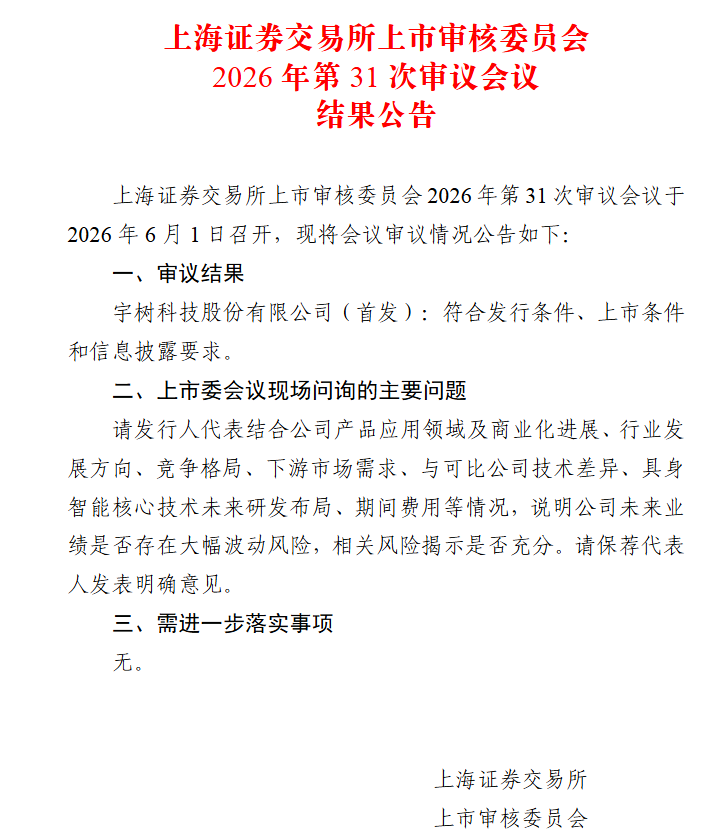
Domestically, Yushun and Changxin have passed the review; Changxin's market value has reached 1.5-2 trillion yuan, directly landing in the top five of the A-share market;
AI companies like Nvidia and Google are always caught in the fear of rising prices; it has even been reported that housing prices in places like Shenzhen have rebounded, and due to exceeding expectations in semiconductor and AI companies, executives of these companies have started a mass buying spree for properties.
However, another scenario exists, those who took out loans to buy gold at the beginning of the year are still stuck, and domestic consumer stocks continue to decline; many netizens have expressed that they completely missed this wave of the AI bull market and are anxious every day about what to do now.
Only a Few People Make Money
Let's look at the data: in 2025, the profitability ratio for retail investors in A-shares is only about 18.9%, while the loss ratio is as high as 81.1%, with an average loss of about 21,000 yuan per person. The loss ratio for small retail investors with less than 100,000 yuan is even close to 98.7%.
This is against the backdrop of a nearly 20% increase in the main index in 2025, an 80% increase for the Sci-tech Innovation 50, and overall rises last year, with Wind data showing that 500 individual stocks have doubled and more than 120 companies have tripled their shares.
When the main index corrected from January to April 2026, faith in AI collapsed, and institutions cut their losses at the low point.
During the decline, there was a wave of share reductions in AI stocks. The major shareholder and executives of Zhongji Xuchuang (optical modules) reduced their holdings by 4.914 billion yuan, and then the stock price rose by 35%; Kunlun Wanwei's major shareholder Li Qiong planned to reduce by 35.86 million shares, and after the reduction announcement, the stock price plummeted by 20%, but then rebounded by 40% within a month, with some reducing shareholders "selling at the floor."
A report from Guosen Securities on AI sector reductions pointed out that in 2026, the potential gains lost due to early reductions by institutions in the AI computing power sector exceeded 200 billion yuan (calculated based on average increase after reduction),
while many institutions that firmly held AI stocks have misjudged the direction.
At the end of 2025, institutions bet on vertical applications like AI education and AI healthcare, but these vertical applications have failed to explode, and in 2026 these sectors averaged a decline of over 20%, while the computing power sector increased by over 50%;
Abroad, instances of missing out and selling are emerging endlessly.
The globally renowned fund Bridgewater had significantly reduced its holdings in Nvidia (by nearly two-thirds), Alphabet (over half), Amazon (9.6%), and Microsoft (35%) in Q3 2025, only for these stocks to average an increase of over 80% from Q4 2025 to Q1 2026;
There are also many short sellers; short positions in the U.S. stock market have recently hit a new high since 2012.
Data shows that the total leverage ratio of hedge funds has risen to about 293%, with the short exposure in the S&P 500 index and the Days-to-Cover indicator reaching record highs.
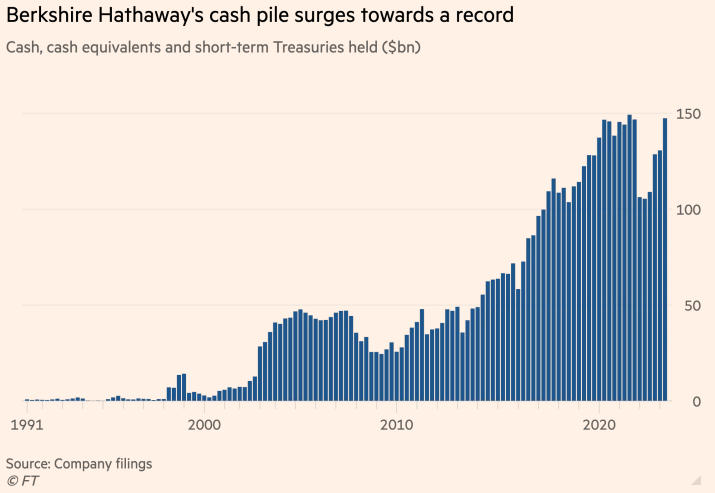
Even Buffett, strong as he is, began reducing his positions early; in Q1 2026, his cash reserves reached a historical high of 39.738 billion dollars, completely missing out on the AI boom and the surge in U.S. tech stocks.
Multiple Waves Rising Together
However, it cannot be denied that AI remains the most certain and revolutionary opportunity in the current market.
AI is not a short-term concept, but a fundamental infrastructure revolution akin to electricity and the internet. Historical experience shows that many who missed the first wave of tech stocks found opportunities in the application layer or the next round of infrastructure upgrades.
China also has unique space in self-research, application implementation, and addressing shortcomings in the industry chain related to AI.
When we are confused and anxious, we might as well see how the best in the industry view things; it may give us some guidance and inspiration.
Tencent's Ma Huateng, often seen as lagging in the AI era, has been striving to catch up since last year, and his speech at the shareholders' meeting in May this year sparked much discussion.
Regarding AI, he stated, “A year ago, we thought we had boarded the ship, but later we found that the ship was leaking; now it feels like we've stood on it but can't sit down, and we hope the ship can go a little faster.”
And regarding “what to do next”, he pointed out, “You can't just cross over casually because you see others doing it, seizing their territory. We have done that before but basically failed.”
Indeed, the AI era offers very broad opportunities, and finding the most suitable opportunity by combining one’s own strengths and characteristics is the best choice.
Now stepping back, but with deep insights into AI from ten years ago, Jack Ma stated that AI is a once-in-a-century industrial revolution-level opportunity comparable to the invention of electricity; the AI era has just begun, and now is the time to lay out investments; there is no such thing as having missed out;
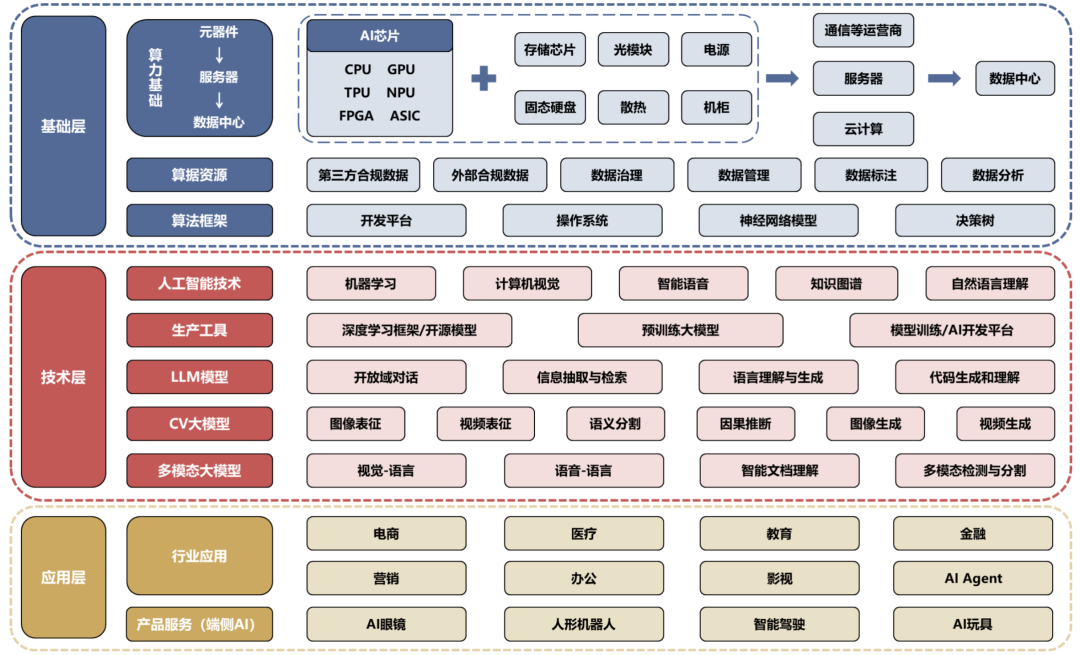
From infrastructure for computing power, large model platforms to industry AI applications, the entire industry chain continues to release long-term investment opportunities.
Looking at this, the opportunities along the entire industrial chain are limitless, whether in work or investment, or entrepreneurship; by deeply cultivating the industrial chain, as long as one is immersed in the AI wave, along with Dong Yongping's long-termism and integrity philosophy, one will eventually reap rewards.
The current large model is smart enough, but only Claude has taken the lead in achieving profitability in the coding agent track, while AI+ is still on the way.
The next round of structural opportunities will definitely be left for those who are well-prepared and have a stable mindset.
免责声明:本文章仅代表作者个人观点,不代表本平台的立场和观点。本文章仅供信息分享,不构成对任何人的任何投资建议。用户与作者之间的任何争议,与本平台无关。如网页中刊载的文章或图片涉及侵权,请提供相关的权利证明和身份证明发送邮件到support@aicoin.com,本平台相关工作人员将会进行核查。


